This week’s nuclear and climate news
 Well, ya can’t get away from it. It’s always the pandemic! This week, the news moves on to considering the future. Biodiversity scientists warn that future pandemics are on the horizon, if we don’t stop our rapid destruction of nature. With increasing human population, encroaching on wild habitats, there’s increased risk of pathogens transferring between animals and humans.
But also, the pandemic is showing us how our trashed world can heal.
Amidst the continuing propaganda for the (still non existent) new “cheap ” small nuclear reactors, comes the sobering fact that the nuclear industry is in trouble, in this time of pandemic. It’s not just nuclear’s unique safety problem, but now the business problem. As wind and solar power thrive , nuclear power is going down the drain, with low prices and slumping demand.
A bit of good news – Hole in the ozone layer is now closed.
The nuclear pandemic. Nuclear Issues and Epidemiology. Low Oil Prices May Kill Off The Next Nuclear Boom Before It Begins.
New START is the only U.S.-Russian nuclear treaty still in effect. Time to renew it.
Petersberg Climate Dialogue to be held virtually this year. Climate change: lakes and rivers will become drier, increasingly infectious and toxic.
Solar and Wind Cheapest Sources of Power in Most of the World Solar heating.
ARCTIC. An Arctic island is warming SIX times faster than the global average.
JAPAN. 16 Japanese Financial institutions won’t invest in companies involved in nuclear weapons. Half of highly radioactive exhaust stack dismantled at Fukushima Nuclear Reactor 1,
RUSSIA. Coronavirus a big threat to Russia’s secret nuclear cities, as virus incidence rises. Russia warns US against using low-yield nuclear weapons, threatening all-out retaliation. With international finance help, Russia is dismantling its most radioactive ship.
USA.
- USA’s complicated and contradictory plan to punish Iran. Could President Trump launch a nuclear attack via Twitter? “Mrs America”- Phyllis Schlafly determined fan of nuclear weapons, like today’s pro nuclear women in public life.
- Federal appeals court dismisses case against GE over Fukushima nuclear disaster.
- To store surplus plutonium, USA’s Waste Isolation Pilot Plant will have to be enlarged. Beyond Nuclear and other groups challenge Holtec’s nuclear waste plan for New Mexico. Beyond Nuclear opposes Holtec nuclear waste plan: the Nuclear Regulatory Commission is not above the law. The Southwest Research and Information Center says that rules are ignored in nuclear waste construction in New Mexico. Comment Period For Proposed Nuclear Waste Dump In New Mexico extended by 60 days.
- Nuclear reactor pressure vessel to be shipped by rail to Utah, from Sanonofre. Indian Point nuclear power station‘s first step to closure, as one reactor shuts down.
- Do-it-yourself radiation monitoring.
- Offshore wind is General Electric’s great opportunity, not dodgy Small Nuclear Reactors. Michael Moore’s sham attack on renewable energy has had rigorous debunking
UK. UK ignored warnings about pandemic danger, cut health funding, spent up big on nuclear weapons. Report warns on the threat of sea level rise to Sizewell nuclear plan. Everyone is needed in bid for a future free of nuclear .
NORTH KOREA. Time to support humanitarian initiatives for North Korea.
ISRAEL. Netanyahu’s deceitful push to try to get USA to attack Iran.
INDIA. Hundreds of foreign companies procuring nuclear materials for India and Pakistan.
FRANCE. France’s unfairly heavy monitoring of anti-nuclear activists, treating them as violent criminals.
AUSTRALIA. Flinders Local Action Group want a new process for disposal of Australia’s nuclear waste. South Australian group calls – ” No to radioactive waste on agricultural land in Kimba or South Australia.” Dr Helen Caldicott explains the (virtually eternal) problem of toxic nuclear waste.
Wind and solar power thriving in pandemic, but nuclear power going down the drain
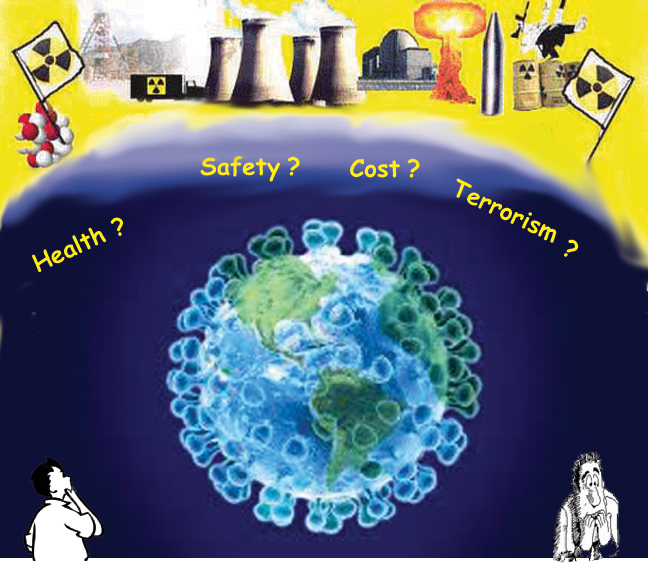
 Nuclear is Getting Hammered by Green Power and the Pandemic, Plant operators are forced to switch uneconomic units off because of low prices and slumping demand. Bloomberg Green, May 4, 2020, “………Nations around the world have set tough targets to reduce greenhouse gases with the help of clean energy to meet commitments set out in the 2015 Paris Agreement.
In China, the coronavirus caused reduced output at CGN Power Co.’s atomic plants after the Lunar New Year holiday. Without taking into account the two reactors that came into operation in 2019, output at the remaining 22 units fell 4.7% in the first quarter from a year earlier, the company said.
After correcting for weather effects, full lockdowns reduced daily electricity demand by at least 15% in France, India, Italy, Spain, the U.K. and northwest U.S., the International Energy Agency said in a report on April 30. Global power consumption will decline as much as 5% this year, or the most since the Great Depression, according to the group advising the richest nations.
That will hurt all power sources, although use of renewables will still post a 1% gain this year, IEA said. Nuclear could drop by 3% from 2019 due to lower demand and delays to planned maintenance and construction of several projects, IEA said.
For example, EDF’s U.K. unit is undertaking more work than usual at its reactors, with five out of 15 units halted for long-term repairs. Output is below normal for the time of year. The company declined to comment on whether it was altering production due to rising renewables.
……. At Vattenfall, workers will permanently shut another old reactor at Ringhals by the end of the year, just after one unit was closed down in December. It would have been too costly to make the investments needed to keep them running any longer, the company has said.
And Hall, the boss, has a clear vision. While 5 billion kronor ($510 million) will be invested to secure safe operations at its nuclear and hydro plants this year and next, as much as 25 billion kronor will go to wind.
“We want to build more fossil-free generation and that is predominantly wind.” https://www.bloomberg.com/news/articles/2020-05-04/nuclear-is-getting-hammered-by-green-power-and-the-pandemic
Scientists Warn Worse Pandemics Are on the Way if We Don’t Protect Nature
 Scientists Warn Worse Pandemics Are on the Way if We Don’t Protect Nature https://www.ecowatch.com/pandemics-environmental-destruction-2645854694.html?rebelltitem=4#rebelltitem4 Jordan Davidson
Apr. 27, 2020 A group of biodiversity experts warned that future pandemics are on the horizon if mankind does not stop its rapid destruction of nature.
Writing an article published Monday by The Intergovernmental Science-Policy Platform on Biodiversity and Ecosystem Services (IPBES), the authors put the responsibility for COVID-19 squarely on our shoulders.
“There is a single species that is responsible for the COVID-19 pandemic – us. As with the climate and biodiversity crises, recent pandemics are a direct consequence of human activity – particularly our global financial and economic systems, based on a limited paradigm that prizes economic growth at any cost. We have a small window of opportunity, in overcoming the challenges of the current crisis, to avoid sowing the seeds of future ones,” the authors wrote on IPBES.
The authors of the report include the three co-chairs of the comprehensive 2019 IPBES Global Assessment Report on Biodiversity and Ecosystem Services, which found that one million species of plants and animals are at risk of extinction within decades. The fourth author, Peter Daszak, is the president of EcoHealth Alliance and is tasked with spearheading the IPBES’ next global assessment, as The Guardian reported.
The authors argue that government stimulus plans need to include sustainable and nature-positive initiatives. “It may be politically expedient at this time to relax environmental standards and to prop up industries such as intensive agriculture, long-distance transportation such as the airlines, and fossil-fuel-dependent energy sectors, but doing so without requiring urgent and fundamental change, essentially subsidizes the emergence of future pandemics,” the authors wrote.
They also fault wanton greed for allowing microbes that lead to novel diseases to jump from animals to humans.
“Rampant deforestation, uncontrolled expansion of agriculture, intensive farming, mining and infrastructure development, as well as the exploitation of wild species have created a ‘perfect storm’ for the spillover of diseases from wildlife to people,” they wrote in their article.
They warn that 1.7 million unidentified viruses known to infect people are estimated to exist in mammals and water birds. Any one of these may be more disruptive and lethal than COVID-19.
With that in mind, the authors suggest three facets that should be considered for COVID-19-related stimulus plans. Countries should strengthen environmental regulations; adopt a ‘One Health’ approach to decision-making that recognizes complex interconnections among the health of people, animals, plants, and our shared environment; and prop up healthcare systems in the most vulnerable countries where resources are strained and underfunded. “This is not simple altruism – it is vital investment in the interests of all to prevent future global outbreaks,” the scientists argue in their IPBES article.
“The programs we’re talking about will cost tens of billions of dollars a year,” Daszak told The Guardian. “But if you get one pandemic, even just one a century, that costs trillions, so you still come out with an incredibly good return on investment.
“Business as usual will not work. Business as usual right now for pandemics is waiting for them to emerge and hoping for a vaccine. That’s not a good strategy. We need to deal with the underlying drivers.”
Their assessment has been supported recently by others in the scientific community. A study published earlier this month blamed human impact on wildlife for the current outbreak, as The Guardian reported.
The authors of the new article end their piece on an optimistic note about nature’s resiliency. “We can build back better and emerge from the current crisis stronger and more resilient than ever – but to do so means choosing policies and actions that protect nature – so that nature can help to protect us,” they wrote.
New START is the only U.S.-Russian nuclear treaty still in effect. Time to renew it
|
Minister Lavrov was specific that Washington must agree to extend New START before Russia would agree to include new Russian systems in future negotiations. Secretary Pompeo reiterated the U.S. position that future arms control talks must embrace the White House desire to include China in a trilateral arms control agreement. Frankly, holding New START hostage to Chinese agreement to join a trilateral negotiation makes no sense. Under New START, Russia and the U.S. are permitted to deploy up to 1,550 nuclear warheads. China maintains a minimum deterrence force that the director of the Defense Intelligence Agency recently stated to be a couple of hundred nuclear warheads. Given this large disparity, China has little to gain from negotiating and has shown little interest in doing so. If Russia and the U.S. can bring their numbers down significantly through a new round of negotiations, there could be a basis then to persuade China to join a trilateral negotiation. The Trump administration should immediately accept the Russian offer to extend the New START Treaty and to engage in a new round of strategic arms negotiations. New START is the only U.S.-Russian nuclear treaty still in effect. If the pact is permitted to expire in February 2021, there will be no limits on Russian strategic systems and no inspection regime to verify what types and numbers of systems the Russians are deploying. The Joint Chiefs of Staff and the Intelligence Community are solidly in favor of extending New START because they know what the adverse impact will be on our ability to assess the threat to U.S. interests and our planning to address that threat. A bold approach the U.S. should consider is to enter into a negotiation now with Russia to extend New START at a lower level of 1,000 deployed warheads from the currently authorized 1,550. During the 2010 negotiations on New START, the Joint Chiefs certified that 1,000 would be adequate to support our deterrence strategy. …….. https://thehill.com/opinion/international/494960-time-to-restart-nuclear-arms-negotiations-with-russia |
|

16 Japanese Financial institutions won’t invest in companies involved in nuclear weapons
 Many Japanese lenders refuse to invest in companies linked to nuclear arms https://www.japantimes.co.jp/news/2020/05/03/business/corporate-business/many-japanese-lenders-refuse-invest-companies-linked-nuclear-arms/#.Xq8zaqgzbIU
KYODO Sixteen Japanese financial institutions say they refrain from investing in and extending loans to companies involved in the manufacturing of nuclear weapons and delivery systems, according to a Kyodo News survey released Sunday.
The survey found the lenders set guidelines for such issues in an effort to avert international criticism against conducting business with nuclear-related companies amid growing public perceptions about the inhumane nature of nuclear weapons and other weapons of mass destruction.
The 16 lenders include three megabanks — MUFG Bank under Mitsubishi UFJ Financial Group Inc., Mizuho Bank under Mizuho Financial Group Inc., and Sumitomo Mitsui Banking Corp. under Sumitomo Mitsui Financial Group Inc. — as well as Japan Post Bank Co. and Resona Bank under Resona Holdings Inc.
Kyodo sent a written questionnaire to a total of 119 city banks, regional banks and online banks from late February to early March. Of those, 35 responded.
About 70 percent of the total did not answer because they said they have never discussed the issue.
A Resona Bank official said the Osaka-based lender drew up written rules in March 2018 that it will not invest in nuclear, anti-personnel mines and other such fields due to rising international criticism against conducting businesses with companies involved in the manufacturing and development of weapons of mass destruction.
Eleven other lenders possessing such guidelines are Saitama Resona Bank in Saitama Prefecture, Aozora Bank in Tokyo, SBI Sumishin Net Bank, Hokkaido Bank and North Pacific Bank in Hokkaido, Tohoku Bank in Iwate Prefecture, Ogaki Kyoritsu Bank in Gifu Prefecture, Kansai Mirai Bank in Osaka Prefecture, Minato Bank in Hyogo Prefecture, Higo Bank in Kumamoto Prefecture and Kagoshima Bank in Kagoshima Prefecture.
According to the survey, nine respondents including Hokkaido Bank, the Bank of Kochi in Kochi Prefecture and Oita Bank in Oita Prefecture said they backed the Treaty on the Prohibition of Nuclear Weapons.
Of 20 lenders expressing reservation about the 2017 U.N. nuclear ban treaty, five questioned the Japanese government’s reluctance to sign it.
Japan does not possess nuclear weapons but remains under the nuclear umbrella of the United States.
Twelve respondents including Tohoku Bank, Higo Bank and the Bank of Toyama in Toyama Prefecture said they think the adoption of the U.N. pact would generate risks in the future to investment in nuclear-related companies.
None of the 35 respondents said they have provided funds to companies developing intercontinental ballistic missiles, bombers capable of loading nuclear weapons and other nuclear weapons-linked infrastructure.
However, the three megabanks declined to disclose their investments in nuclear-related companies.
 While welcoming the 16 lenders for supporting such guidelines, the International Campaign to Abolish Nuclear Weapons, or ICAN, a nongovernmental organization and the 2017 Nobel Peace Prize laureate, said it suspects some still continue to invest in nuclear-related businesses.
“Companies that manufacture nuclear weapons conduct businesses in other areas,” said Akira Kawasaki, a member of the International Steering Group of ICAN. “We see it as a perception gap between us and some banks that claim they abstain from investing in nuclear weapons manufacturing businesses.”
ICAN wants those banks to disclose details about their guidelines, Kawasaki said.
Beyond Nuclear and other groups challenge Holtec’s nuclear waste plan for New Mexico
 Carlsbad Current Argus 2nd May 2020, A proposed nuclear waste repository near Carlsbad and Hobbs proceeded through the federal licensing process despite protests from environmental
groups who questioned the legality of the project. Holtec International applied to the Nuclear Regulatory Commission (NRC) for a license to build and operate a facility that would temporarily store spent nuclear fuel rods in a remote location of southeast New Mexico while a permanent repository is developed.
The consolidated interim storage facility was challenged by Beyond Nuclear and other organizations who questioned Holtec’s application for suggesting the U.S. Department of Energy could take ownership of the waste.
1 This Month


Tell the Ukrainian Government to Drop Prosecution of Peace Activist Yurii Sheliazhenko

Petition to revoke the licensing of the Near Surface Nuclear Disposal Facility (NSDF) at Chalk River. https://www.ourcommons.ca/petitions/en/Petition/Details?Petition=e-7247


of the week – STOP SMALL MODULAR REACTORS IN CANADA
To see nuclear-related stories in greater depth and intensity – go to https://nuclearinformation.wordpress.com
-
Archives
- March 2026 (204)
- February 2026 (268)
- January 2026 (308)
- December 2025 (358)
- November 2025 (359)
- October 2025 (376)
- September 2025 (258)
- August 2025 (319)
- July 2025 (230)
- June 2025 (348)
- May 2025 (261)
- April 2025 (305)
-
Categories
- 1
- 1 NUCLEAR ISSUES
- business and costs
- climate change
- culture and arts
- ENERGY
- environment
- health
- history
- indigenous issues
- Legal
- marketing of nuclear
- media
- opposition to nuclear
- PERSONAL STORIES
- politics
- politics international
- Religion and ethics
- safety
- secrets,lies and civil liberties
- spinbuster
- technology
- Uranium
- wastes
- weapons and war
- Women
- 2 WORLD
- ACTION
- AFRICA
- Atrocities
- AUSTRALIA
- Christina's notes
- Christina's themes
- culture and arts
- Events
- Fuk 2022
- Fuk 2023
- Fukushima 2017
- Fukushima 2018
- fukushima 2019
- Fukushima 2020
- Fukushima 2021
- general
- global warming
- Humour (God we need it)
- Nuclear
- RARE EARTHS
- Reference
- resources – print
- Resources -audiovicual
- Weekly Newsletter
- World
- World Nuclear
- YouTube
-
RSS
Entries RSS
Comments RSS
 nuclear-news