With dry and windy conditions, new areas of ‘smoldering’ reported near Chernobyl nuclear plant
New areas of ‘smoldering’ reported near Chernobyl nuclear plant, Accu Weather, By Courtney Spamer, AccuWeather meteorologist, Apr. 18, 2020 A massive fire that broke out in northern Ukraine at the beginning of April is no longer said to be threatening the infamous Chernobyl nuclear power plant in the region. However, officials are monitoring hot spots as winds whip through the region.
The fire began to burn in the region back on April 3, near the town of Pripyat, located over two hours north of the country’s capital of Kiev and near the border with Belarus.
Police say they arrested a 27-year-old man who is being accused of starting the fire last week. On Monday, police said that another local resident burned waste and accidentally set dry grass ablaze.
The location of the fire was reportedly only one kilometer (less than one mile) away from the Chernobyl nuclear power plant, the site of the world’s largest nuclear catastrophe back in April 1986.
However, Greenpeace Russia, on Monday, warned that the fire being in close proximity of the power plant posed a radiation risk.
“Higher-than-usual” radiation levels were first reported by the AP on April 5, and are being carefully monitored as the fire continues.
According to Reuters, Chernobyl tour operator, Yaroslav Yemelianenko, shared on Facebook that the fire was only two kilometers away from where “the most highly active radiation waste of the whole Chernobyl zone is located.” He called on officials to warn people of the danger.
Emergency services said on Tuesday morning that there were still some acreage “smoldering” in the Chernobyl Exclusion Zone, but that the zone contained no open fire.
Acting Chairman of the State Environmental Inspectorate, Yegor Firsov, later said that the fire in the Chernobyl exclusion zone was extinguished, and cited some rain that moved through the region as one helpful factor.
Hundreds of firefighters, as well as several planes and helicopters, battled the blaze for 10 days.
………Strong winds increased the difficulty in containing what’s left of the blaze and new areas of “smoldering” were reported in the Exclusion Zone, but did not pose a threat to any critical facilities, reported officials……..
Dry weather across much of eastern Europe has allowed for a more volatile environment for fire to thrive.
Through April 13, only two percent of the month’s normal rainfall has fallen in Kiev. Since the beginning of 2020, the city has been much drier than normal, only recording 81 mm of rain instead of the average 150 mm.
The dry weather has also caused crop losses already this year across Ukraine, with further damage possible should the dry stretch continue.
Keep checking back on AccuWeather.com and stay tuned to the AccuWeather Network on DirecTV, Frontier and Verizon Fios.
2020 predicted to be Earth’s warmest year on record

2020 expected to be Earth’s warmest year on record, scientists say, Doyle Rice, USA TODAY, 17 Apr 20,
- This year’s warmth is “unusual,” given the lack of a strong El Niño.
- Already, through the first three months of the year, it’s the second-warmest on record.
- There’s a 99.9% chance that 2020 will end among the five warmest years on record.
Federal scientists announced Thursday that 2020 has nearly a 75% chance of being the warmest year on record for the planet Earth.
Already, through the first three months of the year, it’s the second-warmest on record, trailing only the El Niño fueled year of 2016, the National Oceanic and Atmospheric Administration (NOAA) said.
This year’s warmth is “unusual,” given the lack of a strong El Niño, a natural warming of tropical Pacific Ocean water that influences temperatures worldwide, according to Deke Arndt of NOAA’s National Centers for Environmental Information.
He said both February and March were the warmest months on record without an El Niño present. The long-term trend of ongoing heat the planet continues to see is primarily because of the emission of greenhouse gases from the burning of fossil fuels, he said.
Even if 2020 ends up not being the warmest year, NOAA said there’s a 99.9% chance that 2020 will end among the five warmest years on record.
The warmth has been nearly global so far this year: “Record-hot January-through-March temperatures were seen across parts of Europe, Asia, Central and South America, as well as the Atlantic, Indian and western Pacific Oceans,” NOAA said. “No land or ocean areas had record-cold temperatures during this period.”
Climate change:Antarctic glacier retreated 3 miles in 22 years, threatening global sea-level rise
What winter?:Earth just had its second-warmest December-February on record……
Sea-level rise:Greenland and Antarctica are now melting six times faster than in the 1990s https://www.usatoday.com/story/news/nation/2020/04/16/global-warming-2020-expected-warmest-year-record-noaa-said/5144767002/
Global heating dries up vast areas of the American West, could bring long-lasting megadroughts

|
The Parched West is Heading Into a Global Warming-Fueled Megadrought That Could Last for Centuries,
Warmer temperatures and shifting storm tracks are drying up vast stretches of land in North and South America.BY BOB BERWYN, INSIDECLIMATE NEWS, APR 16, 2020 The American West is well on its way into one of the worst megadroughts on record, a new study warns, a dry period that could last for centuries and spread from Oregon and Montana, through the Four Corners and into West Texas and northern Mexico.Several other megadroughts, generally defined as dry periods that last 20 years or more, have been documented in the West going back to about 800 A.D. In the study, the researchers, using an extensive tree-ring history, compared recent climate data with conditions during the historic megadroughts. They found that in this century, global warming is tipping the climate scale toward an unwelcome rerun, with dry conditions persisting far longer than at any other time since Europeans colonized and developed the region. The study was published online Thursday and appears in the April 17 issue of the journal Science. Human-caused global warming is responsible for about half the severity of the emerging megadrought in western North America, said Jason Smerdon, a Columbia University climate researcher and a co-author of the new research. “What we’ve identified as the culprit is the increased drying from the warming. The reality is that the drying from global warming is going to continue,” he said. “We’re on a trajectory in keeping with the worst megadroughts of the past millennia.” The ancient droughts in the West were caused by natural climate cycles that shifted the path of snow and rainstorms. But human-caused global warming is responsible for about 47 percent of the severity of the 21st century drought by sucking moisture out of the soil and plants, the study found. The regional drought caused by global warming is plain to see throughout the West in the United States. River flows are dwindling, reservoirs holding years worth of water supplies for cities and farms have emptied faster than a bathtub through an open drain, bugs and fires have destroyed millions of acres of forests, and dangerous dust storms are on the rise. A similar scenario is unfolding in South America, especially in central Chile, a region with a climate similar to that in western North America. Parts of the Andes Mountains and foothills down to the coast have been parched by an unprecedented 10-year dry spell that has cut some river flows by up to 80 percent. In both areas, research shows, global warming could make the droughts worse than any in at least several thousand years, drying up the ground and shifting regional weather patterns toward drier conditions. This is bad news for modern civilizations that have developed in the last 500 years, during which they enjoyed an unusually stable and wet climate. And assumptions about water availability based on that era are not realistic, said climate scientist Edward Cook, another co-author on the study who is also with the Lamont-Doherty Earth Observatory. The impacts of a long-lasting drought in the West could also affect adjacent regions. A 2019 study showed that dry conditions in upwind areas may be intensifying agricultural droughts. With west winds prevailing across North America, hot and dry conditions in the Southwest could reduce the amount of atmospheric moisture available to produce rainfall farther east, in Oklahoma and Texas, for example. The study found that such drought linkages accounted for 62 percent of the precipitation deficit during the 2012 Midwest drought. In Chile, A Shared, Drought-Prone ClimateIn Chile, the current drought, with rainfall deficits of 20 to 40 percent, started in 2010, said René Garreaud, a climate researcher at the Universidad de Chile. Common threads run through the research on the two hemispheres because the climate system is globally linked. Large-scale changes in the tropical Pacific affect both regions, Garreaud said……. The only real long-term solution is to halt greenhouse gas pollution, he said. “It’s like with the coronavirus pandemic, we have to flatten the curve of global warming. We do that by removing the emissions.” https://insideclimatenews.org/news/15042020/megadrought-american-west-south-america-drought-climate-change |
|
Outcry as uranium industry exploits Covid 19 to call for financial bailout
  Uranium Industry’s COVID-19 Bailout Request Sparks a Disgusted Pushback, Phoenix New Times, Uranium Industry’s COVID-19 Bailout Request Sparks a Disgusted Pushback, Phoenix New Times,
ELIZABETH WHITMAN | APRIL 14, 2020 , When Jamescita Peshlakai was a little girl, she herded sheep along the Little Colorado River, which courses through the Navajo Nation in northern Arizona.
One July morning in 1979, a dam containing tailings from United Nuclear Corporation’s uranium mill some 200 miles away broke, letting loose more than 1,000 tons of waste. Ninety-four million gallons of radioactive water gushed into the Puerco River, which feeds the Little Colorado. More than 40 years later, the Church Rock spill is still the biggest release of radioactive material in American history. The lambs born soon after that disaster barely lasted after birth, recalled Peshlakai, now an Arizona state senator. “Once the umbilical cord was cut, they simply died,” she said. “That happened to a lot of livestock at that time, and we did not know it was because of the Church Rock spill.” Uranium mining has left a toxic, indelible imprint on the Navajo Nation. Mining companies would come in over the years to hire Navajo people for the backbreaking work of picking at uranium ore and hauling it in wheelbarrows. When the companies were ready to move on, they abandoned more than 500 mines on the Navajo Nation, the water they had contaminated, and the people who worked them, many of whom died of cancer and whose offspring were born with birth defects, Peshlakai said. “They never did anything to fix the land, and fix the communities or the tribal nations that they used,” Peshlakai said. That legacy has done nothing to stop America’s dwindling uranium mining industry from going to the federal government and asking to be bailed out in the midst of a public health crisis. At the end of March, two uranium companies penned a letter to President Donald Trump asking for a $150 million bailout, citing the economic impacts of COVID-19. One of them was Energy Fuels Resources, which hopes to open a uranium mine south of the Grand Canyon and whose exploratory operations already have led to it trucking radioactive water across the Navajo Nation. The request quickly sparked disgust and fury among those who oppose the industry’s deleterious effects on people and the land. Last Friday, a cohort of 75 conservation and grassroots groups penned a missive of their own and sent it to four congressional leaders, asking them to reject any bailout for an industry that has wreaked so much destruction, and calling into question the companies’ claims that a public health crisis like COVID-19 justifies extending a lifeline to a declining industry. Leaders of the Navajo Nation also oppose the request. Jared Touchin, a spokesperson for Navajo Nation President Jonathan Nez and Vice President Myron Lizer, said that the two leaders “would not support this effort if it proposes to use uranium resources that impact the Navajo people.” Peshlakai also rejected the idea that the industry, which has never been held accountable for its operations in Arizona, receive a bailout. “This industry should not be left off the hook,” she said. In their letter to Senate Majority Leader Mitch McConnell, Senate Minority Leader Chuck Schumer, Speaker of the House of Representatives Nancy Pelosi, and House Minority Leader Kevin McCarthy, the 75 groups declared that the uranium industry was “falsely” suggesting that the COVID-19 pandemic had led to uranium shortages that threatened supply chains. Rather than helping the industry, they said, Congress should “invest stimulus funds towards the assessment, reclamation, and cleanup of the hundreds of thousands of abandoned hardrock mines on public and tribal lands, which are currently polluting roughly 40 percent of western headwaters.” Among the signatories were the Sierra Club, the Wilderness Society, the Grand Canyon Trust, and the Natural Resources Defense Council…….. To the 75 groups who wrote in protest, because the U.S. uranium industry has been in decline for years, the two companies [ Energy Fuels Resources, and Ur-Energy USA], are unjustly invoking the COVID-19 pandemic in an effort to make funding that the administration promised months ago finally materialize. The industry is “seeking to take advantage of the global Coronavirus pandemic for their own benefit by seeking $150 million for the establishment of a uranium reserve,” they wrote. Citing the fact that Arizona Public Service, which operates the country’s largest nuclear power plant, Palo Verde, recently said it was “confident” it could provide reliable service throughout the pandemic, they suggested that the industry’s warning of supply chain disruptions was misleading. “Industry reports are telling us that they have more than enough uranium,” said Ray Rasker, executive director of the Montana-based Headwaters Economics, a nonprofit land management research firm. The U.S. already has a stockpile of uranium, he explained. Because of a global oversupply or uranium, prices have also fallen low, Rasker said; right now, prices are below $30 a pound. And if they were to rise again, the most economically viable deposits of uranium in North America are in Saskatchewan, Canada — an ally of the U.S. “There’s no national security concern,” Rasker said. Past statements suggest that the industry is now invoking COVID-19 to seek what it believes it is due……. In an investigation in 2018, Phoenix New Times found that reviving uranium mining in the U.S. made little sense, because of the low quality of deposits in the country, an oversaturated global market, and the lack of benefits for local economies. https://www.phoenixnewtimes.com/news/uranium-industry-asks-for-bailout-during-covid-19-arizona-11465201 |
|
Climate change will bring regular major floods to USA – no longer “once in a lifetime” floods
 US to have major floods on daily basis unless sea-level rise is curbed – study
- New Orleans, Honolulu and Miami expected to be vulnerable
- Research: advancing tides will ‘radically redefine the coastline’ Guardian, Oliver Milman
@olliemilman, Fri 17 Apr 2020 Flooding events that now occur in America once in a lifetime could become a daily occurrence along the vast majority of the US coastline if sea level rise is not curbed, according to a new study that warns the advancing tides will “radically redefine the coastline of the 21st century”.The research finds major cities such as Honolulu, New Orleans and Miami will become increasingly vulnerable to elevated high tides and stronger storms fueled by the global heating caused by human activity. Beach and cliff erosion will exacerbate this situation.
The accelerating pace of sea level rise means that by the end of the century floods currently considered once in a lifetime, or once every 50 years or so, will become a daily high tide occurrence for more than 90% of the coastal locations assessed by researchers from the US government, the University of Illinois at Chicago and the University of Hawaii.
Within 30 years from now, these now-rare flooding events will become annual occurrences for more than 70% of the locations along the US coast according to the research published in Scientific Reports. This scenario threatens huge, multibillion-dollar damages and, potentially, the viability of some coastal communities.
“If future sea-level rise causes once extreme but rare floods to occur frequently then … this may render some parts of the US coastline uninhabitable,” said Sean Vitousek, a scientist at the US Geological Survey.
The disruption caused by frequent flooding will threaten the habitability of much of the US coastline as it is already widely projected to do to many low-lying islands in the Pacific, Vitousek added……. https://www.theguardian.com/environment/2020/apr/16/us-climate-change-floods-sea-level-rise
Pennsylvania Department of Environmental Protection wants delay to license for moving radioactive Nuclear reactor 2 at Three Mile Island
Pennsylvania raises alarms on transfer of radioactive Three Mile Island reactor, State Impact, Pennsylvania, Susan Phillips , 17 Apr 20,
Citing financial concerns and the COVID-19 emergency, the Pennsylvania Department of Environmental Protection has asked the federal Nuclear Regulatory Commission to delay a decision over a license transfer of the radioactive Unit 2 reactor at the Three Mile Island nuclear power plant in Dauphin County.
The reactor, which sits on an island in the middle of the Susquehanna River, experienced a partial meltdown in 1979, the worst nuclear accident in United States history.
In an April 6 letter to NRC chair Kristine Svinicki, DEP Secretary Patrick McDonnell detailed a number of issues, including a lack of funds to properly clean up the site, unknown levels of radiation that remain on site, how and where the remaining radioactive materials will be disposed of, and how the process could affect the health of the Susquehanna River.
“The TMI Unit 2 nuclear accident resulted in damage to the majority of the reactor core, released millions of curies of radioactive noble gases into the environs, and grossly contaminated the interiors of the containment and auxiliary buildings,” McDonnell wrote in the letter. “… Despite the limited entries into the containment building to remove damaged nuclear fuel in the 1980s, there are vast areas in the plant with unknown radiological conditions related to the TMI Unit 2 accident. I firmly believe TMI Unit 2 is the most radiologically contaminated facility in our nation outside of the Department of Energy’s weapons complex.”
GPU Nuclear (now a subsidiary of FirstEnergy), the company that operated the plant during the meltdown, plans to transfer its license to Salt Lake City-based EnergySolutions, one of a few companies that purchase shuttered nuclear facilities to take over the decommissioning of the sites, with the goal of dismantling and disposing of radioactive materials cheaper and faster.
Each nuclear facility has a mandated trust fund — known as the Nuclear Decommissioning Trust Fund, or NDT, and financed with ratepayer dollars — to cover the costs of the decommissioning. Companies such as EnergySolutions and Holtec International, which bought the license of the shuttered Oyster Creek facility in New Jersey, hope to turn a profit by spending less than the dollars remaining in the trust fund to dispose of the radioactive waste.
Eric Epstein, chair of the anti-nuclear watchdog group TMI Alert, opposes the transfer and has petitioned the NRC for a hearing. Epstein argues that the transfer is an illegal taking of public funds.
“TMI-2 Solutions, an investment vehicle based in Delaware, wants to come in and clean the plant up, something that nobody’s been able to do in 41 years, and do it cheaper and faster than anybody else,” Epstein said. “… there’s over $1 billion in public money sitting in the decommissioning fund. And that’s what this is about, them coming in, taking the money, and then getting whatever is left over.”
Epstein said it’s an easy way for FirstEnergy to get the cleanup of the plant off its books. EnergySolutions has decommissioned a number of shuttered nuclear plants, including the Zion nuclear power plant in Illinois, the La Crosse plant in Wisconsin, the Fort Calhoun plant in Nebraska and the San Onofre plant in California.
Work done in the 1980s removed all the spent fuel at TMI Unit 2 and transferred it to a Department of Energy site in Idaho. The Three Mile Island site was decontaminated to the extent possible and sealed off. But some damaged fuel from the reactor vessel remains, as well as an unknown amount of radioactive material.
AmerGen, now Exelon, bought the neighboring TMI Unit 1 reactor in 1999, operating it until September, when Exelon shut it down. That plant will be put into what is called “SAFSTOR” status, in which the facility’s radiation is left to decay naturally over time, before the plant is dismantled.
GPU Nuclear continues to hold the license of TMI’s Unit 2. In October, EnergySolutions signed an agreement between FirstEnergy and its subsidiary GPU Nuclear. At the time, GPU Nuclear president Greg Halnon said the transfer to EnergySolutions freed FirstEnergy from its “decommissioning obligations.”
EnergySolutions created a joint venture with New Jersey-based construction company Jingoli to do the decommissioning of TMI-2, which they have named ES/Jingoli Decommissioning LLC. EnergySolutions also created a subsidiary known as TMI-2 Solutions.
The Nuclear Regulatory Commission published a notice in the Federal Register of review of the transfer on March 26, setting a 30-day period for public comment.
In his letter to the NRC, McDonnell, the Pennsylvania DEP secretary, said the recent shuttering and planned decommissioning of TMI-1 was never meant to jump-start the decommissioning of the contaminated remains of TMI-2.
“With the announcement of GPU Nuclear Corporation planning to shed its responsibility for TMI Unit 2 to TMI-2 Solutions, we now understand that TMI-2 Solutions plans to immediately begin the decommissioning of TMI Unit 2 with the accrued $800 million in the financial assurance fund that GPU Nuclear Corporation and the NRC currently control,” McDonnell wrote.
DEP pointed out in the letter that cost estimates for the clean-up for TMI-2 are $1.2 billion, but said it could be more given the unknown status of the unit, which has remained inaccessible for 27 years.
In a report issued to the NRC by GPU Nuclear dated March 18, 2020, the trust fund is listed at approximately $899 million, while the estimated clean-up costs are $1,353,638,075.
Epstein, who directs TMI Alert, said costs could run significantly higher.
“This company doesn’t have the experience or wherewithal to clean the place up,” Epstein said. “Their plan is to speed up the decommissioning. It’s on an island in the middle of a river. The building itself is radioactive.”
It’s unclear how the company will close the gap in funding and still make a profit, or who would be responsible for the clean-up should the current trust fund not cover the full costs…..
They’re operating off old data from the ’80s and ’90s in terms of the technical side of the equation,” he said. “And they’re operating off old data from last year in terms of the financial situation. We don’t think the money’s there.”
In a brief filed with the NRC, DEP attorneys asked for more time to review the company’s plan to make sure Pennsylvania taxpayers aren’t left holding the bag if the funds do run out.
DEP Secretary McDonnell also raised questions in his letter about where the radioactive material would end up, including whether any of the low-level waste would be disposed of in Pennsylvania landfills.
“Equally important, we require firm legal assurances that financial resources are available to complete decommissioning once started, including bonding between the Commonwealth and licensee,” he wrote. “I also expect no radioactive waste from TMI Unit 2 will be left on Three Mile Island.”…..
A spokesperson for the Nuclear Regulatory Commission said that “staff reviewing the application will carefully consider any comments submitted.”
Comments are due April 27. https://stateimpact.npr.org/pennsylvania/2020/04/17/pennsylvania-raises-alarms-on-transfer-of-radioactive-three-mile-island-reactor/
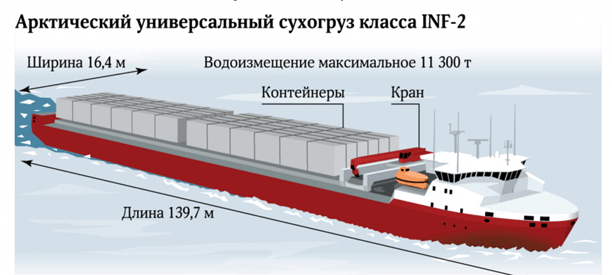
No easy fix for Russia’s troubled Arktica ice-breaker – delivery delayed for at least a year
|
Russia’s new Arktika nuclear icebreaker delayed for at least a year https://bellona.org/news/arctic/2020-04-russias-new-arktika-nuclear-icebreaker-delayed-for-at-least-a-yearA defective electric engine aboard Russia’s newest nuclear icebreaker has set off a cascade of difficulties that will postpone its scheduled May delivery date by at least several months, frustrating Moscow’s drive to tame Arctic sea routes as part of a broad economic plan. April 17, 2020 by Anna Kireeva, Charles Digges
A defective electric engine aboard Russia’s newest nuclear icebreaker has set off a cascade of difficulties that will postpone its scheduled May delivery date by at least several months, frustrating Moscow’s drive to tame Arctic sea routes as part of a broad economic plan. The problems aboard the Arktika icebreaker, slated to be the largest in the world, came to light in February, when a 300-ton electric propulsion motor on the vessel’s starboard side – which has nothing to do with the nuclear propulsion system – failed during sea trials. By this month, it has become clear to officials that there are no easy fixes are in sight, and that the delayed delivery of the enormous vessel from a St Petersburg shipyard to its stationing in Murmansk means a number of older nuclear powered will be forced to continue operations. “I don’t think we know all the details of this incident,” Andrei Zolotkov, a former nuclear icebreaker technician and the held of Bellona’s Murmansk offices, said. “The constant failure to meet the deadline to put new nuclear icebreakers into operation is already damaging to the builders’ reputations. The failure of the [electric motor] is another big minus.” The Artkika is the lead vessel of Russia’s LK60Ya nuclear icebreaker line, which Moscow sees as a central tool for developing the frozen Northern Sea Route, the Arctic shipping artery on which President Vladimir Putin has staked much of Russia’s economic future. Like its sister vessels – the Ural and the Sibir – the Arktika weighs in at a displacement of 33,500 tons, and measures 173 meters from bow to stern. The price tag of each new ship is about $550 billion. The Arktika’s twin RITM-200 reactors will deliver a combined 175 megawatts of power, making it the most powerful civilian vessel in the world. And like its sister vessels, the Arktika is named for an earlier nuclear icebreaker, in a nod to Soviet heyday of polar exploration. These newer vessels will be facing newer tasks. Putin has demanded that cargo tonnage flowing through the Arctic reach 80 million tons by 2024 – a huge increase over present levels – in hopes of making the Northern Sea Route a competitor to the Suez Canal. With these new vessels, Moscow say it can extend the annual navigation season in the polar region – which, even in the grip of climate change, is only about three months per year. But the Arktika’s delivery deadline to Atomflot, Russia’s nuclear icebreaker headquarters in Murmansk, has already undergone a series of revisions. The vessel has been on the drawing board since 2012, and was first due for commissioning in late 2017. When that date arrived, the deadline was pushed back to December 2019 – and that soon became May 2020. Such is the case for the Arktika’s sister vessels. Although the Baltic Shipyard in St Petersburg has floated their hulls, they have yet to be delivered to Murmansk and been at Atomflot. This leaves Moscow’s push to tame the Arctic running behind. To make up for the delays, Rosatom, Russia’s state nuclear corporation, has extended the operational lifetimes of three older icebreakers. As such, the Taymyr nuclear icebreaker, which began operations in 1987, will run until 2025. The Vaigach, launched in 1987, will run until 2027, and the Yamal, launched in 1989, will run through 2028. They will join the other old guard workhorse, the “50 let Pobedy,” or 50 years Victory, which Atomflot still has in operation. For the moment, prospects for the Arktika’s launch appear for this year. The faulty engine can’t be swapped with one from another icebreaker, and a new one can’t be built before 2021. That, said Zolotkov, might not stop the vessel from being delivered to Atomflot under so-called “trial operation” – a measure that allows various officials to claim at least some progress. But given the number of issues such a move would leave unresolved, Zolotkov discounted it as a possibility. “A vessel or ship should leave the shipyard in good order and ready for real work, and not imitate the fulfillment of plans and deadlines that have long been violated, ” Zolotkov said. |
|
Georgia’s Nuclear Plant Vogtle, workforce cut due to coronavirus, costs increase, and costs flow through communityflow
 Georgia Power cuts nearly 2,000 Vogtle workers as coronavirus spreads, AJC, Georgia Power is cutting nearly 2,000 workers from its multibillion-dollar nuclear expansion of Plant Vogtle as the new coronavirus continues to spread, absenteeism grows and more than 400 workers have self isolated. Georgia Power cuts nearly 2,000 Vogtle workers as coronavirus spreads, AJC, Georgia Power is cutting nearly 2,000 workers from its multibillion-dollar nuclear expansion of Plant Vogtle as the new coronavirus continues to spread, absenteeism grows and more than 400 workers have self isolated.
The 20% reduction in the project’s 9,000-person workforce was announced in a Thursday morning regulatory filing by Georgia Power’s parent, Atlanta-based Southern Company. The cuts are expected to last into the summer, according to Southern’s filing with the U.S. Securities and Exchange Commission. …….
The expansion, which the company said is the largest construction project in the state, is already years behind schedule and billions of dollars over budget as a result of numerous problems that began long before the pandemic. Staff and consultants with the Georgia Public Service Commission warned last year of continued challenges for the state’s largest utility to complete the project by its latest approved schedule.
Overruns and delay costs are likely to be passed along not only to Georgia Power customers but also to consumers, businesses, schools and others served by many utilities throughout the state that are contractually tied to the project……. https://www.ajc.com/news/state–regional/georgia-power-cuts-nearly-000-vogtle-workers-coronavirus-spreads/TDwlZkUTBP2e6KzMNbHLZO/
|
|
|
With the threat of Covid 9, nuclear test affected Pacific Islanders need Medicaid restored
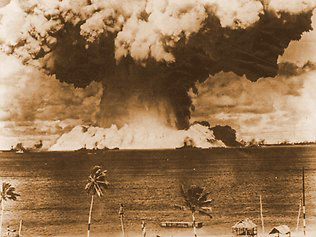 Lawmakers push to restore Medicaid for islanders affected by nuclear tests https://www.politico.com/news/2020/04/16/coronavirus-uninsured-pacific-islanders-190979
Islanders were given coverage after U.S. nuclear-weapons tests drove them from their homes, but lost it in the 1996 welfare reform. By DAN DIAMOND, 04/17/2020
Alarmed by the threat posed by the Covid-19 pandemic, lawmakers are urging congressional leaders to restore health coverage for tens of thousands of uninsured Pacific Islanders who were promised Medicaid after U.S. nuclear weapons testing but lost coverage in the 1996 welfare reform bill.
“We are in the middle of a national crisis that is unlike anything we’ve ever faced. Stopping the spread of the virus begins with ensuring that everyone has access to health care,” said Rep. Tony Cárdenas (D-Calif.), who’s leading the bipartisan effort with Sen. Mazie Hirono (D-Hawaii). “We have ignored this problem for too long, and it is time we fixed it.”
The United States promised that residents of the Marshall Islands, Palau and Micronesia would have access to Medicaid through a 1986 pact known as the Compact of Free Association, or COFA — about four decades after the U.S. conducted dozens of nuclear weapons tests in the Marshall Islands that have been linked to myriad cancers and other health problems. However, the 1996 U.S. Personal Responsibility and Work Opportunity Act stripped the islanders of their access to Medicaid, a decision described as a legislative oversight.
Cárdenas, Hirono and colleagues like GOP Reps. Steve Womack (R-Ark.) and Don Young (R-Alaska) urged congressional leaders on Wednesday to use the next coronavirus stimulus package to restore Medicaid for the 61,000-plus islanders who live in the United States.
“As the United States confronts the Covid-19 pandemic, it is vital that individuals in our communities can access testing and treatment so they can care for themselves and help prevent additional transmission of the virus,” the lawmakers wrote in a letter shared with POLITICO.
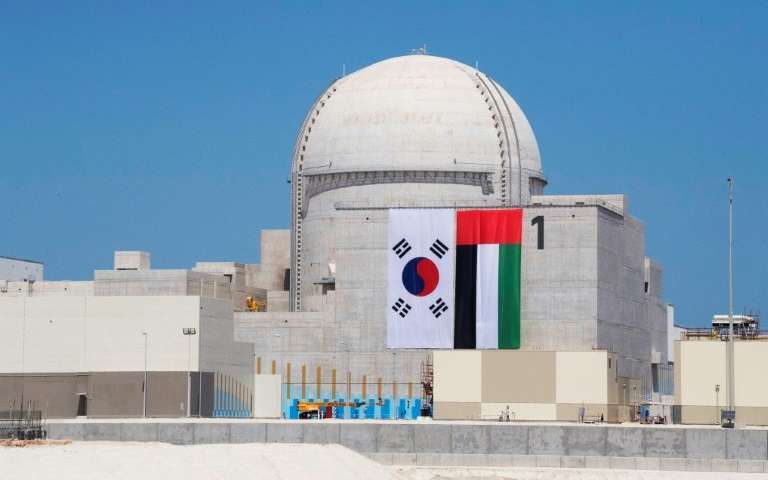
United Arab Emirates’ new ‘cheap and cheerful’ Barakah nuclear reactor adds to danger and Middle East tensions
|
The wrong reactor at the wrong time”: inside the UAE’s Barakah nuclear , Power Technology, JP Casey, 17 Apr 20,
The UAE has announced that the first reactor of its under-construction Barakah nuclear power plant is scheduled to come online within “a few months”. The country’s first nuclear plant could address a key energy need in the region, but questions remain as to its usefulness and safety in a geopolitically tense environment.
……. Located 53km from the city of Ruwais in Abu Dhabi’s Gharbiya region, construction on the $20bn project began in 2012, and is finally nearing completion. With four reactors, developed by the state-owned Emirates Nuclear Energy Corporation and the South Korea-based Korean Electric Power Corporation (KEPCO), the plant is expected to have an operating capacity of 5.6GW, which will account for one quarter of the country’s energy needs.
But behind these grand claims, the project has been dogged by controversy. From macro problems, such as the inherent dangers of building a nuclear reactor in a geopolitically tense region, to specific weaknesses with Barakah, such as the cracking of the cement used to build the facility itself, the project has no shortage of critics. With the UAE eager to continue with the project, its completion appears a matter of when, not if, opening up a series of lessons to learn ahead of new nuclear construction……
The plant is expected to produce 5.6GW of power once fully operational, with four reactors powered with APR-1400 technology, developed in South Korea, driving this production. This figure would make the plant the sixth-largest nuclear facility in the world by net production capacity, and its backers hope the project will help to kick-start an energy revolution in the Middle East. However, questions remain about the ultimate suitability of the plant, considering the risks inherent in nuclear and the potential for alternative sources of clean energy in the region. Dr Paul Dorfman, an honorary research associate at UCL and founder and chair of the Nuclear Consulting Group, an independent group of academics that aim to assess the risks and merits of nuclear projects, is sceptical about the suitability of Barakah for the UAE. So, given the fact – and it is a fact – that nuclear investment generates significant financial losses, one wonders if there are other reasons for Barakah,” he said. “Especially because nuclear energy seems to make limited economic sense for the Gulf States. As desert kingdoms, they have some of the best solar resources in the world, with solar having much, much lower investment and generation costs than nuclear.”
These solar resources are particularly significant considering the relative importance of renewable technology and nuclear power to the UAE’s 2050 climate goals. The nation aims to develop renewables as a primary source of power, and nuclear as a backup, a policy that could positively impact the solar industry, but hamstring the nuclear sector.
“Saudi recently tripled its renewable energy targets, and has successfully tended for large scale projects in wind and solar, with a Saudi-based consortium launching a world record low price of $17 per megawatt hour for a 900 megawatt solar park in Dubai itself,” said Dorfman. “So, worldwide and in the Gulf, the fate of new nuclear is linked to and determined by renewable energy technology rollout.” ……..
Dorfman is again concerned about these safety assurances, not only because of alleged mishaps at Barakah, but the generally lax approach to safety regulation across the nuclear sector.
“And what’s particularly worrying is the lack of a core catcher, which in the event of a failure of the emergency reactor core systems, would retain the nuclear fuel once it breached the reactor pressure vessel. On top of that, concrete cracking in all four reactor containment buildings hasn’t helped, nor has installation of faulty pilot-operated safety relief valves.”
 He also noted that KEPCO’s reputation has been somewhat tarnished by a series of scandals originating in 2013, where top safety officials were sentenced for falsifying safety documents for parts used in its nuclear reactors. 100 people were ultimately charged, as six of the country’s 23 operating nuclear reactors were shut down between late 2012 and late 2013, discrediting the reputation in which the UAE has placed such high stock to justify its safety moves at Barakah. He also noted that KEPCO’s reputation has been somewhat tarnished by a series of scandals originating in 2013, where top safety officials were sentenced for falsifying safety documents for parts used in its nuclear reactors. 100 people were ultimately charged, as six of the country’s 23 operating nuclear reactors were shut down between late 2012 and late 2013, discrediting the reputation in which the UAE has placed such high stock to justify its safety moves at Barakah.Finances may have played a key role in the involvement of KEPCO. The UAE awarded KEPCO a contract worth $20bn for the construction of the plant, a much lower bid than was made by other firms. In 2008, Synapse Energy predicted that new nuclear construction could cost up to $9bn for each 1.1GW plant; while this figure is not a specific measurement for all nuclear facilities, this prediction would place the expected cost of Barakah at around $45bn, more than double what KEPCO invested into the facility. “It’s a bit of a ‘cheap and cheerful’ reactor,” Dorfman added. Political damage The impact of these uncertain safety credentials could significantly discredit many of the world’s nuclear regulatory bodies, which have signed off on the Barakah plant despite these risks. Dorfman said that the plight of the facility highlights the “discretionary rather than mandatory” nature of nuclear regulation, where national governments are given exclusive responsibility to enforce operational and safety standards without the support of a strong international body. “The International Atomic Energy Association can attempt to control what’s happening, but it can’t necessarily say to anybody: ‘you will do this’ or ‘you will do that’, as we’ve found out to a cost in Iran, Pakistan, or Israel,” he said. The lack of a central global executive to take responsibility for safety, and the resulting burden on national governments, means nuclear power and nuclear safety are tied to national policy and local geopolitics in a way that is unlike any other energy source. Dorfman pointed to the example of the Houthi insurgency in Yemen, which saw rebel groups overthrow the Yemeni president Abd-Rabbu Mansour Hadi, who was allied with the Gulf states, in 2015. Two years later, the rebels claimed to have fired rockets at Barakah as a warning to the UAE against future involvement in Yemeni affairs, with the prospect of military strikes launched at a nuclear facility an obvious political, and potentially humanitarian, emergency.
“Following a very recent military strike against Saudi oil refineries, and all that implies, nuclear safety in the region increasingly revolves around the broader issue of security,” Dorfman continued, highlighting the pressure on the UAE government to ensure the security of the Barakah plant. “Tense Gulf strategic geopolitics makes new civil nuclear construction more controversial there than elsewhere,” said Dorfman, summarising many of the threats to local people and regional stability posed by the plant, which remain unresolved. “Once Barakah begins full-scale generation there will be a major maritime risk, whether directly intended or unintentional. “It’s the wrong reactor in the wrong place at the wrong time.” https://www.power-technology.com/features/the-wrong-reactor-at-the-wrong-time-inside-the-uaes-barakah-nuclear-plant/ |
|

Increased tensions between USA and China, as U.S. accuses China of secret nuclear tests
Times 17th April 2020, Relations between China and the United States have plunged to a new low
after the release of a report that suggests Beijing may have conducted
secret nuclear tests, in contravention of arms treaties. Compiled by the US
state department, it says that extensive excavations have been carried out
in the desert of Lop Nur, northwest China, along with the construction of
“explosive containment” chambers. The work coincided with the blocking
of transmissions from sites that monitor levels of radiation and seismic
activity, it added.
Daily Mail 16th April 2020, China accuses the U.S. of ‘confounding black and white’ with a ‘fabricated’
report after State Department warned Beijing might be conducting small
nuclear bomb tests.
https://www.dailymail.co.uk/news/article-8224941/China-accuses-U-S-confounding-black-white-fabricated-nuclear-test-claims.html
Heavy winds fan new fires breaking out in Chernobyl exclusion zone
— New wildfires spread around Chernobyl nuclear plant, New Europe, By Elena Pavlovska, 17 Apr 20,
The state emergency service said three new fires had broken out, but were “not large-scale and not threatening”…..
The [previous] fire sparked concerns that clouds of radioactive smoke could be released and blow south towards Kyiv, after an activist posted a video online showing a cloud of smoke rising within sight of the protective dome over Chernobyl’s Unit 4 nuclear reactor. https://www.neweurope.eu/article/new-wildfires-spread-around-chernobyl-nuclear-plant/
Covid 19 outbreak causes EDF to extend outages of nuclear reactors for several months
 EDF extends nuclear reactor outages as virus outbreak hit maintenance plans PARIS (Reuters) 17 Apr 20, – French utility EDF on Thursday extended outages at three nuclear reactors including the Flamanville 1 and 2 facilities by several months as it adjusts its maintenance schedule due to the coronavirus outbreak.
The utility said earlier on Thursday that it expected a sharp drop in its domestic nuclear power output to a record low in 2020 as a result of the fall in business activity caused by the coronavirus.
EDF extended the outages at the 1,300 megawatt each Flamanville 1 and 2 reactors in the north of France by five months until the end of October.
It had already reduced staffing at the nuclear power plant to around 100 from 800 because of a cluster of coronavirus outbreaks in the area.
The reactors have been offline since September and January 2019 respectively for maintenance and had been scheduled to resume production at the end of May.
The company said that the outages could be extended due to complex maintenance activities.
It extended the production shutdown at its 1,300 MW Paluel 2 reactor by four months until Dec. 31, saying the “duration of the outage maybe be longer due to technical issues requiring the implementation of a new and complex process”.
The Paluel 2 reactor was halted in October for refuelling and maintenance and had been expected to resume on at the end of August.
Reporting by Bate Felix; Editing by Jan Harvey AT TOP https://www.reuters.com/article/us-france-nuclearpower/edf-extends-nuclear-reactor-outages-as-virus-outbreak-hit-maintenance-plans-idUSKCN21Y28P
Opening the lid on Russia’s super-secretive nuclear industry

“Our country will receive waste from foreign nuclear power plants built by Rosatom from time to time” https://realnoevremya.com/articles/4406-vladimir-slivyak-on-import-of-radioactive-waste-to-russia By  Matvey Antropov, 14.04.2020
Environmentalist Vladimir Slivyak on the industry that “always kept its affairs secret”
On March 19 and April 6 of this year, German eco-activists protested against the export of new shipments of radioactive waste to Russia, “cynically undertaken in the midst of the pandemic to safely avoid protests.” Realnoe Vremya spoke with Vladimir Slivyak, co-chairman of the Russian environmental group Ecozaschita!, author of the book From Hiroshima to Fukushima, about how nuclear waste is imported to Russia, how open information is about Rosatom’s activities, and whether a nuclear power plant will be built in Tatarstan.
“We will know that certain wastes are imported to Russia after their transportation or arrival”
Vladimir, let’s first determine what is considered to be radioactive waste.
There are different points of view on this issue. There is a view of the nuclear industry, which is the position of the state, and there is a view of environmentalists, which, of course, is fundamentally different. The first is that if you plan to use radioactive waste (RW) further, then they are not considered waste. Environmentalists believe that any action with radioactive materials leaves waste (by-products). This can be work at nuclear power plants, in places where uranium is extracted and enriched — there are a lot of such places. In general, the discussion about what is considered waste in Russia has been going on for many years.
It should also be noted that when it comes to importing nuclear waste to Russia, it is most often waste from uranium enrichment — depleted uranium hexafluoride UF6 or spent fuel from nuclear power plants.
How many tonnes of radioactive waste are imported to Russia and who is their main exporter?
There is a contract, under which from 2019 to 2022, 12,000 tonnes of depleted uranium hexafluoride should be imported to our country from the plant in Gronau (North Rhine —Westphalia), owned by Urenco. Approximately 6,000 tonnes have already been imported. Of course, we don’t know about all the contracts. From 2016 to at least 2019, Russia received depleted uranium hexafluoride from the British plant in Capenhurst of the same company Urenco. It is unknown exactly how much it was imported.
The nuclear industry has always kept its business secret and still does. All the words that they want to be open and engage with the public are conversations in favour of the poor. Of course, all the information in Rosatom is classified. We will know that certain wastes are imported to Russia after their transportation or arrival to Russia. We have colleagues abroad who monitor the movement of nuclear waste. So we will only find out about this through our own channels of civil cooperation of activists. Reports from representatives of the nuclear industry are very rare in the media, so it is quite difficult for us to navigate. But the data on the movement of uranium hexafluoride from the plant in Gronau are accurate — they were obtained by a member of the Bundestag from the official response of the German government.
It should also be noted that Rosatom builds nuclear power plants in different countries of the world. Last year, we conducted the first independent study in Russia to find out where Rosatom operates, where nuclear power plants are actually being built, and where only the appearance of construction is being created. We have a corresponding report on our website. Usually, the priority option when signing an agreement on the construction of a nuclear power plant involves the return of spent nuclear fuel to Russia, of course, for a lot of money. In other words, our country will receive waste from foreign nuclear power plants built by Rosatom from time to time. Ecologists consider them to be one of the most dangerous among the nuclear waste.
“They say that this is not waste but valuable raw materials. At the same time, a million tonnes of ‘raw materials’ lie idle for decades”
As far as I know, the import of nuclear waste in Russia was not always allowed, right?
Yes, in the ’90s, spent nuclear fuel from nuclear power plants could not be transported. And then it was considered waste. There was also a complete ban on the import of other raw materials. The nuclear industry (then ministry of atomic energy) came out of the situation in the following way: referring to long-concluded agreements that need to be fulfilled, the ministry for atomic energy asked to make an exception for them. And the government agreed with these arguments.
And in 2001, a bill was passed allowing the import of spent fuel from foreign nuclear power plants and removing it from the category of waste (because it can be used further). Although the essence of the question on this topic is as follows: during the production of electricity at nuclear power plants, nuclear waste occurs. Whether you use them in the future or not -it’s still waste. Besides, not all spent fuel is used in any way in industry.
Our legislation has done everything for Rosatom’s comfortable operation. If the latter has indicated somewhere that it plans to use the waste in some way in the future, this means that it ceases to be radioactive waste. But this is absurd.
Rosatom is committed to disposing of all depleted uranium hexafluoride available in Russia by 2080. Here is a quote on this topic from Novaya Gazeta: “But against the background of the international outcry, Rosatom announced the launch of a programme for the management of DUHF, in which uranium “tails” are called raw materials for nuclear power of the future, a source of hydrogen fluoride and fluorine. One of the goals of the programme is the complete elimination of DUHF reserves at all Russian landfills by 2080. “Our activities can be designated with the Recycling sign,” said the acting CEO of Techsnabexport (Rosatom’s subsidiary) Yury Ulyanin.”
Does anyone believe that Rosatom will be able to recycle millions of tonnes of UF6 by 2080? In Russia, any documents that speak of such a distant time are perceived as absurd. At the moment, more than one million tonnes of depleted uranium hexafluoride are stored at enterprises and in places where radioactive waste is stored in Russia. A very small part has been converted to a different form that is more convenient for storage, but this is not even disposal or recycling.
Now, when the issue of importing UF6 from Germany has been raised, Rosatom insists that it is not waste but insanely valuable and necessary raw materials. But at the same time, they have a million tonnes of this raw material without any use for decades
“We were brought and showed absolutely nothing”
Under what conditions are nuclear waste stored? How safe is it?
For example, waste from Germany is being transported to a landfill in the closed city of Novouralsk in Sverdlovsk Oblast. No one is allowed in this city to see what kind of radioactive waste is stored there. There are satellite photos that show that the containers are under the open sky. In some photos in Google Maps or Google Earth, one can see that some containers are subject to corrosion.
This information is also available from government agencies, but it is from the second half of the 2000s. Since then, publication of information on nuclear waste had been restricted. In the 2000s, Rostekhnadzor made reports on dangerous types of industry in Russia, in which the risks were described in detail. It said that a significant number of containers are subject to corrosion and there is a threat of their depressurization.
Now Rosatom says that everything is fine, take our word for it. Word — because an ordinary person can not get to the places where any radioactive waste is transported. For the most part, these are closed cities with access control. Even if someone is allowed on them as an exception, they only show a small piece of territory. You can’t freely study containers, you don’t decide what they show you.
I had a single experience of visiting a closed city in the 2000s. Then there was a fire at one of the enterprises of the uranium industry in the city of Lesnoy, Sverdlovsk Oblast. We distributed information about the fire through our channels, and a representative of Rosatom told us something like this: “Let’s take you to that company, and you will see for yourself that the information about the fire is not true.” My colleague and I were brought and showed absolutely nothing. We were taken to the house of culture, where the employees of this enterprise were sitting, and they began to express something to us. We asked: “Will you show us anything?” They told us they wouldn’t show us anything, and sent us back.
Apart from satellite images, there is no other open information on radioactive waste in closed cities.
Where and how are other types of radioactive waste stored in Russia? Are there any radiation leak?
If we take spent nuclear fuel from a nuclear power plant, then after removing it from the reactor, it is stored in pools, where it lies in the water for several years and cools down. Spent fuel can be stored dry for a long time in containers on special sites.
By default, we should assume that in theory, radiation leakage is always possible, and therefore we need to achieve the most reliable barrier between RW and the environment. Once radiation enters the environment, you can no longer control it. The rain or wind blows, and the radioactive trace spreads further and further. The only chance to contain radiation is to organize very well the places where radioactive substances are stored.
A person cannot imagine all the combinations of extreme circumstances that can lead to the depressurization of a container with radioactive substances or to the destruction of a storage facility. Accidents happen because people can’t calculate everything. Each accident is an example of some new combination of circumstances that we could not have predicted.
The nuclear industry remains the most classified in Russia. They try never to talk about any problems or accidents, and this is contrary to the interests of public safety. From the latest news, we can recall how last year the media reported about a suspected radiation leak in Novouralsk. We haven’t really found out what happened there.
Impacts of coronavirus on the technical, financial and legal mess that is the Vogtle nuclear project in Georgia, USA
 Work continues on Georgia nuclear reactors as coronavirus hits, The Bond Buyer, By Shelly Sigo Work continues on Georgia nuclear reactors as coronavirus hits, The Bond Buyer, By Shelly Sigo
April 15, 2020, Construction continues on new nuclear reactors in Georgia as COVID-19 impacts workers, and as a Florida city tries in court to vacate its contract with a public power agency that has a stake in the nuclear project.
Georgia Power Co., the investor owned utility heading up construction, reports that 35 employees have tested positive for the novel coronavirus that causes COVID-19, which has killed more than 26,000 people in the United States since late February. More than 9,000 workers are on site at Plant Vogtle in Waynesboro, Georgia, about 25 miles from Augusta. GPC owns 45.7% of the reactor project, while three public power agencies have a majority stake and combined ownership of 54.3%. …… The Georgia Department of Health reported 14,987 positive cases of the virus, 552 deaths, and 2,922 hospitalizations across the state Wednesday….. The impacts from the virus “could disrupt or delay construction, testing, supervisory and support activities at Plant Vogtle Units 3 and 4,” the notice said. “It is too early to determine what impact, if any, the COVID-19 outbreak will have on the current construction schedule or budget for Plant Vogtle Units 3 and 4,” the notice concluded. With the onslaught of the coronavirus pandemic, S&P Global Ratings revised the North America regulated utility industry outlook to negative from stable on April 2. Southern’s A-minus long-term rating was placed on creditwatch negative, though it already had a negative outlook due to the Vogtle project’s construction and financial risks….. While GPC is overseeing construction and owns a minority stake in the nearly $30 billion project, three public power agencies hold a majority interest. Those are Oglethorpe Power Corp. with 30%, Municipal Electric Authority of Georgia (or MEAG Power) with 22.7% and Dalton Utilities with 1.6% of the ownership. MEAG remains locked in a federal lawsuit with the city of Jacksonville, Florida, and its utility, JEA. JEA has a 20-year, take-or-pay power purchase agreement to pay debt service on a portion of bonds MEAG issued to finance part of its stake in the Vogtle project. Under the agreement, JEA is paying 41% of MEAG’s cost to finance the new reactors, and will also receive power from the units when completed. In a limited public offering memorandum last year, MEAG said the capital requirements for JEA’s PPA were estimated at about $2.9 billion, most of which were financed with $2.004 billion of long-term Project J bonds and $575.7 million of U.S Department of Energy loan guarantees. As project costs rose, JEA and MEAG sued each other in September 2018 over the PPA, with JEA and Jacksonville contending that the agreement was improperly approved and should be vacated. The legal challenge landed in the Atlanta Division of the United States District Court Northern District of Georgia. In December, MEAG filed a motion for a declaratory judgment in an attempt to enforce the PPA. JEA opposed MEAG’s motion and filed its own for a declaratory judgment stating, in part, that neither JEA nor the city can be bound by Georgia’s bond validation proceedings…….. In other arguments in the case, JEA and Jacksonville have cited increased costs from the delayed nuclear reactors, most of which occurred when the first primary contractor, Westinghouse, filed for bankruptcy. After that, GPC and the public utilities sharing costs in the project voted to continue construction. JEA said it complained about what it considers a subsequent “new uncapped cost-plus construction contract.”…… https://www.bondbuyer.com/news/work-continues-on-georgia-nuclear-reactors-as-coronavirus-hits |
|
|
-
Archives
- February 2026 (228)
- January 2026 (308)
- December 2025 (358)
- November 2025 (359)
- October 2025 (376)
- September 2025 (258)
- August 2025 (319)
- July 2025 (230)
- June 2025 (348)
- May 2025 (261)
- April 2025 (305)
- March 2025 (319)
-
Categories
- 1
- 1 NUCLEAR ISSUES
- business and costs
- climate change
- culture and arts
- ENERGY
- environment
- health
- history
- indigenous issues
- Legal
- marketing of nuclear
- media
- opposition to nuclear
- PERSONAL STORIES
- politics
- politics international
- Religion and ethics
- safety
- secrets,lies and civil liberties
- spinbuster
- technology
- Uranium
- wastes
- weapons and war
- Women
- 2 WORLD
- ACTION
- AFRICA
- Atrocities
- AUSTRALIA
- Christina's notes
- Christina's themes
- culture and arts
- Events
- Fuk 2022
- Fuk 2023
- Fukushima 2017
- Fukushima 2018
- fukushima 2019
- Fukushima 2020
- Fukushima 2021
- general
- global warming
- Humour (God we need it)
- Nuclear
- RARE EARTHS
- Reference
- resources – print
- Resources -audiovicual
- Weekly Newsletter
- World
- World Nuclear
- YouTube
-
RSS
Entries RSS
Comments RSS
 nuclear-news