With international finance help, Russia is dismantling its most radioactive ship
|
Russia’s most radioactive ship reaches dismantlement milestone The Lepse service ship, once the most glaring nuclear hazard in the Murmansk harbor, will now be emptied of nearly all of its radioactive cargo by the end of this year, Russian nuclear authorities have said. Bellona April 29, 2020 by Anna Kireeva, Charles DiggesThe Lepse service ship, once the most glaring nuclear hazard in the Murmansk harbor, will now be emptied of nearly all of its radioactive cargo by the end of this year, Russian nuclear authorities have said.
During its career as a refueling vessel for Soviet era nuclear icebreakers, the Lepse amassed 639 spent nuclear fuel assemblies, some of them damaged, creating an environmental danger that bobbed neglected at a Murmansk dock for decades. After it was taken out of service in 1988, the Lepse was left to languish at Atomflot, the headquarters of Russia’s nuclear icebreaker fleet, where it posed a severe radioactive hazard to Murmansk and its 300,000 residents. Over the course of more than two decades, Bellona worked with Russian officials ensure the vessel’s safe disposal. Now those plans are coming to fruition as officials say 97 percent of the nuclear fuel loaded into the Lepse’s holds will be emptied at the Nerpa Shipyard, to where the vessels was finally moved in 2012 for its painstaking dismantling…… All told, the Lepse participated in 14 refueling operations aboard the Lenin as well as the nuclear icebreakers the Sibir and the Arktika. In 1981, the vessel was again retrofitted, this time to so it could accommodate irradiated machine parts and other radioactive waste the nuclear icebreakers needed to offload. The Lepse’s history took a darker when it was used to help dump radioactive waste in the Kara and Barents Seas, contributing to Russia’s Cold War heritage of f nuclear and radiological hazards strewn across the Arctic sea floor, the extent of which is only beginning to be understood. It was in the early 1990s that the Lepse and the dangers it posed caught Bellona’s eye, and the organization mobilized the European Union to allocate funding toward removing it from Murmansk harbor and safely dismantling it. The boat was finally towed from Atomflot to the Nerpa naval shipyard in September 2012, after more than a decade of strenuous and often tedious negotiations among Bellona, the Russian government and European financial institutions – most notably the European Bank of Reconstruction and Development – to ensure the Lepse’s safe disposal. The EBRD-managed program is financed by the NDEP Nuclear Window, an international fund with contributions from Belgium, Canada, Denmark, the European Union, Finland, France, Germany, the Netherlands, Norway and the UK. The bank is also helping finance the safe removal of some 22,000 spent nuclear fuel assemblies from Andreyeva Bay, a former technical base used to service Soviet Northern Fleet Submarines. https://bellona.org/news/nuclear-issues/2020-04-russias-most-radioactive-ship-reaches-dismantlement-milestone |
|
|
No comments yet.
1 This Month
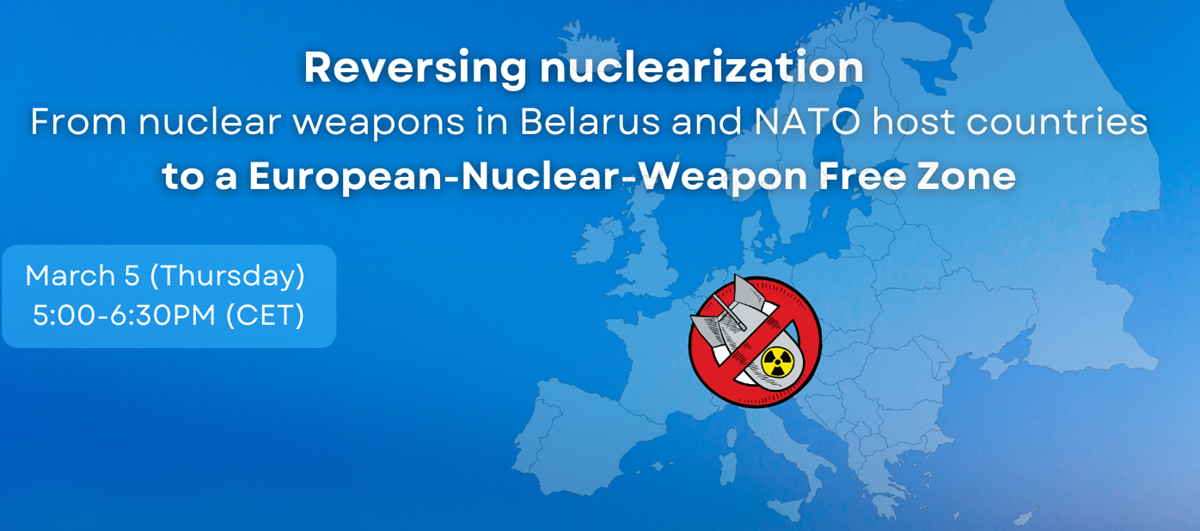
5 March -Online – Reversing nuclearization:
From nuclear weapons in Belarus and NATO host countries to a European-Nuclear-Weapon Free Zone
11am-12:30pm Eastern Time USA / 5pm-6:30pm CET

of the week – Advocating for a
nuclear free beach – https://www.samuellawrencefoundation.org/
The Samuel Lawrence Foundation advocates for a Nuclear Waste Free Beach at San Onofre, join us and take action!

10 March A LIVE WEBINAR THE REAL EFFECTS OF NUCLEAR POWER
What the Industry Isn’t Telling Us
1:00 PM Mountain, 2 pm Central, 3 pm Eastern. Live on the Keepers of the Water Facebook page

18 March Webinar @ 1 PM EST: An Assessment of SMR Projects: The Case of Canada
register for the zoom:
https://us02web.zoom.us/webinar/register/WN_o8BIIOUvQ2ONJR1nta65DQ#/registration

of the week – STOP SMALL MODULAR REACTORS IN CANADA
To see nuclear-related stories in greater depth and intensity – go to https://nuclearinformation.wordpress.com
-
Archives
- March 2026 (51)
- February 2026 (268)
- January 2026 (308)
- December 2025 (358)
- November 2025 (359)
- October 2025 (376)
- September 2025 (258)
- August 2025 (319)
- July 2025 (230)
- June 2025 (348)
- May 2025 (261)
- April 2025 (305)
-
Categories
- 1
- 1 NUCLEAR ISSUES
- business and costs
- climate change
- culture and arts
- ENERGY
- environment
- health
- history
- indigenous issues
- Legal
- marketing of nuclear
- media
- opposition to nuclear
- PERSONAL STORIES
- politics
- politics international
- Religion and ethics
- safety
- secrets,lies and civil liberties
- spinbuster
- technology
- Uranium
- wastes
- weapons and war
- Women
- 2 WORLD
- ACTION
- AFRICA
- Atrocities
- AUSTRALIA
- Christina's notes
- Christina's themes
- culture and arts
- Events
- Fuk 2022
- Fuk 2023
- Fukushima 2017
- Fukushima 2018
- fukushima 2019
- Fukushima 2020
- Fukushima 2021
- general
- global warming
- Humour (God we need it)
- Nuclear
- RARE EARTHS
- Reference
- resources – print
- Resources -audiovicual
- Weekly Newsletter
- World
- World Nuclear
- YouTube
-
RSS
Entries RSS
Comments RSS
 nuclear-news
Leave a comment