The past week in climate and nuclear news
Everything’s quieter, as we all batten down the hatches, and wait for that Covid 19 curve to flatten ….
The planet needs a green recovery. But are governments up for this? https://www.youtube.com/watch?v=Y1e7zXAGMKQ
Some bits of good news – Optimistic COVID Updates – Himalayan Mountaintops Visible for the First Time in 30 Years as Air Pollution Continues to Plummet in India.
2020 predicted to be Earth’s warmest year on record. Climate Change Multiplies the Threats of Infectious Diseases. To tackle the climate crisis, the world cannot return to normal after Covid-19. Changes for a low carbon economy are possible: we must advocate for this.
Artificial Intelligence in nuclear weapons and military systems.
UKRAINE. Smoke from Chernobyl area wildfires made Ukraine’s capital have the worst air pollution in the world. With dry and windy conditions, new areas of ‘smoldering’ reported near Chernobyl nuclear plant. Heavy winds fan new fires breaking out in Chernobyl exclusion zone. Criirad final report on Chernobyl Fires – Recommendations and findings. Abandoned Chernobyl nuclear plant is threatened by approaching wildfires.
USA.
- Coronavirus doubters follow climate denial playbook . Georgia’s Nuclear Plant Vogtle, workforce cut due to coronavirus, costs increase, and costs flow through community. Impacts of coronavirus on the technical, financial and legal mess that is the Vogtle nuclear project in Georgia, USA. Will nuclear refuelling workers at Limerick nuclear station spread Coronavirus to each other, and to the wider community? Coronavirus cases at Hanford nuclear waste site and at Nuclear Fuel Services. Multiple COVID 19 cases confirmed among Nuclear Fuel Services employees in Erwin.
- Outcry as uranium industry exploits Covid 19 to call for financial bailout.
- Increased tensions between USA and China, as U.S. accuses China of secret nuclear tests. President Trump ‘talked about nuclear weapons’ with Vladimir Putin in a call to the Kremlin over the weekend as START Treaty’s expiration looms.
- A warning to Idaho residents on the danger of Hanford’s nuclear wastes. America’s eternal nuclear waste problem.
- COVID-19 Lessons from Three Mile Island #2 — the NRC . Pennsylvania Department of Environmental Protection wants delay to license for moving radioactive Nuclear reactor 2 at Three Mile Island.
- Global heating dries up vast areas of the American West, could bring long-lasting megadroughts. Climate change will bring regular major floods to USA – no longer “once in a lifetime” floods.
UK. UK’s plutonium problem as it shuts down its last nuclear reprocessing facility. Environmental rules governing radioactive waste, fish farming, recycling and other sectors are being weakened due to Covid 19. For UK’s new Labour leader, climate action and Green New Deal will be key goals
FRANCE. Covid 19 outbreak causes EDF to extend outages of nuclear reactors for several months. EDF cutting back on its nuclear energy goals.
RUSSIA. Opening the lid on Russia’s super-secretive nuclear industry. No easy fix for Russia’s troubled Arktica ice-breaker – delivery delayed for at least a year.
BELARUS. Belarus to get a new nuclear reactor along with $10 billion debt to Russia.
PACIFIC ISLANDS. With the threat of Covid 9, nuclear test affected Pacific Islanders need Medicaid restored.
UNITED ARAB EMIRATES. United Arab Emirates’ new ‘cheap and cheerful’ Barakah nuclear reactor adds to danger and Middle East tensions.
SAUDI ARABIA. Saudi Arabia’s nuclear reactor will eventually lead to a Saudi nuclear weapon, and to its use.
AUSTRALIA. Australian Radiation Protection and Nuclear Safety Agency (ARPANSA) is critical of Government propaganda on Kimba nuclear waste dump plan. Parliamentary committee finds that Kimba nuclear waste dump law may breach Indigenous human rights. 1
A warning to Idaho residents on the danger of Hanford’s nuclear wastes

A study released by the National Cancer Institute in 1997 showed that 25 states had citizens exposed to high levels of radiation due to nuclear testing.
“When there is an earthquake in that area, the radiation fallout will be equal to Chernobyl,” Brodesser said in her lecture. “When, not if.”
They know what they’ve done’: America’s nuclear past threatens Idaho’s future https://www.idahopress.com/news/local/they-know-what-theyve-done-americas-nuclear-past-threatens-idahos-future/article_a02826ba-b62f-5964-9b08-09dbe300d596.html, By ASHLEY MILLER amiller@idahopress.com MERIDIAN — In a time before social distancing, the lecture hall of the Idaho College of Osteopathic Medicine was packed. Students, staff, politicians and community members sat intermixed in the seats, elbow to elbow.
But Kaaren Brodesser stood alone.
Before she started her lecture on March 10, she was introduced simply as an advocate. More than that, she is a witness, part of a small group of people fighting for the rights of Idahoans whose lives changed on July 16, 1945, when the U.S. conducted the first-ever nuclear test, setting off a series of events the world is still struggling to fully understand.
These are downwinders, and they are dying.
‘THEY KNOW WHAT THEY’VE DONE’
In the 1950s and ’60s, the bulk of America’s nuclear testing was done in a 680-square-mile piece of desert about 65 miles outside of Las Vegas. The Nevada Test Site was ground zero for America’s Cold War preparations, testing the effects and power of the nuclear bombs designed by the military. From 1951 to 1958, around 100 aboveground nuclear tests were conducted on the site. The site was chosen for its relative isolation from any densely populated cities; however, in the end, distance was not the solution it first seemed.
The term “downwinders” refers to anyone who lived in communities exposed to nuclear radiation during the end of World War II and the peak of the Cold War (roughly the late 1940s to 1980). During the construction and testing of nuclear weapons, wind patterns directed the fallout far beyond the safety perimeters of the sites, spreading radiation hundreds and even thousands of miles away.
In the book “Atomic Farmgirl,” author Teri Hein details her life growing up downwind of Hanford, Washington, where the bulk of America’s plutonium was produced for many decades. She explains the fallout like this: When Mount Saint Helens erupted in 1980, ash drifted far past the state lines of Washington. The wind carried and then settled the debris into neighboring states. Nuclear radiation fallout can be thought of in the same way. The testing locations in Nevada and the production plants in Hanford are the eruption. The radiation then drifted into Idaho, Montana, Wyoming and beyond.
The radiation was in the air and, more importantly, in the crops and livestock of these communities. According to the National Cancer Institute, a significant portion of the Intermountain West was exposed to high doses of radiation from the tests, specifically the radioisotope Iodine-131. Iodine-131 is processed in the thyroid, the gland in your neck that regulates hormones. This is why children seemed to be the hardest hit from the fallout: their thyroid is still developing and isn’t strong enough to process the high dosage of Iodine.
NCI’s list of medical issues tied to downwinders is long, ranging from multiple sclerosis to various forms of cancer that slowly eat away at your life. That’s something that Emmett resident Tona Henderson knows only too much about. Continue reading
UK’s plutonium problem as it shuts down its last nuclear reprocessing facility

burial. https://thebulletin.org/2020/04/britain-has-139-tons-of-plutonium-thats-a-real-problem/
Climate Change Multiplies the Threats of Infectious Diseases
 Climate Change Multiplies the Threats of Infectious Diseases, BY Daniel Ross, Truthout,
  April 19, 2020
As the novel coronavirus continues to rage like a wildfire across the planet, its devastating toll has left many asking whether climate change — another multifaceted phenomenon with global reach — has played a part in spreading, even triggering, the pandemic. Some, like Katharine Hayhoe, a climate change scientist and professor of public policy at Texas Tech University, have been able to provide answers.
“Climate change didn’t cause the pandemic, and climate change directly causes very few of them,” Hayhoe told Truthout. “But what climate change does is it interacts with, and in many cases has the potential to exacerbate the impacts.”
For those well-versed in the mechanics of climate change, this comes as no surprise — scientists, policy makers and other experts have long acknowledged the links between global warming and the spread of infectious diseases, promulgating the sorts of findings described in the wide-ranging 2018 Intergovernmental Panel on Climate Change report, detailing what efforts are needed to limit global warming to 1.5 degrees Celsius.
Dig down, and this multilayered issue has knock-on effects — from the way rising temperatures exacerbate certain health problems to the disruptions that extreme weather events have on the global supply chain — that are inextricably linked with one another. What’s more, the governmental response to the coronavirus crisis, say experts, offers a troubling glimpse into what might happen in the future as the global thermometer inches upwards.
“What it underscores in the first instance is how underprepared we are,” said Sherri Goodman, a senior fellow at the Wilson Center’s Environmental Change and Security Program and Polar Institute.
As a former first deputy undersecretary of defense in environmental security, she coined the term “threat multiplier” to describe climate change’s kaleidoscopic impacts.
“Our systems — institutional, infrastructure, health, emergency response — could all be overwhelmed from the climate crisis,” Goodman said, warning that the time for wholesale climate resiliency preparedness is upon us. “What we have now is history accelerating itself — things are happening so fast.”
“Where Can These People Go?”
Perhaps most salient in terms of current events is the issue of zoonotic diseases spread between animals and humans, like the COVID-19 virus, which is believed to have originated in bats before being transferred to humans via scaly animals like pangolins. As the world’s population growth continues to rise, natural habitats will continue to be encroached upon and destroyed, not only removing valuable carbon sinks like rainforests but creating environments in which notorious zoonotic disease carriers like bats and rats thrive.
Climate change is also likely to encourage the spread — both in terms of seasonal risk and geographic reach — of “vector-borne” diseases. These are illnesses like West Nile Virus and Lyme Disease that are borne by mosquitoes, ticks and fleas, and already account for a significant number of deaths annually.
According to Sheri Weiser, a professor of medicine at the University of California, San Francisco (UCSF), there’s still much to learn about how rising temperatures are impacting the spread of infectious diseases. “But we know the common cause of climate change and COVID-19 — the globalization that’s driving fossil fuel emissions — contributes to the pre-conditions that pave the way for viruses like that,” Weiser said.
Indeed, there’s already an extensive library of medical literature detailing how climate change can impact human health. Extreme weather events — a symptom of a warming planet — can lead to fluctuating temperatures which have been shown to contribute to and worsen cardiovascular and cerebrovascular diseases, kidney disorders and a host of other illnesses. On top of that, extreme heat and humidity can limit the effectiveness of certain medications used to treat these conditions………
the Trump administration’s slash-and-burn approach to the scientific wing of the federal government is the elephant in the room during the COVID-19 pandemic.
Last September, for example, the U.S. Agency for International Development (USAID) effectively shuttered its PREDICT program, which was charged with identifying and combating new emerging viruses. With the COVID-19 death toll in the U.S. now well into five figures, USAID has injected more than $2 million to kickstart the program, at least temporarily. The Environmental Data and Governance Initiative recently found that the Trump administration has repeatedly, “and sometimes successfully,” sought to cut funding aimed at the Centers for Disease Control and Prevention for fighting global pandemics. Nevertheless, the Trump administration isn’t alone in neglecting science and research; for nearly two decades now, the amount of federal funds funneled toward basic research has shrunk markedly……. https://truthout.org/articles/climate-change-multiplies-the-threats-of-infectious-diseases/?eType=EmailBlastContent&eId=71649a96-ad00-4169-afc2-bb1b572e3345
COVID-19 Lessons from Three Mile Island #2 — the NRC
I happen to think it is worse for a government in crisis to fake it than to admit they aren’t sure of the correct problem, much less the correct answer. To say that COVID-19 is “no worse than the flu” or that “it will disappear in a few weeks” when you don’t really know what you are talking about is dangerous. It costs lives.
No executive ego is worth loss of life.
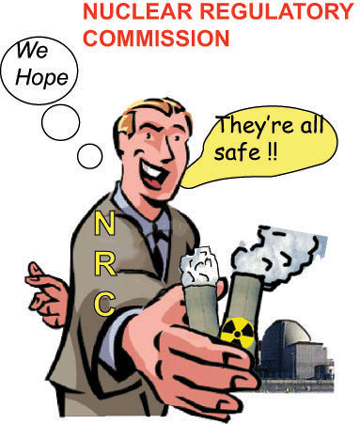 COVID-19 Lessons from Three Mile Island #2 — the NRC https://www.cringely.com/2020/04/17/covid-19-lessons-from-three-mile-island-2-the-nrc/?fbclid=IwAR3GJkbLC9UyA344IclZfHkFACO4fdj9Oxd0nxfUZ3M8xJ9UC5_VmS-T124 By Robert X. Cringely April 17th, 2020 My last column was about crisis management lessons I learned back in 1979 while investigating the Federal Emergency Management Agency for the President’s Commission on the Accident at Three Mile Island (TMI). Let’s just say that FEMA wasn’t ready for a nuclear meltdown. Today we turn to the other federal agency I investigated at that same time — the Nuclear Regulatory Commission (NRC). While FEMA was simply unprepared and incompetent, the NRC was unprepared and lied about it.
Like FEMA, the NRC had recently undergone a rebranding from its previous identity as the Atomic Energy Commission — a schizoid agency that had been charged with both regulating nuclear power and promoting it. It’s difficult to be the major booster of technology while at the same time making safety rules for it. Think of the Trump Administration’s approach to coal as an example of such a paradox.
When the NRC was created to regulate nuclear power, that PR function was sent over to the U.S. Department of Energy. So all the NRC had to do at Three Mile Island was to make sure the utility was following the rules and to help them keep the public safe. Not much of either actually happened during the accident, mainly because nobody really had any idea of the actual state of the reactor. This suggests that maybe a bit more regulation should have been done during the reactor design phase.
Since almost nobody but me remembers any of this let’s get out of the way the two most important lessons of Three Mile Island. The first lesson explains why the accident was so bad while the second explains why nobody died.
The primary technical failing of TMI came down to a poor operator training combined with a major user interface glitch. All of the TMI operators were originally trained by the U.S. Navy, where they operated nuclear reactors on submarines and aircraft carriers. This was a deliberate policy on the part of General Public Utilities (GPU), the electric company that owned the plant. And it wasn’t a bad policy. The Navy vets were proven operators who didn’t panic and had been well trained on their ships. Alas, they weren’t especially well trained on the actual reactor they operated at TMI. In fact, they weren’t really trained to operate the reactor at all: they were trained to pass the reactor operator test.
This distinction between being trained to operate the reactor versus being trained to pass the test is crucial. GPU assumed the Navy veterans already knew plenty about reactors, so they concentrated solely in their training on the actual operation of reactor systems. This may sound okay, but what was missing was any deep understanding of what was actually happening inside the reactor that might have been helpful for troubleshooting.
By streamlining their training, the reactor operators may have known which valve to open or close, but not necessarily why they were opening or closing it.
Look at the picture above [on original] of the control room at Three Mile Island Unit 2. There is a lot going on in this picture from 1979. There are hundreds of switches and valves matched by hundreds of meters and gauges. Video screens on the back wall mainly verified the state (open/closed, on/off) of these valves and switches. In this entire control room there was ONE warning light and ONE horn or buzzer. When something went wrong this one light would start to blink red and the buzzer would sound an alarm.
In theory, when the buzzer sounded an operator could scan all the gauges and figure out what was happening inside the reactor. In real terms, however, this was close to impossible to do. There were just too many variables and — remember — the operators weren’t trained to understand the innards of the reactor, just how to run it.
What actually ran the reactor was a minicomputer. So when the warning light started to blink (by this time they’d turned-off the buzzer) the operators could go to that IBM Selectric printer in the foreground of the picture above where the minicomputer would print out a trouble code and description of what had gone wrong. This printer-based user interface was a key failing at TMI because within two minutes of the first alarm sounding, that printer queue was already six hours behind in printing trouble codes.
While designing this printer-centric system they’d apparently never considered what would happen if there were 100 or 1000 trouble codes hitting at the same time. Worse still, every time the system updated (which as I recall was every minute), it sent to the printer another 100 or 1000 codes.
Certainly, there was an engineer somewhere who understood that printing subsystem and could have found a way into the queue, but nobody in Harrisburg knew who that engineer was. That engineer didn’t work for GPU. So the utility was never able to get past this UI problem which made the reactor operators essentially blind. They had to guess what was happening inside the reactor, and their guesses had to be correct, they thought, or people might die.
No pressure here.
The reactor operators were clueless. The GPU executives called-in to help were clueless. And the NRC “experts” were clueless, too. In fact, nobody at the NRC had been through operator training for this particular class of reactor.
will shortly look in some detail at the NRC’s response, but first let’s cover that other lesson of TMI — why nobody died. That nobody died at Three Mile Island was a total fluke. There was at least one over-pressure event that should have blown the containment dome over the reactor, releasing radiation into Middletown, Pennsylvania. The only reason the containment wasn’t breached was TMI had been built extra-strong because it was right next to the Harrisburg International Airport.
In this picture [on original] notice the airport in the background. The final approach goes right past Three Mile Island. There were a dozen Babcock & Wilcox reactors in the U.S. identical to the two units at Three Mile Island, but only those two TMI reactors were built next to what had been a US Air Force B-52 base. So only those two reactors got an extra foot of concrete added to their containment domes, taking them from three feet thick to four feet thick, just in case a B-52 happened to crash into one.
Had the TMI accident happened at the otherwise-identical Rancho Seco reactor near Sacramento, California, people probably would have died.
So TMI-2 melted-down, but it was overbuilt and nobody was actually in danger. However, back in 1979 nobody knew this.
Let’s take a moment here to contrast TMI and Chernobyl, the difference being that there was no containment at Chernobyl. The accidents were comparable, but with no containment, Chernobyl directly killed 31 people with an estimated 4000 additional deaths over the years since from radiation-caused cancer.
Reactor containments are good.
Not knowing what was actually happening inside the reactor, the men controlling Unit 2 made some bad decisions that made things worse. And after the first few hours, those decisions were all made with the agreement of the NRC, which also didn’t have a clue what was happening. For the most part, whatever was done was based on guesses and more of those guesses were wrong than were right. But since the containment was extra-thick, it probably didn’t matter.
Now to the part about lying. It is common for people in positions of authority to prefer that they are seen as acting correctly. Certainly, that was the case with the NRC, which never in the months I investigated them said anything like the truth — that they had no idea what the fuck was happening inside that reactor. They wanted to be seen as professional and calm, not clueless and panicked. So their official accounts projected this professionalism and tended to point fingers mainly at the utility — GPU. The NRC story was that they saved the day.
With the benefit of 41 years of hindsight, it’s pretty clear that nobody saved the day at TMI. Nor was the day especially at risk, though that, too, wasn’t known at the time.
My job in 1979 was to understand what happened and how it was presented to the outside world and when I did interviews at the NRC it just plain felt wrong. If the agency had done everything right, why did the accident seem so perilous?
That’s when I phoned-into the NRC Emergency Operations Center and learned something the agency had failed to disclose.
In one of the documents I retrieved from the NRC I found a telephone number for the NRC Emergency Operations Center. Purely on a hunch, I called it. This was in July 1979 and the accident began in March of that year. Like all government phones 41 years ago, this one was answered by a person. The EOC was still in operation, still supporting the accident recovery. As I spoke on the phone I heard a beeping sound.
“What’s that beep?” I asked.
“That’s the recorder — this call is being recorded,” the person on the phone explained.
“Are all incoming lines recorded?” I asked.
“Yup, all 40 of them,” was the answer.
We were already a month into investigating the NRC and nobody at the agency had mentioned that all incoming lines to the Emergency Operations Center were recorded (this was very unusual at the time). Rather than listen to the NRC explain what had happened back in March, I could presumably listen to the recordings myself.
The NRC said, “no.”
Remember those FEMA guys tapping their West Point rings on the conference table? Ring tapping was common at the NRC as well, where the agency had a huge investment in looking infallible. Giving me access to those recordings could have blown their cover, so they rejected my request.
The NRC, which was part of the Executive Branch, rejected a request effectively from the President of the United States.
At this point, some writers might mention the Deep State. But that implies a conspiracy. What I think was going on here was more like hubris.
We subpoenaed the tapes. The NRC said they couldn’t give us the tapes (no reason was given, by the way — they just “couldn’t” do it). Nor could they copy the tapes for us. So we went to court and eventually the NRC offered to transcribe the tapes for us — a process they estimated would take six weeks. They wanted to wait until all the transcriptions were finished before providing any, so we went back to court for quicker access.
Does any of this make sense to you? If your state governor calls up the highway department and asks for some files, do you think they ever say “no?”
As the transcripts began to trickle out it was clear that something was wrong. Some of the transcriptions simply didn’t make sense. And key sections were missing entirely, with the transcription saying only that they were unintelligible. So it was back to court to get the original tapes, which the NRC still refused to give up. Instead, they set up a listening room at NRC headquarters where only one investigator at a time could go for a few hours per day to listen to the original tapes. We had to know which tapes to ask for based on the bad transcriptions that still weren’t all complete.
The NRC, so intent on maintaining security, had hired an outside transcription service. That service had no special knowledge of nuclear reactor operations, so when technical terms were used they often got them wrong or just said they were unintelligible. Things were unintelligible, too, when more than two people were on the line or when people were urgently speaking over one another. In other words, the most urgent moments were those moments least likely to be correctly transcribed.
Sitting in that NRC listening room, listening to the tapes after a month of fighting to get them, they were actually quite clear. By this time I was an expert, I knew the terms and I knew what the speakers were discussing and the context. When they said things like “Shit, I think it’s going to blow!” that wasn’t unintelligible to me.
The lesson of the Nuclear Regulatory Commission at Three Mile Island was that they were incompetent and unhelpful. Part of this was a difficult relationship with GPU, part was that crazy printer-based user interface to the reactor computer, but a lot of it came down to the NRC having a huge investment in looking infallible. And that’s the lesson for COVID-19.
I happen to think it is worse for a government in crisis to fake it than to admit they aren’t sure of the correct problem, much less the correct answer. To say that COVID-19 is “no worse than the flu” or that “it will disappear in a few weeks” when you don’t really know what you are talking about is dangerous. It costs lives.
No executive ego is worth loss of life.
To tackle the climate crisis, the world cannot return to normal after Covid-19.
 New Statesman 16th April 2020, To tackle the climate crisis, the world cannot return to normal after
Covid-19. This moment must be used to build a new economic consensus founded on justice, care and sustainability. The same fractures exposed by this pandemic are the fault lines along which the battle for climate justice is fought.
Many of the people most vulnerable in the current crisis will be worst affected by environmental breakdown, while those who are enriched by this pandemic are likely to benefit in the future. Reports this week that UK hedge funds are cashing in on Covid-19 ring eerily similar to now regular stories of investors betting on climate collapse, water
scarcity and crop failure, and investing in the infrastructures and technologies of disaster.
And just as many nations and communities have been abandoned in our response to this pandemic, it is all too easy to imagine a future in which communities from Jakarta to east Yorkshire are left to fend for themselves amid accelerating climate breakdown. Indeed, to imagine it one has only to look at the present.
Post-crisis stimulus should be directed towards green infrastructure and innately low carbon forms of work like health and social care, proven so vital and so undervalued by this crisis. Debts must be written off to allow those countries most vulnerable to climate crisis to build resilience against it. And having exposed austerity as an ideological choice, rather than a necessity, we must ensure these mistakes are never repeated, and social safety nets are both valued and strengthened.
Rapid Transition Alliance 16th April 2020, Andrew Simms: In the debate over the global response to Covid19 a battle of hashtags has broken out between those urging a quick return to ‘normal’, and those saying that ‘normal’ had many problems and the crisis has revealed both the need and an opportunity for changing direction, and a shift of economic purpose.
Saudi Arabia’s nuclear reactor will eventually lead to a Saudi nuclear weapon, and to its use
 Saudi Arabia’s Nuclear Reactor Nears Completion, Bringing Prospect Of Saudi WMD – OpEd https://www.eurasiareview.com/19042020-saudi-arabias-nuclear-reactor-nears-completion-bringing-prospect-of-saudi-wmd-oped/, April 19, 2020 Richard Silverstein Bloomberg reported last week that Saudi Arabia’s first nuclear reactor is nearing completion. It purchased the reactor from the Argentinian company, INVAP. But construction and installation of the plant has proven a huge payday for companies in several European countries and the U.S.
After the Obama administration hesitated to support the project, Trump offered full-throated support. One of the most attractive propositions in the deal for him was the lucrative contracts for U.S. businesses who participated.
The reactor is one of the crowning achievements of Crown Prince Mohammed bin Salman (aka “the Headchopper”) in his plan to “modernize” and “reform” the Saudi Arabian economy and military. Part of his ambition has been to project his country’s power and interests in more muscular fashion in the region. One of the ways he did this was to invade Yemen and rain terror upon the Houthi regions of that country killing 100,000 Yemenis and starving even more with a crippling blockade.
Saudi Arabia’s chief regional rival has been Iran. The purpose of the reactor is to send a loud and clear message that Iran’s nuclear ambitions will be met step-for-step by MBS. If Iran gets nuclear weapons, the Crown Prince wants to be right behind. The problem with this approach is that Iran, which has not made such a weapon though it could have if it wanted, has pursued a careful, calibrated approach. While the Saudis have pursued a reckless, aggressive approach in every operation they undertake to project their military power.
If they can decimate Yemen as they have, sinking themselves into a costly quagmire, why would anyone think they would use the products of their nuclear reactor in any more responsible way? Does MBS’s order to murder Jamal Khashoggi, cut his body into pieces and disappear it in acid, give anyone confidence that he wouldn’t be willing to do the same to entire countries he saw as implacable enemies?
Iran has never threatened to use nuclear weapons. Just the opposite, Ayatollah Khamenei has issued a fatwa declaring them forbidden. MBS, despite the fact that his country is a signatory to the Nuclear Non-Proliferation Pact, would never swear off such weapons. In fact, the moment that he has the ability to build and deliver WMD will likely be the day he threatens to use it.
Every party which collaborated with the Saudis in this project will have blood on their hands when (not if) that country becomes nuclear-capable.
Only a decade ago, the Obama administration supported a regional conference planned to promote a Middle East nuclear-free zone. Israel, with its 200 nuclear weapons, objected strenuously and the idea died of neglect. There will come a time in the near future when the world will regret this tragically-missed opportunity.
Despite boilerplate statements that the reactor is for civilian power and research purposes, mark my words: Saudi Arabia’s nuclear reactor will eventually lead to a Saudi nuclear weapon. That weapon will exponentially increase the likelihood it will be used someday. Again, not “if,” but “when.”
This article was published by Tikun Olam
Smoke from Chernobyl area wildfires made Ukraine’s capital have the worst air pollution in the world
Unilad 18th April 2020, Wildfires burning near the Chernobyl nuclear plant have covered the capital
of Ukraine in smoke and made its air pollution among the worst in the
world. Residents burning rubbish near Chernobyl accidentally sparked fires
on April 4, and though firefighters managed to contain the initial blazes,
three new fires began to spread in the contaminated exclusion zone on
Thursday, April 16. The fires were propelled by strong winds and smoke has
engulfed the capital Kyiv. While many residents are adhering to
stay-at-home orders anyway, authorities are now encouraging residents to
close their windows to prevent the smog filling their houses.
1 This Month
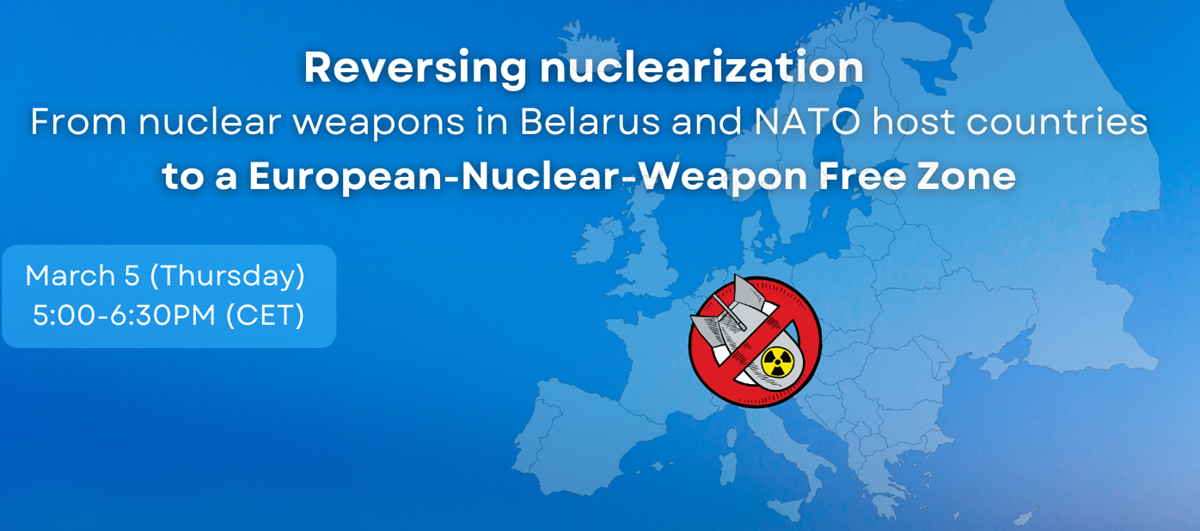
5 March -Online – Reversing nuclearization:
From nuclear weapons in Belarus and NATO host countries to a European-Nuclear-Weapon Free Zone
11am-12:30pm Eastern Time USA / 5pm-6:30pm CET

of the week – Advocating for a
nuclear free beach – https://www.samuellawrencefoundation.org/
The Samuel Lawrence Foundation advocates for a Nuclear Waste Free Beach at San Onofre, join us and take action!
10 March A LIVE WEBINAR THE REAL EFFECTS OF NUCLEAR POWER
What the Industry Isn’t Telling Us
1:00 PM Mountain, 2 pm Central, 3 pm Eastern. Live on the Keepers of the Water Facebook page


18 March Webinar @ 1 PM EST: An Assessment of SMR Projects: The Case of Canada
register for the zoom:
https://us02web.zoom.us/webinar/register/WN_o8BIIOUvQ2ONJR1nta65DQ#/registration

of the week – STOP SMALL MODULAR REACTORS IN CANADA
To see nuclear-related stories in greater depth and intensity – go to https://nuclearinformation.wordpress.com
-
Archives
- March 2026 (37)
- February 2026 (268)
- January 2026 (308)
- December 2025 (358)
- November 2025 (359)
- October 2025 (376)
- September 2025 (258)
- August 2025 (319)
- July 2025 (230)
- June 2025 (348)
- May 2025 (261)
- April 2025 (305)
-
Categories
- 1
- 1 NUCLEAR ISSUES
- business and costs
- climate change
- culture and arts
- ENERGY
- environment
- health
- history
- indigenous issues
- Legal
- marketing of nuclear
- media
- opposition to nuclear
- PERSONAL STORIES
- politics
- politics international
- Religion and ethics
- safety
- secrets,lies and civil liberties
- spinbuster
- technology
- Uranium
- wastes
- weapons and war
- Women
- 2 WORLD
- ACTION
- AFRICA
- Atrocities
- AUSTRALIA
- Christina's notes
- Christina's themes
- culture and arts
- Events
- Fuk 2022
- Fuk 2023
- Fukushima 2017
- Fukushima 2018
- fukushima 2019
- Fukushima 2020
- Fukushima 2021
- general
- global warming
- Humour (God we need it)
- Nuclear
- RARE EARTHS
- Reference
- resources – print
- Resources -audiovicual
- Weekly Newsletter
- World
- World Nuclear
- YouTube
-
RSS
Entries RSS
Comments RSS
 nuclear-news