Nuclear Non-Proliferation in a Deadlock
Nuclear Non-Proliferation in a Deadlock https://css.ethz.ch/en/services/digital-library/publications/publication.html/ae6c357e-353b-4152-a5e6-508115882177
Main content Apr 2020 Oliver Thränert writes that since its entry into force on 5 March 1970, the Nuclear Non-Proliferation Treaty (NPT) has established an international norm against the proliferation of nuclear weapons and served as the basis for a comprehensive non-proliferation regime. However, the NPT has been mired in a crisis of credibility for years and there is little prospect for a successful review conference for the treaty in 2020, something which takes place every five years. In this analysis, Thränert looks back on the NPT’s history, its achievements, the role of Switzerland and more
India’s dangerous nuclear triad
|
Why India’s Nuclear Triad Is Such a Dangerous Weapon No joke. National Interest
by Caleb Larson, 10 Apr 20, India’s indigenously developed technology—and a lot of Russian hardware and help—all keep Pakistan and China at bay.
No-First-Use “An NFU policy essentially constitutes a promise, backed by a survivable nuclear arsenal, to only use nuclear weapons in response to a nuclear attack,” explained a Carnegie publication. “The logic is simple and effective: you don’t nuke me, and I won’t nuke you. India and China both have declared no-first-use policies, whereas Pakistan and the United States, among others, do not rule out the first use of nuclear weapons in a conflict.” Despite India’s formidable nuclear arsenal, India had since 2003 maintained it will not use said weapons of mass destruction first, but strictly in a retaliatory manner for deterrence. Triad India maintains a nuclear triad—that is a three-pronged nuclear weapon delivery system that utilizes a diverse array of means for delivering nuclear payload on target. New Delhi has air-launched nuclear missiles, land-based nuclear missiles, and most recently submarine-launched missiles. ……. Armed and Dangerous Over all, India’s nuclear triad is a mix of capabilities—free-falling bombs, long-range and quite sophisticated missiles, and sub-launched missiles of unclear capabilities and likely limited range. Still, India is one of the preeminent nuclear powers in the region, behind China. Look to Russia for more developmental help in the future. https://nationalinterest.org/blog/buzz/why-india%E2%80%99s-nuclear-triad-such-dangerous-weapon-142272 |
|
Pakistan’s tactical nuclear weapons, even defensively used, could usher in a larger nuclear war
|
Pakistan’s Tactical Nuclear Weapons Should Terrify You, National Interest, by Kyle Mizokami 10 Apr 20, “…… Unusually among the smaller powers, Islamabad has developed an arsenal of tactical nuclear weapons designed to destroy enemy forces on the battlefield……
Experts believe that Pakistan has between 150 and 180 nuclear bombs. It’s not clear when the country first had an operational, deployable weapon, but by the mid-1990s it had weapons to spare. ….. Tactical nuclear weapons, also called nonstrategic nuclear weapons, are low-yield (ten kilotons or less) nuclear weapons designed for use on the battlefield. Unlike larger, more powerful strategic nuclear weapons, tactical nuclear weapons are meant to destroy military targets on the battlefield. Tactical nuclear weapons are meant to be used against troop formations, headquarters units, supply dumps, and other high-value targets……
Pakistan’s nuclear weapons, particularly tactical nuclear weapons, are seen as an asymmetric means of offsetting India’s advantage in conventional forces. Even if a Pakistani Army offensive into India fails and the Strike Corps counterattacked, tactical nuclear weapons could blunt their spearheads, ideally halting them in their tracks. …..
Pakistan’s tactical nuclear weapons, while intrinsically unsavory, are at least defensive in nature. Unfortunately, given the number of times India and Pakistan have gone to war over the last eighty years, their use is theoretical than those of most countries. The use of nuclear weapons by one side could rapidly escalate to the use of larger, strategic weapons against populated areas by both sides. …… https://nationalinterest.org/blog/buzz/pakistan%E2%80%99s-tactical-nuclear-weapons-should-terrify-you-142937
|
|
|
Bankrupt FirstEnergy Solutions is resuscitated as Energy Harbor, House Bill 6 subsidises Perry and Davis-Besse Nuclear Power plants

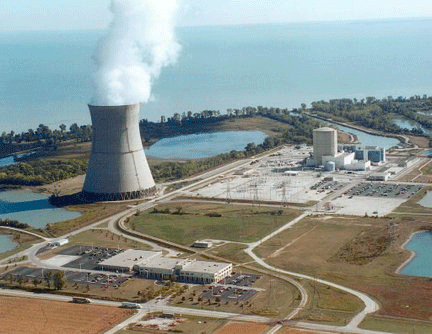
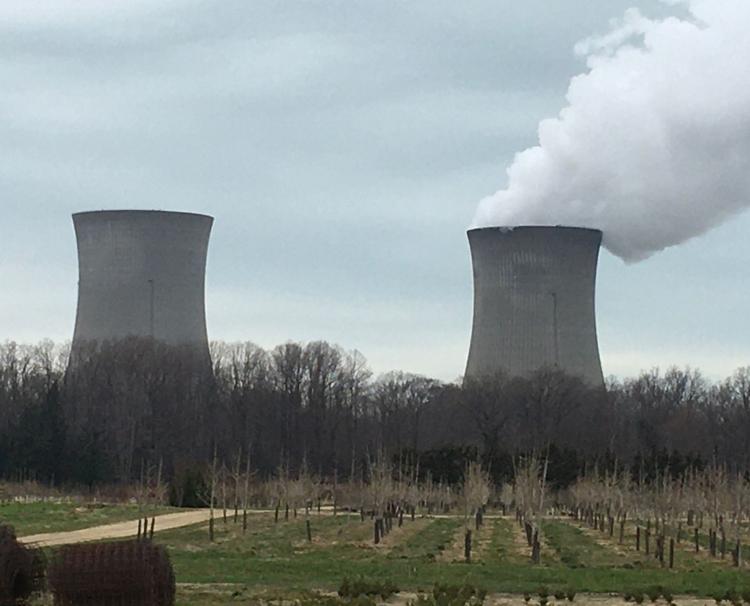
In March 2018, the owner of both plants, known then as FirstEnergy Solutions, announced that it would close both plants if subsidies were not approved. ……..
In addition, FirstEnergy Solutions filed for bankruptcy.
While H.B. 6 went into effect in October, it was announced on Feb. 27 that the former FirstEnergy Solutions, under the new name of Energy Harbor, emerged from bankruptcy……
Perry area government leaders recently offered their views on how the Perry Nuclear Power Plant staying open will impact the future financial outlook for their respective towns or entities, as well as the community as a whole. ……
Under terms of House Bill 6, charges paid by residential, commercial and industrial customers on their electric bills will generate an estimated $170 million a year. Of that total, $150 million annually will go to the Perry and Davis-Besse nuclear power plants. The other $20 million is earmarked to support six solar energy projects in Ohio.
The nuclear plants will receive money between 2021 and 2027. …… https://www.news-herald.com/news/perry-leaders-assess-impact-of-perry-nuclear-power-plant-staying-open/article_ac6bb456-78f5-11ea-ba51-d72a1e490038.html
Idaho lawmakers want nuclear waste ready to get trucked away
Idaho lawmakers want nuclear waste ready to get trucked away
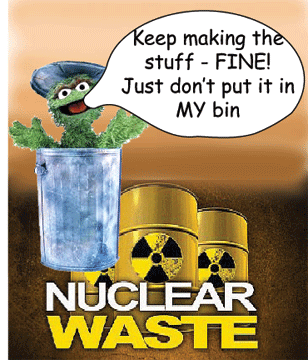 by KEITH RIDLER Associated Press, Saturday, April 11th 2020 BOISE, Idaho (AP)
– Idaho’s congressional delegation wants the U.S. Department of Energy to prepare spent nuclear fuel for trucking out of eastern Idaho ahead of a 2035 deadline.
The two Republican senators and two Republican representatives in the letter sent Wednesday said the department could be readying the spent fuel for placement in protective trucking containers.
A 1995 agreement following a series of federal lawsuits requires the Energy Department to remove most of the spent fuel and other nuclear waste from the site that includes the Idaho National Laboratory……..
The Idaho lawmakers acknowledge the lack of a permanent repository in their letter, but they say preparing the waste for removal from Idaho should start anyway. …….
The U.S. Government Accountability Office reports that the U.S. has more than 99,000 tons (90,000 metric tons) of spent nuclear fuel stored at 80 sites in 35 states. Most of the spent fuel is from nuclear power generation at commercial plants, with about 15% coming from the U.S. government’s nuclear weapons program.
Some of that nuclear waste was being sent to Idaho for years until former Democratic Gov. Cecil Andrus and former Republican Gov. Phil Batt engaged in a series of federal court battles with the Energy Department resulting in the 1995 Settlement Agreement during Batt’s term that is generally seen as preventing Idaho from becoming a high-level nuclear waste dump.
That agreement, with some exceptions, requires the Energy Department by 2035 to remove spent fuel and nuclear waste from its 890-square-mile (2,300-square-kilometer) eastern Idaho site in sagebrush steppe. The area is about 50 miles (80 kilometers) west of Idaho Falls and sits atop a giant aquifer supplying farms and cities in the region with water.
The 1995 agreement has been altered several times over the years, including twice recently…….
The U.S. Navy also stores spent fuel from its fleet of nuclear-powered warships at the site. That spent fuel is also covered in the 1995 agreement. https://idahonews.com/news/local/idaho-lawmakers-want-nuclear-waste-ready-to-get-trucked-away
Critical comments on the claim that “Nuclear Energy Could Power The Trillion-Dollar Space Race”
 Haley Zaremba’s final comment “” good news for public health and the environment coming out of the space industry”” left me puzzled.
Just exactly how are nuclear-powered space travel, and nuclear reactors on the moon and on Mars “good news for public health and the environment”?
A second question – nuclear reactors in space as a “trillion dollar” industry. Does this mean that it will magically somehow bring in trillions of dollars to the U.S. economy, – or, more likely, just add trillions of dollars to the national debt?
A final question – as the global economy, and especially the American economy, goes into freefall, heading for the greatest Depression ever, is this article just a rather sad joke?

Nuclear Energy Could Power The Trillion-Dollar Space Race https://oilprice.com/Energy/Energy-General/Nuclear-Energy-Could-Power-The-Trillion-Dollar-Space-Race.html By Haley Zaremba – Apr 09, 2020, While the economy comes to a grinding halt here on Earth, some investors, inventors, and dreamers are looking to the stars for their next business venture. The final frontier has been touted as a potential breeding ground for untold numbers of industries in key economic sectors including mining, tourism, research and development, data collection and analysis, to name just a very few.
In fact, the commercial potential of the space economy is allegedly so great and so untapped (for now) that Bank of America Merrill Lynch projected back in 2017 that the size of the space industry is due to explode, expanding to more than eight times its current size by 2050. Valued at nearly $400 billion now, that means that the space sector would reach a total value of nearly $3 trillion over the next thirty years.
We are entering an exciting era in space where we expect more advances in the next few decades than throughout human history,” a Bank of America report stated. Goldman Sachs and Morgan Stanley, however, were far more conservative in their projections than Bank of America Merrill Lynch, but the financial corporations still predicted that the space sector will expand to be a more-than trillion dollar industry inside of 20 years.
Even the United States Chamber of Commerce has been bullish on the space sector, stating that “total private investment is growing at a striking pace,” citing research by Bryce Space and Technology. “From 2000-2005, the industry received more than $1.1 billion in investment from private equity, venture capital, acquisitions, prizes and grants, and public offerings. By the 2012-2017 period, the industry had received more than $10.2 billion.” The Chamber goes on to say that, “the increased investment reflects the new opportunities in the commercial space sector and new startup ventures that did not exist a decade ago.”
Last summer, Oilprice reported that the nuclear industry was also angling to get a piece of the modern-day space race. “In just a few short years from now, the United States will be shipping nuclear reactors to the moon and Mars,” the report said, citing statements from team members from the Kilopower project, a collaborative venture from NASA and the United States Department of Energy.
The Kilopower project is a near-term technology effort to develop preliminary concepts and technologies that could be used for an affordable fission nuclear power system to enable long-duration stays on planetary surfaces,” said NASA’s Space Technology Mission Directorate. “In layman’s terms, the focus of the Kilopower project is to use an experimental fission reactor to power crewed outposts on the moon and Mars, allowing researchers and scientists to stay and work for much longer durations of time than is currently possible,” the Oilprice article summed up.
Now, just this week, an article from Space.com reported that “space is about to go nuclear — at least if private companies get their way.” The article is referencing developments from the 23rd annual Commercial Space Transportation Conference (CST), which took place in Washington, D.C. back in January. There, “a panel of nuclear technology experts and leaders in the commercial space industry spoke about developments of the technology that could propel future spacecraft faster and more efficiently than current systems can.”
NASA is no stranger to nuclear power. The agency has already used nuclear energy to power its Mars rovers, its Cassini mission probe of Saturn and its rings, and the two Voyagers up there exploring the edges of our solar system as we speak. The nuclear energy that powered those projects, however, relied “on the passive decay of radioactive plutonium, converting heat from that process into electricity to power the spacecraft,” whereas, according to the panelists at the CST, the future of space industry electricity lies in “Nuclear Thermal Propulsion (NTP), a technology developed in the 1960s and ’70s that relies on the splitting, or fission, of hydrogen atoms.” This form of nuclear fission would need low-enriched uranium, a much less hazardous material.
“An NTP-powered spacecraft would pump hydrogen propellant through a miniature nuclear reactor core. Inside this reactor core, high energy neutrons would split uranium atoms in fission reactions; those freed neutrons would smack into other atoms and trigger more fission. The heat from these reactions would convert the hydrogen propellent into gas, which would produce thrust when forced through a nozzle,” explained Space.com.
At least there is some good news for public health and the environment coming out of the space industry on the week that Trump announced that he wants to mine the moon.
We spend billions on nuclear weapons. Let’s fund the NHS instead
In that light, one has to question whether spending between £2bn and £3bn per year (actual government figures are hard to come by) on maintaining a Trident submarine on constant nuclear deterrent patrol at sea – when the missiles are not targeted and have been at “several days’ notice to fire” for over 20 years for lack of any perceived nuclear threat – is now a proper use of our rapidly vanishing national financial resources.
This is on top of some £60bn-plus to replace the submarines, their missiles and other assorted costs associated with Trident.
Cmdr Robert Forsyth RN (Ret’d)
Former executive officer of a Polaris submarine and nuclear submarine commanding officer
Cmdr Robert Green RN (Ret’d)
April 10 Energy News — geoharvey

Opinion: ¶ “Staying On Course: Renewable Energy In The Time Of COVID-19” • Decisions on addressing the social and economic impacts of the pandemic come at a time of profound uncertainty about long-term effects of the crisis on the world’s societies. The response must accomplish more than just to bail out the existing socio-economic structures. […]
1 This Month


Tell the Ukrainian Government to Drop Prosecution of Peace Activist Yurii Sheliazhenko

Petition to revoke the licensing of the Near Surface Nuclear Disposal Facility (NSDF) at Chalk River. https://www.ourcommons.ca/petitions/en/Petition/Details?Petition=e-7247


of the week – STOP SMALL MODULAR REACTORS IN CANADA
To see nuclear-related stories in greater depth and intensity – go to https://nuclearinformation.wordpress.com
-
Archives
- March 2026 (204)
- February 2026 (268)
- January 2026 (308)
- December 2025 (358)
- November 2025 (359)
- October 2025 (376)
- September 2025 (258)
- August 2025 (319)
- July 2025 (230)
- June 2025 (348)
- May 2025 (261)
- April 2025 (305)
-
Categories
- 1
- 1 NUCLEAR ISSUES
- business and costs
- climate change
- culture and arts
- ENERGY
- environment
- health
- history
- indigenous issues
- Legal
- marketing of nuclear
- media
- opposition to nuclear
- PERSONAL STORIES
- politics
- politics international
- Religion and ethics
- safety
- secrets,lies and civil liberties
- spinbuster
- technology
- Uranium
- wastes
- weapons and war
- Women
- 2 WORLD
- ACTION
- AFRICA
- Atrocities
- AUSTRALIA
- Christina's notes
- Christina's themes
- culture and arts
- Events
- Fuk 2022
- Fuk 2023
- Fukushima 2017
- Fukushima 2018
- fukushima 2019
- Fukushima 2020
- Fukushima 2021
- general
- global warming
- Humour (God we need it)
- Nuclear
- RARE EARTHS
- Reference
- resources – print
- Resources -audiovicual
- Weekly Newsletter
- World
- World Nuclear
- YouTube
-
RSS
Entries RSS
Comments RSS
 nuclear-news