Microbes in nuclear fuel ponds slow down the decommissioning process
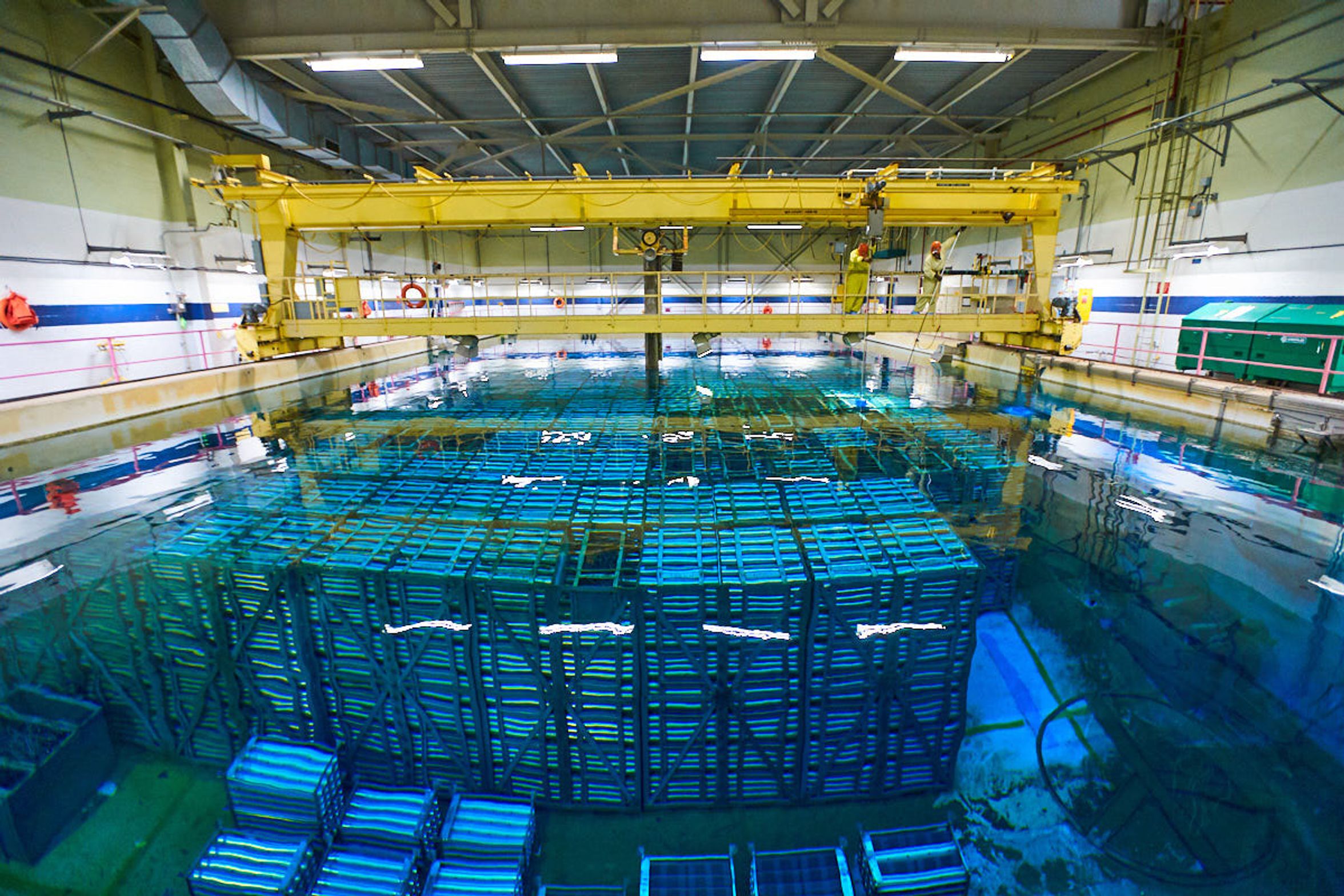 Manchester University 8th April 2020,Two new research papers from The University of Manchester, working with colleagues at Sellafield Limited and the National Nuclear Laboratory show that microbes can actively colonise some of the most intensively radioactive waste storage sites in Europe. When nuclear facilities such as
Sellafield were designed and built more than 50 years ago, it was sensible to assume that the conditions in the pond would prevent microbial life from taking hold, but now new research shows that this is not the case. The growth of microbial life in nuclear facilities can cause uncertainty or problems. Understanding how microbial life can inhabit environments such as
fuel storage ponds is vital to progress nuclear decommissioning work such as at Sellafield. Microbes are a group of organisms that, including bacteria and algae, are known to inhabit a wide range of habitats on Earth. Improvements in detection technology in recent years has allowed microorganisms to be detected in environments previously thought to be inhospitable to life. It is now becoming clear that some microorganisms are capable of withstanding surprisingly high doses of radiation, at levels significantly greater than seen in natural environments. Power Technology 8th April 2020, University of Manchester researchers have discovered microbial life can
Geomicromicrobiologists studied microbes that can cause summer blooms in
nuclear fuel storage ponds, slowing down the decommissioning process of retired nuclear plants. Summer blooms reduce visibility and disrupt fuel retrieval. University of Manchester microbiology professor Jonathan Lloyd
said: “Our research focused on Sellafield’s First Generation Magnox Storage Pond (FGMSP), which is a legacy pond that has both significant levels of radioactivity in conjunction with a highly alkaline pH (11.4), equivalent to domestic bleach. “The ultimate aim of this work was to identify the microbes that can tolerate such an inhospitable environment, understand how they tolerate high radiation levels, and help site operators control their growth. “The growth of the microorganisms in the FGMSP inhibits the operations in the pond, which is currently a priority for decommissioning. “ |
|
|
No comments yet.
1 This Month


Tell the Ukrainian Government to Drop Prosecution of Peace Activist Yurii Sheliazhenko

Petition to revoke the licensing of the Near Surface Nuclear Disposal Facility (NSDF) at Chalk River. https://www.ourcommons.ca/petitions/en/Petition/Details?Petition=e-7247


of the week – STOP SMALL MODULAR REACTORS IN CANADA
To see nuclear-related stories in greater depth and intensity – go to https://nuclearinformation.wordpress.com
-
Archives
- March 2026 (204)
- February 2026 (268)
- January 2026 (308)
- December 2025 (358)
- November 2025 (359)
- October 2025 (376)
- September 2025 (258)
- August 2025 (319)
- July 2025 (230)
- June 2025 (348)
- May 2025 (261)
- April 2025 (305)
-
Categories
- 1
- 1 NUCLEAR ISSUES
- business and costs
- climate change
- culture and arts
- ENERGY
- environment
- health
- history
- indigenous issues
- Legal
- marketing of nuclear
- media
- opposition to nuclear
- PERSONAL STORIES
- politics
- politics international
- Religion and ethics
- safety
- secrets,lies and civil liberties
- spinbuster
- technology
- Uranium
- wastes
- weapons and war
- Women
- 2 WORLD
- ACTION
- AFRICA
- Atrocities
- AUSTRALIA
- Christina's notes
- Christina's themes
- culture and arts
- Events
- Fuk 2022
- Fuk 2023
- Fukushima 2017
- Fukushima 2018
- fukushima 2019
- Fukushima 2020
- Fukushima 2021
- general
- global warming
- Humour (God we need it)
- Nuclear
- RARE EARTHS
- Reference
- resources – print
- Resources -audiovicual
- Weekly Newsletter
- World
- World Nuclear
- YouTube
-
RSS
Entries RSS
Comments RSS
 nuclear-news
Leave a comment