
 Coronovirus pandemic could cripple the nuclear industry, Online Opinion, By Noel Wauchope Thursday, 26 March 2020 Nuclear power facilities have this one problem that is unique to the nuclear industry, and that is, the need for exceptional security. No other industry has these risks of radioactive accident and special vulnerability to terrorism. The IAEA defines nuclear security as:
The prevention and detection of and response to, theft, sabotage, unauthorized access, illegal transfer or other malicious acts involving nuclear material, other radioactive substances or their associated facilities.Nuclear power facilities have this one problem that is unique to the nuclear industry, and that is, the need for exceptional security. No other industry has these risks of radioactive accident and special vulnerability to terrorism. The IAEA defines nuclear security as:
According to Mycle Schneider, in the World Nuclear Status Report , reactor safety depends above all on a:
…’culture of security’, including the quality of maintenance and training, the competence of the operator and the workforce, and the rigour of regulatory oversight. So a better-designed, newer reactor is not always a safer one.
Experts say that the
…largest single internal factor determining the safety of a nuclear plant is the culture of security among regulators, operators and the workforce – and creating such a culture is not easy.
This security risk brings with it, the need for a very high level of secrecy……….
There was already a shortage of skilled nuclear workers, even before COVID19 hit the world. The most recent Global Energy Talent Index (GETI) reports “an acute need for talent” in the nuclear sector. Nuclear professionals are an aging group, with a “vast wave of imminent retirements.” The onslaught of the pandemic could mean some shortages of well-informed, capable professionals working at nuclear reactors, and at other nuclear facilities, such as waste management and transport. And there’s that even more secretive area, nuclear weapons production and management.
Of course, there’s that whole other workforce – the nuclear security officers, whose job is just as critical as that of the physicists and engineers. There’s quite a history of anti- nuclear activists breaking into nuclear facilities in order to demonstrate their vulnerability to terrorist attacks.
The nuclear lobby is of course, fighting to win hearts and minds, with some persuasive propaganda. Their theme is the value of nuclear research reactors in industry and health, and especially in the detection of viruses. And they do have a point. Still radionuclides are being produced by non-nuclear means. The role of small nuclear research reactors is increasingly looking like the fig leaf on an unsustainable and super-expensive nuclear power industry.
In the meantime, as trade and industry slow down, with the global march of this pandemic, the nuclear industry is already suffering a set-back. The loss of well-informed staff, whether in the professional area, or at lower levels in the workforce hierarchy, poses a special problem for this industry, with its secretive culture. Nuclear power has a unique safety requirement, meaning that its reactors may need to be shut down, or at least, have their operations cut back. https://www.onlineopinion.com.au/view.asp?article=20808
March 27, 2020
Posted by Christina Macpherson |
2 WORLD, health, safety |
Leave a comment
Eurasian Review 24th March 2020, With the current uncertainty generated by the new Coronavirus, it is a good time to spare another thought for the dangers of nuclear security that too can emerge quickly and leave a widely destructive trail.
The subject of nuclear terrorism has silently faded out of public sight and political attention ever since the Nuclear Security Summit (NSS) process ended in 2016. Of course, institutions like the International Atomic Energy Agency (IAEA), Interpol, and some arms of the UN have continued to implement action plans that were drawn when the NSS process wound up.
But, over the past four years, there has not been much public scrutiny of the implementation of measures related to the many dimensions of nuclear security. This is too important an issue to let out of sight, and any untoward incident that would qualify as an act of nuclear terrorism would yet again have an impact of the kind that 9/11 or COVID-19 have wrought on countries.
https://www.eurasiareview.com/24032020-cyber-nuclear-security-challenges-an-issue-that-wont-go-away-analysis/
March 26, 2020
Posted by Christina Macpherson |
2 WORLD, safety |
Leave a comment
For now, Kristensen says, “probably the healthiest people in America are those who are coming back from the longest submarine patrols,” which currently last as long as 78 days.
They’ve been underwater since almost the beginning of the year.
THE U.S. MILITARY’S BEHIND-THE-SCENES MOVES TO PROTECT NUCLEAR READINESS AMID CORONAVIRUS https://www.newsweek.com/us-militarys-behind-scenes-moves-protect-nuclear-readiness-amid-coronavirus-1493829
BY WILLIAM M. ARKIN ON 3/23/20 The Defense Department shifted many of its domestic bases to “health protection condition” Charlie on Sunday, the latest in a series of moves to protect military forces, families and bases from coronavirus. HPCON Charlie – also known as “substantial threat of sustained community transmission” – is the fourth highest of five levels.
Though Pentagon officials continue to insist that the coronavirus pandemic has had no impact on operational readiness of the armed forces, behind the scenes military exercises and deployments are being scaled down and canceled, and plans are being put in place to sustain essential operations. That includes the so-called triad of bombers, land-based missiles and submarines that make up the U.S. nuclear arsenal.
Last week, the head of U.S. Strategic Command (STRATCOM), Adm. Charles A. “Chas” Richard, said that nuclear readiness was unaffected by coronavirus. The nuclear forces, he said, “remain ready to execute” their war plans despite coronavirus and that the pandemic has had “no impact to our ability” to carry out missions.
Adm. Richard said that his Omaha, Nebraska-based command “had plans in place that we have updated and are executing,” to deal with a pandemic. The nuclear force, he said, was designed to operate isolated for long periods of time.
But an active force that is constantly kept on alert is also one that is more exposed. According to a military tally compiled as of Sunday and reviewed by Newsweek, units feeding STRATCOM have a cumulative 106 uniformed personnel not on duty due to coronavirus, either because of confirmed cases or “protective self-quarantine.” Six bases are listed where bombers, missiles, aerial refueling tankers and supporting command and communications units that support the nuclear force are reporting coronavirus cases, according to the data compiled by the Defense Department.
One positive case of coronavirus was reported Saturday at Whiteman air force base in Johnson County, Missouri, where the B-2 stealth bomber force is deployed. Three of those bombers returned to base over the weekend from a “deterrent” mission deployment to Europe. That mission, observers say, was cut short in comparison with previous bomber deployments.
The United States currently has a total of about 850 nuclear warheads on alert – 400 nuclear-armed land-based intercontinental missiles in three western states, and 450 warheads on five ballistic missile submarines in the Atlantic and Pacific Oceans. These are the weapons that are ready to instantly respond to presidential commands, according to the Federation of American Scientists. An additional 1,300 warheads can be brought up to alert status quickly on four or five additional submarines and on 60 nuclear-configured B-2 and B-52 bombers at bases, all in a matter of a few days.
Last week, Air Force Chief of Staff Gen. David L. Goldfein said that the nuclear deterrent has had no changes in its operations due to coronavirus.
An example of those operations is the deployment of the three B-2 stealth bombers to Europe on March 8, the bombers and their maintainers first landing at Lajes Field in the Azores, an archipelago of nine islands 850 miles off the coast of Portugal. The next day, the bombers flew to RAF Fairford in Gloucestershire in the southwest U.K. There, they conducted various practice missions – over the North Sea on March 12, an Icelandic Air Policing mission on March 16 and 17, over the North Sea on March 18, and then over the Arctic Ocean on March 20. The bombers practiced flying with British, Dutch and Norwegian fighter planes, practicing escort and the procedures for the bombing of Russia.
“A credible deterrent for the high North region,” Lt. Gen. Steven Basham said, in describing the operations. “Operating B-2s in the Arctic allow us to shape that environment by demonstrating our resolve to deliver combat power anywhere in the world if called upon.”
“The world expects that NATO and the U.S. continue to execute our mission with decisiveness, regardless of any external challenge,” said Gen. Jeff Harrigian, commander of U.S. Air Forces in Europe.
Instead, the Department is in a constant cycle of keeping the existing stockpile of bomber and missile warheads healthy. Nuclear weapons expert and observer Hans Kristensen of the Federation of American Scientists says that includes “taking apart and surveying existing warheads in the stockpile” at the rate of about a dozen or so warheads per month. This is primarily accomplished at the Pantex plant in Amarillo, Texas, though the two nuclear laboratories –Los Alamos in New Mexico and Livermore in California – also get involved in more complex and problem cases discovered in what are called “surveillance” activities. The current U.S. nuclear stockpile is made up of seven different basic types of warheads, and some sampling of each is shipped from active bases back to Pantex and the laboratories in a complex and secret ongoing process.
Kristensen says that though there have been few signs of how coronavirus is impacting nuclear forces, the B-2 mission in Europe was “dramatically shortened” in comparison with previous years. “Last fall when they deployed the B-2s, they were there [at RAF Fairford] for a month,” he says. Kristensen is been closely following bases where nuclear weapons are deployed, as well as the operations of the force, expecting that there will be significant changes if the virus persists in its growth.
Though U.S. European Command says its readiness remains high “for the foreseeable future,” it admits it is already curtailing numerous military exercises due to coronavirus. In the coming months, Gen. Tod Wolters, overall European commander says, it is likely that between 30 and 65 percent of exercises will be reduced or canceled. Other commands have similarly canceled or postponed Russia-oriented military exercises, including a Red Flag exercise planned for Alaska and a high-profile test of a new all-domain warfighting system planned for next month, one that would have practiced the integration of nuclear, conventional, cyber and space weaponry.
“My organization is designed to be able to operate isolated for long periods of time,” STRATCOM commander Adm. Richard insists.
The 3,000 person headquarters in Omaha has taken steps to institute social distancing, and it has shifted some people and functions to alternate and subordinate commands, improving redundancies and guarding against spread of the virus.
Though alerts, exercises, and the shuffling around of warheads continues, a senior officer at U.S. Strategic Command (who requested anonymity because he is not authorized to public speak on the matter) says that everyone is anticipating that there will be significant changes are coming. “There isn’t a command headquarters, including STRATCOM,” the senior officer says, “where there aren’t people with coronavirus symptoms or in self-quarantine.”
For now, Kristensen says, “probably the healthiest people in America are those who are coming back from the longest submarine patrols,” which currently last as long as 78 days.
They’ve been underwater since almost the beginning of the year.
March 26, 2020
Posted by Christina Macpherson |
health, USA, weapons and war |
Leave a comment
Hanford workers were given leaky respirators at contaminated job site, contractor’s documents reveal https://www.seattletimes.com/seattle-news/times-watchdog/hanford-workers-were-given-leaky-respirators-at-contaminated-job-site-contractors-documents-reveal/?fbclid=IwAR18g7iwSGZJNg63q1UKl8nmUbzP4WF0JD7pqTMte9_IVRDXwM5JoCZcESA
RICHLAND, Benton County — Bill Evans Jr. worked on the front lines of the Hanford cleanup. He supervised crews tasked with dismantling tanks, uncoupling pipes and painting over surfaces to stanch the spread of radioactive particles inside some of the most hazardous buildings at the nation’s most contaminated nuclear site.
To keep themselves safe, they donned full-body protective suits, sometimes two. Battery-charged respirators hung by their sides, circulating filtered air through breathing tubes and into hoods.
In May 2016, seven years into his Hanford career, Evans had a seizure on his lunch break that left him dazed. It was the first of many that forced him to stop working. Since then, repeated seizures have overtaken his life, resulting in falls that dislocated his jaw, fractured his spine and sent him crashing through a glass pane that gashed his head and required 30 stitches.
Evans, 45, is convinced that the sudden onset of his illness was linked to his job. Last year, he got a surprising clue about what might have gone wrong. A document from his old employer, slipped to him by a colleague, stated that a respirator cartridge Evans frequently used had a bad seal caused by changes made to the gear at Hanford, and possibly exposed him to radioactive and chemical contamination.
“I was floored, surprised and angry,” Evans said. “Because I trusted that equipment. That equipment was my lifeline.”
Evans was one of an estimated 560 workers at the Plutonium Finishing Plant between 2012 and October 2016 who wore respirator gear that may have leaked, according to documents obtained by The Seattle Times. The project contractor, CH2M Hill Plateau Remediation Company, told workers on the job site about the safety lapse, which was also detailed in a November 2016 letter to be placed in affected workers’ medical files.
But the contractor did not directly reach out to workers, like Evans, who had already left the job, according to a spokesman for CH2M Hill. The letter ended up in the files of only 150.
UPDATE
In response to a Seattle Times investigation, advocates seek benefits for workers who wore leaky respirators at Hanford
March 26, 2020
Posted by Christina Macpherson |
- plutonium, health, USA |
Leave a comment
Rightwing governments have denied the problem and been slow to act. With coronavirus and the climate, this costs lives.
The coronavirus pandemic has brought urgency to the defining political question of our age: how to distribute risk. As with the climate crisis, neoliberal capitalism is proving particularly ill-suited to this.
Like global warming, but in close-up and fast-forward, the Covid-19 outbreak shows how lives are lost or saved depending on a government’s propensity to acknowledge risk, act rapidly to contain it, and share the consequences.
On these matters, competence and ideology overlap. Governments willing to intervene have been more effective at stemming the virus than laissez-faire capitalists. The further right the government, the more inclined it is to delay action and offload blame elsewhere. International comparisons suggest this could be making infection and death rates steeper.
Take the US, where Donald Trump is only now acknowledging the seriousness of the pandemic after weeks of claiming fears were exaggerated. Until recently, his government put more money into shielding the oil industry than providing adequate testing kits. He reportedly ordered officials to downplay early warnings because he did not want bad news in an election year. The US now has one of the fastest rising numbers of new cases in the world.
In Brazil, the ultra-right president, Jair Bolsonaro, is equally reckless. He claimed the risks of coronavirus were overblown, until 17 of his aides and security detail tested positive after a trip to the US. Last weekend, he ignored his own government’s advice and chose to shake hands and pose cheek-to-cheek for selfies at a mass rally of supporters. As cases and deaths surge, his support has plummeted.
In the UK, Boris Johnson acknowledged the risk, but did little about it. Though not as extreme in his denial as Trump or Bolsonaro, Johnson’s government first dithered, then dabbled with a policy of “herd-immunity”that was reportedly driven by Dominic Cummings’ desire to protect the economy, even if it cost pensioners’ lives. The UK has since shifted tack and enforced a lockdown, but its controls are still haphazard. Last week, daily deaths in the UK were reckoned to be on a steeper upward curve than Italy was at the same stage.
By contrast, more interventionist governments – generally but not exclusively those which are centrist or leftwing – have acted more quickly and shared the burden of risk more widely. Norway, Denmark and Sweden already appear to have flattened the coronavirus curve. Spain and France implemented lockdowns at around 200 deaths, which the UK and US have far surpassed.
In Asia, China initially attempted to hide the problem from the public when the virus emerged in Wuhan, then mobilised huge public resources to enforce a strict lockdown and provide extra hospital beds. South Korea, Taiwan and Thailand also appear to have turned the corner thanks to different combinations of extensive testing, quarantine measures and public health education.
Other factors are at play. Asian countries with prior experience of the Sars epidemic appear to have been better prepared. Italy, one of the worst affected countries, has one of the world’s oldest populations. In Japan’s case, the relatively flat curve of confirmed cases may also be a result of the government’s unwillingness to do widespread testing because it could jeopardise the Olympics.
Similarly, the relatively low number of cases in the global south has raised hopes that warmer weather might slow the disease – but this is far from certain. A comparatively low number of coronavirus cases could be the result of a lag caused by distance from the origin of the disease, relatively lower levels of international traffic, and fewer resources for testing.
This pandemic has amplified the importance of assessing and controlling risk before it gets out of hand. But the political champions of the neoliberal right, such as Trump and Bolsonaro, are more inclined to deny and delay, as climate politics have shown us in recent years.
When it comes to a pandemic like Covid-19, that position is untenable. No leader can deny the science, nor can they endlessly delay action as they have done on global heating. Muddling through until the next election is not an option; leaders will be judged on deaths next week, not emissions reductions in 2050.
The demographics are also completely different. Unlike the climate crisis, the virus predominantly threatens the elderly – the right’s core support group – rather than millennials. So far, the worst affected regions are also closer to the centre of economic power: the cool industrialised north rather than the warmer developing south (though the latter may suffer more in the future due to weaker healthcare systems).
For the right, this makes the pandemic a greater political threat than the climate crisis has ever been. Unless they can quickly get on top of the disease, they will lose any claim to being champions of national security. It is entirely possible that the effects of this pandemic could be one of the most catastrophic failures of free-market capitalism.
This should also be a lesson for the left. If state intervention and scientific advice is effective in dealing with the virus, the same principles should be applied more aggressively towards the still more apocalyptic threats of climate disruption and the collapse of nature. Until now, the left has recognised these dangers, but done little to act on them because economic growth has always taken precedence.
The pandemic has proved that delays are deadly and expensive. If we are to avoid a cascade of future crises, governments must think beyond a return to business as usual. Our conception of what is “normal” will have to change. We’ll need to invest in natural life-supporting systems such as a stable climate, fresh air and clean water. In the past, those goals have been dismissed as unrealistic or expensive, but recent weeks have shown how quickly the political compass can shift.
First though, we need to accept – and share – risk. Instead of deferring risks to future generations, weaker populations and natural systems, governments need to transform risks into responsibilities we all bear. The longer we hesitate, the fewer resources we will have at our disposal, and the more risk we will have to divide.
• Jonathan Watts is the Guardian’s global environment editor
March 26, 2020
Posted by Christina Macpherson |
2 WORLD, climate change, health |
Leave a comment
The president and his far-right allies see the pandemic as one more chance to again rip apart the notion that countries do better by cooperating.
While we have to self-isolate from the virus, we don’t have to isolate ourselves from the world. Trump could be uniting our strengths. We all could.


Trump Could Have Led the World Against the Coronavirus We have to isolate ourselves from the virus. He doesn’t have to isolate us from the world. 25 Mar 20, https://www.defenseone.com/ideas/2020/03/trump-could-have-led-world-against-coronavirus/164086/?oref=d-topstory
Trump can’t help himself. He is missing his chance to live out “America First.”
In January or February, he could have convened world leaders, determined a plan to stop the coronavirus, and shown what American power can really do with all of the pomp and circumstance of summit stages and Fox News backdrops. He could have made the world grateful for his leadership.
Even now, as the world stays home FaceTiming with family, Trump could convene a video conference of world leaders, sitting in Washington’s big chair in the middle of the virtual table, directing help, aid, relief, supplies, NATO militaries and the narrative. He could have even liberals and TV pundits praising him as the global leader he believes himself to be.
The coronavirus pandemic is more than a 9/11 moment. It’s a Reagan-second-term-chance-to-beat-the-Soviets moment. It’s a political opening to soften up, wake up, and bring the world together. It’s an opportunity to diminish Beijing and Moscow and marginalize violent extremists.
The United States should be leading the world through this pandemic. Americans should be leading the world. Trump should be leading the world.
He could have thought big, but instead he plays small. On Tuesday night, the president of the United States was up late retweeting posts from the partisan and anti-Semitic information warfare site Breitbart, amplifying their praise and thumping liberal snowflakes and the corporate media.
Yesterday, the number of Americans who have died from the coronavirus rose by 160. The number of Americans who tested positive for the virus rose by 10,000. The number of infected reached 26,000 in New York state. The number worldwide is nearly 500,000. Continue reading →
March 26, 2020
Posted by Christina Macpherson |
health, politics, USA |
Leave a comment
Dundee Courier 24th March 2020, Opponents of the Hinkley Point C project criticised the decision to carry on and called on the Government to tell them to stop. “This is putting lives at risk right across Somerset and the whole of the country,” said Stop Hinkley campaign spokeswoman Katy Attwater. “Why hasn’t the Prime Minister ordered them to stay at home – is he just pandering to the nuclear lobby? “While the rest of the country is in lockdown, EDF fails to acknowledge that if someone has developed a fever, they have been incubating and spreading the virus for days beforehand.
“Monitoring for fever is leaving it too late. Who is advising them on best practice? “EDF is irresponsible with its decisions on climate change, marine protection, archaeological heritage, and future safety of the people in Somerset. “Now it is failing to address the Covid-19 emergency adequately. They need to stop work at Hinkley Point C now to protect workers and local people.”
March 26, 2020
Posted by Christina Macpherson |
health, safety, UK |
Leave a comment
 Plan to dispose of Fukushima wastewater drafted https://www3.nhk.or.jp/nhkworld/en/news/20200324_42/ , March 24, 20 Plan to dispose of Fukushima wastewater drafted https://www3.nhk.or.jp/nhkworld/en/news/20200324_42/ , March 24, 20 NHK has learned that Tokyo Electric Power Company, or TEPCO, has drafted a plan for disposing of radioactive wastewater stored at the troubled Fukushima Daiichi nuclear power plant.Water used to cool molten nuclear fuel from the 2011 accident is treated to remove most radioactive material. But tritium and other substances remain in the water, a huge amount of which is stored in about 1,000 large tanks.
A government panel last month compiled a report that says releasing diluted radioactive wastewater into the sea or air are realistic options.
TEPCO’s plan for doing so would involve diluting the wastewater with seawater, aiming for a tritium level of one-fortieth that allowed by national regulation.
The firm would gradually release the diluted water over about 30 years, taking into consideration the amount of similar water released at other nuclear plants.
TEPCO would also test treating the wastewater again to further remove other radioactive materials.
The utility is to explain the plan to local officials and residents in Fukushima Prefecture. People in the local fishery and tourism industries oppose releasing the water into the ocean.
|
|
|
March 26, 2020
Posted by Christina Macpherson |
Fukushima continuing |
Leave a comment
Work continues at Hinkley Point C nuclear power station in Somerset but workforce cut by half, Watch Rupert Evelyn’s ITV News report: [on original]. 25 Mar 20. The beaches of Somerset are deserted as the warning to stay at home appears to have been heeded but on the Bristol Channel coast thousands of people are still clocking in to work at Europe’s largest building site.
The Government has deemed the jobs at Hinkley Point C nuclear power station near Bridgwater to be essential and French energy giant EDF says that it is “a project of critical national importance”.
The number of construction workers will now be reduced by more than half to around 2,000 to mitigate the coronavirus risk and bosses have pledged to reduce staffing levels further as the project progresses.
But critics and opponents have rounded on the decision to carry on and have called on the Government to halt proceedings.
This is putting lives at risk right across Somerset and the whole of the country. Why hasn’t the Prime Minister ordered them to stay at home – is he just pandering to the nuclear lobby? While the rest of the country is in lockdown, EDF fails to acknowledge that if someone has developed a fever, they have been incubating and spreading the virus for days beforehand.
– KATY ATTWATER, STOP HINKLEY CAMPAIGN SPOKESWOMAN
Workers have been photographed close to each other in the canteen and sitting shoulder to shoulder on the buses which transport them to and from the site.
This is at odds with Government advice to socially distance.
They need to put something else in place. They need to consider their workers. If there is an outbreak at Hinkley Point then it would be uncontrollable. Our NHS system here in the South West is quite small compared to big cities.
March 26, 2020
Posted by Christina Macpherson |
health, politics, UK |
Leave a comment
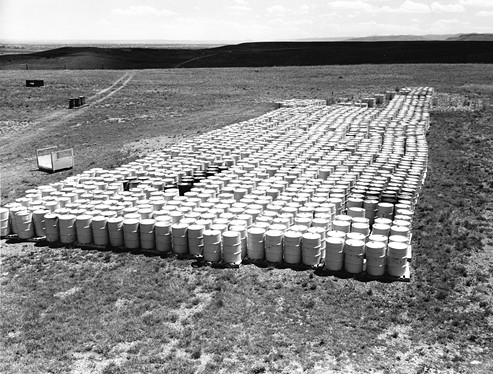
 How Colorado’s nuclear past is affecting its future, Colorado Springs INDY, GONE FISSION, by Heidi Beedle 25 Mar 20, IT WAS FEB. 25 AND BROOMFIELD City Council was done. It unanimously voted last month to withdraw from the Jefferson Parkway Public Highway Authority (JPPHA), a proposed north-south toll road that would ostensibly help mitigate traffic congestion in the Northwest Metro Denver area. The route would have taken the road through the eastern edge of the Rocky Flats Wildlife Refuge, just south of the Boulder County line, bordering Arvada and Broomfield.
 The council vote was influenced by preliminary soil samples taken by the JPPHA in July 2019, specifically one sample that showed plutonium levels more than five times higher than the acceptable standard (the rest of the samples taken at that time were within acceptable standards). Before its current existence as a wildlife refuge, Rocky Flats was the site of a nuclear weapons plant, which has caused concern about plutonium contamination in the area. Forty-eight subsequent samples taken by the U.S. Fish and Wildlife Service, which manages the refuge, showed levels well below cleanup standards of 50 picocuries per gram.
The city council vote is the latest installment in the ongoing conflict between concerned residents and public officials, and Rocky Flats and Colorado Department of Public Health and Environment (CDPHE). For decades, residents and at least two directors of Jefferson County Public Health, have claimed that plutonium released from the plant is responsible for the high rate of cancers in the area. These claims have been consistently disputed by CDPHE and the Department of Energy (DOE). ……..
Johnson was concerned about the instances of cancers in Jefferson County and questioned the official measurements of plutonium in the soils around Rocky Flats, finding in his own testing that plutonium levels in the soil were 44 times higher than reported by the Department of Public Health. Johnson grew increasingly concerned about an increase in cancer deaths in Jefferson County, and in a paper published in 1981, noted that a rise in certain kinds of cancers Johnson was seeing in Jefferson County, such as leukemia, “supports the hypothesis that exposure of general populations to small concentrations of plutonium and other radionuclides may have an effect on cancer incidence.” Johnson noted that “plutonium concentrations in the air at the Rocky Flats plant are consistently the highest (1970-1977) in the US DOE monitoring network,” based on his studies of the DOE’s own data. He also asserted that the DOE’s measurements were likely an underestimation.
Almost 40 years later, and the current head of the Jefferson County Public Health Department, Dr. Mark Johnson (no relation) has come to the same conclusion. In 2018 he spoke outagainst opening the wildlife refuge to the public, and he thinks the recent discovery of plutonium near the proposed parkway site should give people reason to reconsider. “
“There are clear studies that have shown there is an increased risk or rate of plutonium in the dirt there,” agrees Mark Johnson. “I have concerns already about the digging around with the subdivisions and the commercial enterprises that have gone into that area that were basically kicking up a lot of stuff — and we don’t know what is there.”
Carl Johnson was fired in 1981 for his persistent, outspoken criticism of the plant, but won a subsequent whistleblower lawsuit. Partly due to Johnson’s criticism, the FBI and the EPA began looking into operations at the Rocky Flats Plant starting in 1987. The investigation was aided by Jim Stone, an employee at the plant who also became a whistleblower over what he saw as grave safety violations……..
THOUGH EXHAUSTIVE DOCUMENTATION of waste sites and deposits exists, questions remain as to the effectiveness of the now-completed cleanup. Jon Lipsky, a former FBI agent who led the raid on Rocky Flats in 1989, criticized the decision to open the refuge to the public in 2016, and has claimed there is still work to be done. Originally, the DOE estimated it would take 65 years and $37 billion to clean up the site. It was completed in 2005 for $7 billion.
During the process, there were still surprises to be found. ……..
The questions of the lasting effects from the operations at Rocky Flats may never be answered to the satisfaction of residents like Hansen, who are dealing with serious health issues. Jeff Gipe, the artist behind the Cold War Horse memorial that was erected in 2015, is currently working on a documentary about the plant, Half-Life of Memory, which may draw more attention to the issue.
President Donald Trump, who has a good shot at re-election, has reduced the effectiveness of agencies like the EPA while also advocating for an increase in nuclear arms development.
In 2019, the federal government proposed a new plutonium pit production facility near Aiken, South Carolina. But that is presumably not our problem. https://www.csindy.com/coloradosprings/how-colorados-nuclear-past-is-affecting-its-future/Content?oid=21526239
March 26, 2020
Posted by Christina Macpherson |
- plutonium, environment, Reference, USA |
Leave a comment
 Tepco may take 30 years to release Fukushima No. 1 radioactive water, https://www.japantimes.co.jp/news/2020/03/25/national/tepco-fukushima-nuclear-plant-water/#.Xnvw-4gzbIU Tokyo Electric Power Company Holdings Inc. said Tuesday it may spend up to 20 to 30 years releasing contaminated water into the surrounding environment from its disaster-crippled Fukushima No. 1 nuclear power plant.
The possible time span was mentioned in draft plans Tepco drew up in line with a government panel’s report in February, calling the release of the water into the ocean or the air in the form of vapor a “realistic option.”
The company currently stores roughly 119 tons of water that still contains tritium and other radioactive substances after passing through a treatment process at the nuclear plant, which suffered a triple meltdown in March 2011 caused by a magnitude 9.0 earthquake and tsunami. The amount of contaminated water stored at the facility is still increasing.
According to the draft plans, Tepco will first conduct secondary treatment work to reduce the amount of radioactive substances in the water other than tritium — which cannot be removed by existing systems — to levels below national standards.
Following the treatment, the water will be released into the ocean, after being diluted with seawater to lower the radiation level to 1,500 becquerels per liter, or emitted into the air from a tall exhaust stack after being vaporized.
Tepco also plans to use social media to counter rumors that exposure to radiation from the released water is harmful.
March 26, 2020
Posted by Christina Macpherson |
Fukushima continuing |
Leave a comment

|
Trump Will Feed You to COVID-19 to Keep the Money Happy, William Rivers Pitt, Truthout, March 24, 2020
I have developed a strange affinity for Dr. Anthony S. Fauci. Donald Trump made Fauci — the 36-year director of the National Institute of Allergy and Infectious Diseases who has advised every president over that span — the hood ornament on this administration’s careening coronavirus Cadillac. Fauci is the face of SCIENCE in this fight, and from the sound of things, SCIENCE is about to get fired.
According to a number of sources, Trump has grown irritated at Fauci for the ever-increasing frequency of Fauci’s public corrections of Trump. Trump has been using the daily coronavirus briefings as a stand-in for his raucous, fiction-raddled rallies to spray dangerous, history-obscuring gibberish into the wind. He does not like it when Fauci, his own hand-picked face of SCIENCE, clowns him from the same podium. Because of this, Fauci may soon be gone.
The reasons for Fauci’s sudden cascade into disfavor are enough to stagger the imagination. I wrote on Monday about the capitalists jumping on television to demand the huddled masses get back to work. As it turns out, one of the larger cats in that particular tree — former Goldman Sachs CEO Lloyd Blankfein — started yelling about this very thing before I’d written a sentence.
That’s not the worst part, however. This is the worst part, as reported by Gabriel Sherman of Vanity Fair:
 Trump’s view that he can ignore Fauci’s opinion may be influenced by advice he’s getting from Jared Kushner, whose outside-the-box efforts have often rankled those in charge of managing the crisis. According to two sources, Kushner has told Trump about experimental treatments he’s heard about from executives in Silicon Valley. Trump’s view that he can ignore Fauci’s opinion may be influenced by advice he’s getting from Jared Kushner, whose outside-the-box efforts have often rankled those in charge of managing the crisis. According to two sources, Kushner has told Trump about experimental treatments he’s heard about from executives in Silicon Valley.
“Jared is bringing conspiracy theories to Trump about potential treatments,” a Republican briefed on the conversations told me. Another former West Wing official told me: “Trump is like an 11-year-old boy waiting for the fairy godmother to bring him a magic pill.”
According to sources, Trump has been jealous that Cuomo’s press briefings have gotten such positive reviews. “He’s said Cuomo looks good,” a Republican briefed on internal conversations said. Trump’s solution has been to put on his own show. “Trump wants to play press secretary,” a former West Wing official said.
For the record, Trump’s devoted evocations of the gobbledygook Kushner apparently brings him may have already gotten one person killed. Trump has been peddling the anti-malarial drug chloroquine as a cure-all for COVID-19, even as Fauci and other experts try to wave him off because of the lethal side effects of this untested-for-coronavirus medication. Now, a man who listened to Trump on chloroquine is dead, and his wife is in critical condition.
We have traveled an astonishingly gruesome coronavirus timeline with this damn-fool president — denial followed by denial followed by blame followed by “war,” now followed, apparently, by ignoring and firing SCIENCE because it’s bad for business……….
The president of the United States is lying to you.
He wants you to go back to work because his wealthy friends are feeling the pinch. You, who are the economy, are not participating in the flywheel of the wealth machine because SCIENCE told you not to. You are doing what you are supposed to do, what Dr. Fauci told you to do. Please continue to keep yourself safe.
And then we see what happens next, especially if Trump decides to fire SCIENCE and replace it with profit.
https://truthout.org/articles/trump-will-feed-you-to-covid-19-to-keep-the-money-happy/?eType=EmailBlastContent&eId=f1e5e887-4a66-4abc-957f-5c1127e3db56
|
|
March 24, 2020
Posted by Christina Macpherson |
health, politics, USA |
Leave a comment
|
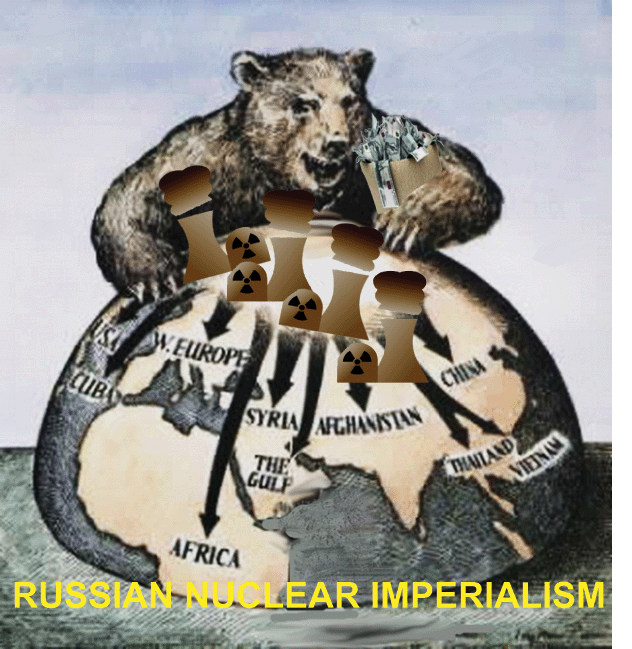
Belarus to swap gas dependence on Moscow for nuclear dependence on Moscow https://bellona.org/news/nuclear-issues/2020-03-belarus-to-swap-gas-dependence-on-moscow-for-nuclear-dependence-on-moscowA nuclear power plant built to lessen Belarus’s dependence on Moscow for natural gas – but constructed and lavishly financed by Russia’s state nuclear corporation Rosatom – is due to begin operation later this year, officials in the Belarus capital of Minsk have said. March 24, 2020 by Charles Digges
A nuclear power plant built to lessen Belarus’s dependence on Moscow for natural gas – but constructed and lavishly financed by Russia’s state nuclear corporation Rosatom – is due to begin operation later this year, officials in the Belarus capital of Minsk have said.
The plant will feature two VVER-1200 reactors – the second of which will come online next year – that will together generate some 2.4 gigawatts of power in the cloistered post-Soviet dictatorship on Russia’s western border.
The International Atomic Energy Agency found that the plant largely fulfilled general safety guidelines and issued a number of recommendations for improvement. Others have raised alarm over potential safety issues. GlobalData quoted energy and nuclear policy analyst Mycle Schneider as warning: “Neighboring countries have voiced concern over the lack of review of some serious safety concerns, and Lithuania has transmitted an official note to the European Council.”
Since its inception in the early 2000s, the Belarus nuclear power plant, in Ostrovets near the border of Lithuania, has been fraught with difficulties. Environmentalists who oppose the plant are routinely harassed and stifled and in some cases kicked out of the country.
Neighboring Lithuania, once seen as a promising potential market when construction began, is now so opposed to the plant that its parliament outlawed purchasing any electricity it produces and has sent envoys to other countries encouraging them to do the same. Poland and the Ukraine have also spoken out against the plant.
Each of these groups have called attention to the mishaps that have plagued the plant during its construction, including an incident in 2016 when technicians inadvertently dropped a 330-ton reactor pressure vessel – which houses the core – from a crane. A replacement unit sent to the site was accidentally run into a column at a railway station when it arrived.
But the plant also illustrates an energy conundrum facing many European countries. While a number of nations in the old Soviet orbit seek to diversify their energy supplies away from Russian natural gas, Rosatom is more than willing to step into the vacuum left by that shift.
By offering huge loans to build and supply nuclear power plants, Rosatom can keep customers financially and technically beholden to Moscow for as long as 50 years.
With other kinds of power infrastructure, a contractor builds a facility and leaves it to be operated by the country where it stands. Not so with nuclear power plants, where foreign government customers, like Belarus, remain dependent on Rosatom – and thus the Russian state – for fuel, know-how and eventual decommissioning works.
That geopolitical strategy is not lost on Lithuania, whose prime minister recently told the New York Times that: “The [Ostrovets} nuclear plant is an example of Russia’s desire to keep states along its borders in its orbit at all costs – it helps them preserve more influence.”
The policy is has broad implications. Rosatom has convinced dozens of countries to sign memorandums of understanding on all manner of nuclear services, from research and training facilities to nuclear power plant construction. As a result, Rosatom says that its portfolio of foreign projects has swelled to more than $200 billion.
But that figure invites skepticism. Many of the counties Rosatom counts toward that figure – like Ethiopia, Algeria, Nigeria, Sudan and Rwanda – won’t be ready to support nuclear power on their grids for decades. Others where Rosatom builds are already underway – like India’ Kudankulam, Iran’s Bushehr and China’s Tianwan – are already familiar with Rosatom’s typical cost overruns and delays.
Furthermore, a deep dig into Rosatom’s claimed income by the Russian environmental group Ecodefence revealed that business wasn’t going quite as indicated.
A report by the group, published last year, detailed a number of cases where the corporation misstated the worth of its overseas reactor construction projects, and inflated their worth by several billion dollars.
Still, the corporation is an ambitious and successful presence on the international market. According to one study, cited by the New York Times, Rosatom has sold more nuclear technology abroad since 1999 than the United States, France, China, South Korea and Japan combined.
Rosatom’s approach to marketing its reactors is distinct from its western competitors because it offers to finance, build and operate the plants that it builds abroad. These generous terms come thanks to the enormous state subsidies Rosatom receives – and which it can then funnel into loans that boost its profits on paper.
The Belarus plant, for instance, comes thanks to a $10 million line of credit from Rosatom. Hungary, a member of the EU, became another customer when it took an $11 billion loan to build its Paks II in 2016. Rosatom also won a $30 billion contract for four reactors in Egypt, and another big nuclear plant deal in Turkey.
While it’s tempting to see a strategy afoot in Rosatom’s foreign projects, the Kremlin insists it’s just business. President Vladimir Putin has publicly distanced himself from mixing politics with foreign commerce.
|
|
March 24, 2020
Posted by Christina Macpherson |
Belarus, politics international, Russia |
Leave a comment
|
Moscow starts work on highway through nuclear waste site https://www.dw.com/en/moscow-starts-work-on-highway-through-nuclear-waste-site/a-52864335Preparation for the construction of a controversial road in the Russian capital has kicked off. Activists say it could send radioactive dust into the air and river. But the authorities are pushing on with the project. Residents film on their mobile phones as an excavator broke ground to prepare the construction site. They film through the shoulders of a row of police officers, pointing out that no one is wearing protective clothing for work on a nuclear waste site. “These comrades are protecting us from the radiation,” says one woman sarcastically about the officers. “Just wonderful.”
Behind the police line is a factory that produces military equipment. The onetime Polymetals factory used to extract thorium and uranium from ore and dump radioactive waste here in the 1950s and 1960s, before this spot became part of the territory of the capital. The site stretches along the sloping banks of the Moskva River, with the popular Kolomenskoe park on one side and residential apartment blocks on the other.
Since January, Sergey Vlasov has been one of around 50 local activists standing guard at the site around the clock to prevent construction. “My family has lived here for decades,” he says. “It’s my home and I don’t want to have to move to avoid the threat of nuclear radiation. I don’t want to have to worry about them thoughtlessly digging this all up and radioactive dust being released into the air.”
Vlasov is an elected deputy in the municipal council of the Pechatniki district across the river, and he also worries about representing his voters. There have been several protests against the highway, which demonstrators have call the “Road to Death.”
Another local resident, Anna, whose windows look out on the nuclear waste dump, says the project is “scary” and complains that the police officers here are essentially “acting as security guards for the bridge building company.”
Killing two birds with one stone
According to city authorities, the planned highway and flyover will help with Moscow’s chronic traffic problems by connecting districts and helping free up the city’s main ring road. In an official blog post Moscow’s mayor, Sergey Sobyanin, wrote in January that although the highway is no “panacea,” there are “no logical alternatives” to it.
He did, however, admit for the first time that the area is contaminated. Sobyanin insists that construction of the highway will “solve two problems at once” by “radically improving the transportation situation and eliminating a radioactive dump.” On the other hand, the city authorities have repeatedly insisted that the actual highway will not cut through the nuclear waste itself. On its website the city planning department explains that the current work is merely preparation for construction, and that they will only begin work on the flyover after “positive results” confirm that the area is clean.
Beneath the surface
But the cleanup is difficult. The government agency in charge of it, Radon, has been removing contaminated soil from the site for years to prevent slippages. In an agency publication from 2006, Radon’s chief engineer for Moscow, Alexander Barionov, said that the hilly location of the site would make a full cleanup tough. “One incautious step, and radioactive soil gets into the river.”
Rashid Alimov from the Russian branch of Greenpeace thinks authorities should not be digging in the area without having carried out a full ecological evaluation of the site. “We don’t really even know to what extent the company, Radon, understands where exactly the nuclear waste is and how deep it really is in the ground.”
The authorities did check the area ahead of the decision to build. But Greenpeace insists they were too superficial, and the group is taking the city to court to get that evaluation declared invalid. “Our position is that this place should have officially been declared a nuclear waste dump,” Alimov says. Greenpeace carried out its own tests with an external company in October and found that radiation in several samples from the area is “above the permissible norm” and that building work should not be carried out there.
Alimov also points out that the government is contradicting itself. He cites a 2017 report from the official Russian consumer watchdog Rospodtrebnadzor on the “sanitary and epidemic” conditions in Moscow, which stated that there were 60,000 tons of nuclear waste by the former Polymetals factory. “That’s a very inconvenient number for Moscow authorities now,” he says.
Keeping up the fight
But many local residents seem to feel that the work being done ahead of building shows the authorities will most likely go ahead with their plans no matter what. Still, even after the excavators arrived, they were as determined as ever to stand their ground, despite the high police presence at the construction site.
Local politician Vlasov thinks the authorities are trying to scare the activists. “They are trying to make us sit tight and keep quiet. At the moment, all the actions of the mayor’s office aim to hush this up,” he says. “But we will keep trying to attract attention to this situation.”
Authorities have opened a criminal case against several activists for apparently damaging a radiation monitor on the site. And there were several standoffs between protesters and police last week. On Thursday, over 60 activists were briefly detained.
Vlasov says that since the arrests the residents have been regrouping. They may have to call off their shift duty at the construction site, he says. But just like Greenpeace, they are hoping to take authorities to court over the highway plans.
“Of course we will keep fighting,” he says. “We plan to take this case to court — even though no one really believes we can win.”
|
|
March 24, 2020
Posted by Christina Macpherson |
politics, Russia, safety |
Leave a comment

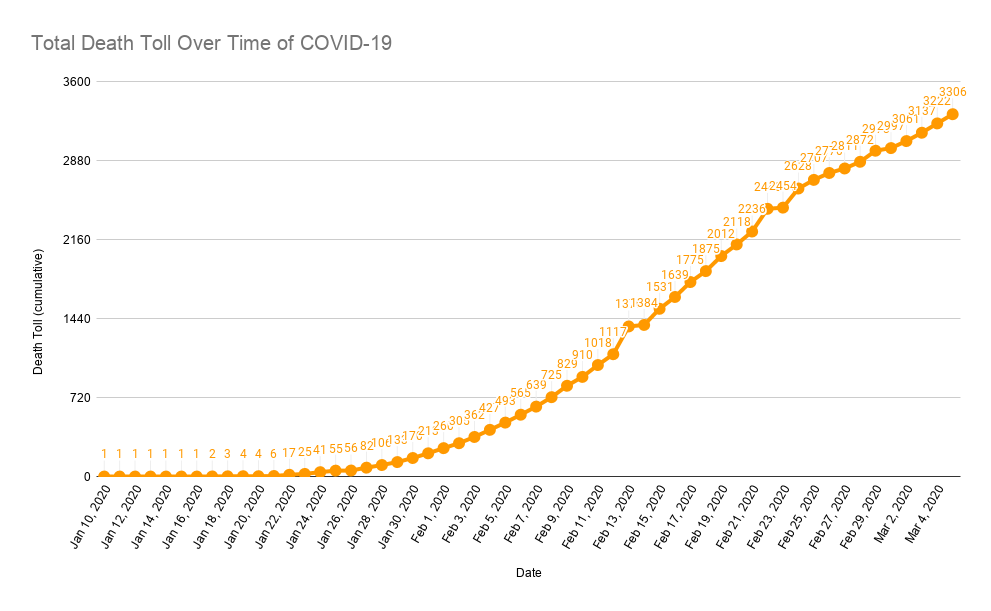
graph above is of world total.
Events happen so quickly. It becomes important to know what news is true, and what is not. It is something of a crisis in journalism, – which analysis, which interpretation is credible? I try to follow articles that make sense, and come from reliable writers and journals. Reported numbers vary a lot – of those infected with Cov19, of the deaths. For one example – USA infection numbers are almost certainly far greater than reported, because of inadequate testing. In interpretation, Donald Trump’s phrase the “Chinese virus” feeds in to xenophobia, an unfortunate theme when global co-operation is needed, to combat a global epidemic. Politicians exploit false conspiracy theory that the coronavirus is a bioweapon.
What action is needed? I found this article, with its excellent graph, a reliable guide. It helped me to conclude that the drastic shutdowns and “social distancing”will have awful results, but that inaction on coronavirus would be worse.
Some bits of good news – 10 Positive Updates on the COVID-19 Outbreaks From Around the World
Coronavirus Covid-19 Testing Per Capita By Country; The US Near The Bottom; India Worse
Tokyo Olympic Games‘ costly chaos: they can’t be held in 2020.
“Balance” a dangerous practice – journalists presenting as equal -Trump’s and scientists’ opinion on coronavirus science.
Coronavirus threatens nuclear power plants with staff shortages, possible shutdowns.
Destruction of habitats, loss of biodiversity, bring pandemics.
Impact of coronavirus is curbing greenhouse gas emissions.
Paul Ehrlich on Coronavirus and the growthmania that drives environmental destruction. Bill McKibben on the Virus and the Climate Movement. Global warming influence on extreme weather events has been frequently underestimated. Coronavirus Halts Street Protests, but Climate Activists Have a Plan.– Ozone-depleting chemicals appearing again in the atmosphere.
Nuclear Power Plants: Tritium is a lot more hazardous than they say. Dr Ian Fairlea on Epidemiological Evidence of Cancer Risks.
“Peaceful” and military nuclear reactors always inextricably linked. Nuclear-powered submarines – fraught with legal and political problems. New research on the global climate impacts of a small nuclear war. The catastrophic danger to nuclear weapons complexes, of climate change’s extreme weather.
A new low-cost solar technology for environmental cooling.
USA.
UK Sellafield nuclear facility cuts back drastically on staff working onsite. Sellafield nuclear waste site to close due to coronavirus. Nuclear waste transport disrupted by measures to stall coronavirus. Hinkley nuclear worker concerned at coronavirus risks at the site. EDF reassures UK that during coronavirus epidemic, nuclear operations will continue. Britain’s Trident nuclear submarine base is in the grip of a Coronavirus scare.
The Sizewell C project would tear through preciously fragile nature preserve. The Blackwater Against New Nuclear Group (BANNG) protests the lack of full information on nuclear plans.
JAPAN.
RUSSIA. Coronavirus in Russia: The Latest News. Big European bank offers to help Russia retrieve 1000s of radioactive junk from the Arctic sea.
FRANCE. French nuclear workers in fear of coronavirus infection. Coronavirus cluster in the area – construction stalled at France’s Flamanville nuclear reactor.
CANADA. Canada pushing Small Modular Nuclear Reactors, but the outlook for uranium/nuclear industry is bleak.
IRAN. Iran, hit by hardship and coronavirus, gets callous sanctions from Trump administration.
BULGARIA. Bulgaria delays deadline for Belene nuclear project bids.
NORTH KOREA. What effect will pandemic have on tensions with North Korea?
AUSTRALIA. Doctors again call on Australian govt about Julian Assange’s precarious health, risk of coronavirus. The Morrison govt’s emergency measures are a massive subsidy to Australia’s largest corporations.
March 24, 2020
Posted by Christina Macpherson |
Christina's notes |
1 Comment







 nuclear-news