Coronavirus Shows Us What Our Future Could Look Like During Climate Crisis
Coronavirus Shows Us What Our Future Could Look Like During Climate  Crisis, BY Sharon Zhang, Truthout, March 29, 2020 The COVID-19
  pandemic has rapidly been absorbed into our collective consciousness, remaking the fabric of our lives. Suddenly, millions are sheltering in place, strangers have started wishing each other well when exiting grocery stores, people have stopped touching their faces and shelves that are normally stocked with bleach and hand sanitizer are barren.
For many, the looming sense of dread is a new sensation….
But for those of us who have lived in acute awareness of the reality of the climate crisis, the current state of pandemic dread feels awfully familiar — just a more imminent version of the dread about the climate that we have been feeling for years.
It’s a psychological phenomenon known informally in the climate community as climate anxiety, climate grief or eco-anxiety…….
Though the pandemic-panic that Mull and others have written on has been ongoing for the past few weeks, climate writers started opening up about their climate grief years ago. …….
But it’s not just psychological trauma that these two crises share — if you take the time to look, the similarities run wide and deep. These are twin worldwide crises that require global cooperation to defeat; they will ravage the way of life as we know it; they will affect, in one way or another, nearly every single person on Earth.
The economy as we know it — rather, as we knew it three months ago — will be a thing of the past if we let the climate crisis continue unmitigated…….
Economists are currently struggling to model all of the short-term effects of the pandemic, so many of those remain unknown. Climate researchers, however, have had much more time to model the future economic impacts of the climate crisis. By 2090, in the U.S. alone and under the same high emissions scenario, NCA researchers predict that costs from mortality due to extreme temperatures will total $141 billion a year, losses of coastal property will total $118 billion a year, and labor losses will cost $155 billion a year. That’s equivalent to a Hurricane Katrina every single year, just from lost labor.
The health care system, too, will be overwhelmed by the climate crisis, just as hospital beds are rapidly being filled by COVID-19 patients. In some places, the climate crisis has already given a preview of this: In 2018, record heat waves caused U.K. hospitals to utilize emergency procedures, when people were being sent to the hospital in such an overwhelming volume that ambulances had to line up outside.
Though COVID-19 is causing hospitals to fill up simultaneously nationwide, “climate-related events will be more limited in their spatial scale, but will be increasingly frequent over time,” says Kristina Dahl, a senior climate scientist at the Union of Concerned Scientists. A heat wave in San Francisco won’t set the whole country ablaze, but it could overwhelm the local health care system.
The key difference between illness caused by a pandemic and the climate crisis, Dahl points out, is that it’s much easier to trace the illness caused by the former. “Things like hurricanes and heat waves and wildfires have always occurred,” she says, but, “to some extent, we know that we are amping them up by adding greenhouse gases to the atmosphere.”
This is likely, in part, why the federal government has quickly pivoted to action on COVID-19, while greenhouse gases have remained largely untouched by Congress for decades. While right-wing media and politicians denied the consequences of inaction on the virus just weeks ago, they have quickly had to change their tune as the spread of the virus has become undeniable. Whereas with long-term, gradual change, it’s easy for deniers to blame such things as the severity of the bushfires in Australia on anything but increasingly hot and arid conditions caused by climate change.
The ruling class has also had less motivation to address the climate crisis because the people suffering the most are, disproportionately, already marginalized. Poor, Black and health-compromised people are and will be the hardest hit by both crises — and some are already being affected by both at once. Air pollution is continually one of the most pronounced issues of environmental justice, and physicians have said those with continual exposure to air pollution are likely to be more vulnerable to the effects of coronavirus……..
“Coronavirus has made so clear that global issues can’t be easily categorized as just a health issue or just an environmental issue,” says says Kristina Dahl, a senior climate scientist at the Union of Concerned Scientists. “They really encompass our broader economy and encompass or entire social systems and ways of life.” ….. https://truthout.org/articles/coronavirus-shows-us-what-our-future-could-look-like-during-climate-crisis/?eType=EmailBlastContent&eId=5e383daa-77a3-48e3-a6f5-f82b689f50fc
Kansai Electric Power Co’s history of nuclear corruption
 While the depth of the scandal has
  surprised many, stories of collusion and bribery in Fukui towns hosting Kepco’s plants are quite common and date back to the 1970s when the first power plants opened.
Naito, who died in 2018, claimed to have directed illicit cash payments to prime ministers and key politicians in the ruling and opposition parties between 1972 and 1990 in exchange for favorable legislation regarding nuclear power and electricity policies.
A closer look at Kansai Electric and its gift-giving scandal https://www.japantimes.co.jp/news/2020/03/29/business/kansai-electric-gift-giving-scandal/#.XoEN-YgzbIU BY ERIC JOHNSTON, STAFF WRITER OSAKA – Earlier this month, Kansai Electric Power Co. concluded that scores of its employees had received cash and gifts worth hundreds of millions of yen from an influential politician in a Fukui Prefecture town where the utility operates a nuclear power plant. The revelations by Kepco’s investigative panel once again showed the dark side of Japan’s nuclear industry.
What is Kepco?
Kepco is the major utility providing electric power to the Kansai region, including Kyoto, Osaka, Nara, Hyogo, Shiga and Wakayama prefectures. With over 20,000 direct employees and 77 affiliated companies, it is one of Kansai’s largest and most influential corporations economically, but also politically. Kepco executives have long held high leadership positions in local business lobby groups such as the Kansai Economic Federation, which played a leading role in convincing local and national politicians, as well as the appropriate ministries in Tokyo, to approve and fund projects ranging from Kansai Airport to the 2025 Expo. Kepco’s largest shareholder is the city of Osaka, which owned about 7.3 percent of Kepco’s stock as of September 2019.
What’s the role of the Takahama plant?
Fukui Prefecture is home to 11 Kepco nuclear reactors at three plants. One of these is the Takahama plant, which hosts some of Japan’s oldest reactors. The No. 1 and 2 reactors are now over 40 years old but scheduled to be restarted later this year. The No. 3 and 4 reactors, which are 35 and 34 years old, are offline and currently being upgraded to better protect against terrorism threats. But construction is running behind schedule and the exact date of their restart is unclear.
In 2010, just before the Great East Japan Earthquake and the resulting nuclear disaster in Fukushima, nuclear power at Kepco’s three Fukui plants accounted for 51 percent of its electricity sources. That figure sat at 29 percent as of the end of the 2018 fiscal year.
What was the scandal all about? Continue reading
Nuclear stations having difficulties with staffing; one station has workers positive for Covid19

 Coronavirus could disrupt normal refueling practices for nuclear facilities as staffing concerns grow, Utility Dive, By Iulia Gheorghiu March 26, 2020, The nuclear sector has sprung into action to screen employees for signs of the novel coronavirus and prepare for potential disruptions to their typical refueling practices in light of pandemic-related travel restrictions……..
Entire crew of nuclear submarine in coronavirus quarantine
“Orel” (K-266) is an Oscar-II class nuclear-powered submarine sailing for the Northern Fleet. Normally, the submarine has a crew of about 110 sailors.
The civilian that had met with a man infected with the coronavirus was on board “Orel” in a “business matter”, Murmansk-based news-online B-port reports.
Also, the crew of a nearby submarine and the personnel on a floating workshop are placed in quarantine.
The submarine is based in Zapadnaya Litsa, the westernmost bases of the Northern Fleet on the Kola Peninsula.
No reports have been published about any coronavirus cases in Zaozersk, the navy town where the crew and their families live.
By March 28th, Russia’s official number of coronavirus infections raised to 1,264.
The “Murmansk group” on social media channel Vkontakte says there are 12 people who have given pre-positive tests of coronavirus in the Murmansk region.
Government under pressure to suspend non-essential construction work (such as building nuclear plants)
“The judgment we have made is that in work, in many instances, the 2m rule can be applied,” he said.
However critics say public health should be prioritised over the economy during the coronavirus outbreak.
Former Tory cabinet minister Iain Duncan Smith joined those calling for a temporary suspension of work. He told the BBC: “I think the balance is where we should delete some of those construction workers from going to work and focus only on the emergency requirements.”
The confusion over who is able to work came after Prime Minister Boris Johnson’s announced a nationwide lockdown in a televised address on Monday night.
The PM said people should only leave their homes to shop for basic goods, fulfil medical needs, to exercise and to travel to work when “absolutely necessary”. However the types of work considered necessary has not yet been made clear….. https://www.cityam.com/government-under-pressure-to-suspend-non-essential-construction-work/
Thoughts in the time of pandemic
Yes, this is an aberration from the real focus of this website.
 BUT – we’re all going to have to deal with the time of pandemic.
The positives. Much kindness is going on – people offering help to the disabled, the elderly … the courage of health workers – the music – the balcony cheerers, the social networking, the chance to be still at home, and reflect.
The negatives. The vulnerable millions of the poor and crowded, in India, and elsewhere – the losses of jobs and income, the loneliness, the family stress, domestic violence, the “digital divide” – for those without smartphones and computers. The big corporations that will emerge as the winners.
What to do? Here’s my suggestion, (if you can) :
COVID-19 Threatens Outages Scheduled at 97% of U.S. Nuclear Plants in 2020
|
Nuclear Industry in the Time of Pandemic – theme for April 2020
Nuclear power may soon be irrelevant to our energy needs. With the pandemic and social distancing, nuclear reactors are likely to be cutting back on output, or even going offline. And there are still the risks of extreme weather. Irrelevant, but still dangerous. Similarly, other nuclear facilities, like waste management, and nuclear weapons sites are also threatened. New nuclear development possibly stopped in its tracks, and certainly adding to its already astronomic costs.
The nuclear lobby, desperate to keep its industry alive, is claiming that “essential work” is the construction of the UK’s boondoggle –Hinkley C project, and USA’s boondoggle Nuclear Plant Vogtle.
The “Small Nuclear Reactors” industry development is looking sillier – carrying its huge financial risk, but no safety risk yet, seeing that it does not physically exist.
Nuclear-powered U.S. Aircraft Carrier Roosevelt now carrying Coronavirus
 Coronavirus Diverts U.S. Aircraft Carrier From Mission In Western Pacific https://getaka.co.in/usa-news/coronavirus-diverts-u-s-aircraft-carrier-from-mission-in-western-pacific/ March 26, 2020 npr.org First it was commercial cruise ships that became floating petri dishes for the coronavirus.
Now the U.S. Navy’s nuclear powered aircraft carrier USS Theodore Roosevelt has been diverted to the U.S. “There were three [crew members who] initial[ly tested positive], there were five more that were flown off the ship or in the process of being flown off the ship, and then there are several others that are in isolation right now,” Acting Secretary of the Navy Thomas Modly said Thursday at the Pentagon. “But the ship is going to be pulling into Guam, and they’re going to figure out from there who needs to come off, who can stay on, looking at the level of symptoms and things like that. “
Other U.S. officials have said there are now dozens aboard the Roosevelt who have been found to be infected with the coronavirus.
“We are already starting the process of testing 100 percent of the crew to ensure that we’ve got that contained,” said Modly.
There are 5,000 sailors aboard the carrier, and Modly says some are being tested with approximately 800 test kits available and a limited laboratory capacity to process them on board.
With 133 confirmed cases of COVID-19 as of Thursday morning, the Navy accounts for nearly half of the U.S. military’s 280 reported cases.
“Our forces are all over the world all the time, that may have something to do with it,” Modly said, “and we also have big fleet concentration in areas such as San Diego, Norfolk and other areas where we have a lot of people that are together.”
The acting Navy secretary spoke shortly after Defense Secretary Mark Esper told Reuters that the Pentagon would no longer be disclosing in granular detail where cases of COVID-19 in the U.S. military have been detected.
“What we want to do is give you aggregated numbers,” the wire service quotes Esper as saying. “But we’re not going to disaggregate numbers because it could reveal information about where we may be affected at a higher rate than maybe some other places.”
Modly acknowledged that the Navy had not been disclosing which of its ships had been impacted by the outbreak.
“But obviously the information about the [Roosevelt] came out and we felt it was responsible for us to come out and give you all the straight story about what’s happening there,” he told reporters in the Pentagon briefing room. “We’ll follow the direction of the secretary of defense in terms of this, but from my perspective, being as transparent as possible is probably the best path.”
Pandemic plan for Nuclear Power Plant could make employees isolate at the reactor
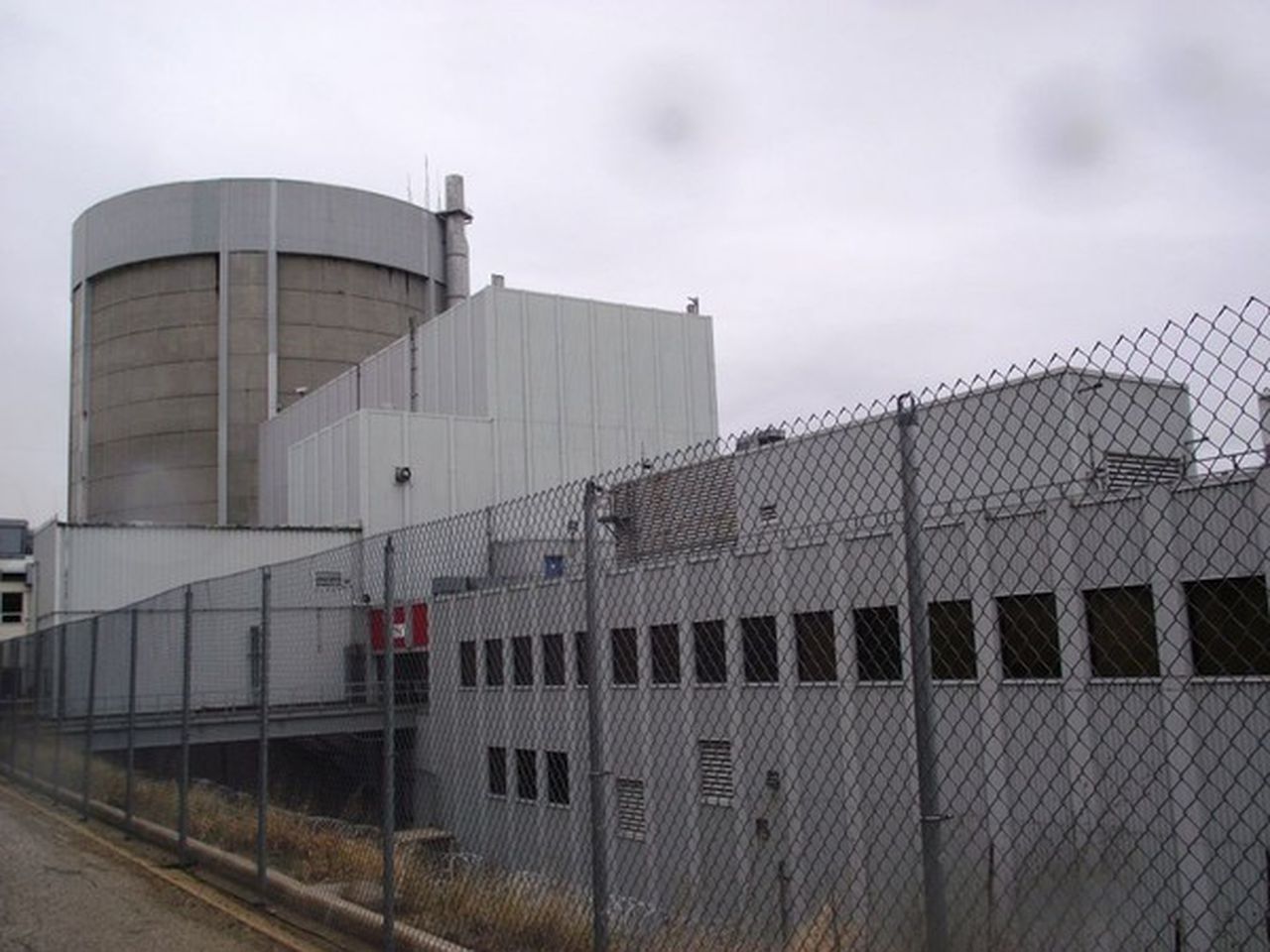
Nuclear plant could ‘sequester’ employees to live on-site under pandemic plan By Brad Devereaux | bdeverea@mlive.com-27 Mar 20, COVERT, MI — The company that owns Palisades nuclear plant has a private pandemic plan that includes a contingency to sequester employees live at the site temporarily, though that scenario is unlikely, a company spokeswoman said……
Entergy owns the nuclear plant situated on the Lake Michigan shoreline about 7 miles south of South Haven…..
Sequester means employees would reside on site, Gent said. The company declined to release its full plans to MLive because they contain business-sensitive information, she said….
The Nuclear Regulatory Commission, which inspects to ensure safety at plants across the country, said resident inspectors are ready to respond immediately should there be developing safety issues amid the coronavirus outbreak. Resident inspectors will make regular visits to operating nuclear power reactor sites and will remotely monitor plant data systems, meetings and other information. Back-up inspectors are available from regional offices or headquarters should they be necessary to maintain oversight, the NRC said…..
In 2017, Entergy announced that it planned to close Palisades in the spring of 2022.
In Aug. 2018, Entergy announced it had agreed to sell the subsidiaries that own Palisades and the Pilgrim Nuclear Power Station in Plymouth, Massachusetts, after their shutdowns and reactor defuelings, to a Holtec International subsidiary for prompt decommissioning.
Call to suspend all contractor work at Hinkley new nuclear site, because of Covid19
 NFLA 26th March 2020, The Nuclear Free Local Authorities (NFLA) calls today for the suspension of all work by contractors of EDF Energy at the Hinkley Point C proposed new nuclear reactor site, due to the concerns of an infection spread from the public health emergency sparked by the covid-19 outbreak.
sadly considerable amounts of people losing their employment – though the
government is seeking to provide most of them with 80% of their current
income.
The nuclear industry’s 2007 NEI Pandemic Licensing Plan still accepted, but not really safe
 Nuclear Power Safety and the COVID-19 Pandemic https://allthingsnuclear.org/elyman/nuclear-power-safety-and-the-covid-19-pandemic ED LYMAN, ACTING DIRECTOR, NUCLEAR SAFETY PROJECT; SENIOR SCIENTIST, GLOBAL SECURITY PROGRAM | MARCH 26, 2020, With the world facing overwhelming and immediate threats from the novel coronavirus (COVID-19) pandemic, the risks of nuclear power are probably far from the thoughts of most people. But there is no escaping the fact that nuclear plants, which provide about 20 percent of the U.S. electricity supply, require highly-trained staff to operate them safely and to protect them from terrorist attacks. Nuclear Power Safety and the COVID-19 Pandemic https://allthingsnuclear.org/elyman/nuclear-power-safety-and-the-covid-19-pandemic ED LYMAN, ACTING DIRECTOR, NUCLEAR SAFETY PROJECT; SENIOR SCIENTIST, GLOBAL SECURITY PROGRAM | MARCH 26, 2020, With the world facing overwhelming and immediate threats from the novel coronavirus (COVID-19) pandemic, the risks of nuclear power are probably far from the thoughts of most people. But there is no escaping the fact that nuclear plants, which provide about 20 percent of the U.S. electricity supply, require highly-trained staff to operate them safely and to protect them from terrorist attacks.They also need periodic maintenance to ensure that critical safety systems remain in good working order. And, they must be closely supervised by the Nuclear Regulatory Commission (NRC) to ensure that plant owners are effectively implementing nuclear safety and security requirements. However, the NRC does not generally oversee the health and safety of plant workers unless it is related to radiation exposure, so it is largely up to the plant owners themselves to implement protective measures against COVID-19 to ensure they have a functioning workforce. Reports about potential coronavirus cases among the workforce at Plant Vogtle in Georgia and allegations of a lack of enforcement of social distancing protocols there raise concerns about the adequacy of the industry’s response to the COVID-19 pandemic. During crises such as the current pandemic, ensuring that nuclear power plants operate safely and reliably is even more critical. Tens of millions of Americans live within 50 miles of operating nuclear power plants. A reactor accident or terrorist attack could release a large amount of radioactive material into the environment, potentially exposing many people to high levels of radiation. As the world saw after the 1986 Chernobyl and 2011 Fukushima accidents, such an event at a U.S. nuclear plant might force people from their homes for months or longer and contaminate food and water supplies—the last thing Americans need to deal with right now. Compounding the impacts of such a disaster with the social and economic disruptions caused by spread of the virus would further strain an already fragile health care system and economy. Thus it is incumbent on the NRC to make sure that the pandemic does not compromise nuclear safety and security—and if it does, to take whatever actions, including ordering plant shutdowns, are necessary. However, the NRC will likely face tremendous pressure from nuclear plant owners, some of whom are financially strapped, to keep their plants running and generating revenue. The NRC should have developed a policy long ago to address these questions, but like the rest of the U.S. government, it is now playing catch-up fast. Short-staffing nuclear plantsA key question the NRC may soon face is how it should react if a nuclear plant is unable to maintain the required numbers of licensed control room operators and security personnel per shift. For example, a single control room at a two-unit plant must be staffed with three operators and two senior operators. Also, there must be at least ten armed responders on each shift to protect the plant from radiological sabotage attacks—and the actual number most plants have committed to providing is likely higher. There are also regulations governing work hours and fatigue management that were put into place partly to address excessive overtime issues that arose after the 9/11 attacks. Licensees could apply for waivers from work hour restrictions if the number of available personnel were to decline, but those extensions would be limited due to the potential for fatigue. If a plant is unable to meet any of these requirements, it generally must shut down unless the NRC provides an exemption from the regulations or relief from license commitments. NRC can allow reactors to operate while in violation of their legally binding license commitments by granting a “notice of enforcement discretion.” The radiological risk to public health and safety will generally increase when the plant is operating outside of approved license limits. In evaluating whether to issue a notice of enforcement discretion, the NRC uses a standard that there should be “no significant increase” in radiological risk after reactor owners have implemented compensatory measures. This standard is nominally the same during a pandemic or other national emergency as at any other time. But difficult choices may be necessary if nuclear plant shutdowns were to jeopardize the availability of electricity during such an emergency, which is unlikely given that most regions of the country have supply well in excess of their reserve margins and COVID-19 is suppressing demand. In any event, such considerations are beyond the scope of NRC’s authority to ensure radiological safety and security. The industry’s proposal: increase riskThese issues are not new. In 2006, the NRC held a workshop to consider the impacts of a pandemic flu outbreak on safety. A number of difficult policy questions were discussed, including the potential need to sequester workers early in an outbreak and the effect of high rates of absenteeism. But little was done to resolve these questions. In 2007 the Nuclear Energy Institute (NEI), the nuclear industry’s main trade organization in Washington, submitted a draft “Pandemic Licensing Plan” to the NRC for review. The plan recognized “the potential for an influenza pandemic to reduce nuclear plant staffing below the levels necessary to maintain full compliance with all NRC regulatory requirements,” described “the regulatory actions necessary to permit continued operation with reduced staffing levels for approximately four to six weeks” and recommended, “NRC enforcement discretion as the most efficient and effective licensing response to a pandemic.” In justifying this approach, NEI argued that “regulatory relief to permit rescheduling of selected activities and deferral of most administrative and programmatic requirements would balance the risk from continued operation with the risk from regional blackouts and grid instability.” At the time, the NRC did not buy NEI’s argument for broad and pre-approved enforcement discretion that would increase radiological risk during a pandemic, responding that “the NRC staff finds that without bounding entry conditions and more specific technical bases for the proposed regulatory relief, NEI’s approach still presents significant challenges that may prevent meaningful overall progress in pandemic preparation. For instance, the plan contains only limited justification concerning the public health and safety need for nuclear power plants to remain on-line during a pandemic; likewise, the plan does not adequately explain why increased safety and security risk may be offset by considerations of need for electric power. Moreover, the plan continues to raise other significant legal and policy issues that would need to be resolved.” The situation today: too little, too lateAlthough the NRC and NEI continued to discuss these issues more than a decade ago, there is no indication that their differences were ever resolved. Concern about an influenza pandemic was overshadowed by the Fukushima accident. Today, the NRC is in a different place. Three of the four sitting commissioners are Republicans who embody the spirit of the pro-industry, anti-regulation Trump administration. It would be shocking to see the NRC staff criticize an NEI proposal in 2020 the way it did back in 2008. In an NRC public meeting on March 20 to discuss regulatory issues related to the coronavirus pandemic, an NEI representative referred to the 2007 NEI Pandemic Licensing Plan as the basis for the industry’s regulatory contingency approach, and no one from the NRC raised the staff’s previous concerns about the plan. The NRC staff said that the agency was planning to issue a memorandum to provide guidance on enforcement issues, but did not address the standards it would be using to approve enforcement discretion—and in particular, whether it now accepted NEI’s argument that a net increase in radiological risk would be appropriate to reduce the unlikely risks to the electrical grid. The NRC assured me today that its risk standards for granting enforcement discretion have not changed and that if they deemed any plant unsafe they could and would issue an order to shut it down. More details should be available when it releases its Enforcement Guidance Memorandum later this week. However, there may be extreme circumstances where the NRC may have to make difficult decisions that would involve the balancing of radiological risk and electricity supply risk. If so, the NRC will need to consult not only with other government agencies responsible for grid security and infrastructure protection but also with the public. Such discussions should begin now. Hopefully, it is not yet too late to come up with a satisfactory answer. |
|
|
Olympic Torch Relay stopped – another blow to the nuclear propaganda about “Fukushima recovery”

Now Postponed, The Olympic Torch Relay Was To Bring Hope To Ravaged Fukushima, March 26, 2020, Heard on All Things Considered“………….This region was devastated nine years ago when the largest earthquake in Japan’s recorded history triggered a massive tsunami. The giant wave washed away nearly 20,000 people, including thousands in Fukushima. It also hit the Fukushima Daiichi Nuclear Power Station right down the coast, causing a partial meltdown that sent plumes of radioactive particles for miles. The area has been trying to rebuild ever since.
Ueno, a 46-year-old wheat farmer, was supposed to run the torch on Thursday through his hometown of Minamisoma. His current home, down the street from the empty field he’s standing in, is one of the only buildings around. His old houseused to be here too…..
This part of Fukushima, in the area around the Daiichi power plant, is still suffering from high levels of radiation. Only a tiny fraction of the population has returned, most over the age of 60, and many streets still sit empty and deserted, left exactly as they were nine years ago tumbled by the earthquake and rotting. It’s not the same Fukushima that it was before the disaster. … https://www.npr.org/2020/03/26/821402324/now-postponed-the-olympic-torch-relay-was-to-bring-hope-to-ravaged-fukushima
Coronavirus brings a big problem for nuclear reactors’ scheduled outages: the industry demands special exemptions
 Covid 19 threatens outages scheduled at 97% of U.S. nuclear plants in 2020
by Sonal Patel, powermag.com, 27 Mar 20
Challenged by the COVID-19 pandemic, the U.S. nuclear industry has asked the Trump administration to ensure nuclear workers, suppliers, and vendors will have access to nuclear plants and personal protective equipment (PPE) during the 2020 spring and fall refueling outage seasons and beyond. All but two of the nation’s nuclear plants had scheduled planned outages this year, work that the generators consider crucial to keep the lights on.
In a March 20 letter to Energy Secretary Dan Brouillette, Nuclear Energy Institute (NEI) President and CEO Maria Korsnick noted nuclear reactors have a “unique requirement” to load a fresh batch of fuel once every 18 to 24 months. The event necessitates a shut down for two to four weeks during which intense work occurs, including critical maintenance.
Each plant typically brings in several hundred specialized workers for this work over a typical period of 30-60 days, which includes activities in advance of and following the outage. These workers typically stay in hotels or board with local families, and eat in restaurants,” Korsnick wrote. In the course of performing outages and in routine operations, nuclear plant workers also use PPE and supplies for radiological protection. As the COVID-19 pandemic intensifies, the industry will also require medical PPE and supplies to minimize its spread, she said. Continue reading
British small nuclear reactors to help Turkey to get nuclear weapons?
 Fears over nuclear Turkey after Rolls Royce reactor deal, Morning Star,
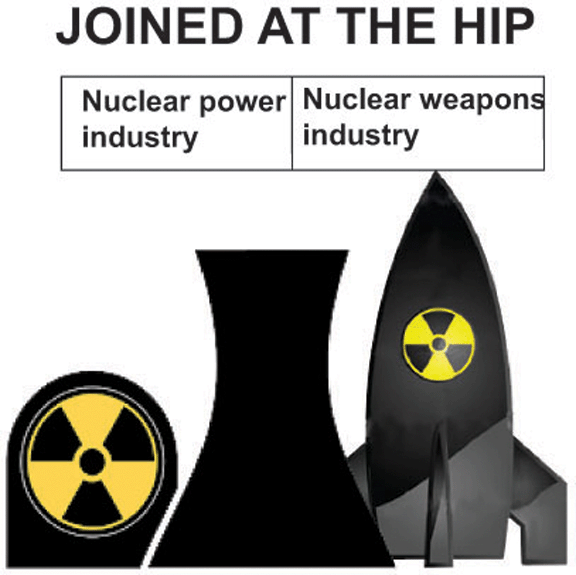
 MARCH 25, 2020 ENGINEERING firm Rolls-Royce has struck a deal with Turkey for the production of nuclear mini-reactors, sparking fears that the British company and its international consortium partners are helping pave the way for Ankara to develop a nuclear bomb…..
the plans have raised fears that Turkey’s authoritarian President Recep Tayyip Erdogan could use the development as a step towards the country becoming a nuclear-armed power.
As previously reported in the Morning Star, Turkey’s secret nuclear programme includes plans to acquire weapons of mass destruction (WMDs), including nuclear missiles.
Writing in a pro-government newspaper in 2017, Mr Karaman said: “We need to consider producing these weapons, rather than purchasing them, without losing any time and with no regard to words of hindrance from the West.”
There are already some 70 US-owned nuclear warheads said to be based at Incirlik airbase near the southern of Adana.
In previous deals with Russia and a Japanese-French consortium, the door was left open for the development of nuclear weapons after Turkey rejected offers to include the provision of uranium and the return of the spent fuel rods used in the reactors.
The development has parallels with the Indian missile capability developed after the testing of plutonium produced in the Canadian-supplied Cirus reactor, which first raised the issue that nuclear technology supplied for peaceful purposes could be diverted to weapons production. https://morningstaronline.co.uk/article/b/fears-over-nuclear-turkey-after-rolls-royce-reactor-deal
-
Archives
- February 2026 (228)
- January 2026 (308)
- December 2025 (358)
- November 2025 (359)
- October 2025 (376)
- September 2025 (258)
- August 2025 (319)
- July 2025 (230)
- June 2025 (348)
- May 2025 (261)
- April 2025 (305)
- March 2025 (319)
-
Categories
- 1
- 1 NUCLEAR ISSUES
- business and costs
- climate change
- culture and arts
- ENERGY
- environment
- health
- history
- indigenous issues
- Legal
- marketing of nuclear
- media
- opposition to nuclear
- PERSONAL STORIES
- politics
- politics international
- Religion and ethics
- safety
- secrets,lies and civil liberties
- spinbuster
- technology
- Uranium
- wastes
- weapons and war
- Women
- 2 WORLD
- ACTION
- AFRICA
- Atrocities
- AUSTRALIA
- Christina's notes
- Christina's themes
- culture and arts
- Events
- Fuk 2022
- Fuk 2023
- Fukushima 2017
- Fukushima 2018
- fukushima 2019
- Fukushima 2020
- Fukushima 2021
- general
- global warming
- Humour (God we need it)
- Nuclear
- RARE EARTHS
- Reference
- resources – print
- Resources -audiovicual
- Weekly Newsletter
- World
- World Nuclear
- YouTube
-
RSS
Entries RSS
Comments RSS
 nuclear-news