COVID-19 Threatens Outages Scheduled at 97% of U.S. Nuclear Plants in 2020
|
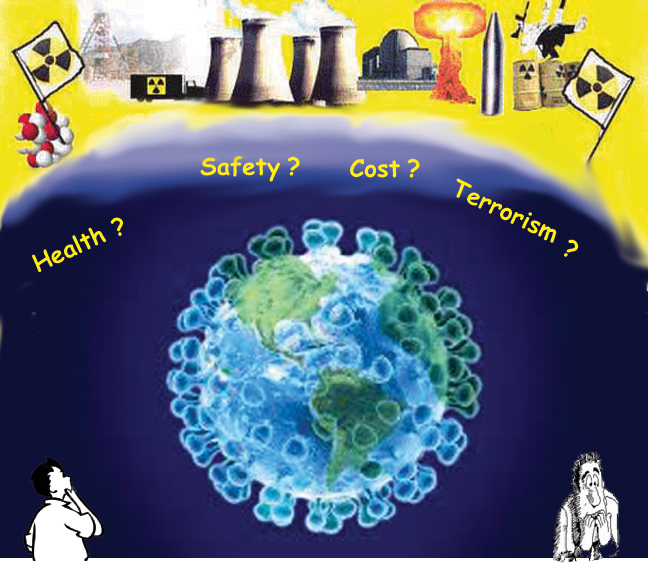
Nuclear Industry in the Time of Pandemic – theme for April 2020
Nuclear power may soon be irrelevant to our energy needs. With the pandemic and social distancing, nuclear reactors are likely to be cutting back on output, or even going offline. And there are still the risks of extreme weather. Irrelevant, but still dangerous. Similarly, other nuclear facilities, like waste management, and nuclear weapons sites are also threatened. New nuclear development possibly stopped in its tracks, and certainly adding to its already astronomic costs.
The nuclear lobby, desperate to keep its industry alive, is claiming that “essential work” is the construction of the UK’s boondoggle –Hinkley C project, and USA’s boondoggle Nuclear Plant Vogtle.
The “Small Nuclear Reactors” industry development is looking sillier – carrying its huge financial risk, but no safety risk yet, seeing that it does not physically exist.
Nuclear-powered U.S. Aircraft Carrier Roosevelt now carrying Coronavirus
 Coronavirus Diverts U.S. Aircraft Carrier From Mission In Western Pacific https://getaka.co.in/usa-news/coronavirus-diverts-u-s-aircraft-carrier-from-mission-in-western-pacific/ March 26, 2020 npr.org First it was commercial cruise ships that became floating petri dishes for the coronavirus.
Now the U.S. Navy’s nuclear powered aircraft carrier USS Theodore Roosevelt has been diverted to the U.S. “There were three [crew members who] initial[ly tested positive], there were five more that were flown off the ship or in the process of being flown off the ship, and then there are several others that are in isolation right now,” Acting Secretary of the Navy Thomas Modly said Thursday at the Pentagon. “But the ship is going to be pulling into Guam, and they’re going to figure out from there who needs to come off, who can stay on, looking at the level of symptoms and things like that. “
Other U.S. officials have said there are now dozens aboard the Roosevelt who have been found to be infected with the coronavirus.
“We are already starting the process of testing 100 percent of the crew to ensure that we’ve got that contained,” said Modly.
There are 5,000 sailors aboard the carrier, and Modly says some are being tested with approximately 800 test kits available and a limited laboratory capacity to process them on board.
With 133 confirmed cases of COVID-19 as of Thursday morning, the Navy accounts for nearly half of the U.S. military’s 280 reported cases.
“Our forces are all over the world all the time, that may have something to do with it,” Modly said, “and we also have big fleet concentration in areas such as San Diego, Norfolk and other areas where we have a lot of people that are together.”
The acting Navy secretary spoke shortly after Defense Secretary Mark Esper told Reuters that the Pentagon would no longer be disclosing in granular detail where cases of COVID-19 in the U.S. military have been detected.
“What we want to do is give you aggregated numbers,” the wire service quotes Esper as saying. “But we’re not going to disaggregate numbers because it could reveal information about where we may be affected at a higher rate than maybe some other places.”
Modly acknowledged that the Navy had not been disclosing which of its ships had been impacted by the outbreak.
“But obviously the information about the [Roosevelt] came out and we felt it was responsible for us to come out and give you all the straight story about what’s happening there,” he told reporters in the Pentagon briefing room. “We’ll follow the direction of the secretary of defense in terms of this, but from my perspective, being as transparent as possible is probably the best path.”
Pandemic plan for Nuclear Power Plant could make employees isolate at the reactor
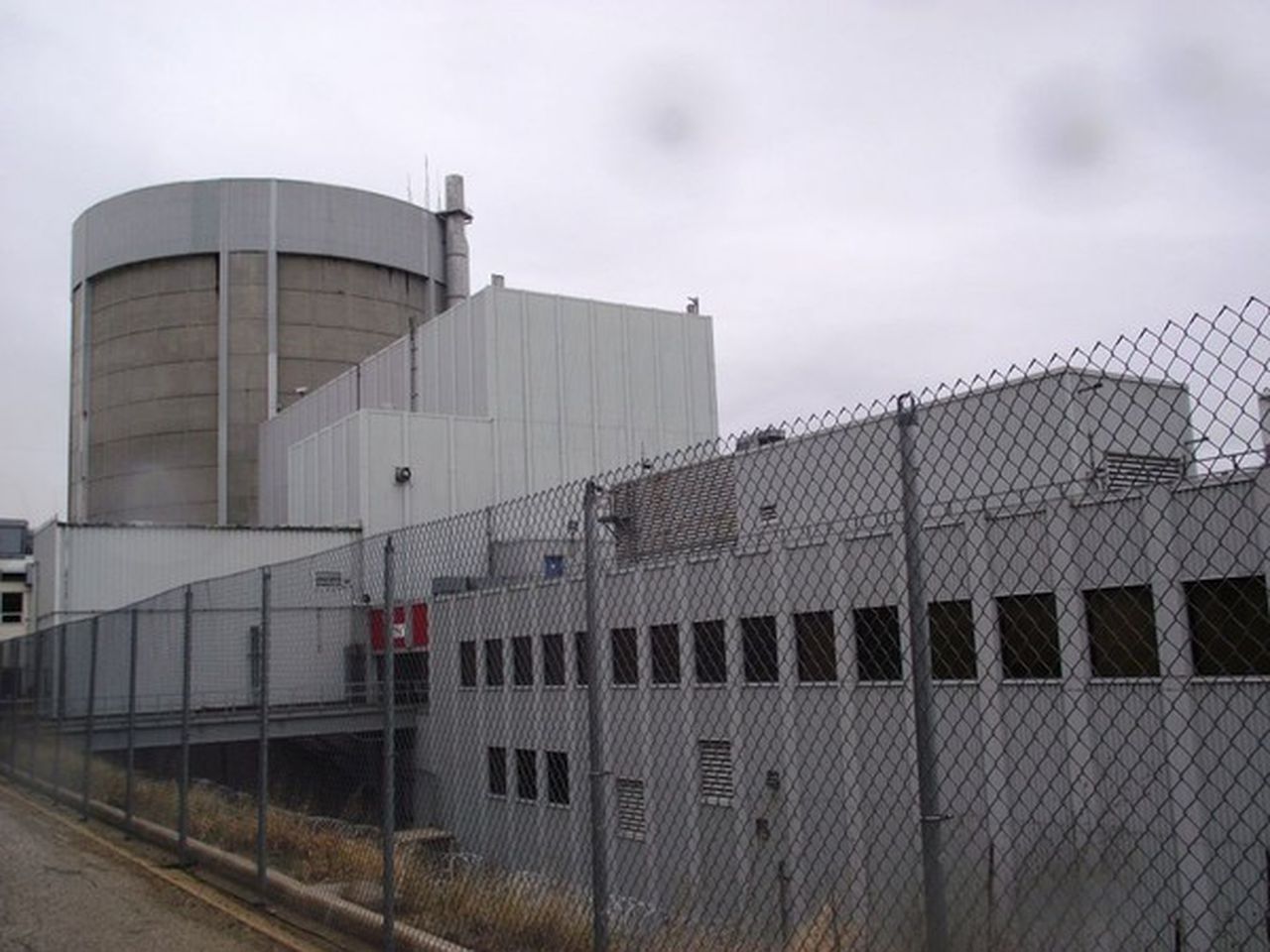
Nuclear plant could ‘sequester’ employees to live on-site under pandemic plan By Brad Devereaux | bdeverea@mlive.com-27 Mar 20, COVERT, MI — The company that owns Palisades nuclear plant has a private pandemic plan that includes a contingency to sequester employees live at the site temporarily, though that scenario is unlikely, a company spokeswoman said……
Entergy owns the nuclear plant situated on the Lake Michigan shoreline about 7 miles south of South Haven…..
Sequester means employees would reside on site, Gent said. The company declined to release its full plans to MLive because they contain business-sensitive information, she said….
The Nuclear Regulatory Commission, which inspects to ensure safety at plants across the country, said resident inspectors are ready to respond immediately should there be developing safety issues amid the coronavirus outbreak. Resident inspectors will make regular visits to operating nuclear power reactor sites and will remotely monitor plant data systems, meetings and other information. Back-up inspectors are available from regional offices or headquarters should they be necessary to maintain oversight, the NRC said…..
In 2017, Entergy announced that it planned to close Palisades in the spring of 2022.
In Aug. 2018, Entergy announced it had agreed to sell the subsidiaries that own Palisades and the Pilgrim Nuclear Power Station in Plymouth, Massachusetts, after their shutdowns and reactor defuelings, to a Holtec International subsidiary for prompt decommissioning.
Call to suspend all contractor work at Hinkley new nuclear site, because of Covid19
 NFLA 26th March 2020, The Nuclear Free Local Authorities (NFLA) calls today for the suspension of all work by contractors of EDF Energy at the Hinkley Point C proposed new nuclear reactor site, due to the concerns of an infection spread from the public health emergency sparked by the covid-19 outbreak.
sadly considerable amounts of people losing their employment – though the
government is seeking to provide most of them with 80% of their current
income.
The nuclear industry’s 2007 NEI Pandemic Licensing Plan still accepted, but not really safe
  Nuclear Power Safety and the COVID-19 Pandemic https://allthingsnuclear.org/elyman/nuclear-power-safety-and-the-covid-19-pandemic ED LYMAN, ACTING DIRECTOR, NUCLEAR SAFETY PROJECT; SENIOR SCIENTIST, GLOBAL SECURITY PROGRAM | MARCH 26, 2020, With the world facing overwhelming and immediate threats from the novel coronavirus (COVID-19) pandemic, the risks of nuclear power are probably far from the thoughts of most people. But there is no escaping the fact that nuclear plants, which provide about 20 percent of the U.S. electricity supply, require highly-trained staff to operate them safely and to protect them from terrorist attacks. Nuclear Power Safety and the COVID-19 Pandemic https://allthingsnuclear.org/elyman/nuclear-power-safety-and-the-covid-19-pandemic ED LYMAN, ACTING DIRECTOR, NUCLEAR SAFETY PROJECT; SENIOR SCIENTIST, GLOBAL SECURITY PROGRAM | MARCH 26, 2020, With the world facing overwhelming and immediate threats from the novel coronavirus (COVID-19) pandemic, the risks of nuclear power are probably far from the thoughts of most people. But there is no escaping the fact that nuclear plants, which provide about 20 percent of the U.S. electricity supply, require highly-trained staff to operate them safely and to protect them from terrorist attacks.They also need periodic maintenance to ensure that critical safety systems remain in good working order. And, they must be closely supervised by the Nuclear Regulatory Commission (NRC) to ensure that plant owners are effectively implementing nuclear safety and security requirements. However, the NRC does not generally oversee the health and safety of plant workers unless it is related to radiation exposure, so it is largely up to the plant owners themselves to implement protective measures against COVID-19 to ensure they have a functioning workforce. Reports about potential coronavirus cases among the workforce at Plant Vogtle in Georgia and allegations of a lack of enforcement of social distancing protocols there raise concerns about the adequacy of the industry’s response to the COVID-19 pandemic. During crises such as the current pandemic, ensuring that nuclear power plants operate safely and reliably is even more critical. Tens of millions of Americans live within 50 miles of operating nuclear power plants. A reactor accident or terrorist attack could release a large amount of radioactive material into the environment, potentially exposing many people to high levels of radiation. As the world saw after the 1986 Chernobyl and 2011 Fukushima accidents, such an event at a U.S. nuclear plant might force people from their homes for months or longer and contaminate food and water supplies—the last thing Americans need to deal with right now. Compounding the impacts of such a disaster with the social and economic disruptions caused by spread of the virus would further strain an already fragile health care system and economy. Thus it is incumbent on the NRC to make sure that the pandemic does not compromise nuclear safety and security—and if it does, to take whatever actions, including ordering plant shutdowns, are necessary. However, the NRC will likely face tremendous pressure from nuclear plant owners, some of whom are financially strapped, to keep their plants running and generating revenue. The NRC should have developed a policy long ago to address these questions, but like the rest of the U.S. government, it is now playing catch-up fast. Short-staffing nuclear plantsA key question the NRC may soon face is how it should react if a nuclear plant is unable to maintain the required numbers of licensed control room operators and security personnel per shift. For example, a single control room at a two-unit plant must be staffed with three operators and two senior operators. Also, there must be at least ten armed responders on each shift to protect the plant from radiological sabotage attacks—and the actual number most plants have committed to providing is likely higher. There are also regulations governing work hours and fatigue management that were put into place partly to address excessive overtime issues that arose after the 9/11 attacks. Licensees could apply for waivers from work hour restrictions if the number of available personnel were to decline, but those extensions would be limited due to the potential for fatigue. If a plant is unable to meet any of these requirements, it generally must shut down unless the NRC provides an exemption from the regulations or relief from license commitments. NRC can allow reactors to operate while in violation of their legally binding license commitments by granting a “notice of enforcement discretion.” The radiological risk to public health and safety will generally increase when the plant is operating outside of approved license limits. In evaluating whether to issue a notice of enforcement discretion, the NRC uses a standard that there should be “no significant increase” in radiological risk after reactor owners have implemented compensatory measures. This standard is nominally the same during a pandemic or other national emergency as at any other time. But difficult choices may be necessary if nuclear plant shutdowns were to jeopardize the availability of electricity during such an emergency, which is unlikely given that most regions of the country have supply well in excess of their reserve margins and COVID-19 is suppressing demand. In any event, such considerations are beyond the scope of NRC’s authority to ensure radiological safety and security. The industry’s proposal: increase riskThese issues are not new. In 2006, the NRC held a workshop to consider the impacts of a pandemic flu outbreak on safety. A number of difficult policy questions were discussed, including the potential need to sequester workers early in an outbreak and the effect of high rates of absenteeism. But little was done to resolve these questions. In 2007 the Nuclear Energy Institute (NEI), the nuclear industry’s main trade organization in Washington, submitted a draft “Pandemic Licensing Plan” to the NRC for review. The plan recognized “the potential for an influenza pandemic to reduce nuclear plant staffing below the levels necessary to maintain full compliance with all NRC regulatory requirements,” described “the regulatory actions necessary to permit continued operation with reduced staffing levels for approximately four to six weeks” and recommended, “NRC enforcement discretion as the most efficient and effective licensing response to a pandemic.” In justifying this approach, NEI argued that “regulatory relief to permit rescheduling of selected activities and deferral of most administrative and programmatic requirements would balance the risk from continued operation with the risk from regional blackouts and grid instability.” At the time, the NRC did not buy NEI’s argument for broad and pre-approved enforcement discretion that would increase radiological risk during a pandemic, responding that “the NRC staff finds that without bounding entry conditions and more specific technical bases for the proposed regulatory relief, NEI’s approach still presents significant challenges that may prevent meaningful overall progress in pandemic preparation. For instance, the plan contains only limited justification concerning the public health and safety need for nuclear power plants to remain on-line during a pandemic; likewise, the plan does not adequately explain why increased safety and security risk may be offset by considerations of need for electric power. Moreover, the plan continues to raise other significant legal and policy issues that would need to be resolved.” The situation today: too little, too lateAlthough the NRC and NEI continued to discuss these issues more than a decade ago, there is no indication that their differences were ever resolved. Concern about an influenza pandemic was overshadowed by the Fukushima accident. Today, the NRC is in a different place. Three of the four sitting commissioners are Republicans who embody the spirit of the pro-industry, anti-regulation Trump administration. It would be shocking to see the NRC staff criticize an NEI proposal in 2020 the way it did back in 2008. In an NRC public meeting on March 20 to discuss regulatory issues related to the coronavirus pandemic, an NEI representative referred to the 2007 NEI Pandemic Licensing Plan as the basis for the industry’s regulatory contingency approach, and no one from the NRC raised the staff’s previous concerns about the plan. The NRC staff said that the agency was planning to issue a memorandum to provide guidance on enforcement issues, but did not address the standards it would be using to approve enforcement discretion—and in particular, whether it now accepted NEI’s argument that a net increase in radiological risk would be appropriate to reduce the unlikely risks to the electrical grid. The NRC assured me today that its risk standards for granting enforcement discretion have not changed and that if they deemed any plant unsafe they could and would issue an order to shut it down. More details should be available when it releases its Enforcement Guidance Memorandum later this week. However, there may be extreme circumstances where the NRC may have to make difficult decisions that would involve the balancing of radiological risk and electricity supply risk. If so, the NRC will need to consult not only with other government agencies responsible for grid security and infrastructure protection but also with the public. Such discussions should begin now. Hopefully, it is not yet too late to come up with a satisfactory answer. |
|
|
Olympic Torch Relay stopped – another blow to the nuclear propaganda about “Fukushima recovery”

Now Postponed, The Olympic Torch Relay Was To Bring Hope To Ravaged Fukushima, March 26, 2020, Heard on All Things Considered“………….This region was devastated nine years ago when the largest earthquake in Japan’s recorded history triggered a massive tsunami. The giant wave washed away nearly 20,000 people, including thousands in Fukushima. It also hit the Fukushima Daiichi Nuclear Power Station right down the coast, causing a partial meltdown that sent plumes of radioactive particles for miles. The area has been trying to rebuild ever since.
Ueno, a 46-year-old wheat farmer, was supposed to run the torch on Thursday through his hometown of Minamisoma. His current home, down the street from the empty field he’s standing in, is one of the only buildings around. His old houseused to be here too…..
This part of Fukushima, in the area around the Daiichi power plant, is still suffering from high levels of radiation. Only a tiny fraction of the population has returned, most over the age of 60, and many streets still sit empty and deserted, left exactly as they were nine years ago tumbled by the earthquake and rotting. It’s not the same Fukushima that it was before the disaster. … https://www.npr.org/2020/03/26/821402324/now-postponed-the-olympic-torch-relay-was-to-bring-hope-to-ravaged-fukushima
Coronavirus brings a big problem for nuclear reactors’ scheduled outages: the industry demands special exemptions
 Covid 19 threatens outages scheduled at 97% of U.S. nuclear plants in 2020
by Sonal Patel, powermag.com, 27 Mar 20
Challenged by the COVID-19 pandemic, the U.S. nuclear industry has asked the Trump administration to ensure nuclear workers, suppliers, and vendors will have access to nuclear plants and personal protective equipment (PPE) during the 2020 spring and fall refueling outage seasons and beyond. All but two of the nation’s nuclear plants had scheduled planned outages this year, work that the generators consider crucial to keep the lights on.
In a March 20 letter to Energy Secretary Dan Brouillette, Nuclear Energy Institute (NEI) President and CEO Maria Korsnick noted nuclear reactors have a “unique requirement” to load a fresh batch of fuel once every 18 to 24 months. The event necessitates a shut down for two to four weeks during which intense work occurs, including critical maintenance.
Each plant typically brings in several hundred specialized workers for this work over a typical period of 30-60 days, which includes activities in advance of and following the outage. These workers typically stay in hotels or board with local families, and eat in restaurants,” Korsnick wrote. In the course of performing outages and in routine operations, nuclear plant workers also use PPE and supplies for radiological protection. As the COVID-19 pandemic intensifies, the industry will also require medical PPE and supplies to minimize its spread, she said. Continue reading
British small nuclear reactors to help Turkey to get nuclear weapons?
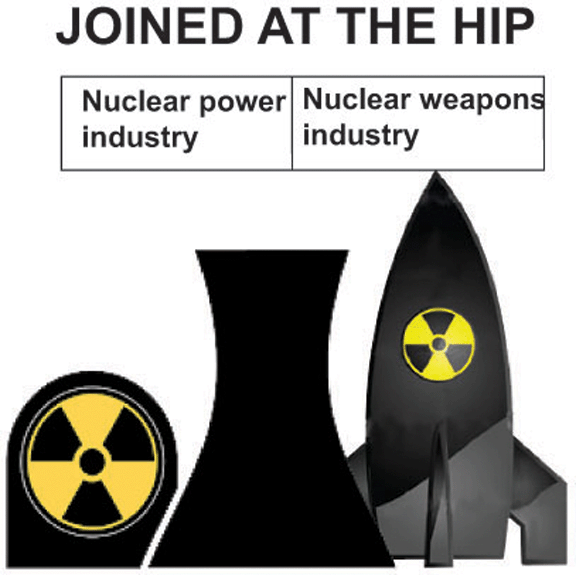 Fears over nuclear Turkey after Rolls Royce reactor deal, Morning Star,
 MARCH 25, 2020 ENGINEERING firm Rolls-Royce has struck a deal with Turkey for the production of nuclear mini-reactors, sparking fears that the British company and its international consortium partners are helping pave the way for Ankara to develop a nuclear bomb…..
the plans have raised fears that Turkey’s authoritarian President Recep Tayyip Erdogan could use the development as a step towards the country becoming a nuclear-armed power.
As previously reported in the Morning Star, Turkey’s secret nuclear programme includes plans to acquire weapons of mass destruction (WMDs), including nuclear missiles.
Writing in a pro-government newspaper in 2017, Mr Karaman said: “We need to consider producing these weapons, rather than purchasing them, without losing any time and with no regard to words of hindrance from the West.”
There are already some 70 US-owned nuclear warheads said to be based at Incirlik airbase near the southern of Adana.
In previous deals with Russia and a Japanese-French consortium, the door was left open for the development of nuclear weapons after Turkey rejected offers to include the provision of uranium and the return of the spent fuel rods used in the reactors.
The development has parallels with the Indian missile capability developed after the testing of plutonium produced in the Canadian-supplied Cirus reactor, which first raised the issue that nuclear technology supplied for peaceful purposes could be diverted to weapons production. https://morningstaronline.co.uk/article/b/fears-over-nuclear-turkey-after-rolls-royce-reactor-deal
12 Fukushima decontamination locations likely to leak radiation, in heavy rain
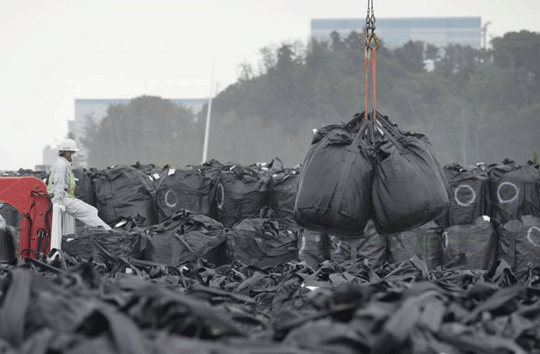
The ministry checked all the sites where the waste is kept after 91 bags were swept into rivers in Fukushima and Tochigi prefectures last year due to downpours caused by Typhoon Hagibis.
Of the 322 locations that are near rivers or in flood-prone areas, 12 sites in Fukushima Prefecture were found to be at risk of having bags of waste swept away or ruptured by mud flows.
The ministry plans to set up fences or move the waste to intermediate storage facilities to reduce the risk by the end of May this year.
Environment Minister Shinjiro Koizumi told reporters on Tuesday his ministry hopes to do the work as soon as possible because of the growing risk of sudden downpours in recent years.
With all eyes on pandemic, Nuclear Non Proliferation Treaty still needs attention
 Nuclear Proliferation Treaty Troubles Remain Unaddressed Amid a Global Pandemic, https://nationalinterest.org/feature/nuclear-proliferation-treaty-troubles-remain-unaddressed-amid-global-pandemic-138162 It is vital that would-be bombmakers be disabused of any notion that they could evade tough international sanctions. We need a country-neutral, reasonably predictable, more-or-less automatic sanction regime that puts all countries on notice, even friends of the powerful. Nuclear Proliferation Treaty Troubles Remain Unaddressed Amid a Global Pandemic, https://nationalinterest.org/feature/nuclear-proliferation-treaty-troubles-remain-unaddressed-amid-global-pandemic-138162 It is vital that would-be bombmakers be disabused of any notion that they could evade tough international sanctions. We need a country-neutral, reasonably predictable, more-or-less automatic sanction regime that puts all countries on notice, even friends of the powerful.
by Victor Gilinsky Henry Sokolski, 27 Mar 20, Just as we’ve had to discard business-as-usual thinking to deal with the current worldwide health emergency; it’s time to get serious about the spread of nuclear weapons. It doesn’t have the immediacy of the coronavirus, but it will last a lot longer and is no less threatening. In particular, we need to fortify the Nuclear Nonproliferation Treaty (NPT), which is fifty years old this year and badly needs fixing. The April 2020 Review Conference will likely be postponed, which provides time to develop something more than the usual charade of incremental proposals that nibble at the problem.
What needs fixing? Five problems: The NPT allows withdrawal on three months notice; it does not bar the use of nuclear explosives as fuels; its inspection arm, the International Atomic Energy Agency (IAEA), is too much involved in promoting nuclear energy; it lacks an established enforcement system, so each violation requires an improvised response; and it is undermined by the holdouts—India, Israel, North Korea, and Pakistan—thumbing their noses at the treaty. International lawyers may scream, but we need to make it essentially impossible to exercise the NPT’s withdrawal provision. This is vital because the member states’ safeguards agreements with the IAEA remain in force only so long as the states remain parties to the treaty. A country should not be allowed to gather the wherewithal for a bomb while a member and then free itself of its treaty responsibilities by announcing its withdrawal. It shouldn’t be allowed to leave the treaty with technology, imported or indigenous, it obtained as a member, because it did so with the forbearance of other members on the assumption that it was doing so for peaceful uses.There has to be a wide safety margin between genuinely peaceful and potentially military applications to make it impossible to surprise the world with a bomb.
The oft-cited “inalienable right” to “nuclear energy for peaceful purposes” in the NPT’s Article IV has to be interpreted strictly in terms of the treaty’s overriding objective expressed in Article I (nuclear weapons countries can’t help others get bombs), and Article II (non-weapons countries can’t get them, period). That’s a long way of saying no commercial use of highly enriched uranium or plutonium, which today has no economic justification.
Another relic embedded in the NPT and the IAEA Statute is their promotion of nuclear power. With mind-numbing regularity, IAEA officials argue that accommodating countries on nuclear energy technology helps to gain their assent to control measures. But this approach weakens the NPT by creating a zero-sum game in which nonproliferation obligations of the many members are held hostage to technology sharing by the main supplier states. Unfortunately, too many members want dangerous technologies. That is not all. The agency’s singling out of nuclear energy as the anointed energy source leads to a misallocation of economic and scientific resources in countries that can’t afford it.
In the initial years of the NPT, there was an implicit assumption that the Western states and Soviets would police their spheres. But now, with the Cold War over, the NPT needs an established enforcement mechanism to deal predictably with violations, instead of each instance requiring improvisation by the leading members. The logic of “safeguards” assumes rapid international reaction, but experience shows it is more often measured in years. It is vital that would-be bombmakers be disabused of any notion that they could evade tough international sanctions. We need a country-neutral, reasonably predictable, more-or-less automatic sanction regime that puts all countries on notice, even friends of the powerful. A permanent secretariat attached to the treaty would help. Finally, it undermines the treaty when a non-member is used to enforce it, as when the United States acquiesced in Israel’s 2007 bombing of Syria’s clandestine reactor, instead of involving the IAEA, or when it cooperated with Israel in sabotaging Iran’s nuclear program.
The most difficult issue is what to do about the three NPT holdouts—India, Israel, and Pakistan—and the member-in-violation, North Korea. The drafters’ intent to only recognize five nuclear states was to first make sure that number did not grow larger while treating reductions among the five separately. To add new nuclear weapon members in addition to these five would undermine the treaty. However impossible it may now seem, the only way that all states can be brought under the NPT system is if all commit themselves to reduce their nuclear weapons to zero. The United States and Russia have made substantial reductions, but the continuation of that process requires all nuclear states to join in further cuts. Towards this end, we would universalize the treaty—that is, regard it as applicable to all states. The three holdouts would then be in non-compliance. Of course, as a legal matter, you cannot force a country to join a treaty. But if the 190 NPT members so decided, they could treat the three holdouts, and North Korea, as countries in non-compliance, with appropriate disadvantages that would follow from that. At the same time, if these countries joined the weapons reductions process under adequate monitoring, they could be considered as approaching compliance, and disadvantages could be moderated.
This much is clear: Incremental, least-common-denominator steps are never going to get us to where we need to be, and serious people responsible for security know it. To cope with proliferation hazards in the face of weak international controls over nuclear programs, the world seems to be slipping—witness the case of Iran—into relying on greatly increased national intelligence operations backed up in the last instance by bombing and even assassinations. It is difficult to imagine that this is a workable solution for the long term.
To stop the further spread of nuclear weapons, we have to stop downplaying the NPT. Instead, we should strengthen and use it. Victor Gilinsky is a program advisor for the Nonproliferation Policy Education Center (NPEC) in Arlington, Virginia. He served on the Nuclear Regulatory Commission under Presidents Ford, Carter, and Reagan. Henry Sokolski is executive director of NPEC and the author of Underestimated: Our Not So Peaceful Nuclear Future (second edition 2019). He served as deputy for nonproliferation policy in the Cheney Pentagon. |
|
LANL Plans to Release Twice the Amount of Tritium Allowed
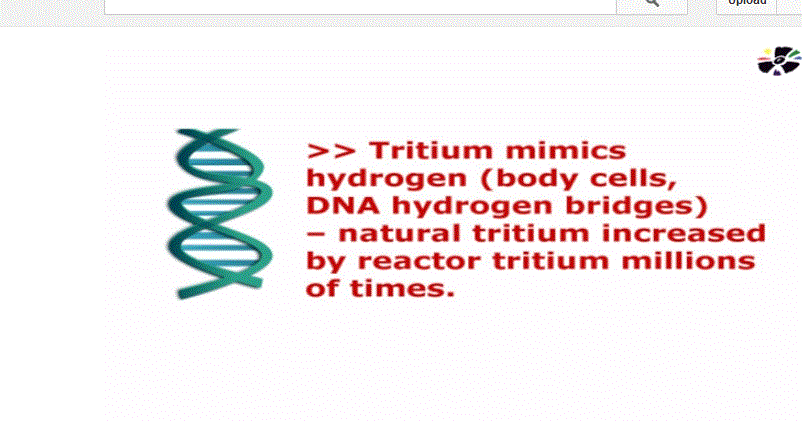 LANL Plans to Release Twice the Amount of Tritium Allowed http://nuclearactive.org/ March 26th, 2020 The Department of Energy (DOE) and its contractor at Los Alamos National Laboratory (LANL) plan to vent radioactive tritium into the air in an amount twice the federal standard of 10 millirems a year. LANL estimates a possible offsite dose to the public of 20.2 he Department of Energy (DOE) and its contractor at Los Alamos National Laboratory (LANL) plan to vent radioactive tritium into the air in an amount twice the federal standard of 10 millirems a year. LANL estimates a possible offsite dose to the public of 20.2 LANL Plans to Release Twice the Amount of Tritium Allowed http://nuclearactive.org/ March 26th, 2020 The Department of Energy (DOE) and its contractor at Los Alamos National Laboratory (LANL) plan to vent radioactive tritium into the air in an amount twice the federal standard of 10 millirems a year. LANL estimates a possible offsite dose to the public of 20.2 he Department of Energy (DOE) and its contractor at Los Alamos National Laboratory (LANL) plan to vent radioactive tritium into the air in an amount twice the federal standard of 10 millirems a year. LANL estimates a possible offsite dose to the public of 20.2
In 2019, the federal Environmental Protection Agency (EPA) approved a 2018 LANL plan under the Clean Air Act. This month, the New Mexico Environment Department approved the plan under the state’s Hazardous Waste Act because there are lead tools present in the containers. But there are inconsistencies between the two plans.
For instance, the earlier Clean Air Act plan proposed using “getters” to capture a portion of the vented tritium before it is released through an open door in the prefabricated shed. The later plan deleted the use of a “getter bed” and replaced it with an unnamed air emissions control system. Nevertheless, the Hazardous Waste Act plan states the gases will pass through a molecular sieve bed and through a metering value before release. https://permalink.lanl.gov/object/tr?what=info:lanl-repo/eprr/ESHID-603412 New Mexicans are concerned about the proposed venting. Tritium is radioactive hydrogen and is highly mobile moving from air to water and back. It can cross the placenta and affect a developing fetus. The 10 millirem standard is based on a 154-pound, five feet 6 inch, Anglo “reference man,” between the ages of 20 to 30, who consumes a European diet. Beata Tsosie, a Community Doula and Gardener, from Santa Clara Pueblo, said, “As a Pueblo woman living downwind and downstream from Los Alamos nuclear weapons production, I am very concerned about the lab’s intentions to go forward with releasing radioactive tritium vapor into our air, land, waters, and ecosystems. During mid April is when our land-based community is outdoors for longer periods of time preparing their fields and gardens for planting. What will it mean to also have cumulative exposure when we consume these crops? There are also increased exposures due to active foraging of wild plants, gathering of clays, fishing, hunting, and ceremony. “Our children are also outdoors for longer periods of time due to the school shutdown for COVID-19, which is scheduled to go on indefinitely. I watch my son playing in his backyard, making his own gardens, running, getting out of breath and breathing deeply the air that I need to know is safe for him to be exposed to. We live 20 minutes away from these planned releases, and now in addition to an already stressful self-quarantine I need to worry about my family being outside enjoying their birthright. “It is my understanding that in the documents submitted to the EPA and NMED in 2018, there is no inclusion of alternatives to these releases. There should not be a rush to put our communities in harms way when all solutions have not even been discussed. I know that the federal standards for tritium exposure are not protective of land-based people of color, or pregnant families and infants who are more vulnerable to radioactive toxicity. Tritium can cross placental boundaries. These standards of exposure are still based on an obsolete model of an adult, white male of European descent and custom. There must be an informed public process that prioritizes protecting those most vulnerable. I do not consent to these toxic releases in my ancestral homelands; it is the continuation of nuclear colonialism and violence on Indigenous lands and bodies and a sorrowful history of environmental racism in our sacred Jemez Plateau. I call on all of our Congressional delegation, EPA and NMED directors to put an immediate halt and suspension to these planned tritium releases and increase in LANL production. Our communities deserve reprieve, health, calm, and wellness in these challenging times.” Given the cumulative health consequences from the proposed venting, organizations and individuals are requesting the Environment Department hold a public comment period and a public hearing. |
|
Nuclear waste disposal: Why the case for deep boreholes is … full of holes
|
Nuclear waste disposal: Why the case for deep boreholes is … full of holes, Bulletin of the Atomic Scientists, By Lindsay Krall, March 26, 2020 “….. The deep borehole concept is relatively simple and has been around since the 1950s. Rather than excavate one enormous mine like Yucca Mountain to store all US civilian nuclear waste, this solution would involve depositing nuclear waste in hundreds of narrow holes drilled into the earth’s crust.
The idea has plenty of boosters, among them a start-up called Deep Isolation, based in Berkeley, California. Founded by physicist Richard Muller and his daughter Elizabeth Muller, the company launched a Series A investment round earlier this year on the promise that it can bring the borehole concept to fruition. By leveraging the lateral drilling technology developed for tapping into shale gas deposits, the company that professes to be the “SpaceX” of nuclear waste claims to have hacked a solution for the permanent disposal of the United States’ 82,000 metric ton inventory of commercially-generated spent nuclear fuel. Unfortunately, the proposal is full of holes. The problem of Yucca Mountain. Ever since the 1950s, the United States has been searching for a place to bury its nuclear waste, which remains radioactive for tens of thousands of years. In 1987, against the will of Nevadans, the US Congress designated Yucca Mountain to host the nation’s spent fuel inventory through an amendment to the Nuclear Waste Policy Act. Ever since, the site has been treated as a political football. The facility was supposed to open in 1998, but far from completion, the project was dismantled in 2010. So far, the only thing that’s been built there is a five-mile exploratory tunnel. Meanwhile, those 82,000 metric tons of spent nuclear fuel remain in temporary storage. In practical terms, that means the spent fuel is sitting at about 80 different places spread out across 35 states, stored either in pools of water or in casks made of steel and concrete. The delays and shortcomings at Yucca Mountain have created opportunities for companies like Deep Isolation to profit from empty promises to deliver “alternative solutions.” The borehole business model. By pledging to streamline the process of disposing spent nuclear fuel, Deep Isolation has already amassed over $14 million in venture capital. To save nuclear plants from shipping their waste to a centralized repository 2,000 miles away, the company conceives to bury the waste more or less on-site at each power plant in nearly horizontal underground holes. Even though hundreds of boreholes will be required to house the nation’s spent fuel inventory, this option is said to be inexpensive, relative to Yucca Mountain. Deep Isolation cites a lower-limit cost of $2 million to drill one hole but suggests that the approach will save money overall by eliminating things like further interim waste storage, transportation, and much of the necessary construction workforce. Confronted with an economies-of-scale argument that would favor a few, large-capacity facilities, the company markets its approach as “modular,” so that the revenue generated from the completion of one easily-replicated, generic borehole can finance the development of subsequent boreholes. A supposedly irrefutable safety case accompanies these seemingly excellent financials. Unlike the Yucca Mountain repository, boreholes would be sited below the water table, at depths ranging from 600 meters to 2 kilometers, in sedimentary rock formations. The disposal zone would consist of or be overlain by shale rock formations, which contain ductile clay minerals that can heal any fractures that would otherwise facilitate the flow of water—a potential hazard—to and away from the waste. Simple tests, such as analyses of natural chlorine isotopes, show that the water in these formations is millions of years old. This, Deep Isolation hopes, will convince stakeholders that the system is impenetrable, with negligible risk for contamination of nearby aquifers. A watertight plan? Long before Deep Isolation announced its hack, the Energy Department had concluded in the 1980s that disposal of spent nuclear fuel in boreholes drilled to depths of roughly 10 kilometers was not an attractive alternative to mined repositories. In the years following, the US Nuclear Waste Technical Review Board, the US Nuclear Regulatory Commission, and waste management organizations of Sweden, the United Kingdom, and Canada reviewed concepts for shallower boreholes, with waste emplaced at depths ranging between 3 kilometers and 5 kilometers. Similar to the Energy Department study, these reviews concluded that borehole disposal would require decades of research, design, and development, which—even if successful—did not promise safety margins superior to a well-sited, deep-mined repository. A more recent study that several colleagues and I authored found that Deep Isolation’s even shallower boreholes, at depths of around 2 kilometers or less, would be plagued by the same problems and that suitable borehole disposal sites are, in fact, geographically scarce. Many challenges to the viability of borehole disposal stem from the limit that modern drilling techniques impose on borehole diameters. Although the precise borehole geometry is dependent on location-specific geologic variables, deeper boreholes generally necessitate smaller diameters. Such a limitation has implications both in terms of the barrier system that surrounds the nuclear fuel and in terms of the ability to fully characterize the geology of the disposal site. To accommodate canisters whose diagonal cross-section has a length of 30 centimeters, the diameter of Deep Isolation’s curving boreholes must be larger than 40 centimeters. Since this exceeds the 22-centimeter standard for oil and gas extraction, the technical feasibility of Deep Isolation’s drilling scheme remains unclear. But if it is feasible, then a 40-centimeter diameter borehole would restrict the thickness of the canister walls to about one centimeter. As compared to deep-mined repositories, which could accept canisters with walls thicker than 5 centimeters, thin-walled canisters will have adverse safety consequences for the workers who will load the waste into the boreholes. Therefore, potential worker exposures to and environmental releases of radioactivity during canister loading warrants careful consideration. For instance, gamma radiation emitted by spent fuel can penetrate a canister wall and expose operators to radiation. The thick-walled canisters destined for deep-mined repositories will attenuate a significant portion of this penetrating radiation, but the thin-walled canisters inherent to borehole disposal will have negligible shielding capability. The sheer number of canisters will pose further challenges. Canister designs for mined repositories will have a capacity of at least four spent fuel assemblies, whereas borehole canisters will each contain only one assembly. Lowering hundreds of thousands of flimsy canisters into hundreds of narrow boreholes in a safe, timely fashion will be tricky, to say the least. If a canister is punctured or becomes stuck during this phase, then the risk to operators and the environment could be high. Investing in the necessary research, design, and development needed for drilling, shielding, and canister emplacement for Deep Isolation’s concept might be justified, if this approach would improve the financial and long-term safety case for spent fuel disposal relative to a deep-mined repository. But, the thin-walled canisters will also adversely affect long-term safety as well, insofar as they will be more likely to fail through corrosion compared to a thicker canister. Whereas mined repository designs incorporate a series of engineered and natural barriers to delay or preclude the release of radionuclides into the groundwater system and into the biosphere, borehole disposal relies entirely on a geologic barrier. Hence, borehole developers must compile a safety case that convinces regulators and the general public that the geologic environment around their disposal sites can function on its own to sequester radionuclides over the 1 million-year regulatory period. This means that in-depth sampling and analysis will need to be performed at every disposal site, undercutting the idea that boreholes represent a modular, easily replicable solution. Ironically, the concept that has been promised to liberate stakeholders of the upfront costs associated with these site investigations is destined to increase the complexity of these activities. Rather than one or a handful of disposal sites, hundreds of disposal boreholes must be investigated thoroughly. Then, stakeholders must reach a high level of certainty that the bedrock, alone, can compensate for a lean engineered barrier system. Grappling with uncertainty. Reducing long-term performance uncertainty is the sine qua non for garnering public support for spent fuel repository projects. Over the course of decades, mined repository programs can take a phased approach to resolving the uncertainties associated with the geologic variables that control the flow of groundwater to and away from the emplaced waste. These include an initial phase during which geologic samples are collected and analyzed at several sites; an interim monitoring phase during which routine measurements are performed to capture the variability of those results; and a construction phase that allows workers, inside a rock cavern, to validate interpretations made in the earlier phases. By contrast, the deep borehole model, which relies on rapid siting, drilling, waste emplacement, and closure, affords little to no opportunity for site monitoring. It offers no way for scientists, regulators, or engaged citizens to enter the rock cavern and learn, through experience and careful examination, whether the repository will remain geologically stable for millennia. A proven approach. Deep Isolation’s rendition of borehole disposal includes a slew of Silicon Valley buzzwords apparently aimed at novice investors on crowdfunding websites. Even if several decades of labor does glean evidence of the technical feasibility of this alleged hack, then its long-term safety case would still be subject to inordinate uncertainty. Nuclear waste experts have long emphasized disposal solutions that rely on mature technologies, for simple reasons. What will happen to surface-stored spent fuel if, while waiting for some shiny new object, a malevolent dictator assumes power? Or, what if a pandemic cripples the global economy? In the end, then, a mined repository still may be the best answer. Technically viable and publicly accepted repository designs are successfully moving ahead in Sweden, Finland, Switzerland, France, Canada, and even China and Russia. Rather than committing, prematurely, to a single site (Yucca Mountain) or chasing after nonviable “alternative solutions,” the United States would be wise to scale one or more of these internationally pioneered designs to accommodate the world’s largest national spent fuel inventory. By coupling one of these technical solutions with the institutional reform proposed by expert committees, the United States might finally find somewhere to put its nuclear waste. https://thebulletin.org/2020/03/nuclear-waste-disposal-why-the-case-for-deep-boreholes-is-full-of-holes/# |
|
How will the IAEA spin the mind-boggling costs of Small Modular Nuclear Reactors (SMRs)?
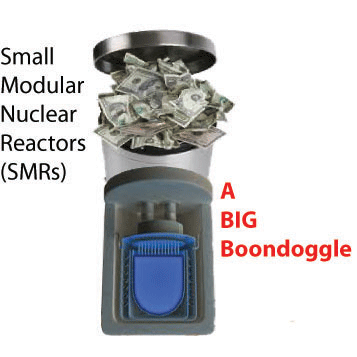 IAEA launches project to examine economics of SMRs https://www.world-nuclear-news.org/Articles/IAEA-launches-project-to-examine-economics-of-SMRs 26 March 2020, he International Atomic Energy Agency (IAEA) is launching a three-year Coordinated Research Project focused on the economics of small modular reactors (SMRs). The project will provide Member States with an economic appraisal framework for the development and deployment of such reactors.
Participants in the research project will cover: market research; analysis of the competitive landscape (SMR vs non-nuclear alternatives); value proposition and strategic positioning; project planning cost forecasting and analysis; project structuring, risk allocation and financial valuation; business planning and business case demonstration; and economic cost-benefit analysis.
The framework they establish will be applied, in particular, to assess the economics of multiples (serial production of reactors in a factory setting), factory fabrication (conditions to be met for a factory to exist), and supply chain localisation (opportunities and impacts).
The deadline for proposals to participate in the research project is 30 April.
1 This Month

18 March Webinar @ 1 PM EST: An Assessment of SMR Projects: The Case of Canada
register for the zoom:
https://us02web.zoom.us/webinar/register/WN_o8BIIOUvQ2ONJR1nta65DQ#/registration

of the week – STOP SMALL MODULAR REACTORS IN CANADA
To see nuclear-related stories in greater depth and intensity – go to https://nuclearinformation.wordpress.com
-
Archives
- February 2026 (256)
- January 2026 (308)
- December 2025 (358)
- November 2025 (359)
- October 2025 (376)
- September 2025 (258)
- August 2025 (319)
- July 2025 (230)
- June 2025 (348)
- May 2025 (261)
- April 2025 (305)
- March 2025 (319)
-
Categories
- 1
- 1 NUCLEAR ISSUES
- business and costs
- climate change
- culture and arts
- ENERGY
- environment
- health
- history
- indigenous issues
- Legal
- marketing of nuclear
- media
- opposition to nuclear
- PERSONAL STORIES
- politics
- politics international
- Religion and ethics
- safety
- secrets,lies and civil liberties
- spinbuster
- technology
- Uranium
- wastes
- weapons and war
- Women
- 2 WORLD
- ACTION
- AFRICA
- Atrocities
- AUSTRALIA
- Christina's notes
- Christina's themes
- culture and arts
- Events
- Fuk 2022
- Fuk 2023
- Fukushima 2017
- Fukushima 2018
- fukushima 2019
- Fukushima 2020
- Fukushima 2021
- general
- global warming
- Humour (God we need it)
- Nuclear
- RARE EARTHS
- Reference
- resources – print
- Resources -audiovicual
- Weekly Newsletter
- World
- World Nuclear
- YouTube
-
RSS
Entries RSS
Comments RSS
 nuclear-news