Tokyo Olympics will take place next year — BCNN1 WP

The Tokyo Olympics are going to happen — but almost surely in 2021 rather than in four months as planned.
No place for atomic power amidst climate chaos and pandemics

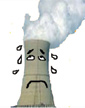 Nuclear lessons from the corona virus March 22, 2020 by beyondnuclearinternational No place for atomic power amidst climate chaos and pandemics Beyond Nuclear By Linda Pentz Gunter
There is nothing like being shut in your own home, alone with your human and animal nearest-and-dearests, to focus the mind on the crises that now swirl outside.
And it is “crises” in the plural, because while all the focus is of course on the corona virus, there is one giant crisis steamrollering toward us that will wreak orders of magnitude more devastation, but somehow does not merit the same kind of emergency action. And that, of course, is climate change.
Denial seems to be one of the greatest of human achievements. It’s also why we have nuclear power. It will be too cheap to meter. An accident will never happen. We will solve the radioactive waste problem later.
With the climate crisis upon us, it should be patently obvious that building new nuclear power plants anywhere is not an intelligent plan. Sea level rise is a certainty, and fires, flooding, storm surges, and earthquakes are likely to increase both in frequency and force. Building power plants that contain an inventory of long-lived lethally radioactive fuel in such an environment is insane. And then to build them on shorelines, as is currently happening at Hinkley, and is threatened for similar settings at Sizewell and possibly Wylfa — all of them in the UK— is irresponsible in the extreme.
The covid-19 crisis almost certainly won’t be the last such Biblical-style plague to strike us. If we fail to learn our lesson this time around, we will be equally unprepared and again forced to quarantine ourselves and call workforces home. But while wind turbines will keep spinning and solar arrays will continue to collect sunlight without any help from us, workers cannot leave a nuclear power plant untended. Knowing this, why build an installation that cannot be safely abandoned?
The answer, of course, is money. But not the industry’s money. Ours. We are the ones who will pay to keep nuclear plants running, and to build new ones……….
The French government is on record as saying that without Hinkley and Sizewell, the French nuclear brand will be finished. It sees the UK projects as an essential redemptive step, given the EPR, its supposed flagship, has so far been a financial and technical shipwreck.
As the Financial Times pointed out in May 2018, “Avoiding delays in the UK will be crucial if EDF is to persuade international buyers — and its own shareholders, not least the French government — that the EPR’s teething problems are over.” ……..
Maybe all of us, becalmed and decelerated, will start to come to our senses. We may see climate changes for the better as we stop flying and driving and cruise-shipping and needlessly consuming, while factories are idled and our air quality improves. The wake-up call comes at a terrible price. But the bigger cost could be everything. https://beyondnuclearinternational.org/2020/03/22/nuclear-lessons-from-the-corona-virus/
Coronavirus: How deadly and contagious is this COVID-19 pandemic?
|
By Annika Blau and Simon Elvery Coronavirus isn’t the first pandemic to sweep the globe in recent years. Epidemics like bird flu, Ebola, SARS and swine flu are still fresh in our memories.So how does COVID-19, the disease caused by coronavirus, compare? And what sets it apart from the flu seasons we face each winter? Here’s how Dr Norman Swan, host of the ABC’s Coronacast, explains it:
|
|


Meet the Climate Science Deniers Who Downplayed COVID-19 Risks

|
Meet the Climate Science Deniers Who Downplayed COVID-19 The very next day, the American Council on Science and Health (ACSH) published an article titled, “Coronavirus in the U.S.: How Bad Will It Be?” “Is coronavirus worse than the flu?” it began. “No, not even close.” “It already has spread from person-to-person in the U.S., but it probably won’t go far,” ACSH added. “And the American healthcare system is excellent at dealing with this sort of problem.” ACSH is one of several organizations promoting climate science denial that are now spreading misinformation on the coronavirus, with potentially deadly consequences. American Council on Science and Health?The ACSH presents itself to the public as a proponent of “peer-reviewed mainstream science,” in the words of the organization’s mission. Their experts have frequently been quoted in mainstream newspapers and magazines, and they pen columns criticizing journalists who write critically about companies like Monsanto. The group has received funding from oil giants including ExxonMobil, as well as from the agribusiness, chemical and tobacco industries to name a few. When it comes to climate change, ACSH has published a steady stream of articles downplaying climate science and criticizing efforts to slow carbon emissions — even in the face of a mountain of peer-reviewed research on the climate crisis. ACSH slammed the medical journal The Lancet as “an ideologically driven outlet with a very clear political agenda where being sensationalist and culturally woke trumps evidence and reasonability” (after the Lancet published an article titled “The carbon footprint”). The purported “pro-science” advocacy group has labeled Greta Thunberg’s activism “doomsday prophesying.” It has (falsely) suggested that climate change is less of a concern because “more people die in winter than in summer” (they don’t). And that’s all just in the past nine months. The ACSH’s stance against climate action dates back to at least 1997. When it comes to coronavirus, now a global pandemic, ACSH’s authors rushed to judgment. They assured readers that there was little to worry about, and put some of the same faulty thinking that underlies their stance on climate change on display. ACSH isn’t alone. Other organizations that have also engaged in climate science denial made similar missteps on COVID-19, including prominent organizations that fanned the flames of conspiracy theories or confidently promoted complacency when circumstances required rapid action. To be clear: No one should be faulted for failing to foresee precisely how severe of a problem COVID-19 would prove to be. None of us has a crystal ball and few, if any, expected this situation to unfold in this particular way. But these organizations published positions that not only wound up being laden with false reassurances, but they did so based on claims that they made confidently at the time that now appear to have been false or misleading. Defending Conspiracy Theorists Continue reading |
The Sizewell C project would tear through preciously fragile nature preserve
Nuclear lessons from the corona virus, No place for atomic power amidst climate chaos and pandemics By Linda Pentz Gunter March 22, 2020 by beyondnuclearinternational……….I recently sat in a room of 75 people — just before you couldn’t anymore — in Suffolk, England, listening to a series of eloquent presentations advocating for a halt to the proposed Sizewell C nuclear power plant there. The occasion was an event hosted by the Nuclear Free Local Authorities. The Sizewell C project, which would add two EPRs to the still operating Sizewell B reactor site, would tear through one of the richest, most preciously fragile and most diverse nature preserves in the country — Minsmere. And be built on a beach.
The first three speakers reminded us of the breathtaking beauty of Minsmere and the animals, insects, birds, and reptiles whose lives would be disrupted, if not ended, by the construction activities alone (my talk and the two others addressed the radiological and climate risks if Sizewell C ever became operational.) We saw slides not only of these animals, but of an exotic array of spectacular plant life that would also be lost. Site construction would dissect and disconnect habitats and frighten species away, with 24-hour lights, noise, heavy machinery, traffic and the bulldozing of their landscape. Wildness, already disappearing fast enough, would be lost.
After listening to the eloquent opening presentations from nature and sports journalist, Simon Barnes, Ben McFarland, head of conservation at Suffolk Wildlife Trust, and Rachel Fulcher of Suffolk Coastal Friends of the Earth, there was only one question to be asked: Why on earth would anyone allow this to happen? But so far, Suffolk County Council has gone alone with the plan, albeit with some caveats and ongoing questions for EDF. They may yet be dissuaded.
A video from Suffolk Coastal Friends of the Earth, narrated by Fulcher, is a quietly passionate reminder, somewhat in the style of her namesake, Rachel Carson, not to pave paradise, as Joni Mitchell once warned.
The first thing that is likely to happen is that EDF will raze Coronation Wood. It will do this, not because it needs to now. It is not even certain that Sizewell C will go ahead. It will do this for show. The show in question is to prove to the world that the French nuclear industry is alive and well. It is moving forward.
Not content with the ghastly building site which is the Hinkley C two-reactor project in Somerset, EDF must impress upon the world that it is moving forward with Sizewell as well, which, the company boasts, it can complete even cheaper and faster.
At the Suffolk meeting, Theberton & Eastbridge Action Group on Sizewell screened a particularly brilliant piece of video, shot from a drone, showing the spectacular Suffolk countryside today and what the hapless Somerset countryside at the Hinkley site now looks like. You can view it below.
The French government is on record as saying that without Hinkley and Sizewell, the French nuclear brand will be finished. It sees the UK projects as an essential redemptive step, given the EPR, its supposed flagship, has so far been a financial and technical shipwreck.
As the Financial Times pointed out in May 2018, “Avoiding delays in the UK will be crucial if EDF is to persuade international buyers — and its own shareholders, not least the French government — that the EPR’s teething problems are over.”
The Royal Society for the Protection of Birds, which owns the Minsmere reserve, has said it has concerns that “EDF energy may not be able to keep its environmental promises.”
But the organization should instead be 100 per cent certain that EDF will not keep its environmental promises or any other kind for that matter. You just have to look at the company’s track record, along with the systemic disregard by all nuclear companies anywhere in the world, for the well-being and survival of animals and their habitats, both wild and domestic. (This latter is all documented in our newest booklet — Nuclear power and harm to animals, wild and domestic.)
There is particular reason to mistrust EDF because the company has experienced an endless series of technical, safety and transparency problems at the EPR construction sites still plodding their way to incompletion at Flamanville 3 in France and Olkiluoto 3 in Finland. Even such fundamentals as the concrete pour of the reactor foundation at Flamanville 3 had to be redone. The Flamanville 3 containment came from a forge which falsified quality control data and installed counterfeit parts; the vessel head is defective. And, amidst the corona virus, part of the workforce at Flamanville 1 and 2, both fortunately offline for maintenance, has now been called home. (An outbreak of covid-19 among its staff has also now forced the closure of the reprocessing plant at Sellafield in the UK.)
One can only hope that the decision-makers of Suffolk will wake up and smell the marsh-marigolds (I am no botanist so I can’t vouch for their actual aroma.) Or maybe amidst the silence of their now corona-forced sequestration, they will listen to the song of reed buntings, or sedge warblers and decide they are worth saving. Perhaps they will marvel at the aerobatics of the marsh harrier, or wander out at night and glimpse a rare barbastelle bat, “serrated wings against the sky, Like a glove, a black glove thrown up at the light,” as D.H. Lawrence so vividly described the animals in his poem, Bats (although Lawrence did not care for bats.)…….https://beyondnuclearinternational.org/2020/03/22/nuclear-lessons-from-the-corona-virus/
Global warming influence on extreme weather events has been frequently underestimated

Global warming influence on extreme weather events has been frequently underestimated, Science Daily, March 18, 2020
- Source:
- Stanford University
- Summary:
- Analysis shows global warming is intensifying the occurrence of unprecedented hot spells and downpours faster than predicted by historical trends.
-
A new Stanford study reveals that a common scientific approach of predicting the likelihood of future extreme weather events by analyzing how frequently they occurred in the past can lead to significant underestimates — with potentially significant consequences for people’s lives.
Stanford climate scientist Noah Diffenbaugh found that predictions that relied only on historical observations underestimated by about half the actual number of extremely hot days in Europe and East Asia, and the number of extremely wet days in the U.S., Europe and East Asia.
The paper, published March 18 in Science Advances, illustrates how even small increases in global warming can cause large upticks in the probability of extreme weather events, particularly heat waves and heavy rainfall. The new results analyzing climate change connections to unprecedented weather events could help to make global risk management more effective.
- We are seeing year after year how the rising incidence of extreme events is causing significant impacts on people and ecosystems,” Diffenbaugh said. “One of the main challenges in becoming more resilient to these extremes is accurately predicting how the global warming that’s already happened has changed the odds of events that fall outside of our historical experience.”
A changing world……. https://www.sciencedaily.com/releases/2020/03/200318143722.htm
‘Fukushima 50 ‘ – a new film about the nuclear meltdown
 Dramatizing the reality of a nuclear meltdown https://www.japantimes.co.jp/news/2020/03/21/national/media-national/nuclear-meltdown-movies/#.XnfM5YgzbIU BY PHILIP BRASOR As with many feature films based on real-life incidents, “Fukushima 50,” which opened nationwide March 6 and depicts the actions of the men who struggled to contain the disaster at the Fukushima No. 1 nuclear power plant following the Great East Japan Earthquake of March 2011, is a blend of factual exposition and dramatic enhancement. Stories require conflict to keep them interesting, usually with a hero fighting an adversary. In “Fukushima 50,” the hero is plant manager Masao Yoshida (Ken Watanabe), who makes life-and-death decisions in resistance against higher-ups rendered as incompetents. Dramatizing the reality of a nuclear meltdown https://www.japantimes.co.jp/news/2020/03/21/national/media-national/nuclear-meltdown-movies/#.XnfM5YgzbIU BY PHILIP BRASOR As with many feature films based on real-life incidents, “Fukushima 50,” which opened nationwide March 6 and depicts the actions of the men who struggled to contain the disaster at the Fukushima No. 1 nuclear power plant following the Great East Japan Earthquake of March 2011, is a blend of factual exposition and dramatic enhancement. Stories require conflict to keep them interesting, usually with a hero fighting an adversary. In “Fukushima 50,” the hero is plant manager Masao Yoshida (Ken Watanabe), who makes life-and-death decisions in resistance against higher-ups rendered as incompetents.
One of these “villains,” as pointed out by writer and editor Yusuke Nakagawa in the March 6 online edition of Gendai Business, is Naoto Kan, who was the prime minister at the time of the disaster. In the movie, Kan’s name is never uttered and, as Nakagawa points out, the actor who plays him, Shiro Sano, doesn’t look like him, but that’s not what concerns Nakagawa. Sano portrays Kan as a puddle of hysteria whose decisions threaten lives because they make Yoshida’s job more difficult. Kan has an infamous temper and Nakagawa acknowledges that he made mistakes during the course of the emergency, but the movie fails to detail the reasons for his actions. Turning him into a babbling fool makes the filmmakers’ job easier, which is to show Yoshida as a towering figure of courage and resourcefulness in the face of a crisis that could have ended in the destruction of eastern Japan. Continue reading |
Members of New Mexico’s congressional delegation want longer comment period on Holtec’s spent nuclear fuel plan
More Time Sought for Public Input on Nuclear Fuel Proposal, Members of New Mexico’s congressional delegation are calling out federal nuclear regulators. By Associated Press, Wire Service Content March 21, 2020, BY SUSAN MONTOYA BRYAN, Associated Press
ALBUQUERQUE, N.M. (AP) — Members of New Mexico‘s congressional delegation are requesting that federal regulators extend the public comment period for an environmental review related to a multibillion-dollar complex that would store spent nuclear fuel from commercial power plants around the United States.
The Nuclear Regulatory Commission recently issued a preliminary recommendation, favoring approval of a license for Holtec International to build the facility in southeastern New Mexico.
The comment period is set at 60 days, but the New Mexico congressional leaders say that should be extended and any public meetings delayed
given the health emergency that has resulted from the new coronavirus.
“The proposal to store high-level nuclear waste has prompted a great deal of public interest across New Mexico,” they wrote in a letter sent Friday to the commission chairman. “The concerns are driven in part by the prospect that any temporary storage facility will remain in the state indefinitely while a pathway for permanent disposal for high-level radioactive waste is identified.”
It wasn’t immediately clear if the commission would entertain the request, as the federal government is moving ahead with numerous rule-makings and comment periods involving other government projects.
New Jersey-based Holtec International is seeking a 40-year license to build what it has described as a state-of-the-art complex near Carlsbad. The first phase calls for storing up to 8,680 metric tons of uranium, which would be packed into 500 canisters. Future expansion could make room for as many as 10,000 canisters of spent nuclear fuel.
Holtec said the U.S. currently has more than 80,000 metric tons of used nuclear fuel in storage at dozens of sites around the country and the inventory is growing at a rate of about 2,000 metric tons per year.
The NRC staff’s preliminary recommendation states there are no environmental impacts that would preclude the commission from issuing a license for environmental reasons. That recommendation was based on a review of Holtec’s application and consultation with local, state, tribal and federal officials.
New Mexico Gov. Michelle Lujan Grisham and other top elected officials are among those who have long had concerns about the potential environmental effects and the prospects of the state becoming a permanent dumping ground for spent nuclear fuel because the federal government lacks a permanent plan for what to do with the waste piling up at power plants around the country.
The governor and others also have questions about whether the facility would compromise oil and gas development in the Permian Basin, one of the world’s most prolific energy production regions.
There were a handful of public meetings in 2018, and another round was set to begin in the coming weeks.
“NRC has been running on auto-pilot to approve the Holtec license application, but hopefully this letter from the delegation will help them to wake up to the pandemic,” said Don Hancock with the watchdog group Southwest Research and Information Center.
The governor has issued several orders in recent days limiting public gatherings as restaurants and other businesses have been forced to cutback their operations as part of the state’s efforts to curb the spread of the virus.
U.S. Sens. Tom Udall and Martin Heinrich and Reps. Ben Ray Lujan, Deb Haaland and Xochitl Torres Small all signed Friday’s letter to the commission. They’re asking that regulators wait for the threat of COVID-19 to pass and to schedule public meetings at locations around New Mexico to allow ample opportunity for full participation. AT TOP https://www.usnews.com/news/best-states/new-mexico/articles/2020-03-21/more-time-sought-for-public-input-on-nuclear-fuel-proposal
Iran, hit by hardship and coronavirus, gets callous sanctions from Trump administration
 Trump’s callous sanctions risk tipping Iran over the nuclear precipice, Mike Pompeo’s imposition of further sanctions is another disaster for the people of Iran and could cause Tehran to raise the stakes, Guardian, Simon Tisdall Sun 22 Mar 2020
Displaying the sort of unthinking bellicosity that has characterised his tenure as US secretary of state, Mike Pompeo chose last week – a time of unprecedented global turmoil – to impose yet more unilateral sanctions on Iran. This was akin to pouring petrol on a burning building, then waiting to see how big an explosion ensues.
The timing of the new measures was doubly inept. Iran’s freeing of thousands of political prisoners last week raised hopes of full pardons for jailed US citizens and the British-Iranian dual national Nazanin Zaghari-Ratcliffe, who has been temporarily released.
Those hopes have receded now. Meanwhile, Pompeo’s heedless intervention risked fuelling calls inside Iran to
not only the creaking 2015 nuclear deal but also the nuclear non-proliferation treaty (NPT) – the cornerstone since 1970 of international efforts to curb the spread of nuclear weapons.
,………. the move could hardly have been more provocative, or more cruel. Iranians have endured many months of intensifying hardship as US sanctions have shrunk the economy, destroyed jobs and depressed living standards. They have been badly hit by the coronavirus, which the health ministry has said is killing one person every 10 minutes.
Advertisement
Callous US disregard for Iran’s Covid-19 emergency – it is effectively blocking bilateral medical aid and a request for a $5bn loan from the International Monetary Fund – suggests that Washington is not interested in confidence-building measures. “The Wuhan virus is a killer and the Iranian regime is an accomplice,” Pompeo snarled.
Iran’s leadership is under pressure from conservative hardliners after the latter’s recent election successes. This latest manifestation of Washington’s unremitting hostility may help push them over the brink. Thanks mainly to Donald Trump and his sidekick, Tehran could soon move a crucial step closer to going nuclear – the very outcome the Americans most fear……. https://www.theguardian.com/commentisfree/2020/mar/21/trump-pompeo-iran-callous-sanctions-nuclear-precipice
Sun 22 Mar 2020 Trump’s callous sanctions risk tipping Iran over the nuclear precipiceSimon Tisdall
isplaying the sort of unthinking bellicosity that has characterised his tenure as US secretary of state, Mike Pompeo chose last week – a time of unprecedented global turmoil – to impose yet more unilateral sanctions on Iran. This was akin to pouring petrol on a burning building, then waiting to see how big an explosion ensues.
The timing of the new measures was doubly inept. Iran’s freeing of thousands of political prisoners last week raised hopes of full pardons for jailed US citizens and the British-Iranian dual national Nazanin Zaghari-Ratcliffe, who has been temporarily released.
Those hopes have receded now. Meanwhile, Pompeo’s heedless intervention risked fuelling calls inside Iran to
not only the creaking 2015 nuclear deal but also the nuclear non-proliferation treaty (NPT) – the cornerstone since 1970 of international efforts to curb the spread of nuclear weapons.
,………. the move could hardly have been more provocative, or more cruel. Iranians have endured many months of intensifying hardship as US sanctions have shrunk the economy, destroyed jobs and depressed living standards. They have been badly hit by the coronavirus, which the health ministry has said is killing one person every 10 minutes.
Callous US disregard for Iran’s Covid-19 emergency – it is effectively blocking bilateral medical aid and a request for a $5bn loan from the International Monetary Fund – suggests that Washington is not interested in confidence-building measures. “The Wuhan virus is a killer and the Iranian regime is an accomplice,” Pompeo snarled.
Iran’s leadership is under pressure from conservative hardliners after the latter’s recent election successes. This latest manifestation of Washington’s unremitting hostility may help push them over the brink. Thanks mainly to Donald Trump and his sidekick, Tehran could soon move a crucial step closer to going nuclear – the very outcome the Americans most fear……. https://www.theguardian.com/commentisfree/2020/mar/21/trump-pompeo-iran-callous-sanctions-nuclear-precipice
Navy sailor assigned to US Central Command headquarters tests positive for coronavirus
|
Navy sailor assigned to US Central Command headquarters tests positive for coronavirus, The Hill, BY TAL AXELROD – 03/21/20 A Navy sailor assigned to U.S. Central Command (CENTCOM) headquarters has tested positive for the coronavirus.CENTCOM announced Saturday that the sailor, who tested positive for the virus Friday, had returned to the U.S. from overseas on March 15 and “immediately” entered a precautionary quarantine at his residence. He did not stop at CENTOM before returning home.
The sailor began exhibiting symptoms on March 18, at which point he went to the health clinic at Macdill Air Force Base in Tampa, Fla……. The news comes a day after the Air Force announced an active-duty airman and an Air Force contractor who both visited the Pentagon in recent weeks have tested positive for the coronavirus. The active-duty member works for the Defense Health Agency in Falls Church, Va., and was in the Pentagon “for less than an hour” on Monday. The contractor was last in the Pentagon on March 2, according to the Air Force, and has been self-quarantining and receiving medical treatment since March 7….. The Pentagon also said Friday it is monitoring 2,600 military personnel in Europe for possible exposure to the coronavirus. Thirty-five of the 72,000 U.S. forces in Europe have tested positive for the illness. U.S. Marine Corps Gen. Kenneth McKenzie, commander of U.S. Central Command, announced changes Friday to operations at CENTCOM headquarters to protect against the virus, including prioritizing social distancing and maximizing use of tele-work and shift work.https://thehill.com/policy/defense/navy/488789-navy-sailor-assigned-to-us-central-command-headquarters-tests-positive |
|
6 Ways Trump’s Denial of Science Has Delayed the Response to COVID-19 (and Climate Change)
 6 Ways Trump’s Denial of Science Has Delayed the Response to COVID-19 (and Climate Change) https://insideclimatenews.org/news/19032020/denial-climate-change-coronavirus-donald-trump Misinformation, blame, wishful thinking and making up facts are favorite techniques. Katelyn Weisbrod, 20 Mar 20
Wishing Away the Science.
Coronavirus Feb. 28, 2020 “[Coronavirus is] going to disappear. One day—it’s like a miracle—it will disappear.”
Robert Redfield, director of the Centers for Disease Control and Prevention, said in an interview on CNN that the virus was likely here to stay, possibly for months.
Climate Change September 2015“I’m not a believer in global warming, I’m not a believer in man-made global warming. It could be warming and it’s gonna start to cool at some point.”
The scientific consensus is clear that global warming is happening and is a threat to the planet; The New York Times illustrates the basics of global warming and climate change here.
Misusing Scientific Data
Coronavirus Feb. 10, 2020 “Now, the virus that we’re talking about having to do—you know, a lot of people think that goes away in April with the heat—as the heat comes in. Typically, that will go away in April. We’re in great shape though.”
Some coronaviruses are seasonal. But scientists still don’t know whether the virus that causes COVID-19 will be. Findings of a recent study suggest that the virus is spreading most readily in cooler temperature zones, The Washington Post reports; however, the study does not conclude from that evidence that the virus will be significantly reduced in the summer.
Climate Change Nov. 11, 2019 “You know, I actually heard the other day, some pretty good politician. I’ve seen him around for a long time. Nice white hair. Everything is like central casting. You could put the guy in a movie. He was talking. I don’t know if he believes this—but he was a Democrat—he said, ‘We have 11 years.’ It’s the first time I’ve heard it; I heard 12. But now, see, it’s been a year, so now they think we have 11 years to live. I don’t know, folks. I think these people have gone totally loco.”
The Intergovernmental Panel on Climate Change issued a report in 2018 that said global carbon emissions would need to be cut by 45 percent by 2030 to keep temperatures below 1.5 degrees Celsius. This does not mean we have 11 years to live, as Trump asserted, but rather 11 years to shift energy production away from fossil fuels to keep warming within the goals of the Paris accord.
Making Stuff Up
Coronavirus March 6, 2020 “Anybody that needs a test can have a test. They are all set. They have them out there. In addition to that they are making millions more as we speak but as of right now and yesterday anybody that needs a test that is the important thing…”
Contrary to Trump’s assertion, patients and health care workers were complaining that they could not get access to coronavirus tests. A few days later, testifying to a House committee, Dr. Anthony Fauci, director of the National Institute of Allergy and Infectious Diseases, acknowledged tests were not yet widely available. “The idea of anybody getting it
easily the way people in other countries are doing it—we’re not set up for that,” he said.
Climate Change Sept. 4, 2019 In September, 2019, Trump showed the press an image of Dorian’s projected trajectory that had apparently been altered using a Sharpie to include Alabama in the path of the storm.
Earlier, Trump had tweeted that Alabama would probably be hit by Hurricane Dorian. The National Weather Service in Birmingham, Alabama, then contradicted the president with a tweet saying Alabama was not at risk. Trump used the altered image a few days later.
Blaming China
Coronavirus March 18, 2020 on Twitter “I always treated the Chinese Virus very seriously, and have done a very good job from the beginning, including my very early decision to close the ‘borders’ from China—against the wishes of almost all. Many lives were saved. The Fake News new narrative is disgraceful & false!”
Trump has been urged to stop calling COVID-19 the “Chinese Virus,” a term he has used repeatedly and that some have called racist and dangerous. And many public health experts have criticized the administration’s lack of preparation and failure to act quickly when the virus was first recognized.
Climate Change Nov. 6, 2012 on Twitter
“The concept of global warming was created by and for the Chinese in order to make U.S. manufacturing non-competitive.”
There is a widespread scientific consensus about the reality of human-driven global warming.
Blaming the Democrats
Coronavirus Feb. 28, 2020 “Now the Democrats are politicizing the coronavirus. You know that, right? Coronavirus. They’re politicizing it … And this is their new hoax.”
By this time, the U.S. had confirmed 60 cases of coronavirus. The CDC had already warned the public to prepare for the virus to spread, assuring them that this was not a hoax.
Climate Change Sept. 11, 2019 “Over 100 Democrats have signed up to support the $100 trillion Green New Deal. That’s a beauty. No more cows. No more planes. I guess, no more people, right?”
A Washington Post fact check shows that the Green New Deal resolution supported by most Democrats did not include mention of halting air travel or doing away with cows.
Ignoring Expert Advice
Climate Change Nov. 26, 2018, Commenting to reporters on the Intergovernmental Panel on Climate Change report saying climate change would hurt the economy.
“I’ve seen it, I’ve read some of it, it’s fine. Yeah, I don’t believe it.”
The report, produced by climate experts and Trump’s own administration, said climate change would damage the economy.
Coronavirus March 13, 2020 during a press conference on the coronavirus. Trump is seen shaking hands with Walgreens president Richard Ashworth, despite CDC warnings that shaking hands can spread the virus and recommending elbow bumps instead.
Hinkley nuclear worker concerned at coronavirus risks at the site
station but has seen no changes.
https://www.somersetlive.co.uk/news/somerset-news/worker-fears-spread-coronavirus-hinkley-3967724
Seabrook Nuclear plant operating with limited staff
Nuclear plant operating with limited staff Gloucester Daily Times, By Jack Shea Staff Writer, 22 Mar 20
- SEABROOK, N.H. — Amid the ongoing coronavirus pandemic, the company that owns the Seabrook, New Hampshire, nuclear power plant is continuing to operate the facility with only essential personnel, while the Nuclear Regulatory Commission is doing most of its work to monitor the plant remotely.
In a statement Friday afternoon, Lindsay Robertson, spokesperson for NextEra Energy, which owns the Seabrook nuclear plant, said the company has implemented its “pandemic plan,” and is following its procedures for ensuring continuity of service……..
According to Diane Screnci, spokesperson for the NRC, the commission is continuing oversight of the Seabrook plant and other facilities licensed by the commission, although much of the work is being done over the phone.
Screnci said the NRC’s resident inspectors are onsite at a reduced frequency, and are able to do their jobs remotely……
The C-10 Foundation monitors the safety of the Seabrook nuclear power plant because six Massachusetts communities — Amesbury, Merrimac, Salisbury, Newburyport, Newbury and West Newbury — are within a 10-mile radius of the plant and are considered part of the New Hampshire plant’s emergency planning zone. https://www.gloucestertimes.com/news/local_news/nuclear-plant-operating-with-limited-staff/article_b477e508-1332-5eb5-8592-3d9426ab897d.html
Officials: Nuclear Plant Employees Failed to Check for Fires
Officials: Nuclear Plant Employees Failed to Check for Fires https://www.fireengineering.com/2020/03/22/485749/officials-nuclear-plant-employees-failed-to-check-for-fires/ 3.22.20 HARTSVILLE, S.C. (AP) — Employees at a South Carolina nuclear plant failed to check for fires when making rounds and then falsified log books, federal officials said.The violations of policy happened in 2017 at Duke Energy’s Robinson Nuclear Plant near Hartsville, The Nuclear Regulatory Commission said in a statement.
The employees were supposed to check two emergency diesel generating rooms for fire each hour, but didn’t perform their duties while reporting they made rounds in log books, the agency said.
Duke Energy agreed to retrain employees about the importance of the fire checks not only at the Robinson plant, but also at the utility’s other five nuclear facilities.
What effect will pandemic have on tensions with North Korea?
Breakthrough or Crisis? How Will Coronavirus Impact Tensions with North Korea?
Is a breakthrough possible?: “As it continues to call on Pyongyang to resume negotiations, Washington could consider gathering support for an interim agreement from Seoul, Tokyo, Beijing, and Moscow. If successful, perhaps North Korea will feel pressured to return to dialogue or risk being blamed for breaking the diplomatic process. If a deal cannot be reached before November, the elements of such an interim agreement could be the starting point of discussions with the US administration after the elections.” National Interest, by Duyeon Kim, 22 Mar 20 The novel coronavirus pandemic has accelerated geopolitical tensions first in Northeast Asia, with the original outbreak in China, and now around the world as the United States, Europe and many others battle their own epidemics and global markets spiral downward. Leaders among the big powers—particularly the US, China, and Russia—already trying to exploit this global crisis to gain advantage and exert power instead of coming together to fight a common threat. This climate adds another layer of uncertainty over the Korean Peninsula where an authoritarian leader is trying to exert his power at a time when every world leader is preoccupied with the viral disease that is simultaneously testing their leadership and competence.
1 This Month

of the week – Shut Down Drone Warfare!


Tell the Ukrainian Government to Drop Prosecution of Peace Activist Yurii Sheliazhenko

Petition to revoke the licensing of the Near Surface Nuclear Disposal Facility (NSDF) at Chalk River. https://www.ourcommons.ca/petitions/en/Petition/Details?Petition=e-7247
To see nuclear-related stories in greater depth and intensity – go to https://nuclearinformation.wordpress.com
-
Archives
- March 2026 (237)
- February 2026 (268)
- January 2026 (308)
- December 2025 (358)
- November 2025 (359)
- October 2025 (376)
- September 2025 (257)
- August 2025 (319)
- July 2025 (230)
- June 2025 (348)
- May 2025 (261)
- April 2025 (305)
-
Categories
- 1
- 1 NUCLEAR ISSUES
- business and costs
- climate change
- culture and arts
- ENERGY
- environment
- health
- history
- indigenous issues
- Legal
- marketing of nuclear
- media
- opposition to nuclear
- PERSONAL STORIES
- politics
- politics international
- Religion and ethics
- safety
- secrets,lies and civil liberties
- spinbuster
- technology
- Uranium
- wastes
- weapons and war
- Women
- 2 WORLD
- ACTION
- AFRICA
- Atrocities
- AUSTRALIA
- Christina's notes
- Christina's themes
- culture and arts
- Events
- Fuk 2022
- Fuk 2023
- Fukushima 2017
- Fukushima 2018
- fukushima 2019
- Fukushima 2020
- Fukushima 2021
- general
- global warming
- Humour (God we need it)
- Nuclear
- RARE EARTHS
- Reference
- resources – print
- Resources -audiovicual
- Weekly Newsletter
- World
- World Nuclear
- YouTube
-
RSS
Entries RSS
Comments RSS
 nuclear-news