Destruction of habitats, loss of biodiversity, bring pandemics

|
DESTRUCTION OF HABITAT AND LOSS OF BIODIVERSITY ARE CREATING THE PERFECT CONDITIONS FOR DISEASES LIKE COVID-19 TO EMERGE As habitat and biodiversity loss increase globally, the novel coronavirus outbreak may be just the beginning of mass pandemics ENSIA, John Vidal 18 Mar 20, “……… Only a decade or two ago it was widely thought that tropical forests and intact natural environments teeming with exotic wildlife threatened humans by harboring the viruses and pathogens that lead to new diseases in humans like Ebola, HIV and dengue. But a number of researchers today think that it is actually humanity’s destruction of biodiversity that creates the conditions for new viruses and diseases like COVID-19, the viral disease that emerged in China in December 2019, to arise — with profound health and economic impacts in rich and poor countries alike. In fact, a new discipline, planetary health, is emerging that focuses on the increasingly visible connections among the well-being of humans, other living things and entire ecosystems.
Is it possible, then, that it was human activity, such as road building, mining, hunting and logging, that triggered the Ebola epidemics in Mayibout 2 and elsewhere in the 1990s and that is unleashing new terrors today? “We invade tropical forests and other wild landscapes, which harbor so many species of animals and plants — and within those creatures, so many unknown viruses,” David Quammen, author of Spillover: Animal Infections and the Next Pandemic, recently wrote in the New York Times. “We cut the trees; we kill the animals or cage them and send them to markets. We disrupt ecosystems, and we shake viruses loose from their natural hosts. When that happens, they need a new host. Often, we are it.”
Increasing Threat Research suggests that outbreaks of animal-borne and other infectious diseases like Ebola, SARS, bird flu and now COVID-19, caused by a novel coronavirus, are on the rise. Pathogens are crossing from animals to humans, and many are now able to spread quickly to new places. The U.S. Centers for Disease Control and Prevention (CDC) estimates that three-quarters of “new or emerging” diseases that infect humans originate in nonhuman animals. Some, like rabies and plague, crossed from animals centuries ago. Others, like Marburg, which is thought to be transmitted by bats, are still rare. A few, like COVID-19, which emerged last year in Wuhan, China, and MERS, which is linked to camels in the Middle East, are new to humans and spreading globally.
Other diseases that have crossed into humans include Lassa fever, which was first identified in 1969 in Nigeria; Nipah from Malaysia; and SARS from China, which killed more than 700 people and traveled to 30 countries in 2002–03. Some, like Zika and West Nile virus, which emerged in Africa, have mutated and become established on other continents.
Kate Jones, chair of ecology and biodiversity at UCL, calls emerging animal-borne infectious diseases an “increasing and very significant threat to global health, security and economies.” Amplification Effect In 2008, Jones and a team of researchers identified 335 diseases that emerged between 1960 and 2004, at least 60% of which came from non-human animals.
Increasingly, says Jones, these zoonotic diseases are linked to environmental change and human behavior. The disruption of pristine forests driven by logging, mining, road building through remote places, rapid urbanization and population growth is bringing people into closer contact with animal species they may never have been near before, she says. The resulting transmission of disease from wildlife to humans, she says, is now “a hidden cost of human economic development. There are just so many more of us, in every environment. We are going into largely undisturbed places and being exposed more and more. We are creating habitats where viruses are transmitted more easily, and then we are surprised that we have new ones.
Jones studies how land use change contributes to the risk. “We are researching how species in degraded habitats are likely to carry more viruses which can infect humans,” she says. “Simpler systems get an amplification effect. Destroy landscapes, and the species you are left with are the ones humans get the diseases from.”
“There are countless pathogens out there continuing to evolve which at some point could pose a threat to humans,” says Eric Fevre, chair of veterinary infectious diseases at the University of Liverpool’s Institute of Infection and Global Health. “The risk [of pathogens jumping from animals to humans] has always been there.”
The difference between now and a few decades ago, Fevre says, is that diseases are likely to spring up in both urban and natural environments. “We have created densely packed populations where alongside us are bats and rodents and birds, pets and other living things. That creates intense interaction and opportunities for things to move from species to species,” he says. Tip of the Iceberg “Pathogens do not respect species boundaries,” says disease ecologist Thomas Gillespie, an associate professor in Emory University’s Department of Environmental Sciences who studies how shrinking natural habitats and changing behavior add to the risks of diseases spilling over from animals to humans……… https://ensia.com/features/covid-19-coronavirus-biodiversity-planetary-health-zoonoses/
|
|
Nuclear Power Plants: Tritium is a lot more hazardous than they say

tests for statistical significance have been misused in epidemiological studies on cancers near nuclear facilities. These in the past have often concluded that such effects do not occur or they downplayed any effects which did occur. In fact, copious evidence exists throughout the world – over 60 studies – of raised cancer levels near NPPs.
Most (>75%) of these studies found cancer increases but because they were small, their findings were often dismissed as not statistically significant. In other words, they were chucked in the bin marked “not significant” without further consideration.
The Hazards of Tritium, Dr Ian Fairlie, March 13, 2020
Summary
Nuclear facilities emit very large amounts of tritium, 3H, the radioactive isotope of hydrogen. Much evidence from cell/animal studies and radiation biology theory indicates that tritium is more hazardous than gamma rays and most X-rays. However the International Commission on Radiological Protection (ICRP) continues to underestimate tritium’s hazard by recommending a radiation weighting factor (wR) of unity for tritium’s beta particle emissions. Tritium’s exceptionally high molecular exchange rate with hydrogen atoms on adjacent molecules makes it extremely mobile in the environment. This plus the fact that the most common form of tritium is water, ie radioactive water, means that, when tritium is emitted from nuclear facilities, it rapidly contaminates all biota in adjacent areas. Tritium binds with organic matter to form organically bound tritium (OBT) with long residence times in tissues and organs making it more radiotoxic than tritiated water (HTO). Epidemiology studies indicate increases in cancers and congenital malformations near nuclear facilities. It is recommended that nuclear operators and scientists should be properly informed about tritium’s hazards; that tritium’s safety factors should be strengthened; and that a hazard scheme for common radionuclides be established. Continue reading
Moscow: roadworks commence on top of radioactive waste dump: protestors enraged

 Protests as Moscow moves to build road on radioactive dump, https://www.france24.com/en/20200318-protests-as-moscow-moves-to-build-road-on-radioactive-dump Moscow (AFP)Moscow authorities on Wednesday began work on building a highway over a Soviet-era dump of radioactive materials, despite months of public protests and warnings from environmental campaigners.
Greenpeace and other activists have long campaigned against the project to build an eight-lane motorway over the top of a tree-lined slope in southern Moscow that contains radioactive waste buried in the Soviet era.
The former top-secret facility produced the radioactive element thorium for nuclear reactors until the 1970s.
Greenpeace and other activists have long campaigned against the project to build an eight-lane motorway over the top of a tree-lined slope in southern Moscow that contains radioactive waste buried in the Soviet era.
The former top-secret facility produced the radioactive element thorium for nuclear reactors until the 1970s.
“We have registered 0.4 microsieverts,” while the permitted level in Moscow is 0.3,” Vlasov told AFP, adding that he expected those levels to increase in the future.
“When large-scale work begins, all this crap will be in the air,” he said.
Galina Rozvadovskaya, who lives near the site, said she came as soon as she learnt of the start of the construction work.
“Our task is to stop this lawlessness,” Rozvadovskaya told AFP. “What do we want? For them to conduct a proper survey of this burial site.”
Moscow Mayor Sergei Sobyanin is keen to redevelop post-industrial wasteland and insists there are only “insignificant traces of contamination” on the road’s route.
Activists say, however, dangerous radioactive particles could be spread around and end up in people’s lungs. Citing a state report, Greenpeace says the site contains at least 60,000 tonnes of radioactive waste.
ma-video-as/am/cdw
Joe Biden, Bernie Sanders, on climate and nuclear power
 Georgia’s Presidential Primary: Biden And Sanders
 On Climate WABE
Sanders and Biden agree that the U.S. should re-commit to the Paris Climate Agreement, the international accord that President Donald Trump is pulling the country out of. They also say the U.S. should be a world leader on climate change. And they have pledged to reject donations from the fossil fuel industry.
Both say that we need to make sure workers from, say, the coal industry, and their communities, aren’t left behind in a transition to cleaner energy sources.
They want to make big investments in infrastructure and in research and technology; they want to help get more electric vehicles on the roads, and improve railroads and public transit.
Timeline and Spending
Biden says he’d spend $1.7 trillion over the next ten years. Sanders proposes to spend almost ten times that amount, $16.3 trillion.
On the schedule side, Biden’s goal is net-zero greenhouse gas emissions by 2050.
Different Tactics
Both candidates have extensive plans, and we’re not getting all the details in here. But here are some of the tactics where they begin to diverge.
Part of what Biden wants to invest in is carbon capture technology, to basically suck carbon dioxide out of the air and store it to help counteract emissions.
Biden wants to regulate natural gas much more strictly, and to ban new oil and gas leases on federal lands. And he’d encourage renewable energy development in those places.
Sanders wants to basically remake the country’s electric system.
He wants to expand government-run power authorities and have them generate electricity from renewable sources, to eventually drive coal- and gas-fired power plants out of business.
Beyond the regulations Biden is calling for on natural gas, Sanders wants to flat out ban fracking. He also wants to ban imports and exports of fossil fuels.
And Sanders calls carbon capture technology, which Biden supports, a false solution.
While Sanders is against all of it, Biden supports research on a new generation of smaller, cheaper nuclear reactors. And he doesn’t rule out continuing to use the existing ones. https://www.wabe.org/georgias-presidential-primary-sanders-and-biden-on-climate/
Big European bank offers to help Russia retrieve 1000s of radioactive junk from the Arctic sea
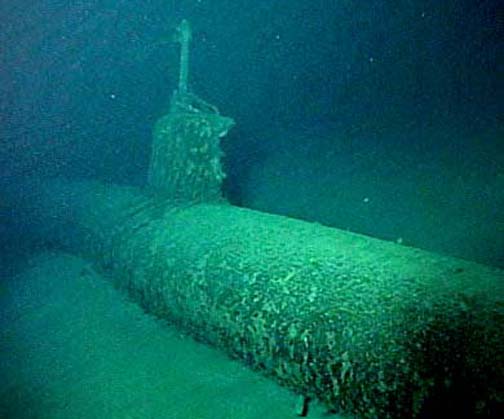
CTY Pisces – Photos of a Japanese midget submarine that was sunk off Pearl Harbor on the day of the attack. There’s a hole at the base of the conning tower where an artillery shell penetrated the hull, sinking the sub and killing the crew. Photos courtesy of Terry Kerby, Hawaii Undersea Research Laboratory. August 2003.
|
Major European bank could help Russia lift its sunken nuclear submarines https://bellona.org/news/nuclear-issues/2020-03-major-european-bank-could-help-russia-lift-its-sunken-nuclear-submarinesThe European Bank for Reconstruction and Development has signaled its readiness to help Russia raise Soviet-era radioactive debris, including two sunken nuclear submarines, from the bottom of Arctic seas. March 18, 2020 by Charles Digges charles@bellona.no While the deal is not yet final, it is thought that financial assistance would be allocated by the bank’s Northern Dimensions Environmental Partnership program – whose Nuclear Window fund has disbursed millions of dollars to help clean up radioactive hazards in Russia and Ukraine. Talks on funding the recovery of these Cold War artifacts have been underway since the end of last year, when the Russian government reinvigorated long-dormant discussions on retrieving the sunken radioactive cast offs. Alexander Nikitin, who heads Bellona’s St Petersburg offices, has been a part of these discussions. According to the Russian government’s official website on submarine decommissioning programs, the plan to raise the subs was presented at the EBRD’s assembly of donors in December, where the cost for the project was estimated at €300 million. It will now be up to Russia, the site reported, to furnish the bank with a comprehensive plan on raising the subs. While Moscow has considered various methods for raising the subs over the years, those who participated in the December discussions concluded a special ship might have to be built to get the job done. Beginning in the 1960s, the Soviet Navy used the waters east of the Novaya Zemlya atomic weapons testing range as a sort of watery nuclear waste dump. While the Soviet Union was hardly the only nuclear nation that resorted to dumping radioactive waste at sea, it was one of the most prolific. According to catalogues released by Russia in 2012, the military dumped some 18,000 separate objects in the Arctic that could be classified as radioactive waste. These included some 17,000 containers of radioactive waste; 19 ships containing radioactive waste; 14 nuclear reactors, including five still loaded with spent nuclear fuel; and 735 other piece of radioactively contaminated heavy machinery. Scientists at the Nuclear Safety Institute of the Russian Academy of Sciences, or IBRAE, say that time and corrosion have managed to decay thousands of these hazards and render them harmless. This leaves about 1,000 that continue to post a high risk of spreading radioactive contamination. Chief among these are two submarines, the K-159 and the K-27, both of which officials say pose the greatest threat to the environments in which they now lie. The K-159, which sank while it was being towed to decommissioning in 2003 and killed the nine sailors aboard, now lies in some of the most fertile fishing grounds of the Kara Sea. Raising this sub, say Russian experts, should be a priority. Its reactors hold some 800 kilograms of spent nuclear fuel, which they fear could contaminate the sea floor, leading to an economic crisis for the Russian and Norwegian fishing industries.
Like the K-159, the K-27 claimed its share of victims. Nine members of its crew of 144 died of radiation related illnesses shortly after returning to shore. Many more of the crew succumbed to similar illnesses in the years that followed. Too radioactive to be dismantled conventionally, the Soviet Navy towed the K-27 to the Arctic Novaya Zemlya nuclear testing range in 1982 and scuttled it in one of the archipelago’s fjords at a depth of about 30 meters. The sinking took some effort. The sub was weighed down by concrete and asphalt to secure its reactor and a hole was blown in its aft ballast tank to swamp it. But the fix won’t last forever. The asphalt was only meant to stave off contamination until 2032. Worse still is that the K-27’s reactors could be in danger of generating an uncontrolled nuclear chain reaction, prompting many experts to demand it be retrieved first. Raising these submarines from the depths will require technology Russia currently lacks. Even the lifting of the Kursk – perhaps the most famous sub recovery to date – required the assistance of the Dutch. But the K-159 lies at a depth much greater than the Kursk did, leading many experts to suggest building an new vessel for the purpose. From 1946 to 1993, more than 200,000 tons of waste, some of it highly radioactive, was dumped in the world’s oceans, mainly in metal drums, according to the International Atomic Energy Agency. The lion’s share of dumped nuclear waste came from Britain and the Soviet Union, figures from the IAEA show. By 1991, the US had dropped more than 90,000 barrels and at least 190,000 cubic meters of radioactive waste in the North Atlantic and Pacific. Other countries including Belgium, France, Switzerland and the Netherlands also disposed of tons of radioactive waste in the North Atlantic in the 1960s, 70s and 80s. |
|
|

Sellafield nuclear waste site to close due to coronavirus
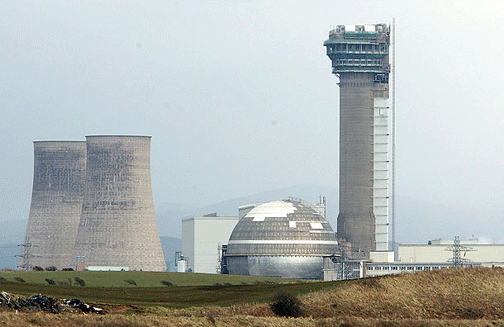 Sellafield nuclear waste site to close due to coronavirus, Magnox reprocessing plant will begin controlled shutdown after 8% of staff self-isolate,Guardian Jillian Ambrose Energy correspondentThu 19 Mar 2020 Britain’s nuclear waste site will shut its reprocessing plant at Sellafield after more than 8% of its staff began self-isolating to prevent the spread of the coronavirus.
The controlled shutdown of the Magnox plant in Cumbria will begin in the next few days after an outbreak of the Covid-19 virus within Sellafield’s 11,500 staff.
The company told employees on Tuesday evening that it would “scale back some operations” to “make best use of available people”.
Sellafield revealed last weekend that a staff member had tested positive for coronavirus, and on Monday it confirmed that another employee with suspected Covid-19 had begun self-isolation.
The number of Sellafield employees self-isolating has quickly climbed to about 1,000.
A Sellafield spokesman said the number in self-isolation included people with symptoms of the virus as well as those with underlying health conditions who undertaking social distancing……..
The Magnox plant is to close permanently this year. It began reprocessing waste from Britain’s first nuclear reactors in 1964 to separate the uranium and plutonium, which can still be reused from the spent radioactive waste. https://www.theguardian.com/business/2020/mar/18/sellafield-nuclear-waste-plant-close-coronavirus-staff
Doctors again call on Australian govt about Julian Assange’s precarious health, risk of coronavirus
 Almost 200 medical doctors say Julian Assange’s health is at increased risk from coronavirus, https://www.thecanary.co/global/world-news/2020/03/18/almost-200-medical-doctors-say-julian-assanges-health-is-at-increased-risk-from-coronavirus/
 John McEvoy 18th March 2020 On 18 March, almost 200 medical doctors wrote to Australian foreign minister Marise Payne to warn that Julian Assange’s health is at increased risk from the new coronavirus.
“Mr Assange could die in prison”
This is the latest in a number of letters sent by Doctors for Assange to express concern over the WikiLeaks publisher’s deteriorating health.
On 22 November, the group signed an open letter addressed to UK home secretary Priti Patel, saying: “we have real concerns, on the evidence currently available, that Mr Assange could die in prison”.
In a follow-up letter published on 4 December, the doctors wrote:
When the UK, as a Permanent Member of the United Nations Security Council, repeatedly ignores not only the serious warnings of the United Nations Special Rapporteur on Torture, but also its unequivocal investigative and remedial obligations under international and human rights law, the credibility of the UK’s commitment to human rights and the rule of law is fatally undermined.
Fertile breeding grounds”
The latest letter, signed by medical doctors from countries including the UK, Australia, Sweden, and the US, was written in light of the recent coronavirus pandemic.
The letter reads:
We wrote to you on December 15 2019 that Julian Assange’s life is at risk due to nearly a decade of human rights abuse including arbitrary detention, psychological torture and medical neglect. Now, with the president of the Prison Governor’s Association warning that prisons provide “fertile breeding grounds” for coronavirus, Julian Assange’s life and health are at heightened risk due to his arbitrary detention during this global pandemic. That threat will only grow as the coronavirus spreads. …
We therefore stand by our previous calls for the Australian Government to urgently intervene to protect the life, health and human rights of its citizen Julian Assange, before it is too late, whether due to coronavirus or any number of catastrophic health outcomes.
Coronavirus is the latest threat to Assange’s life, adding onto years of arbitrary punishment and psychological torture.
Dr Ian Fairlea on Epidemiological Evidence of Cancer Risks
 The Hazards of Tritium,https://www.ianfairlie.org/news/the-hazards-of-tritium/ , Dr Ian Fairlie, March 13, 2020 “……….Epidemiological Evidence of Risks Because of methodological limitations, epidemiology studies are a blunt tool for discovering whether adverse effects result from radiation exposures. These limitations include:
- under-ascertainment, …
- strict data requirements….
- confounding factors: the true causes of morbidity or mortality can be uncertain due to confounding factors such as socio-economic status and competing causes of death.
- bias: ……
- poor signal to noise…..
- uncertain doses:……
- wide confidence intervals……
The Abuse of Statistical Significance Tests
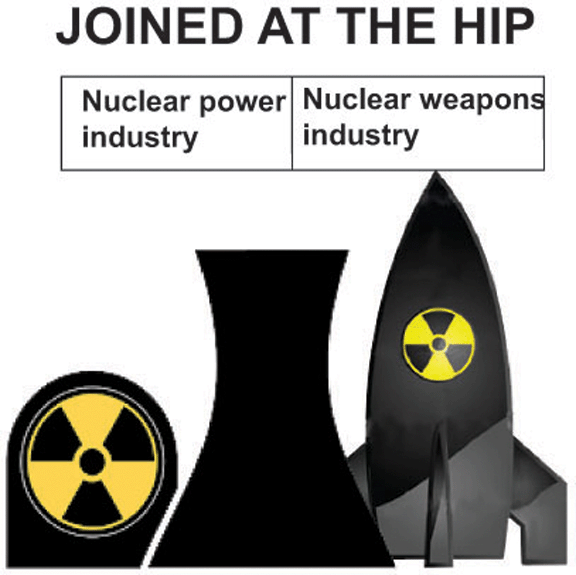
“Peaceful” and military nuclear reactors always inextricably linked
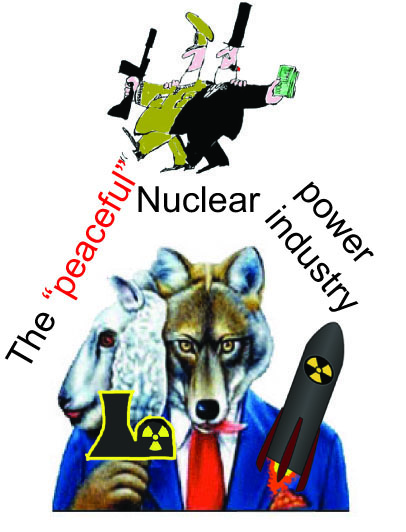 Anne McMenamin Nuclear Fuel Cycle Watch Australia, 19 Mar 20, . I’m referring to the structural links between the commercial and military uses of nuclear reactors, and, to some extent, the way THEY see it – which doesn’t always line up with the technical realities. History shows that the 2 industries have been inextricably linked from the beginning.
“Great efforts have been and still are made to disguise the close connection between nuclear energy for war and for power stations. Two reasons are suggested for this: political convenience in avoiding additional informed protests against nuclear weapon production and industrial convenience in carrying on without public protest what has become a very profitable industry.”
Sir Kelvin Spencer CBE FCGI LLD (HON)
First issue of Medicine and War, in 1985
Similarly, a document from the Los Alamos National Laboratory in August, 1981, states:
“There is no technical demarcation between the military and civilian reactor and there never was one. What has persisted over the decades is just the misconception that such a linkage does not exist.”
“Some Political Issues Related to Future Special Nuclear Fuels Production,”
LA- 8969-MS, UC-16
In 2013, historian Dr David Palmer said,
“The issue is processing uranium for nuclear power that then can be used for defence. You have to understand this in terms of Adelaide; it’s a military, industrial and intelligence complex.”
Palmer was commenting on the notable push for nuclear energy and nuclear submarines coming from numerous academics and business people in Adelaide. He considered the real motive behind the nuclear push is security in energy supply for the military, and hence the need to solve the problem of waste disposal, which is currently discouraging investment in nuclear power. Major military/weapons corporations such as Raytheon, Halliburton subsidiary Kellogg, Brown and Root, Lockheed Martin, Babcock and General Atomics are now a noticeable presence in the SA economy.
Links can be clearly seen, e.g. Heathgate, which owns the Beverley mine, is a wholly owned subsidiary of General Atomics, one of the world’s largest weapons manufacturer/servicer. https://www.facebook.com/groups/1021186047913052/
Military use: that is clearly the reason for developing Small Nuclear Reactors
 If the testing goes well, a commercially developed, Nuclear Regulatory Commission licensed reactor will be demonstrated on a “permanent domestic military installation.
The department awarded contracts to BWX Technologies, Inc. of Virginia, for $13.5 million; Westinghouse Government Services of Washington, D.C. for $11.9 million; and X-energy, LLC of Maryland, for $14.3 million, to begin a two-year engineering design competition for a small nuclear microreactor designed to potentially be forward deployed with forces outside the continental United States.
The combined $39.7 million in contracts are from “Project Pele,” a project run through the Strategic Capabilities Office (SCO), located within the department’s research and engineering side. The prototype is looking at a 1-5 megawatt (MWe) power range. The Department of Energy has been supporting the project at its Idaho National Laboratory.
Pele “involves the development of a safe, mobile and advanced nuclear microreactor to support a variety of Department of Defense missions such as generating power for remote operating bases,” said Lt. Col. Robert Carver, a department spokesman. “After a two-year design-maturation period, one of the companies funded to begin design work may be selected to build and demonstrate a prototype.”…….
A second effort is being run through the office of the undersecretary of acquisition and sustainment. That effort, ordered in the 2019 National Defense Authorization Act, involves a pilot program aiming to demonstrate the efficacy of a small nuclear reactor, in the 2-10 MWe range, with initial testing at a Department of Energy site in roughly the 2023 timeframe.
If the testing goes well, a commercially developed, Nuclear Regulatory Commission licensed reactor will be demonstrated on a “permanent domestic military installation by 2027,” according to DoD spokesman Lt. Col. Mike Andrews. “If the full demonstration proves to be a cost effective energy resilience alternative, NRC-licensed [reactors] will provide an additional option for generating power provided to DoD through power purchase agreements.”…….
According to Dr. Jonathan Cobb, a spokesman for the World Nuclear Association, small nuclear reactors come in three flavors. The first, small modular reactors, sit in the 20-300 MWe range and are approaching the point they will appear on market.
The second category sits from 10-100 megawatts, and have been used in transports such as icebreakers. According to Cobb, a pair of 32 MWe reactors, based on icebreaker technology, are being used aboard the Akademik Lomonosov, a Russian “floating power plant.”
The third category, covering what the Pentagon appears most interested in, is a category known as microreactors. The challenge, Cobb said, is that this group is the furthest behind technologically, with demonstrations of commercial systems targeted for “the second half of the 2020s,” putting them in the “ballpark” of what DoD is looking for with its A&S effort……
Edwin Lyman, director of the Nuclear Safety Project at the Union of Concerned Scientists, has concerns about the availability of fuel to power a proliferation of small nuclear reactors. He noted, “there are no clear plans for manufacturing the quantity of high-assay low enriched uranium, much less the production of high-quality TRISO [TRi-structural ISOtropic particle] fuel, that would be able to meet timelines this decade.”……
Lord, for her part, would not rule out working with foreign allies on the nuclear program in some way, saying “We always talk with our partners and allies about collaboration. We have many umbrella vehicles, if you will, to do that, particularly with [National Technology and Industrial Base] countries — U.K., Canada, Australia. We have a little bit of an easy button there for working back and forth with technical information.”… https://www.defensenews.com/smr/nuclear-arsenal/2020/03/09/pentagon-to-award-mobile-nuclear-reactor-contracts-this-week/?fbclid=IwAR2MTkRUDqIkruQHY0RivblBzoSY6gubpl8gkWDUDhedVwZEGstJhHYLb6U#.XmawxEl-aJ0.facebook
Impact of coronavirus is curbing greenhouse gas emissions
How changes brought on by coronavirus could help tackle climate change Based on projections for economic growth in 2020, there are suggestions that the impact of the coronavirus might significantly curb global emissions. https://www.sbs.com.au/news/how-changes-brought-on-by-coronavirus-could-help-tackle-climate-change
Restrictions in the free movement of people are disrupting economic activity across the world as measures to control the coronavirus roll out.
There is a strong link between economic activity and global carbon dioxide emissions, due to the dominance of fossil fuel sources of energy.
This coupling suggests we might be in for an unexpected surprise due to the coronavirus pandemic: a slowdown of carbon dioxide emissions due to reduced energy consumption.
Based on new projections for economic growth in 2020, we suggest the impact of the coronavirus might significantly curb global emissions.
The effect is likely to be less pronounced than during the global financial crisis (GFC). And emissions declines in response to past economic crises suggest a rapid recovery of emissions when the pandemic is over.
But prudent spending of economic stimulus measures, and a permanent adoption of new work behaviours, could influence how emissions evolve in future.
The world in crisis
In just a few short months, millions of people have been put into quarantine and regions locked down to reduce the spread of the coronavirus. Around the world, events are being cancelled and travel plans dropped.
A growing number of universities, schools and workplaces have closed and some workers are choosing to work from home if they can.
Even the Intergovernmental Panel on Climate Change has cancelled a critically important meeting and will instead hold it virtually.
The International Energy Agency had already predicted oil use would drop in 2020, and this was before an oil price war emerged between Saudi Arabia and Russia.
The unprecedented coronavirus lockdown in China led to an estimated 25 per cent reduction in energy use and emissions over a two-week period compared to previous years (mostly due to a drop in electricity use, industrial production and transport).
This is enough to shave one percentage point growth off China’s emissions in 2020.
Reductions are also being observed in Italy, and are likely to spread across Europe as lockdowns become more widespread.
The emission-intensive airline industry, covering 2.6 per cent of global carbon dioxide emissions (both national and international), is in freefall.
It may take months, if not years, for people to return to air travel given that coronavirus may linger for several seasons.
Given these economic upheavals, it is becoming increasingly likely that global carbon dioxide emissions will drop in 2020.
Coronavirus is not the GFC
Leading authorities have revised down economic forecasts as a result of the pandemic, but so far forecasts still indicate the global economy will grow in 2020. For example, the Organisation for Economic Cooperation and Development (OECD) downgraded estimates of global growth in 2020 from three per cent (made in November 2019) to 2.4 per cent (made in March 2020).
The International Monetary Fund has indicated similar declines, with an update due next month.
Assuming the carbon efficiency of the global economy improves in line with the 10-year average of 2.5 per cent per year, the OECD’s post-coronavirus growth projection implies carbon dioxide emissions may decline 0.3 per cent in 2020 (including a leap year adjustment).
But the GFC experience indicates that the carbon efficiency of the global economy may improve much more slowly during a crisis. If this happens in 2020 because of the coronavirus, carbon dioxide emissions still could grow.
A decomposition of CO2 emissions growth into economic growth (orange) and carbon efficiency improvements (green) to estimate future emissions based on OECD economic growth projections. Glen Peters/CICERO
Under the worst-case OECD forecast the global economy in 2020 could grow as little as 1.5 per cent.
All else equal, we calculate this would lead to a 1.2 per cent decline in carbon dioxide emissions in 2020.
This drop is comparable to the GFC, which in 2009 led to a 0.1 per cent drop in global GDP and a 1.2 per cent drop in emissions.
So far, neither the OECD or International Monetary Fund have suggested coronavirus will take global GDP into the red.
The emissions rebound
The GFC prompted big, swift stimulus packages from governments around the world, leading to a 5.1 per cent rebound in global emissions in 2010, well above the long-term average.
Previous financial shocks, such as the collapse of the former Soviet Union or the 1970s and 1980s oil crises, also had periods with lower or negative growth, but growth soon returned.
At best, a financial crisis delays emissions growth a few years. Structural changes may happen, such as the shift to nuclear energy after the oil crises, but evidence suggests emissions continue to grow.
The economic legacy of the coronavirus might also be very different to the GFC. It looks more like a slow burner, with a drop in productivity over an extended period rather than widespread job losses in the short term.
Looking to the future
The coronavirus pandemic will not turn around the long-term upward trend in global emissions. But governments around the world are announcing economic stimulus measures, and the way they’re spent may affect how emissions evolve in future.
There is an opportunity to invest the stimulus money in structural changes leading to reduced emissions after economic growth returns, such as further development of clean technologies.
Also, the coronavirus has forced new working-from-home habits that limit commuting, and a broader adoption of online meetings to reduce the need for long-haul business flights. This raises the prospect of long-term emissions reductions should these new work behaviours persist beyond the current global emergency.
The coronavirus is, of course, an international crisis, and a personal tragedy for those who have lost, and will lose, loved ones. But with good planning, 2020 could be the year that global emissions peak (though the same was said after the GFC).
That said, past economic shocks might not be a great analogue for the coronavirus pandemic, which is unprecedented in modern human history and has a long way to go.
Tokyo High Court slashes damages to Fukushima nuclear disaster evacuees
|
Tokyo High Court slashes damages to Fukushima nuclear disaster evacuees, Japan Times, 18 Mar 20, The Tokyo High Court on Tuesday ordered ¥1 million in additional damages be paid each to some 300 evacuees from the 2011 Fukushima nuclear disaster, down by two-thirds from the amount awarded by a lower court ruling.The total amount of additional compensation Tokyo Electric Power Company Holdings Inc. must pay was reduced to about ¥360 million from the ¥1.1 billion awarded by the Tokyo District Court in 2018…….
In their petition, the plaintiffs, including former residents of the Odaka district in Minamisoma, Fukushima Prefecture, sought additional damages of ¥10.9 billion in total. The ruling was the second by a high court on a collective damages lawsuit filed by those displaced by the nuclear accident, following one issued by Sendai High Court last week. On Tuesday, presiding Judge Wataru Murata said Tepco must pay additional damages on top of the ¥8.5 million it paid per person based on estimates calculated under government-set interim standards. The additional damages have to be paid to compensate for the loss of hometowns, as “the foundations of residents’ lives have changed greatly and have yet to be restored,” Murata said. But the amount of the additional damages should be reduced because individual circumstances of the evacuees should not be taken into account, Murata said, denying the need for such consideration as had been recognized by the lower court…….https://www.japantimes.co.jp/news/2020/03/18/national/crime-legal/tokyo-high-court-slashes-damages-fukushima-nuclear-disaster-evacuees/#.XnJ94IgzbIU |
|
New research on the global climate impacts of a small nuclear war
How a small nuclear war would transform the entire planet
Nuclear waste dumping for the beautiful landscape of the Northwoods?
 Nuclear Waste In The Northwoods https://www.wxpr.org/post/nuclear-waste-northwoods#stream/0 Nuclear Waste In The Northwoods https://www.wxpr.org/post/nuclear-waste-northwoods#stream/0
By GARY ENTZ 18 Mar 20, The issue of nuclear waste generated by power plants in the United States always seems to be somebody else’s problem. In this week’s Northwoods Moment in History, Gary Entz reminds us how it wasn’t so long ago that it could have been a problem for the Northwoods and could be again in the future.
The beautiful landscape of the Northwoods along with its pristine lakes and streams is something that most people would not associate with a nuclear waste dump. Yet not so long ago that is exactly what the United States Department of Energy had in mind for the region. What was once known as Atomic Power grew out of the atomic weapons research programs of World War II and the Cold War. The first fission reactor capable of generating electricity came online in 1951 and the first commercial reactor to generate electricity for the public market came online in 1957. By March of 1979, when the accident at Three Mile Island occurred, there were over eighty nuclear reactors that either were or had been in operation in the U.S. with nearly sixty more under construction. Wisconsin had three of those reactors, located at Point Beach, Kewaunee, and La Crosse. Nuclear power is touted as being clean energy because it has zero emissions; that is, the steam rising from a nuclear cooling tower is just that, water steam. However, fuel rods are usually swapped out every 18 to 24 months. Spent fuel rods remain dangerously radioactive for 10,000 years or longer and must be safely stored. Unused nuclear fuel rods typically spend 7 to 10 years in a pool of water to cool down and are then stored in dry casks either at the power plant site or in a spent fuel storage installation. Today there eighty sites across dozens of states where nearly 80,000 metric tons of nuclear waste from America’s power plants and military installations is stored. This is where the Northwoods comes in. By the late 1970s, the Department of Energy wanted a centralized location where all the nation’s nuclear waste could be stored and monitored. In the 1980s, the DOE ranked Wisconsin’s Wolf River Batholith as number two of the top three options for a high-level nuclear waste repository. The Batholith is a 1,000 square mile watershed that extends over seven counties, including Langlade, Shawano, Waupaca, Menominee, Portage, Marathon and Oconto counties, and the land of three tribes, the Stockbridge-Munsee, Menominee and Ho-Chunk. This area was selected due to its stable granite geology and lack of earthquakes. The proposed sixteen square mile facility was dangerously close to popular waterways. If the radioactive materials leaked, then contaminated water could flow into the Wolf River, the Fox River, and on to Lake Winnebago and Lake Michigan. The people of the Northwoods and all of Wisconsin were overwhelmingly opposed to becoming a nuclear dump for the DOE. In a 1983 statewide referendum, 89 percent voted for a moratorium on nuclear power and a waste disposal site in Wisconsin. Because of the licensing issues at Yucca Mountain, Nevada, the DOE has been looking for different options, and in 2008 the Wolf River Batholith was again listed as a leading alternative. In 2015, when the state legislature voted to overturn the 1983 moratorium on nuclear power, it also inadvertently lifted to moratorium on a nuclear waste dump. |
|
EDF reassures UK that during coronavirus epidemic, nuclear operations will continue
|
EDF Energy says plans in place to maintain operations at UK nuclear plants https://uk.finance.yahoo.com/news/edf-energy-says-plans-place-144424093.html?guccounter=1&guce_referrer=aHR0cHM6Ly9uZXdzLmdvb2dsZS5jb20v&guce_referrer_sig=AQAAABq2naeyyQ9ohtcPQW2Ho9e2-qDfI6XSbDwfZUneTxi4VhdT3GWx-zWbqg0MCFS2ArOO-cBI7xrEXbGJxc_Z4MEQGCMb8xZYz9GdF6dLu3azUPUvN5EB4x2GgyUSjwZkX1E93xGECuqxS4HnxqOETaVwytGf9KBTZIzT3QuaBP-R Reuters18 March 2020 By Nina ChestneyLONDON (Reuters) – EDF Energy has plans in place to maintain operations at its nuclear power plants in Britain during the coronavirus outbreak, it told Reuters on Tuesday.
The company operates all 15 nuclear reactors in Britain. Currently eight of those, with a combined capacity of around 4.2 gigawatts – almost half of the country’s total nuclear power capacity – are offline for planned or unplanned outages. “We have comprehensive plans in place to maintain operations at all of our power stations and planned generation is not affected at any of our sites,” said a spokeswoman, declining to specify what the measures were. On Monday, EDF Energy’s parent company EDF <EDF.PA> said it would reduce staff at its Flamanville nuclear power plant in northern France due to coronavirus infections in the Cotentin region. The plant has been offline for maintenance. Britain’s Office for Nuclear Regulation (ONR) said all UK sites have minimum staffing levels, and contingency plans should they fall below these levels, to enable them to stay in control of activities that could affect nuclear safety under all foreseeable circumstances. The ONR, which is in charge of overseeing nuclear safety, said its staff have been directed to work at home. “A number of inspectors will continue to travel to sites where required, but we will endeavour to carry out as much of our business as possible via phone, email and Skype,” it said. “These measures will not have a severe impact on our regulation of the nuclear industry.” (Reporting by Nina Chestney; Editing by Pravin Char and Jan Harvey) |
|
1 This Month

of the week – Shut Down Drone Warfare!


Tell the Ukrainian Government to Drop Prosecution of Peace Activist Yurii Sheliazhenko

Petition to revoke the licensing of the Near Surface Nuclear Disposal Facility (NSDF) at Chalk River. https://www.ourcommons.ca/petitions/en/Petition/Details?Petition=e-7247
To see nuclear-related stories in greater depth and intensity – go to https://nuclearinformation.wordpress.com
-
Archives
- April 2026 (91)
- March 2026 (251)
- February 2026 (268)
- January 2026 (308)
- December 2025 (358)
- November 2025 (359)
- October 2025 (376)
- September 2025 (257)
- August 2025 (319)
- July 2025 (230)
- June 2025 (348)
- May 2025 (261)
-
Categories
- 1
- 1 NUCLEAR ISSUES
- business and costs
- climate change
- culture and arts
- ENERGY
- environment
- health
- history
- indigenous issues
- Legal
- marketing of nuclear
- media
- opposition to nuclear
- PERSONAL STORIES
- politics
- politics international
- Religion and ethics
- safety
- secrets,lies and civil liberties
- spinbuster
- technology
- Uranium
- wastes
- weapons and war
- Women
- 2 WORLD
- ACTION
- AFRICA
- Atrocities
- AUSTRALIA
- Christina's notes
- Christina's themes
- culture and arts
- Events
- Fuk 2022
- Fuk 2023
- Fukushima 2017
- Fukushima 2018
- fukushima 2019
- Fukushima 2020
- Fukushima 2021
- general
- global warming
- Humour (God we need it)
- Nuclear
- RARE EARTHS
- Reference
- resources – print
- Resources -audiovicual
- Weekly Newsletter
- World
- World Nuclear
- YouTube
-
RSS
Entries RSS
Comments RSS
 nuclear-news