nuclear-news

The News That Matters about the Nuclear Industry Fukushima Chernobyl Mayak Three Mile Island Atomic Testing Radiation Isotope

  • Home
  • 1 This Month
  • ACTION !
  • Disclaimer
  • Links
  • PAGES on NUCLEAR ISSUES

Does the USA arsenal REALLY need costly new plutonium weapons cores?
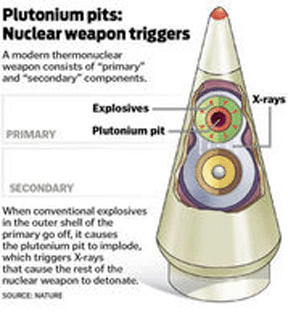
An Unanswered Question at the Heart of the U.S.’s Nuclear Arsenal.  Nobody knows how long the plutonium “pits” in the cores of bombs last, and the answer could cost—or save—billions   https://blogs.scientificamerican.com/observations/an-unanswered-question-at-the-heart-of-americas-nuclear-arsenal/, By Stephen Young on January 28, 2020  

The United States has an arsenal of some 3,800 nuclear weapons, about half of which are deployed, with the rest in storage. The Department of Energy’s National Nuclear Security Agency (NNSA) and the nuclear weapons laboratories it oversees are concerned that the performance of the weapons will degrade over time. Most of the components can be—and are being—replaced with new versions, so the main concern is the behavior of aging plutonium “pits” at the core of all U.S. weapons.

Plutonium essentially doesn’t exist in nature but is produced in nuclear reactors. It was first produced during World War II, and the U.S. government didn’t care about pit aging because it constantly replaced pits with newly built ones as it upgraded its arsenal during the Cold War.  So, no one in the weapons labs knew what the lifetime of a pit was. Instead, the NNSA simply assumed it was 45–60 years.

And during the Cold War, the U.S. produced a lot of pits, tens of thousands. It stopped in 1989 when the production plant was shut down by the FBI and the EPA due to pervasive environmental damage. Los Alamos National Laboratory in New Mexico manufactured 31 pits between 2007 and 2013, but none since. That means virtually all the pits in today’s arsenal were made 30–40 years ago, which would have meant serious problems for the stockpile starting in 2025 if the NNSA’s assumption were correct.

So, what is the lifetime of a pit?

In 2005, Congress tasked JASON, the independent science advisory group, with answering this question. Their groundbreaking 2007 report examined the data the weapons labs had produced and concluded that most weapons system types in the stockpile “have credible minimum [emphasis added] lifetimes in excess of 100 years as regards aging of plutonium.” Moreover, this minimum age would also apply to the remaining types once straightforward adjustments were made. This finding significantly reduced pressure to resume large-scale production of pits for some time.

Last year, Congress—led by Sen. Dianne Feinstein (D–Calif.)—sensibly asked JASON to update its earlier work. Unfortunately, JASON’s new, very brief “letter report” contains zero new information on pit lifetimes.

What went wrong? Did JASON fail to do its job? Or was the group unable to do it?

When asked this question, an NNSA official confirmed that it was a lack of data, not a failure by JASON, that prevented an update on the 2007 estimates. JASON’s report states: “A focused program of experiments, theory, and simulations is required to determine the timescales over which Pu [plutonium] aging may lead to unacceptable degradation in primary performance.”

JASON lays the blame for this failure squarely on the NNSA, declaring that “in general, studies on Pu aging and its impacts on the performance of nuclear-weapon primaries have not been sufficiently prioritized over the past decade.”

It seems entirely possible that this was not an oversight on the part of NNSA but reflects that the agency does not want to know the answer. The NNSA wants to produce new types of warheads, not just refurbish existing ones. That requires the ability to produce new pits in bulk.  If minimum pit lifetimes were 200 years, then there would be no need for new pit production to maintain existing weapons. The cost of pit production would then be entirely attributed to new weapons and the price tag for those would increase substantially, making it less likely that Congress will give NNSA the go-ahead.

Instead of studying pit lifetimes, the NNSA has focused on major upgrades for three existing nuclear weapons, a new uranium processing facility and, notably, one all-new nuclear weapon—the first since the end of the Cold War—that will require production of new plutonium pits.

And, not coincidentally, the Trump administration and many in Congress are pushing a plan to produce at least 80 pits per year by 2030. The rationale they offer is disarmingly simple: if the U.S. has roughly 4,000 nuclear weapons and pits last 100 years, then the NNSA needs to produce 80 pits per year starting in 2030 to be able to replace the entire stockpile by 2080.

But what if plutonium pits last longer than 100 years? Deferring production of new pits would significantly reduce the stress on the NNSA’s infrastructure, already struggling under a workload many times heavier than at any time since the end of the Cold War. It would also save tens of billions of dollars.

However, the all-new warhead, known as the W87-1, would need new plutonium pits. The NNSA estimates the W87-1 will cost $11–16 billion, not including the money needed to produce the new pits, which adds another $14–28 billion.

Moreover, another recent independent study mandated by Congress found that the current timeline and cost estimate for pit production are not realistic. The May 2019 study by the Institute for Defense Analyses concluded that the 80 pits per year goal was “potentially achievable given sufficient time, resources, and management focus, although not on the schedules or budgets currently forecasted…. Put more sharply, eventual success of the strategy  to reconstitute plutonium pit production is far from certain.” (Emphasis added.)

In other words, producing 80 pits per year may be possible, but it will not happen by 2030 and it will cost more than current projections.

This makes an updated estimate on pit lifetime even more important.

Congress should put the NNSA’S feet to the fire. Sen. Feinstein, sponsor of the JASON study, is the ranking member of the Senate committee that oversees the NNSA. She should push the committee to direct the NNSA to undertake the “focused program” that JASON recommends, now. The answer will determine whether the U.S. needs to spend tens of billions of dollars in a rush to produce pits, or whether it can sensibly and safely postpone that decision.

Share this:

  • Share on X (Opens in new window) X
  • Share on Facebook (Opens in new window) Facebook
Like Loading...

January 30, 2020 - Posted by Christina Macpherson | weapons and war

No comments yet.

Leave a comment Cancel reply

This site uses Akismet to reduce spam. Learn how your comment data is processed.

« Previous | Next »

1 This Month

​To see nuclear-related stories in greater depth and intensity – go to https://nuclearinformation.wordpress.com/

Now until to February 10, 2026 Radioactive waste storage in France: the debate is finally open! How to participate?

  • Categories

    • 1
      • Arclight's Vision
    • 1 NUCLEAR ISSUES
      • business and costs
        • employment
        • marketing
      • climate change
      • culture and arts
      • ENERGY
        • renewable
          • decentralised
          • energy storage
      • environment
        • oceans
        • water
      • health
        • children
        • psychology – mental health
        • radiation
        • social effects
        • women
      • history
      • indigenous issues
      • Legal
        • deaths by radiation
        • legal
      • marketing of nuclear
      • media
        • investigative journalism
        • Wikileaks
      • opposition to nuclear
      • PERSONAL STORIES
      • politics
        • psychology and culture
          • Trump – personality
        • public opinion
        • USA election 2024
        • USA elections 2016
      • politics international
      • Religion and ethics
      • safety
        • incidents
      • secrets,lies and civil liberties
        • civil liberties
      • spinbuster
        • Education
      • technology
        • reprocessing
        • Small Modular Nuclear Reactors
        • space travel
      • Uranium
      • wastes
        • – plutonium
        • decommission reactor
      • weapons and war
        • Atrocities
        • depleted uranium
      • Women
    • 2 WORLD
      • ANTARCTICA
      • ARCTIC
      • ASIA
        • Burma
        • China
        • India
        • Indonesia
        • Japan
          • – Fukushima 2011
          • Fukushima 2012
          • Fukushima 2013
          • Fukushima 2014
          • Fukushima 2015
          • Fukushima 2016
          • Fukushima continuing
        • Malaysia
        • Mongolia
        • North Korea
        • Pakistan
        • South Korea
        • Taiwan
        • Turkey
        • Vietnam
      • EUROPE
        • Belarus
        • Bulgaria
        • Denmark
        • Finland
        • France
        • Germany
        • Greece
        • Ireland
        • Italy
        • Kazakhstan
        • Kyrgyzstan
        • Russia
        • Spain
        • Sweden
        • Switzerland
        • UK
        • Ukraine
      • MIDDLE EAST
        • Afghanistan
        • Egypt
        • Gaza
        • Iran
        • Iraq
        • Israel
        • Jordan
        • Libya
        • Saudi Arabia
        • Syria
        • Turkey
        • United Arab Emirates
      • NORTH AMERICA
        • Canada
        • USA
          • election USA 2020
      • OCEANIA
        • New Zealand
        • Philippines
      • SOUTH AMERICA
        • Brazil
    • ACTION
    • AFRICA
      • Kenya
      • Malawi
      • Mali
      • Namibia
      • Niger
      • Nigeria
      • Somalia
      • South Africa
    • Atrocities
    • AUSTRALIA
    • Christina's notes
    • Christina's themes
    • culture and arts
    • Events
    • Fuk 2022
    • Fuk 2023
    • Fukushima 2017
    • Fukushima 2018
    • fukushima 2019
    • Fukushima 2020
    • Fukushima 2021
    • general
    • global warming
    • Humour (God we need it)
    • Nuclear
    • RARE EARTHS
      • thorium
    • Reference
      • Reference archives
    • resources – print
    • Resources -audiovicual
    • Weekly Newsletter
    • World
    • World Nuclear
    • YouTube
  • Pages

    • 1 This Month
    • ACTION !
    • Disclaimer
    • Links
    • PAGES on NUCLEAR ISSUES
      • audio-visual news
      • Anti Nuclear, Clean Energy Movement
        • Anti Nuclear movement – a success story
          • – 2013 – the struggle for a nuclear-free, liveable world
          • – 2013: the battle to expose nuclear lies about ionising radiation
            • Speakers at Fukushima Symposium March 2013
            • Symposium 2013 Ian Fairlie
      • Civil Liberties
        • – Civil liberties – China and USA
      • Climate change
      • Climate Change
      • Economics
        • – Employment
        • – Marketing nuclear power
        • – Marketing Nuclear Power Internationally
        • nuclear ‘renaissance’?
        • Nuclear energy – the sick man of the corporate world
      • Energy
        • – Solar energy
      • Environment
        • – Nuclear Power and the Tragedy of the Commons
        • – Water
      • Health
        • Birth Defects in the Chernobyl Radiation Affected Region.
      • History
        • Nuclear History – the forgotten disasters
      • Indigenous issues
      • Ionising radiation
        • – Ionising radiation – medical
        • Fukushima FACT SHEET
      • Media
        • Nuclear Power and Media 2012
      • Nuclear Power and the Consumer Society – theme for December 2012
      • Peace and nuclear disarmament
        • Peace on a Nuclear Free Earth
      • Politics
        • – Politics USA
      • Public opinion
      • Religion and ethics
        • -Ethics of nuclear power
      • Resources – print
      • Safety
      • Secrets and lies
        • – NUCLEAR LIES – theme for January 2012
        • – Nuclear Secrets and Lies
      • Spinbuster
        • 2013 nuclear spin – all about FEAR -theme for June
        • Spinbuster 1
      • Technology
        • TECHNOLOGY Challenges
      • Wastes
        • NUCLEAR WASTES – theme for October 2012
        • – Plutonium
      • Weapons and war
      • Women
  • Archives

    • February 2026 (59)
    • January 2026 (308)
    • December 2025 (358)
    • November 2025 (359)
    • October 2025 (376)
    • September 2025 (258)
    • August 2025 (319)
    • July 2025 (230)
    • June 2025 (348)
    • May 2025 (261)
    • April 2025 (305)
    • March 2025 (319)
  • Categories

    • 1
      • Arclight's Vision
    • 1 NUCLEAR ISSUES
      • business and costs
        • employment
        • marketing
      • climate change
      • culture and arts
      • ENERGY
        • renewable
          • decentralised
          • energy storage
      • environment
        • oceans
        • water
      • health
        • children
        • psychology – mental health
        • radiation
        • social effects
        • women
      • history
      • indigenous issues
      • Legal
        • deaths by radiation
        • legal
      • marketing of nuclear
      • media
        • investigative journalism
        • Wikileaks
      • opposition to nuclear
      • PERSONAL STORIES
      • politics
        • psychology and culture
          • Trump – personality
        • public opinion
        • USA election 2024
        • USA elections 2016
      • politics international
      • Religion and ethics
      • safety
        • incidents
      • secrets,lies and civil liberties
        • civil liberties
      • spinbuster
        • Education
      • technology
        • reprocessing
        • Small Modular Nuclear Reactors
        • space travel
      • Uranium
      • wastes
        • – plutonium
        • decommission reactor
      • weapons and war
        • Atrocities
        • depleted uranium
      • Women
    • 2 WORLD
      • ANTARCTICA
      • ARCTIC
      • ASIA
        • Burma
        • China
        • India
        • Indonesia
        • Japan
          • – Fukushima 2011
          • Fukushima 2012
          • Fukushima 2013
          • Fukushima 2014
          • Fukushima 2015
          • Fukushima 2016
          • Fukushima continuing
        • Malaysia
        • Mongolia
        • North Korea
        • Pakistan
        • South Korea
        • Taiwan
        • Turkey
        • Vietnam
      • EUROPE
        • Belarus
        • Bulgaria
        • Denmark
        • Finland
        • France
        • Germany
        • Greece
        • Ireland
        • Italy
        • Kazakhstan
        • Kyrgyzstan
        • Russia
        • Spain
        • Sweden
        • Switzerland
        • UK
        • Ukraine
      • MIDDLE EAST
        • Afghanistan
        • Egypt
        • Gaza
        • Iran
        • Iraq
        • Israel
        • Jordan
        • Libya
        • Saudi Arabia
        • Syria
        • Turkey
        • United Arab Emirates
      • NORTH AMERICA
        • Canada
        • USA
          • election USA 2020
      • OCEANIA
        • New Zealand
        • Philippines
      • SOUTH AMERICA
        • Brazil
    • ACTION
    • AFRICA
      • Kenya
      • Malawi
      • Mali
      • Namibia
      • Niger
      • Nigeria
      • Somalia
      • South Africa
    • Atrocities
    • AUSTRALIA
    • Christina's notes
    • Christina's themes
    • culture and arts
    • Events
    • Fuk 2022
    • Fuk 2023
    • Fukushima 2017
    • Fukushima 2018
    • fukushima 2019
    • Fukushima 2020
    • Fukushima 2021
    • general
    • global warming
    • Humour (God we need it)
    • Nuclear
    • RARE EARTHS
      • thorium
    • Reference
      • Reference archives
    • resources – print
    • Resources -audiovicual
    • Weekly Newsletter
    • World
    • World Nuclear
    • YouTube
  • RSS

    Entries RSS
    Comments RSS

Site info

nuclear-news
Blog at WordPress.com.
Privacy & Cookies: This site uses cookies. By continuing to use this website, you agree to their use.
To find out more, including how to control cookies, see here: Cookie Policy
  • Comment
  • Reblog
  • Subscribe Subscribed
    • nuclear-news
    • Join 2,077 other subscribers
    • Already have a WordPress.com account? Log in now.
    • nuclear-news
    • Subscribe Subscribed
    • Sign up
    • Log in
    • Copy shortlink
    • Report this content
    • View post in Reader
    • Manage subscriptions
    • Collapse this bar
 

Loading Comments...
 

    %d

