California fights NASA over toxic Santa Susana nuclear site
California, NASA Clash Over Cleanup at Nuclear, Rocket Site, https://news.bloombergenvironment.com/environment-and-energy/california-nasa-clash-over-cleanup-at-nuclear-rocket-site
- California says the space agency is not adhering to past agreements
- NASA needs to redraft a cleanup plan, toxics agency says
California’s toxics agency is opposing a revised NASA cleanup plan to remove contamination at a former rocket and energy research site where a partial meltdown happened decades ago, calling the federal agency’s proposal irregular, infeasible, and legally deficient.
It’s the latest fight in a long tussle over the Santa Susana Field Laboratory, a 2,850-acre site in Simi Valley near Los Angeles, where an estimated 17,000 rockets engine tests occurred. The lab, which operated from 1948 to 2006, was also home to 10 nuclear reactors where the Energy Department and what is now the Boeing Co. did energy research.
The site experienced a partial nuclear meltdown in 1959, but evidence wasn’t revealed until 20 years later. Cleanup work has been ongoing since the 1960s.
Cesium-137
The National Aeronautics and Space Administration agreed to a consent order in 2010 with the state Department of Toxic Substances Control requiring soil remediation of the site, which was contaminated with 16 radiologicals like cesium-137, and 116 chemicals.
A final environmental review was completed in 2014, but the space agency issued a separate draft cleanup plan in October based on new data showing more contamination.
The draft plan provides options for how much soil would be excavated. One option, the one that reflects the agreement in original administrative order on consent with the state, calls for excavating 870,000 cubic yards, an increase from the 500,000 cubic yards estimated in the 2014 plan to meet the standard agreed upon with the state. The other options call for removing lesser amounts, down to 176,500 cubic yards. The plan also considers a no-action alternative.
NASA said in the draft supplemental environmental impact statement that it hasn’t chosen a preferred option yet.
In a letter sent to NASA Jan. 8, the Department of Toxic Substances Control asked the space agency to revise its cleanup plans to reflect the original administrative order on consent, known as an AOC.
State Agency Rejects Other Options
“NASA must also be aware that DTSC is not open to considering NASA cleanup alternatives which are non-compliant with the AOC,” the letter said. “DTSC also will not renegotiate the binding AOC soil cleanup commitments to accommodate challenges NASA claims will be posed by the [Santa Susana Field Laboratory] cleanup implementation.”
The letter criticized some of NASA’s options as irregular because they called for decreased cleanup when contamination had ncreased. It called excavating less contaminated soil than called for in the 2010 agreement infeasible.
“NASA has failed to provide a rational explanation or data to support the [DSEIS] irregularities and unexplained reversal,” DTSC wrote, calling the plan “legally deficient.”
In its draft cleanup plan, NASA said it would be hard to find adequate backfill to support vegetation in areas that were excavated.
A NASA spokeswoman said Jan. 14 that the agency was reviewing comments made about the draft plan and valued input from all stakeholders.
“NASA is eager to work with DTSC and the community to implement a cleanup that is based in science, technically achievable, and is protective of the surrounding community and the natural environment,” Jennifer Stanfield wrote in an email.
NASA didn’t immediately respond to a question about other cleanup sites where revisions to agreements were being sought. DTSC couldn’t immediately say if the space agency had sought changes at other state cleanup sites.
Groups Back Cleanup Agreement
Community, environmental, and justice groups say the 2010 plan reached with the state is adequate and that NASA has no authority to decide how much contamination it must remove.
New estimates pointing to more contamination than previously thought also mean NASA should redouble cleanup efforts, Natural Resources Defense Council, Physicians for Social Responsibility Los Angeles, and Committee to Bridge the Gap said in a comment letter to NASA about its draft supplemental environmental impact statement (DSEIS).
“The decision by the Trump Administration NASA to issue this DSEIS sets the stage for abandoning huge amounts of chemically hazardous material and would consign this important land in Southern California, set in the midst of millions of California residents, to never be cleaned up,” the groups wrote.
The new plan wasn’t a surprise. A NASA inspector general report issued in March said the cleanup would take too long and would be too costly and stringent. The Department of Energy is also seeking to reduce its cleanup obligations.
For its part, the toxics agency plans to issue a final environmental impact report this summer that “fully complies with and implements” the 2010 agreement, DTSC spokesman Russ Edmondson said in an email.
To contact the reporter on this story: Emily C. Dooley at edooley@bloombergenvironment.com, To contact the editors responsible for this story: Gregory Henderson at ghenderson@bloombergenvironment.com; Sylvia Carignan at scarignan@bloombergenvironment.com; Renee Schoof at rschoof@bloombergenvironment.com
Legal action against Orano’s lying advertising about nuclear power solving climate change
 Reporterre 16th Jan 2020 The Sortir du nuclear network is filing a complaint against an Orano advertising campaign, which presents nuclear energy as a solution against climate change. A false statement intended to boost investments in a declining sector, denounces the association.
https://reporterre.net/Le-nucleaire-bon-pour-le-climat-Orano-poursuivi-pour-publicite-mensongere
No chance of re-using spent mixed-oxide (MOX) fuel, its storage highly dangerous
|
Mainichi 15th Jan 2020, There are no prospects that spent mixed-oxide (MOX) fuel, made by reprocessing spent nuclear material, can be further reprocessed and reused for nuclear power generation in accordance with the Japanese government’s energy policy.
Storing such fuel for a long period has thus raised safety
concerns. The Nuclear Regulation Authority (NRA) has expressed concerns that the storage of spent MOX fuel in the pool over such a long period is highly dangerous. In case of a power blackout, the temperature of the water in the pool could not be maintained at a certain level and it would become unable to cool the fuel just as was the case with the Fukushima nuclear crisis. https://mainichi.jp/english/articles/20200115/p2a/00m/0na/029000c |
|
Nuclear weapons are an existential threat and intertwined with the climate threat
Guardian 16th Jan 2020
 Rachel Connolly is right to demand that the Labour leadership Rachel Connolly is right to demand that the Labour leadershipcandidates address the climate crisis (The nuclear button? There really are more pressing issues, Journal, 8 January). But suggesting we remove nuclear weapons from the conversation ignores how intertwined these two existential threats are. Generations of climate scientists have documented that a
nuclear war could cause drastic climatic disturbances and global famine. Last year scientists found that the use of a few hundred weapons (less than 10% of today’s global nuclear arsenals) could nearly stop all rain over India and central China, and reduce global precipitation globally by 15%-30%. It would take over a decade to return to rainfall levels before the nuclear war. Nuclear weapons destroy the climate even when they are not used. Nuclear weapons facilities – not unlike the oil and gas companies
exacerbating the climate crisis – have contaminated land and water around the world with waste that will last far beyond even our grandchildren’s lifetimes. https://www.theguardian.com/world/2020/jan/16/nuclear-weapons-worsen-the-climate-crisis |
|
Japanese High Court rules against nuclear reactor restart
 Japan court halts nuclear reactor restart citing volcano, earthquake risks, Channel News Asia. 17 Jan 2020
TOKYO: A Japanese nuclear reactor near a fault line must remain shut because of the risk of its being struck by earthquakes and volcanic eruptions, a high court ordered on Friday (Jan 17).
All nuclear power stations were shut down after the 2011 Fukushima nuclear accident following a catastrophic tsunami, and many remain closed.
The Japanese public has turned against atomic power, despite Prime Minister Shinzo Abe insisting the nation needs nuclear plants to power the world’s third-largest economy, and the court decision was a boost for the country’s anti-nuclear movement.
The move by the Hiroshima High Court reversed a lower court decision in March that would have allowed the reactor at the Ikata nuclear plant in western Japan to resume operations.
The plant’s operator, Shikoku Electric Power, wanted to resume work at the reactor, which had been halted for routine inspections, and said it will appeal the high court’s ruling.
The case was originally lodged by residents of a neighbouring region who complained the utility failed to properly evaluate the risks posed by a local volcano and seismic faultlines……… https://www.channelnewsasia.com/news/asia/japan-court-halts-ikata-nuclear-reactor-restart-volcano-quake-12274482
Japanese Only Operational Nuclear Reactor Shut
Japanese Only Operational Nuclear Reactor Shut, Increasing Fuel Costs, By Tsvetana Paraskova for Oilprice.com A Japanese high court has ordered local utility Shikoku Electric Power Company to continue idling its only operational nuclear reactor until the company provides a satisfactory proof that the reactor is safe.The extended shutdown of the nuclear reactor would lead to higher fuel costs for the Japanese utility.
Shikoku Electric Power’s only operational reactor at the Ikata nuclear plant in western Japan was taken offline at the end of December for regular maintenance. The utility planned to restart the reactor within two months, but the Hiroshima High Court has just ruled that the utility had not provided sufficient guarantees that the reactor would be safe in case of earthquakes or volcano eruptions……..
Public opposition to nuclear energy is creating uncertainty about how much nuclear generation capacity Japan will restore.
Japan spent an additional annual average of around US$30 billion for fossil fuel imports in the three years after the Fukushima accident, according to EIA estimates.
The country is also looking at alternative energy sources, including hydrogen, in order to reduce its fossil fuels import bill as the future of many of its nuclear reactors is still uncertain. https://oilprice.com/Latest-Energy-News/World-News/Japanese-Only-Operational-Nuclear-Reactor-Shut-Increasing-Fuel-Costs.html
Nuclear reactors for the gulf region could be an even worse threat than global heating
|
Could UAE nuclear reactors imperil the Gulf? https://www.aljazeera.com/ajimpact/uae-nuclear-reactors-imperil-gulf-200117180846816.html
Reactor due to come online in March could elevate risk of an arms race and environmental catastrophe, says analyst. When it comes to safeguarding the wellbeing of planet Earth, fossil fuels are an increasingly controversial energy source. Nuclear is arguably more so, given the experience of Chernobyl and the potential to convert civilian nuclear technology to military uses. Those risks become even more ominous when a nuclear power plant is introduced into a tinderbox of geopolitical rivalries like the Arabian Peninsula. But that’s where the region is headed. This week, the world learned that after years of delays, the United Arab Emirates is set to bring the first of four nuclear reactors in the Al Dhafra Region of Abu Dhabi online by the end of March. The UAE’s nuclear power plant is named Barakah – Arabic for “divine blessing”. That is how UAE Minister of State Sultan bin Ahmad Sultan Al Jaber spun it at the Abu Dhabi Sustainability Week conference, telling reporters earlier this week “we will become the first country in the region to deliver safe, commercial and peaceful nuclear power”. But some nuclear experts are not so sanguine, and are warning of the potential curse that could be unleashed by Barakah, from a nuclear arms race to environmental catastrophe. ‘Significant questions’ about relative safetyA recent report by Paul Dorfman, chair of the non-profit Nuclear Consulting Group, titled Gulf Nuclear Ambition: New Reactors in the United Arab Emirates, highlights myriad risks inherent in Barakah’s design. Among the most prominent red flags is the firm that won the contract to build Barakah – Korea Electric Power Corporation (KEPCO), which clinched the deal with a bid that was “spectacularly low, about 30% lower than the next cheapest bid,” the report says. That bargain-basement price was made possible, the report notes, thanks to a lack of “key improved safety design features” normally expected on new European reactors but missing from those built by KEPCO. Such features include a so-called “core catcher” to prevent the nuclear reactor core from breaching the containment building in the event of a meltdown and other defences to guard against a significant radiation release in the event of an accident or deliberate attack on the facility. Further compounding these omissions, says the report, is “the discovery of cracking in all 4 reactor containment buildings” and the installation of faulty valves – all of which cast doubt over the UAE’s ability to provide “adequate nuclear regulation”. The UAE is the only country that has purchased a KEPCO reactor. But if it proves unable to contain radioactive fallout resulting from an accident or attack, this won’t just be a problem for the Emirates. Radioactive fallout travels, and the UAE’s neighbours are already voicing concerns. In March, Qatar’s foreign affairs ministry reportedly sent a letter to the International Atomic Energy Agency saying that a radioactive plume from an accidental discharge could reach its capital, Doha, within five to 13 hours – and a radiation leak could devastate the Gulf’s water supply due to the region’s heavy reliance on desalination plants. Regional tensions and broader security issuesDespite the UAE’s insistence that its nuclear ambitions are peaceful, concerns about the potential for proliferation abound given the geopolitical rifts between neighbouring Gulf countries and the recent ratcheting up of tensions in the Middle East. This month, fears of a military escalation engulfing the Middle East were heightened after the United States assassinated Iranian General Qassem Soleimani in an air attack and Tehran retaliated with missile attacks on US airbases in Iraq. Qatar is currently the subject of an ongoing diplomatic, trade and transport blockade by the UAE, Saudi Arabia and Egypt over allegations that Doha supports “terrorism” and is too close to Iran. Qatar has rejected such claims. In September, a drone attack on Saudi Aramco’s oil facilities raised serious concerns about the vulnerability of the region’s energy infrastructure to assaults. “As recent military strikes against Saudi oil refineries infer, nuclear safety revolves around the broader issue of security,” notes Dorfman in his report, “especially since belligerent armed groups may view UAE military operations as a reason to target nuclear installations or intercept enriched uranium fuel or waste transfers nationally or regionally.” Such warnings have not deterred the UAE from pressing ahead and sticking to the script. Abu Dhabi continues to say its nuclear programme is grounded in transparency, safety, security, sustainability and international cooperation. The region can only hope those principals are enforced as the Arabian Peninsula is pulled across the nuclear threshold. |
|
|
EDF’s dubious plan to finance Sizewell C nuclear build will actually increase costs
problems and costs, not savings.
https://realfeed-intariffs.blogspot.com/2020/01/why-edfs-argument-that-they-cut-costs.html
Power creates hubris; and the United States of America is one of nine nations inflicted with nuclear hubris
If an attack of any sort kills “hundreds of thousands or even millions” of people—their deaths are instantly belittled if they aren’t Americans. Common Dreams, by Robert C. Koehler, 17 Jan 2020
When I do so, an internal distress signal starts beeping and won’t stop, especially when the issue under discussion is war and mass destruction, i.e., suicide by nukes, which has a freshly intense relevance these days as Team Trump plays war with Iran.
What doesn’t matter, apparently, is any awareness that we live in one world, connected at the core: that the problems confronting this planet transcend the fragmentary “interests” of single, sovereign entities, even if the primary interest is survival itself.
The question for me goes well beyond democracy—the right of the public to have a say in what “we” do as a nation—and penetrates the decision-making process itself and the prevailing definition of what matters . . . and what doesn’t. What doesn’t matter, apparently, is any awareness that we live in one world, connected at the core: that the problems confronting this planet transcend the fragmentary “interests” of single, sovereign entities, even if the primary interest is survival itself.
I fear that this country’s geopolitical thinking and decision-making are incapable of stepping beyond the concept of violent (including thermonuclear) self-defense, or even, indeed, acknowledging that consequences emerge from such actions that go well beyond the strategic considerations that summon them.
Recently, for instance, the Bulletin of the Atomic Scientists, keeper of the annually updated Doomsday Clock, which serves as an international warning signal on the state of global danger from nuclear war and climate change, published an essay by James N. Miller, former undersecretary of Defense for Policy in the Obama administration, defending the fact that the U.S. government maintains a policy that allows “first use” of nuclear weapons under certain circumstances. ……..
Miller’s essay, titled “No to No First Use—for Now,” set off, as I say, an internal distress signal that wouldn’t shut up, beginning with the fact that the essay addressed simply this country’s self-granted permission to use nuclear weapons first, before the other guy did, under “extreme circumstances,” if it so chose. What was missing from this essay was any suggestion that nuclear disarmament—no use ever—deserved consideration. This was not up for discussion. ……..
let me make an introduction. James Miller, meet Beatrice Fihn, executive director of the International Campaign to Abolish Nuclear Weapons, the organization that won the Nobel Peace Prize in 2017.
“At dozens of locations around the world—in missile silos buried in our earth, on submarines navigating through our oceans, and aboard planes flying high in our sky—lie 15,000 objects of humankind’s destruction,” Fihn said during her acceptance speech. “Perhaps it is the enormity of this fact, perhaps it is the unimaginable scale of the consequences, that leads many to simply accept this grim reality. To go about our daily lives with no thought to the instruments of insanity all around us. . . .
“As fellow Nobel Peace Laureate, Martin Luther King Jr, called them from this very stage in 1964, these weapons are ‘both genocidal and suicidal.’ They are the madman’s gun held permanently to our temple. These weapons were supposed to keep us free, but they deny us our freedoms.
“It’s an affront to democracy to be ruled by these weapons. But they are just weapons. They are just tools. And just as they were created by geopolitical context, they can just as easily be destroyed by placing them in a humanitarian context.”
And I return to that question I posed earlier: Why?
Why is this level of thinking not present at the highest levels of our government? Power is an enormous paradox. We’re the greatest military superpower on the planet, and this fact is consuming our ability to think and act in a rational and humane manner. Power creates hubris; and the United States of America is one of nine nations inflicted with nuclear hubris. We can tell other nations (e.g., Iran) what to do, but we’re not about to do it ourselves.
Feel safe yet? https://www.commondreams.org/views/2020/01/16/nuclear-hubris
 |
ReplyForward
|
In UK, energy bosses bullying locals into submission over Sizewell nuclear build?
East Anglian Daily Times 16th Jan 2020, Villagers whose properties would be affected by a bypass included in Sizewell C plans, claim energy bosses are trying to pressure them into submission.
A group of households in Farnham claim EDF Energy’s valuers
have attempted to hold complex discussions over financial mitigation
related to the new section of the A12 with little notice and no time to
prepare.
https://www.eadt.co.uk/news/farnham-residents-criticse-edf-over-a12-bypass-route-1-6468545
INTERNATIONAL BONHOEFFER SOCIETY CALLS FOR ‘ENDING DONALD TRUMP’S PRESIDENCY’ IN ‘STATEMENT OF CONCERN’ — limitless life

INTERNATIONAL BONHOEFFER SOCIETY CALLS FOR ‘ENDING DONALD TRUMP’S PRESIDENCY’ IN ‘STATEMENT OF CONCERN’ BY JIM WALLIS JAN 16, 2020 SHARE Two years ago, Sojourners magazine released our February 2018 cover story, asking the question, “Is This a Bonhoeffer Moment?” This week, the board of directors of the International Bonhoeffer Society — an organization dedicated to research and […]
1 This Month
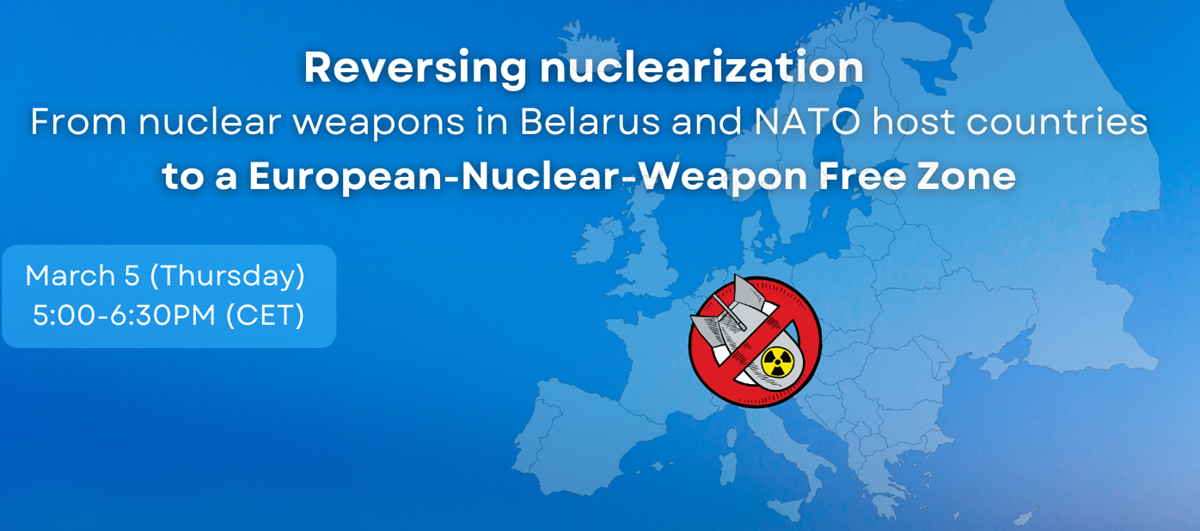
5 March -Online – Reversing nuclearization:
From nuclear weapons in Belarus and NATO host countries to a European-Nuclear-Weapon Free Zone
11am-12:30pm Eastern Time USA / 5pm-6:30pm CET

of the week – Advocating for a
nuclear free beach – https://www.samuellawrencefoundation.org/
The Samuel Lawrence Foundation advocates for a Nuclear Waste Free Beach at San Onofre, join us and take action!
10 March A LIVE WEBINAR THE REAL EFFECTS OF NUCLEAR POWER
What the Industry Isn’t Telling Us
1:00 PM Mountain, 2 pm Central, 3 pm Eastern. Live on the Keepers of the Water Facebook page


18 March Webinar @ 1 PM EST: An Assessment of SMR Projects: The Case of Canada
register for the zoom:
https://us02web.zoom.us/webinar/register/WN_o8BIIOUvQ2ONJR1nta65DQ#/registration

of the week – STOP SMALL MODULAR REACTORS IN CANADA
To see nuclear-related stories in greater depth and intensity – go to https://nuclearinformation.wordpress.com
-
Archives
- March 2026 (38)
- February 2026 (268)
- January 2026 (308)
- December 2025 (358)
- November 2025 (359)
- October 2025 (376)
- September 2025 (258)
- August 2025 (319)
- July 2025 (230)
- June 2025 (348)
- May 2025 (261)
- April 2025 (305)
-
Categories
- 1
- 1 NUCLEAR ISSUES
- business and costs
- climate change
- culture and arts
- ENERGY
- environment
- health
- history
- indigenous issues
- Legal
- marketing of nuclear
- media
- opposition to nuclear
- PERSONAL STORIES
- politics
- politics international
- Religion and ethics
- safety
- secrets,lies and civil liberties
- spinbuster
- technology
- Uranium
- wastes
- weapons and war
- Women
- 2 WORLD
- ACTION
- AFRICA
- Atrocities
- AUSTRALIA
- Christina's notes
- Christina's themes
- culture and arts
- Events
- Fuk 2022
- Fuk 2023
- Fukushima 2017
- Fukushima 2018
- fukushima 2019
- Fukushima 2020
- Fukushima 2021
- general
- global warming
- Humour (God we need it)
- Nuclear
- RARE EARTHS
- Reference
- resources – print
- Resources -audiovicual
- Weekly Newsletter
- World
- World Nuclear
- YouTube
-
RSS
Entries RSS
Comments RSS
 nuclear-news