Nuclear and climate news to 6 January
One wonders if Donald Trump’s aim is to take the world to the brink of nuclear war, and then to pull back , with himself appearing like the global hero. Trump ordered the drone assassination of an Iranian hero. Iran will now no longer restrict uranium enrichment, part of the 2015 deal limiting the country’s nuclear program in exchange for easing sanctions.https://www.youtube.com/watch?v=8_I8TuF_dLA
A bit of good news – For the 29th consecutive year, India and Pakistan exchange lists of nuclear facilities.
The world is realising how quickly even a rich and ‘developed’ nation, Australia, can be devastated by extreme weather, exacerbated by climate change. https://www.youtube.com/watch?v=pJ_NyEYRkLQ . Celebrities are donating to bushfire relief. Which is great. I’d like to think that they are equally generous to non-anglophone countries, which suffer even greater climate disasters.
War planners ignore the fire effects of nuclear bombing.
Not nuclear bombs, but the cutting of undersea cables, could be the decisive war weapon.
Researchers still don’t fully understand Arctic melt and sea level rise.
The rise and rise of global offshore wind capacity.
IRAN. Complex and tortured history of Iran and nuclear weapons debate. Iran pulling out of nuclear deal commitment after U.S. strike that killed Soleimani . Suleimani’s Gone, and the Iran Nuclear Deal May Be Next.
NORTH KOREA. Kim Jong Un May Be Leaving The Door Open To Nuclear Talks.
SERBIA. Depleted uranium causing cancer epidemic in Serbia.
JAPAN.
- Fukushima Reactor Cleanup Delayed by Five Years as Japanese Public Demands End to Nuclear Energy. Fukushima Radioactive Water: Towards Environmental Release. Video release of Fukushima Daiichi Unit 3 – High radiation. Bee swarm affected by Fukushima radiation.
- Japan plans 100% renewable energy for Fukushima prefecture by 2040.
- Secrecy in proceedings of Japan nuclear regulator about Kansai Electric’s three nuclear power plants.
USA.
- The escalation of nuclear tension between USA and Iran. Trump’s push for lofty nuclear treaty sparks worry over current deal.
- Trump’s plan to systematically remove environmental protection. Tennessee Valley Authority unfairly fired a nuclear whistleblower.
- Ohio’s nuclear legal battles: Supreme Court will hear case filed by Ohioans Against Corporate Bailouts (OACB).
- Nuclear’s ‘safe and green’ image is the industry’s devious hoax.
- Radiation-free medical imaging.
FRANCE. The European Pressurised Water Reactor (EPR) is dragging nuclear company EDF into $billions of debt
UK.
- UK’s Sizewell C nuclear project not viable, due to escalating costs? UK govt trying to finance new nuclear plants, – complicated relations with China and USA.
- UK: legal action against environmental destruction by Sizewell nuclear project.
- Britain’s £1.2bn cleanup begins, of Berkeley nuclear power station, closed 30 years ago.
- Very unwise plan: UK’s Bradwell B nuclear project. vulnerable to climate extremes.
- Britain’s nuclear weapons convoys a disaster waiting to happen. Documents reveal UK’s plans for rolling out nuclear weapons. Nuclear weapons could have been sited in Norther Ireland.
GERMANY. Germany To Close All Nuclear Plants By 2022. Germany’s nuclear phase-out enters final stretch.
CANADA. How On tario can get out of nuclear power, and reduce carbon emissions.
RUSSIA. Environmental and technical worries, as Russia extends the life of old Kola Nuclear Power Plant. Russia, in fear of a USA first strike may now revive its “dead hand” nuclear weapon.
MADAGASCAR. Thorium and uranium pollution from Rio Tinto’s Madagascar mine.
EGYPT. Egypt’s solar energy success.
ISRAEL.Prime Minister Netanyahu almost blew the secret of Israel’s nuclear arsenal.
Iran pulling out of nuclear deal commitment after U.S. strike that killed Soleimani
Iran pulling out of nuclear deal commitment after U.S. strike that killed Soleimani https://www.nbcnews.com/news/world/iran-pulling-out-nuclear-deal-following-u-s-strike-killed-n1110636
State TV reported Iran will no longer restrict uranium enrichment, part of the 2015 deal limiting the country’s nuclear program in exchange for easing sanctions. Jan. 6, 2020, By Max Burman and The Associated Press
Iran said Sunday that it was ending its commitment to limit enrichment of uranium as part of its 2015 nuclear deal with world powers, more fallout from the U.S. strike that killed Gen. Qassem Soleimani.
President Donald Trump unilaterally withdrew from the deal in May 2018, renewing tensions between the two countries that reached new heights after Friday’s air strike.
Iran’s state television reported Sunday that it will no longer abide by the limits of the deal, which restricted nuclear development in exchange for the easing of crippling economic sanctions.
The agreement placed limits on Tehran’s uranium enrichment, the amount of stockpiled enriched uranium as well as research and development in its nuclear activities.
America’s European allies have attempted to salvage the deal despite Trump’s decision to withdraw and reimpose sanctions, but Iran has gradually reduced its commitments and now leaves the deal in tatters.
The country’s foreign ministry said earlier Sunday that recent events meant it would take an even bigger step away from the deal than initially planned.
Iran’s Foreign Minister Javad Zarif confirmed the news on Twitter, stating that there “will no longer be any restriction on number of centrifuges.”
“This step is within JCPOA & all 5 steps are reversible upon EFFECTIVE implementation of reciprocal obligations,” Zarif said.
The foreign minister added that the country will still cooperate with the International Atomic Energy Agency.
Complex and tortured history of Iran and nuclear weapons debate
|
IRAN DOES NOT HAVE NUCLEAR WEAPONS, BUT HERE’S WHY ITS PROGRAM IS AT THE HEART OF THE CRISIS https://www.newsweek.com/why-iran-does-not-have-nuclear-weapons-1480355BY TOM O’CONNOR ON 1/3/20 Iran is not believed to possess nuclear weapons and officially has never sought them—although its top foes the United States, Israel and Saudi Arabia are among those who argue that the Islamic Republic has always secretly wanted such a weapon of mass destruction. This dispute has been at the heart of a worsening Middle East crisis that flared up with the Pentagon’s killing of a top Iranian military leader. The assassination of Revolutionary Guard Quds Force commander Major General Qassem Soleimani along with top Iraqi militia figures Thursday in Baghdad came amid a series of deadly, tit-for-tat escalations that has worsened since President Donald Trump pulled out of a 2015 nuclear deal in May 2018. The accord granted Tehran billions of dollars in sanctions relief in exchange for severely restricting its nuclear activities. The agreement has since begun to unravel, with European powers struggling to normalize trade ties under threat of U.S. sanctions and Iran reducing its own commitments in response. While Soleimani’s death may be the most dramatic salvo in the U.S. and Iran’s feud in some time, it was not at all the first blood shed throughout the two nations’ complex, tortured history. Officially, nuclear weapons have been banned by Iran because Supreme Leader Ayatollah Ali Khamenei has deemed them to be forbidden under Islam; since 2003, the U.S. accused of Iran of seeking to develop them. That same year, Khamenei issued a fatwa—an Islamic legal opinion—allegedly dating back to beliefs he expressed for nearly a decade, opposing the manufacturing of weapons of mass destruction. While Iran’s nuclear activities continued, officials consistently argued—and have to this day—that the work was purely for energy purposes. The idea of weapons of mass destruction being un-Islamic has repeatedly surfaced in the Islamic Republic over the years, with Khamenei saying as recently as June that “religious verdicts prohibit building nuclear weapons.” Iran also publicly opposes chemical and biological weapons, owing to Iraq’s use of mustard gas and nerve agents during their 1980s war in which Washington backed Baghdad and at times bombed both Iranian troops and civilians. Officially, nuclear weapons have been banned by Iran because Supreme Leader Ayatollah Ali Khamenei has deemed them to be forbidden under Islam; since 2003, the U.S. accused of Iran of seeking to develop them. That same year, Khamenei issued a fatwa—an Islamic legal opinion—allegedly dating back to beliefs he expressed for nearly a decade, opposing the manufacturing of weapons of mass destruction. While Iran’s nuclear activities continued, officials consistently argued—and have to this day—that the work was purely for energy purposes. The idea of weapons of mass destruction being un-Islamic has repeatedly surfaced in the Islamic Republic over the years, with Khamenei saying as recently as June that “religious verdicts prohibit building nuclear weapons.” Iran also publicly opposes chemical and biological weapons, owing to Iraq’s use of mustard gas and nerve agents during their 1980s war in which Washington backed Baghdad and at times bombed both Iranian troops and civilians. As international restrictions against Tehran tightened in 2010, a computer virus known as Stuxnet was uncovered that crippled Iran’s centrifuges. Also that year, a series of targeted attacks began that killed four Iranian nuclear scientists and wounded another. Iran blamed both Israel—which itself is widely believed to possess nuclear weapons—and the U.S. for the operations. Israel has neither confirmed nor denied its involvement in either, but has been widely attributed both with the U.S. assisting in the latter. The finalization of the Iran nuclear deal—officially known as the Joint Comprehensive Plan of Action—in 2015 was largely hailed as a diplomatic landmark by the international community. Though opposed by hardliners in both Washington and Tehran, the agreement officially held Iran’s nuclear program under the scrutiny of International Atomic Energy Agency monitoring and opened up the country’s economy. Trump, who came to office in early 2017, felt it did no go far enough, however, in curbing what he believed to be Iran’s nuclear weapons ambitions, as well as its support for militant groups abroad and its ongoing missile development. He has since applied a “maximum pressure” strategy in hopes of reining in the Islamic Republic, though the security situation across the Middle East has deteriorated significantly. For one year, the International Atomic Energy Agency reported that Iran abided by the deal, even without any U.S. or full European commitment. On the first anniversary of the U.S. exit from the nuclear deal last May—and just days after the White House announced the deployment of additional troops to the Persian Gulf region—Iran, however, officially began stepping away and has continued to do so. Fellow signatories China, the European Union, France, Germany, Russia and the United Kingdom all continue to support the accord. But all parties have raised their doubts as to its success should tensions continue to worsen. |
|
Japan plans 100% renewable energy for Fukushima prefecture by 2040
 Fukushima unveils plans to become renewable energy hub, https://www.theguardian.com/environment/2020/jan/05/fukushima-unveils-plans-to-become-renewable-energy-hub-japan
Japan aims to power region, scene of 2011 meltdown, with 100% renewable energy by 2040, Justin McCurry in Tokyo , 6 Jan 2020
Fukushima is planning to transform itself into a renewable energy hub, almost nine years after it became the scene of the world’s worst nuclear accident for a quarter of a century.
The prefecture in north-east Japan will forever be associated with the triple meltdown at the Fukushima Daiichi nuclear power plant on 11 March 2011, but in an ambitious project the local government has vowed to power the region with 100% renewable energy by 2040, compared with 40% today.
The 2011 accident, triggered by a powerful earthquake and tsunami, sent large quantities of radiation into the atmosphere and forced the evacuation of more than 150,000 residents.
The 300bn yen ($2.75bn) project, whose sponsors include the government-owned Development Bank of Japan and Mizuho Bank, will involve the construction of 11 solar and 10 wind farms on abandoned farmland and in mountainous areas by the end of March 2024, according to the Nikkei Asian Review.
A 80km grid will connect Fukushima’s power generation with the Tokyo metropolitan area, once heavily dependent on nuclear energy produced at the prefecture’s two atomic plants. When completed, the project will generate up to 600 megawatts of electricity, roughly two-thirds the output of an average nuclear power plant.
Despite the Fukushima disaster, the world’s worst nuclear accident since Chernobyl in 1986, Japan’s conservative government is pushing to restart idle reactors.
It wants nuclear power, which generated almost a third of the country’s power before Fukushima, to make up between 20% and 22% of its overall energy mix by 2030, drawing criticism from campaigners who say nuclear plants pose a danger given the country’s vulnerability to earthquakes and tsunami.
All of Japan’s 54 reactors were shut down after the Fukushima meltdown. Nine reactors are in operation today, having passed stringent safety checks introduced after the disaster.
Renewables accounted for 17.4% of Japan’s energy mix in 2018, according to the Institute for Sustainable Energy Policies, well below countries in Europe. The government iaims to increase this to between 22% and 24% by 2030 a target the prime minister, Shinzo Abe, has described as ambitious but which climate campaigners criticise as insufficient.
Abe insists nuclear energy will help Japan achieve its carbon dioxide emissions targets and reduce its dependence on imported gas and oil, but his recently appointed environment minister, Shinjiro Koizumi, has called for the country’s nuclear reactors to be scrapped to prevent a repeat of the Fukushima disaster.
“We will be doomed if we allow another nuclear accident to occur. We never know when we’ll have an earthquake,” Koizumi said when he joined Abe’s cabinet in September.
The government is unlikely to meet its target of 30 reactor restarts by 2030 given strong local opposition and legal challenges.
Japan faces mounting international criticism over its dependence on imported coal and natural gas. It received the “fossil of the day” award from the Climate Action Network at last month’s UN climate change conference in Madrid after its industry minister announced plans to continue using coal-fired power.
Japan is the third-biggest importer of coal after India and China, according to the US Energy Information Administration. Its megabanks have been urged to end their financing of coal-fired plants in Vietnam and other developing countries in Asia.
For the 29th consecutive year, India and Pakistan exchange lists of nuclear facilities
 India, Pakistan exchange list of nuclear installations, https://economictimes.indiatimes.com/news/defence/india-pakistan-exchange-list-of-nuclear-installations/articleshow/73056333.cms
The two countries exchanged the list of nuclear installations and facilities covered under the Agreement on the Prohibition of Attack against Nuclear Installations between India and Pakistan, the External Affairs Ministry said. This was done simultaneously through diplomatic channels in New Delhi and Islamabad.
The two countries exchanged the list of nuclear installations and facilities covered under the Agreement on the Prohibition of Attack against Nuclear Installations between India and Pakistan, the External Affairs Ministry said.
This was done simultaneously through diplomatic channels in New Delhi and Islamabad.
The exchange of the list came amid tense diplomatic ties between the two countries over the Kashmir issue
Secrecy in proceedings of Japan nuclear regulator about Kansai Electric’s three nuclear power plants
Japan nuclear regulator effectively made safety measure decision behind closed doors, https://mainichi.jp/english/articles/20200104/p2a/00m/0na/013000c, January 4, 2020 (Mainichi Japan) TOKYO — Decisions were effectively made at a closed-door pre-meeting hearing about Kansai Electric Power Co. at the Nuclear Regulation Authority (NRA), prompting experts to argue that closed-door pre-meeting hearings have effectively become the body’s decision-making organ, and that the NRA’s actions violate the Public Records and Archives Management Act.
In December 2018, at a preliminary hearing of a meeting in which the NRA was to decide on countermeasures against volcanic ash that it would require from Kansai Electric Power Co. (KEPCO) for its nuclear power plants, the NRA slashed one of two proposals that had come up. The organization, however, did not create minutes of the preliminary hearing in which this occurred, and collected and disposed of documents distributed to the participants.
At a public meeting held six days later, the NRA presented the remaining proposal and approved it — as if the other proposal had never existed. Meanwhile, the NRA claims that all decision-making is done at committee meetings.
In December 2018, at a preliminary hearing of a meeting in which the NRA was to decide on countermeasures against volcanic ash that it would require from Kansai Electric Power Co. (KEPCO) for its nuclear power plants, the NRA slashed one of two proposals that had come up. The organization, however, did not create minutes of the preliminary hearing in which this occurred, and collected and disposed of documents distributed to the participants.
At a public meeting held six days later, the NRA presented the remaining proposal and approved it — as if the other proposal had never existed. Meanwhile, the NRA claims that all decision-making is done at committee meetings.
Kansai Electric’s three nuclear power plants — Takahama, Oi, and Mihama — had obtained authorization for its nuclear reactors according to new standards instituted in response to the March 2011 meltdowns at the Fukushima Daiichi nuclear station. Some researchers, however, had pointed out that the amount of volcanic ash that would be generated in the event of an eruption at Mount Daisen in Tottori Prefecture, western Japan, had been underestimated. At an open meeting on Nov. 21, 2018, the NRA agreed, and was deliberating how to handle the authorization it had already given Kansai Electric.
The Mainichi Shimbun obtained a document that had been distributed to participants of the pre-meeting hearing in December 2018 titled “Procedures for using the new findings to have (KEPCO) apply for authorization of nuclear reactors (proposals)” from a source connected to the case. “Notes for discussion” was printed at the top right-hand side of the sheet of paper, along with a chart showing possible procedures for two proposals: 1. Swiftly prompt an application through written instruction, and 2. Order a re-evaluation of estimated volcanic ash volume. According to the source, the discussion in the pre-meeting hearing was based on this document, and participants made the decision to go with proposal 2.
Both proposals 1 and 2 ultimately seek that the utility apply for authorization. But the document says that while proposal 1 means that the NRA has determined that the nuclear reactors would fail to meet standards, proposal 2 means that the NRA will have not gone so far as to make a decision until it accepted KEPCO’s re-evaluation. If the NRA determined that a reactor did not meet standards, it was possible that calls for a stop to the project may have spread.
According to the NRA Secretariat’s public relations department, the pre-meeting hearings are called “chairman lectures,” in which the NRA Secretariat’s administrative staff explain the contents of documents to the NRA chairman. A total of 11 people, including Chairman Toyoshi Fuketa; Akira Ishiwatari, who is in charge of volcanic ash issues; then secretary-general Masaya Yasui; and then deputy secretary-general and current secretary-general, Toru Ogino, participated in a pre-meeting hearing held on Dec. 6, 2018.
As for the reason that no minutes of the meeting were taken, an NRA Secretariat PR representative explained, “It was a brainstorming session in which participants spoke freely about the issues and their views, and in which no conclusion was drawn. The session does not correspond to a decision-making process as defined in the Public Records and Archives Management Act.”
At the public meeting held Dec. 12, only proposal 2 was presented, and all five commissioners agreed to it. In March 2019, Kansai Electric submitted a report that raised the maximum estimated amount of volcanic ash to about twice that of the original volume. However, because the utility showed no intention of applying for authorization, the NRA ordered an application that June.
(Japanese original by Kosuke Hino, Tokyo Bureau, and Ryuji Tanaka, Special Reports Department)
Britain’s £1.2bn cleanup begins, of Berkeley power station, closed 30 years ago
 Nuclear waste removal begins 30 years after power station closure, https://www.bbc.com/news/uk-england-somerset-50866867 5 Jan 2029, Work has begun on removing nuclear waste from Berkeley power station, 30 years after it was decommissioned.The disused Magnox generator, situated on the banks of the River Severn in Gloucestershire, closed in 1989. Nuclear waste removal begins 30 years after power station closure, https://www.bbc.com/news/uk-england-somerset-50866867 5 Jan 2029, Work has begun on removing nuclear waste from Berkeley power station, 30 years after it was decommissioned.The disused Magnox generator, situated on the banks of the River Severn in Gloucestershire, closed in 1989.
It was the world’s first commercial power station and its laboratories and many of its buildings have already been dismantled. Work emptying its vast concrete vaults of the nuclear waste Berkeley generated is only now able to safely begin. But it will not be safe for humans to go inside its reactor cores until 2074. The BBC has been given a rare glimpse of what is stored under the disused site.For the past 50 years parts of the coastline of the west of England have been dominated by nuclear power stations. The 1960s saw the construction of Hinkley A and Hinkley B in Somerset, with both Oldbury and Berkeley built on the banks of the River Severn in the 1950s. Only Hinkley B is still in use but the nuclear waste the stations generated has remained in place. It takes hundreds of years to decompose and has to be stored underground. It will cost an estimated £1.2bn to fully decommission Berkeley. About 200 people are currently working on the site under strict security. Work emptying waste products from the concrete vaults, eight metres (26ft) underground, is a complicated process. They contain used graphite from the fuel elements in the nuclear generating process, material from the cooling ponds and from the laboratories. The removal is expected to take five or six years to complete. Rob Ledger, waste operations director at Berkeley, said: “When the power stations first started generating I don’t think there was much thought put into how the waste was going to be dealt with or retrieved. “It’s taken a while to develop the equipment and the facilities [to do this]. “A mechanical arm moves the debris into position and then a ‘grab’ comes down through an aperture in the vaults and picks up the debris [and] puts it into a tray. “Each debris-filled tray weighs up to 100kg (220lb). “The automated machinery is controlled by computers [and] tips [the waste] into a cast iron container.” The containers will house the waste in an intermediate storage facility until a long-term solution can be found. “Nuclear waste does take a long time to decay… it’s hundreds of years. And that’s why we have to go to these lengths, to store it safely,” said Mr Ledger. Eventually the boxes will be housed deep underground in a long-term storage facility. The location has not yet been decided by the government. There are currently estimated to be almost 95,000 tonnes of nuclear waste in the form of graphite blocks across the UK. But if the Carbon 14 can be extracted from the blocks, they become much safer and easier to deal with. A new process is being explored, by scientists at Bristol University, to ensure not all of the waste will be discarded. They have developed a process that uses reactor core spent contents in a new power form. Carbon 14 from nuclear reactors is infused into wafer-thin diamonds, man-made in a lab at Bristol University. They then become radioactive and form the heart of a battery that would last for many thousands of years. The tiny batteries could be used in pacemakers, hearing aids or sent into space as part of the space programme. The process is being piloted in association with the UK Atomic Energy Authority in Abingdon. It is hoped the decommissioned Gloucestershire site may be redeveloped to manufacture the new batteries, creating jobs in the region. |
|
Thorium and uranium pollution from Rio Tinto’s Madagascar mine
Concerns about radioactive contamination dog Rio Tinto’s Madagascar mine, MONGABAY, by Malavika Vyawahare on 31 December 2019
|
|
|
||||

Researchers still don’t fully understand Arctic melt and sea level rise
 These Are the Biggest Climate Questions for the New Decade These Are the Biggest Climate Questions for the New DecadeThe 2010s brought major climate science advances, but researchers still want to pin down estimates of Arctic melt and sea level rise, Scientific Amrican , By Chelsea Harvey, E&E News on January 4, 2020 The 2010s were almost certainly the hottest decade on record — and it showed. The world burned, melted and flooded. Heat waves smashed temperature records around the globe. Glaciers lost ice at accelerating rates. Sea levels continued to swell. At the same time, scientists have diligently worked to untangle the chaos of a rapidly warming planet. In the past decade, scientists substantially improved their ability to draw connections between climate change and extreme weather events. They made breakthroughs in their understanding of ice sheets. They raised critical questions about the implications of Arctic warming. They honed their predictions about future climate change. The 2010s were almost certainly the hottest decade on record — and it showed. The world burned, melted and flooded. Heat waves smashed temperature records around the globe. Glaciers lost ice at accelerating rates. Sea levels continued to swell. At the same time, scientists have diligently worked to untangle the chaos of a rapidly warming planet. In the past decade, scientists substantially improved their ability to draw connections between climate change and extreme weather events. They made breakthroughs in their understanding of ice sheets. They raised critical questions about the implications of Arctic warming. They honed their predictions about future climate change. Some of these links are straightforward. Melting Arctic ice pouring into the ocean can raise global sea levels. Thawing permafrost can release large amounts of carbon dioxide and methane into the atmosphere, potentially accelerating the rate of global warming. Others are more contentious. In the last decade, a growing scientific debate has arisen about the influence of Arctic warming on global climate and weather patterns, particularly in the midlatitudes…….. One ongoing project known as the Polar Amplification Model Intercomparison Project is conducting a series of coordinated model experiments, all using the same standard methods, to investigate the Arctic climate and its connections to the rest of the globe. Experts say these kinds of projects may help explain why modeling studies conducted by different groups with different methods don’t always get the same results. Outside that debate, there are still big questions about the Arctic climate to resolve. Scientists know the Arctic is heating up at breakneck speed — but they’re still investigating all the reasons why. Researchers believe a combination of feedback processes are probably at play. Sea ice and snow help reflect sunlight away from the Earth. As they melt away, they allow more heat to reach the surface, warming the local climate and causing even more melting to occur……. OCEANS AND ICE Sea-level rise is one of the most serious consequences of climate change, with the potential to displace millions of people in coastal areas around the world. At the moment, the world’s oceans are rising at an average rate of about 3 millimeters each year. It appears to be speeding up over time. That may not sound like much, but scientists are already documenting an increase in coastal flooding in many places around the world…….. Some scientists worry that as ice loss continues to speed up in both Greenland and Antarctica, parts of the ice sheets could eventually destabilize and collapse entirely — leading to catastrophic sea-level rise. In recent years, scientists have discovered that warm ocean currents are helping to melt some glaciers from the bottom up, both in Greenland and particularly in parts of West Antarctica. Better understanding the relationship between oceans and ice is a key priority for glacier experts, Tedesco said. At the same time, monitoring the way water melts and moves along the top of the ice is also a major priority. In Greenland, climate-driven changes in the behavior of large air currents like the jet stream may be helping to drive more surface melting……. EXTREME WEATHER EVENTSThe past decade saw leaps and bounds in a field of climate research known as “attribution science” — the connection between climate change and extreme weather events. It was once thought to be impossible, but scientists are now able to estimate the influence of global warming on individual events, like heat waves or hurricanes. In the past few years alone, scientists have found that some events are now occurring that would have been impossible in a world with no human-caused climate change. As attribution science has advanced, researchers have been able to tackle increasingly complex events, like hurricanes and wildfires, which were previously too complicated to evaluate with any confidence. They’ve gotten faster, too — researchers are now able to assess some extreme events nearly in real time. Some organizations are working to develop sophisticated attribution services, similar to weather services, which would release analyses of extreme events as soon as they occur. The German national weather service; the United Kingdom’s Met Office; and the Copernicus program, part of the European Centre for Medium-Range Weather Forecasts, have all begun exploring these kinds of projects. At the same time, scientists are working to improve their predictions of future extreme events in a warming world. So far, climate models predict that many extreme weather events will happen more frequently, or will become more severe, as the climate continues to change. Heat waves will be hotter, hurricanes will intensify, heavy rainfall events may happen more frequently in some places, and droughts may be longer in others……. PROJECTING THE FUTURE Predicting how much the Earth will warm, given a certain level of greenhouse gas emissions, may seem like the simplest goal of climate modeling. But it’s harder than it sounds. Climate models don’t always agree on the Earth’s exact sensitivity to greenhouse gas emissions — although they do tend to fall within a certain range. If global carbon dioxide concentrations were to double, for instance, models from the past decade have tended to predict that the Earth would warm from between 1.5 and 4.5 degrees Celsius……. https://www.scientificamerican.com/article/these-are-the-biggest-climate-questions-for-the-new-decade/?amp |
|
UK govt trying to finance new nuclear plants, – complicated relations with China and USA
boss Vincent de Rivaz ill-advisedly said that customers would be using
electricity from the planned Hinkley Point C power plant to cook their
Christmas turkeys by 2017. Two years on from that self-imposed deadline,
the £21bn nuclear power station is still being built over a sprawling site
in the Somerset countryside – while the very future of nuclear power in
the UK is up for debate as other sources of energy snap at its heels and
investment in the sector gets harder to find.
backdrop of wariness about the source of potential investments:
state-backed China General Nuclear (CGN) is one of few investors willing to
pour money into the risky nuclear sector – but the communist
superpower’s involvement has brought political and security concerns as
well as opposition from the US.
beset by controversy, with Theresa May, the former prime minister,
reversing George Osborne’s courting of China in 2016 when she ordered a
review of China’s involvement in the UK’s nuclear industry, amid
concerns about national security.
consultation opened in the summer on the potential new financing mechanism for nuclear power plants which will see consumers pay for nuclear power plants before they start producing, in an attempt to bring down the costs of financing.
https://www.telegraph.co.uk/business/2020/01/05/britain-heading-fallout-nuclear-conundrum/

Trump’s plan to systematically remove environmental protection
 Trump’s 2020 plan: Change the rules on rules, Kelsey Brugger, E&E News reporter Greenwire: Friday, January 3, 2020 In the first half of 2020, Trump officials are hurrying to fundamentally change the way environmental rules are crafted.The administration plans to finalize regulations that could hamstring future presidents from making rules that rely on public health studies or fail to fully consider the benefits to Americans.
Trump’s regulatory plan released last fall showed hundreds of “economically significant” actions that the administration plans to finalize this year. Of those, at least 18 are noteworthy environmental rules — on air pollution and emissions to drilling and water quality.
But it’s Trump’s rules on the rulemaking process itself that could have the most lasting impact, according to experts.
For example, EPA’s proposed rule, “Strengthening Transparency in Regulatory Science,” could restrict the scientific evidence used to write air pollution rules.
The Trump administration also plans to change the way cost-benefit analyses are calculated, weakening future limits on power plant emissions, for example. Both rules are expected to advance in early 2020.
“Those are foundational,” said Betsy Southerland, a former longtime senior EPA career staffer and member of the Environmental Protection Network. “If they are finalized, from now on all environmental rules cannot count co-benefits and cannot use public health studies, then they can paralyze future rulemaking while the litigation slowly winds forward.”
It would take considerable time for a new administration to reverse those rollbacks, and certain Trump actions could get lost in the morass. The Obama EPA similarly could not undo some George W. Bush-era Clean Air Act permits that allowed aging facilities to continue to operate.
But time is running out.
The administration is up against a May deadline: Any regulations completed after that point would be subject to review under the Congressional Review Act. If 2021 ushers in a new president and a left-leaning Congress, the pair could undo many of Trump’s controversial triumphs.
Generally, not much happens in the federal government during an election year, when administrations tend to enter “political lockdown.” But in the Trump era, “unprecedented” is typical. And Trump continues to campaign on aggressive deregulation………
n 2020, the administration is expected to complete several environmental priorities.
The changes most concerning to Southerland included the WOTUS rewrite, the Affordable Clean Energy repeal and other pesticide reviews that are being done under the Toxic Substances Control Act, she said. “They are racing to finalize all of the damaging rollbacks in 2020,” she said.
Other drafts expected to be released in the coming weeks or months include the National Environmental Policy Act, which Trump ordered to be revised to ease permitting requirements when he first entered office; the Mercury and Air Toxics Standards, which would revoke past findings of mercury emissions and other pollutants; and the clean car standards, a joint effort of EPA and the Department of Transportation.
That two-part effort would weaken Obama-era fuel economy standards and prevent California from setting its own stricter standards (Greenwire, Nov. 20, 2019).
The Trump mantra, in a large part, has simply been to undo what Obama did…….Twitter: @kelseybrugger Email: kbrugger@eenews.net https://www.eenews.net/stories/1061984181
How Ontario can get out of nuclear power, and reduce carbon emissions
 Ontario can phase out nuclear and avoid increased carbon emissions, The Conversation, January 6, 2020 MV Ramana, Simons Chair in Disarmament, Global and Human Security at the Liu Institute for Global Issues, University of British Columbia, Xiao Wei, MITACS Globalink Research Intern, University of British Columbia As wind and solar energy have become cheaper, they’ve become a more prominent and important way to generate clean electricity in most parts of the world.The Ontario government, on the other hand, is cancelling renewable energy projects at a reported cost of at least $230 million while reinforcing the province’s reliance on nuclear power via expensive reactor refurbishment plans.
As researchers who have examined the economics of electricity generation in Ontario and elsewhere, we argue that this decision is wasteful and ill-advised, and the unnecessary cost differential will rise further in the future.
One concern about renewables has been the intermittency of these energy sources. But studies have shown it’s feasible to have an all-renewable electric grid.
These feasibility studies, however, are always location specific. In that spirit, we have carried out detailed modelling and found that it’s possible to meet Ontario’s electricity demands throughout the year with just a combination of renewables, including hydropower, and storing electricity in batteries.
We also found that dealing with the intermittency of wind and solar energy by adding batteries would be more economical than refurbishing nuclear plants in the foreseeable future, well before the current refurbishment projects are completed.
That’s because of the expected decline in the cost of batteries used to store the electricity during the hours when the wind is blowing or the sun is shining in order to supply electricity during the periods when they aren’t. The cost of different kinds of battery technologies, such as lithium-ion or flow batteries, have come down rapidly in recent years.
Essential results
In all scenarios, the bulk of the demand was met by solar and wind power, with a lower fraction met by hydropower. Even in the scenarios with no batteries, less than 20 per cent of the electricity demand was met by nuclear power…….
In summary, our results show that for reasonable assumptions about future battery costs and the current price tag for solar and wind power, scenarios involving nuclear power are more than 20 per cent higher than the cheapest scenario involving only batteries, solar, wind and the current hydropower capacity. …
nuclear power isn’t needed to meet Ontario’s electricity needs. And the absence of nuclear power won’t have any impact on emissions in Ontario’s energy sector.https://theconversation.com/ontario-can-phase-out-nuclear-and-avoid-increased-carbon-emissions-128854?fbclid=IwAR20ANW_yAmpR7zZVw113hUp9bl7Xt2h0v1XiB1K815lFIKctZiaR8xB5Ew
Very unwise plan: UK’s Bradwell B nuclear project vulnerable to climate extremes
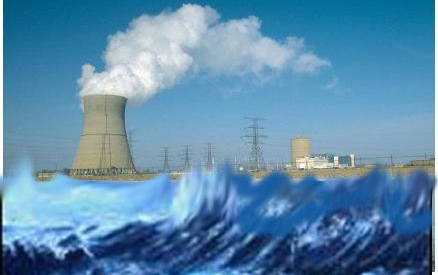 BANNG 2nd Jan 2020, It may appear that all has been quiet on the eastern front in the recent past but CGN seems intent on carrying out its plans to build Bradwell B and is continuing with its site investigations. 2020 will be an important, probably crucial, year in terms of whether plans for new nuclear power plants move forward. The Bradwell B Generic Design Assessment (GDA) will be at its peak. EDF will apply for Development Consent (DCO) for Sizewell C.
We anticipate there will be a big push by the new Government and the
nuclear industry for new nuclear development. And Bradwell B will be slowly
approaching its pre-application stage, which could begin within the next
two years.
growing and BANNG will need all supporters to play a part.
erosion.
The rise and rise of global offshore wind capacity
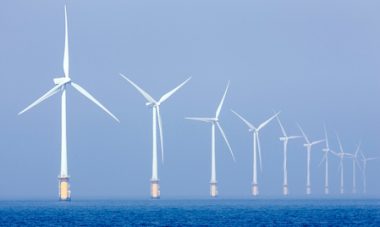
Renew Extra 4th Jan 2020, Dave Elliott: The International Energy Agency says global offshore wind capacity may increase 15-fold and attract around $1 trillion of cumulative investment by 2040, driven by falling costs, supportive government policies and some remarkable technological progress, such as larger turbines and floating foundations.
https://renewextraweekly.blogspot.com/2020/01/offshore-wind-and-pv-will-be-big-says.html
Egypt’s solar energy success
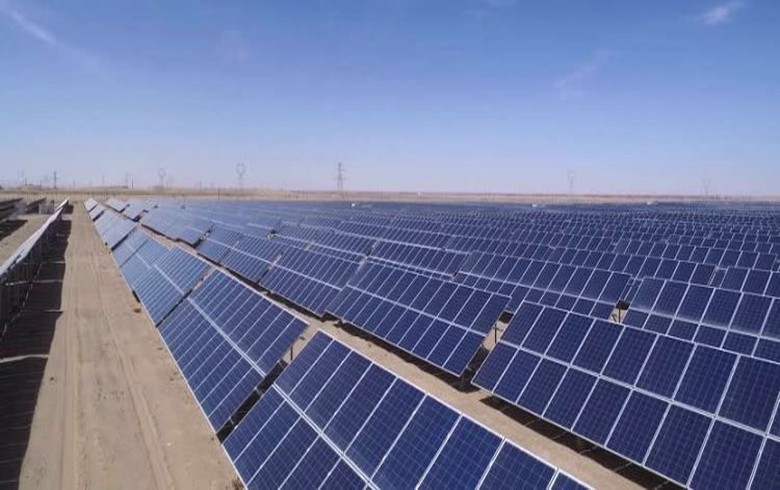
Reuters 17th Dec 2019, Near the southern Egyptian city of Aswan, a swathe of photovoltaic solarpanels spreads over an area of desert so large it is clearly visible from space. Designed to anchor a renewable energy sector by attracting foreign and domestic private-sector developers and financial backers, the plant now provides nearly 1.5 GW to Egypt’s national grid and has brought down the price of solar energy at a time when the government is phasing out electricity subsidies.
1 This Month


Tell the Ukrainian Government to Drop Prosecution of Peace Activist Yurii Sheliazhenko

Petition to revoke the licensing of the Near Surface Nuclear Disposal Facility (NSDF) at Chalk River. https://www.ourcommons.ca/petitions/en/Petition/Details?Petition=e-7247


of the week – STOP SMALL MODULAR REACTORS IN CANADA
To see nuclear-related stories in greater depth and intensity – go to https://nuclearinformation.wordpress.com
-
Archives
- March 2026 (163)
- February 2026 (268)
- January 2026 (308)
- December 2025 (358)
- November 2025 (359)
- October 2025 (376)
- September 2025 (258)
- August 2025 (319)
- July 2025 (230)
- June 2025 (348)
- May 2025 (261)
- April 2025 (305)
-
Categories
- 1
- 1 NUCLEAR ISSUES
- business and costs
- climate change
- culture and arts
- ENERGY
- environment
- health
- history
- indigenous issues
- Legal
- marketing of nuclear
- media
- opposition to nuclear
- PERSONAL STORIES
- politics
- politics international
- Religion and ethics
- safety
- secrets,lies and civil liberties
- spinbuster
- technology
- Uranium
- wastes
- weapons and war
- Women
- 2 WORLD
- ACTION
- AFRICA
- Atrocities
- AUSTRALIA
- Christina's notes
- Christina's themes
- culture and arts
- Events
- Fuk 2022
- Fuk 2023
- Fukushima 2017
- Fukushima 2018
- fukushima 2019
- Fukushima 2020
- Fukushima 2021
- general
- global warming
- Humour (God we need it)
- Nuclear
- RARE EARTHS
- Reference
- resources – print
- Resources -audiovicual
- Weekly Newsletter
- World
- World Nuclear
- YouTube
-
RSS
Entries RSS
Comments RSS
 nuclear-news