Hazards of Russia’s nuclear colonialism- example South Africa
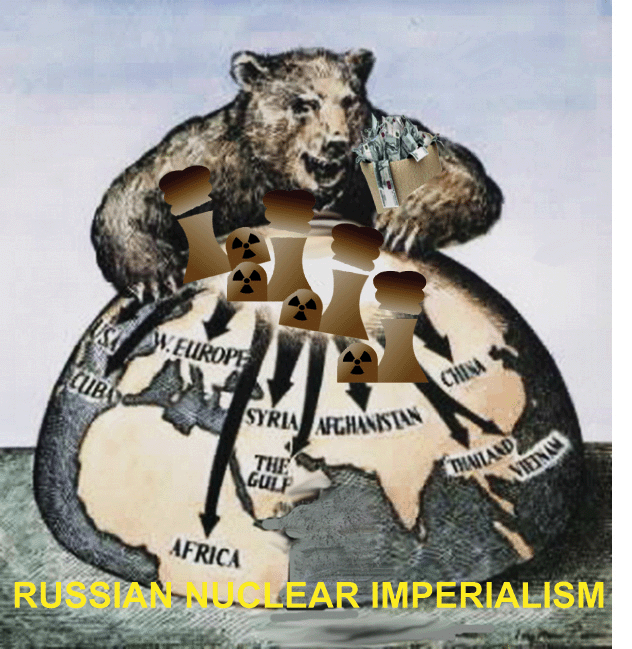
 Africa, Russia squandered close ties with the South African government by overplaying its hand and getting caught up in a corrupt nuclear energy pact. Carnegie Endowment For International Peace (thoroughly researched and referenced) 16 Dec 19,
 SUMMARY
 Amid the widespread attention the Kremlin’s recent inroads in Africa have attracted, there has been surprisingly little discussion of South Africa, a country which, for nearly a decade, unquestionably represented Russia’s biggest foreign policy success story on the continent. As relations soared during the ill-starred presidency of Jacob Zuma (2009–2018), the Kremlin sought to wrest a geopolitically significant state out of the West’s orbit and to create a partnership that could serve as a springboard for expanded influence elsewhere in Africa.
Key parts of the Russian national security establishment view civil nuclear power exports as an important tool for projecting influence overseas while creating revenue streams for sustaining intellectual and technical capabilities and vital programs inside Russia itself. Yet such cooperation is often a two-edged sword. On the one hand, costly projects such as the one pushed by Zuma typically make little economic sense for the purchasing country, spurring uncomfortable questions about who stands to benefit. On the other hand, heavily subsidized projects pursued mainly for geopolitical reasons risk saddling Russia’s nuclear power monopoly Rosatom with burdens it can ill afford.
Ongoing investigations of high-level corruption during the period of so-called state capture under Zuma shed remarkable light on how the Kremlin operates in Africa and other parts of the world. In retrospect, the sustainability of Moscow’s embrace of South Africa was highly questionable due to its paltry tool kit. Russian involvement in the South African economy is miniscule compared to that of other trading partners such as the EU, China, the United States, India, and the UK, accounting for a mere 0.4 percent of South Africa’s foreign trade. While the Soviet Union was an important patron during the anti-apartheid struggle, modern-day Russia offers little in the way of practical assistance for helping South Africa deal with its deep-set economic and societal challenges.
Starting with Putin’s 2006 visit, the Kremlin pushed systematically to elevate bilateral nuclear cooperation with South Africa. The first breakthrough was a Putin-Mbeki agreement for Russia to supply fuel to South Africa’s Koeberg nuclear power plant.33 Koeberg is part of an inheritance from the apartheid regime’s nuclear weapons program, and its two reactors generate approximately 5 percent of the country’s total electricity.34 On the same visit, Putin also publicly called for ramping up bilateral cooperation on uranium mining and nuclear power plant construction, activities that would eventually take center stage during the state capture investigation.35
……… During the Mbeki presidency, Eskom explored a possible $12 billion expansion of the Koeberg facility but decided in 2008 that the project was unaffordable.37
Enter Russia’s nuclear power monopoly, Rosatom. The firm’s then CEO Sergei Kiriyenko, the author of major reforms to Russia’s nuclear sector in the mid-2000s, had identified growth of nuclear power plant construction overseas as one of Rosatom’s top priorities in the wake of the global financial crisis. The crisis had led to significant belt-tightening throughout the Russian economy, and Rosatom’s leadership viewed international expansion as a mechanism for sustaining intellectual and technical capabilities inside Russia and funding vital programs. The firm continues to play up prospects for foreign reactor sales even today. In a June 2019 interview, current CEO Alexey Likhachev claimed that Rosatom has contracts for $190 billion, of which $90 billion is for projects in twelve countries that have already started.38 (Russian and foreign experts have expressed skepticism about these numbers.)
Despite the propensity of the company’s executives to exaggerate their overseas marketing prowess, Rosatom also serves as an important tool for the Kremlin’s foreign policy agenda. That role has created significant albeit unresolvable tensions within the company. Its technocratic leadership, which takes a more conservative approach to managing the firm’s finances, chafes at being saddled with projects that do not make good economic sense. Yet, to the Kremlin, which controls the company through its oversight board, even bad deals can make for good geopolitics. Putin’s persistent advocacy of a large-scale nuclear deal with South Africa fell squarely into this category.39
THE MAKINGS OF A SHADY DEAL
Viewed from South Africa, the most troubling aspects of the deal were its enormous cost, the disregard for the established legal and administrative norms for government procurement, and the likelihood that the chief personal beneficiaries would be Zuma and the Guptas……. From Rosatom’s point of view, the deal appears to have been little more than a loss-leader. South Africa’s lackluster economic prospects and questionable ability to shoulder the costs of constructing and operating a new constellation of civil nuclear power plants meant that financial rewards for Rosatom were far from a sure thing. Ultimately, any commercial upside for Rosatom would have been derived from lucrative long-term agreements for nuclear fuel, reactor maintenance, and decommissioning activities over the plant’s projected fifty to sixty years of service life. Accordingly, the geopolitical value of a deal positioning Russia as a major actor in South Africa’s economy (with an eye toward further expansion elsewhere on the continent) would have been far more consequential……
Notably, the deal was hardly a coup for Russian state coffers. The sheer size of the proposal and its projected burden on the South African economy tend to obscure the fact that Rosatom was being forced to undertake a massive construction project with uncertain upfront financing and equally uncertain prospects for long-term commercial gain.55 In theory, Rosatom stood to recoup some of these outlays via long-term fuel purchases and other service agreements. Yet in practice, it is hard to overlook the fact that the deal was largely a dodgy venture with significant risks driven by geopolitical, rather than commercial, considerations.
Russia is hardly an attractive economic partner for South Africa in most respects. Bilateral trade is inconsequential and, considering the major role of extractive industries in both countries’ economies, they enjoy no natural complementarity. Russia has long struggled to attract foreign investors and is hardly a promising investment destination for South Africa. Moscow has no history of extending loans to Pretoria during the Cold War. As a result, the Kremlin could not dangle debt forgiveness, one of its primary tools for economic statecraft, to incentivize South African political cooperation in multilateral venues like the UN, as it has long done with partners in other parts of sub-Saharan Africa……..
the Kremlin overplayed its hand. Its pursuit of a massive, nontransparent nuclear deal mobilized South African civil society and Zuma’s political opponents. ……. Another unintended consequence was the impression that the failed nuclear deal was all there was to the South Africa–Russia relationship. This exposed Russia’s limited—at best—tool kit for long-range projection of its power and influence.
The questionable ethical aspects of the nuclear deal and the Kremlin’s role in avidly promoting it illustrate the Putin regime’s reputation as an oftentimes unsavory and shortsighted business partner. Such deals may appeal to the leaders of countries with weak rule of law and fragile civil society, but in South Africa any future deals involving Russia are likely to attract considerable scrutiny.
While the questionable benefits of the nuclear deal for South Africa have been well documented, the dubious economic benefits for Russia have drawn less attention. This, in turn, underscores the role of geopolitics and opportunism as the key drivers of Russian policy toward South Africa. With a meager tool kit for sustaining its geopolitical ambitions, Moscow is finding that success is more elusive than commonly perceived. Serious questions remain about the tangible benefits such global forays will provide to the Kremlin over the long run. ………. https://carnegieendowment.org/2019/12/16/nuclear-enrichment-russia-s-ill-fated-influence-campaign-in-south-africa-pub-80597
1 Comment »
Leave a comment
1 This Month
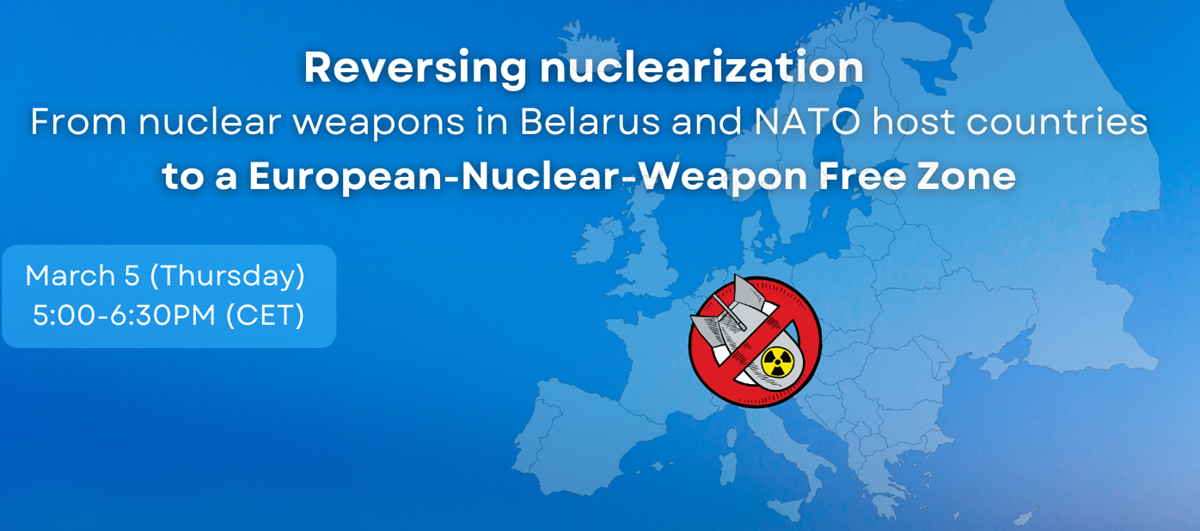
5 March -Online – Reversing nuclearization:
From nuclear weapons in Belarus and NATO host countries to a European-Nuclear-Weapon Free Zone
11am-12:30pm Eastern Time USA / 5pm-6:30pm CET

of the week – Advocating for a
nuclear free beach – https://www.samuellawrencefoundation.org/
The Samuel Lawrence Foundation advocates for a Nuclear Waste Free Beach at San Onofre, join us and take action!
10 March A LIVE WEBINAR THE REAL EFFECTS OF NUCLEAR POWER
What the Industry Isn’t Telling Us
1:00 PM Mountain, 2 pm Central, 3 pm Eastern. Live on the Keepers of the Water Facebook page

18 March Webinar @ 1 PM EST: An Assessment of SMR Projects: The Case of Canada
register for the zoom:
https://us02web.zoom.us/webinar/register/WN_o8BIIOUvQ2ONJR1nta65DQ#/registration

of the week – STOP SMALL MODULAR REACTORS IN CANADA
To see nuclear-related stories in greater depth and intensity – go to https://nuclearinformation.wordpress.com
-
Archives
- March 2026 (51)
- February 2026 (268)
- January 2026 (308)
- December 2025 (358)
- November 2025 (359)
- October 2025 (376)
- September 2025 (258)
- August 2025 (319)
- July 2025 (230)
- June 2025 (348)
- May 2025 (261)
- April 2025 (305)
-
Categories
- 1
- 1 NUCLEAR ISSUES
- business and costs
- climate change
- culture and arts
- ENERGY
- environment
- health
- history
- indigenous issues
- Legal
- marketing of nuclear
- media
- opposition to nuclear
- PERSONAL STORIES
- politics
- politics international
- Religion and ethics
- safety
- secrets,lies and civil liberties
- spinbuster
- technology
- Uranium
- wastes
- weapons and war
- Women
- 2 WORLD
- ACTION
- AFRICA
- Atrocities
- AUSTRALIA
- Christina's notes
- Christina's themes
- culture and arts
- Events
- Fuk 2022
- Fuk 2023
- Fukushima 2017
- Fukushima 2018
- fukushima 2019
- Fukushima 2020
- Fukushima 2021
- general
- global warming
- Humour (God we need it)
- Nuclear
- RARE EARTHS
- Reference
- resources – print
- Resources -audiovicual
- Weekly Newsletter
- World
- World Nuclear
- YouTube
-
RSS
Entries RSS
Comments RSS
 nuclear-news
15 shoddy reactors in ukraine ready to blow. administered by rosatom. same for russia and other parts of europe multiple outdated shitty embrittled reactors with substandard containement. some run experimental mag ox plutonium that will probaly cause prompt criticalities like one of the reactors at fukushima. The dangerous mixed oxide reactors will blow soon.
armenia has tow of the oldest most damaged rosatom rectors in the world.
Rosaton is a fraud. they make shitty reactors. There was already a major nuclear waste fire in ukraine in 2013. They lie and dont care because, most of the fuker pentecostal nazis from ukraine go to radioactive shithole america , where trump has setup a major nuclear catastrophe soon and probable nuclear war. many to canada too. They vote for trump because they are racists dumfukniks.
I wonder how many african countries, will want a shoddy russian reactor after one of roatoms shitty reactors blows up soon in ukraine bulgaria the balkans, russia or armenia.
There have been at least 3 or 4 major radionuclide releses from russia since fukushima occured. the world is pretty much a mess thanks to nuclear and lack of leader ship with evil monkeys like putin, macron, especially fuko, abe