Marathon UN climate talks have a rather disappointing outcome
Disappointment as marathon climate talks end with slim deal. AP News, By FRANK JORDANS and ARITZ PARRA,MADRID (AP) 15 Dec 19, — Marathon U.N. climate talks ended Sunday with a slim compromise that sparked widespread disappointment, after major polluters resisted calls for ramping up efforts to keep global warming at bay and negotiators postponed debate about rules for international carbon markets for another year.
Organizers kept delegates from almost 200 nations in Madrid far beyond Friday’s scheduled close of the two-week talks. In the end, negotiators endorsed a general call for greater efforts to tackle climate change and several measures to help poor countries respond and adapt to its impacts.
U.N. Secretary-General António Guterres said he was “disappointed” by the meeting’s outcome.
“The international community lost an important opportunity to show increased ambition on mitigation, adaptation and finance to tackle the climate crisis,” he said. “We must not give up and I will not give up.”
The final declaration cited an “urgent need” to cut planet-heating greenhouse gases in line with the goals of the landmark 2015 Paris climate change accord. But it fell far short of explicitly demanding that countries submit bolder emissions proposals next year, which developing countries and environmentalists had demanded……
Thankfully, the weak rules on a market-based mechanism, promoted by Brazil and Australia, that would have undermined efforts to reduce emissions, have been shelved,” said Mohamed Adow, director of Nairobi-based campaign group Power Shift Africa.
Helen Mountford, from the environmental think-tank World Resources Institute, said that “given the high risks of loopholes discussed in Madrid, it was better to delay than accept rules that would have compromised the integrity of the Paris Agreement.”…….
Delegates made some progress on financial aid for poor countries affected by climate change, despite strong resistance from the United States to any clause holding big polluters liable for the damage caused by their emissions. Countries agreed four years ago to funnel $100 billion per year by 2020 to assist developing nations, but so far nowhere near that amount has been raised. …..
The United States will be excluded from much of those talks after President Donald Trump announced the country’s withdrawal from the Paris accord, a process than comes into force Nov. 4, 2020……. https://apnews.com/aca79ab4956f370b8892ba574fe56834
Analysis of decontamination of irradiated soil of Fukushima area
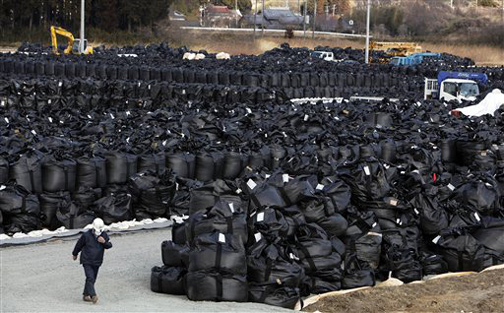
Fukushima: Lessons learned from an extraordinary case of soil decontamination https://www.sciencedaily.com/releases/2019/12/191212081926.htm
- Source:
- European Geosciences Union
- Summary:
- Following the accident at the Fukushima nuclear power plant in March 2011, the Japanese authorities decided to carry out major decontamination works in the affected area, which covers more than 9,000 km2. On Dec. 12, 2019, with most of this work having been completed, researchers provided an overview of the decontamination strategies used and their effectiveness.
- On December 12, 2019, with most of this work having been completed, the scientific journal SOIL of the European Geosciences Union (EGU) is publishing a synthesis of approximately sixty scientific publications that together provide an overview of the decontamination strategies used and their effectiveness, with a focus on radiocesium. This work is the result of an international collaboration led by Olivier Evrard, researcher at the Laboratoire des Sciences du Climat et de l’Environnement [Laboratory of Climate and Environmental Sciences] (LSCE — CEA/CNRS/UVSQ, Université Paris Saclay).
Soil decontamination, which began in 2013 following the accident at the Fukushima Dai-ichi nuclear power plant, has now been nearly completed in the priority areas identified1. Indeed, areas that are difficult to access have not yet been decontaminated, such as the municipalities located in the immediate vicinity of the nuclear power plant. Olivier Evrard, a researcher at the Laboratory of Climate and Environmental Sciences and coordinator of the study (CEA/CNRS/UVSQ), in collaboration with Patrick Laceby of Alberta Environment and Parks (Canada) and Atsushi Nakao of Kyoto Prefecture University (Japan), compiled the results of approximately sixty scientific studies published on the topic.
This synthesis focuses mainly on the fate of radioactive cesium in the environment because this radioisotope was emitted in large quantities during the accident, contaminating an area of more than 9,000 km2. In addition, since one of the cesium isotopes (137Cs) has a half-life of 30 years, it constitutes the highest risk to the local population in the medium and long term, as it can be estimated that in the absence of decontamination it will remain in the environment for around three centuries.
“The feedback on decontamination processes following the Fukushima nuclear accident is unprecedented,” according to Olivier Evrard, “because it is the first time that such a major clean-up effort has been made following a nuclear accident. The Fukushima accident gives us valuable insights into the effectiveness of decontamination techniques, particularly for removing cesium from the environment.”
- This analysis provides new scientific lessons on decontamination strategies and techniques implemented in the municipalities affected by the radioactive fallout from the Fukushima accident. This synthesis indicates that removing the surface layer of the soil to a thickness of 5 cm, the main method used by the Japanese authorities to clean up cultivated land, has reduced cesium concentrations by about 80% in treated areas. Nevertheless, the removal of the uppermost part of the topsoil, which has proved effective in treating cultivated land, has cost the Japanese state about €24 billion. This technique generates a significant amount of waste, which is difficult to treat, to transport and to store for several decades in the vicinity of the power plant, a step that is necessary before it is shipped to final disposal sites located outside Fukushima prefecture by 2050. By early 2019, Fukushima’s decontamination efforts had generated about 20 million cubic metres of waste.
Decontamination activities have mainly targeted agricultural landscapes and residential areas. The review points out that the forests have not been cleaned up — because of the difficulty and very high costs that these operations2 would represent — as they cover 75% of the surface area located within the radioactive fallout zone. These forests constitute a potential long-term reservoir of radiocesium, which can be redistributed across landscapes as a result of soil erosion, landslides and floods, particularly during typhoons that can affect the region between July and October. Atsushi Nakao, co-author of the publication, stresses the importance of continuing to monitor the transfer of radioactive contamination at the scale of coastal watersheds that drain the most contaminated part of the radioactive fallout zone. This monitoring will help scientists understand the fate of residual radiocesium in the environment in order to detect possible recontamination of the remediated areas due to flooding or intense erosion events in the forests.
The analysis recommends further research on:
- the issues associated with the recultivation of decontaminated agricultural land3,
- the monitoring of the contribution of radioactive contamination from forests to the rivers that flow across the region,
- and the return of inhabitants and their reappropriation of the territory after evacuation and decontamination.
This research will be the subject of a Franco-Japanese and multidisciplinary international research project, MITATE (Irradiation Measurement Human Tolerance viA Environmental Tolerance), led by the CNRS in collaboration with various French (including the CEA) and Japanese organizations, which will start on January 1, 2020 for an initial period of 5 years.
Complementary approaches
This research is complementary to the project to develop bio- and eco-technological methods for the rational remediation of effluents and soils, in support of a post-accident agricultural rehabilitation strategy (DEMETERRES), led by the CEA, and conducted in partnership with INRA and CIRAD Montpellier.
Decontamination techniques
- In cultivated areas within the special decontamination zone, the surface layer of the soil was removed to a depth of 5 cm and replaced with a new “soil” made of crushed granite available locally. In areas further from the plant, substances known to fix or substitute for radiocesium (potassium fertilizers, zeolite powders) have been applied to the soil.
- As far as woodland areas are concerned, only those that were within 20 metres of the houses were treated (cutting branches and collecting litter).
- Residential areas were also cleaned (ditch cleaning, roof and gutter cleaning, etc.), and (vegetable) gardens were treated as cultivated areas.
1 In Fukushima prefecture and the surrounding prefectures, the decision to decontaminate the landscapes affected by the radioactive fallout was made in November 2011 for 11 districts that were evacuated after the accident (special decontamination zone — SDZ — 1,117 km2) and for 40 districts affected by lower, but still significant levels of radioactivity and that had not been evacuated in 2011 (areas of intensive monitoring of the contamination — ICA, 7836 km2). 2 128 billion euros according to one of the studies appearing in the review to be published on 12 December 2019 in SOIL. 3 Relating to soil fertility and the transfer of radiocesium from the soil to plants, for example.
The study was conducted by Olivier Evrard (Laboratoire des Sciences du Climat et de l’Environnement (LSCE/IPSL), Unité Mixte de Recherche 8212 (CEA/CNRS/UVSQ), Université Paris-Saclay), J. Patrick Laceby (Environmental Monitoring and Science Division (EMSD), Alberta Environment and Parks (AEP)), and Atsushi Nakao (Graduate School of Life and Environmental Sciences, Kyoto Prefectural University).
The toxic gender norms in the nuclear weapons establishment
discussion of nuclear weapons is informed by and perpetuates toxic gender norms. In this world, strength, force, rationality, and destruction are masculine. Things like weapon design, targeting, and nuclear strategy fall into this category. Weakness, emotion, the very concept of peace, and the human costs of nuclear weapons are feminine.
|
The human cost of nuclear weapons is not only a “feminine”
 concern https://thebulletin.org/2019/11/the-human-cost-of-nuclear-weapons-is-not-only-a-feminine-concern/ By Lilly Adams, November 22, 2019 The nuclear weapons world is full of subtle and not-so-subtle misogyny, and I’ve had my share of experiences: Fighting my way onto an otherwise all-male panel, only to have my speaking time cut short. Meeting a male colleague at a conference for the first time, where he immediately told me that he liked the red dress I was wearing in my Facebook profile photo and that I should dress like that more. Having a male superior tell me he saw no problem with the all-male, all-white panel he was organizing and scoffing at the idea that we had a “gender problem.” concern https://thebulletin.org/2019/11/the-human-cost-of-nuclear-weapons-is-not-only-a-feminine-concern/ By Lilly Adams, November 22, 2019 The nuclear weapons world is full of subtle and not-so-subtle misogyny, and I’ve had my share of experiences: Fighting my way onto an otherwise all-male panel, only to have my speaking time cut short. Meeting a male colleague at a conference for the first time, where he immediately told me that he liked the red dress I was wearing in my Facebook profile photo and that I should dress like that more. Having a male superior tell me he saw no problem with the all-male, all-white panel he was organizing and scoffing at the idea that we had a “gender problem.”It would be easy to dwell in frustration on experiences like these, or similar ones I have seen my colleagues face. Instead, I’m inspired by the women who excel in this field despite these challenges. What’s more, I’m glad that these experiences led me to start poking holes in the received nuclear weapons wisdom and to seek new approaches. One such approach, which is often overlooked but increasingly gaining prominence, is to examine nuclear issues through a social justice lens. As with many social justice issues, women, indigenous communities, communities of color, and low-income and rural communities have often been those hit hardest by nuclear weapons production and testing. The scope of suffering among these frontline communities—those directly impacted by US nuclear weapons production and testing—is shocking. A recent study very roughly estimates that atmospheric nuclear testing led to 340,000 to 460,000 premature deaths between 1951 and 1973. The US government has estimated that roughly 200,000 armed service personnel were involved in nuclear weapons tests, though others put that number as high as 400,000. The 67 nuclear tests conducted in the Marshall Islands, in total, had the equivalent power of 1.6 Hiroshima bombs exploded every single day for 12 years. Through all of this, women have been and are still being harmed in unique ways. Women exposed to radioactive fallout have much higher risks of miscarriage, stillbirth, and birth defects in their children. In the most exposed areas of the Marshall Islands, it became common for women to give birth to “jellyfish babies”—babies born without bones and with transparent skin. Breast cancer rates in the Marshall Islands are also shockingly high, yet there is a severe lack of cancer care available to the Marshallese. In the United States, breast-feeding mothers exposed to atmospheric nuclear testing passed Iodine-131 to their children through their breast milk. A recent study from the University of New Mexico showed that in the Navajo Nation, 26 percent of women have “concentrations of uranium exceeding levels found in the highest 5 percent of the US population.” In Japan, women who survived the nuclear bombings in Hiroshima and Nagasaki, in addition to bearing the burden of physical health effects, were stigmatized and shunned, unable to marry because of the fear of radiation-caused illnesses and defects passing down to future generations. And overall, though the reasons are not fully understood, women at all ages are more vulnerable to ionizing radiation and seem more likely to get cancer from radiation exposure, and die, than men. Gender matters when it comes to the physical effects of nuclear weapons, but also the way we do and don’t talk about them. In a recent study on women in national security, I was stunned to read that “the consideration of differential group effects is often dismissed by policymakers who do not consider civilian impacts to be important or useful.” Reading that I had to ask: not “important or useful” for whom? Perhaps they’re not important to policymakers, though I find that incredibly cynical. But surely they’re important to the people suffering and dying from these effects. In her classic “Sex and Death in the Rational World of Defense Intellectuals,” Carol Cohn describes the ways that discussion of nuclear weapons is informed by and perpetuates toxic gender norms. In this world, strength, force, rationality, and destruction are masculine. Things like weapon design, targeting, and nuclear strategy fall into this category. Weakness, emotion, the very concept of peace, and the human costs of nuclear weapons are feminine. She found that the reality of human death was not even a part of the language that policymakers use when discussing nuclear weapons—it’s been scrubbed out. If you feel conflicted discussing war plans involving nuclear weapons that could kill tens of millions, you’re a “wimp.” Maybe you don’t have the “stones” for war. The arms control community has largely bought into this mindset. At a recent meeting about how we might reach new audiences, a woman suggested using more emotion and storytelling in our work. Someone else quickly responded that this was not what our work was about, that we didn’t have time to dwell on emotions. I think sticking to strategy, budgets, and warhead and missile design feels safer and more acceptable to this male-dominated field. Because of this, I often feel as if I must work twice as hard to prove my credibility and make my voice heard. Not only am I a woman—already a strike against me—I also want to talk about the human impacts of nuclear weapons, apparently an emotional and irrelevant topic. At a recent nine-day conference for aspiring nuclear professionals, I attended 33 lectures on everything from stockpile stewardship to Russia’s nuclear doctrine to ballistic missile defense. There were no lectures on the human costs of nuclear weapons; it was barely mentioned. It is long past time for the nuclear nonproliferation and arms control community to work with these affected communities and center them in our advocacy. The arms control community is small, but it has resources, access, and in many cases the labels of “expertise” and “credibility.” The communities affected by nuclear weapons creation and testing have in many cases been denied all of these things as part of a larger history of marginalization. When the traditional arms control community also denies them credibility and access, sidelines their stories, and does not support their goals, we are perpetuating the systems of oppression that caused them to be harmed in the first place. People in these communities are dying today, and we are ignoring it. This is the motivation behind my new project, “Sharing the Stage with Nuclear Frontline Communities,” funded by the Ploughshares Fund Women’s Initiative. My project works to put the voices of these communities front and center, share the work of local leaders and experts, and help find opportunities for collaboration with those in the more traditional arms control and nonproliferation sphere. As a first step, I will create a database of leaders and experts that are interested in partnering with those in the arms control and nonproliferation world. Ultimately, I hope to find opportunities for genuine, mutually supportive collaboration. Could those with contacts in congressional offices help atomic veterans organize a lobby day to call for expanding compensation from the government? Could a community watchdog group share their expertise on the ins-and-outs of a nuclear lab and help inform the work of nuclear policy groups? Can the grassroots advocacy and storytelling happening in frontline communities be coordinated with policy work happening on the Hill in Washington, D.C.? The database will also include entries for organizations in the nuclear policy and arms control world. Those interested can support the project by including an entry of their own. An even better way to get involved is to get in touch with frontline community members themselves for suggestions—as the ones directly impacted, they know best what kind of collaboration is most effective and helpful. Over the years, nuclear weapons policy has been made largely without input from the people who actually have a first-hand understanding of the effects of these weapons: the communities harmed by nuclear weapons production and testing. Though there is much work to be done to right the wrongs these communities have endured, a good first step for those in the nuclear policy community is to embrace their perspectives and knowledge: listen to their stories, build relationships, and find ways to meaningfully work together. Lilly Adams Lilly Adams is an independent consultant specializing in nuclear weapons outreach and policy issues. She works with the Union of Concerned Scientists in their Global Security Program and was… |
|
Angst in Utah over dangers of nuclear waste transport to “temporary” storage
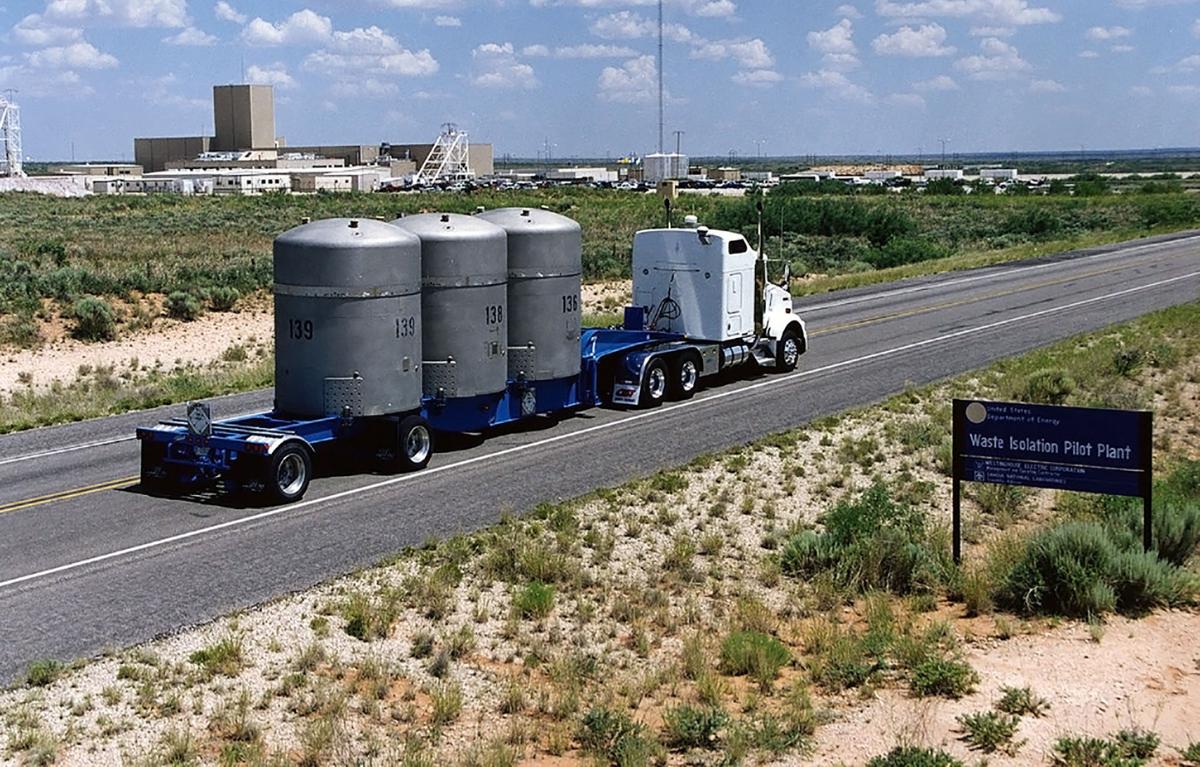
“Congress should be pursuing hardened on-site storage for this waste at or near its current location. This is the solution that can most safely contain it and not put others at-risk,”
“Washington is bowing to the political clout of industry while placing unnecessary and potentially costly risks on public health
|
Nuclear Waste Policy Amendments Act hurts Utah http://suindependent.com/nuclear-waste-policy-amendments-act-hurts-utah/
The Nuclear Waste Policy Amendments Act of 2019 inherently puts innocent citizens at risk should an accident occur during transportation. By Steve Erickson, 13 Dec 19, On Dec. 11, organizations announced their opposition to House Resolution 2699, the Nuclear Waste Policy Amendments Act of 2019, and urged the Utah’s federal delegation to vote against this bill. These organizations include the Healthy Environment Alliance of Utah, Citizens Education Project, Utah Physicians for a Healthy Environment, Uranium Watch, the Nevada Nuclear Waste Task Force, and the Utah Sierra Club.
HR 2699 aims to open consolidated interim storage facilities for high-level radioactive waste throughout the southwest. Continue reading
|
The world is headed for climate crisis and nuclear destruction
|
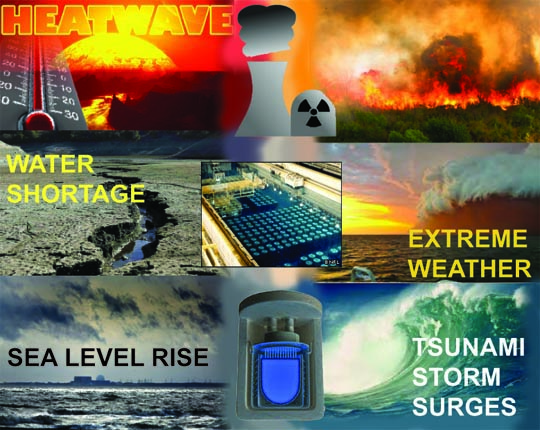
The world is headed for climate crisis and nuclear destruction https://www.idsnews.com/article/2019/12/opextinction121119 BRYCE GREENE In August 1945, the development and dropping of the atomic bombs ushered humanity into an unprecedented era. For the first time in human history, we possessed the capacity for complete species destruction.
Current actions regarding climate and atomic bombs taken by lawmakers are putting the world at risk of this destruction again. Since 1947, an organization known as the Bulletin of the Atomic Scientists developed a theoretical model to describe just how close we are to the brink. The end result was a clock whose countdown to midnight signified the approaching end of humanity. This model was dubbed The Doomsday Clock. Over the years, scientists have adjusted the clock according to their assessment of the risk of destruction. In 1953, the clock was moved to 11:58 as Americans and Soviets developed the hydrogen bomb, a weapon with destructive capabilities orders of magnitude greater than the Hiroshima bomb. Given the effects of nuclear winter alone, such a war have almost certainly wiped out all of humanity, the catastrophic event known as omnicide. In subsequent years, the U.S. maintained Cold War-level military spending and rejected a series of nuclear arms treaties. This aggressive stance, along with a nuclear North Korea and fears of nuclear terrorism, has prompted the clock to shift continuously back towards midnight. In 2007, the bulletin included a new variable for measuring omnicidal dangers: climate change. The effects of a steadily warming planet pose an enormous threat to organized human existence. Global warming increases the frequency and severity of natural catastrophes such as wildfires, floods, freak storms and droughts. Increased carbon in the atmosphere is causing decreased nutrition levels in crops. Coastal areas around the world will sink under water, and entire countries will be uninhabitable due to excessive heat. The effects of this would be enough to tear apart the liberal world order. Since then, the clock has been inching closer to destruction. In 2018, the bulletin moved the clock to 2 minutes to midnight, as close as it has ever been in the clock’s history. The reasons are clear. President Donald Trump and the rest of the Republicans continued to march the U.S. on the path towards climate and nuclear catastrophe. In many ways they are aided by a Democratic establishment who scoff at a Green New Deal while taking hundreds of thousands in fossil fuel money. Earlier this year, the administration announced that it was going to withdraw from the Paris Climate Agreement, absolving itself of the responsibility to help limit emissions. Of course, Trump and America aren’t the only culprits behind the world’s emissions. The Bulletin of the Atomic Scientists notes that most of the countries of the world have “failed miserably” in their goal to reduce emissions. After a brief plateau in emissions, global emissions resumed their rise after 2017. After the Obama administration initiated a $1 trillion investment in “modernizing” our nuclear arsenal, Trump is also hastening our march to nuclear annihilation by expanding that investment. In response, Vladmir Putin announced Russia’s own modernization efforts. Additionally, Trump announced that the U.S. was abandoning the INF treaty that limits the kinds of nuclear weapons that could be developed The administration’s Nuclear Posture Review highlights the need to be prepared to use nukes in a wide variety of circumstances, as well as plans to develop “more-useable” nuclear weapons. None of this will increase our safety. We are at the beginning of a new nuclear arms race. Earlier this year, Trump announced he would reimpose sanctions of Iran, violating the Iran nuclear deal. The direct human costs of the sanctions aside, this raises the risk of a conflagration in the region that could lead to nuclear exchange. A nuclear North Korea continues to hang over Southeast Asia. Though the Trump meeting with Kim was a step in the right direction, no concrete actions were taken. All of these problems are exacerbated by the new paradigm of weaponized information. In 2019, the Bulletin announced that information warfare techniques pose another threat to civilization. In a world of fake news and alternative facts, the information ecosystem is threatened with utter chaos. The Bulletin writes that “by manipulating the natural cognitive predispositions of human beings, information warriors can exacerbate prejudices, biases, and ideological differences.” The modern information society makes such manipulation exponentially more dangerous. Society will not be able to deal with the problems we face if citizens cannot trust the information they encounter. The Bulletin says, “This new abnormal is simply too volatile and dangerous to accept as a continuing state of world affairs.” Our society is living with a gun pointed at our head, and the people who run the world seem intent on playing around with the trigger. But it doesn’t have to be this way. The Bulletin of the Atomic Scientists released a statement saying “The means for managing dangerous technology and reducing global-scale risk exist; indeed, many of them are well-known and within society’s reach, if leaders pay reasonable attention to preserving the long-term prospects of humanity, and if citizens demand that they do so.” As citizens of the world, we have a job to do. |
|
How India’s Kudankulam Nuclear Power Plant (KNPP) got hacked
 How a nuclear plant got hacked, Plugging nuclear plants into the internet makes them vulnerable targets for nation-state attack. By J.M. Porup, Senior Writer, CSO December 9, 2019 If you think attacking civilian infrastructure is a war crime, you’d be right, but spies from countries around the world are fighting a silent, dirty war to pre-position themselves on civilian infrastructure — like energy-producing civilian nuclear plants — to be able to commit sabotage during a moment of geopolitical tension.
What follows is an explanation of how India’s Kudankulam Nuclear Power Plant (KNPP) got hacked — and how it could have been easily avoided.
The KNPP hack The news came to light, as it so often does these days, on Twitter. Pukhraj Singh (@RungRage), a “noted cyber intelligence specialist” who was “instrumental in setting up of the cyber-warfare operations centre of the National Technical Research Organisation (NTRO),” according to The New Indian Express, tweeted: “So, it’s public now. Domain controller-level access Kudankulam Nuclear Power Plant. The government was notified way back. Extremely mission-critical targets were hit,” noting in a quote tweet that he was aware of the attack as early as September 7, 2019, calling it a “causus belli” (an attack sufficiently grave to provoke a war).
In a later tweet, Singh clarified that he did not discover the malware himself. A third party “contacted me & I notified National Cyber Security Coordinator on Sep 4 (date is crucial). The 3rd party then shared the IoCs with the NCSC’s office over the proceeding days. Kaspersky reported it later, called it DTrack.”
At first the Nuclear Power Plant Corporation of India (NPCI) denied it. In a press release they decried “false information” on social media and insisted the KNPP nuclear power plant is “stand alone and not connected to outside cyber network and internet” and that “any cyber attack on the Nuclear
Power Plant Control System is not possible.”
Then they backtracked. On October 30, the NPCI confirmed that malware was in fact discovered on their systems, and that CERT-India first noticed the attack on September 4, 2019. In their statement, they claimed the infected PC was connected to the administrative network, which they say is “isolated from the critical internal network.”
“Investigation also confirms that the plant systems are not affected,” their statement concludes.
Power Plant Control System is not possible.”
Then they backtracked. On October 30, the NPCI confirmed that malware was in fact discovered on their systems, and that CERT-India first noticed the attack on September 4, 2019. In their statement, they claimed the infected PC was connected to the administrative network, which they say is “isolated from the critical internal network.”
“Investigation also confirms that the plant systems are not affected,” their statement concludes.
A targeted attack
Contrary to some initial reporting, the malware appears to have been targeted specifically at the KNPP facility, according to researchers at CyberBit. Reverse-engineering of the malware sample revealed hard-coded administrator credentials for KNPP’s networks (username: /user:KKNPP\\administrator password: su.controller5kk) as well as RFC 1918 IP addresses (172.22.22.156, 10.2.114.1, 172.22.22.5, 10.2.4.1, 10.38.1.35), which are by definition not internet-routable.
That means it is highly likely the attacker previously broke into KNPP networks, scanned for NAT’ed devices, stole admin credentials, and then incorporated those details into this new malware, a second-stage payload designed for deeper and more thorough reconnaissance of KNPP’s networks.
“This was a very targeted attack on just this plant,” Hod Gavriel, a malware analyst at CyberBit, tells CSO. “Probably this was the second stage of an attack.”
The malware discovered, however, did not include Stuxnet-like functionality to destroy any of KNPP’s systems. “This phase was only for collection of information, it wasn’t sabotageware,” Gavriel says. ….. https://www.csoonline.com/article/3488816/how-a-nuclear-plant-got-hacked.html
North Korea conducts second test at satellite site, to ‘bolster nuclear deterrent’
San Francisco Chronicle, Simon Denyer, The Washington Post Dec. 14, 2019 TOKYO – North Korea announced on Saturday it had conducted another test at a satellite launch station near the Chinese border, saying the unspecified test would help bolster the country’s nuclear deterrent.The test was conducted Friday evening, and was the second in less than a week at the Sohae Satellite Launching Station in Tongchang-ri, a site near the Chinese border that has been used to test rocket engines and launch satellites into space in the past…… (subscribers only) https://www.sfchronicle.com/news/article/North-Korea-conducts-second-test-at-satellite-14906516.php
Sceptisim over Boris Johnson’s promises environment and climate
 The Conversation 13th Dec 2019, Rebecca Willis: Climate change had a higher profile in the UK election campaign than ever before, with parties competing hard over their offer to concerned voters.
But this was a debate that the Conservatives – who won a landslide majority – largely stood back from. Their manifesto was light on detail compared to the other parties, and Boris Johnson chose not to take part in the first ever UK televised leaders’ debate on climate.
Conservative candidates were conspicuous by their absence in local climate
hustings, too. Neither was climate mentioned in their legislative plan for
the first hundred days. The Conservative government did legislate for a net
zero carbon emissions target back in June, following the advice of the
Committee on Climate Change. And there was an explicit manifesto pledge to
deliver on this target, with no signs of backtracking.
In his speech to the party faithful on the morning of his election, Johnson declared his ambition to “make this country the cleanest, greenest on Earth, with the most far-reaching environmental programme”, adding: And you the people of this country voted to be carbon-neutral in this election – you voted to be carbon-neutral by 2050. And we’ll do it.
But targets don’t reduce carbon. Policies do. And despite its much-admired Climate Change Act, the UK’s policy record lately has not been good. The Committee on Climate Change have repeatedly warned that the UK is off track to meet future commitments, a verdict shared by the independent Climate Action Tracker project, which assesses each country’s performance against the Paris Agreement. It rated the UK as “insufficient”, with policies compatible
with a 3°C world – not the 1.5°C level that we desperately need.
If the new government is serious about its commitment, it will have to signal this soon, and with confidence. Steps that it could and should take straight
away include: instigating a swift review of governance for net-zero, giving
responsibility and resources to other government departments, and,
crucially, to local areas, to deliver on carbon strategy; prioritising
climate and environmental protection in negotiations for a trading
relationship with the European Union; moving quickly to consult on a
phase-out date for petrol and diesel vehicles, as promised in its
manifesto; removing the de facto ban on onshore wind energy, which the
Committee on Climate Change advised needs to increase in capacity by 1GW a
year; confirming its opposition to fracking, and making its moratorium
permanent; pledging to formally consider the results of the national
citizens’ assembly on climate change, Climate Assembly UK, due to report
in 2020.
Weak outcome of UN climate change talks in Madrid
Key points:
- UN secretary-general Antonio Guterres said he was “disappointed” by the meeting’s outcome
- The final talks fell short of promising to enhance countries’ pledges to cut planet-heating greenhouse gases next year
- There was no final agreement on regulation for international carbon markets, with the EU warning that weak rules sought by some countries would undermine the system
Those failures came even after organisers added two more days to the 12 days of scheduled talks in Madrid.
In the end, delegates from almost 200 nations endorsed a declaration to help poor countries that are suffering the effects of climate change, although they did not allocate any new funds to do so.
The final declaration called on the “urgent need” to cut planet-heating greenhouse gases in line with the goals of the landmark 2015 Paris climate change accord.
That fell far short of promising to enhance countries’ pledges to cut planet-heating greenhouse gases next year, which developing countries and environmentalists had lobbied the delegates to achieve.
The Paris accord established the common goal of avoiding a temperature increase of more than 1.5 degrees Celsius by the end of the century.
So far, the world is on course for a 3 to 4-degree Celsius rise, with potentially dramatic consequences for many countries, including rising sea levels and fiercer storms.
Negotiators in Madrid left some of the thorniest issues for the next climate summit in Glasgow in a year, including the liability for damages caused by rising temperatures that developing countries were insisting on.
That demand was resisted mainly by the United States……..
observers said big emissions emitters like China, the United States and India need to stop shirking their responsibilities.
“Regressive governments put profit over the planetary crisis and the future of generations to come,” the conservation group WWF said in a statement.
Ms Mountford said the talks this year “reflect how disconnected country leaders are from the urgency of the science and the demands of their citizens in the streets.”
“They need to wake up in 2020,” she added. https://mobile.abc.net.au/news/2019-12-16/un-climate-summit-ends-with-no-deal-on-carbon-markets/11801772
UK election. Green Party grew by 60%
 Business Green 13th Dec 2019, The Green Party saw its total number of votes grow by over 60 per cent in yesterday’s election, delivering the biggest percentage gains of any party following a campaign that saw environmental issues take centre stage.
Caroline Lucas retained her seat in Brighton Pavilion, increasing her share
of the vote by almost five per cent to 57 per cent.
https://www.businessgreen.com/bg/news/3084650/green-party-celebrates-60-per-cent-vote-surge
United States and Russia are on the verge of a new arms race
By most accounts, the United States and Russia are on the verge of a new arms race, if not already in one.
But last month, something unusual happened: U.S. inspectors traveled to Russia to examine a new missile that Moscow says is super-fast. The demonstration was “aimed at facilitating efforts to ensure the viability and efficiency of New START,” the Russian Defense Ministry said.
Dmitry Stefanovich, a researcher with the Russian International Affairs Council, said the inspection of the weapon — called Avangard by Russian military designers — was a demonstration that Moscow was eager to extend New START.
“It is more like an offer: See, we will [give] you transparency on some new weapons and probably some more in the future, but we have to extend the treaty for it to work,” he told RFE/RL. “And we expect the same from you, when your modernization of strategic weapons reaches fruition.”
Large Arsenals
Signed in 2010 by Presidents Barack Obama and Dmitry Medvedev, New START limited the U.S. and Russian nuclear arsenals by capping the numbers of delivery systems — long-range bombers, silo-based land missiles, and submarine-launched missiles — and deployed warheads.
As of September 1, Russia had 513 deployed strategic launchers with 1,426 warheads, according to State Department figures. The United States deploys 668 strategic launchers with 1,376 warheads, according to the data……
The treaty expires in February 2021, although provisions allow for it to be prolonged by five years if both sides agree. ….. https://www.rferl.org/a/new-hope-for-new-start-can-russia-and-the-u-s-agree-to-keep-a-lid-on-their-nuclear-arsenals-/30326546.html
Nuclear War Simulator shows the devastation that nukes could cause
Nuclear War Simulator shows the devastation that nukes could cause , MIC, By AJ Dellinger, Dec 14, 2019
, The fallout of nuclear war is the premise for all sorts of films and video games. There is a sort of morbid curiosity to imagining what life would be like in a post-apocalyptic world caused by this type of warfare, but the threat of such an occurrence is anything but science fiction. To better understand exactly how devastating to the planet and the population that a global nuclear could cause, there’s Nuclear War Simulator.
Docking problems for Russia’s nuclear ships
After the floating dock SD-50 sank at Roslyakovo yard north of Murmansk last fall “Sevmorput” now had to sail all around Scandinavia to St. Petersburg to find a dock large enough. Barents Observer, By Thomas Nilsen, December 15, 2019
“Sevmorput” left her homeport in Murmansk on December 5th and arrived in St. Petersburg on the 12th after sailing a distance of nearly 3,000 nautical miles, information from MarineTraffic tells.
The 260 meters long container ship is currently moored at the Admiralteyskiye yard in the Neva River, but will later be taken to the nearby dry dock at Kanonerskiy yard, SeaNews agency reports.
It was late October last year the floating dock sank at shipyard No. 82 in Roslyakovo between Murmansk and Severomorsk in the Kola Bay. The dock was then holding “Admiral Kuznetsov”, Russia’s only aircraft carrier.
The sunken dock was the only one on the Kola Peninsula large enough to accommodate “Sevmorput” and navy ships like the nuclear-powered battle cruiser “Pyotr Velikiy” and ballistic missile submarines of the Delta-IV-, Oscar, II- and Borei-classes.
An older land-dock at naval yard No. 35, Sevmorput, in Murmansk will be expanded to facilitate larger military vessels, like the submarines. The dock is said to be ready by 2021. Meanwhile, navy ships will have to sail to Severodvinsk for simple docking operations……..https://thebarentsobserver.com/en/industry-and-energy/2019/12/nuclear-powered-container-ship-sailed-3000-nm-change-propellers-lack
Release of radioactive dust at Dounreay contravened regulations
|
RADIOACTIVE DUST ACCIDENTALLY RELEASED AT NUCLEAR SITE CONTRAVENED MULTIPLE REGULATIONS, INVESTIGATION FINDS, Newsweek
BY ARISTOS GEORGIOU ON 12/13/19 Environmental authorities in Scotland have said that an accidental release of radioactive dust from a nuclear site “contravened multiple” regulatory conditions, according to reports.
The contaminated dust vented out of a uranium recovery plant at Dounreay—a nuclear research center which is in the process of being decommissioned—earlier this year after a valve failed during a system test in February, the BBC reported. This caused a “disturbance” of contaminated dust in the ventilation system and a subsequent discharge into the facility itself and the atmosphere…… https://www.newsweek.com/radioactive-dust-nuclear-site-multiple-regulatory-conditions-investigation-1477168 |
|
December 15 Energy News — geoharvey

Opinion: ¶ “UN COP25 Summit Ends With Anger With Global Warming’s ‘Window Of Escape’ Getting Harder” • Major economies have resisted calls for bolder commitments as a UN summit in Madrid limped towards a delayed conclusion, dimming any hopes that nation governments would act in time to mitigate the impacts of climate change. [ABC News] […]
1 This Month


Tell the Ukrainian Government to Drop Prosecution of Peace Activist Yurii Sheliazhenko

Petition to revoke the licensing of the Near Surface Nuclear Disposal Facility (NSDF) at Chalk River. https://www.ourcommons.ca/petitions/en/Petition/Details?Petition=e-7247


of the week – STOP SMALL MODULAR REACTORS IN CANADA
To see nuclear-related stories in greater depth and intensity – go to https://nuclearinformation.wordpress.com
-
Archives
- March 2026 (204)
- February 2026 (268)
- January 2026 (308)
- December 2025 (358)
- November 2025 (359)
- October 2025 (376)
- September 2025 (258)
- August 2025 (319)
- July 2025 (230)
- June 2025 (348)
- May 2025 (261)
- April 2025 (305)
-
Categories
- 1
- 1 NUCLEAR ISSUES
- business and costs
- climate change
- culture and arts
- ENERGY
- environment
- health
- history
- indigenous issues
- Legal
- marketing of nuclear
- media
- opposition to nuclear
- PERSONAL STORIES
- politics
- politics international
- Religion and ethics
- safety
- secrets,lies and civil liberties
- spinbuster
- technology
- Uranium
- wastes
- weapons and war
- Women
- 2 WORLD
- ACTION
- AFRICA
- Atrocities
- AUSTRALIA
- Christina's notes
- Christina's themes
- culture and arts
- Events
- Fuk 2022
- Fuk 2023
- Fukushima 2017
- Fukushima 2018
- fukushima 2019
- Fukushima 2020
- Fukushima 2021
- general
- global warming
- Humour (God we need it)
- Nuclear
- RARE EARTHS
- Reference
- resources – print
- Resources -audiovicual
- Weekly Newsletter
- World
- World Nuclear
- YouTube
-
RSS
Entries RSS
Comments RSS
 nuclear-news