Nuclear wastes and other problems – nuclear power not low carbon, not safe
Uncertainties surround spent nuclear fuel disposal https://www.ft.com/content/496254ae-0a38-11ea-bb52-34c8d9dc6d84 Dr Paul Dorfman, et al
We beg to differ with Jonathan Ford’s view on nuclear waste, that decommissioning and storage should be manageable problems (“Nuclear liabilities need to be put into a clearer perspective”, Inside Business, November 18). As the recent World Nuclear Waste Report 2019, states, no country in the world has a deep geological repository for spent nuclear fuel in operation, and there remain significant scientific uncertainties associated with the deep disposal concept. Moreover, with costs of both interim and permanent storage of spent nuclear fuel ramping, no country has either securely estimated costs nor closed the gap between secured funds and cost estimates. The report adds that there is a lack of comprehensive, quantitative and qualitative information on risks associated with nuclear waste, with meta-analyses on the health impacts of nuclear waste notable for their virtual absence.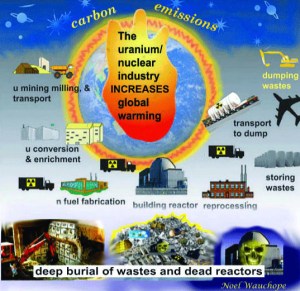 We also take issue with Mr Ford’s claim that “nuclear power remains one of the few technologies the world has for reliably generating zero-carbon electricity”. The evidence base concludes that, taking account of the nuclear fuel cycle (uranium mining, fuel enrichment, construction of power stations and the waste stream), nuclear has CO2 emissions between 10 and 18 times those of renewables. And, in the light of major accidents, incidents, technical failures and outages, it is difficult to comprehend how the world’s ageing nuclear fleet can conceivably be described as reliable. Dr Paul Dorfman Senior Research Associate, UCL Energy Institute, University College London Prof Andy Blowers Author, ‘The Legacy of Nuclear Power’ Prof Keith Barnham Emeritus Professor of Physics, Imperial College London Paul Brown Co-Editor, Climate News Network Prof Tom Burke Founder and Chair, E3G Prof Steve Thomas Emeritus Professor of Energy Policy, University of Greenwich Dr David Toke Reader in Energy Policy, University of Aberdeen Prof Andy Stirling Science Policy Research Unit, Sussex Energy Group, University of Sussex Prof Brian Wynne Professor Emeritus of Science Studies, Lancaster University
We beg to differ with Jonathan Ford’s view on nuclear waste, that decommissioning and storage should be manageable problems (“Nuclear liabilities need to be put into a clearer perspective”, Inside Business, November 18). As the recent World Nuclear Waste Report 2019, states, no country in the world has a deep geological repository for spent nuclear fuel in operation, and there remain significant scientific uncertainties associated with the deep disposal concept. Moreover, with costs of both interim and permanent storage of spent nuclear fuel ramping, no country has either securely estimated costs nor closed the gap between secured funds and cost estimates. The report adds that there is a lack of comprehensive, quantitative and qualitative information on risks associated with nuclear waste, with meta-analyses on the health impacts of nuclear waste notable for their virtual absence.
 We also take issue with Mr Ford’s claim that “nuclear power remains one of the few technologies the world has for reliably generating zero-carbon electricity”. The evidence base concludes that, taking account of the nuclear fuel cycle (uranium mining, fuel enrichment, construction of power stations and the waste stream), nuclear has CO2 emissions between 10 and 18 times those of renewables. And, in the light of major accidents, incidents, technical failures and outages, it is difficult to comprehend how the world’s ageing nuclear fleet can conceivably be described as reliable. Dr Paul Dorfman Senior Research Associate, UCL Energy Institute, University College London Prof Andy Blowers Author, ‘The Legacy of Nuclear Power’ Prof Keith Barnham Emeritus Professor of Physics, Imperial College London Paul Brown Co-Editor, Climate News Network Prof Tom Burke Founder and Chair, E3G Prof Steve Thomas Emeritus Professor of Energy Policy, University of Greenwich Dr David Toke Reader in Energy Policy, University of Aberdeen Prof Andy Stirling Science Policy Research Unit, Sussex Energy Group, University of Sussex Prof Brian Wynne Professor Emeritus of Science Studies, Lancaster University
No comments yet.
1 This Month



Tell the Ukrainian Government to Drop Prosecution of Peace Activist Yurii Sheliazhenko

Petition to revoke the licensing of the Near Surface Nuclear Disposal Facility (NSDF) at Chalk River. https://www.ourcommons.ca/petitions/en/Petition/Details?Petition=e-7247


of the week – STOP SMALL MODULAR REACTORS IN CANADA
To see nuclear-related stories in greater depth and intensity – go to https://nuclearinformation.wordpress.com
-
Archives
- March 2026 (212)
- February 2026 (268)
- January 2026 (308)
- December 2025 (358)
- November 2025 (359)
- October 2025 (376)
- September 2025 (258)
- August 2025 (319)
- July 2025 (230)
- June 2025 (348)
- May 2025 (261)
- April 2025 (305)
-
Categories
- 1
- 1 NUCLEAR ISSUES
- business and costs
- climate change
- culture and arts
- ENERGY
- environment
- health
- history
- indigenous issues
- Legal
- marketing of nuclear
- media
- opposition to nuclear
- PERSONAL STORIES
- politics
- politics international
- Religion and ethics
- safety
- secrets,lies and civil liberties
- spinbuster
- technology
- Uranium
- wastes
- weapons and war
- Women
- 2 WORLD
- ACTION
- AFRICA
- Atrocities
- AUSTRALIA
- Christina's notes
- Christina's themes
- culture and arts
- Events
- Fuk 2022
- Fuk 2023
- Fukushima 2017
- Fukushima 2018
- fukushima 2019
- Fukushima 2020
- Fukushima 2021
- general
- global warming
- Humour (God we need it)
- Nuclear
- RARE EARTHS
- Reference
- resources – print
- Resources -audiovicual
- Weekly Newsletter
- World
- World Nuclear
- YouTube
-
RSS
Entries RSS
Comments RSS
 nuclear-news
Leave a comment