John Hopkins University prominent in helping the nuclear weapons industry
 Johns Hopkins University among schools furthering nuclear weapons, BALTIMORE SUN |NOV 20, 2019 When choosing a university, students should be weighing class sizes, major options or even the dining hall food quality. But what they shouldn’t have to consider is if their dream school helps to build nuclear weapons.
A new report reveals that nearly 50 U.S. colleges and universities contribute to building and maintaining U.S. nuclear weapons, in direct contradiction to their mission statements and often without the knowledge of their students and faculty. Three local universities are among these schools of mass destruction: Johns Hopkins University in Baltimore and George Washington University and Georgetown University in Washington, D.C.
Johns Hopkins’ Applied Physics Laboratory is a Defense Department-affiliated research center that works on nuclear weapons, which helped Johns Hopkins receive $828 million in research and development grants from the Defense Department for Fiscal Year 2017 — more than twice as much any other American university. The laboratory renewed a seven-year contract in 2017 to continue a strategic partnership with the Air Force Nuclear Weapons Center.
The laboratory operates away from the prying eyes of most students and faculty in a 453-acre, off-campus location. While Johns Hopkins generally exempts classified research, there is a blanket exemption policy for classified research at the Applied Physics Laboratory.
George Washington University maintains a Stockpile Stewardship Academic Alliance Center of Excellence, receiving $12.5 million in grants over five years for research relevant to the nation’s nuclear stockpile.
Georgetown University is a university partner of Lawrence Livermore National Laboratory. While the details of the partnership are not public, Lawrence Livermore receives 86% of its funding from the U.S. National Nuclear Security Administration Weapons Activities Appropriations for the design, engineering and evaluation of nuclear warheads.
College students should learn how to make the world a better place, not how to develop the tools to end it. Universities themselves make this point in their mission statements. Johns Hopkins sums up its mission as “knowledge for the world.” The mission of George Washington University is to “educate individuals in liberal arts, languages, sciences, learned professions, and other courses and subjects of study, and to conduct scholarly research and publish the findings of such research.” Georgetown University’s website states that at the core of its Jesuit tradition are “transcendent values, including the integration of learning, faith and service; care for the whole person; character and conviction; religious truth and interfaith understanding; and a commitment to building a more just world.”
It is time for these universities to live up to their own moral objectives.
As a first step, universities must provide more clarity about their work to support U.S. nuclear weapons so that students and faculty can make informed choices about where they would like to invest their intellectual capital. Johns Hopkins should reconsider whether permitting classified research at the Applied Physics Laboratory is in line with its “commitment to openness in documentation and dissemination of research results.”
George Washington University should shut down its “Stockpile Stewardship Academic Alliance Center of Excellence,” unless it receives a legally-binding guarantee that none of the basic research the center conducts will be applied to maintaining and expanding the U.S. nuclear weapons arsenal.
Georgetown may continue to partner with Lawrence Livermore on the minority of the laboratory’s research that contributes to “building a more just world.” But it must explicitly reject research for the laboratory’s main objective — building and maintaining nuclear weapons.
Universities can play a key role to equip the next generation of leaders with the knowledge and skills to make the world better a place. Nuclear weapons don’t belong there.
Alicia Sanders-Zakre (alicia@icanw.org) is policy and research coordinator of ICAN, Winners of the 2017 Nobel Peace Prize. https://www.baltimoresun.com/opinion/op-ed/bs-ed-op-1121-universities-nuclear-weapons-20191120-m77eyfshsngizdmsbl64z3mm7a-story.html
Swedish accusations against Assange – always a political motive on behalf of USA
We need to ask ourselves why the focus is not on the crimes perpetrated by those involved in war crimes. Why is an Australian citizen being subjected to US espionage laws even though he was never on US soil? More importantly, why should an Australian citizen have allegiance to the US?
 The Swedish case against Assange was always political, https://www.theage.com.au/national/the-swedish-case-against-assange-was-always-political-20191120-p53cgs.html,By Greg Barns and Alysia Brooks, November 20, 2019 It is almost a decade since Julian Assange woke to discover, on the front page of a Swedish newspaper, that Swedish authorities had decided to pursue him on allegations of sexual misconduct. Immediately, Julian presented himself to the police station to make a statement and clear his name. After speaking with prosecutors, he was told he could leave the country; so he did.
Currently, Assange is held on remand in Belmarsh prison, in conditions that are exacerbating his already fragile health, and impeding his ability to prepare his defence. He is facing unprecedented charges under the US Espionage Act, for allegedly carrying out actions that journalists and publishers engage in as a part of their work. He is facing 175 years – an effective death sentence – for allegedly engaging in journalism.
And let’s not forget the material that was exposed by WikiLeaks. The releases included evidence of war crimes, including torture and unlawful killings, perpetrated during the Iraq and Afghanistan wars, and the Guantanamo files, which demonstrated that the majority of men, and children, were being held and tortured at the prison, even though they were innocent of any crime.
We need to ask ourselves why the focus is not on the crimes perpetrated by those involved in war crimes. Why is an Australian citizen being subjected to US espionage laws even though he was never on US soil? More importantly, why should an Australian citizen have allegiance to the US?
Greg Barns is a barrister and adviser to the Australian Assange Campaign. Dr Alysia Brooks is a human rights and due process advocate.
Toxic flushing of nuclear poisons into Lake Winnepeg
 Pinawa’s toxic predicament hurts Lake Winnipeg https://www.winnipegfreepress.com/opinion/analysis/pinawas-toxic-predicament-hurts-lake- Pinawa’s toxic predicament hurts Lake Winnipeg https://www.winnipegfreepress.com/opinion/analysis/pinawas-toxic-predicament-hurts-lake- winnipeg-564698971.html By: Dave Taylor 11/9/2019 winnipeg-564698971.html By: Dave Taylor 11/9/2019 How on Earth did humans ever think nature would absorb the nasty poisons we generate?
By now, we should realize that to bury or flush these toxins will not make them simply disappear. Many are insidious and will be back to bite us in the future. Putting a stop to these practices is paramount considering efforts to ameliorate past mistakes is such an onerous proposition, one that is even more demanding when the original polluter and their profits have disappeared.
We persist in flushing sewage into Lake Winnipeg and resist efforts to reduce phosphorus loads all in the name of financial savings. Ironically, there are no savings to be had, just a deferred payment plan. People will pay, it’s just a matter of when. The nuclear facility near Pinawa was built in the 1960s upon this very strategy of flushing wastes into the Winnipeg River and ultimately Lake Winnipeg, and continues to this day. The justification at that time was that they could dilute the radioactivity to levels that met their vague “as low as reasonably achievable” policy. Efforts continue to clean up the mess left behind in trenches, standpipes and bunkers, many of which are in disrepair and lead to the river. The subcontracting consortium that is attempting to deal with defunct sites across the country is Canadian Nuclear Labs (CNL). It is funded by the federal government and is led by SNC-Lavalin, whose lobbying efforts of the federal government are renowned and include bribery and fraud charges, as well as illegal election financing. The off-loading of the site and its problems have significantly altered the original decommissioning plans of 2001 and expedient shortcuts are being slipped by Canada’s nuclear regulator, the Canadian Nuclear Safety Commission, which we are obliged to trust to provide scrutiny of the cleanup and the ever-changing plans. CNL has applied for a 10-year licence and is being paid a king’s ransom ($1 billion annually) to restore the lands messed up by Atomic Energy of Canada at sites across the country. Placing our trust in CNL or the regulatory watchdog, commission, has never been more difficult. Not only are they administered by the same natural resources minister who advocates the expansion of nuclear power in Canada, but they have received a chastising by the International Atomic Energy Agency (IAEA) for what can only be described as a substandard approach to radioactive-waste disposal. The IAEA conducted a review mission in September and concluded the commission should enhance its policies and “should consider better aligning its radiation-protection requirements with IAEA safety standards.” In other words, shape up. At the very least, the federal watchdog should be placed under the environment portfolio so there is no perception of conflict of interest. The challenges for Pinawa are substantial as radioactive waste has been disposed of in decaying installations, some of which have required significant patching for cracks and, in a recent report made available to the public, they have discovered evidence of plutonium in the sewage lagoon not intended to receive radioactive materials. There are also the remains of Whiteshell Reactor No. 1 this consortium plans to seal up with concrete in hopes that the inevitable leaks will be absorbed by the river. Indigenous elders, including Dave Courchene, have taken a collaborative approach to dealing with this toxic predicament, which is upstream from them and entirely related to the concept of “flushing” wastes into a sacred river. Representatives of the Sagkeeng, Hollow Water and Peguis communities held a ceremony at Pinawa in September in hopes of changing the paradigm and promoting a much better solution. Since there is no solution to the problem of nuclear waste, they advocate isolating, containing, repackaging and consistent monitoring of these poisons over hundreds of years, a proposal that CNL is not likely to embrace as it will cut into their profits. Sagkeeng Chief Derrick Henderson stated: “We must be very careful with what we do to our land; we will be here forever and we all have that responsibility and duty.” Until the federal government assumes this duty of stewardship toward the Winnipeg River, “flushing” of radioactive waste will continue. The elders are sending SNC-Lavalin and friends a clear message. If they aren’t willing to adhere to traditional wisdom, keep them on a short leash with a year-to-year licence. Dave Taylor teaches at the University of Winnipeg.
|
|

Holtec’s proposed nuclear storage facility of little benefit to New Mexico
“There is no guarantee that high-level nuclear waste can be safely transported to and through New Mexico.”
“There is no guarantee that this site will truly be ‘interim’ and won’t become the permanent dumping ground for our nation’s nuclear waste.”
“I’ve never understood what the rationale was for transporting this nuclear waste for these many miles all the way down to New Mexico. I don’t have an answer as to why it can’t be stored close to where it was created,”
“We really have to think about our land use, to think about being able to build other kinds of businesses that don’t end up spoiling the land and air,”

|
Not much benefit to the state’: Legislators scrutinize details of Holtec’s proposed nuclear storage facility, New Mexico Political Report, By Kendra Chamberlain 20 Nov 19, “……. The firm Holtec International, which specializes in spent nuclear fuel storage, has applied for a license from the federal Nuclear Regulatory Commission to construct and operate the facility in southeastern New Mexico. The proposal, which is still moving through the licensing application process established by the NRC for consolidated interim storage, would house up to 120,000 metric tons of high-level waste at capacity — more nuclear waste than currently exists in the country.
During his presentation to the committee, Mayer pitched the project as an economic boon to the state that would not affect oil and gas activity in the area and assured committee members the facility would not threaten water resources in the area. But legislators at the meeting weren’t completely sold on the project. “I’m reminded of how [much] of a long-term legacy this project is creating for fellow New Mexicans,” said state Sen. Jeff Steinborn, D-Las Cruces. “We’re dealing with something that our successors’ successors’ successors will be dealing with, with not much benefit to the state and a very significant upfront cost.” Continue reading |
Nuclear wastes and other problems – nuclear power not low carbon, not safe
We beg to differ with Jonathan Ford’s view on nuclear waste, that decommissioning and storage should be manageable problems (“Nuclear liabilities need to be put into a clearer perspective”, Inside Business, November 18). As the recent World Nuclear Waste Report 2019, states, no country in the world has a deep geological repository for spent nuclear fuel in operation, and there remain significant scientific uncertainties associated with the deep disposal concept. Moreover, with costs of both interim and permanent storage of spent nuclear fuel ramping, no country has either securely estimated costs nor closed the gap between secured funds and cost estimates. The report adds that there is a lack of comprehensive, quantitative and qualitative information on risks associated with nuclear waste, with meta-analyses on the health impacts of nuclear waste notable for their virtual absence.
 We also take issue with Mr Ford’s claim that “nuclear power remains one of the few technologies the world has for reliably generating zero-carbon electricity”. The evidence base concludes that, taking account of the nuclear fuel cycle (uranium mining, fuel enrichment, construction of power stations and the waste stream), nuclear has CO2 emissions between 10 and 18 times those of renewables. And, in the light of major accidents, incidents, technical failures and outages, it is difficult to comprehend how the world’s ageing nuclear fleet can conceivably be described as reliable. Dr Paul Dorfman Senior Research Associate, UCL Energy Institute, University College London Prof Andy Blowers Author, ‘The Legacy of Nuclear Power’ Prof Keith Barnham Emeritus Professor of Physics, Imperial College London Paul Brown Co-Editor, Climate News Network Prof Tom Burke Founder and Chair, E3G Prof Steve Thomas Emeritus Professor of Energy Policy, University of Greenwich Dr David Toke Reader in Energy Policy, University of Aberdeen Prof Andy Stirling Science Policy Research Unit, Sussex Energy Group, University of Sussex Prof Brian Wynne Professor Emeritus of Science Studies, Lancaster University
Problematic question of Fukushima food at the Olympic Games
Japan grapples with serving Fukushima food at Olympics, Channel News Asia, 20 Nov 19, FUKUSHIMA: For years, Japan’s government has sought to convince consumers that food from Fukushima is safe despite the nuclear disaster. But will it serve the region’s produce at the Tokyo Olympics?
It’s a thorny subject for the authorities. They pitched the Games in part as a chance to showcase the recovery of areas affected by the 2011 tsunami and nuclear disaster.
Government officials tout strict checks on food from the region as evidence that the produce is completely safe, but it remains unclear whether athletes and sports teams from around the world will be convinced.
In the Fukushima region, producers are keen to see their products served at the Olympic village and have submitted a bid to the organisers.
“The Fukushima region has put forward food from 187 producers and is second only to Hokkaido when it comes to meeting the specified criteria in terms of range of products,” said Shigeyuki Honma, assistant director general of the local government’s agriculture and forestry planning division.
“Fukushima wants to serve athletes its rice, its fruits, beef and vegetables. But the committee still has to decide.”……
the figures have only gone some way to reassuring foreign officials: numerous countries including China, South Korea, and the United States maintain restrictions on the import of some or all produce from Fukushima.
South Korea, which is currently locked in a dispute with Japan over wartime issues, has been vocal about its concerns ahead of the Olympics, even raising the possibility of bringing in its own kitchen and food.
“We have requested the Olympic organisers to provide objective data verified by an independent third body,” the South Korean Sports and Olympic Committee said in a statement earlier this year.
“Since Japan repeatedly said its food from Fukushima is safe, we have demanded they provide statistics and data to back up their claims,” an official with the committee told AFP.
The position underlines a long-running problem for Japan: while it points to its extensive, government-mandated checks as proof of safety, many abroad feel the government is not an objective arbiter……..
The International Olympic Committee said it was still weighing how to handle the matter.
“Food menus and catering companies for the Olympic Village are under discussion and have yet to be defined,” a spokesman told AFP.
The Tokyo 2020 organisers said promoting areas affected by the 2011 disaster remains a key goal…….
Environmentalists say Fukushima water too radioactive to release
Officials from the Ministry of Economy, Trade and Industry addressed a government committee Monday, and said that the health risk associated with releasing water that absorbed radionuclides in the aftermath of the March 2011 nuclear accident would be “small.”
During the hearing, the officials said that releasing the water over the course of one year would cause exposure amounting to a miniscule fraction of the radiation that humans are naturally exposed to annually.
The officials said that storage facilities are already close to capacity, with over 1 million tons of contaminated water being stored in steel tanks on the site in northeast Japan. Tokyo Electric Power Company (TEPCO), the operator of the Fukushima plant, estimates that with around 120 tons of ground water leaking into the basement levels of the three reactors that suffered meltdowns as a result of the 2011 earthquake and tsunami, the storage tanks will reach capacity in the summer of 2022.
Contamination questions
TEPCO and the government have long believed that the best way to dispose of the water is to simply release it into the ocean. They claimed until this year that contaminated water had been cleansed by a so-called advanced liquid processing system to the point that virtually all the radionuclides had been reduced to “non-detect” levels.
Leaked TEPCO documents, however, show that varying amounts of 62 radionuclides — including strontium, iodine, cesium and cobalt — have not been removed from the water.
The company has also been criticized for refusing to permit independent organizations to test the water that is being stored at the site.
Nevertheless, environmentalists fear that preparations are under way to release the water into the environment.
“Even a year ago, when the first report on options for disposing the treated water was presented to the committee, it seemed clear to me even then that the preferred option was to release it into the ocean,” said Azby Brown, the lead researcher for Tokyo-based nuclear monitoring organization Safecast Japan. Other options included evaporation and burying the water.
“My take on this is that they have already reached a decision and that all these discussions now on the options are purely theater.”
Calls for added storage capacity
Safecast, Greenpeace and other environmental organizations have called for the company to build more tanks on the site. Additionally, when the area within the plant perimeter is full, they advocate building more storage on adjacent farmland that can no longer be used because it is too highly contaminated.
Brown said TEPCO officials ruled that option out on the grounds that they want to limit the tanks to the existing site.
“Honestly, I don’t see much evidence of genuine consideration of the other options,” he said.
Others are more optimistic that the government and TEPCO will eventually conclude that it would be too damaging to their reputations to dump the water into the Pacific.
“They do seem to be coming back to this option regularly, but once you start to look at the logistics of it, very quickly it’s clear that it’s virtually impossible,” said Hideyuki Ban, co-director of the Citizens’ Nuclear Information Center.
We do not know the levels of radionuclides in the water they say has been treated, but the best guess we have is that levels of tritium are at about 1 million becquerels per liter,” he said.
“The government has set a level of 60,000 becquerels per liter as the target before the water is released, but TEPCO says they want to get it down to 1,500 becquerels.”
“To do that is going to take a long time, and then every tank of water that was going to be released would have to be tested to make sure that it meets those standards,” Ban said. “We think that they would be better off just deciding to keep storing the water for the next 30 years.”
The best of bad options?
TEPCO said that a final decision on how to dispose of the water will be made by the government after all the available options have been taken into consideration.
But a company official told DW that time is running out for a decision to be made.
“In three years, the capacity that we are adding at the site at the moment will be used up and there is nowhere else to build tanks,” he said. “We have a three-year window for the government to decide on a policy and a course of action.”
France’s nuclear company EDF – report – a litany of failures
EDF gives Macron little reason to come clean on nuclear, Problems at a flagship nuclear reactor means French government can take time over future of EDF. BEN HALL 20 Nov 19
The earthquake that shook the Rhone valley in south-east France last week could have been another financial disaster for energy giant EDF in what has been a bruising year. Its share price has taken a battering over concerns that it will struggle to pay for the upkeep of its ageing fleet of reactors, find money to build new ones and service its €37bn of net debt. The worries have been amplified by further delays and cost overruns at the mammoth nuclear plant it is building on the Normandy coast. The Rhone valley is home to four of the country’s 19 atomic power stations and a nuclear fuel processing facility, all operated by EDF. The tremor was the worst to hit France in 16 years. Three reactors at Cruas had to be shut down until mid-December for mandatory safety checks. ……..
…………The failures at Flamanville have given Paris reason to withhold the clarity EDF needs — even if Mr Macron’s regards the nuclear industry as a strategic asset for France and Europe. The risks of nuclear power to health and safety and the costs of decommissioning and waste storage may be overblown, as Jonathan Ford has argued in this column. But if the more basic challenge of building vaguely on time or on budget cannot be met, nuclear energy soon loses its appeal. ben.hall@ft.com https://www.ft.com/content/adbe9da6-0ab8-11ea-bb52-34c8d9dc6d84
Irish wind power for France, as France’s EDF nuclear electricity is in a financial mess

 Interconnector gives Ireland a stake in France’s fraught nuclear debate https://www.irishtimes.com/opinion/interconnector-gives-ireland-a-stake-in-france-s-fraught-nuclear-debate-1.4086989
The bill for modernising 54 ageing reactors is currently estimated at €100bn, Nov 19, 2019, Tony Kinsella In October 2nd, 2018, the European Commission agreed to provide €530 million (56 per cent of the total cost) for an Ireland-France 700MW Celtic electricity interconnector. France can export cheap base-load nuclear electricity surpluses along this interconnector, while Irish wind-generated power can flow in the opposite direction.
However, French nuclear policy is a mess. The bill for modernising its ageing reactors is currently estimated at €100 billion, a figure that can only rise.
France’s first commercial nuclear plants were commissioned in the 1960s. Construction was boosted following the 1974 oil shock, with 54 pressurised water reactors (PWR) commissioned between 1978-1991, with a programmed life span of 40 years.
The ageing reactors are due to be replaced by EPR reactors jointly developed by France’s Areva and Siemens of Germany. EPR is third-generation pressurised water reactor technology.
The first EPR project was the 2005 Olkiluoto 3 plant in Finland, followed by the 2007 Flamanville plant in Normandy, France. They will both take four times as long to build and cost between three and four times their original estimates – Olkiluoto is due to start operating from 2020 having cost nearly €9 billion and Flamanville in 2023 for €12.4 billion.
The world’s first two operational EPR reactors opened in Taishan, China, last year. These two 1,750MW plants cost €3.5 billion each, and took nine years to build.
On October 28th, the French government received a damning 34-page report on the Flamanville nuclear project. Jean-Martin Folz, former head of carmaker Peugeot, was, at the behest of the government, tasked by Électricité de France (EDF) with producing a “no-holds barred” review of the Flamanville project in July 2019. He submitted a chillingly realistic report.
Some key elements of the Flamanville plant are defective. Repairing or replacing them will involve partial demolition of the plant. It might now prove cheaper to simply abandon it.
Wasted away
At the heart of the problem is that Europe’s once highly-skilled nuclear industry has wasted away since the 1990s. We no longer have enough experienced nuclear contractors, engineers, welders and technicians. This problem also bedevils the €22 billion Hinkley Point project in the UK.
Despite this EDF remains committed to new plants. Le Monde published an internal EDF note on November 9th on the company’s plans to build a further six EPR plants for €7 billion apiece.
The French minister for energy, Élisabeth Borne, moved quickly to publicly distanced herself from this position. She told the Political Questions show on national television that it was “not a view I share”.
Borne, an engineer and former head of the Paris RATP transit authority, went on to underline that the “option of 100 per cent renewable electricity had not been sufficiently studied”.
Borne is a respected technocrat. When she calls on EDF to “reflect on its role in a 100 per cent renewable situation” she means business.
She confirmed that no decisions on nuclear plants would be taken before mid-2021, and that “no new nuclear plants will be approved until Flamanville is operational”.
France has fallen behind in the installation of renewable power. Successive governments have chopped and changed in their approaches, denying renewable developers clear long-term perspectives. Less than 40 per cent of projects approved under a national tendering system since 2010 have actually been built.
President Giscard d’Estaing argued in 1974 that ‘France does not have oil but it has ideas’. Macron now needs to embrace ‘ideas’
Planning approval systems where every project is processed separately on a narrow basis create an additional obstacle. The fact that certain project technology has been approved in, say, Normandy offers no guarantee that an identical project will get the go-ahead in Burgundy.
Full planning approval on a very restricted technical basis takes over five years. Minor changes in processes and equipment can mean that planning approval is no longer valid, and the developer has to either begin again or abandon the project. This has been fatal for many renewable projects where available technologies evolve between the planning application and construction.
Cumbersome and therefore expensive procedures act as barriers to local projects and the involvement of regional and local authorities or co-operatives.
Administrative culture
Realisation of significant renewable energy projects in France will require a shift in French administrative culture. The financial costs may be relatively low, but more than one reform has foundered on the rocks of French administrative immobility.
If France is to expand its renewable sector from its current 18 per cent it needs to achieve two things – boost the European transmission grid and simplify procedures for renewable energies in France.
The French government needs to decide just what kind of electricity mix it wants, what France needs, and what the French electorate will accept by mid-2021, with the debate closed by the May 2022 presidential elections.
Paris could decide on a number of new EPR plants for around €10 billion apiece, invest to extend the working life of its current reactors, or significantly facilitate renewable energies and storage capacity.
President Giscard d’Estaing argued in 1974 that “France does not have oil but it has ideas”. Macron now needs to embrace “ideas”.
One 700MW connector can almost replace one nuclear reactor. A second Franco-Irish interconnector could now be on the cards.
Tony Kinsella is an entrepreneur and commentator. He divides his time between Ireland and southwest France
South Korea’s safety concerns about Fukushima water release
South Korea Nuclear Regulator Wants Information on Radioactive Fukushima Water Release, By Reuters, 20 Nov. SEOUL — Japan’s reluctance to disclose information about the release of radioactive water from its damaged Fukushima nuclear plant is hampering neighboring countries’ efforts to minimize the impact, the head of South Korea’s nuclear safety agency said on Wednesday.
Since the 2011 earthquake and tsunami caused a meltdown at some of the reactors the Fukushima plant, owner Tokyo Electric Power Co (Tepco) has been storing radioactive water in tanks at the site from the cooling pipes used to keep the fuel cores from melting. The utility will run out of space for the water in 2022.
Japan has not yet decided how to deal with the contaminated water, but its environment minister said in September that radioactive water would have to be released from the site into the Pacific Ocean.
“We have been raising Japan’s radioactive water issue to the international community to minimize the impact … but as Japan hasn’t disclosed any specific plan and process we would need more details to run simulations and study,” Uhm Jae-sik, chairman of the Nuclear Safety and Security Commission, told Reuters.
In addition to the Fukushima crisis, safety concerns about nuclear energy have increased in South Korea following a 2012 scandal over the supply of faulty reactors parts with forged documents, prompting a series of shutdowns of nuclear reactors.
South Korea, the world’s fifth-largest user of nuclear power, targets a long-term phase out of atomic power to allay public concerns.
“Regardless of the government’s energy policy change, our primary goal is ensuring the safety of nuclear power,” Uhm said.
South Korea operates 25 nuclear reactors, which generate about a third of the country’s total electricity. Of the 25 reactors, 10 are offline for maintenance, according to the website of Korea Hydro & Nuclear Power.
(Reporting By Jane Chung; Editing by Christian Schmollinger) https://www.nytimes.com/reuters/2019/11/20/world/asia/20reuters-southkorea-nuclear.html
UK’s Liberal Democrat leader criticised for her willingness to use nuclear weapons

 Sickening’: Jo Swinson condemned for unhesitatingly saying she would use nuclear weapons, CND attacks ‘disgraceful response’, saying: ‘Not even a moment’s hesitation about the prospect of killing millions of people’ Independent, Rob MerrickDeputy Political Editor @Rob_Merrick, 20 Nov 19
Jo Swinson has been criticised for trying to pass a “virility test” after saying she would be willing to press the nuclear button if she becomes prime minister.
The Liberal Democrat leader was asked if she would “ever be prepared to use a nuclear weapon”, answering with a single word: “Yes.”
The Campaign for Nuclear Disarmament attacked the “disgraceful response”, saying: “Not even a moment’s hesitation about the prospect of killing millions of people. We need better than this.”
And Nicola Sturgeon, the Scottish National Party leader, said: “It’s sickening to hear this question asked and answered as if it’s some kind of virility test and without any context.
“Using nuclear weapons would mean killing millions of people. Those consequences should be made clear.”
But a Lib Dem spokesman defended Ms Swinson’s answer, saying: “We support multilateral disarmament, but if you have a nuclear deterrent and tell everyone you won’t use it, it ceases to be a deterrent.”
The controversy comes after Labour got into difficulty over its stance on the UK’s Trident nuclear submarines. It is party policy to retain them – but Jeremy Corbyn has previously said he would not use them.
Emily Thornberry, the shadow foreign secretary, said Labour would “work collectively” on how to respond to a nuclear threat.
The Lib Dem general election manifesto is expected to back maintaining “a minimum nuclear deterrent”, while pursuing international talks to achieve multilateral disarmament.
When in office, in the Cameron-Clegg coalition, the party pledged to put forward alternatives to scale down the Trident fleet, but the idea came to nothing.
Defence experts have suggested that the number of Vanguard submarines could be reduced, ending so-called ‘continuous at sea deterrence’, without putting the UK at risk.
However, little has been heard about the idea from the Lib Dems since Nick Harvey was sacked from his defence post in the coalition in 2012.
On the campaign trail, Mr Corbyn has also declined to rule out scrapping Trident as part of any post-election arrangement with the SNP.
The Labour leader said that, as prime minister, he would seek to revive non-proliferation talks with other nations, with the UK’s nuclear weapons on the table.
Asked whether he would agree to scrap Trident if the SNP insisted on that as the price of backing a Labour government in a hung parliament, Mr Corbyn said: “I think the SNP would actually agree with me, and indeed in the past they certainly have, that the priority has to be giving realism to the nuclear non-proliferation treaty.”
Ms Thornberry, asked if Mr Corbyn would press the button, replied: “I suspect that the way that Jeremy makes decisions is that he takes advice and that we work collectively.”
Social media is an increasingly important battle ground in elections – and home to many questionable claims pumped out by all sides. If social media sites won’t investigate the truth of divisive advertising, we will. Please send any political Facebook advertising you receive to digitaldemocracy@independent.co.uk, and we will catalogue and investigate it. Read more here.https://www.independent.co.uk/news/uk/politics/jo-swinson-nuclear-weapon-button-war-lib-dems-election-debate-a9210456.html

US presidential candidate Deval Patrick’s ignorance about nuclear weapons
 Deval Patrick: the latest presidential candidate to be uninformed on nuclear weapons, Bulletin of the Atomic Scientists, By John Krzyzaniak, November 20, 2019 Deval Patrick, the former governor of Massachusetts, became the latest latecomer to the 2020 presidential campaign when he entered the fray last week. At the time of this writing, he does not have very many clear policy positions, or even a campaign website. But anyone running for president—even someone who’s still on the honeymoon period of his announcement—should expect to be asked tough policy questions, especially on important issues like nuclear weapons. Was Patrick prepared? Well, not really………. Deval Patrick: the latest presidential candidate to be uninformed on nuclear weapons, Bulletin of the Atomic Scientists, By John Krzyzaniak, November 20, 2019 Deval Patrick, the former governor of Massachusetts, became the latest latecomer to the 2020 presidential campaign when he entered the fray last week. At the time of this writing, he does not have very many clear policy positions, or even a campaign website. But anyone running for president—even someone who’s still on the honeymoon period of his announcement—should expect to be asked tough policy questions, especially on important issues like nuclear weapons. Was Patrick prepared? Well, not really……….
Overall, Patrick is woefully uninformed about what is a hugely important—dare I say existential—issue. But he’s not alone: A whole slew of 2020 candidates have either pleaded ignorance on certain nuclear policies or given answers that were borderline incomprehensible. In 2016 things were hardly different. In a debate with Hillary Clinton, then-candidate Donald Trump made two contradictory statements on this issue in almost the same breath, saying both that he would “certainly not do a first strike” and that he “can’t take anything off the table.” The next Democratic presidential debate is on Wednesday evening. If we’ve learned anything from the debates, it’s that disproportionate attention to one or two issues, such as healthcare or immigration, has driven candidates to put serious thought into their own stance on those issues. If the moderators can carve out 10 minutes for a question or three on America’s nuclear weapons policies, it would mark a welcome change. https://thebulletin.org/2019/11/deval-patrick-the-latest-presidential-candidate-to-be-uninformed-on-nuclear-weapons/ |
|
If You Can’t Do Nuclear, Try (Concentrating) Solar Power Instead
|
If You Can’t Do Nuclear, Try (Concentrating) Solar Power Instead, https://cleantechnica.com/2019/11/19/concentrating-solar-power-breakthrough/ Some great news for concentrating solar power fans sailed in over the transom this morning. Mega wealthy person and famed US investor Bill Gates may be chasing the nuclear unicorn with his startup Terrapower, but meanwhile his other startup Heliogen — his secret one! — has just burst out of stealth mode with a new concentrating solar power breakthrough in its pocket.
A Concentrating Solar Power Breakthrough Grows In Lancaster, CAWhile TerraPower has been pitching nukes, the Heliogen research team has been hammering away in deepest secrecy at its research facility in Lancaster, California, with the aim of developing a concentrating solar power system that can deliver temperatures of more than 1,000 degrees Celsius.
Reading between the lines of Heliogen’s first ever press release, that puts the new solar system in direct competition with fossil fuels for high-heat industrial processes including cement and steel production. If all goes according to plan, the new system will also breathe new, lower-carbon life into the petrochemical industry. That’s great news for ExxonMobil and other petroleum (and natural gas) stakeholders, though it’s not so great news for the “keep it in the ground” approach to averting climate global disaster. The Concentrating Solar Power SolutionA typical concentrating solar power system works by collecting sunlight from arrays of specialized mirrors called heliostats (so Heliogen, get it?), and focusing the energy on a central point, where it heats molten salt or another medium, which then gets put to use. Boiling water for steam to run a generator is one such example. If that sounds complicated, it is. Concentrating solar power has had its critics in past years, mainly due to its relatively high cost and complexity. Nevertheless, the Department of Energy has been a big supporter of the technology here in the US, and it has been catching on elsewhere around the globe as the technology improves and costs come down. The Energy Department has also been zeroing in on research that leads to new record-setting heat levels, just as Heliogen is claiming. Here’s Heliogen on that topic: “Previous commercial concentrating solar thermal systems have been designed to reach temperatures of up to only 565 degrees Celsius – useful for power generation, but insufficient for many industrial processes. Many of these processes require much higher temperatures, which have traditionally been reached through the burning of fossil fuels.” That’s nothing. Heliogen is looking at temperatures up to 1,500 degrees. If you’re thinking what Heliogen is thinking, run right out and buy yourself a cigar. Among other uses, the technology could be deployed to “split” hydrogen from water. Hydrogen is a zero emission fuel but the primary source of hydrogen today is fossil natural gas, so the prospect of switching to water as a feedstock is a big deal. In terms of staving off catastrophic climate change, devoting energy to water-splitting systems makes sense only if the energy comes from renewable resources like solar, so if you hear the sound of popping in the distance, that would be renewable hydrogen fans breaking out the bubbly in celebration. How Does It Work?So far so good, but the devil is in the details. Other teams are pursuing high heat solar power systems. What puts Heliogen ahead of the rest of the concentrating solar power pack? The company isn’t saying much, except that it has something to do with an “advanced computer vision software to hyper-accurately align a large array of mirrors to reflect sunlight to a single target.” So far that sounds like a typical concentrating solar power system, with an extra punch provided by maneuvering the array of heliostats with extreme accuracy, enabling them to reflect more sunlight than other systems. There is probably a lot more to the picture, but that’s all Heliogen is giving out for now. Come to think of it, though, Heliogen has something in common with another company that has a concentrating solar power research site in Lancaster, California, called Edisun Microgrids. The thing in common is visionary innovator Bill Gross, who is listed as the CEO of Edisun, and who is also the CEO and co-founder of Heliogen. Gross has several other solar startups under his belt, but let’s zero in on Edisun. Last spring the Energy Department included Edisun in a group of research teams aiming to bring down the cost of concentrating solar power. Here’s the rundown from the Energy Department: “Traditional cost reduction strategies have focused on developing larger heliostats with more mirror surface area on each unit, making the mirrors even more susceptible to wind. This project will pair smaller mirrors that can more precisely track the sun with an inexpensive novel gear train as the foundation of the heliostat.” Stay tuned as CleanTechnica checks in with Heliogen for more details on its technology. Whatever Happened To TerraPower?Meanwhile, speaking of arrays, Heliogen has an impressive array of researchers, partners, and investors behind it, but Bill Gates sticks out in terms of name recognition so let’s hear what he has to say (via Heliogen’s press release): “…If we’re going to get to zero-carbon emissions overall, we have a lot of inventing to do. I’m pleased to have been an early backer of Bill Gross’s novel solar concentration technology. Its capacity to achieve the high temperatures required for these processes is a promising development in the quest to one day replace fossil fuel.” So, where does that leave TerraPower? The nuclear industry still has potential for growth in some parts of the world. TerraPower initially had China in its sights, although that avenue has reportedly been closed, at least temporarily, due to the President* Trump’s trade policies. Here in the US the prospects for finding news sites for nuclear power plants are zero to none within the foreseeable future, despite an assist from President* Trump’s so-named Affordable Clean Energy plan. Nevertheless, there are still 98 nuclear power plants in the US. Some of them could potentially house new technology as their licenses come up for renewal. As of last year the Energy Department was still cheerleading for TerraPower’s molten salt nuclear technology, and TerraPower continues to soldier on with R&D. The company has been working on a lab expansion and last September it also passed an important milestone in its work with the Energy Department’s Idaho National Laboratory. Since some concentrating solar systems also use molten salt as a medium, it’s also possible that some of TerraPower’s R&D could transfer to the concentrating solar power field, even if the nuclear thing doesn’t work out so well. |
|
|
1 This Month
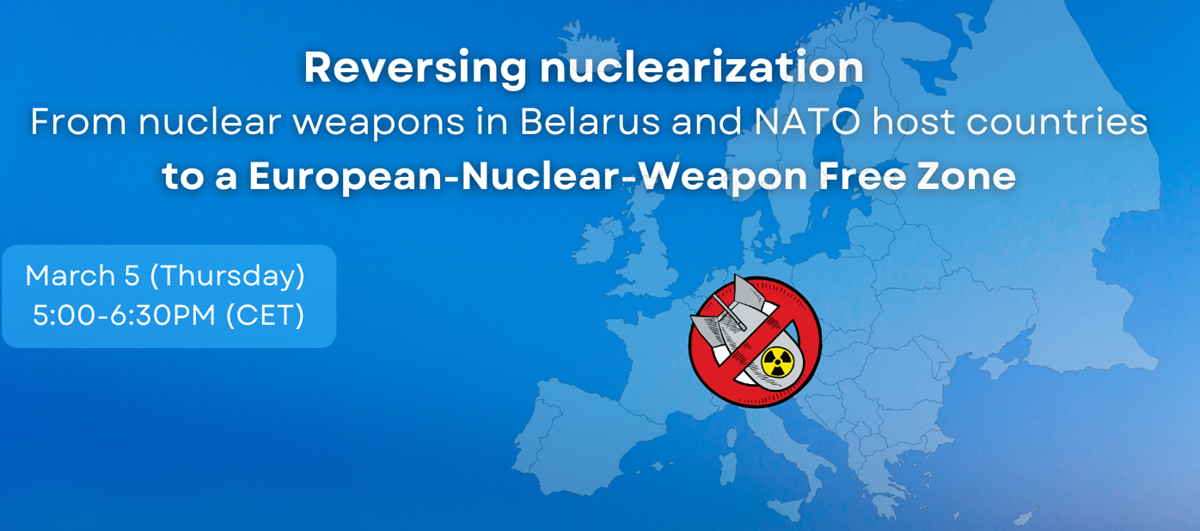
5 March -Online – Reversing nuclearization:
From nuclear weapons in Belarus and NATO host countries to a European-Nuclear-Weapon Free Zone
11am-12:30pm Eastern Time USA / 5pm-6:30pm CET

of the week – Advocating for a
nuclear free beach – https://www.samuellawrencefoundation.org/
The Samuel Lawrence Foundation advocates for a Nuclear Waste Free Beach at San Onofre, join us and take action!

10 March A LIVE WEBINAR THE REAL EFFECTS OF NUCLEAR POWER
What the Industry Isn’t Telling Us
1:00 PM Mountain, 2 pm Central, 3 pm Eastern. Live on the Keepers of the Water Facebook page

18 March Webinar @ 1 PM EST: An Assessment of SMR Projects: The Case of Canada
register for the zoom:
https://us02web.zoom.us/webinar/register/WN_o8BIIOUvQ2ONJR1nta65DQ#/registration

of the week – STOP SMALL MODULAR REACTORS IN CANADA
To see nuclear-related stories in greater depth and intensity – go to https://nuclearinformation.wordpress.com
-
Archives
- March 2026 (38)
- February 2026 (268)
- January 2026 (308)
- December 2025 (358)
- November 2025 (359)
- October 2025 (376)
- September 2025 (258)
- August 2025 (319)
- July 2025 (230)
- June 2025 (348)
- May 2025 (261)
- April 2025 (305)
-
Categories
- 1
- 1 NUCLEAR ISSUES
- business and costs
- climate change
- culture and arts
- ENERGY
- environment
- health
- history
- indigenous issues
- Legal
- marketing of nuclear
- media
- opposition to nuclear
- PERSONAL STORIES
- politics
- politics international
- Religion and ethics
- safety
- secrets,lies and civil liberties
- spinbuster
- technology
- Uranium
- wastes
- weapons and war
- Women
- 2 WORLD
- ACTION
- AFRICA
- Atrocities
- AUSTRALIA
- Christina's notes
- Christina's themes
- culture and arts
- Events
- Fuk 2022
- Fuk 2023
- Fukushima 2017
- Fukushima 2018
- fukushima 2019
- Fukushima 2020
- Fukushima 2021
- general
- global warming
- Humour (God we need it)
- Nuclear
- RARE EARTHS
- Reference
- resources – print
- Resources -audiovicual
- Weekly Newsletter
- World
- World Nuclear
- YouTube
-
RSS
Entries RSS
Comments RSS
 nuclear-news