A Govt panel to decide on dumping Fukushima waste water
Panel deciding whether to dump radioactive water from Fukushima into the ocean https://www.seafoodsource.com/news/environment-sustainability/panel-deciding-whether-to-dump-radioactive-water-from-fukushima-into-the-ocean By Chris Loew October 30, 2019
The Japanese government may allow Tokyo Electric Power Company (TEPCO) to dump more than 250 million gallons of contaminated water accumulated in tanks around its Fukushima nuclear power plants into the ocean.
Environment Minister Yoshiaki Harada commented in September that he supports the plan, as it may be the only solution for the wastewater. An expert panel is now studying the options, and its recommendation is likely to become policy.
The contaminated water was used to cool the superheated fuel rods in the Fukushima Daiishi facility prior to and during the nuclear meltdown that occurred as a result of the Tōhoku earthquake and tsunami in March 2011. The water has already been treated by multiple facilities, including a multi-nuclide removal facility (an advanced liquid processing system, or “ALPS”), which removed most of the radioactive materials, including cesium and strontium, but not tritium. Tritium is difficult to separate from water, because it closely resembles hydrogen, which is a natural component of water.
Many methods, both practically tried and theoretical, do exist for separation and removal of tritium, and they were assessed in a report presented by the International Research Institute for Nuclear Decommissioning in 2013. But all of them had the drawback of requiring a large amount of energy and equipment. Also, performance is poor for the low concentrations in the water at Fukushima Daiichi.
Last year, a team of researchers from Kindai University and private companies in western Japan developed an aluminum filter with holes of five nanometers or less in diameter. Steam of water containing tritium can be stopped, while that of water can pass. However, another issue is that 400 cubic meters of groundwater flowing into the basements of the buildings every day needs to be pumped and treated, necessitating treatment on a very large scale. This may not be justified when considering the actual danger of release to the ocean, according to the report.
Before the accident, tritium in cooling water was thinned with circulated sea water so that the allowable concentration might not be exceeded, and the diluted tritium was routinely released into the sea. Releasing the water at a rate that would allow it to be well diluted may be the best option, the report said.
While tritium has a radioactive half-life of 12.3 years, its biological half-life in the human body is only 10 days, and in fish it is less than two days. This is because tritium easily bonds to water, replacing the hydrogen atom. So as we drink and expel water, the tritium is carried away rather than accumulating in tissues. While some radioactive materials become concentrated as they move up the food chain, tritium is diluted.
The main danger of the policy is not actual harm, but rather public perceptions about the safety of seafood from Fukushima and its neighboring prefectures. Countries that have been gradually relaxing restrictions on imports of Japanese seafood may be forced by public fears to take a wait-and-see approach before further easing—a setback to local seafood firms, which have waited for years to return to their pre-disaster export figures.
No comments yet.
1 This Month
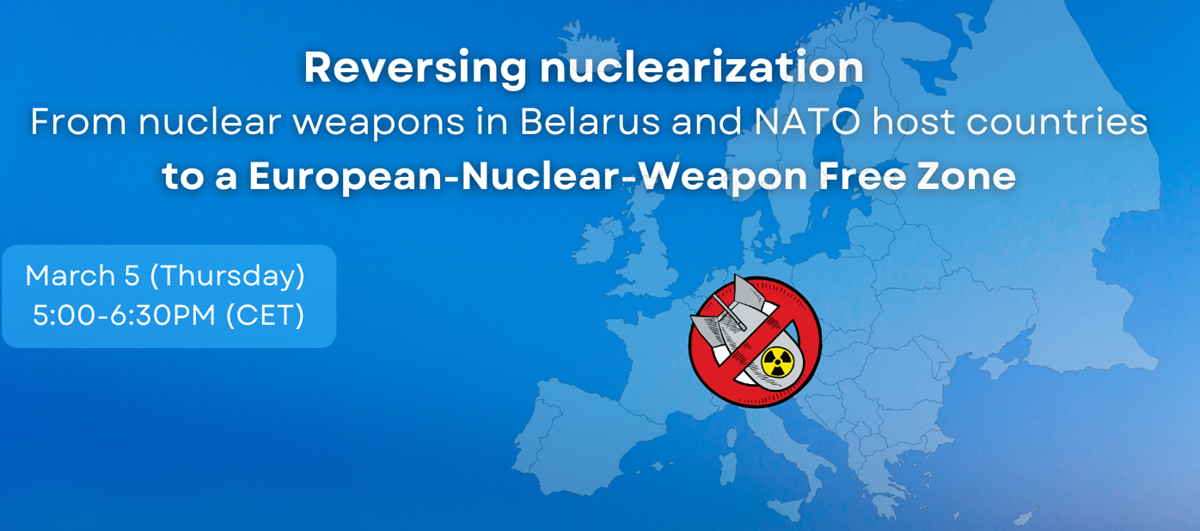
5 March -Online – Reversing nuclearization:
From nuclear weapons in Belarus and NATO host countries to a European-Nuclear-Weapon Free Zone
11am-12:30pm Eastern Time USA / 5pm-6:30pm CET

of the week – Advocating for a
nuclear free beach – https://www.samuellawrencefoundation.org/
The Samuel Lawrence Foundation advocates for a Nuclear Waste Free Beach at San Onofre, join us and take action!

10 March A LIVE WEBINAR THE REAL EFFECTS OF NUCLEAR POWER
What the Industry Isn’t Telling Us
1:00 PM Mountain, 2 pm Central, 3 pm Eastern. Live on the Keepers of the Water Facebook page

18 March Webinar @ 1 PM EST: An Assessment of SMR Projects: The Case of Canada
register for the zoom:
https://us02web.zoom.us/webinar/register/WN_o8BIIOUvQ2ONJR1nta65DQ#/registration

of the week – STOP SMALL MODULAR REACTORS IN CANADA
To see nuclear-related stories in greater depth and intensity – go to https://nuclearinformation.wordpress.com
-
Archives
- March 2026 (51)
- February 2026 (268)
- January 2026 (308)
- December 2025 (358)
- November 2025 (359)
- October 2025 (376)
- September 2025 (258)
- August 2025 (319)
- July 2025 (230)
- June 2025 (348)
- May 2025 (261)
- April 2025 (305)
-
Categories
- 1
- 1 NUCLEAR ISSUES
- business and costs
- climate change
- culture and arts
- ENERGY
- environment
- health
- history
- indigenous issues
- Legal
- marketing of nuclear
- media
- opposition to nuclear
- PERSONAL STORIES
- politics
- politics international
- Religion and ethics
- safety
- secrets,lies and civil liberties
- spinbuster
- technology
- Uranium
- wastes
- weapons and war
- Women
- 2 WORLD
- ACTION
- AFRICA
- Atrocities
- AUSTRALIA
- Christina's notes
- Christina's themes
- culture and arts
- Events
- Fuk 2022
- Fuk 2023
- Fukushima 2017
- Fukushima 2018
- fukushima 2019
- Fukushima 2020
- Fukushima 2021
- general
- global warming
- Humour (God we need it)
- Nuclear
- RARE EARTHS
- Reference
- resources – print
- Resources -audiovicual
- Weekly Newsletter
- World
- World Nuclear
- YouTube
-
RSS
Entries RSS
Comments RSS
 nuclear-news
Leave a comment