Humboldt Bay – a case study in how not to involve the community in cleanup of a dead nuclear reactor


Input from the public included a strong sentiment that this was a very poor storage location for the spent fuel.
Laird went on to say that while there’s already been half a meter of sea level rise, a meter more, which is predicted to occur within 40 years, will fully inundate the generation station, 101 in that area and cause the dry cask storage area to become an island, until it is eroded away.
Notably, PG&E’s Decommissioning Fund will run out in 2025, a mere 5 years from now, the casks the waste are in only have a shelf life of 40 to 50 years, and the half life of the waste in storage in those casks in PG&E’s custody, is 24,000 years.

NUCLEAR WASTE BEING STORED 115 FT FROM HUMBOLDT BAY AS SEA LEVEL RISES
On January 14th, the Nuclear Energy Innovation and Modernization Act (NEIMA) was signed into law. According to Jurist Legal News and Research website, NEIMA makes several changes to the licensing process for nuclear reactors. The NEIMA gave the NRC less than a year to “develop and implement a staged licensing process for commercial advanced nuclear reactors.” Continue reading
Corporate greed, fighting over America’s extravagant $85 billion nuclear missile program

 become the Defense Department’s primary provider of ballistic missiles, Boeing has launched an aggressive lobbying campaign,
There was an $85 billion elephant in the room at this year’s Air Force Association conference, an annual trade show where thousands of uniformed airmen rub shoulders with suit-clad defense contractors hawking the latest advanced weaponry.
Those entering the conference hotel in National Harbor, Md., were welcomed by an enormous blue banner splashed with the Northrop Grumman logo and the words “LEGENDARY DETERRENCE” ― a not-so-subtle reference to the company’s ballistic missile ambitions.
Northrop is poised to take over a massive Air Force nuclear weapons program called Ground Based Strategic Deterrent, or GBSD, which will call on a team of contractors to replace the U.S. military’s aging stock of Minuteman III intercontinental ballistic missiles. But Boeing’s Arlington-based defense business, which has handled the Minuteman program since 1958, has launched an aggressive lobbying campaign in defense of its interests.
Northrop “is on a path to a sole-source opportunity,” Boeing GBSD Program Manager Frank McCall warned in an interview Wednesday on the floor of the trade show.
“There has never been a time in the history of the Minuteman when the Air Force wasn’t supported by both companies,” he said, adding that he thinks the Pentagon is taking “a winner-take-all approach” that is “unprecedented in the history of intercontinental ballistic missiles.”
The ground-based missiles make up one leg of the U.S. nuclear triad, which aims to be ready to deliver warheads at a moment’s notice from air, land or sea. They are meant to deter other countries from launching a nuclear strike by sending a message that any first-mover will be destroyed immediately.
The different components of the triad are extremely expensive to build and keep at the ready. For the new ground-based missiles, the Pentagon faces a difficult dilemma as it tries to get the best solution for the best price.
The Air Force had hoped to evaluate multiple competing options. But Boeing, thought to be the only viable competitor aside from Northrop, says it won’t participate unless the Air Force changes its approach.
With Boeing out, the Northrop-led team appears to be the Pentagon’s only option, something that could make it hard for the government to negotiate a fair price.
It is a common dilemma facing Defense Department weapons buyers, who have the impossible task of running a competitive marketplace when there are, at best, two or three potential suppliers for the most expensive weapons systems. The U.S. defense industry has consolidated to a worrying degree in the decades since the Cold War, officials and analysts say, with a handful of dominant suppliers exerting tremendous influence.
A White House report released last year found 300 cases in which important defense products are produced by just a single company, a “fragile” supplier, or a foreign supplier.
There is big money at stake for Boeing and Northrop: Defense Department estimates for the long-term cost of the program range between $62 billion and $100 billion. Both companies have formidable lobbying operations, spending $7.2 million and $8.3 million, respectively, on Washington lobbyists in 2019.
Boeing’s stewardship of the Minuteman program brought it roughly 600 defense contracts totaling $8 billion in the first 30 years of the programs, according to estimates provided by the company. Northrop has traditionally taken a secondary role handling complex systems integration.
In 2017, Northrop and Boeing were awarded contracts worth $349.2 million and $328.6 million, respectively, to develop their own version of a next-generation replacement for the Minuteman. In July, the Air Force asked each company to submit a proposal, hoping to compare the two missile designs and negotiate a fair price.
Boeing quickly threw a wrench into that plan, announcing July 25 that it would walk away from the competition because the Air Force’s request for proposals allegedly favored Northrop.
Boeing’s concerns stem from Northrop Grumman’s 2017 acquisition of a company called Orbital ATK for $7.8 billion. Orbital ATK ― which operates as a Northrop Grumman business unit called Innovation Systems ― is a dominant producer of rocket motors that power ballistic missiles. Aerojet Rocketdyne, the other U.S. manufacturer of rocket motors, also is working with Northrop.
Boeing has taken its case to the Pentagon, as well as to the Federal Trade Commission, but has failed to block the deal.
“We continue to stand ready to support this important program,” wrote Leanne Caret, president of Boeing’s Arlington-based defense business, in a July 23 letter seen by The Washington Post. “As we have discussed, we believe there are other procurement structures that could provide this capability more rapidly at less cost, and we will look for ways to leverage the work … to help support this critical national security mission.”
Boeing later approached Northrop about the possibility of teaming up but was rejected, a Boeing official said. So it came as little surprise Monday when Northrop released the list of companies it is teaming up with, and Boeing isn’t on it.
Air Force officials stood by their approach but declined to comment on how they will proceed.
“We are very open to a variety of proposals. … We are open to teaming relationships. We just don’t want to dictate,” Will Roper, the Air Force’s assistant secretary for acquisition, technology and logistics, told reporters Monday. “We think it should be decided by industry and what they think is best value.”
Soon afterward, Boeing countered that it is pursuing a multifaceted advocacy and lobbying campaign asking the government to force Northrop to collaborate.
“We believe it is a path to a better weapons system solution that will allow us to field the solution more quickly than either company could handle on its own,” said McCall, the Boeing official.
Analysts expressed concern over the current arrangement, in which Northrop will almost certainly be the only bidder. Whether Boeing’s proposal will resolve the problem is less clear.
“I would much rather see a direct competition between Northrop and Boeing,” said Dan Grazier, a former Marine Corps captain working at the Project on Government Oversight, a watchdog group. “The best practice for any acquisition system would be a solid, honest, competitive prototyping, where the government can weigh competing options and get a competitive price.”
Donald Trump’s chilling nuclear warning to Iran
 LOCKED & LOADED Donald Trump boasts US nuclear weapons are in ‘tip-top shape’ in thinly-veiled threat to Iran, Jon Lockett, The Sun UK, 21 Sep 2019, DONALD Trump bizarrely boasted his nukes are in tip-top condition in what is being seen as a chilling warning to Iran. LOCKED & LOADED Donald Trump boasts US nuclear weapons are in ‘tip-top shape’ in thinly-veiled threat to Iran, Jon Lockett, The Sun UK, 21 Sep 2019, DONALD Trump bizarrely boasted his nukes are in tip-top condition in what is being seen as a chilling warning to Iran.
The US President’s worrying words come days after he said his military was “locked and loaded” as the Middle East inches towards a full-scale war. He told reporters at the White House last night: “Nobody can beat us militarily. No-one can even come close. “Our nuclear was getting very tired. Now we have it in, as we would say, tippy-top shape. Tippy top. We have new and we have renovated and it’s incredible. “We all should pray we never have to use it.”
Trump was responding to questions about the US’s military capability after Iranian-backed militia were blamed for a drone attack on a Saudi oil field. The President earlier revealed he is to send troops to Saudi Arabia following a drone attack on the world’s biggest oil plant. Trump confirmed the deployment after admitting there were many options on the table, including the “ultimate option“ – war with Iran. In response, Iran’s Foreign Minister Mohammed Javad Zarif said any US or Saudi military strike against Tehran would bring “all-out war”. This morning Tehran insisted it would pursue any aggressor, even it carries out a limited attack, and seek to destroy it. The head of the elite Revolutionary Guards Major General Hossein Salami warned: “Be careful, a limited aggression will not remain limited. We will pursue any aggressor. “We are after punishment and we will continue until the full destruction of any aggressor.” Huge fires were seen engulfing two major Saudi Arabian oil plants at around 4am on Saturday. Oil prices rose as much as 20 per cent to above $71.00 (£57) a barrel — the biggest percentage spike in almost three decades. DRAMATIC ESCALATIONUS Defense Secretary Mark Esper said the attack was a “dramatic escalation of Iranian aggression” as he confirmed troops will be deployed to beef up Saudi air defences He added: “The president has approved the deployment of U.S. forces, which will be defensive in nature.” Esper said “all indications are that Iran was responsible for” the drone attack on the world’s biggest oil plant that could cut the world’s supply in half. Iran has denied having any involvement, but the Pentagon says weapons were “Iranian produced and were not launched from Yemen”. US Secretary of State Mike Pompeo also accused Iran of “an unprecedented attack on the world’s energy supply.” The US was backed by Saudi Arabia, …….. https://www.thesun.co.uk/news/9974575/donald-trump-boasts-nukes-iran-threat/ |
|
Donald Trump keen to build a military partnership with Australia’s PM ‘man of titanium’
Donald Trump suggests China ‘a threat to the world’ while praising Scott Morrison as a ‘man of titanium’ US president signalled he would raise with Morrison a military contribution in Iran but then indicated he did not do so, Guardian, Katharine Murphy Political editor
 Morrison, as a “man of titanium”.
Following a ceremonial welcome for Morrison on Friday Washington time attended by more than 4,000 guests, Trump praised Morrison’s personal fortitude, describing him as “a man of real, real strength, and a great guy”.
The American president signalled he would raise with Morrison a possible military contribution in Iran beyond the current freedom of navigation commitment in the Strait of Hormuz, but later in the day indicated he had not, in fact, raised the issue during a bilateral meeting at the White House.
The Australian prime minister made a point of praising the president’s restraint in relation to Iran to date and made no commitment beyond saying the government would consider any request from the administration on its merits. …….
Trump said he was interested in building a coalition for military action with Australian participation, but then told reporters at a subsequent press conference Iran wasn’t discussed, and Morrison then described Australia’s possible participation as “moot”…….. https://www.theguardian.com/australia-news/2019/sep/21/donald-trump-suggests-china-a-threat-to-the-world-while-praising-scott-morrison-as-a-man-of-titanium
Ever cheaper wind energy a big threat to UK’s nuclear white elephants
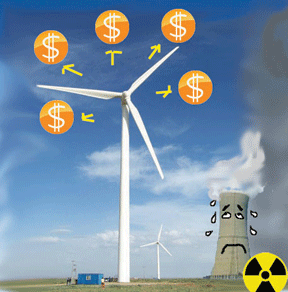 Times 21st Sept 2019, Alistair Osborne: Who wouldn’t prefer clean energy from Dogger than, say, Hinkley Point C: the £20 billion nuclear disaster in leafy Somerset?
The latest round of offshore wind contracts is quite a moment. For the first time, it looks like being subsidy-free. Companies have agreed to build 5.5 gigawatts of new capacity, enough to power almost seven million homes, for a guaranteed price of as little as £39.65 per megawatt hour – in 2012 prices. Compare that to the price for when the turbines start whirring in 2023-24, also in 2012 money: £48.13/MWh. In short, clean energy without any extra cost to the consumer.
In just five years, wind has blown the competition away. It was only in 2014 that Dong Energy, now Orsted, signed up to build the 1,200MW Hornsea 1 project at a strike price of £140/MWh.
By September 2017, the guaranteed price for the 1,386MW Hornsea 2 was down to £57.50. And now it’s 30 per cent cheaper again: a dizzying drop that drives home two things.
First, that Britain, blessed with a nice bit of breeze, leads the world in offshore wind: by next year it’ll have 10GW of installed capacity. Second, that the more you build, the cheaper it gets.
If only the same thing could be said for nuclear power. The strike price for Hinkley Point, in the same 2012 money, is a rapacious £92.50/MWh: a socking bribe to get France’s EDF and its Chinese partner to build the thing. It’s set to rip off consumers for 35 years. Naturally, it’s at least eight years late: now shooting for operations in 2025, not 2017. Its French prototype in Flamanville, where building costs have more than trebled to €10.9 billion, is at least ten years late. Oh, and its welding’s dodgy, too.
And nuclear’s not even green: it comes with a vast clean-up bill. True, it brings baseload energy that wind can’t yet match. But storage technology is advancing all the time.
So why’s the government persisting with last century tech that comes at a radioactive price? Yes, offshorewind might endanger a seabird that’s forgotten its specs. But, luckily, it’s a bigger threat to another species: nuclear white elephants.
https://www.thetimes.co.uk/article/597b8770-dbdf-11e9-9cfd-b79996a387b0
Standing up and fighting back — Beyond Nuclear International

The Climate Strike goes to the Capitol
via Standing up and fighting back — Beyond Nuclear International
You’ve Got to See These Inspiring Photos to Understand the Scale of Today’s Global Climate Strikes, Mother Jones — Rise Up Times

We Are All Connected!
New York’s Climate Strike and the Things That Make Teen-Agers March — limitless life

Cultural Comment New York’s Climate Strike and the Things That Make Teen-Agers March By Alexandra Schwartz September 20, 2019 What had brought so many teens to Foley Square, in Manhattan, for the New York climate strike? Everyone’s answer was the same, the only one possible: a sense of existential threat. Photograph by Jonno Rattman for The […]
via New York’s Climate Strike and the Things That Make Teen-Agers March — limitless life
Shutdown of Three Mile Island’s infamous nuclear plant symbolises the end of the nuclear energy era
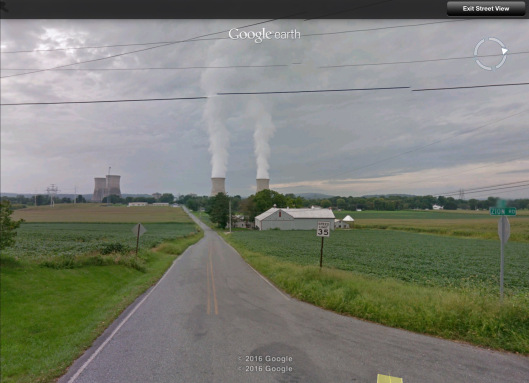 Three Mile Island’s infamous nuclear plant shuts down after 45 years https://www.engadget.com/2019/09/21/three-mile-island-nuclear-plant-shuts-down/
This doesn’t mark the end of the overall story, however, as it’ll take decades to clean up. Some of the teardown will take place quickly. Staff will remove the reactor’s fuel supply in the next few weeks and store it in the used fuel pool. It’ll take much longer to fully decommission the reactor, however. Exelon estimated that the plant won’t be fully clear of radioactive material until 2078, or more than a century after it entered service. Unit 2 is expected to close in 2036.
Unit 1 has been relatively safe, with the only notable incident being an air pressure change that briefly exposed 20 employees to a mild amount of radiation. However, the reactor has long lived in the shadow of Unit 2, whose partial meltdown exposed nearly 2 million people to radiation. There don’t appear to have been any publicly disclosed health effects, but the incident led to stricter oversight and, along with the Chernobyl disaster, defined the public perception of nuclear energy.
Exelon wasn’t shy in trying to pin the blame on local government. It claimed that Pennsylvania law “does not support the continued operation” of the reactor, and that rules “fail to evenly value clean energy resources” while dirty power sources could “pollute for free.” It doesn’t think nuclear is getting a fair shake compared to renewables and other clean energy sources, in other words. It has also complained about low natural gas prices that make Unit 1 difficult to run.
It’s not certain just what happens next, but the odds aren’t high for a revival. While nuclear is relatively clean, the rises of both renewables and natural gas have reduced the demand for it. Like it or not, the industry has moved on — the closure is a symbol of that transition.
Surface melting causes Antarctic glaciers to slip faster towards the ocean
Direct link between surface melting and short bursts of glacier acceleration in Antarctica
- Date:
- September 20, 2019
- Source:
- University of Sheffield
- Summary:
- Study shows for the first time a direct link between surface melting and short bursts of glacier acceleration in Antarctica. During these events, Antarctic Peninsula glaciers move up to 100% faster than average. Scientists call for these findings to be accounted for in sea level rise predictions…….
https://www.sciencedaily.com/releases/2019/09/190920111355.htm
Despite previous warnings, and findings, court finds Tepco executive not guilty after Fukushima nuclear disaster
Fukushima trial ends in not guilty verdict, but nuclear disaster will haunt Japan for decades to come, By James Griffiths, CNN, September 19, 2019 The only criminal prosecution stemming from the 2011 Fukushima nuclear disaster has ended in not guilty verdicts, in a blow to families displaced by the meltdown, as the fallout promises to haunt northern Japan for decades to come.
CNN’s Yoko Wakatsuki contributed reporting from Tokyo. https://edition.cnn.com/2019/09/19/asia/japan-fukushima-trial-intl-hnk/index.html
1 This Month


18 March Webinar @ 1 PM EST: An Assessment of SMR Projects: The Case of Canada
register for the zoom:
https://us02web.zoom.us/webinar/register/WN_o8BIIOUvQ2ONJR1nta65DQ#/registration


of the week – STOP SMALL MODULAR REACTORS IN CANADA
To see nuclear-related stories in greater depth and intensity – go to https://nuclearinformation.wordpress.com
-
Archives
- March 2026 (140)
- February 2026 (268)
- January 2026 (308)
- December 2025 (358)
- November 2025 (359)
- October 2025 (376)
- September 2025 (258)
- August 2025 (319)
- July 2025 (230)
- June 2025 (348)
- May 2025 (261)
- April 2025 (305)
-
Categories
- 1
- 1 NUCLEAR ISSUES
- business and costs
- climate change
- culture and arts
- ENERGY
- environment
- health
- history
- indigenous issues
- Legal
- marketing of nuclear
- media
- opposition to nuclear
- PERSONAL STORIES
- politics
- politics international
- Religion and ethics
- safety
- secrets,lies and civil liberties
- spinbuster
- technology
- Uranium
- wastes
- weapons and war
- Women
- 2 WORLD
- ACTION
- AFRICA
- Atrocities
- AUSTRALIA
- Christina's notes
- Christina's themes
- culture and arts
- Events
- Fuk 2022
- Fuk 2023
- Fukushima 2017
- Fukushima 2018
- fukushima 2019
- Fukushima 2020
- Fukushima 2021
- general
- global warming
- Humour (God we need it)
- Nuclear
- RARE EARTHS
- Reference
- resources – print
- Resources -audiovicual
- Weekly Newsletter
- World
- World Nuclear
- YouTube
-
RSS
Entries RSS
Comments RSS
 nuclear-news