Canada’s Conservative and Liberal politicians in the service of the nuclear lobby, not the Canadian people
 Conservatives and Liberals advance corporate Canada’s nuclear dreams, http://www.rabble.ca/columnists/2019/09/conservatives-and-liberals-advance-corporate-canadas-nuclear-dreams Ole Hendrickson September 18, 2019
The Trudeau government’s controversial Impact Assessment Act (Bill C-69) and its key regulation (the Physical Activities Regulations, better known as the “project list”) came into force on August 28 — slipped through during the summer season.
In 2012 the Harper government slashed the number of projects requiring environmental assessment, arguing that only the biggest projects have an impact on the environment.
Under the Impact Assessment Act, many nuclear projects can now proceed unimpeded by impact review requirements to assess effects on the environment, health, social or economic conditions; effects of malfunctions or accidents; or impacts on the rights of Indigenous peoples.
The Harper government’s 2012 project list did require assessment of new uranium mines or mills. The new list requires assessment only if a uranium mine or mill has a capacity over 2,500 tonnes per day.
The 2012 list required assessment of new nuclear reactors. The new list allows reactors generating up to 200 million watts of heat to be built anywhere without assessment.
Furthermore, the new list allows nuclear waste storage facilities to be built on the sites of any of these so-called “small modular reactors” without assessment.
This paves the way for a Canadian landscape dotted with mass-produced nuclear reactors — the vision of a “roadmap” released by Natural Resources Minister Amarjeet Sohi in November 2018.
Canada’s nuclear industry giants — Cameco and SNC-Lavalin — were deeply involved in these developments. The nuclear industry has long been the darling of the federal government.
Cameco operates the world’s largest uranium mine in northern Saskatchewan, the world’s largest commercial uranium refinery in Blind River, Ontario, and the Port Hope, Ontario uranium conversion facility. But it has been losing global market share to facilities in Kazakhstan.
Competition is fierce. Uranium markets dried up after the Fukushima disaster. Rapid growth of renewables has virtually halted reactor construction.
Under a secret 10-year, multi-billion-dollar contract put in place during the fall 2015 election period, the Harper government gave SNC-Lavalin, in alliance with two U.S. companies, ownership of “Canadian Nuclear Laboratories” (then a subsidiary of the Crown corporation, Atomic Energy of Canada Limited).
The contract allows the alliance to carry out commercial activities — including small nuclear reactor development — at the federal government’s heavily subsidized research facility in Chalk River, Ontario.
According to the federal lobbyist registry, Neil Bruce, former president of SNC-Lavalin, met with Michael Binder, former president of the Canadian Nuclear Safety Commission (CNSC), to discuss “environment, climate, energy, infrastructure” on July 12, 2018.
The following week, on July 19, Tim Gitzel, president and CEO of Cameco, met with Christine Loth-Brown, a vice-president in the Canadian Environmental Assessment Agency (CEAA), and with Jason Cameron, a CNSC vice-president. On July 26, Gitzel again met with these same two people, plus another CEAA vice-president. For that meeting he was accompanied by Pierre Gratton, president of the Canadian Mining Association.
On November 11, 2018, Gratton met with the following people, at the same time: Rumina Velshi, president, CNSC; Ron Hallman, president, CEAA; Christyne Tremblay, deputy minister, Natural Resources Canada; and Stephen Lucas, deputy minister, Environment and Climate Change Canada.
Canada’s senior bureaucrats gutted environmental assessment after this series of meetings.
The SNC-Lavalin affair has ripped the veil off the domination of Canada by a corporate oligarchy. Government departments, regulatory bodies such as the CNSC and CEAA (now the “Impact Assessment Agency”), and elected officials behave like corporate lapdogs.
The Conservatives handed the federal government’s nuclear research facilities over to SNC-Lavalin and its partners, along with a juicy multi-year, multi-billion-dollar contract. The Liberals pulled out all the stops so SNC-Lavalin could continue to hold federal contracts, despite fraud and corruption charges.
Natural Resources Minister Amarjeet Sohi released a road map promoting new nuclear reactors.
Environment Minister Catherine McKenna exempted these reactors and their wastes from impact assessment.
The 2015 Liberal election promise to restore public trust in environmental assessment has been broken.
Ole Hendrickson is a retired forest ecologist and a founding member of the Ottawa River Institute, a non-profit charitable organization based in the Ottawa Valley.
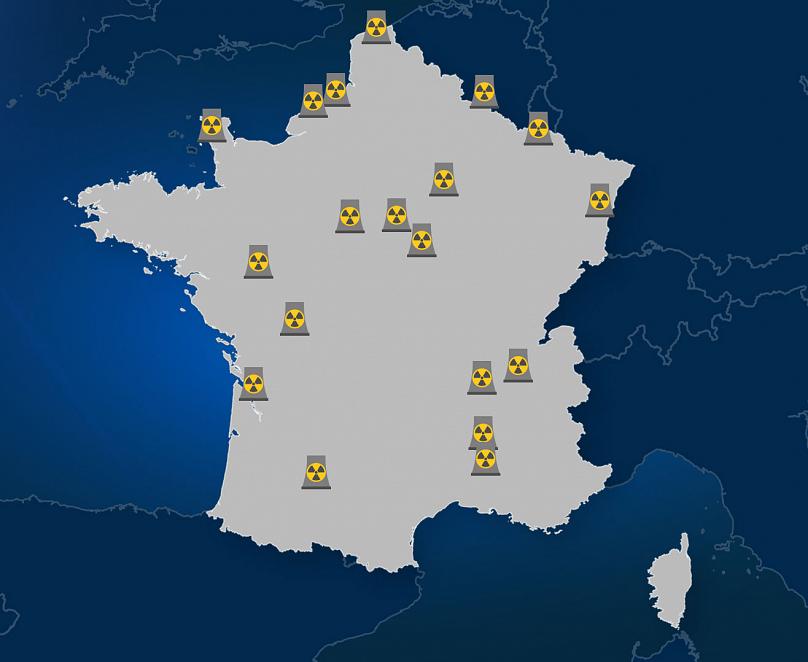
faulty parts found in a number of France’s nuclear reactors
10% of French Nuclear Reactors Have Potentially Faulty Parts Installed as Fukushima Fears Persist https://sputniknews.com/europe/201909181076832892-10-of-french-nuclear-reactors-have-potentially-faulty-parts-installed-as-fukushima-fears-persist/
|
by Tim Korso Most European states have taken a course to reduce to zero the use of nuclear plants since the disaster at the Japanese plant Fukushima in 2011 that led to the contamination of nearby land and sea.
Six (around 10% of the total amount) of nuclear reactors in France are using parts that had “manufacturing deviations” Electricite de France (EDF) SA, the country’s biggest power supplier reported. The irregularities were found in 16 steam generators used on nuclear power plants in Blayais, Bugey, Fessenheim, Dampierre-en-Burly, and Paluel. At the same time, EDF stated that the issue is not a pressing one and doesn’t require immediate attention. The report comes in line with an ongoing programme of reactor checks in France following the discovery of carbon-content irregularities in the steel produced by Le Creusot Forge in 2016, which made the metal weaker than usual. The checks led to the temporary suspension of numerous reactors, and a spike in energy prices both in France and in nearby states due to the former’s need to import energy to cover the deficit. Some European states have even announced their intention of completely phasing out the use of nuclear energy, gradually shutting down existing nuclear plants and aborting the construction of newer ones following the 2011 disaster at the Japanese plant Fukushima, which left significant patches of land and sea contaminated. The incident happened after the plant was hit by a powerful tsunami that knocked out its power and left reactors without cooling systems. Three countries, namely Belgium, Switzerland and Germany, are planning to eventually switch to renewable energy sources, while using gas in the transitional period. France, however, despite initially considering such option decided to keep its nuclear industry. Still, Paris opted for a reduction of its portion in the country’s energy generation from over 70% down to 50% by 2035. |
Climate Emergency – ‘We’re losing the race’
‘We’re losing the race’: UN secretary general calls climate change an ’emergency’
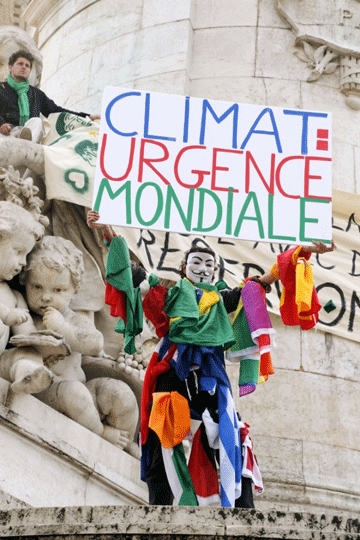
António Guterres cites ‘fantastic leadership’ of young activists and is counting on public pressure to compel governments to honor the 2015 Paris Agreement Guardian Mark Hertsgaard, @markhertsgaard 18 Sep 2019 The UN secretary general says that he is counting on public pressure to compel governments to take much stronger action against what he calls the climate change “emergency”.
“Governments always follow public opinion, everywhere in the world, sooner or later,” António Guterres, said on Tuesday in an interview with Covering Climate Now, a global collaboration of more than 250 news outlets, led by Columbia Journalism Review and the Nation, in partnership with the Guardian. Guterres, a former prime minister of Portugal, added: “And so … we need to keep telling the truth to people and be confident that the political system, especially democratic political systems, will in the end deliver.”
Guterres refused to comment on Donald Trump and the Trump administration’s hostility to climate action, but a CBS News poll released on 15 September found that 69% of Americans want the next president to take action, while 53% say such action is needed “right now”. Guterres said that “it would be much better” if the US was “strongly committed to climate action”, just as it would be better if Asian countries [notably, China and Japan] stopped exporting coal plants. Until then, he said, “what I want is to have the whole society putting pressure on governments to understand they need to run faster. Because we are losing the race.”
With five days remaining before the UN climate action summit on 23 September, the secretary general cited the “fantastic leadership” of young activists as a leading example of how civil society can pressure governments to honor the 2015 Paris Agreement to limit temperature rise to “well below” 2C and preferably to 1.5C. Recent election results across Europe – where green parties gained significant public backing – also left Guterres optimistic that at next Monday’s summit the European Union will announce that it promises to be “carbon neutral” by 2050, as the Paris Agreement mandates……… https://www.theguardian.com/environment/2019/sep/18/un-secretary-general-climate-crisis-trump
The ozone layer is repairing – international co-operation pays off
|
BY MAANI TRUU, 17 Sept 19, The world’s ozone layer is on track to be completely healed by the 2060s, according to modelling by the UN’s environmental agency (UNEP).
In the past 19-years, parts of the ozone layer have recovered at a rate of one to three per cent every ten years, UNEP has found. If this continues, the Northern Hemisphere’s ozone layer is set to heal completely by the 2030s, the Southern Hemisphere by the 2050s, and the polar regions in the following decade. As we rightly focus our energies on tackling climate change, we must be careful not to neglect the ozone layer and stay alert to the threat posed by the illegal use of ozone-depleting gases,” UN Secretary-General António Guterres said in a statement on Monday. “The recent detection of emissions of one such gas, CFC-11, reminds us that we need continued monitoring and reporting systems, and improved regulations and enforcement.” The ozone layer, made up of three types of oxygen atoms, is located approximately 15 kilometres above the earth and helps to protect the planet from ultraviolet rays that cause skin cancer, crop damage, eye cataracts and other issues. But since the late 1970s, the ozone layer had been consistently thinning due to the overuse of chemicals called chlorofluorocarbons, reaching a crisis point in the 1990s when about 10 per cent of the layer had been eroded. n 1987, UN members signed a treaty – known as the Montreal Protocol – aimed at phasing out ozone-depleting substances and developed replacements. According to the UNEP, the Montreal Protocol has successfully led to the removal of 99 per cent of chlorofluorocarbons, which previously existed in refrigerators, air-conditioners and other consumer products. “The Montreal Protocol is both an inspirational example of how humanity is capable of cooperating to address a global challenge and a key instrument for tackling today’s climate crisis,” Mr Guterres said. “Under this international treaty, nations have worked for 32 years to slash the use of ozone-depleting chemicals, used largely by the cooling industry. As a result, the ozone layer that shields us from the sun’s harmful ultraviolet radiation is healing.” The ozone layer is also instrumental in curbing the effects of climate change, with the barrier stopping approximately 135 billion tonnes of carbon dioxide emissions from entering the atmosphere between 1990 to 2010, UNEP said. Earlier this year, China came under fire for allegedly releasing large quantities of banned chemical Chlorofluorocarbon-11 (CFC-11) into the atmosphere, in violation of the UN treaty. |
|
|

Iodine tablets for 2.2 million people in France
|
France will give out free iodine tablets to around 2.2 million people living close to nuclear plants to help protect them from radiation in case of an acciden https://eutoday.net/news/environment/2019/france-to-distribute-out-free-iodine-tablets-to-2-2-million-peoplet, Euronews reports. The country’s nuclear regulator agency ASN said on Tuesday people living within 10-20 kilometres from one of EDF’s 19 nuclear plants, as well as some 200,000 institutions including schools, will receive a letter in the incoming days informing them they can pick up the tablets from the nearest pharmacy. Previously, France distributed iodine tablets to people living within a 10 kilometre radius from a nuclear plant but has now decided to widen the radius. During nuclear accidents, radioactive iodine is released into the atmosphere that when inhaled or swallowed by the thyroid gland can cause cancer in later years. When the thyroid gland is saturated with stable iodine, it no longer absorbs the radioactive iodine. ASN said that in case of a nuclear accident, people should seek shelter in buildings and not go pick up their children from school. France is the world’s most nuclear-reliant nation, with three-quarters of its electricity produced by state-owned EDF’s 58 nuclear reactors in 19 plants spread all over the country. |

New York City supports students’ climate protest
More than one million New York students allowed to skip school for climate protest, Public school students in New York are allowed to skip class to join the youth climate strikes.
SBS NEWS, BY ANNE BARNARD 18 Sep 19 When New York City announced that public school students could skip classes without penalties to join the youth climate strikes planned around the world on Friday, you could almost hear a sigh of relief.Before the announcement, the protests, to be held three days ahead of the United Nations Climate Action Summit, had thrown a new complication into the usual back-to-school chaos: With the protests framed as a cry to protect their futures from climate disaster, should students heed the call?
Parents had wondered how to word emails to principals requesting excused absences. Teachers had been wondering how to react. Some students had been vowing to protest no matter what, but others had worried about possible repercussions.
Most of all, the decision last week by the nation’s largest school district buoyed national protest organisers, who are hoping that the demonstrations will be the largest on climate in US history, with at least 800 planned across the 50 states. They expressed hope that other districts around the country would follow suit.
“Holy smokes, this thing could get HUGE,” Jamie Henn, a founder of the climate action organisation 350.org, said on Twitter after the decision was announced by New York City’s Department of Education………
Demonstrators as young as nine had already turned up to greet the 16-year-old Swedish climate activist Greta Thunberg when she arrived last month by an emissions-free yacht in New York Harbour. Greta has inspired Friday student protests in at least 100 countries.
Larger crowds, mostly of high school students, have demonstrated with her on two recent Fridays at the United Nations………
Some 600 medical professionals across the country have also signed a virtual “doctor’s note” encouraging teachers to excuse students on the grounds that climate change is dangerous to their and others’ health. HTTPS://WWW.SBS.COM.AU/NEWS/MORE-THAN-ONE-MILLION-NEW-YORK-STUDENTS-ALLOWED-TO-SKIP-SCHOOL-FOR-CLIMATE-PROTEST
Elizabeth Warren’s comprehensive plan for Anti-Corruption Reforms
 Warren Unveils “Most Sweeping Set of Anti-Corruption Reforms Since Watergate”, TruthOut Jessica Corbett, Common Dreams September 17, 2019 Democratic presidential primary candidate Sen. Elizabeth Warren on Monday unveiled a wide-ranging plan to combat corruption in U.S. politics with “big, structural change to fundamentally transform our government.” Warren Unveils “Most Sweeping Set of Anti-Corruption Reforms Since Watergate”, TruthOut Jessica Corbett, Common Dreams September 17, 2019 Democratic presidential primary candidate Sen. Elizabeth Warren on Monday unveiled a wide-ranging plan to combat corruption in U.S. politics with “big, structural change to fundamentally transform our government.”
The End Washington Corruption plan builds on legislation that the Massachusetts Democrat introduced last August, months before she announced her presidential campaign. Warren released the plan ahead of her Monday night speech in New York City, near the site of the tragic 1911 Triangle Shirtwaist Factory fire. “Today, I’m announcing a comprehensive set of far-reaching and aggressive proposals to root out corruption in Washington,” Warren wrote on Medium Monday. “It’s the most sweeping set of anti-corruption reforms since Watergate. The goal of these measures is straightforward: to take power away from the wealthy and the well-connected in Washington and put it back where it belongs — in the hands of the people.” Warren directly targeted President Donald Trump with her Medium post. “Make no mistake about it: The Trump administration is the most corrupt administration of our lifetimes,” she wrote, highlighting tax breaks for the wealthiest Americans and corporations, Supreme Court justices “hand-picked by right-wing extremist groups,” and key cabinet and ambassador posts the president has filled with former lobbyists and major donors. “But these problems did not start with Donald Trump. They are much bigger than him,” Warren noted, emphasizing the need for broad, transformative change. “My plan lays out nearly a hundred ways that we can change our government to fix this problem — from improving public integrity rules for federal officials in every branch of government to ending lobbying as we know it, fixing the criminal laws to hold corrupt politicians to account, and ensuring our federal agencies and courts are free from corrupting influences.” The plan has six broad goals under which Warren organized her proposals. The first goal is restoring public integrity — which, she argued, requires “rooting out financial conflicts of interest in Washington.” To achieve this, Warren would:
As part of Warren’s effort to address the public’s lack of confidence in federal officials and institutions, she wants to “close and padlock the revolving door between government and industry.” Her proposals to achieve this are:
The White House hopeful would also work to curb the influence of corporations and powerful special interests on the U.S. justice system. Specifically, Warren calls for strengthening ethics requirements for federal judges and ensuring that Supreme Court justices are held to the same standard as judges in lower courts. She would also mandate the public dissemination of all federal judges’ financial reports, recusal decisions, and speeches and “close the loophole that allows federal judges to escape investigations for misconduct by stepping down from their post.”………. https://truthout.org/articles/warren-unveils-most-sweeping-set-of-anti-corruption-reforms-since-watergate/?eType=EmailBlastContent&eId=cea503c8-3faa-4731-ad8b-b83e698521c9 |
Dramatic rise in the risk of a US-Russia nuclear war, which would kill mega millions
 US-Russia nuclear war would kill 34 million people within hours and is increasingly likely, Princeton study concludes, Independent UK, Risk of catastrophic conflict has risen ‘dramatically in the past two years’, academics warn Jon Sharman. 18 Sep 19, More than 90 million people would be killed or injured in a nuclear war between the US and Russia if a conventional conflict went too far, according to a new simulation created by researchers.
Such a scenario has become “dramatically” more plausible in the last two years because the two countries have dropped support for arms-control measures, according to a team from Princeton University.
The simulation, the result of a study at Princeton‘s Science and Global Security programme (SGS), suggests 34 million people would be killed and 57 million injured in the first hours of an all-out nuclear conflagration – not counting those left ill by fallout and other long-term problems.
In the animation, electronic trails of ballistic missiles arc across the screen, before blossoming into a carpet of white discs.
Worldwide destruction would include the nuclear incineration of Europe, which the Princeton scientists claimed could be brought about by the escalation of a conventional war between Russia and Nato………. https://www.independent.co.uk/news/world/americas/us-russia-nuclear-war-trump-putin-simulation-europe-nato-a9109116.html
Close nuclear talks with Saudi Arabia – U.S. senators urge Trump administration
U.S. senators urge Trump administration to end nuclear talks with Saudis https://www.reuters.com/article/us-usa-saudi-nuclearpower/us-senators-urge-trump-administration-to-end-nuclear-talks-with-saudis-idUSKBN1W329R, Timothy Gardner WASHINGTON (Reuters) 18 Sept 19, – Two Democratic U.S. senators on Wednesday urged Trump administration officials to halt talks with Saudi Arabia on building nuclear reactors after weekend attacks that halved the country’s oil output and increased instability in the Middle East.
U.S. Energy Secretary Rick Perry told reporters on Tuesday at a nuclear power conference in Vienna the United States would only provide Saudi Arabia with nuclear power technology if it signed an agreement with a U.N. watchdog allowing for intrusive snap inspections.
But Saudi Arabia has resisted agreeing to strict nonproliferation restrictions, known as the gold standard, that would block it from enriching uranium and reprocessing spent fuel, potential pathways to making a nuclear bomb.
Senators Ed Markey and Jeff Merkley, members of the Senate Foreign Relations Committee, wrote to Secretary of State Mike Pompeo and Perry urging the administration to discontinue recent talks with the kingdom about nuclear power development.
The lawmakers have been concerned about Saudi Arabia’s reluctance to agree to the gold standard, after de facto ruler Crown Prince Mohammed bin Salman said last year his country does not want nuclear weapons but will pursue them if its rival Iran develops one.
“Sharing nuclear technology with Saudi Arabia, especially without adequate safeguards, will give Riyadh the tools it needs to turn the Crown Prince’s nuclear weapons vision into reality,” said the letter from Markey and Merkley, a copy of which was seen by Reuters.
The State Department and Energy Department did not immediately comment.
In a Sept. 4 letter to Saudi Arabia’s Energy Minister Khalid al-Falih, who was replaced by Prince Abdulaziz bin Salman on Sunday, Perry said an agreement on nuclear power “must also contain a commitment by the kingdom to forgo any enrichment and reprocessing for the term of the agreement.”
But the letter, a copy of which was obtained by Reuters, did not clarify the length of the “term” the kingdom would have to forgo those practices or whether it covered U.S. origin uranium or uranium from other countries.
A nonproliferation expert said the administration wants to convey the idea it supports the gold standard, but the ambiguity means it remains unclear if it does.
“Why would you even consider helping the kingdom build nuclear reactors after the attack on an energy facility?” said Henry Sokolski, executive director of the Washington-based Nonproliferation Policy Education Center. “What makes you think building another energy facility that’s radioactive is smart?”
Perry has said that if the United States does not work with Saudi Arabia, other suppliers such as China and Russia could help the kingdom develop nuclear power.
But some lawmakers say if China or Russia helped the kingdom develop nuclear power without adequate nonproliferation safeguards Washington has the tools to counter that.
Riyadh plans to issue a multi-billion-dollar tender in 2020 to construct its first two nuclear power reactors, with U.S., Russian, South Korean, Chinese and French firms involved in preliminary talks.
In February, Markey and Senator Marco Rubio, a Republican, joined lawmakers in the House of Representatives in introducing legislation that would increase congressional oversight over any civil nuclear cooperation agreement with Saudi Arabia.
Reporting by Timothy Gardner; Editing by Tom Brown and David Gregorio
France to give more people iodine tablets after expanding nuclear security cordon
By Euronews with Reuters 18/09/2019 – “……….. Previously, France distributed iodine tablets to people living within a 10 kilometre radius from a nuclear plant but has now decided to widen the radius…….. https://www.euronews.com/2019/09/17/france-to-give-more-people-iodine-tablets-after-expanding-nuclear-security-cordon
Wind farm to take over former nuclear site in New Jersey
Former nuclear site in N.J. set to become key part of new offshore wind farm, NJ.com, By Michael Sol Warren | NJ Advance Media for NJ.com
When the Danish wind developer Orsted won its bid to build a massive wind farm in the ocean off of Atlantic City earlier this year, it immediately faced a new challenge: how to bring that future electricity to land.
Orsted found its solution in a shuttered nuclear power plant.
Last week, the New Jersey Board of Public Utilities approved Orsted’s purchase of interconnection rights at the former Oyster Creek nuclear power plant in Lacey Township from the plant’s owner, Exelon Generation. The purchase means that Oyster Creek could be used as a landing point for the electricity generated by the company’s Ocean Wind project. ……
The Oyster Creek site is appealing because it already has the infrastructure needed to feed power into the regional electric grid.
According to NJBPU documents, Orsted estimated that it would save $25 million by using an existing interconnection point with the grid, like Oyster Creek, instead of building a totally new one…….
Ocean Wind will be capable of producing 1,100 megawatts of electricity once it goes online; that’s enough to power about 500,000 homes. Orsted expects the project to be completed in 2024. The NJBPU gave its blessing to the Ocean Wind project in June. …..https://www.nj.com/news/2019/09/former-nuclear-site-in-nj-set-to-become-key-part-of-new-offshore-wind-farm.html
Plan to keep Three Mile Island nuclear debris dumped in Idaho
Agency considering storing Three Mile Island nuclear debris in Idaho
The U.S. Nuclear Regulatory Commission said Monday it’s considering a request from the U.S. Department of Energy to renew a license to store the radioactive debris from the Three Mile Island nuclear power plant.
The core of a reactor south of Harrisburg, Pennsylvania, partially melted in 1979. The commission says continuing to store the debris at the Energy Department’s 890-square-mile site in eastern Idaho that includes the Idaho National Laboratory will have no significant impact.
The license would be good through 2039, four years past an agreement the Energy Department has with Idaho to remove the high-level radio
Nuclear power seems safer now? But there are hidden dangers
Reed ’21: The Hidden Dangers of Nuclear Energy, Brown Daily Herald , By ANDREW REED
STAFF COLUMNIST, September 6, 2019 “…….. for the last few decades, making reactors safer to operate has been the primary focus of nuclear engineers. In fact, nuclear engineers have said that some of the newest generation of reactors, which will begin production in 2030, will be even walk-away-safe — that is, you could relinquish all control of the reactor, forever, without incident. Inevitably, and even perhaps in my lifetime, the threat of nuclear meltdowns will be a relic of a technologically feeble era. But that’s what scares me.
Keep in mind, the concern here is not necessarily that a terrorist could themselves create a nuclear weapon. Though not impossible, there are considerable engineering challenges to doing so. Rather, the more immediate concern is a terrorist obtaining nuclear material, driving a truck filled with said material and conventional explosives into the middle of Manhattan, and detonating what is referred to as a “dirty bomb.” In doing so, they would disperse radioactive material across the city. A crude bomb of this form would, at the very least, cause extreme psychological chaos.
Many of the problems associated with nuclear technology remain unsolved and seem, for the time being, unsolvable. Technology can all but eliminate the risk of nuclear meltdowns, but the associated risks are intrinsic to the technology itself and only increase with the passage of time. It is up to us to decide if clean energy is worth a fully nuclear planet — if we are willing to trade energy for the chance that a terrorist flies a plane into a reactor or contaminates an entire city with a radioactive bomb. But once this technology spreads, there will be no reigning it in.
USA Office of Nuclear Energy taking over STEM education

Navigating Nuclear: Energizing Our Free World is packed with FREE K-12 resources to support educators who want to incorporate nuclear into their lesson plans. All activities and lesson plans are Next Generation Science Standard-aligned.
The middle school curriculum is ready for teachers to use. High school and elementary resources are under development and will be rolled out over the next two years, so stay tuned!
The DOE-sponsored curriculum will include new perspectives on computer science, computational thinking and culturally-responsive curriculum……..
Inspiring future generations of leaders, scientists, and engineers is what we’re all about at DOE. Our Nuclear Energy University Program (NEUP) supports students’ passion for nuclear by funding nuclear energy research and infrastructure projects at colleges and universities across the nation. …….. https://www.energy.gov/ne/articles/nuclear-power-pack-3-can-t-miss-stem-resources-nuclear-energy
 |
ReplyForward
|
USA Senate panel concerned about technical problems in nuclear weapons
 Senate panel wants probe into nuclear weapons glitches, Roll Call, John M. Donnelly @johnmdonnelly 18 Sept 19,
Panel is concerned that problems might reflect fundamental oversight shortcomings that have broader implications. The panel is concerned that recent glitches in atomic weapons may have broader implications, and senators want to get to the bottom of the issue. Separately, a congressional aide familiar with the issue said the problems will add hundreds of millions of dollars to the atomic weapons budget.
“The Committee is concerned that a recent technical challenge demonstrates a lack of systems engineering and highlights a lack of coordination and leadership focus, which in turn jeopardizes successful program execution,” the report says.
The document does not mention any particular programs or provide details on the nature of the technical challenges. But experts on nuclear weapons said the panel is almost certainly referring to problems with two new weapons: a bomb called the B61-12 and a modified submarine-launched warhead called the W-88.
In both those programs, problems with commercially manufactured electrical components have caused months of delays, U.S. government officials have publicly acknowledged.
In another sign of intensifying congressional concern over the programs, the House Armed Services Subcommittee on Strategic Forces plans to hold a hearing Sept. 25 on those two programs.
Senate appropriators suggested in their report that they are worried the delays in these programs may reflect fundamental oversight shortcomings and could cause ripple effects in other nuclear initiatives, such as keeping nuclear weapons out of terrorists’ hands, updating warship reactors and modernizing facilities.
The investigation must find causes and solutions, the panel said, and it must “ensure the extent of condition is not more widespread than currently reported.”……….. https://www.rollcall.com/news/congress/senate-panel-wants-probe-nuclear-weapons-glitches
1 This Month


Tell the Ukrainian Government to Drop Prosecution of Peace Activist Yurii Sheliazhenko

Petition to revoke the licensing of the Near Surface Nuclear Disposal Facility (NSDF) at Chalk River. https://www.ourcommons.ca/petitions/en/Petition/Details?Petition=e-7247


of the week – STOP SMALL MODULAR REACTORS IN CANADA
To see nuclear-related stories in greater depth and intensity – go to https://nuclearinformation.wordpress.com
-
Archives
- March 2026 (204)
- February 2026 (268)
- January 2026 (308)
- December 2025 (358)
- November 2025 (359)
- October 2025 (376)
- September 2025 (258)
- August 2025 (319)
- July 2025 (230)
- June 2025 (348)
- May 2025 (261)
- April 2025 (305)
-
Categories
- 1
- 1 NUCLEAR ISSUES
- business and costs
- climate change
- culture and arts
- ENERGY
- environment
- health
- history
- indigenous issues
- Legal
- marketing of nuclear
- media
- opposition to nuclear
- PERSONAL STORIES
- politics
- politics international
- Religion and ethics
- safety
- secrets,lies and civil liberties
- spinbuster
- technology
- Uranium
- wastes
- weapons and war
- Women
- 2 WORLD
- ACTION
- AFRICA
- Atrocities
- AUSTRALIA
- Christina's notes
- Christina's themes
- culture and arts
- Events
- Fuk 2022
- Fuk 2023
- Fukushima 2017
- Fukushima 2018
- fukushima 2019
- Fukushima 2020
- Fukushima 2021
- general
- global warming
- Humour (God we need it)
- Nuclear
- RARE EARTHS
- Reference
- resources – print
- Resources -audiovicual
- Weekly Newsletter
- World
- World Nuclear
- YouTube
-
RSS
Entries RSS
Comments RSS
 nuclear-news