Long history of misguided suggestions to nuclear bomb hurricanes

|
The idea has evidently surfaced multiple times in the administration, as Swan outlined, including during a hurricane preparedness briefings at the White House. “I got it. I got it. Why don’t we nuke them?” the president evidently interrupted, according to Swan’s source. “They start forming off the coast of Africa, as they’re moving across the Atlantic, we drop a bomb inside the eye of the hurricane and it disrupts it. Why can’t we do that?” Even in a White House system engineered to respond quickly and authoritatively to a president’s whims, questions, or orders, no one knew what to do with an idea so obviously batty. As one source reportedly told Swan, “You could hear a gnat fart in that meeting. People were astonished. After the meeting ended, we thought, ‘What the f—? What do we do with this?’” (Trump denied the reports in a tweet Monday.) The truth, though, is that Donald Trump’s apparent brainstorm—as terrible an idea as it is—actually has a long history. Seventy years ago, it was at the forefront of American scientific thought. What makes Trump’s embrace of nuking hurricanes unique is that, broadly speaking, no policymaker has seriously considered it a good idea since the days that the 73-year-old president was wearing diapers. The bombing of Hiroshima and Nagasaki—when the US unleashed a destructive technology more powerful than anything in history—at first spurred unbridled excitement over the power of the atom…… Engineers dreamed of the day when nuclear engines would replace gasoline-powered automobiles, when a lump of Uranium-235 the size of a vitamin pill would power the family car for years at a time. In those heady early years of the atomic age, many scientists imagined a world where humans could routinely use nuclear weapons to cleave the earth and remake its climate. Decades before climate change became a major concern, one book, Almighty Atom: The Real Story of Atomic Energy, suggested using atomic weapons to melt the polar ice caps, gifting “the entire world a moister, warmer climate.” Thought experiments exploded over how harnessing the power of the atom would finally unleash humans’ ability to control and reshape their environment through geo-engineering. “For the first time in the history of the world, man will have at his disposal energy in amounts sufficient to cope with the forces of Mother Nature,” ……. One of the first tourist attractions in Las Vegas was the chance to wake up early, stand outside your hotel, and watch the flash and mushroom cloud from the bombs rolling into the sky. The after-effects of radiation—the invisible and inescapable poison spread by nuclear explosions—became clear soon enough. With that awareness, early atomic enthusiasm waned, particularly as bombs leapt from nuclear to thermonuclear, the atomic bomb’s power of kilotons—that is, a thousand tons of TNT—growing to the hydrogen bomb’s megatons, the equivalent of a million tons of TNT….. nuking hurricanes entered the conversation. According to International Spy Museum historian Vince Houghton, whose book Nuking the Moon details wacky military and intelligence schemes, an American meteorologist named Jack Reed, one of the nation’s earliest hurricane hunters, appears to be the first to seriously consider bombing a hurricane. His calculations held that maybe one or two 20-megaton bombs might be able to deflect a hurricane from land. He called for a test of the theory, but found it embraced by precisely zero policymakers …. Reed’s idea would actually now be prohibited under international law by the Peaceful Nuclear Explosions Treaty. Yet the appeal of nuking hurricanes has never really gone away. The issue is such a MacGuffin that NOAA has dedicated a webpage to debunking it: “During each hurricane season, there always appear suggestions that one should simply use nuclear weapons to try and destroy the storms,” the weather service writes. “Apart from the fact that this might not even alter the storm, this approach neglects the problem that the released radioactive fallout would fairly quickly move with the tradewinds to affect land areas and cause devastating environmental problems. Needless to say, this is not a good idea.” The idea has enough staying power that the meteorologists at NOAA even took on the underlying science, pointing out that there’s little evidence that even a successfully placed atomic bomb would do anything to alter a hurricane’s formation —the systems are simply too large, too strong, and most of all, a nuclear explosion wouldn’t affect the underlying dynamics, …… Even for Donald Trump, launching 80 nukes a year seems extreme https://www.wired.com/story/nuking-hurricanes-polar-ice-caps-climate-change/ |
|
No comments yet.
1 This Month
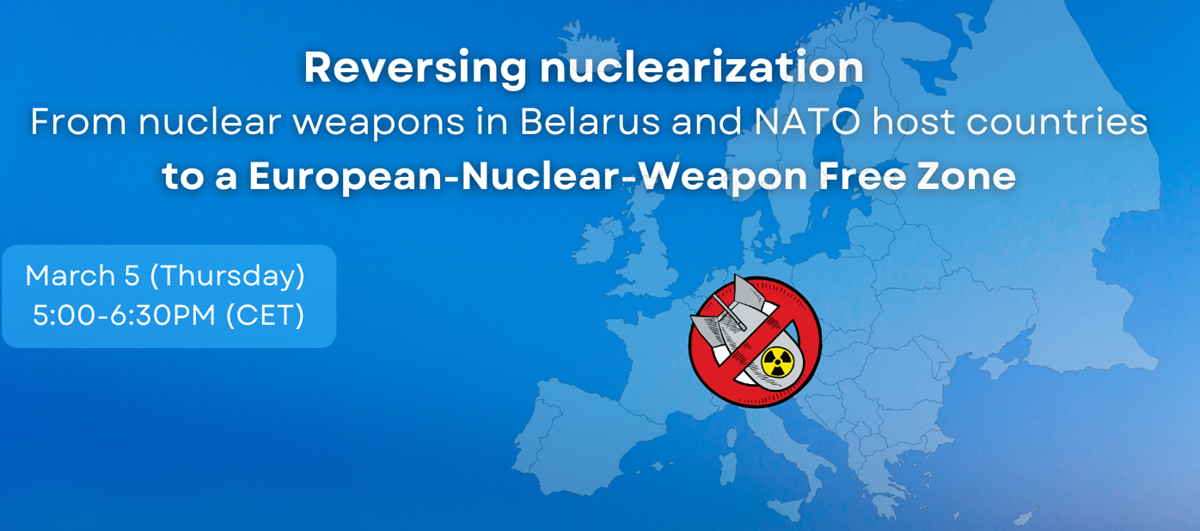
5 March -Online – Reversing nuclearization:
From nuclear weapons in Belarus and NATO host countries to a European-Nuclear-Weapon Free Zone
11am-12:30pm Eastern Time USA / 5pm-6:30pm CET

of the week – Advocating for a
nuclear free beach – https://www.samuellawrencefoundation.org/
The Samuel Lawrence Foundation advocates for a Nuclear Waste Free Beach at San Onofre, join us and take action!
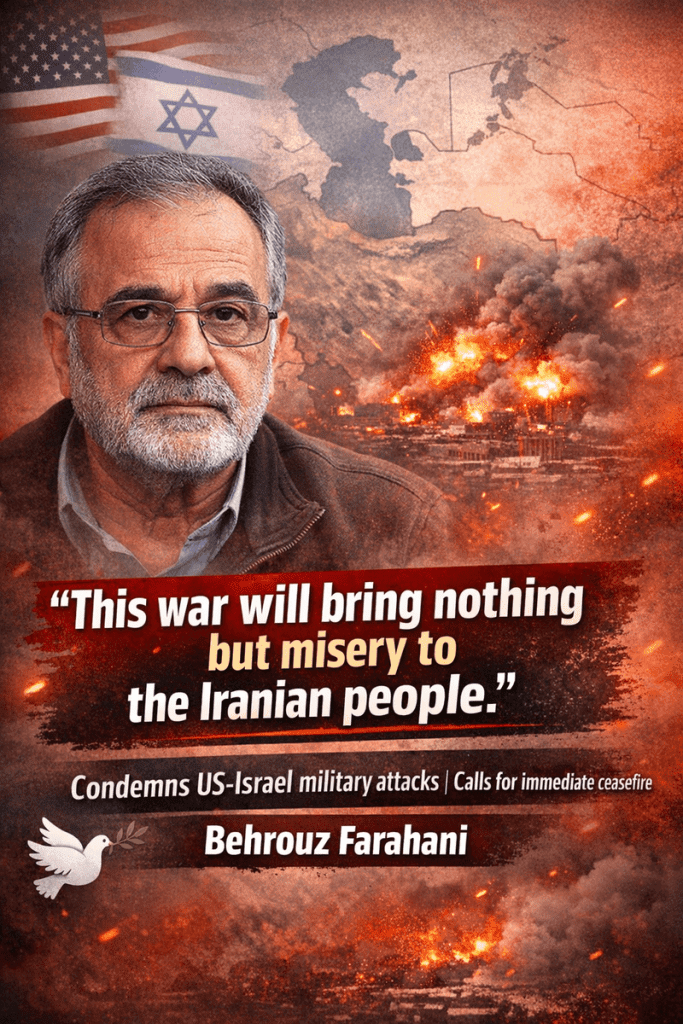
10 March A LIVE WEBINAR THE REAL EFFECTS OF NUCLEAR POWER
What the Industry Isn’t Telling Us
1:00 PM Mountain, 2 pm Central, 3 pm Eastern. Live on the Keepers of the Water Facebook page

18 March Webinar @ 1 PM EST: An Assessment of SMR Projects: The Case of Canada
register for the zoom:
https://us02web.zoom.us/webinar/register/WN_o8BIIOUvQ2ONJR1nta65DQ#/registration

of the week – STOP SMALL MODULAR REACTORS IN CANADA
To see nuclear-related stories in greater depth and intensity – go to https://nuclearinformation.wordpress.com
-
Archives
- March 2026 (51)
- February 2026 (268)
- January 2026 (308)
- December 2025 (358)
- November 2025 (359)
- October 2025 (376)
- September 2025 (258)
- August 2025 (319)
- July 2025 (230)
- June 2025 (348)
- May 2025 (261)
- April 2025 (305)
-
Categories
- 1
- 1 NUCLEAR ISSUES
- business and costs
- climate change
- culture and arts
- ENERGY
- environment
- health
- history
- indigenous issues
- Legal
- marketing of nuclear
- media
- opposition to nuclear
- PERSONAL STORIES
- politics
- politics international
- Religion and ethics
- safety
- secrets,lies and civil liberties
- spinbuster
- technology
- Uranium
- wastes
- weapons and war
- Women
- 2 WORLD
- ACTION
- AFRICA
- Atrocities
- AUSTRALIA
- Christina's notes
- Christina's themes
- culture and arts
- Events
- Fuk 2022
- Fuk 2023
- Fukushima 2017
- Fukushima 2018
- fukushima 2019
- Fukushima 2020
- Fukushima 2021
- general
- global warming
- Humour (God we need it)
- Nuclear
- RARE EARTHS
- Reference
- resources – print
- Resources -audiovicual
- Weekly Newsletter
- World
- World Nuclear
- YouTube
-
RSS
Entries RSS
Comments RSS
 nuclear-news
Leave a comment