UK government commits to ordering mini nuclear reactors from Rolls Royce
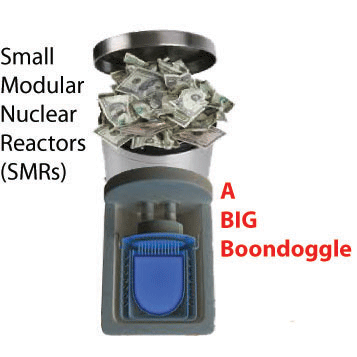 Rolls-Royce gets government commitment for mini nuclear reactors UK aero-engine maker seeks to spearhead development of export-led industry https://www.ft.com/content/32ee2100-ad43-11e9-8030-530adfa879c2 Sylvia Pfeifer in London, 24 July 19,
Although the initial commitment is just £18m, it will allow the consortium to mature the design of the reactors. The move, which is subject to a final sign-off, would still require significant levels of additional investment before the reactors can become a commercial reality. The UK aero-engine maker has long argued that its technology in this sphere should be regarded as a “national endeavour” to develop nuclear skills that can be used to create an export-led industry.
A consortium spokesperson said on Tuesday that the £18m investment would be used to “mature the design, address the considerable manufacturing technology requirements and to progress the regulatory licensing process”. He added: “We believe with early co-investment by the government, this power station design is a compelling commercial opportunity.”
Rolls-Royce and its team, which includes Laing O’Rourke and Arup, was one of several consortiums that bid in an initial government-sponsored competition launched in 2015 to find the most viable technology for a new generation of small nuclear modular reactors (SMRs). Most of these will not be commercial until the 2030s
Supporters argue that they can deliver nuclear power at lower cost and reduced risk. They will draw on modular manufacturing techniques that will reduce construction risk, which has plagued larger-scale projects. However, when a nuclear sector deal was finally unveiled last June, the government allocated funding only for more advanced modular reactors.
MRs, which typically use water-cooled reactors similar to existing nuclear power stations, were omitted from funding even though they were closer to becoming commercial. Rolls-Royce threatened last summer that it would shut down the project if there was no meaningful support from the government.
Ministers have in recent months scrambled to recast Britain’s energy policy after the collapse of plans to build several large reactors and on Monday evening published proposals to finance new nuclear plants by having taxpayers pay upfront through their energy bills. The government added that, as part of its plans to fund advanced nuclear technologies, it would make an “initial award” of up to £18m under the industrial strategy challenge fund to the Rolls-Royce-led consortium in the autumn. The consortium has said any government funding will be matched in part by contributions from the companies as well as by raising funds from third-party organisations.
No comments yet.
1 This Month
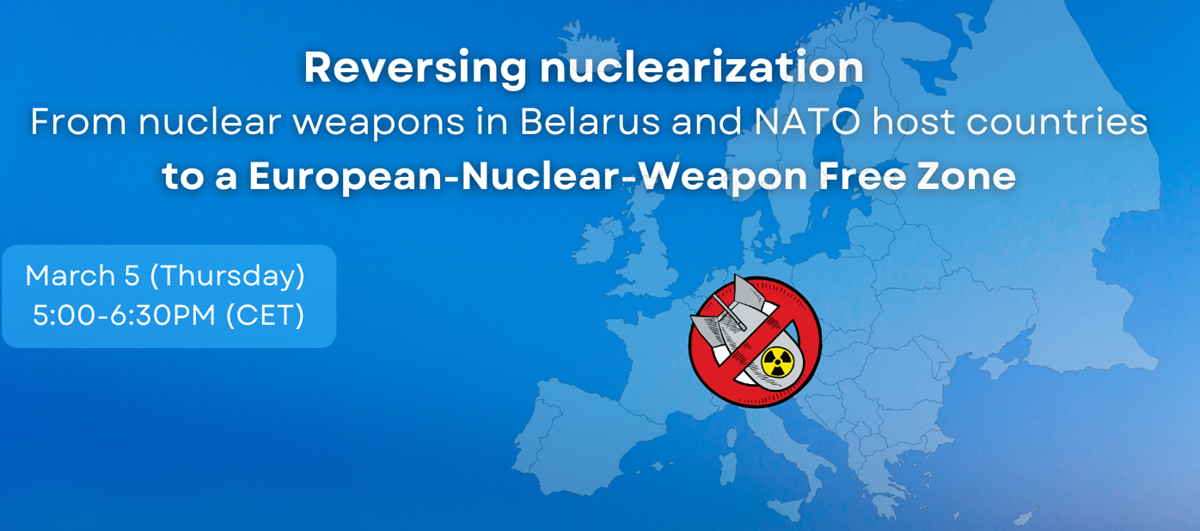
5 March -Online – Reversing nuclearization:
From nuclear weapons in Belarus and NATO host countries to a European-Nuclear-Weapon Free Zone
11am-12:30pm Eastern Time USA / 5pm-6:30pm CET

of the week – Advocating for a
nuclear free beach – https://www.samuellawrencefoundation.org/
The Samuel Lawrence Foundation advocates for a Nuclear Waste Free Beach at San Onofre, join us and take action!

10 March A LIVE WEBINAR THE REAL EFFECTS OF NUCLEAR POWER
What the Industry Isn’t Telling Us
1:00 PM Mountain, 2 pm Central, 3 pm Eastern. Live on the Keepers of the Water Facebook page

18 March Webinar @ 1 PM EST: An Assessment of SMR Projects: The Case of Canada
register for the zoom:
https://us02web.zoom.us/webinar/register/WN_o8BIIOUvQ2ONJR1nta65DQ#/registration

of the week – STOP SMALL MODULAR REACTORS IN CANADA
To see nuclear-related stories in greater depth and intensity – go to https://nuclearinformation.wordpress.com
-
Archives
- March 2026 (51)
- February 2026 (268)
- January 2026 (308)
- December 2025 (358)
- November 2025 (359)
- October 2025 (376)
- September 2025 (258)
- August 2025 (319)
- July 2025 (230)
- June 2025 (348)
- May 2025 (261)
- April 2025 (305)
-
Categories
- 1
- 1 NUCLEAR ISSUES
- business and costs
- climate change
- culture and arts
- ENERGY
- environment
- health
- history
- indigenous issues
- Legal
- marketing of nuclear
- media
- opposition to nuclear
- PERSONAL STORIES
- politics
- politics international
- Religion and ethics
- safety
- secrets,lies and civil liberties
- spinbuster
- technology
- Uranium
- wastes
- weapons and war
- Women
- 2 WORLD
- ACTION
- AFRICA
- Atrocities
- AUSTRALIA
- Christina's notes
- Christina's themes
- culture and arts
- Events
- Fuk 2022
- Fuk 2023
- Fukushima 2017
- Fukushima 2018
- fukushima 2019
- Fukushima 2020
- Fukushima 2021
- general
- global warming
- Humour (God we need it)
- Nuclear
- RARE EARTHS
- Reference
- resources – print
- Resources -audiovicual
- Weekly Newsletter
- World
- World Nuclear
- YouTube
-
RSS
Entries RSS
Comments RSS
 nuclear-news
Leave a comment