New report: nuclear energy cannot be classified as “clean”, nor as economic

 Nuclear: A poor investment strategy for clean energy https://www.pv-magazine.com/2019/07/24/nuclear-a-poor-investment-strategy-for-clean-energy/
The study undertook an empirical survey of the 674 nuclear plants that have ever been built to demonstrate that private economic interests were not the motive, but instead have been driven by military interests.
“Nuclear power was never designed for commercial electricity generation; it was aimed at nuclear weapons. That is why nuclear electricity has been and will continue to be uneconomical,” says Christian von Hirschhausen, coauthor of the study.
In its Monte Carlo simulation model developed for the net present value of a 1 GW nuclear plant, the study found that expected loss of revenues range between 1.5 and 8.9 billion euros. The model built in a variety of factors including the wholesale cost of electricity (20-80 euros/MWh), specific investment costs (4,000-9,000 euros/kW) and the weighted average cost of capital (4-10%). In the Monte Carlo analysis, researchers argue that, in all cases, nuclear investment would generate significant financial losses.
Expanding beyond lacking economic sustainability, the report goes on to further undermine international debates and policies which support nuclear as a part of climate action strategies. “Nuclear energy is by no means clean. Its radioactivity will endanger humans and the natural world for over one million years,” says von Hirschhausen.
The report calls out the International Energy Agency for recently suggesting nuclear energy in a clean energy system and for its encouragement of subsidies to the technology and its suppliers. Policies and frameworks around the world have incorporated nuclear power into the mix of future energy production. The EU Clean Energy Package built to support climate protection contains service life extensions for a number of nuclear plants and also recommends building more than 100 new plants by 2050.
“Describing nuclear energy as “clean” ignores the significant environmental risks and radioactive emissions it engenders along the process chain and beyond,” the report concludes.
Despite DIW’s warnings against costs and dangers, nuclear power capacity is increasing worldwide, even though solar and wind are taking front-runner positions as the cheapest grid-connected sources of energy. According to the World Nuclear Association, there are currently 50 reactors under construction, with more than 100 nuclear power reactors are on order or planned, and more than 300 additional plants proposed.
No comments yet.
1 This Month
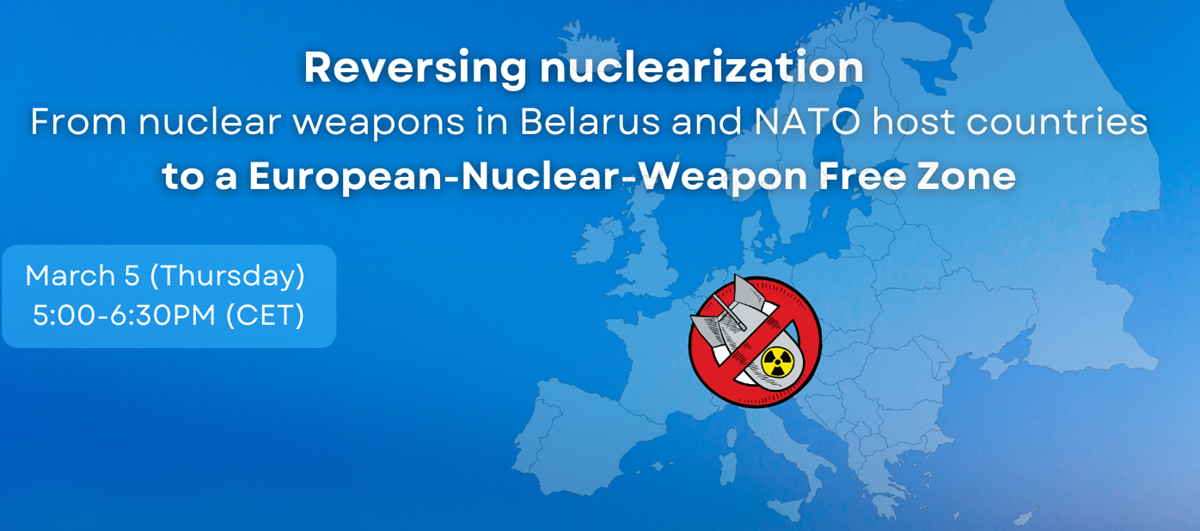
5 March -Online – Reversing nuclearization:
From nuclear weapons in Belarus and NATO host countries to a European-Nuclear-Weapon Free Zone
11am-12:30pm Eastern Time USA / 5pm-6:30pm CET

of the week – Advocating for a
nuclear free beach – https://www.samuellawrencefoundation.org/
The Samuel Lawrence Foundation advocates for a Nuclear Waste Free Beach at San Onofre, join us and take action!
10 March A LIVE WEBINAR THE REAL EFFECTS OF NUCLEAR POWER
What the Industry Isn’t Telling Us
1:00 PM Mountain, 2 pm Central, 3 pm Eastern. Live on the Keepers of the Water Facebook page

18 March Webinar @ 1 PM EST: An Assessment of SMR Projects: The Case of Canada
register for the zoom:
https://us02web.zoom.us/webinar/register/WN_o8BIIOUvQ2ONJR1nta65DQ#/registration

of the week – STOP SMALL MODULAR REACTORS IN CANADA
To see nuclear-related stories in greater depth and intensity – go to https://nuclearinformation.wordpress.com
-
Archives
- March 2026 (51)
- February 2026 (268)
- January 2026 (308)
- December 2025 (358)
- November 2025 (359)
- October 2025 (376)
- September 2025 (258)
- August 2025 (319)
- July 2025 (230)
- June 2025 (348)
- May 2025 (261)
- April 2025 (305)
-
Categories
- 1
- 1 NUCLEAR ISSUES
- business and costs
- climate change
- culture and arts
- ENERGY
- environment
- health
- history
- indigenous issues
- Legal
- marketing of nuclear
- media
- opposition to nuclear
- PERSONAL STORIES
- politics
- politics international
- Religion and ethics
- safety
- secrets,lies and civil liberties
- spinbuster
- technology
- Uranium
- wastes
- weapons and war
- Women
- 2 WORLD
- ACTION
- AFRICA
- Atrocities
- AUSTRALIA
- Christina's notes
- Christina's themes
- culture and arts
- Events
- Fuk 2022
- Fuk 2023
- Fukushima 2017
- Fukushima 2018
- fukushima 2019
- Fukushima 2020
- Fukushima 2021
- general
- global warming
- Humour (God we need it)
- Nuclear
- RARE EARTHS
- Reference
- resources – print
- Resources -audiovicual
- Weekly Newsletter
- World
- World Nuclear
- YouTube
-
RSS
Entries RSS
Comments RSS
 nuclear-news
Leave a comment