Ohio Senate to vote on subsidy bill to save state’s nuclear power plants.

Ohio Senate to vote on bill to save state’s nuclear power plants. (Reuters) 18 July 19 – The Ohio Senate will likely pass a bill on Wednesday that will create subsidies to avoid the early shutdown of the state’s two nuclear power reactors, according to analysts and those watching the legislation.
The two reactors in Ohio – Davis Besse and Perry – are owned by FirstEnergy Solutions, which has said it would shut the money-losing plants in 2020 and 2021 unless the state provides some financial assistance to keep them operating.
FirstEnergy Solutions is a bankrupt unit of Ohio power company FirstEnergy Corp.
Analysts said the Senate version of the nuclear bill, House Bill 6 (HB6), would likely pass the Senate Energy and Public Utilities and the Senate Rules and Reference Committees before going to the full Senate for a vote.
“If the Senate passes HB6 later today as expected, the bill will go over to the House for a concurrence vote,” said Josh Price, senior analyst at Height Capital Markets, noting the state House has an “if needed” session scheduled for Thursday if members need more time to debate the Senate changes to the bill. HB6 passed the House in May.
The current version of the bill would provide an overall reduction in consumer power rates by weakening the state’s renewable and energy efficiency goals even though FirstEnergy Solutions would receive an estimated $150 million a year from 2020-2026 to keep its reactors in service.
……. On Monday, U.S. electric generator LS Power warned it would be forced to terminate development of an expansion of its Troy natural gas-fired power plant in Ohio if the state passes legislation to subsidize nuclear energy. …..https://www.reuters.com/article/us-ohio-nuclear/ohio-senate-to-vote-on-bill-to-save-states-nuclear-power-plants-idUSKCN1UC1Y2
US’ Nuclear Regulatory Commission planning to reduce inspections at the country’s nuclear reactors?
 Nuclear Regulatory Commission mulls cutting back on inspections at nuclear reactors CBS News, 17 July 19 Washington – The staff of the Nuclear Regulatory Commission is recommending that the agency cut back on inspections at the country’s nuclear reactors, a cost-cutting move promoted by the nuclear power industry but denounced by opponents as a threat to public safety. Nuclear Regulatory Commission mulls cutting back on inspections at nuclear reactors CBS News, 17 July 19 Washington – The staff of the Nuclear Regulatory Commission is recommending that the agency cut back on inspections at the country’s nuclear reactors, a cost-cutting move promoted by the nuclear power industry but denounced by opponents as a threat to public safety.
The recommendations, made public Tuesday, include reducing the time and scope of some annual inspections at the nation’s 90-plus nuclear power plants. Some other inspections would be cut from every two years to every three years. Some of the staff’s recommendations would require a vote by the commission, which has a majority of members appointed or reappointed by President Trump, who has urged agencies to reduce regulatory requirements for industries. The nuclear power industry has prodded regulators to cut inspections, saying the nuclear facilities are operating well and that the inspections are a financial burden for power providers. Nuclear power, like coal-fired power, has been struggling in market completion against cheaper natural gas and rising renewable energy. …… Commission member Jeff Baran criticized the proposed changes Tuesday, saying reducing oversight of the nuclear power industry “would take us in the wrong direction.” “NRC shouldn’t perform fewer inspections or weaken its safety oversight to save money,” Baran said. The release comes a day after Democratic lawmakers faulted the NRC’s deliberations, saying they had failed to adequately inform the public of the changes under consideration……. “Cutting corners on such critical safety measures may eventually lead to a disaster that could be detrimental to the future of the domestic nuclear industry,” Rep. Frank Pallone, D-N.J., chair of the House Energy and Commerce Committee, and other House Democrats said in a letter Monday to NRC Chairwoman Kristine Svinicki. Edwin Lyman, a nuclear-power expert at the nonprofit Union of Concerned Scientists, faulted the reasoning of commission staff that the good performance of much of the nuclear power industry warranted cutting back on agency inspections for problems and potential problems. “That completely ignores the cause-and-effect relationship between inspections and good performances,” Lyman said. https://www.cbsnews.com/news/nuclear-regulatory-commission-mulls-cutting-back-on-inspections-at-nuclear-reactors/ |
|
U.N. nuclear watchdog’s chief plans to step down early -diplomats
U.N. nuclear watchdog’s chief plans to step down early -diplomats, VIENNA (Reuters) 16 July 19,- U.N. nuclear watchdog chief Yukiya Amano plans to step down early, in March of next year, because of an unspecified illness that has visibly weakened him over the past year, diplomats who follow his agency’s work said on Wednesday……https://www.reuters.com/article/us-un-iaea-chief/un-nuclear-watchdogs-chief-plans-to-step-down-early-diplomats-idUSKCN1UC1CJ
Long-delayed Finland Olkiluoto 3 nuclear reactor to start July 2020 – TVO
 Long-delayed Finland nuclear reactor to start July 2020 – TVO https://www.reuters.com/article/finland-nuclear/long-delayed-finland-nuclear-reactor-to-start-july-2020-tvo-idUSL8N24I4LH PARIS, July 17 (Reuters) – Finnish Teollisuuden Voima Oyj (TVO) said in a statement on Wednesday that the long-delayed Olkiluoto 3 nuclear plant would start generating electricity in July 2020.
TVO said that the Areva-Siemens Consortium that is building the reactor had informed it that nuclear fuel will be loaded into the reactor in Jan. 2020, the first connection to the grid will take place in April 2020, and start of regular electricity production in July 2020.
The EPR reactor in western Finland is already more than a decade behind schedule and had been due to start producing electricity in January 2020.
A similar reactor under construction for French utility EDF in Flamanville, France is also years behind schedule and billions over budget due to a string of major technical problems, including weak spots in its steel and faulty weldings.
In Taishan, China the world’s first EPR reactor went into commercial operation in Dec. 2018 and the second one is expected to go into full operation in the fourth quarter of 2019.
EDF, which has a 30 percent stake in the Taishan reactors, is also building two EPR reactors in Hinkley Point, Britain. (Reporting by Geert De Clercq Editing by Bate Felix)
Waste drum at Westinghouse nuclear fuel factory exploded, caught fire
Waste drum at Westinghouse nuclear fuel factory exploded, caught fire https://www.postandcourier.com/business/waste-drum-at-westinghouse-nuclear-fuel-factory-exploded-caught-fire/article_a0052bf8-a726-11e9-8bc5-b3f9366e8ad3.html, By Andrew Brown abrown@postandcourier.co, Jul 15, 2019
A waste drum at a nuclear fuel factory near Columbia caught fire and exploded last week, according to a federal safety report.
The workplace accident occurred at a Westinghouse facility in Hopkins, just off of Bluff Road. The plant makes pellets for nuclear power plants.
In a report filed with the Nuclear Regulatory Commission, Westinghouse said the drum exploded around 2 a.m. Friday after workers at the plant filled it with uranium-contaminated filters, rags, mops and some paper. The container held just over 70 grams of uranium, which is used in nuclear power plants to create a chain reaction that generates electricity.
Westinhouse said a chemical reaction caused the material to heat up, building pressure in the drum. The container blew off its lid, paper inside caught fire, and some of the contaminated material showered the surrounding area, according to the report.
A spokesman for the Nuclear Regulatory Commission said the fire essentially put itself out.
No workers at the plant were injured during the accident and testing confirmed that radiation levels didn’t exceed federal safety limits, according to the company. Westinghouse employees also checked the other drums at the facility to ensure they wouldn’t overheat and explode.
“Air samples taken within the area confirmed no impact to plant personnel, the public or the environment,” Westinghouse spokeswoman Courtney Boone.
Boone said Westinghouse was studying what caused the drum to explode. The company plans to set new rules to keep the wrong materials from mixing, and it will let containers of nuclear material vent to keep pressure from building inside. The Hopkins plant isn’t packaging waste in the meantime
NRC spokesman Joey Ledford said federal inspectors would address the explosion when they make a routine inspection later this month.
It’s not the first time the factory has caught the attention of regulators. The NRC reported last year that uranium at the factory leaked out a small hole and into the ground, according to a story in The State newspaper.
Thad Moore contributed to this report.
Chernobyl radiation
Ed note: This article considers only external radiation emitters – fails to consider internal emitters

UC San Francisco’s Lydia Zablotska, MD, PhD, grew up in Ukraine, trained as physician in Belarus, and has studied the long-term health impacts of radiation exposure on the Chernobyl cleanup workers, local children and others in the region. Her research helped uncover the connection between radiation exposure, thyroid conditions and leukemia, and remains relevant to global health today.
We talked with her about the real-life health impacts from the disaster portrayed in the HBO miniseries. The following answers have been edited for length and clarity.
What kind of radiation were people exposed to at Chernobyl?
The first responders, including firefighters and nuclear workers who tried to put out the multiple fires and prevent the explosion of other reactors at the nuclear power plant, were exposed to large doses of gamma radiation. Gamma radiation originates during the decay of radioactive isotopes of uranium or plutonium used as a nuclear fuel in nuclear power plants. As a result of decay, packets of electromagnetic radiation, which consist of high-energy photons, are emitted and could penetrate body tissues and cause damage to cells and their genetic material. Subsequently, DNA mutations could lead to the development of cancer.
The miniseries shows some workers dying instantly from acute radiation syndrome – what symptoms did they really experience?
The latest report from the United Nations Scientific Committee on the Effect of Atomic Radiation found 134 first responders who were diagnosed with acute radiation syndrome (ARS) after the Chernobyl accident. Of these, 28 died in the first four months, but not instantaneously. Then 19 more died over the next 20 years. But the majority of these survived and lived a long life after that. There were no cases of ARS among the general public living in cities and villages around the Chernobyl power plant.
Large doses of radiation could affect a number of systems in the body that are necessary for survival. Patients with ARS could develop a bone marrow syndrome, which suppresses their immunity, or a gastrointestinal syndrome, which could lead to damage to the lining of the intestines and associated infection, dehydration, and electrolyte imbalance. Then, a couple days later, the circulatory system collapses so people start having blood volume issues and so forth. The whole body is essentially collapsing.
Can those exposed to intense radiation exposure “pass on” their radioactivity to others, as the HBO show suggests?
There are types of radiation where human bodies could retain radioactive particles and remain radioactive over time, but this is not the type that was seen at Chernobyl. After gamma radiation has passed through the body, the person is no longer radioactive and can’t expose other people.
Based on what we know, at Chernobyl, there were also no effects on children who were exposed to radiation in utero.
How does radiation exposure relate to thyroid conditions?
We conducted two studies of thyroid conditions in children who lived at the time of the Chernobyl accident in affected areas in Ukraine and Belarus. We confirmed that the particular type of radiation in Chernobyl, radioactive iodine, could cause thyroid cancer. Unexpectedly, we also showed that radiation to the thyroid gland from ingesting radioactive iodine within two months after the Chernobyl accident by children and adolescents could lead to development of non-cancer thyroid diseases, such as thyroid follicular adenoma, thyroid benign nodules, and hypothyroidism.
We also showed that the youngest children were at the highest risk for developing these diseases. Children’s thyroid glands are very active and act as a sponge for iodine, because our body needs iodine. But our bodies cannot distinguish between dietary iodine, from salt or fish, and radioactive iodine. After the explosion of the nuclear reactor, parts of the core were dispersed in clouds and carried by the prevailing winds. This is how Belarus, which was in the path of winds in the first days after the accident, got really large doses. One of the most contaminated products was milk from pastured cows, mostly consumed by children.
We did a study of cleanup workers in Ukraine and confirmed that gamma radiation causes leukemia, as was found in atomic bomb survivors in Japan. Our truly unique finding was that radiation exposure can cause many types of leukemia, not just a select few. In particular, we showed that radiation doses of gamma radiation were associated with chronic lymphocytic leukemia, the most prevalent type of leukemia in adult, Caucasian men. CLL was not increased in the study of atomic bomb survivors, but as our group at UCSF reported in a later study, CLL is very rare in Japan, so this finding could have been missed. …… https://www.ucsf.edu/news/2019/07/414976/real-chernobyl-qa-radiation-exposure-expert
U.S. Bill: he Radiation Exposure Compensation Act Amendments of 2019
HAGÅTÑA — The Radiation Exposure Compensation Act Amendments of 2019, officially introduced in the U.S. House of Representatives on Tuesday, includes a congressional apology to individuals exposed to radiation while either working in or living near uranium mines or downwind from nuclear weapon test sites.
The bill, introduced by New Mexico Congressman Ben Ray Lujan and cosponsored by Guam Delegate Michael San Nicolas, would expand the coverage of the RECA program to include Guam and the Northern Marianas.
The RECA program is set to expire in 2022. The bill, if enacted into law, would extend the Radiation Exposure Compensation Trust Fund until 2045.
Other jurisdictions covered by the proposed RECA expansion are New Mexico, Idaho, Colorado, Arizona, Utah, Texas, Wyoming, Oregon, Washington, South Dakota, North Dakota and Nevada.
“Tens of thousands of individuals, including miners, transporters, and other employees who worked directly in uranium mines, along with communities located near test sites for nuclear weapons, were exposed during the mid-1900s to dangerous radiation that has left communities struggling from cancer, birth defects, and other illnesses,” states a press release from Lujan’s office.
The RECA amendment legislation provides health and monetary compensations for individuals who were exposed to high levels of radiation that caused sickness, cancer and deaths in identified jurisdictions.
A similar bill was introduced by Sen. Mike Crapo in the U.S. Senate.
The 35th Guam Legislature is scheduled today, Thursday, to hold a public hearing on Resolution 94-35, supporting the passage of Crapo’s S. 947.
The bill does not include the CNMI.
In August 2018, CNMI Delegate Gregorio Kilili Camacho Sablan said the Northern Marianas should also be considered “downwinders.”
“Perhaps, because the [Northern] Marianas was not represented in Congress in 2005, we were not included in a congressionally mandated study of how fallout from nuclear testing in the Marshall Islands may have harmed people on downwind islands,” Sablan said in an August 2018 letter to the U.S. Senate Judiciary Committee. “I think that inequity needs to be addressed.”
New bill introduced in U.S. Congress will benefit Guam victims of radiation exposure
New bill introduced in Congress will benefit Guam victims of radiation exposure https://pacificnewscenter.com/bill-introduced-in-congress-to-benefit-guam-victims-of-radiation-exposure/
UK reaching zero carbon emissions by 2050 – it is achievable
National Grid ESO 12th July 2019 Reaching net zero carbon emissions by 2050 is achievable but requires immediate action across the energy system. National Grid Electricity System
Operator’s Future Energy Scenarios report maps out credible pathways and
scenarios for the future of energy for the next 30 years and beyond.
Based on input from over 600 experts, it looks at the energy needed in Britain,
across electricity and gas – examining where it could come from, how it
needs to change and what this means for consumers, society and the energy
system itself.
The report outlines five potential energy futures –
including net zero by 2050 – and is intended to stimulate debate rather
than provide definitive predictions. It highlights the importance of
different parts of the energy industry working together and details the
critical actions needed to accelerate the decarbonization of the system.
The analysis shows the positive role electric vehicles can play in
decarbonization, with a predicted 35 million electric vehicles by 2050
providing greater flexibility and supporting increased energy from
renewable sources. During periods of oversupply EVs could be used to store
excess electricity with the potential to store roughly one fifth of GB’s
solar generation for when this energy is needed. It also outlines large
scale changes in how power is generated, including growth in wind and solar
generation as coal plants close. There are domestic actions too – homes in
2050 will need to use at least one third less energy for heating than
today, with over 7 million hybrid heat pumps installed by 2050 to provide
continued flexibility.
https://www.nationalgrideso.com/news/pathways-2050-national-grid-eso-publishes-2019-future-energy-scenarios
A nuclear reactor for Bradwell, on UK’s East coast? But what about storm surges, floods, coastal erosion?
BANNG 12th July 19 Blowers asks what might happen at Bradwell if the East coast floods again as in 1953 During the night of 31 January/1 February, 1953, in the moonlit dark, dead heart
of winter, the Essex Coast was struck by a surging storm, flooding the
creeks, overpowering the sea defences and leaving a trail of disruption,
destruction and death in its wake. I recollect my own astonishment when
walking to church that Sunday morning at the sight of the flooded factories
of the Hythe at Colchester.
I wonder what might happen to the low-lying
lands around the Blackwater if such a storm surge occurs again and if,
heaven forbid, a new nuclear power station had been built at the Bradwell
site. What must be recognised is that, with global warming and rising seas,
destructive storm surges, flooding and coastal erosion are quite likely
events over the lifetime of a new nuclear plant on the vulnerable shores of
Bradwell. In the circumstances it is difficult to conceive how the site can
be considered potentially suitable now, let alone into the next century
when decommissioning and radioactive waste management will become hazardous
operations.
July 17 Energy News — geoharvey

Opinion: ¶ “What Happens When Parts Of South Asia Become Unlivable? The Climate Crisis Is Already Displacing Millions” • South Asia is already suffering as a result of climate change, a crisis caused by the developed world’s consumption patterns and fossil fuel-driven capitalism. Extremes of weather are driving people from their homes. [CNN] ¶ “High […]
1 This Month
To see nuclear-related stories in greater depth and intensity – go to https://nuclearinformation.wordpress.com/
12 February – Webinar The Big Push: New Nuclear Projects in Canada
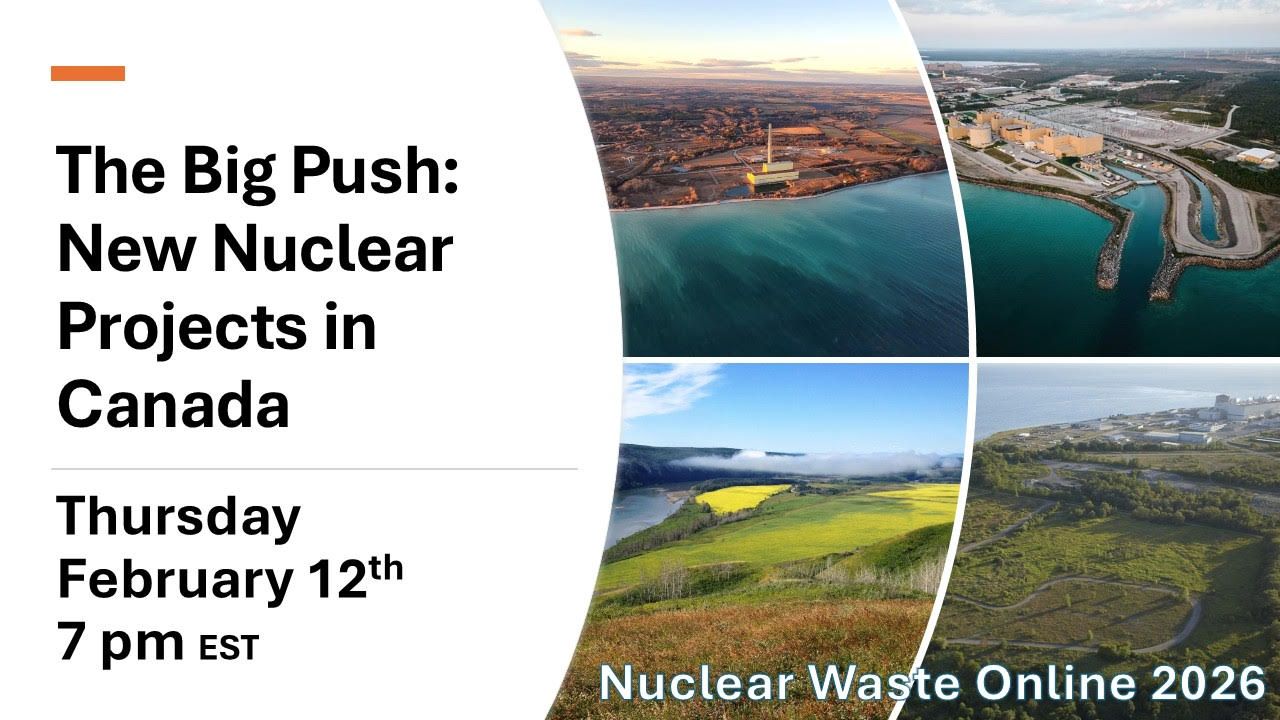
Thursday, February 12, 7 pm Eastern | 2nd of 4 sessions in the 2026 Nuclear Waste Online webinar series
Join a webinar on the push for new nuclear generation in Canada. Go to Northwatch.org to register or use the registration link https://us02web.zoom.us/webinar/register/WN_ZfWOf1GITqSRIZX8CB-A9w
-
Archives
- February 2026 (115)
- January 2026 (308)
- December 2025 (358)
- November 2025 (359)
- October 2025 (376)
- September 2025 (258)
- August 2025 (319)
- July 2025 (230)
- June 2025 (348)
- May 2025 (261)
- April 2025 (305)
- March 2025 (319)
-
Categories
- 1
- 1 NUCLEAR ISSUES
- business and costs
- climate change
- culture and arts
- ENERGY
- environment
- health
- history
- indigenous issues
- Legal
- marketing of nuclear
- media
- opposition to nuclear
- PERSONAL STORIES
- politics
- politics international
- Religion and ethics
- safety
- secrets,lies and civil liberties
- spinbuster
- technology
- Uranium
- wastes
- weapons and war
- Women
- 2 WORLD
- ACTION
- AFRICA
- Atrocities
- AUSTRALIA
- Christina's notes
- Christina's themes
- culture and arts
- Events
- Fuk 2022
- Fuk 2023
- Fukushima 2017
- Fukushima 2018
- fukushima 2019
- Fukushima 2020
- Fukushima 2021
- general
- global warming
- Humour (God we need it)
- Nuclear
- RARE EARTHS
- Reference
- resources – print
- Resources -audiovicual
- Weekly Newsletter
- World
- World Nuclear
- YouTube
-
RSS
Entries RSS
Comments RSS
 nuclear-news