A heightened solar cycle, by chance, reduced the exposure of Apollo astronauts to space radiation
The term “radiation” is used to describe energy that is emitted in the form of electromagnetic waves and/or particles. Humans can perceive some forms of electromagnetic radiation: visible light can be seen and infrared radiation (heat) can be felt.
Meanwhile, other varieties of radiation such as radio waves, X-rays and gamma rays are not visible and require special equipment to be observed. Worryingly, when high energy (ionising) radiation encounters matter, it can cause changes at the atomic level, including in our bodies.
There are a several sources of ionising radiation in space. The sun continuously pours out electromagnetic radiation across all wavelengths – especially as visible, infrared and ultraviolet radiation. Occasionally, enormous explosions on the solar surface known as solar flares release massive amounts of X-rays and gamma rays into space, as well as energetic electrons and protons (which make up the atomic nucleus along with neutrons). These events can pose a hazard to astronauts and their equipment even at distances as far from the sun as Earth, the moon and Mars.
Potentially dangerous radiation in space also originates from outside our solar system. Galactic cosmic rays are high energy, electrically charged atomic fragments that travel at nearly the speed of light and arrive from all directions in space.
On Earth, we are protected from most of this ionising radiation. The Earth’s strong magnetic field forms the magnetosphere, a protective bubble that diverts most dangerous radiation away, while the Earth’s thick atmosphere absorbs the rest.
But above the atmosphere, the magnetosphere traps energetic subatomic particles in two radiation regions. These “Van Allen belts” comprise an inner and outer torus of electrically charged particles.
Lucky escape
So how did NASA solve the problem of crossing the Van Allen belts? The short answer is they didn’t. To get to the moon, a spacecraft needs to be travelling quickly to climb far enough away from the Earth such that it can be captured by the moon’s gravity. The trans-lunar orbit that the Apollo spacecraft followed from the Earth to the moon took them through the inner and outer belts in just a few hours.
Although the aluminium skin of the Apollo spacecraft needed to be thin to be lightweight, it would have offered some protection. Models of the radiation belts developed in the run-up to the Apollo flights indicated that the passage through the radiation belts would not pose a significant threat to astronaut health. And, sure enough, documents from the period show that monitoring badges worn by the crews and analysed after the missions indicated that the astronauts typically received doses roughly less than that received during a standard CT scan of your chest.
But that is not the end of the story. To get to the moon and safely back home, the Apollo astronauts not only had to cross the Van Allen belts, but also the quarter of a million miles between the Earth and the moon – a flight that typically took around three days each way.
They also needed to operate safely while in orbit around the moon and on the lunar surface. During the Apollo missions, the spacecraft were outside the Earth’s protective magnetosphere for most of their flight. As such, they and their crews were vulnerable to unpredictable solar flares and events and the steady flux of galactic cosmic rays.
The crewed Apollo flights actually coincided with the height of a solar cycle, the periodic waxing and waning of activity that occurs every 11 years. Given that solar flares and solar energetic particle events are more common during times of heightened solar activity, this might seem like a cavalier approach to astronaut safety.
There is no doubt that the political imperative in the 1960s to put US astronauts on the moon “in this decade” was the primary driving factor in the mission timing, but there are counterintuitive benefits to spaceflight during solar activity maxima. The increased strength of the sun’s magnetic field that permeates the solar system acts like an umbrella – shielding the Earth, moon and planets from galactic cosmic rays and therefore lessening the impact on astronaut radiation doses. https://theconversation.com/space-radiation-the-apollo-crews-were-extremely-lucky-120339
No comments yet.
1 This Month
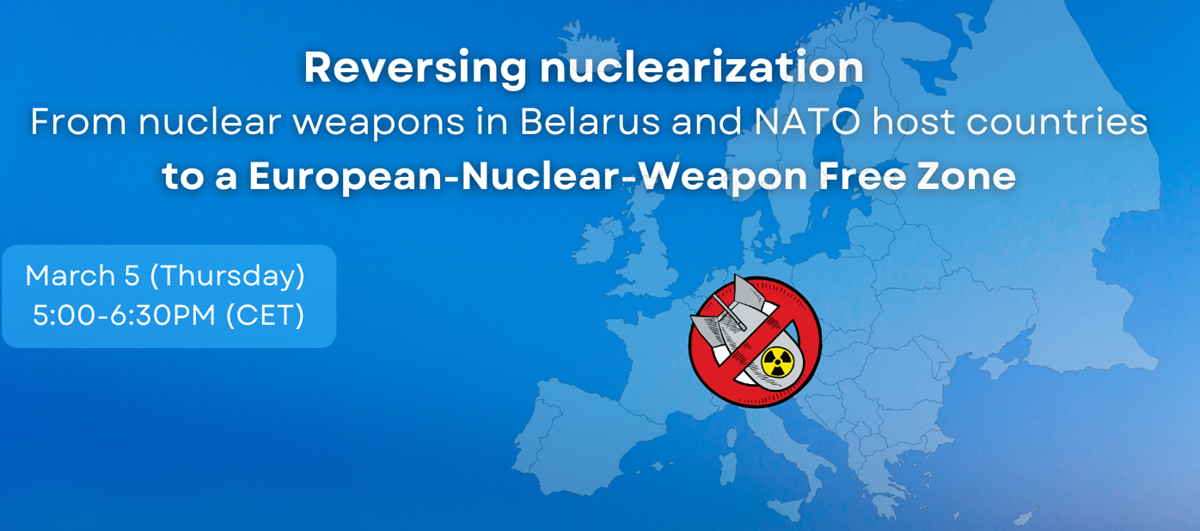
5 March -Online – Reversing nuclearization:
From nuclear weapons in Belarus and NATO host countries to a European-Nuclear-Weapon Free Zone
11am-12:30pm Eastern Time USA / 5pm-6:30pm CET

of the week – Advocating for a
nuclear free beach – https://www.samuellawrencefoundation.org/
The Samuel Lawrence Foundation advocates for a Nuclear Waste Free Beach at San Onofre, join us and take action!
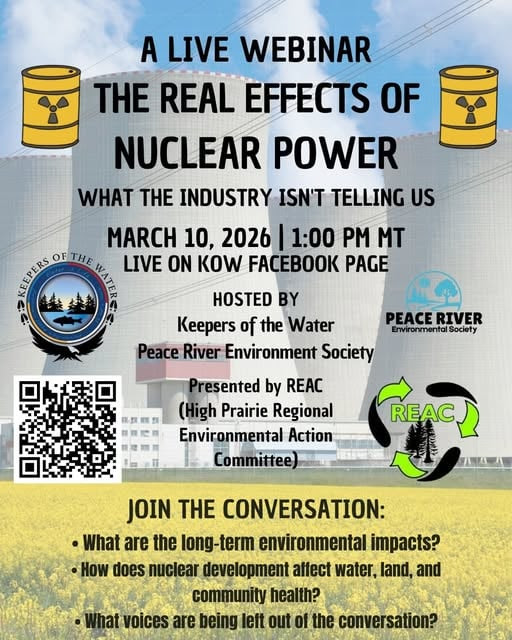
10 March A LIVE WEBINAR THE REAL EFFECTS OF NUCLEAR POWER
What the Industry Isn’t Telling Us
1:00 PM Mountain, 2 pm Central, 3 pm Eastern. Live on the Keepers of the Water Facebook page
18 March Webinar @ 1 PM EST: An Assessment of SMR Projects: The Case of Canada
register for the zoom:
https://us02web.zoom.us/webinar/register/WN_o8BIIOUvQ2ONJR1nta65DQ#/registration

of the week – STOP SMALL MODULAR REACTORS IN CANADA
To see nuclear-related stories in greater depth and intensity – go to https://nuclearinformation.wordpress.com
-
Archives
- March 2026 (51)
- February 2026 (268)
- January 2026 (308)
- December 2025 (358)
- November 2025 (359)
- October 2025 (376)
- September 2025 (258)
- August 2025 (319)
- July 2025 (230)
- June 2025 (348)
- May 2025 (261)
- April 2025 (305)
-
Categories
- 1
- 1 NUCLEAR ISSUES
- business and costs
- climate change
- culture and arts
- ENERGY
- environment
- health
- history
- indigenous issues
- Legal
- marketing of nuclear
- media
- opposition to nuclear
- PERSONAL STORIES
- politics
- politics international
- Religion and ethics
- safety
- secrets,lies and civil liberties
- spinbuster
- technology
- Uranium
- wastes
- weapons and war
- Women
- 2 WORLD
- ACTION
- AFRICA
- Atrocities
- AUSTRALIA
- Christina's notes
- Christina's themes
- culture and arts
- Events
- Fuk 2022
- Fuk 2023
- Fukushima 2017
- Fukushima 2018
- fukushima 2019
- Fukushima 2020
- Fukushima 2021
- general
- global warming
- Humour (God we need it)
- Nuclear
- RARE EARTHS
- Reference
- resources – print
- Resources -audiovicual
- Weekly Newsletter
- World
- World Nuclear
- YouTube
-
RSS
Entries RSS
Comments RSS
 nuclear-news
Leave a comment