India’s nuclear power programme unlikely to progress. Ocean energy is a better way.
The problem is apparently nervousness about handling liquid Sodium, used as a coolant. If Sodium comes in contact with water it will explode; and the PFBR is being built on the humid coast of Tamil Nadu. The PFBR has always been a project that would go on stream “next year”. The PFBR has to come online, then more FBRs would need to be built, they should then operate for 30-40 years, and only then would begin the coveted ‘Thorium cycle’!
 Why nuclear when India has an ‘ocean’ of energy, https://www.thehindu.com/business/Industry/why-nuclear-when-india-has-an-ocean-of-energy/article28230036.ece
If it is right that nothing can stop an idea whose time has come, it must be true the other way too — nothing can hold back an idea whose time has passed.
Just blow the dust off, you’ll see the writing on the wall: nuclear energy is fast running out of sand, at least in India. And there is something that is waiting to take its place.
India’s 6,780 MW of nuclear power plants contributed to less than 3% of the country’s electricity generation, which will come down as other sources will generate more.
Perhaps India lost its nuclear game in 1970, when it refused to sign – even if with the best of reasons – the Non Proliferation Treaty, which left the country to bootstrap itself into nuclear energy. Only there never was enough strap in the boot to do so.
In the 1950s, the legendary physicist Dr. Homi Bhabha gave the country a roadmap for the development of nuclear energy.
Three-stage programme
In the now-famous ‘three-stage nuclear programme’, the roadmap laid out what needs to be done to eventually use the country’s almost inexhaustible Thorium resources. The first stage would see the creation of a fleet of ‘pressurised heavy water reactors’, which use scarce Uranium to produce some Plutonium. The second stage would see the setting up of several ‘fast breeder reactors’ (FBRs). These FBRs would use a mixture of Plutonium and the reprocessed ‘spent Uranium from the first stage, to produce energy and more Plutonium (hence ‘breeder’), because the Uranium would transmute into Plutonium. Alongside, the reactors would convert some of the Thorium into Uranium-233, which can also be used to produce energy. After 3-4 decades of operation, the FBRs would have produced enough Plutonium for use in the ‘third stage’. In this stage, Uranium-233 would be used in specially-designed reactors to produce energy and convert more Thorium into Uranium-233 —you can keep adding Thorium endlessly.
Seventy years down the line, India is still stuck in the first stage. For the second stage, you need the fast breeder reactors. A Prototype Fast Breeder Reactor (PFBR) of 500 MW capacity, construction of which began way back in 2004, is yet to come on stream.
The problem is apparently nervousness about handling liquid Sodium, used as a coolant. If Sodium comes in contact with water it will explode; and the PFBR is being built on the humid coast of Tamil Nadu. The PFBR has always been a project that would go on stream “next year”. The PFBR has to come online, then more FBRs would need to be built, they should then operate for 30-40 years, and only then would begin the coveted ‘Thorium cycle’! Nor is much capacity coming under the current, ‘first stage’. The 6,700 MW of plants under construction would, some day, add to the existing nuclear capacity of 6,780 MW. The government has sanctioned another 9,000 MW and there is no knowing when work on them will begin. These are the home-grown plants. Of course, thanks to the famous 2005 ‘Indo-U.S. nuclear deal’, there are plans for more projects with imported reactors, but a 2010 Indian ‘nuclear liability’ legislation has scared the foreigners away. With all this, it is difficult to see India’s nuclear capacity going beyond 20,000 MW over the next two decades.
Now, the question is, is nuclear energy worth it all?
There have been three arguments in favour of nuclear enFor Fergy: clean, cheap and can provide electricity 24×7 (base load). Clean it is, assuming that you could take care of the ticklish issue of putting away the highly harmful spent fuel.
But cheap, it no longer is. The average cost of electricity produced by the existing 22 reactors in the country is around ₹2.80 a kWhr, but the new plants, which cost ₹15-20 crore per MW to set up, will produce energy that cannot be sold commercially below at least ₹7 a unit. Nuclear power is pricing itself out of the market. A nuclear power plant takes a decade to come up, who knows where the cost will end up when it begins generation of electricity?
Nuclear plants can provide the ‘base load’ — they give a steady stream of electricity day and night, just like coal or gas plants. Wind and solar power plants produce energy much cheaper, but their power supply is irregular. With gas not available and coal on its way out due to reasons of cost and global warming concerns, nuclear is sometimes regarded as the saviour. But we don’t need that saviour any more; there is a now a better option.
Ocean energy
The seas are literally throbbing with energy. There are at least several sources of energy in the seas. One is the bobbing motion of the waters, or ocean swells — you can place a flat surface on the waters, with a mechanical arm attached to it, and it becomes a pump that can be used to drive water or compressed air through a turbine to produce electricity. Another is by tapping into tides, which flow during one part of the day and ebb in another. You can generate electricity by channelling the tide and place a series of turbines in its path. One more way is to keep turbines on the sea bed at places where there is a current — a river within the sea. Yet another way is to get the waves dash against pistons in, say, a pipe, so as to compress air at the other end. Sea water is dense and heavy, when it moves it can punch hard — and, it never stops moving.
All these methods have been tried in pilot plants in several parts of the world—Brazil, Denmark, U.K., Korea. There are only two commercial plants in the world—in France and Korea—but then ocean energy has engaged the world’s attention.
For sure, ocean energy is costly today.
India’s Gujarat State Power Corporation had a tie-up with U.K.’s Atlantic Resources for a 50 MW tidal project in the Gulf of Kutch, but the project was given up after they discovered they could sell the electricity only at ₹13 a kWhr. But then, even solar cost ₹18 a unit in 2009! When technology improves and scale-effect kicks-in, ocean energy will look real friendly.
Initially, ocean energy would need to be incentivised, as solar was. Where do you find the money for the incentives? By paring allocations to the Department of Atomic Energy, which got ₹13,971 crore for 2019-20.
Also, wind and solar now stand on their own legs and those subsidies could now be given to ocean energy.
Russia’s nuclear power station for the Arctic- a floating Chernobyl?
Russia plans to tow a nuclear power station to the Arctic. Critics dub it a ‘floating Chernobyl’, By Mary Ilyushina, CNN, June 29, 2019 Murmansk, Russia (CNN)Next month, a floating nuclear power plant called the Akademik Lomonosov will be towed via the Northern Sea Route to its final destination in the Far East, after almost two decades in construction.
Tokyo monitoring USA-North Korea negotiations, hoping that there will be some real improvement
Japan hopes latest Trump-Kim meeting will help get nuclear, abduction talks moving again, Japan Times , 29 June
KYODO, Japan hopes the third meeting between U.S. President Donald Trump and North Korean leader Kim Jong Un on Sunday will reinvigorate stalled denuclearization talks and help resolve the issue of past abductions of Japanese citizens.
“The meeting could serve as an opportunity for North Korea to come out of its shell,” a senior Japanese Foreign Ministry official said.
Trump and Kim held talks in the Demilitarized Zone dividing the two Koreas and agreed to restart denuclearization talks within weeks following the rupture of their last summit in Hanoi in February.
Tokyo is closely monitoring whether the two countries will move forward negotiations on the denuclearization of North Korea and improve their ties, which could help the U.S. government set up a summit between Prime Minister Shinzo Abe and Kim, as the Japanese leader is hoping for……….https://www.japantimes.co.jp/news/2019/06/30/national/japan-hopes-latest-trump-kim-meeting-will-help-get-nuclear-abduction-talks-moving/#.XRkibT8zbGg
Doubts on the “usability” of Russia’s Submarines Armed with Nuclear Drone-Torpedoes
Russia Plans to Build Four Submarines Armed with Nuclear Drone-Torpedoes, Should America be worried? National Interest,
The Poseidon is the largest torpedo ever built, measuring approximately twenty-four meters long and 1.6-meters in diameter. Using a tiny nuclear reactor to power a pump-jet propulsion system, the Poseidon can traverse thousands of miles across oceans, autonomously navigating around obstacles and evading interception. U.S. intelligence estimates the Poseidon will complete testing by 2025 and enter operational service in 2027.
There remain large question-marks on the Poseidon’s exact capabilities and its operational concept.The Poseidon has been claimed to be capable of blistering-fast speeds of 100 knots, acoustic stealth, and diving as deep as 1,000 meters.
Of these claims, Poseidon’s low operating depth is considered most credible. By itself, this would render interception extremely difficult with current technology. For comparison, U.S. attack submarines (officially) operate down to 240 meters and travel up to 30 knots. Their Mark 48 torpedoes can accelerate to 55 knots and are not rated for much deeper than 800 meters………
In an email in 2018, Kofman wrote me that the Poseidon amounted to a “third-strike” revenge weapon, guaranteeing annihilation of an adversary’s coastal cities, even should Russia’s own nuclear forces be annihilated in a first strike.
While the Poseidon doesn’t fundamentally alter the balance of power, nor the horrifying destructiveness of nuclear war, it does show that humanity is inclined to continue devising ingenious but largely redundant new weapons of mass destruction.
Gaps revealed in Scotland’s nuclear convoy crash preparations

Gaps revealed in nuclear convoy crash preparations, A series of shortfalls in Scotland’s emergency arrangements for coping with a nuclear bomb convoy crash have been exposed by a Scottish Government review. The Ferret, Rob Edwards on June 28, 2019
Leaking radioactivity from an accident would put “strains” on the resources for monitoring the contamination of people, food and the environment, it says. Monitoring may be required “at scale” because of the large number of people involved.
The review reveals that the fire service hasn’t finalised its emergency procedures for convoy crashes, the police need to be better briefed and vetted, while the ambulance service is not told about convoy movements.
The emergency services have also failed to properly record the lessons they learn from emergency exercises, it adds.
Convoys comprising up to 20 or more military vehicles transport Trident nuclear warheads by road at least six times a year between the Royal Naval Armaments Depot at Coulport on Loch Long, near Glasgow, and the bomb factory at Burghfield in Berkshire. The warheads have to be regularly maintained at Burghfield.
Though the Ministry of Defence attempts to keep them secret, the convoys are often photographed, filmed and followed on social media. They travel close to major centres of population such as Glasgow, Edinburgh, Newcastle, Manchester and Birmingham.
The Ferret revealed on 23 June 2019 that an emergency exercise in Scotland called Astral Climb in 2016 had suffered communication breakdowns that could have put people at risk.
A report by campaigners in August 2017 warned that Scotland was “wholly unprepared” to deal with an accident or an attack on a convoy. When the issue was raised in the Scottish Parliament in May 2018, Scottish ministers promised to ask the police and fire inspectorates to conduct a review. ……..
According to the review, the hazards from a bomb convoy crash come from the “explosive, radioactive and toxic materials” that are transported. “The explosive hazard is the same as that which is associated with any chemical high explosive,” it said.
“The main radioactive materials are plutonium and uranium. Plutonium and uranium are both toxic and radioactive. The convoy may also contain other toxic (but not radioactive) materials such as beryllium and lithium. Beyond the immediate hazard area, the potential dispersion of airborne plutonium particles represents the dominant radioactive hazard.”The Scottish Government’s review listed five emergency procedures that have still to be “finalised” by the Scottish Fire and Rescue Service, including operational guidance and intelligence sharing. They should be completed “as a matter of priority”, the review concluded.
Police Scotland were criticised for only conducting a “verbal briefing” for officers prior to convoy movements. “There would be merit in considering a more formal process to provide a record of the information given to officers,” the review said.
“We found that Police Scotland uses appropriate measures to secure information but there was a lack of clarity regarding vetting and which staff and officers have access to sensitive information.”
The fire and police services were both upbraided for failing to record the lessons learned from emergency exercises such as Astral Climb in 2016. They were urged to introduce new systems to ensure that that improvements were made. ……….. https://theferret.scot/nuclear-convoy-safety-scotland-review/
UK’s Department for Business, Energy and Industrial Strategy reports solely on England’s responses re nuclear waste issues
BEIS 27th June 2019 The final policy is published in Implementing geological disposal: working
with communities, which updates and replaces the 2014 white paper,
Implementing Geological Disposal in England.
This consultation was on
behalf of the UK government and the Department of Agriculture, Environment
and Rural Affairs (DAERA) in Northern Ireland. The Department of
Agriculture, Environment and Rural Affairs (DAERA) has published separately
a summary of responses from respondents in Northern Ireland.
Future policy decisions in relation to geological disposal in Northern Ireland would be a
matter for the Northern Ireland Executive, which is currently suspended.
Accordingly, the summary of the responses and consequential final policy
decisions referred to in this document, apply solely to England. The Welsh
Government consulted in parallel with the UK government on policy proposals
for working with communities as part of a consent-based approach to finding
a location for a GDF for higher activity radioactive waste. The Welsh
Government will publish its response to the consultation shortly.
UK’s Department for Business, Energy and Industrial Strategy reports on progress in Radioactive Waste Management
BEIS 27th June 2019 Department for Business, Energy & Industrial Strategy, Eighth annual report explaining the background to the Geological Disposal Programme and covering progress between April 2017 and April 2019. In its
November 2010 response to the House of Lords Science and Technology Select
Committee’s report, Radioactive Waste Management: a Further Update (March
2010), the UK government committed to producing an annual report to
Parliament, setting out progress in relation to the management of higher
activity radioactive waste.
The eighth report sets out progress made in
relation to the management of higher activity radioactive waste for the
period April 2017 to April 2019. Following the publication of the updated
policy framework for higher activity radioactive waste in December 2018,
and the launch of the process to identify a location to develop a
geological disposal facility (GDF), this will be the last report produced
under our 2010 commitment.
What really went wrong at WIPP: An insider’s view of two accidents at the only US underground nuclear waste repository?
February 2014, two accidents happened at the Waste Isolation Pilot Plant
(WIPP) in New Mexico – the United States’ only underground repository
for nuclear waste.
key equipment and disabled the repository’s air monitoring system. Then a
chemical reaction breached a waste drum, causing a radiological release
that contaminated large areas of the repository.
Boards and a Technical Assessment Team identified the immediate causes of
the accidents and recommended remedial actions.
accidents and during the three years WIPP was closed, examines the larger
problems within the Energy Department and its contractors that set the
stage for the accidents. He places the blame on mismanagement at the Los
Alamos National Laboratory; structural problems created by a statutory
“fence” between the National Nuclear Security Administration and the
rest of the Energy Department, including the Office of Environmental
Management, which is responsible for disposing of the waste from more than
60 years of nuclear weapons production; and a breakdown of the “nuclear
culture.”
June 30 Energy News — geoharvey

Opinion: ¶ “American Farmers Can’t Afford This Administration’s Climate Apathy” • If only American farmers had the luxury of sharing this administration’s indifference to climate change. While millions of farmers are reeling from damage by rapidly shifting weather patterns, Trump’s agriculture chief just advises them to check the weather forecast. [The Hill] ¶ “How James […]
Halt the Nuclear Laundry at Lillyhall —

The following is a letter sent as an Open Letter to Allerdale Borough Council – some local press have printed it (above – Whitehaven News 26th June 2019) An Open letter to All Allerdale Borough Councillors, Nuclear Laundry Radiation Free Lakeland have been making waves about the new nuclear laundry operating on the Lillyhall […]
Scottish renewable electricity hits record levels — RenewEconomy

Scottish renewable electricity generation reached record levels in Q1 – enough to power approximately 88% of the country’s households for a year. The post Scottish renewable electricity hits record levels appeared first on RenewEconomy.
via Scottish renewable electricity hits record levels — RenewEconomy
Argument made for US Navy to reject large submarines in favour of small ones
Time to Downsize the Nuclear Attack Sub, The Maritime Executive BY CIMSEC 2019-06-28 [By Duane J. Truitt]
It is clear that U.S. Naval Sea Systems Command (NAVSEA) needs to re-engineer the next generation of SSNs. The bloated SSN(X) (now “New SSN”) concept should be rejected entirely because it is more of the same, but bigger and more expensive. Instead, the Navy should go for a new class of SSN that is far smaller and cheaper than the current Block 5 Virginias. …….. https://www.maritime-executive.com/editorials/op-ed-time-to-downsize-the-nuclear-attack-sub
Chernobyl survivors confirm the accuracy of the TV series, about nuclear radiation
Chernobyl survivors assess fact and fiction in TV series,
1 This Month
To see nuclear-related stories in greater depth and intensity – go to https://nuclearinformation.wordpress.com/
12 February – Webinar The Big Push: New Nuclear Projects in Canada
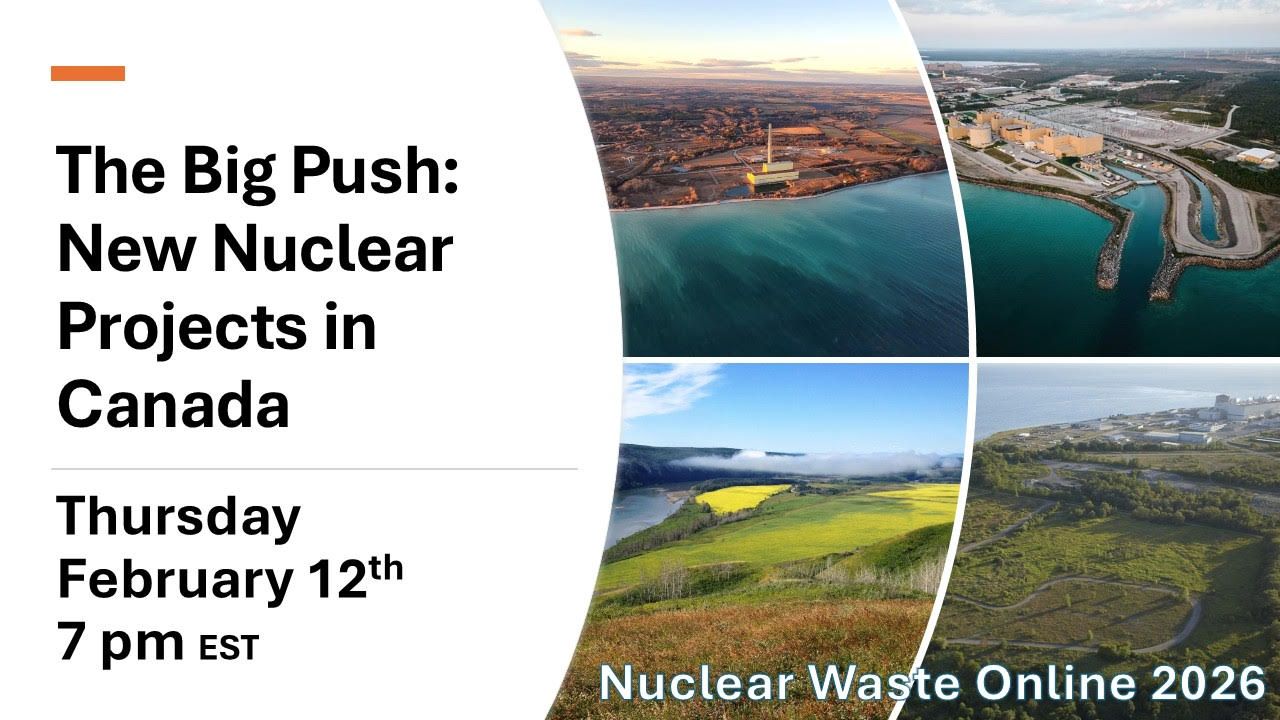
Thursday, February 12, 7 pm Eastern | 2nd of 4 sessions in the 2026 Nuclear Waste Online webinar series
Join a webinar on the push for new nuclear generation in Canada. Go to Northwatch.org to register or use the registration link https://us02web.zoom.us/webinar/register/WN_ZfWOf1GITqSRIZX8CB-A9w
-
Archives
- February 2026 (115)
- January 2026 (308)
- December 2025 (358)
- November 2025 (359)
- October 2025 (376)
- September 2025 (258)
- August 2025 (319)
- July 2025 (230)
- June 2025 (348)
- May 2025 (261)
- April 2025 (305)
- March 2025 (319)
-
Categories
- 1
- 1 NUCLEAR ISSUES
- business and costs
- climate change
- culture and arts
- ENERGY
- environment
- health
- history
- indigenous issues
- Legal
- marketing of nuclear
- media
- opposition to nuclear
- PERSONAL STORIES
- politics
- politics international
- Religion and ethics
- safety
- secrets,lies and civil liberties
- spinbuster
- technology
- Uranium
- wastes
- weapons and war
- Women
- 2 WORLD
- ACTION
- AFRICA
- Atrocities
- AUSTRALIA
- Christina's notes
- Christina's themes
- culture and arts
- Events
- Fuk 2022
- Fuk 2023
- Fukushima 2017
- Fukushima 2018
- fukushima 2019
- Fukushima 2020
- Fukushima 2021
- general
- global warming
- Humour (God we need it)
- Nuclear
- RARE EARTHS
- Reference
- resources – print
- Resources -audiovicual
- Weekly Newsletter
- World
- World Nuclear
- YouTube
-
RSS
Entries RSS
Comments RSS
 nuclear-news