Holtec’s involvement in the Ukraine’s Chernobyl’s dry store facility
 Halting Holtec – A Challenge for Nuclear Safety Advocates, CounterPunch, 7 June 19 “……….The California – Chernobyl Connection
Holtec and its client Edison would have the public believe that the San Onofre ISFSI is top of the line, up to date and state-of-the-art spent fuel handling. But that image seems to be contradicted by a recent Holtec press release and accompanying animated video that may seem to describe something like the kind of waste storage system many are advocating for at San Onofre.
On May 6, 2019, Holtec was “pleased to announce the start of final system-wide trials for Chernobyl’s dry store facility….” In the next two months, Holtec expects to complete “stem-to stern functional demonstrations of the [SF-2] spent fuel handling and storage processes before handing over the facility to Ukraine’s State owned enterprise Chernobyl Nuclear Power Plant (ChNPP).”
The Holtec press release boasts, “Dismembering more than 21,000 RBMK spent fuel assemblies in a special purpose “hotcell,” packaging those fuel assemblies in double walled canisters(DWCs), and transferring them from (open) water-cooled pools into hermetically sealed rugged helium-filled storage systems inside ventilated modules will mark a huge safety milestone for Ukraine.” https://youtu.be/GYR3GmkRZV0
Holtec is also building a project called a Central Spent Fuel Storage Facility (CSFSF) for the Ukrainian company Energoatom. Holtec says the “CSFSF will employ double-confinement DWCs, the world’s first double-walled, double-lid multi-purpose canister system for dry storage of spent nuclear fuel.”
Many may now be asking, “Why isn’t what’s good for Ukraine, also good for California?” But, Donna Gilmore points out that, “It’s a thin-wall canister system. Exterior wall is 3/8″ thick. Interior wall is 1/2″ thick. Both welded shut. Still must be stored in Holtec concrete cask with air vents. Still cannot be inspected, maintained, monitored or repaired inside or out.” …………https://www.counterpunch.org/2019/06/07/halting-holtec-a-challenge-for-nuclear-safety-advocates/
A ‘P5+4’ summit could break the nuclear deadlock
 A ‘P5+4’ summit could break the nuclear deadlock, The Strategist B1, 7 Jun 2019, |Ramesh Thakur In April, US President Donald Trump directed White House officials to identify pathways to new arms control agreements with Russia and China. If he’s looking for a big and bold new idea, here’s one: a ‘P5+4’ nuclear summit of the leaders of the nine countries that have the bomb.
The five permanent members of the UN Security Council (the ‘P5’) are the only countries recognised by the Nuclear Non-proliferation Treaty (NPT) as lawful possessors of nuclear weapons: China, France, Russia, the UK and the US. The ‘+4’ are the non-NPT nuclear-armed countries—India, Israel and Pakistan—and North Korea, the world’s only NPT defector state.
The existing architecture of nuclear arms control has served us well but is now crumbling. It was weakened first by the US exit from the Anti-Ballistic Missile Treaty in 2002 and then the indefinite delay of the entry into force of the Comprehensive Test-Ban Treaty. More recently, the deterioration has accelerated with the Trump administration’s abandonmentof the nuclear deal with Iran, the US and Russian suspensions of the Intermediate-Range Nuclear Forces Treaty, and the failure thus far to discuss extending New START beyond its expiry date of 2021.
There is a related problem. The NPT-centric architecture cannot accommodate the reality of four non-NPT possessor states. The architecture deficit is exacerbated by the fact that the agenda of nuclear arms control, non-proliferation and disarmament has stalled. The Korean denuclearisation-cum-peace-process has run out of steam. Last month’s meeting of the preparatory committee for the 2020 NPT review conference could not reach agreement on a common statement………..
Nuclear arms control satisfies all the key criteria for a summit. Like pandemics, climate change and biodiversity, nuclear threats spill across national boundaries and defy unilateral solutions. A summit of the nine political leaders, but only them, that is appropriately structured and has been adequately prepared can focus them to do what they alone can do—make tough choices from among competing interests and priorities. Cabinet ministers have single portfolio responsibilities. Heads of state and government have to oversee the entire agenda. With broad, overarching responsibilities, leaders can weigh priorities and balance interests across competing goals, sectors, and national and international objectives. ………
The first thing a nuclear summit should do is reaffirm the famous 1987 declaration by US President Ronald Reagan and Soviet leader Mikhail Gorbachev: ‘a nuclear war cannot be won and must never be fought’. If all nine leaders sign such a statement, it can be adopted as a resolution also by the UN Security Council and General Assembly. That would reverse the recent trend to normalise the discourse of possible nuclear-weapon use and, by hardening the normative boundary between nuclear and other weapons, perhaps also help to stop mission creep with respect to the roles and functions of nuclear weapons………
A summit-level agreement on a few important items would be a powerful stimulus to restarting stalled talks on other outstanding items like bringing the Comprehensive Nuclear-Test-Ban Treaty into force and commencing negotiations on a fissile materials cut-off treaty. Even a modestly successful summit would tell the world that the nine powers take seriously their responsibility for preserving nuclear peace………https://www.aspistrategist.org.au/a-p54-summit-could-break-the-nuclear-deadlock/
Texas Governor vetoes a Bill (on domestic violence) because a pro nuclear amendment was tacked onto it at the last minute
Greg Abbott Signals Limits To Nuclear Waste Disposal In Texas With Bill Veto https://www.texasstandard.org/stories/greg-abbott-signals-limits-to-nuclear-waste-disposal-in-texas-with-bill-veto/ – Written by Caroline Covington
He vetoed a bill in which a radioactive waste provision was tacked on, at the last minute, to a domestic violence bill that had broad support in the Texas House and Senate. By June 7, 2019
A bill to help survivors of domestic violence ended up passing in the Texas Legislature with an odd amendment: a provision that would temporarily waive fees for storing radioactive waste in West Texas. But Gov. Greg Abbott was displeased with the waiver, and vetoed the bill altogether.
Asher Price, energy and environment reporter for the Austin American-Statesman, says the two very different issues ended up being in the same bill because Rep. Poncho Nevárez, a Democrat from Eagle Pass, added an amendment at the last minute.
“The person at the dais, who was leading the House at the time said, ‘Is there any objection?’ Hearing none [they] gaveled in, and suddenly this amendment was attached to this bill,” Price says.
Listen to the rest of the story in the player above. [on original]
It is absurd to question whether we can afford to keep our planet liveable
 Guardian Fiona Harvey 7 June 19, The chancellor has warned against cutting UK emissions to net zero. But failing to act will have dire consequences.
The chancellor, Philip Hammond, has written to the prime ministerto warn against adopting the strict targets on greenhouse gas emissions recommended by the government’s advisers.
His intervention, first reported by the Financial Times (£), raises the important question of whether or not it makes economic sense to save the planet.
If the question sounds absurd, that’s because it is. If we fail to move to a low-carbon economy, the consequences will be dire. According to the Intergovernmental Panel on Climate Change, the body of the world’s leading climate scientists convened by the UN, we must drastically reduce our emissions in the next decade to avoid a catastrophic situation in which droughts, floods, heatwaves and extreme weather across the globe devastate lives, destroy agriculture, lay waste to wildlife and force millions to flee.
Set against that, the costs – of £50bn a year in investment, according to the Committee on Climate Change(CCC), which set out the case last month for a target of net-zero emissions by 2050, or £70bn a year, according to the Department for Business, Energy and Industrial Strategy – of maintaining our current lifestyles and orderly existences are trivial. The UK’s economy is worth roughly £2tn a year at present, so Hammond’s estimate of a £1tn cumulative cost by 2050 amounts to less than half of one year’s GDP in three decades.
Doug Parr, the chief scientist for Greenpeace UK, said: “The Treasury is putting their ideology before our wellbeing, and trying to shape the public debate for political ends. If you want to know whether a policy is good, include the benefits as well as the costs. In this case, the benefits include an economy fit for the 21st century, cleaner air, warmer homes, and maximising the chances of civilisation surviving. If reality doesn’t fit with the Treasury models, it’s the models that need to change.”…….
When we ask whether we can afford to tackle climate change, we are really asking – as the IPCC report and decades of climate science show us – whether we want humanity to survive in anything like our current structures. If our economic system stands in the way of doing so, perhaps it is the economics that are at fault. And economics, like politics, are just a human construct. The physics of the earth’s atmosphere are not. https://www.theguardian.com/environment/2019/jun/06/it-is-absurd-question-whether-we-can-afford-keep-our-planet-liveable
Australia’s highly regarded ABC Chair, Ita Buttrose, speaks out on media freedom
 http://about.abc.net.au/statements/statement-by-ita-buttrose-abc-chair-on-the-publics-right-to-know/
An untrammelled media is important to the public discourse and to democracy. It is the way in which Australian citizens are kept informed about the world and its impact on their daily lives.
Observance of this basic tenet of the community’s right to know has driven my involvement in public life and my career in journalism for almost five decades.
The raid is unprecedented – both to the ABC and to me.
In a frank conversation with the Minister for Communications, Cyber Safety and the Arts, Paul Fletcher, yesterday, I said the raid, in its very public form and in the sweeping nature of the information sought, was clearly designed to intimidate.
It is impossible to ignore the seismic nature of this week’s events: raids on two separate media outfits on consecutive days is a blunt signal of adverse consequences for news organisations who make life uncomfortable for policy makers and regulators by shining lights in dark corners and holding the powerful to account.
I also asked for assurances that the ABC not be subject to future raids of this sort. Mr Fletcher declined to provide such assurances, while noting the “substantial concern” registered by the Corporation.
There has been much reference in recent days to the need to observe the rule of law.
While there are legitimate matters of national security that the ABC will always respect, the ABC Act and Charter are explicit about the importance of an independent public broadcaster to Australian culture and democracy.
Public interest is best served by the ABC doing its job, asking difficult questions and dealing with genuine whistle-blowers who risk their livelihoods and reputations to bring matters of grave import to the surface. Neither the journalists nor their sources should be treated as criminals.
In my view, legitimate journalistic endeavours that expose flawed decision-making or matters that policy makers and public servants would simply prefer were secret, should not automatically and conveniently be classed as issues of national security.
The onus must always be on the public’s right to know. If that is not reflected sufficiently in current law, then it must be corrected.
As ABC Chair, I will fight any attempts to muzzle the national broadcaster or interfere with its obligations to the Australian public. Independence is not exercised by degrees. It is absolute.
___________________________________________________________
For further information contact:
Peter Munro, ABC Communications
munro.peter@abc.net.au
Australia’s Home Affairs Minister Peter Dutton ‘didn’t know anything” about police raids on media offices and home. Really???
 Peter Dutton denies prior knowledge of AFP raids on ABC and News Corp, Guardian, Sarah Martin and Kate Lyons 5 Jun 2019
Following two consecutive days of raids on journalists who had reported on defence matters, Dutton sought to distance himself from the police investigations, saying they were independent from government./////https://www.theguardian.com/australia-news/2019/jun/05/peter-dutton-denies-prior-knowledge-of-afp-raids-on-abc-and-news-corp?CMP=soc_567&fbclid=IwA
Putin warns New START nuclear arms treaty at risk
Russia: Putin warns New START nuclear arms treaty at risk, Aljazeera, 7 June 19,
Russian president accuses US of shunning talks on extending the nuclear arms reduction treaty, which expires in 2021. President Vladimir Putin has said Russia was prepared to drop a nuclear weapons agreement treaty with the United States and warned of “global catastrophe” if Washington keeps dismantling a global arms control regime.
Speaking at an economic forum in St Petersburg, Putin said Washington showed no genuine interest in conducting talks on extending the New START treaty which caps the number of nuclear warheads well below Cold War limits.
“If no one feels like extending the agreement – New START – well, we won’t do it then,” Putin said.
“We have said a hundred times that we are ready [to extend it], but no one is holding any talks with us. The negotiations process hasn’t been arranged at all.”
The treaty was signed by US President Barack Obama and his Russian counterpart Dmitry Medvedev in Prague in 2010.
The accord, which expires in 2021, limits each country to no more than 1,550 deployed nuclear warheads and 700 deployed missiles and bombers.
Together with another agreement known as the Intermediate-Range Nuclear Forces (INF) treaty, New START is considered a centrepiece of superpower arms control.
The US pulled out of the INF in February, accusing Russia of violating its terms. Moscow, which has denied any breaches, followed suit,
Nuclear arms race
Putin said the potential implications of letting the New START treaty expire would be huge, suggesting its demise could fuel a nuclear arms race.
“If we don’t keep this ‘fiery dragon’ under control, if we let it out of the bottle – God forbid – this could lead to global catastrophe,” Putin said.
“There won’t be any instruments at all limiting an arms race, for example, the deployment of weapons in space.”
“This means that nuclear weapons will be hanging over every one of us all the time.”
Putin said he was puzzled by the absence of a global discussion…….https://www.aljazeera.com/news/2019/06/russia-putin-warns-start-nuclear-arms-treaty-risk-190606163914989.html
As Uk’s nuclear power plans fumble, time to boost renewable energy to ensure electricity supply
Report: Boost renewables for ‘no-regrets insurance’ against nuclear gap Business Green, Michael Holder 7 June 19, Boosting renewable power sources in the UK would provide “no-regrets insurance” against a looming gap in the UK’s nuclear capacity, playing a crucial role in reaching net zero greenhouse gas emissions by 2050 in the process, a report today by a leading think tank has found.
The government’s plans for a fleet of new nuclear plants in the UK are facing major challenges after recent decisions by Hitachi and Toshiba to halt projects in North Wales and Cumbria respectively, creating a shortfall between official projections of future nuclear capacity and what the market appears set to deliver.
Meanwhile, the discovery of cracks in graphite bricks around the core of nuclear reactors – such as that which has led to Hunterston B power station in Ayrshire shutting down a reactor – has raised fears some of the UK’s existing nuclear plants could yet close earlier than planned.
The industry’s travails could potentially leave the UK with a looming nuclear capacity gap, which could have huge implications for both the electricity system and the UK’s long-term carbon targets, according to the Energy and Climate Intelligence Unit (ECIU).
Assessing the potential impact of a future nuclear energy gap, the report argues that accelerating the rollout of renewables alongside energy storage and grid flexibility technologies to make up the shortfall in expected capacity during the late 2020s and early 2030s would prove a “no-regrets” solution……
Reports suggests the government may legislate for a 2050 net zero emissions target in the coming week, and if so the government will have to increase its ambitions for renewables in the coming years, said ECIU director Richard Black.
“It would economically pragmatic to accelerate decarbonisation in the near-term by building up capacity in low-cost renewables and flexibility mechanisms,” he explained. “If it turns out they’re not needed, all ministers will have done is to accelerate decarbonisation which they say they need to do anyway; so this really is a no-regrets pathway. But it’s one where decisions are needed soon.” https://www.businessgreen.com/bg/news/3076976/report-boost-renewables-for-no-regrets-insurance-against-nuclear-gap
Tennessee Valley Authority’s new whistleblowing program – to stop safety complaints and silence workers.
 Commission asked to review new nuclear whistleblower program https://fox17.com/news/local/commission-asked-to-review-new-nuclear-whistleblower-program, by Associated Press, June 7th 2019 KNOXVILLE, Tenn. (AP)
KNOXVILLE, Tenn. (AP) — An attorney is asking the U.S. Nuclear Regulatory Commission to review the Tennessee Valley Authority’s new whistleblowing program before it’s implemented.
The Knoxville News Sentinel reports attorney Billie Garde filed a letter Tuesday saying TVA fired some of its nuclear employee whistleblowing program managers. Garde represents the managers. She says the move is designed to stop safety complaints and silence workers.
TVA’s Chief Nuclear Officer Tim Rausch says the whistleblower program is being improved after worker complaints and other criticism. He says the managers weren’t fired but don’t qualify for the new positions within the overhauled program. Rausch says they are being offered other positions within the utility.
TVA has three nuclear plants: Browns Ferry in Athens, Alabama; Sequoyah in Soddy-Daisy; and Watts Bar in Spring City
Plan to move Oversight Bureau at Los Alamos would weaken the monitoring of nuclear radiation releases
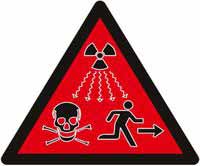
The Environment Department says it is conducting a proper assessment to determine where the Oversight Bureau should be located. Nevertheless, DOE provides about $1.8 million annually to the LANL Oversight Bureau under what was called an agreement in principle between the two agencies. It covered oversight of both the environmental releases from nuclear weapons work and cleanup at LANL. It is now called a memorandum of understanding and is restricted to cleanup.
facilities, personnel, and information. http://nuclearactive.org/ana-opposes-new-doe-order/, http://nuclearactive.org/doe-must-hold-hearings-in-new-mexico-about-order-140-1/, and http://nuclearactive.org/santa-fe-county-commissioners-call-for-suspension-of-doe-order-140-1/. At the same time, recent reports about the use of carbon steel valves in pipelines carrying corrosive radioactive liquid waste again demonstrates that LANL needs more oversight, not less. https://www.dnfsb.gov/sites/default/files/document/18101/Los%20Alamos%20Week%20Ending%20May%203%202019.pdf, and https://nukewatch.org/2019/05/31/faulty-radioactive-liquid-waste-valves-raise-crucial-plutonium-pit-production-and-safety-board-issues/
Joni Arends, of CCNS, urged people to get involved to keep the Oversight Bureau in Los Alamos. She said, “The new Environment Department Secretary, James Kenney, needs to understand the importance of the Oversight Bureau staying in Los Alamos for those living downwind and downstream of LANL. Please contact Secretary Kenney and tell him your story about what the Oversight Bureau means to you. Explain why it needs to remain in Los Alamos. His phone number is 505 827-2855 and his email is James.Kenney@state.nm.us. Please copy your correspondence to your congressperson and your local media. Thank you.”
UK Labour party has accused the government of “actively dismantling” the UK’s solar power industry
the UK’s solar power industry after new installations by households
collapsed by 94% last month. Rebecca Long-Bailey, the shadow business
secretary, used prime minister’s questions to challenge the
government’s record on climate action after scrapping subsidies for
domestic solar panels from April. Standing in for Jeremy Corbyn,
Long-Bailey said solar power had the potential to cut household bills and
carbon emissions while creating thousands of jobs. “But the government,
for some reason, appears to be determined to kill it off, while continuing
to cheerlead for fracking,” she said. (NB – story by Jillian Ambrose
who has moved from the Telegraph to replace Adam Vaughan at the Guardian).https://www.theguardian.com/environment/2019/jun/05/home-solar-panel-installations-fall-by-94-as-subsidies-cut
Chernobyl miniseries could not be made in the real Chernobyl wasteland – radiation would have damaged the film kit
Not at the real Chernobyl wasteland that still stands today in what is now Ukraine, but rather in Lithuania, mainly at Chernobyl’s sister power plant, Ignalina, with other portions filmed in suitably… (subscribers only) https://www.telegraph.co.uk/travel/destinations/europe/lithuania/articles/chernobyl-tv-show-real-filming-locations/
The high costs of bailing out FirstEnergy Solutions’ two Ohio nuclear plants

Costs of FirstEnergy nuclear bailout bill could exceed out-of-pocket subsidies, An analysis by grid operator PJM considers losses if Ohio nuclear subsidies deter new generation. Energy News Network,
A bill to subsidize FirstEnergy Solutions’ two Ohio nuclear plants could cost customers even more than the hundreds of millions of dollars in direct charges proposed to prop up those plus two older coal plants.
A new analysis from grid operator PJM concludes that keeping FirstEnergy’s nuclear plants open could also cost ratepayers as much as $16 million a year in lost savings by discouraging cheaper gas generation from coming online.
Asim Haque, PJM’s executive director for strategic policy and external affairs,testified about the new analysis before the Ohio Senate Energy and Public Utilities Committee on Wednesday.
“PJM’s findings for consumer savings from power plant competition confirm that a competitive generation market is better for millions of Ohio consumers than charging them for bailouts and subsidies under House Bill 6,” said J.P. Blackwood, a spokesperson for the Office of the Ohio Consumers’ Counsel………https://energynews.us/2019/06/06/us/costs-of-firstenergy-nuclear-bailout-bill-could-exceed-out-of-pocket-subsidies/
30 years ago, voters forced shutdown of Rancho Seco nuclear plant in Sacramento County
Phil Angelides, the former state treasurer, was a local businessman in Sacramento at the time, and he was involved in the movement to close Rancho Seco.
“The plant was an enormous liability for Sacramento,” Angelides said. “It was first generation plant technology, it just didn’t function.”
Angelides said Rancho Seco was preventing Sacramento from developing a diversified, forward-looking energy portfolio capable of sustaining the region’s growth because of how costly and inefficient the plant was.
The Sacramento Municipal Utility District opened the Rancho Seco power plant, about a 30-minute drive from downtown Sacramento, for commercial operation in 1975, but for years it was plagued by a series of outages.
In 1985, operators lost control of the plant during an “overcooling” event, which forced an automatic shutdown. The resulting 27-month outage cost SMUD $400 million, according to a report from the Union of Concerned Scientists.
SMUD also paid $745,000 in federal fines for various violations related to the facility through 1989, The Sacramento Bee reported.
Outcry against Rancho Seco unfolded when the safety of nuclear energy was in question. In 1979, the Three Mile Island nuclear power plant near Harrisburg, Pa. suffered a partial meltdown, and in 1986, the accident at Chernobyl became the worst nuclear disaster in human history……..
Just days after the Three Mile Island disaster, people climbed over the fence at Rancho Seco during a protest demonstration.
More than 100 other demonstrators cheered with cries of “shut down now, no meltdown later” as 13 protestors climbed the main gate of the plant. The 13 people were arrested for trespassing, and some demonstrators vowed to go on a hunger strike until the 13 were released from jail………
After the plant shut down, SMUD diversified its energy supply and increased investment in energy efficiency programs that have resulted in customer savings of more than $600 million, SMUD officials said.
While the plant was still running, SMUD built one of the first utility-scale solar plants at Rancho Seco, which was decommissioned and replaced in 2016. The solar array powers downtown buildings like the state Capitol and the Golden 1 Center.
SMUD is now constructing the Rancho Seco Solar 2 project, a second array of solar panels that will be the largest facility in the county when it comes online. Construction is scheduled to start in August……..
Still, the shutdown process for the plant was long and arduous. It took 20 years for the plant to be fully decommissioned by the federal government, costing ratepayers $500 million, The Bee reported.
Disposal of the radioactive waste at the plant hasn’t yet been settled, either. SMUD spends $5 million per year to provide security and oversee proper storage of spent uranium.
The materials have been in dry storage at Rancho Seco since decommission and will remain there until the federal government can come up with a solution, according to SMUD.
Rep. Doris Matsui, D-Sacramento, on Thursday introduced a bill that would initiate a program for both decommissioned plants like Rancho Seco and active plants to store spent nuclear fuel in a consolidated program at the Department of Energy. https://www.sacbee.com/news/local/article231253743.html
Danger of cracks in nuclear reactors
 AI technology improves critical crack detection in nuclear reactors, bridges, buildings, Phys Org, JUNE 7, 2019, by Purdue University A tiny crack in a nuclear reactor, skyscraper, bridge or dam can cause catastrophic consequences. The Minneapolis bridge collapse, which killed 13 people in 2007, is just one example of what can happen when structural integrity is compromised.
Unidentified or under-identified structural damage in nuclear reactors can be cataclysmic. Inspection of critical systems such as nuclear reactors is complicated and time-consuming.
Videos captured by an automatic crack detection system can easily misidentify small scratches or welds as cracks, so technicians must review videos frame by frame. It is a time-consuming process with opportunities for human errors.
A system under development at Purdue University uses artificial intelligence to detect cracks captured in videos of nuclear reactors. The system analyzes video, frame by frame, to detect any cracks. …….https://phys.org/news/2019-06-ai-technology-critical-nuclear-reactors.html
1 This Month

of the week – Shut Down Drone Warfare!


Tell the Ukrainian Government to Drop Prosecution of Peace Activist Yurii Sheliazhenko

Petition to revoke the licensing of the Near Surface Nuclear Disposal Facility (NSDF) at Chalk River. https://www.ourcommons.ca/petitions/en/Petition/Details?Petition=e-7247
To see nuclear-related stories in greater depth and intensity – go to https://nuclearinformation.wordpress.com
-
Archives
- April 2026 (103)
- March 2026 (251)
- February 2026 (268)
- January 2026 (308)
- December 2025 (358)
- November 2025 (359)
- October 2025 (376)
- September 2025 (257)
- August 2025 (319)
- July 2025 (230)
- June 2025 (348)
- May 2025 (261)
-
Categories
- 1
- 1 NUCLEAR ISSUES
- business and costs
- climate change
- culture and arts
- ENERGY
- environment
- health
- history
- indigenous issues
- Legal
- marketing of nuclear
- media
- opposition to nuclear
- PERSONAL STORIES
- politics
- politics international
- Religion and ethics
- safety
- secrets,lies and civil liberties
- spinbuster
- technology
- Uranium
- wastes
- weapons and war
- Women
- 2 WORLD
- ACTION
- AFRICA
- Atrocities
- AUSTRALIA
- Christina's notes
- Christina's themes
- culture and arts
- Events
- Fuk 2022
- Fuk 2023
- Fukushima 2017
- Fukushima 2018
- fukushima 2019
- Fukushima 2020
- Fukushima 2021
- general
- global warming
- Humour (God we need it)
- Nuclear
- RARE EARTHS
- Reference
- resources – print
- Resources -audiovicual
- Weekly Newsletter
- World
- World Nuclear
- YouTube
-
RSS
Entries RSS
Comments RSS
 nuclear-news