Comparing the radioactive pollution from Fukushima and Chernobyl nuclear accidents
|
Chernobyl vs. Fukushima: Which Nuclear Meltdown Was the Bigger Disaster? Live Science By | May 24, 2019 The new HBO series “Chernobyl” dramatizes the accident and horrific aftermath of a nuclear meltdown that rocked the Ukraine in 1986. Twenty-five years later, another nuclear catastrophe would unfold in Japan, after the magnitude 9.0 Tohoku earthquake and subsequent tsunami triggered a disastrous system failure at Fukushima Daiichi Nuclear Power Plant.Both of these accidents released radiation; their impacts were far-reaching and long-lasting. But how do the circumstances of Chernobyl and Fukushima compare to each other, and which event caused more damage? [5 Weird Things You Didn’t Know About Chernobyl] Only one reactor exploded at Chernobyl, while three reactors experienced meltdowns at Fukushima. Yet the accident at Chernobyl was far more dangerous, as damage to the reactor core unspooled very rapidly and violently, said Edwin Lyman, a senior scientist and acting director for the Union of Concerned Scientists Nuclear Safety Project. “As a result, more fission products were released from the single Chernobyl core,” Lyman told Live Science. “At Fukushima the cores overheated and melted but did not experience violent dispersal, so a much smaller amount of plutonium was released.” In both accidents, radioactive iodine-131 posed the most immediate threat, but with a half-life of eight days, meaning half of the radioactive material decayed within that time, its effects soon dissipated. In both meltdowns, the long-term hazards arose primarily from strontium-90 and cesium-137, radioactive isotopes with half-lives of 30 years. And Chernobyl released far more cesium-137 than Fukushima did, according to Lyman. “About 25 petabecquerels (PBq) of cesium-137 was released to the environment from the three damaged Fukushima reactors, compared to an estimate of 85 PBq for Chernobyl,” he said (PBq is a unit for measuring radioactivity that shows the decay of nuclei per second). What’s more, Chernobyl’s raging inferno created a towering plume of radioactivity that dispersed more widely than the radioactivity released by Fukushima, Lyman added. Sickness, cancer and deathAt Chernobyl, two plant workers were killed by the initial explosion and 29 more workers died from radiation poisoning over the next three months, Time reported in 2018. Many of those who died had knowingly exposed themselves to deadly radiation as they worked to secure the plant and prevent further leaks. Government officials relocated an estimated 200,000 people from the region, according to the International Atomic Energy Agency. In the years that followed, cancers in children skyrocketed in the Ukraine, up by more than 90%, according to Time. A report issued by United Nations agencies in 2005 approximated that 4,000 people could eventually die of radiation exposure from Chernobyl. Greenpeace International estimated, in 2006, that the number of fatalities in the Ukraine, Russia and Belarus could be as high as 93,000 people, with 270,000 people in those countries developing cancers who otherwise would not have done so…….. The extent of Fukushima’s environmental impact is still unknown, though there is already some evidence that genetic mutations are on the rise in butterflies from the Fukushima area, producing deformations in their wings, legs and eyes. [See Photos of Fukushima’s Deformed Butterflies] ……. radiation levels around Chernobyl can vary widely. Aerial drone surveys revealed in May that radiation in Ukraine’s Red Forest was concentrated in previously unknown “hotspots,” which scientists outlined in the region’s most accurate radiation maps to date. The Fukushima nuclear power plant is still open and active (though the reactors that exploded remain closed); nonetheless, ongoing concerns about safety linger. The Tokyo Electric Power Company (TEPCO) recently announced that it would not hire foreign workers coming to Japan under newly relaxed immigration rules……. https://www.livescience.com/65554-chernobyl-vs-fukushima.html |
|
|
No comments yet.
1 This Month
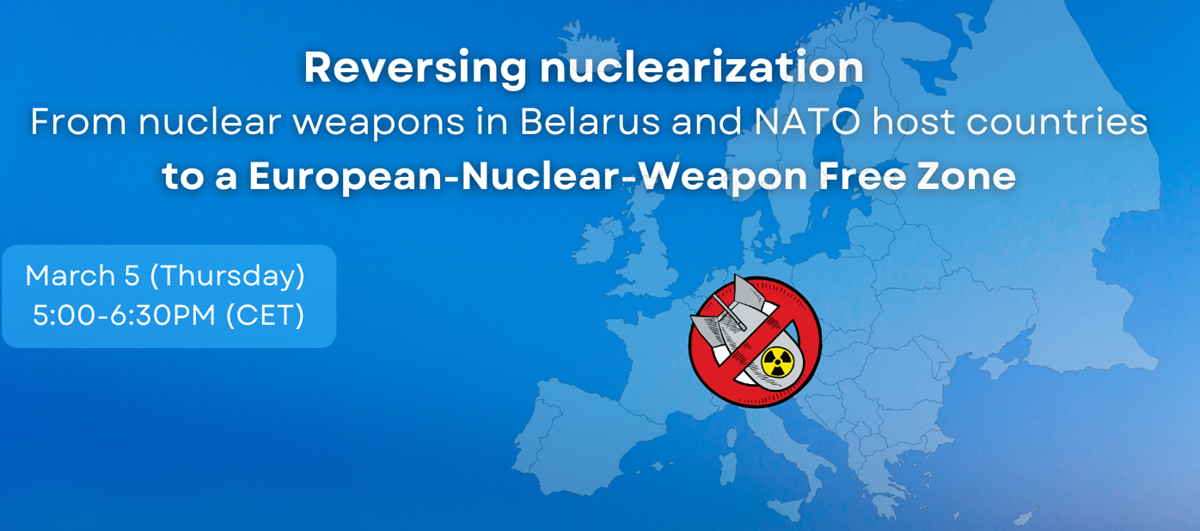
5 March -Online – Reversing nuclearization:
From nuclear weapons in Belarus and NATO host countries to a European-Nuclear-Weapon Free Zone
11am-12:30pm Eastern Time USA / 5pm-6:30pm CET

of the week – Advocating for a
nuclear free beach – https://www.samuellawrencefoundation.org/
The Samuel Lawrence Foundation advocates for a Nuclear Waste Free Beach at San Onofre, join us and take action!

10 March A LIVE WEBINAR THE REAL EFFECTS OF NUCLEAR POWER
What the Industry Isn’t Telling Us
1:00 PM Mountain, 2 pm Central, 3 pm Eastern. Live on the Keepers of the Water Facebook page

18 March Webinar @ 1 PM EST: An Assessment of SMR Projects: The Case of Canada
register for the zoom:
https://us02web.zoom.us/webinar/register/WN_o8BIIOUvQ2ONJR1nta65DQ#/registration

of the week – STOP SMALL MODULAR REACTORS IN CANADA
To see nuclear-related stories in greater depth and intensity – go to https://nuclearinformation.wordpress.com
-
Archives
- March 2026 (51)
- February 2026 (268)
- January 2026 (308)
- December 2025 (358)
- November 2025 (359)
- October 2025 (376)
- September 2025 (258)
- August 2025 (319)
- July 2025 (230)
- June 2025 (348)
- May 2025 (261)
- April 2025 (305)
-
Categories
- 1
- 1 NUCLEAR ISSUES
- business and costs
- climate change
- culture and arts
- ENERGY
- environment
- health
- history
- indigenous issues
- Legal
- marketing of nuclear
- media
- opposition to nuclear
- PERSONAL STORIES
- politics
- politics international
- Religion and ethics
- safety
- secrets,lies and civil liberties
- spinbuster
- technology
- Uranium
- wastes
- weapons and war
- Women
- 2 WORLD
- ACTION
- AFRICA
- Atrocities
- AUSTRALIA
- Christina's notes
- Christina's themes
- culture and arts
- Events
- Fuk 2022
- Fuk 2023
- Fukushima 2017
- Fukushima 2018
- fukushima 2019
- Fukushima 2020
- Fukushima 2021
- general
- global warming
- Humour (God we need it)
- Nuclear
- RARE EARTHS
- Reference
- resources – print
- Resources -audiovicual
- Weekly Newsletter
- World
- World Nuclear
- YouTube
-
RSS
Entries RSS
Comments RSS
 nuclear-news
Leave a comment