As Tokyo Olympics approach, Japan’s futile push to repopulate cleaned-up parts of radioactive areas of Fukushima
|
Japan’s nuclear horror relived as people return to Fukushima’s ghost towns, It is eight years since a devastating tsunami caused three reactors to meltdown at the Fukushima Daiichi nuclear power station on the north-east coast of Japan Mirror UK, Emily RetterSenior Feature Writer, Mirror UK, 29 Apr19
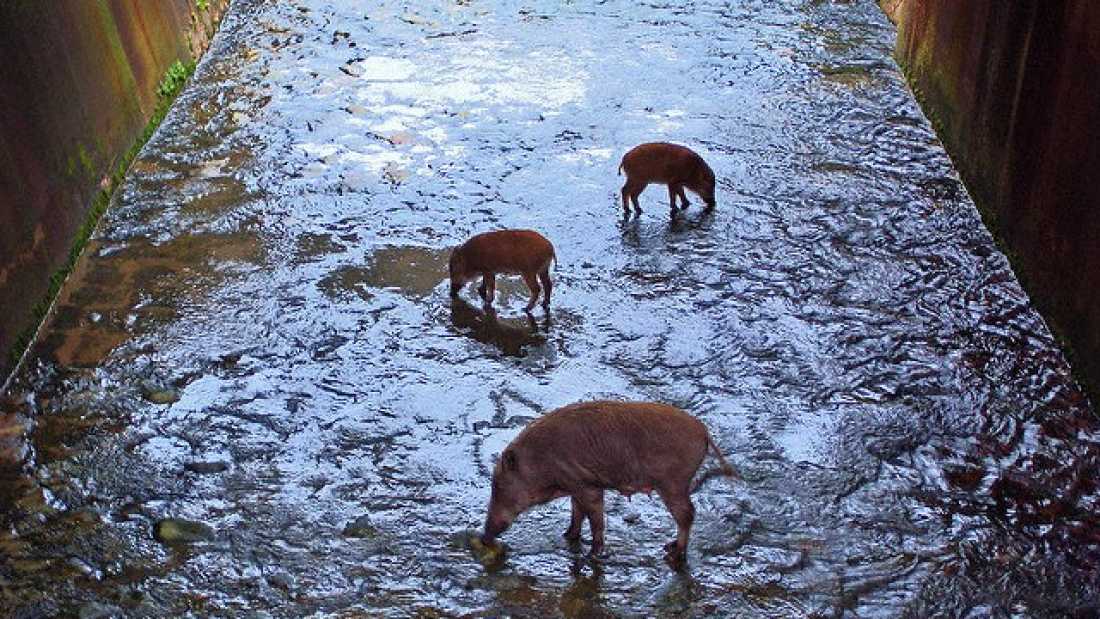
Only wild animals, and the 6ft weeds, which have rampaged through deserted homes and businesses, suffocating once-chatty barbers shops and bustling grocery stores; strangling playgrounds and their rusting rides which lie empty and eerily still. Once unextraordinary, mundane symbols of everyday lives have taken on the appearance of a horror film set in these areas closest to the Fukushima Daiichi nuclear power station on the coast of north-east Japan, eight years after the devastating tsunami which caused a meltdown at three of the plant’s reactors, forcing tens of thousands to flee. The earthquake on March 11, 2011, claimed 19,000 lives, and triggered the world’s largest nuclear disaster since Chernobyl. Radiation leaking in fatal quantities forced 160,000 people to evacuate immediately, and most to this day have not returned to their toxic towns and villages……. The official mandatory evacuation order was lifted, and while reports reveal just 367 residents of Okuma’s original population of 10,341 have so far made the decision to return, and most of the town remains off-limits, the Japanese government is keen this be seen as a positive start to re-building this devastated area……. The Japanese Prime Minister, Shinzo Abe, visited to mark the milestone.
Six Olympic softball games and a baseball game will be staged in Fukushima, the capital of this prefecture, which is free of radiation. The torch relay will even begin at J Village, which was once the base for the crisis response team. Hearteningly, it is now back to its original function, a football training centre. But the truth is, it is mainly older residents who have decided to return to their homes. Seimei Sasaki, 93, explained his family have roots here stretching back 500 years. His neighbourhood in Odaka district now only contains 23 of its original 230. “I can’t imagine what this village’s future looks like,” he admitted. Young families are few and far between – these areas are still a terrifying prospect for parents. But the re-built schools are slowly filling a handful of classroom seats. Namie Sosei primary and middle school, less then three miles from the plant, has seven pupils. One teacher said: “The most frustrating thing for them is that they can’t play team sports.” A sad irony as the Olympics approach. And with so many residents still fearful, so the deadly clean-up operation continues. Work to make the rest of Okuma safe is predicted to take until 2022. The area which was its centre is still a no-go zone. In the years following the disaster, 70,000 workers removed topsoil, tree branches, grass and other contaminated material from areas near homes, schools and public buildings.  Bags of nuclear waste generated after the meltdown of one of Fukushima’s nuclear power plants in 2011 are now stored in the nearby town of Naraha. MUST CREDIT: photo for The Washington Post by Shiho Fukada. A staggering £21billion has been spent in order to make homes safe. Millions of cubic metres of radioactive soil has been packed into bags. By 2021 it is predicted 14million cubic metres will have been generated. The mass scale operation uses thousands of workers. Drivers are making 1,600 return trips a day. But residents understandably want it moved out of Fukushima for good. As yet, no permanent location has agreed to take it, but the government has pledged it will be gone by 2045. At Daiichi itself, the decontamination teams are battling with the build up of 1m tonnes of radioactive water. …..https://www.mirror.co.uk/news/world-news/japans-nuclear-horror-relived-people-14420671 |
|
|

No comments yet.
1 This Month


Tell the Ukrainian Government to Drop Prosecution of Peace Activist Yurii Sheliazhenko

Petition to revoke the licensing of the Near Surface Nuclear Disposal Facility (NSDF) at Chalk River. https://www.ourcommons.ca/petitions/en/Petition/Details?Petition=e-7247


of the week – STOP SMALL MODULAR REACTORS IN CANADA
To see nuclear-related stories in greater depth and intensity – go to https://nuclearinformation.wordpress.com
-
Archives
- March 2026 (204)
- February 2026 (268)
- January 2026 (308)
- December 2025 (358)
- November 2025 (359)
- October 2025 (376)
- September 2025 (258)
- August 2025 (319)
- July 2025 (230)
- June 2025 (348)
- May 2025 (261)
- April 2025 (305)
-
Categories
- 1
- 1 NUCLEAR ISSUES
- business and costs
- climate change
- culture and arts
- ENERGY
- environment
- health
- history
- indigenous issues
- Legal
- marketing of nuclear
- media
- opposition to nuclear
- PERSONAL STORIES
- politics
- politics international
- Religion and ethics
- safety
- secrets,lies and civil liberties
- spinbuster
- technology
- Uranium
- wastes
- weapons and war
- Women
- 2 WORLD
- ACTION
- AFRICA
- Atrocities
- AUSTRALIA
- Christina's notes
- Christina's themes
- culture and arts
- Events
- Fuk 2022
- Fuk 2023
- Fukushima 2017
- Fukushima 2018
- fukushima 2019
- Fukushima 2020
- Fukushima 2021
- general
- global warming
- Humour (God we need it)
- Nuclear
- RARE EARTHS
- Reference
- resources – print
- Resources -audiovicual
- Weekly Newsletter
- World
- World Nuclear
- YouTube
-
RSS
Entries RSS
Comments RSS
 nuclear-news
Leave a comment