On nuclear issues, also, where to start? With the stalemate in nuclear weapons negotiations, in several countries, and India and Pakistan on the tightrope? Or with the nuclear financial messes in USA and UK?
Japan needs thousands of foreign workers to decommission Fukushima plant, prompting backlash from anti-nuke campaigners and rights activists, SCMP Julian Ryall , 26 Apr, 2019
Activists are not convinced working at the site is safe for anyone and they fear foreign workers will feel ‘pressured’ to ignore risks if jobs are at risk
Towns and villages around the plant are still out of bounds because radiation levels are dangerously high
Anti-nuclear campaigners have teamed up with human rights activists in Japan to condemn plans by the operator of the crippled Fukushima Daiichi nuclear plant to hire foreign workers to help decommission the facility.
Tokyo Electric Power Co (TEPCO) has announced it will take advantage of the government’s new working visa scheme, which was introduced on April 1 and permits thousands of foreign workers to come to Japan to meet soaring demand for labourers. The company has informed subcontractors overseas nationals will be eligible to work cleaning up the site and providing food services.
About 4,000 people work at the plant each day as experts attempt to decommission three reactors that melted down in the aftermath of the March 2011 Great East Japan Earthquake and the huge tsunami it triggered. Towns and villages around the plant are still out of bounds because radiation levels are dangerously high.
TEPCO has stated foreign workers employed at the site must have Japanese language skills sufficient for them to understand instructions and the risks they face. Workers will also be required to carry dosimeters to monitor their exposure to radiation.
Activists are far from convinced working at the site is safe for anyone and they fear foreign workers will feel “pressured” to ignore the risks if their jobs are at risk.
“We are strongly opposed to the plan because we have already seen that workers at the plant are being exposed to high levels of radiation and there have been numerous breaches of labour standards regulations,” said Hajime Matsukubo, secretary general of the Tokyo-based Citizens’ Nuclear Information Centre. “Conditions for foreign workers at many companies across Japan are already bad but it will almost certainly be worse if they are required to work decontaminating a nuclear accident site.”
Companies are desperately short of labourers, in part because of the construction work connected to Tokyo hosting the 2020 Olympic Games, while TEPCO is further hampered because any worker who has been exposed to 50 millisieverts of radiation in a single year or 100 millisieverts over five years is not permitted to remain at the plant. Those limits mean the company must find labourers from a shrinking pool.
In February, the Tokyo branch of Human Rights Now submitted a statement to the UN Human Rights Council in Geneva demanding action be taken to help and protect people with homes near the plant and workers at the site.
“It has been reported that vulnerable people have been illegally deceived by decontamination contractors into conducting decontamination work without their informed consent, threatening their lives, including asylum seekers under false promises and homeless people working below minimum wage,” the statement said. “Much clean-up depends on inexperienced subcontractors with little scrutiny as the government rushes decontamination for the Olympic Games.”
Cade Moseley, an official of the organisation, said there are “very clear, very definite concerns”.
“There is evidence that foreign workers in Japan have already felt under pressure to do work that is unsafe and where they do not fully understand the risks involved simply because they are worried they will lose their working visas if they refuse,” he said……
Japan’s nuclear horror relived as people return to Fukushima’s ghost towns,
It is eight years since a devastating tsunami caused three reactors to meltdown at the Fukushima Daiichi nuclear power station on the north-east coast of Japan Mirror UK, Emily RetterSenior Feature Writer, Mirror UK, 29 Apr19
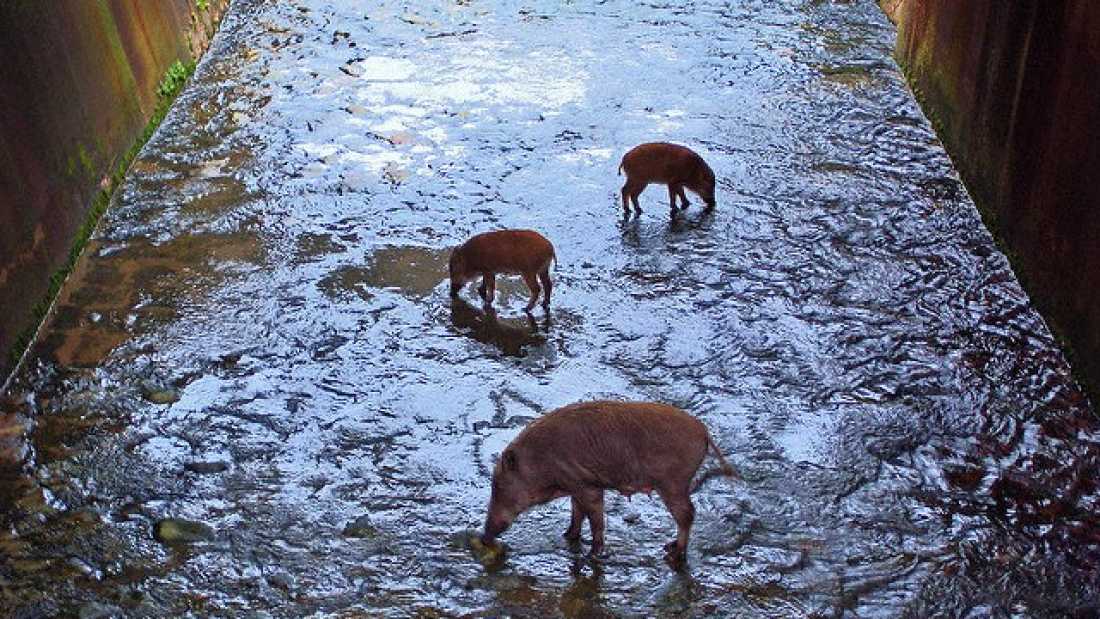
Wide streets still lie empty, scavenging boar and monkeys the only signs of life.
Only wild animals, and the 6ft weeds, which have rampaged through deserted homes and businesses, suffocating once-chatty barbers shops and bustling grocery stores; strangling playgrounds and their rusting rides which lie empty and eerily still.
Laundry hangs where it was pegged out to dry, clock faces are frozen in time, traffic lights flash through their colours to empty roads, meals laid out on tables in family homes, remain uneaten.
Once unextraordinary, mundane symbols of everyday lives have taken on the appearance of a horror film set in these areas closest to the Fukushima Daiichi nuclear power station on the coast of north-east Japan, eight years after the devastating tsunami which caused a meltdown at three of the plant’s reactors, forcing tens of thousands to flee.
The earthquake on March 11, 2011, claimed 19,000 lives, and triggered the world’s largest nuclear disaster since Chernobyl.
Radiation leaking in fatal quantities forced 160,000 people to evacuate immediately, and most to this day have not returned to their toxic towns and villages…….
The official mandatory evacuation order was lifted, and while reports reveal just 367 residents of Okuma’s original population of 10,341 have so far made the decision to return, and most of the town remains off-limits, the Japanese government is keen this be seen as a positive start to re-building this devastated area…….
The Japanese Prime Minister, Shinzo Abe, visited to mark the milestone.
The government is particularly keen to show progress before the 2020 Olympic Games in Tokyo.
Six Olympic softball games and a baseball game will be staged in Fukushima, the capital of this prefecture, which is free of radiation.
The torch relay will even begin at J Village, which was once the base for the crisis response team. Hearteningly, it is now back to its original function, a football training centre.
But the truth is, it is mainly older residents who have decided to return to their homes.
Seimei Sasaki, 93, explained his family have roots here stretching back 500 years.
His neighbourhood in Odaka district now only contains 23 of its original 230.
“I can’t imagine what this village’s future looks like,” he admitted.
Young families are few and far between – these areas are still a terrifying prospect for parents.
But the re-built schools are slowly filling a handful of classroom seats.
Namie Sosei primary and middle school, less then three miles from the plant, has seven pupils.
One teacher said: “The most frustrating thing for them is that they can’t play team sports.”
A sad irony as the Olympics approach.
And with so many residents still fearful, so the deadly clean-up operation continues.
Work to make the rest of Okuma safe is predicted to take until 2022. The area which was its centre is still a no-go zone.
In the years following the disaster, 70,000 workers removed topsoil, tree branches, grass and other contaminated material from areas near homes, schools and public buildings.
Bags of nuclear waste generated after the meltdown of one of Fukushima’s nuclear power plants in 2011 are now stored in the nearby town of Naraha. MUST CREDIT: photo for The Washington Post by Shiho Fukada.
A staggering £21billion has been spent in order to make homes safe.
Millions of cubic metres of radioactive soil has been packed into bags.
By 2021 it is predicted 14million cubic metres will have been generated.
The mass scale operation uses thousands of workers. Drivers are making 1,600 return trips a day.
But residents understandably want it moved out of Fukushima for good.
As yet, no permanent location has agreed to take it, but the government has pledged it will be gone by 2045.
His comments, and those out of the foreign ministry, were relatively upbeat. Kremlin spokesman Dmitry Peskov, however, was a lot less hopeful, saying that he doesn’t think Trump’s proposal was at all serious, and that Russia and China had already talked on the matter.
There is hope on all three sides for a deal that could cut the increasingly exorbitant cost of nuclear arms modernization, while ensuring that all sides retain a deterrent force that makes nuclear exchanges unlikely. At the same time, Trump has long talks of arms races as though he was eager for them, so his sudden suggestion of talks is being viewed with more than a little suspicion.Jason DitzApril 28, 2019
Trump’s talk of three-way nuclear deals emerged last week, and Ushakov says Russia will definitely take part, if-talks ever emerge. At the same time, he said that existing nuclear deals should be more closely respected.
His comments, and those out of the foreign ministry, were relatively upbeat. Kremlin spokesman Dmitry Peskov, however, was a lot less hopeful, saying that he doesn’t think Trump’s proposal was at all serious, and that Russia and China had already talked on the matter.
There is hope on all three sides for a deal that could cut the increasingly exorbitant cost of nuclear arms modernization, while ensuring that all sides retain a deterrent force that makes nuclear exchanges unlikely. At the same time, Trump has long talks of arms races as though he was eager for them, so his sudden suggestion of talks is being viewed with more than a little suspicion.
The Last Time There Was This Much CO2, Trees Grew at the South Pole, Dahr Jamail, Truthout, 29 April 19,
“……….Denial and RealityWhile this certainly comes as no surprise, yet another report came out highlighting how oil and gas giants are spending millions of dollars in their ongoing effort to lobby their paid politicians to block policies aimed at addressing climate disruption. The giant fossil fuel companies are spending an average of $200 million annually to weaken and/or oppose legislation aimed at addressing climate disruption. BP led the way in spending with $53 million, followed by Shell ($49 million), ExxonMobil ($41 million), Chevron and Total ($29 million each).
Meanwhile, as per usual, President Donald Trump has signed executive orders to speed up oil and gas pipeline projects, making it harder for states to block construction projects due to environmental concerns.
Yet, as the White House is actively denying climate disruption and working as hard as it can to promote fossil fuel use, the U.S. military is planning and preparing for dealing with the vast impacts of ongoing climate disruption. “People are acting on climate not for political reasons, but [because] it really affects their mission,” Jon Powers, an Iraq War veteran who served as the federal chief sustainability officer who is now president and chief executive of the investment firm CleanCapital, told The Washington Post. “With the military, it’s now ingrained in the culture and mission there, which I think is the biggest change over the last 10 years.”
Meanwhile, a federal climate disruption study panel and advisory group that was disbanded by the Trump administration due to it not having enough members “from industry,” recently released a report warning that the muddled political response to very clear climate science is putting Americans at risk.
“We were concerned that the federal government is missing an opportunity to get better information into the hands of those who prepare for what we have already unleashed,” Richard Moss, a visiting scientist at Columbia University, who previously chaired the federal panel and is a member of the group who released the report, told The Guardian. “We’re only just starting to see the effects of climate change, it’s only going to get much worse. But we haven’t yet rearranged our daily affairs to adapt to science we have.”
With each passing month, the impacts of runaway climate disruption continue to intensify. And as they do, so must our awareness of what is happening across the planet, and our resolve to take action to address it – especially since most governments around the world are failing to meet these challenges.https://truthout.org/articles/the-last-time-there-was-this-much-co2-trees-grew-at-the-south-pole/
To drive growth in its clean energy market and combat climate change, Pennsylvania adopted the Alternative Energy Portfolio Standards Act in 2004.This requires energy companies to buy specific percentages of their total electricity from clean energy sources. The requirements started small but are designed to increase over time.
There are now 16 different clean energy choices for electric utilities to choose from in Pennsylvania. But new legislation would include a 17th clean generation option—nuclear power. Bills introduced in the state’s House and Senate are intended to prevent the retirement of the Three Mile Island nuclear plant outside Harrisburg and the Beaver Valley plant near Pittsburgh. Both plants are set for closure because they cannot compete on price with electricity from natural gas-fired power plants and renewable energy sources.
Adding nuclear to the clean energy list would not be a simple or inexpensive process. Pennsylvania energy consumers would have to pay hundreds of millions in subsidies to make the nuclear plants economically viable. It’s a process that other energy generators and the manufacturing sector worry will distort Pennsylvania’s energy market. But the nuclear industry supports roughly 16,000 industry jobs and generates 93 percent of the electricity produced in the state by sources that don’t emit carbon dioxide in the process.
Pennsylvania is hardly alone in its quest to buy clean energy; many other states are implementing plans that require energy companies to purchase set amounts so-called “carbon-free” electricity. In some states, nuclear is subsidized as a “green” energy source; in others, it is not. In Pennsylvania, it may be. The battle over that issue will play out in the state Legislature between now and early June, when the owner of the Three Mile Island plant is expected to decide whether to refuel or close it.
It continues to amaze me, the way that Australia props up its uneconomic research nuclear reactor. Why not move fully to particle accelerators, producing medical isotopes with no nuclear waste?
The JEEP II research reactor at Kjeller near Oslo has been shut for scheduled maintenance since last December and corrosion was found on several important safety components during an inspection.
The institute said it would be too costly to repair the reactor.
“The board of directors has decided, based on an overall assessment, that the reactor will not be restarted. IFE will consequently initiate work to prepare the decommissioning of the reactor,” the institute said in a statement.
Nuclear fuel and heavy water have been already removed, meaning that the reactor poses no danger to the environment, it added.
The rector, some 20 kilometres away from Oslo, has been used by researchers in physics, materials, cancer medicine, renewable energy and nuclear disarmament since starting operations in 1967, the IFE said.
In June 2018, Norway’s research reactor in Halden was shut down after 60 years of operation.
“Both Norwegian nuclear reactors are now closed and Norway will enter into a new era with decommissioning of the national nuclear programme which was started in 1948,” the IFE said.
Norway has no commercial nuclear reactors, and generates more than 90 percent of its electricity at hydropower plants. (Reporting by Nerijus Adomaitis. Editing by Jane Merriman)
The Last Time There Was This Much CO2, Trees Grew at the South Pole, Dahr Jamail, Truthout , 29 April 19, “……… Water
As usual, there continue to be ample examples of the impacts of climate disruption in the watery realms of the planet.
In oceans, most of the sea turtles now being born are female; a crisis in sea turtle sex that is borne from climate disruption. This is due to the dramatically warmer sand temperatures where the eggs are buried. At a current ratio of 116/1 female/male, clearly this trend cannot continue indefinitely if sea turtles are to survive.
An alarming study showed recently that the number of new corals on the Great Barrier Reef has crashed by 89 percent after the mass bleaching events of 2016 and 2017. With coral bleaching events happening nearly annually now across many of the world’s reefs, such as the Great Barrier, we must remember that it takes an average of a decade for them to recover from a bleaching event. This is why some scientists in Australia believe the Great Barrier Reef to be in its “terminal stage.”
The UN recently sounded the alarm that urgent action is needed if Arab states are to avoid a water emergency. Water scarcity and desertification are afflicting the Middle East and North Africa more than any other region on Earth, hence the need for countries there to improve water management. However, the per capita share of fresh water availability there is already just 10 percent of the global average, with agriculture consuming 85 percent of it.
Another recent study has linked shrinking Arctic sea ice to less rain in Central America, adding to the water woes in that region as well.
In Alaska, warming continues apace. The Nenana Ice Classic, a competition where people guess when a tripod atop the frozen Nenana River breaks through the ice each spring, has resulted in a record this year of the earliest river ice breakup. It broke the previous record by nearly one full week.
Meanwhile, the pace of warming and the ensuing change across the Bering Sea is startling scientists there. Phenomena like floods during the winter and record low sea ice are generating great concern among scientists as well as Indigenous populations living there. “The projections were saying we would’ve hit situations similar to what we saw last year, but not for another 40 or 50 years,” Seth Danielson, a physical oceanographer at the University of Alaska Fairbanks, told The Associated Press of the diminishing sea ice.
In fact, people in the northernmost community of the Canadian Yukon, the village of Old Crow, are declaring a climate disruption State of Emergency. The chief of the Vuntut Gwitchin First Nation in the Yukon, Chief Dana Tizya-Tramm, has stated that his community’s traditional way of life is at stake, including thawing permafrost and rivers and lakes that no longer freeze deeply enough to walk across in the winter, making hunting and fishing difficult and dangerous. He said that declaring the climate emergency is his community’s responsibility to the rest of the planet.
Other signs of the dramatic warming across the Arctic abound. On Denali, North America’s highest mountain (20,310 feet), more than 66 tons of frozen feces left by climbers on the mountain are expected to begin thawing out of the glaciers there as early as this coming summer.
Another study found that tall ice cliffs around Greenland and the Antarctic are beginning to “slump,” behaving like soil and rock in sediment do before they break apart from the land and slide down a slope. Scientists believe the slumping ice cliffs may well be an ominous sign that could lead to more acceleration in global sea level rise, as far more ice is now poised to melt into the seas than previously believed.
In New Zealand, following the third hottest summer on record there, glaciers have been described by scientists as “sad and dirty,” with many of them having disappeared forever. Snow on a glacier protects the ice underneath it from melting, so this is another way scientists measure how rapidly a glacier can melt — if the snow is gone and the blue ice underneath it is directly exposed to the sun, it’s highly prone to melting. “Last year, the vast majority of glaciers had snowlines that were off the top of the mountain, and this year, we had some where we could see snowlines on, but they were very high,” NIWA Environmental Science Institute climate scientist Drew Lorrey told the New Zealand Herald. “On the first day of our survey, we observed 28 of them, and only about six of them had what I would call a snowline.”
Lastly in this section, another study warned that if emissions continue to increase at their current rate, ice will have all but vanished from European Alpine valleys by 2100. The study showed that half of the ice in the Alps’ 4,000 glaciers will be gone by 2050 with only the warming that is already baked into the system from past emissions. The study warned that even if we ceased all emissions at this moment, two-thirds of the ice will still have melted by 2100……… https://truthout.org/articles/the-last-time-there-was-this-much-co2-trees-grew-at-the-south-pole/
Ben Brown 29/04/2019 By CCN.com: As India and Pakistan continue to throw nuclear threats back and forth, a senior Indian government official tasked with diplomacy in external affairs has dampened any hopes for peace between the two nations.
India’s minister of state for external affairs V.K Singh said this weekend that India and Pakistan will never be friends:
“A country which has been triggering proxy wars against India besides being a terrorist hub can never be treated as a friend. Treating Pakistan as a friend will be the biggest weakness of India.”
INDIA AND PAKISTAN: MONTHS OF NUCLEAR TENSION
The statement comes after months of tension between the two nuclear neighbors. The military posturing reached a peak last week when India’s prime minister Narendra Modi threatened Pakistan with the “mother of nuclear bombs.”
The military aggression first flared in February when Pakistan-based terrorist group JeM killed 40 Indians. India responded with airstrikes over the border and a series of aggressive military action followed on both sides.
PAKISTAN’S F-16 FIGHTER JET AGGRESSION: A VIOLATION OF US TERMS?
The United States has also been dragged into the ongoing conflict between India and Pakistan, but the Trump administration remains firmly on the sidelines. The US has refused to comment on Pakistan’s possible violation of US terms.
In February 2019, Pakistan shot down an Indian jet and captured its pilot. India claims this aggressive action was carried out by a Pakistani F-16 fighter jet, sold to Islamabad by the United States.
If India’s claims are true, it may be a violation of international terms. According to the US arms agreement, Pakistan is only permitted to use the F-16 fighter jets defensively.
Pakistan maintains it did not use the F-16 in the dogfight and, despite India’s claim that it shot down a Pakistani F-16 in the clash, a US count found that all jets were present and correct. India, however, submitted some evidence in the form of call-signs and weaponry used which are associated with Pakistani F-16s.
US STAYS ON THE SIDELINES
This weekend, the US refused to share any information with India about the possible violation of terms. Speaking to the Indian Express, an unnamed official said it was a matter solely for the US and Pakistan:
“Soon after we were informed by the Indian side about Pakistan using F-16 aircraft on Feb 27, we informed the Indians that we will not be sharing any information on the subject as it is a bilateral matter between the US and Pakistan.”
Pakistan maintains it did not use the F-16 in the dogfight and, despite India’s claim that it shot down a Pakistani F-16 in the clash, a US count found that all jets were present and correct. India, however, submitted some evidence in the form of call-signs and weaponry used which are associated with Pakistani F-16s.
The official said it was a strictly unbiased position and it would do the same if the tables were turned:
“If a third country tomorrow wants information about the C130 or C17 or Apaches that the IAF [Indian Air Force] uses, our answer would be the same. It is a bilateral matter between India and the US.”
PEACE IN THE INDIAN SUB-CONTINENT?Pakistan is on a mission to dispel fears of conflict, but not everyone is convinced. The country invited a handful of journalists to learn about Islamabad’s desire for peace, summed up by this Reuters commentary:
“Pakistan says it is tired of conflict, opposed to extremism, open for peace talks and clamping down on corruption. It also insists it is run by politicians, with the military partnering rather than dominating.”
But with constant military posturing from both Pakistan and India, the peaceful rhetoric doesn’t quite match the nuclear grandstanding.
–‘Don’t test our resolve’: Pakistan warns India against mentioning its nuclear power lightly https://scroll.in/latest/921739/dont-test-our-resolve-pakistan-warns-india-against-mentioning-its-nuclear-power-lightly– 29 Apr 19, Pakistan’s military spokesperson Major General Asif Ghafoor reiterated Pakistan’s denial of India’s claim that it was responsible for the attack in Pulwama. Pakistan on Monday warned India against testing its military’s resolve and said that it was capable of protecting its citizens. Pakistan’s military spokesperson Major General Asif Ghafoor accused India of relying on false claims about the Pulwama attack in India and the Indian Air Force’s air strike in Balakot.The military spokesperson urged India to be a more responsible nuclear power. “In your [Indian] rhetoric, you keep using nuclear power as a threat,” Ghafoor said. “Nuclear powers are not a threat, they are a weapon of deterrence that should not be mentioned lightly…Do not test our resolve.”
Ghafoor was referring to Prime Minister Narendra Modi’s remark earlier this month that India’s nuclear weapons are “not meant for Diwali”. Modi had received criticism from several quarters for that statement.
Ghafoor denied that it was responsible for the attack in Pulwama that killed 40 Indian security personnel. “We told them we were not involved,” Ghafoor told reporters at a press conference. “India then violated our airspace, we then gave the ultimatum that we will respond when we see fit. Two months have passed since and India has told countless lies on the matter. We have not responded to the lies, not because we can’t, but because we don’t want to retaliate.”
Ghafoor reiterated that Pakistan had incurred no damage from India’s air strike in Balakot. He said hiding the downing of a plane is impossible in today’s day and age.
“International media came to Pakistan, we told them that they should go to the place and see for themselves what had happened. India had said that 300 people had died in their attack [in Balakot]. Then they said that they had used a small-scale missile that bore a tiny hole in the ceiling of the building and then exploded inside. We again offered to show your own [Indian] media the site,” he said.
Report on Modi’s remark on nuclear weapons sent to EC, says election official in Barmer https://scroll.in/latest/921705/report-on-modis-remark-on-nuclear-weapons-sent-to-ec-says-district-election-officialThe prime minister had warned Pakistan at the rally last week, saying India’s nuclear weapons are ‘not meant for Diwali’.Election authorities in Barmer district of Rajasthan on Monday said they have submitted a factual report to the Election Commission after looking into the Congress’ allegation that Prime Minister Narendra Modi had “brazenly violated” the poll code by repeatedly invoking the armed forces at an rally in the district on April 21, PTI reported.
At the rally, Modi had said that India does not get scared of Pakistan’s nuclear strike threats anymore. “Every other day they used to say, ‘We have nuclear button, we have nuclear button’,” the prime minister had said. “What do we have then? Have we kept it for Diwali?”
Following the complaint by the Congress the following day, the Election Commission had sought a report on the prime minister’s address. “The report has been forwarded with the copy of PM’s speech as per the direction of the commission,” said district election officer Himanshu Gupta.
This is not the first instance of the ruling party invoking the armed forces during the campaign for these Lok Sabha elections. On April 18, the Election Commission warned Union Minister for Minority Affairs Mukhtar Abbas Naqvi for referring to the defence forces as “Modi ji ki Sena [Narendra Modi’s Army]” and asked him to be careful in the future. This came a few days after a warning was issued to Uttar Pradesh Chief Minister Adityanath for making the same remark.
Apart from the Opposition parties, military veterans have also complained about such speeches made by BJP leaders. On April 12, more than 150 veterans of the Indian armed forces wrote to President Ram Nath Kovind, urging him to stop the politicisation of the military during election campaigns. The letter urged Kovind to “take all necessary steps to urgently direct all political parties that they must forthwith desist from using the military, military uniforms or symbols, and any actions by military formations or personnel, for political purposes or to further their political agendas”.
The Election Commission has issued multiple advisories asking political parties not to indulge in political propaganda involving the defence forces.
Uranium waste in NM puts lie to ‘carbon free’, Albuquerque Journal, BY DUANE CHILI YAZZIE / SHIPROCK CHAPTER PRESIDENT, NAVAJO NATION, April 26th, 2019 “……..We must understand that abuse of seemingly inanimate matter has consequence. The extraction of uranium and the exploitation of it causes compounded waste and resultant compounded consequence. We have created mountains of radioactive waste; because we have limited knowledge and capacity to conclusively, effectually and permanently deal with this waste, we bury it. Out of sight, out of mind does not ease our minds because we know it is there. My community of Shiprock has one of the largest uranium waste disposal cells in the country sitting in the middle of our community. People who naively exalt science and technology may simultaneously inebriate themselves from the consequence of the devastating reality.The natural law of cause and effect predicates all. With my Navajo people, we have suffered the deaths of hundreds of our uranium miners, millers, transporters and affected family members due to health complications caused by exposure to uranium. In 1979 a United Nuclear Corp. holding pond burst, releasing 94 million gallons of radioactive waste that cascaded through Gallup and on downstream. Women and children who waded in the contaminated Rio Puerco, burning their feet, were told that the radioactive water was a figment of their imagination. … Our lives continue to be at stake. The radioactive levels remain, and we, the contaminated people, continue to develop uranium-related health issues. We die a slow death. The world of science and technology has damaged us and the natural world.
The Public Service Company of New Mexico, which has made an incredible indelible scar of industrial consequence on New Mexico and the Earth, now wants to add more nuclear to its portfolio. By doing so, PNM will only amplify this consequence. Some say that nuclear-generated electricity should be allowed because it is “carbon-free.” From a life-cycle perspective, it is not carbon-free. The semantics are irrelevant; what matters is the eventual and permanent negative impact and consequence to the land, the people and our planet Earth.
(In honor of) this Earth Day, it is imperative we acknowledge the damage done to the integrity of the life of Earth. The seemingly insurmountable effect from the cause of the extractive industry demands our attention. We have a climate crisis that is ebbing the life of our planet. The delicate balance of the equilibrium of the Earth and its life systems have been dangerously upset. We cannot further aggravate this great dilemma with more uranium exploitation and continue to destroy the sanctity of our Earth Mother and all life upon and within her.https://www.abqjournal.com/1307342/uranium-waste-in-nm-puts-lie-to-carbon-free.html
The Last Time There Was This Much CO2, Trees Grew at the South Pole, Dahr Jamail, Truthout , 29 April 19, “……… Earth The impact of runaway emissions is already upon us. Several cities in the northern U.S., such as Buffalo, Cincinnati and Duluth, are already preparing to receive migrants from states like Florida, where residents are beset with increasing flooding, brutal heat waves, more severe and frequent hurricanes, sea level rise, and a worse allergy season. City planners in the aforementioned cities are already preparing by trying to figure out how to create jobs and housing for an influx of new residents.
Indications of the climate disruption refugee crisis are even more glaring in some other countries.
Large numbers of Guatemalan farmers already have to leave their landdue to drought, flooding, and increasingly severe extreme weather events.
In low-lying Bangladesh, hundreds of thousands of people are already in the process of being displaced from coastal homes, and are moving into poverty-stricken areas of cities that are already unprepared to receive the influx of people. Given that 80 percent of the population of the country already lives in a flood plain, the crisis can only escalate with time as sea level rise continues to accelerate.
Meanwhile, diseases spread by mosquitoes are also set to worsen in our increasingly warm world. A recently published study on the issue shows that over the next three decades, half a billion more people could be at risk of mosquito-delivered diseases.
Other migrations are occurring as well. In Canada’s Yukon, Indigenous elders told the CBC that caribou and moose are moving further north than ever before in order to escape the impacts of climate disruption like warmer summers, lakes and rivers that don’t freeze, and adjusting their migrations to find more food. This has deep impacts on the survival and culture of the area’s Indigenous residents.
In economic news, a researcher for the Federal Reserve Bank recently penned a letter urging central banks to note the financial risks, and possibly an impending financial crisis, brought about by climate disruption. “Without substantial and sustained global mitigation and regional adaptation efforts,” read the letter, “climate change is expected to cause growing losses to American infrastructure and property and impede the rate of economic growth over this century.”
Another report showed that climate disruption is already negatively impacting fruit breeders, and consumers will soon feel the pain of higher prices. “We are seeing industries that may not survive if we don’t find a solution, and we are only just seeing the consequences of climate change,” Thomas Gradziel, of the University of California at Davis, told The Washington Post.
Underscoring all of this, the Global Seed Vault in Svalbard, Norway, known as the “Doomsday Vault,” has already been altered by climate disruption impacts. The primary impacts thus far have been floodingaround the vault, given how warm temperatures have become across the Arctic. The Doomsday Vault holds nearly one million seeds from around the globe, and functions as a backup in case climate disruption, war, famine, or disease wipes out certain crops. In other words, it’s a backup plan to backup plans. A recent report showed that climate change’s impacts on the seed vault could get worse as snow season shortens, heavier and more frequent rainfalls escalate, and avalanches and mudslides near the vault become more common.
Lastly in this section, researchers recently warned that the Arctic has now entered an “unprecedented state” that is literally threatening the stability of the entire global climate system. Their paper, “Key Indicators of Arctic Climate Change: 1971–2017,” with both American and European climate scientists contributing, warned starkly that changes in the Arctic will continue to have massive and negative impacts around the globe.
Cost of MoD nuclear projects is rocketing The Times, 29 Apr 19, The government’s defence nuclear enterprise will cost 26 per cent more than previously forecast over the next three years, a report says.
The Ministry of Defence is facing a funding gap of up to £14 billion in its ten-year equipment plan. In the report, out tomorrow, the Nuclear Information Service (NIS), a campaign organisation that monitors the nuclear defence industry and promotes transparency, also raises concerns that five upgrade projects within the programme are experiencing financial difficulties. Four upgrade projects have already been scrapped, it says.
The three big upgrade projects for which information is released are rated either “amber/red” or “red”, meaning that delivery of the projects is either under threat or appears impossible.
APRIL 29, 2019 BY A PUBLIC AFFAIRThirty-three years ago, on April 26, 1986, the Chernobyl Nuclear Power Plant in northern Ukraine experienced two explosions and a fire that released deadly levels of radioactive gas and ash. This event is widely considered the most disastrous nuclear power plant accident in history.
Historian Kate Brown says that “much of what we’re told about the Chernobyl disaster and its after-effects is incomplete or incorrect.” Today, she joins us on the show to share her research of Chernobyl and nuclear history and to discuss her latest book, Manual for Survival: A Chernobyl Guide to the Future. Along the way, she and Patty consider what happens when atomic energy is released; the impact of radiation on the landscape, on animal bodies, and on human bodies; and the environmental and public health consequences of large-scale technological disasters.













 nuclear-news