To 5th March – nuclear and climate news
 Well, Donald Trump and Kim Jong had a nice little photo-shoot in Vietnam. Nothing actually came of it. But , look on the bright side. It could have been a lot worse. Meanwhile USA and South Korea officially call off annual military exercises amid nuclear talks with North Korea.
Climate change’s impact on the oceans is already affecting marine life, and the world’s seafood stocks are declining. How to face what is happening – global environmental collapse. Good news – The young are stepping up to the climate challenge – The Sunrise Movement
Cold War-like arms race is likely to follow the collapse of a historic nuclear treaty.
The possibility of nuclear war between India and Pakistan.
Oxygen in oceans declining – climate change brings another threat to marine life
YouTube has become a leader in climate change denial.
Energy companies should be planning for an industrial revolution driven by renewables. Completely impractical to replace coal power with nuclear.
ARCTIC. Arctic ice – summers without it could happen sooner than predicted.
JAPAN. Japan’s long-drawn out nuclear “comeback” – safety and cost issues. ‘Ionising radiation’ not so bad’ – subtle cover-up of the dangers, by Japan’s Centre for Environmental Creation. Japan’s nuclear watchdog concerned at possibility of volcano near nuclear station.
Nightmarishly high radiation levels –robots the only chance to deal with Fukushima reactors’ molten fuel. 2020 Olympics A grand propaganda effort – to minimise the reality of the Fukushima nuclear meltdowns. Fukushima’s mountains of radioactive soil – community opposition to recycling it. The Fukushima Nuclear Disaster and the Tokyo Olympics. Along the 2020 Olympics torch route in Japan – higher radiation levels. Japanese Govt Olympic Games campaign to “showcase” Fukushima’s recovery is not really working.
NORTH KOREA. North Korea’s major nuclear reactor has been shut down for months. North Korea’s frighteningly strong non-nuclear artillery.
IRAN. International Atomic Energy Agency chief again confirms that Iran is keeping to the nuclear deal.
RUSSIA. Vladimir Putin signs decree suspending Russia’s membership of Intermediate-Range Nuclear Forces Treaty (INF). Russia to lease nuclear-powered attack submarine to India for a cool $3 billion.
PAKISTAN. Punjab Chief Minister Amarinder Singh warns on Pakistan’s readiness to use nuclear weapons. Imran Khan to consult nuclear chiefs after India’s first air strike on Pakistan in decades.
USA.
- Despite U.S. Congress’s concerns, Trump is still pushing for sale of nuclear technology to Saudi Arabia. Trump’s son-in-law, Jared Kushner, helping Saudi Crown Prince towards getting nuclear weapons? Trump Ordered Officials To Give Kushner Security Clearance Despite FBI-CIA Concerns Re Kushner’s Foreign and Business Contacts With Israel, Russia, UAE, and Others. Bipartisan pair of Michigan congressmen aim to limit any USA deal to sell nuclear technology to Saudi Arabia.
- New report highlights the inability of USA to deal with nuclear waste. No way to get rid of spent nuclear fuel (but they still keep making it anyway!) It was easy enough to build U.S army’s nuclear stations – but it’s difficult to get rid of them. Kim Kardashian West demands Trump, Newsom, lead cleanup of Santa Susana Nuclear Site.
- U.S. army wants risky small modular nuclear reactors. Is it safe to keep Peach Bottom and other ageing nuclear stations running until 2054? Political push for small modular nuclear reactors in Utah. Santee Cooper continues search for new owner after failed nuclear project. USA taxpayers again forking out money for dodgy new nuclear reprocessing. Bankrupt Pacific Gas and Electric wants to restart Diablo Canyon Nuclear Station,without prior inspection.
- A BIG boondoggle – Nuclear And Emerging Technologies For Space.
- Radiation in a crematorium traced back to a human body.
- Major presidential candidate in USA running on climate action policy.
UK. Faslane nuclear submarine base had hundreds of health and safety incidents in 2018. Rolls Royce largely getting out of the nuclear industry.
FRANCE. New defects, after a series of problems and delays, in France’s supposed “nuclear flagship” Flamanville. Huge workforce at Flamanville nuclear reactor, employed to fix unsafe welds.
Nightmarishly high radiation levels -robots the only chance to deal with Fukushima reactors’ molten fuel
For Fukushima’s nuclear disaster, robots may be the only hope, The 2011 meltdown in Japan is still too hot for humans to handle. Send in the machines. CNet BY ROGER CHENG, MARCH 4, 2019 ………. I’m inside the cavernous top of the Unit 3 reactor in the Fukushima Daiichi Nuclear Power Plant. Yes, that Fukushima Daiichi, site of the world’s worst nuclear disaster.
Unit 3 was one of three reactors crippled on March 11, 2011, after a 9.0 earthquake struck 80 miles off the coast of Japan. (Units 4, 5 and 6 at Daiichi weren’t operating at the time.) The temblor shook so violently it shifted the Earth’s axis by nearly 4 inches and moved the coast of Japan by 8 feet. Eleven reactors at four nuclear power plants throughout the region were operating at the time. All shut down automatically. All reported no significant damage.
An hour later, the tsunami reached shore.
Two 50-foot-high waves barreled straight at Fukushima Daiichi, washing over coastal seawalls and disabling the diesel generators powering the plant’s seawater cooling systems. Temperatures inside the reactors skyrocketed to as high as 5,000 degrees Fahrenheit.
Fuel rods became molten puddles of uranium that chewed through the floors below, leaving a radioactive cocktail of fuel rods, concrete, steel and melted debris. Molten fuel ultimately sank into the three reactors’ primary containment vessels, designed to catch and secure contaminated material.
Next Monday marks the eighth anniversary of the earthquake. Since then, Japanese energy giant Tokyo Electric Power Company, or Tepco, has cleared enough of the rubble on the top floor of the Unit 3 building to allow for my 10-minute visit.
I gaze up at the massive barrel vault ceiling, trying to get a handle on the sheer scale of everything. Radiation levels are too high for me to linger. My quickening pace and breath are betrayed by rapid flapping noises coming from the purple filters on both sides of my respirator mask.
At the far end of the room, there’s an enormous orange platform known as a fuel-handling machine. It has four giant metal legs that taper down, giving the structure a sort of animalistic look. Thin steel cables suspend a chrome robot in the center of the frame. The robot, largely obscured by a pink plastic wrapper, is equipped with so-called manipulators that can cut rubble and grab fuel rods. The robot will eventually pull radioactive wreckage out of a 39-foot-deep pool in the center of the room.

It’s just one of the many robots Tepco is using to clean up the power plant. It’s why I came to Japan this past November — to see how robots are working in one of the most extreme situations imaginable.
The Japanese government estimates it will cost $75.7 billion and take 40 years to fully decommission and tear down the facility. The Japan Atomic Energy Agency even built a research center nearby to mock up conditions inside the power plant, allowing experts from around the country to try out new robot designs for clearing away the wreckage.
The hope is that the research facility — along with a drone-testing field an hour away — can clean up Daiichi and revitalize Fukushima Prefecture, once known for everything from seafood to sake. The effort will take so long that Tepco and government organizations are grooming the next generation of robotics experts to finish the job. …….
Two years ago, Tepco erected a dome over the Unit 3 reactor and fuel pool so that engineers could bring in heavy equipment and now, us.
Roughly 60 feet below me, radiation is being emitted at 1 sievert per hour. A single dose at that level is enough to cause radiation sickness such as nausea, vomiting and hemorrhaging. One dose of 5 sieverts an hour would kill about half of those exposed to it within a month, while exposure to 10 sieverts in an hour would be fatal within weeks.
Unit 3 is the least contaminated of the three destroyed reactors.
 Radiation in Unit 1 has been measured at 4.1 to 9.7 sieverts per hour. And two years ago, a reading taken at the deepest level of Unit 2 was an “unimaginable” 530 sieverts, according to The Guardian. Readings elsewhere in Unit 2 are typically closer to 70 sieverts an hour, still making it the hottest of Daiichi’s hotspots.
The reactors’ hostile environments brought most of the early robots to their figurative knees: High gamma radiation levels scrambled the electrons within the semiconductors serving as the robots’ brains — ruling out machines that are too sophisticated. Autonomous robots would either shut down or get snared by misshapen obstacles in unexpected places.
The robots also had to be nimble enough to avoid disturbing the volatile melted fuel rods, essentially playing the world’s deadliest game of “Operation.” At least initially, they weren’t. “Fukushima was a humbling moment,” says Rian Whitton, an analyst at ABI Research. “It showed the limits of robot technologies.”………….. https://www.cnet.com/news/for-fukushimas-nuclear-disaster-robots-may-be-the-only-hope/
North Korea’s major nuclear reactor has been shut down for months
Key North Korean nuclear reactor has been shut down for months: IAEA, Channel News Asia, 4 Mar 19, VIENNA: The nuclear reactor that is believed to have supplied much of the plutonium for North Korea’s nuclear weapons appears to have been shut down for the past three months, the UN atomic watchdog said on Monday (Mar 4), without suggesting why.The 5-megawatt reactor is part of North Korea’s Yongbyon nuclear complex, the possible dismantling of which was a central issue in talks between US President Donald Trump and North Korean leader Kim Jong Un in Vietnam last week.
The Vienna-based International Atomic Energy Agency has not had access to North Korea since Pyongyang expelled its inspectors in 2009, and it now monitors the country’s nuclear activities mainly through satellite imagery.
Some independent analysts, who are also using satellite imagery, believe the ageing reactor is having technical problems.
“The agency has not observed any indications of the operation of the 5MW(e) reactor since early December 2018,” IAEA Director-General Yukiya Amano said in a closed-door speech to his agency’s Board of Governors, which is meeting this week.
At the radiochemical laboratory that separates plutonium from the reactor’s spent fuel, there were no indications of such reprocessing activities, Amano added.
But a facility widely believed to be used for uranium enrichment, a process that can also produce weapons-grade material for nuclear bombs, appeared to be running, he said. And building work continued on an experimental light-water reactor.
The IAEA has repeatedly said it is ready to play a verification role in North Korea once a political agreement is reached on the country’s nuclear activities.
The United States says it wants a full “denuclearisation” of North Korea, but the Trump-Kim summit’s abrupt ending without agreement left the future of their talks uncertain ………. https://www.channelnewsasia.com/news/asia/key-north-korean-nuclear-reactor-has-been-shut-down-for-months–iaea-11310906
International Atomic Energy Agency chief again confirms that Iran is keeping to the nuclear deal

 Head of UN nuclear agency: Iran keeping to nuclear deal, https://www.foxnews.com/world/head-of-un-nuclear-agency-iran-keeping-to-nuclear-deal4 Mar 19, BERLIN – The head of the U.N. nuclear watchdog says Iran is complying with the 2015 deal with major world powers aimed at preventing the country from building nuclear weapons.
Yukiya Amano made his assessment in a regular update to the International Atomic Energy Agency’s board of governors, confirming a confidential report distributed to member states last month.
He said Monday that “Iran is implementing its nuclear-related commitments under the Joint Comprehensive Plan of Action,” referencing the official name of the 2015 deal.
The U.S. unilaterally withdrew from the deal last year and re-imposed sanctions.
The other signatories — Germany, France, Britain, Russia and China — are trying to keep alive the deal, which offered Iran economic incentives.
Vladimir Putin signs decree suspending Russia’s membership of Intermediate-Range Nuclear Forces Treaty (INF)
Russia officially suspends INF Treaty with US, https://www.aljazeera.com/news/2019/03/russia-officially-suspends-inf-treaty-190304143410145.html
Vladimir Putin signs decree suspending Russia’s obligations under key nuclear arms pact with US. Russia’s President Vladimir Putin has signed a decree suspending Moscow’s participation in a key Cold War-era nuclear arms control treaty, following a similar move by the United States.
In a statement on Monday, the Kremlin said the suspension would last until the US “ends its violations of the treaty or until it terminates”.
In February, Washington gave notice of its intention to withdraw from the landmark 1987 Intermediate-Range Nuclear Forces Treaty (INF), which was established as a major safeguard against nuclear war.
The move by US President Donald Trump set the stage for the bilateral pact’s termination in six months.
Washington accuses Moscow of developing and deploying a cruise missile that violates provisions of the treaty that ban the production, testing and deployment of land-based cruise and ballistic missiles that have a range between 500km and 5,500km.
US officials have also expressed concerns that China, which is not party to the pact, was gaining a significant military advantage in Asia by deploying large numbers of missiles with ranges beyond the treaty’s limit.
Russia has denied any breaches, instead, charging that it was the US that had flouted the pact by deploying missile defence facilities in Eastern Europe that could fire cruise missiles instead of interceptors.
Washington rejects the claim.
The collapse of the treaty has stoked fears of a replay of a Cold War-era European missile crisis during the 1980s, when the US and the Soviet Union both deployed intermediate-range missiles on the continent.
Putin has previously said Russia would seek to develop medium-range missiles, but would not deploy them in the European part of the country or elsewhere unless the US does so.
NATO has supported the US’s decision to withdraw from the pact, but many European leaders have voiced fears over the consequences of its demise.
China has also urged Russia and the US to preserve the treaty.
The young are stepping up to the climate challenge – The Sunrise Movement
 Adults failed to take climate action. Meet the young activists stepping up, Some are calling climate change this generation’s civil rights movement. These are the young activists leading the charge, Guardian, by Adrian Horton, Dream McClinton and Lauren Aratani, 4 Mar 19,
Despite being barely two years old, the Sunrise Movement has outpaced established environmental groups in the push to radically reshape the political landscape around climate change. Closely allied with new congresswoman Alexandria Ocasio-Cortez, the youth-led Sunrise Movement has helped set out a sweepingly ambitious plan to address climate change in the form of the Green New Deal.
The movement comprises a small core team of young organizers, supported by a larger group of several hundred volunteers. The group’s elevation of the Green New Deal has clearly riled Trump, who has falsely but repeatedly claimed that the plan would result in the banning of cars, air travel and even cows.
The Guardian spoke to Sunrise members on how the organization has shaken the political and environmental establishment in the US…….. https://www.theguardian.com/environment/2019/mar/04/can-they-save-us-meet-the-climate-kids-fighting-to-fix-the-planet
With the global environmental collapse, adaptation is now the challenge
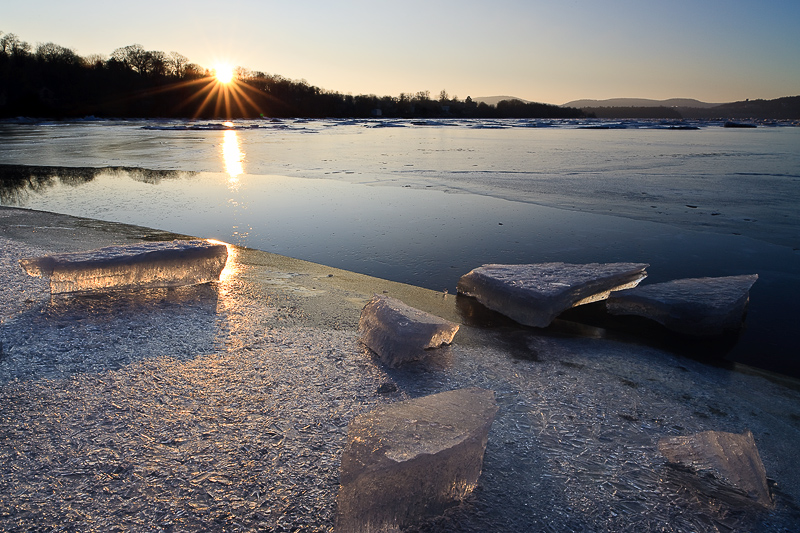
Rethink Activism in the Face of Catastrophic Biological Collapse, Dahr Jamail and Barbara Cecil, Truthout,
PART OF THE TRUTHOUT SERIES How Then Shall We Live? 4 Mar 19,
It may be that when we no longer know what to do
we have come to our real work,
and that when we no longer know which way to go,
we have begun our real journey.
The mind that is not baffled is not employed.
The impeded stream is the one that sings.
― Wendell Berry
Anyone who thinks there is still time to wholly remedy the situation must answer the question: How do we remove all the heat that’s already been absorbed by the oceans? Invigorated activism, as heartening and important as it is, is not going to completely stem these tides.
Thus, the third level of activism, adaptation, comes into focus.
Despite U.S. Congress’s concerns, Trump is still pushing for sale of nuclear technology to Saudi Arabia
 Team Trump Keeps Pushing Deal to Send Nuclear Tech to Saudis
Congress raised ‘grave concerns’ about the Trump administration’s past attempts to send nuclear technology to the Saudis. But Team Trump isn’t done trying. The Daily Beast, Erin Banco, Betsy Woodruff 03.04.19 The Trump administration is still actively working to make a deal to send U.S. nuclear technology to Saudi Arabia, according to two U.S. officials and two professional staffers at federal agencies with direct knowledge of those conversations. American energy businesses are still hoping to cash in on Riyadh’s push for energy diversification,
Russia to lease nuclear-powered attack submarine to India for a cool $3 billion
|
India, Russia To Sign $3 Billion Nuclear Sub Deal This Week
India and Russia are set to sign a $3 billion lease agreement for a nuclear-powered attack sub on March 7, according to local media reports. The Diplomat, By Franz-Stefan Gady, March 05, 2019 India and Russia are expected to conclude an intergovernmental agreement for a 10-year lease of a Russian nuclear-powered attack submarine (SSN) this week. The deal, estimated to be worth around $3 billion, will likely be inked on March 7, according to sources cited by The Economic Times. Neither the Indian nor Russian defense ministries, however, have officially confirmed that a signing ceremony will be held in the coming days. |
|
Punjab Chief Minister Amarinder Singh warns on Pakistan’s readiness to use nuclear weapons
|
Pakistan will not hesitate to go nuclear in war with India: Amarinder Singh, “Whether it was one killed or 100, the message has gone out loud and clear that India will not let the killing of its soldiers and citizens go unpunished,” Singh said. Economic Times , 4 Mar 19, AMRITSAR: Punjab Chief Minister Amarinder Singh on Monday warned that Pakistan would not hesitate to use its nuclear arsenal if it felt it was losing out against India in a conventional war. Pointing out that both India and Pakistan were nuclear powers, he said it was not in either country’s interest to use the weapons of mass destruction but Islamabad could indulge in such a misadventure, if faced with defeat in other battles. ….. https://economictimes.indiatimes.com/news/politics-and-nation/pakistan-will-not-hesitate-to-go-nuclear-in-war-with-india-amarinder-singh/ |
|
|
North Korea’s frighteningly strong non-nuclear artillery
|
Forget About Nuclear Weapons: North Korea’s Artillery Could Kill Thousands And impact millions within 24 hours. National Interest
North Korea on Nov. 16, 2018 claimed it tested a new “ultramodern” weapon, ending a voluntary freeze on major weapons testing that began in April 2018. State-run Korean Central News Agency said Kim visited the Academy of Defense Science, a center of weapons-development in North Korea, and “supervised a newly-developed ultramodern tactical weapon test.” Pak Jong Chon, who apparently is head of the Korean People’s Army Artillery Command, reportedly attended the test alongside North Korean leader Kim Jong Un, hinting that the weapon in the test was a non-nuclear artillery system, perhaps firing rockets. ……. Much of Pyongyang’s artillery is in range of the Seoul Greater Metropolitan Area, which begins just 25 miles south of the DMZ. Some 10 million people live in the Greater Seoul Metropolitan Area and another 15 million reside just outside of the metropolitan area. South Korea has prepared underground shelters for Seoul’s entire population. “Though the expanding range of North Korea’s ballistic missiles is concerning, a serious, credible threat to 25 million [Republic of Korea] citizens and approximately 150,000 U.S. citizens living in the [Greater Seoul Metropolitan Area] is also posed from its long-range artillery.” U.S. Army general Vincent Brooks, head of U.S. Forces Korea, told a U.S. Senate committee in March 2018. …….. https://nationalinterest.org/blog/buzz/forget-about-nuclear-weapons-north-korea%E2%80%99s-artillery-could-kill-thousands-46077 |
|
Texas-based Uranium Energy Corporation strongly lobbying Trump administration, and demonising Canadian company Uranium One
The Nuclear Energy Industry Goes MAGA to Win Over Trump
A U.S. uranium company set up shop at CPAC and started spreading Clinton scare stories. The Daily Beast, Lachlan Markay, 03.03.19 A leading U.S. uranium producer is confident that President Donald Trump is going to crack down on its foreign competitors. But in the spirit of not taking any chances, the company rented space at the annual Conservative Political Action Conference, enlisted a top Trumpworld public relations executive, and invoked a well-worn Trump attack line on his 2016 campaign opponent to try to nail down a policy win.
Bankrupt Pacific Gas and Electric wants to restart Diablo Canyon Nuclear Station,without prior inspection

 What Deadly Disaster Is the Criminal, Bankrupt PG&E So Desperately Hiding at Its Diablo Canyon Nukes, https://readersupportednews.org/opinion2/277-75/55293-rsn-what-deadly-disaster-is-the-criminal-bankrupt-pgae-so-desperately-hiding-at-its-diablo-canyon-nukes
By Harvey Wasserman, Reader Supported News, 3 Mar 19,  s the bankrupt federal felon Pacific Gas & Electric desperately hiding something very deadly at its Diablo Canyon Power Plant? Will we know by March 7, when the company wants to restart Unit One, which is currently shut for refueling? Will YOU sign our petition asking Governor Gavin Newsom and other officials to inspect that reactor before it can restart?
In 2010, PG&E blew up a neighborhood in San Bruno, killing eight people.
In 2018, it helped burn down much of northern California, killing more than eighty people. The company has now admitted its culpability in starting that infamous Camp Fire and has questioned its own ability to continue to operate.
On February 6, it incinerated five buildings in San Francisco.
The company is bankrupt. It has been convicted of numerous federal felonies. It actually has a probation officer.
But the real terror comes at its Diablo Canyon nuclear reactors, nine miles west of San Luis Obispo on the central California coast.
The reactors are embrittled. They may be cracked. As with the gas pipes in San Bruno and the power poles in northern California, PG&E’s maintenance at these huge reactors has been systematically neglected.
But the company does NOT want the public to inspect them. WHY?
Right now, Diablo Unit One is shut for refueling. Critical inspections for embrittlement, cracking and deferred maintenance could be easily and cheaply done. Public discussions could also be held on vulnerability to earthquakes, waste management, and corporate competence.
The public does not need Diablo’s power, which often overloads the grid, forcing the shutdown of cleaner, safer wind and solar capacity. Reopening a cracked reactor would turn the fuel assemblies on-site into high-level radioactive waste, converting a multi-million-dollar asset into a huge fiscal liability.
Diablo Unit One is in particular danger because it was designed in the 1960s. Its original blueprints did not account for the dozen earthquake faults since discovered nearby. Copper used in key welds is now known to be inferior. Older reactors like those at Diablo are susceptible to embrittlement and cracking, which could be catastrophic.
In 1991 the Yankee Rowe Reactor in Massachusetts was forced to shut because of embrittlement. It was younger then than Diablo One is now.
Because PG&E is in bankruptcy and on federal probation, the state has extraordinary power right now. Normally such issues are pre-empted by the feds.
But at this time the governor, state agencies, the California Public Utilities Commission, and the courts have the right to demand these inspections. Certainly the public has a legitimate expectation to be protected.
The downwind consequences of a major accident are beyond comprehension. Diablo is less than 200 miles upwind from Los Angeles. A radioactive cloud from a likely disaster would threaten the lives of millions. Damage to property and the natural ecology, including some of the world’s most productive farmland, would be essentially impossible to calculate.
US Representative Salud Carbajal (D-San Luis Obispo) has already questioned PG&E’s competence to run these two huge reactors. A number of Hollywood stars, along with State Senator Ben Allen (D-Santa Monica), San Luis Obispo Mayor Heidi Harmon, and numerous towns and party organizations, have already joined with more than a thousand grassroots activists to ask the governor to require these critical tests and to subject the findings to public scrutiny.
Given PG&E’s bankruptcy and criminal convictions, and the extreme vulnerability of reactors as old as those at Diablo Canyon, we must seriously wonder why the company would now ask to be exempt from a simple set of inspections.
To protect the health, safety, economy and ecology of our state, the governor, regulatory agencies, CPUC, and the courts must step in to demand these aged reactors be immediately subjected to painstaking public scrutiny.
There is no good reason not to do this, and no excuse for PG&E to be asking for an exemption from a simple, long-overdue inspection.
The last thing California can afford is a radioactive replay of what has happened with that pipeline explosion in San Bruno or those catastrophic fires in what’s left of the northern forests.
Next month marks the 40th anniversary of the accident at Three Mile Island, and the release of The China Syndrome, which told a terrifying tale we also do not want to see repeated.
You can sign our petition asking Governor Newsom and our public officials to step in at Diablo Canyon NOW, before it is once again too late.
Energy companies should be planning for an industrial revolution driven by renewables

FT 4th March 2019 Nick Butler: A radical outlook needs strategy to match. Energy companies should be planning for an industrial revolution driven by renewables. By
2035, renewables (solar and wind) will account for more than 50 per of
global power generation; electric vehicles will be the low-cost option for
car, van and small-truck drivers; oil demand will be declining; and gas
demand will have peaked.
growing global economy and a still-rising population. This is not, as you
might imagine, the latest summary of aspirations from a campaign group such
as Greenpeace or Friends of the Earth. Nor is it an ambitious claim by one
of the renewables trade associations.
drawn from a serious, considered projection produced by McKinsey, the
global management consultancy. The key is the falling cost of renewables,
which are set “to become cheaper than existing coal and gas in most regions
by 2030”, McKinsey says. That will encourage electrification across the
global economy, driving efficiency by replacing less productive forms of
supply.
industrial revolution. The 20th-century energy economy, centred on coal and
oil, is giving way to something very different. And this transition has
ceased to be a matter for the distant future or something that can be
pushed off by industry leaders to the next generation of executives. The
complacency that smothers hard thinking in most of the major energy
companies is outdated. In an industry that thinks on a 20-year horizon,
2035 is within the immediate planning horizon.
now. Establishing a corporate strategy for producing value in very
different market conditions should be a priority for all in the sector. We
are entering the season when energy companies produce their annual reports
and hold their AGMs. Shareholders, large and small, would be well advised
to ask the managers and non-executives who work for them to set out in
detail their plans for the transition. I would be delighted to publish a
collection of the answers.
https://www.ft.com/content/f3a201d6-3a7b-11e9-b72b-2c7f526ca5d0
Completely impractical to replace coal power with nuclear
Le Temps 3rd March 2019 [Machine Translation] Replace the fossil with fissile, is it really so easy? A small calculation will allow to quickly give the answer. This is
the rule of 3 x 10: 10 years of work before the commissioning of a nuclear
reactor, $ 10 billion per unit of production of 1000 MWe, 10% of
electricity production is nuclear in the world. 10 years of work: the
construction and authorization file, the preparation of the site, the civil
works, the installation itself, the tests. 10 billion, without the costs of
decommissioning (estimated at half of this amount) and waste management.
10% of the world’s electricity, which itself represents 20% of the global
energy mix, so it’s … 2%. The fossil represents about 75% of this mix,
the balance being biomass (wood …). These 2% are insured today by some
450 reactors.
To even double this share, from 2% to about 5% (assuming a
stabilization of consumption, which is unfortunately far from being
achieved), it would take 10 years, spend 4500 billion … for an effect
condemned to remain very limited.
Unless … as some pronuclearaires do not
hesitate to claim it, we accelerate the pace. Thus, the German newspaper
Die Welt, published on February 27th, stated that 115 reactors a year
should be built in the world!
The strategy of developing decentralized
renewable energies, geothermal, wind, solar, hydraulic, biomass combined
with a real desire to achieve an economical use of energy is infinitely
more realistic. It is clearly better in terms of efficiency in terms of
output, commitment of resources and resilience of the energy system,
including in terms of diversified and local jobs.
1 This Month


Tell the Ukrainian Government to Drop Prosecution of Peace Activist Yurii Sheliazhenko

Petition to revoke the licensing of the Near Surface Nuclear Disposal Facility (NSDF) at Chalk River. https://www.ourcommons.ca/petitions/en/Petition/Details?Petition=e-7247


of the week – STOP SMALL MODULAR REACTORS IN CANADA
To see nuclear-related stories in greater depth and intensity – go to https://nuclearinformation.wordpress.com
-
Archives
- March 2026 (204)
- February 2026 (268)
- January 2026 (308)
- December 2025 (358)
- November 2025 (359)
- October 2025 (376)
- September 2025 (258)
- August 2025 (319)
- July 2025 (230)
- June 2025 (348)
- May 2025 (261)
- April 2025 (305)
-
Categories
- 1
- 1 NUCLEAR ISSUES
- business and costs
- climate change
- culture and arts
- ENERGY
- environment
- health
- history
- indigenous issues
- Legal
- marketing of nuclear
- media
- opposition to nuclear
- PERSONAL STORIES
- politics
- politics international
- Religion and ethics
- safety
- secrets,lies and civil liberties
- spinbuster
- technology
- Uranium
- wastes
- weapons and war
- Women
- 2 WORLD
- ACTION
- AFRICA
- Atrocities
- AUSTRALIA
- Christina's notes
- Christina's themes
- culture and arts
- Events
- Fuk 2022
- Fuk 2023
- Fukushima 2017
- Fukushima 2018
- fukushima 2019
- Fukushima 2020
- Fukushima 2021
- general
- global warming
- Humour (God we need it)
- Nuclear
- RARE EARTHS
- Reference
- resources – print
- Resources -audiovicual
- Weekly Newsletter
- World
- World Nuclear
- YouTube
-
RSS
Entries RSS
Comments RSS
 nuclear-news