Current status of nuclear weapons around the world
|
The Status Of Nuclear Weapons Around The World, NPR (transcript) , February 28, 2019, Heard on All Things Considered
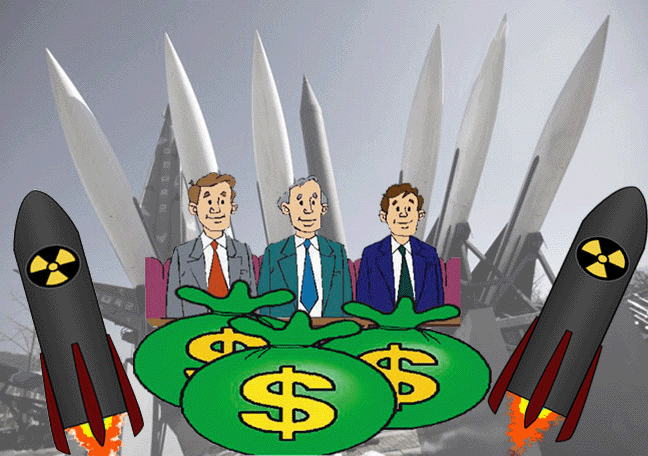
NPR’s Ari Shapiro speaks with Joan Rohlfing, president and COO of the Nuclear Threat Initiative about the current status of nuclear weapons globally. ARI SHAPIRO, HOST:Were surrounded by reminders that North Korea is not the only nuclear threat. In Russia, Moscow says it’s developing a hypersonic missile that will someday be able to get past American defenses. India and Pakistan, both nuclear powers, claim to have shot down each other’s fighter jets. It’s their most serious confrontation in years. To assess how dangerous this moment is, we’re joined now by Joan Rohlfing. She worked on nonproliferation in the Clinton administration, and she’s now president of the Nuclear Threat Initiative…….. ROHLFING: So there are currently nine nuclear weapon states that have the capacity to use nuclear weapons today. There’s the so-called permanent five of the U.N. Security Council – U.S., Russia, China, France, U.K. And then in the category of newer, more recent nuclear weapon states, we have India, Pakistan, Israel, North Korea. ………
ROHLFING: So there are several brightest danger spots. I wish I could say there was only one danger spot. And as we’ve seen so much media focus on North Korea, I would say we’re missing the broader picture. And two danger spots are the U.S.-Russia relationship as well as India and Pakistan. ……….
ROHLFING: So the U.S. and Russia have significant arsenals on high alert, ready to go at a moment’s notice against a backdrop of a lot of friction and deteriorating relationship across a range of fronts – over Ukraine, over Crimea, over Syria. There are many ways in which you could imagine an accident or a miscalculation happening. There are dangerous military incidents that are happening with some regularity, planes coming in close contact with each other. And for decades, we were engaged in ongoing negotiations to manage the nuclear threat. Five years ago, that effectively fell apart. And for the first time in 50 years, we have not been talking about how we manage this relationship and are potentially allowing the guardrails, the treaties that restrain nuclear weapons, to crater. So it’s a very troubling moment. ……… One of the complications is there are new technologies that make the nuclear threat more complex. So think about the emergence of cyberattacks, cyber vulnerabilities. The Defense Department in 2013 issued a report that essentially said – and I’m paraphrasing – there are no military systems that are immune from the threats of cyberattack and cyber vulnerabilities.
SHAPIRO: And so a hacker could conceivably make it look as though a nuclear attack was imminent or actually stage one.
ROHLFING: Indeed. Imagine if our command and control system were compromised so it looked like there was a significant incoming attack and it prompted us to react by retaliating with nuclear missiles or vice versa.SHAPIRO: So when you put the danger of this moment in the context of the last 50 years, how worried are you right now? ROHLFING: I’m very worried. I would say this is the most dangerous period since the Cuban Missile Crisis, the current period. The risk is that high. And it’s interesting. As we see so much focus on North Korea, this is a much broader threat. It’s an urgent threat. And it’s the biggest existential threat that most people have never heard of. SHAPIRO: What needs to change to move things in a more positive direction? ROHLFING: I would say number one, we’ve got to get back to the negotiating table in particular with Russia. Other states on a regional basis need to do this as well, notably India and Pakistan. We have to talk to each other to figure out how we manage to prevent nuclear crises……… https://www.npr.org/2019/02/28/699118990/the-status-of-nuclear-weapons-around-the-world |
|
No comments yet.
1 This Month
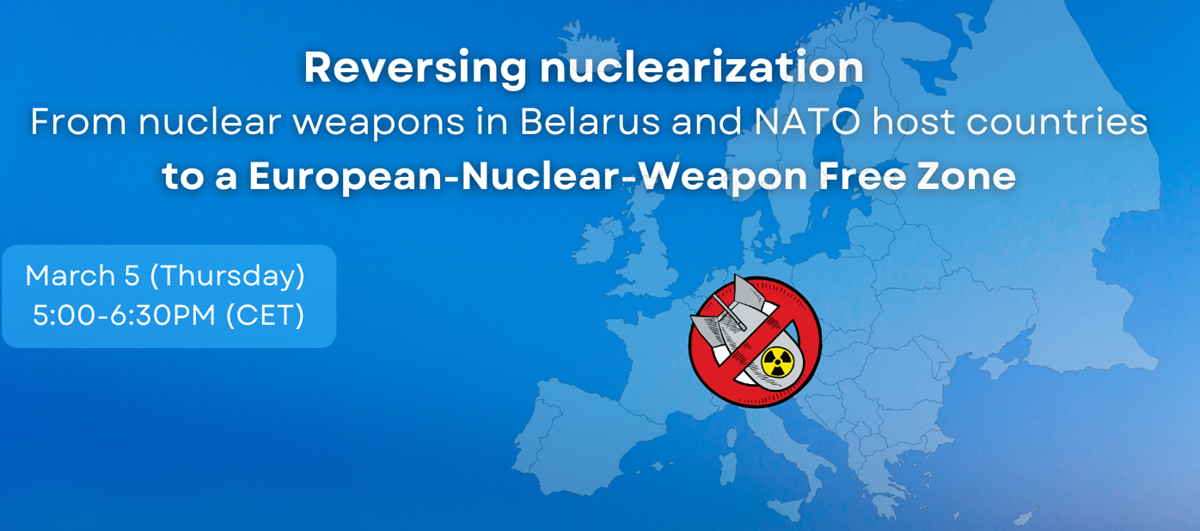
5 March -Online – Reversing nuclearization:
From nuclear weapons in Belarus and NATO host countries to a European-Nuclear-Weapon Free Zone
11am-12:30pm Eastern Time USA / 5pm-6:30pm CET

of the week – Advocating for a
nuclear free beach – https://www.samuellawrencefoundation.org/
The Samuel Lawrence Foundation advocates for a Nuclear Waste Free Beach at San Onofre, join us and take action!
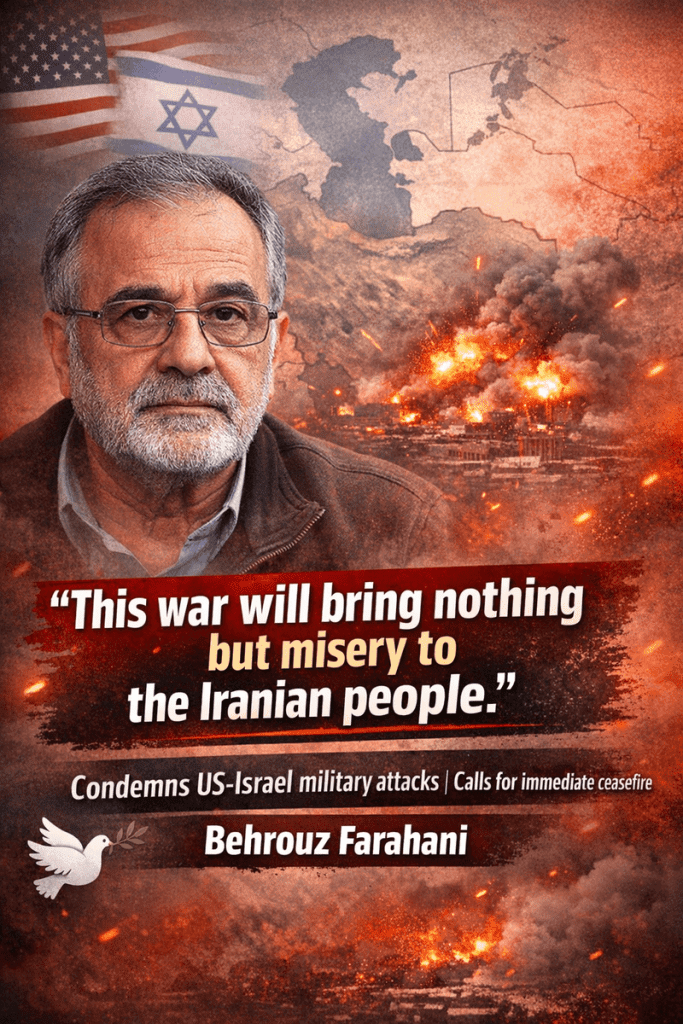
10 March A LIVE WEBINAR THE REAL EFFECTS OF NUCLEAR POWER
What the Industry Isn’t Telling Us
1:00 PM Mountain, 2 pm Central, 3 pm Eastern. Live on the Keepers of the Water Facebook page

18 March Webinar @ 1 PM EST: An Assessment of SMR Projects: The Case of Canada
register for the zoom:
https://us02web.zoom.us/webinar/register/WN_o8BIIOUvQ2ONJR1nta65DQ#/registration

of the week – STOP SMALL MODULAR REACTORS IN CANADA
To see nuclear-related stories in greater depth and intensity – go to https://nuclearinformation.wordpress.com
-
Archives
- March 2026 (51)
- February 2026 (268)
- January 2026 (308)
- December 2025 (358)
- November 2025 (359)
- October 2025 (376)
- September 2025 (258)
- August 2025 (319)
- July 2025 (230)
- June 2025 (348)
- May 2025 (261)
- April 2025 (305)
-
Categories
- 1
- 1 NUCLEAR ISSUES
- business and costs
- climate change
- culture and arts
- ENERGY
- environment
- health
- history
- indigenous issues
- Legal
- marketing of nuclear
- media
- opposition to nuclear
- PERSONAL STORIES
- politics
- politics international
- Religion and ethics
- safety
- secrets,lies and civil liberties
- spinbuster
- technology
- Uranium
- wastes
- weapons and war
- Women
- 2 WORLD
- ACTION
- AFRICA
- Atrocities
- AUSTRALIA
- Christina's notes
- Christina's themes
- culture and arts
- Events
- Fuk 2022
- Fuk 2023
- Fukushima 2017
- Fukushima 2018
- fukushima 2019
- Fukushima 2020
- Fukushima 2021
- general
- global warming
- Humour (God we need it)
- Nuclear
- RARE EARTHS
- Reference
- resources – print
- Resources -audiovicual
- Weekly Newsletter
- World
- World Nuclear
- YouTube
-
RSS
Entries RSS
Comments RSS
 nuclear-news
Leave a comment