 Dr. Gregory Jaczko served as Chairman of the U.S. Nuclear Regulatory Commission from 2009-2012, and as a commissioner from 2005-2009. As Chairman, he played a lead role in the American government’s response to the Fukushima nuclear accident in Japan. Dr. Jaczko is now an adjunct professor at Princeton University and Georgetown University, and an entrepreneur with a clean energy development company. He is the author of Confessions of a Rogue Nuclear Regulator.
South Korea offers hope that the Trump-Kim nuclear summit could bring an end to the Korean War
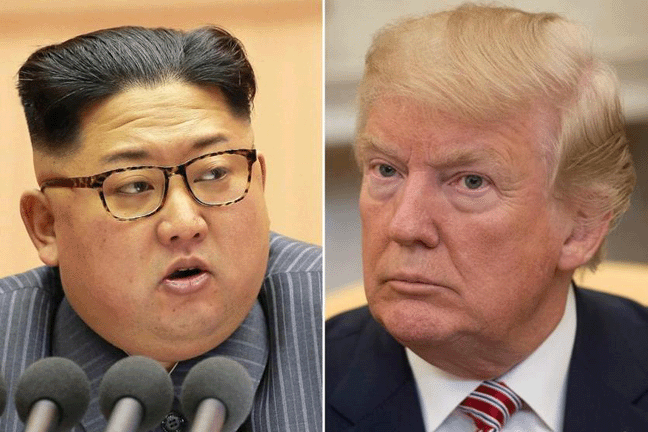 Korean War could be declared over at Trump-Kim summit, says South Korea There’s an upbeat tone that a formal declaration ending the Korean War could be made at the Hanoi summit this week. SBS News 25 Feb 19, Hopes that US President Donald Trump and North Korean leader Kim Jong-un will formally declare an end to the 1950-53 Korean War at the Hanoi summit rose Monday, after South Korea said the two leaders could reach an agreement.
The devastating conflict between communist North Korea, backed by China, and the capitalist South, aided by the United States, ended with an armistice rather than a peace treaty, leaving Pyongyang and Washington still technically at war.
“I believe that the possibility is there,” the South’s presidential Blue House spokesman Kim Eui-kyeom told reporters about a formal declaration.
“There is no way of knowing what kind of declaration it might be, but I believe the US and North Korea may reach an agreement.”
President Moon Jae-in said in October “it was only a matter of time” before Washington and Pyongyang declared an end to the war.
The US has also struck an upbeat tone. Stephen Biegun, the US special envoy for North Korea, said earlier this month that Trump was “ready to end this war”, fuelling speculation that the formal end of the conflict may be near.
Kim, the leader of North Korea, is due to meet the US president in the Vietnamese capital on Wednesday and Thursday, where it is hoped the pair will make progress in talks on denuclearisation, and a possible peace treaty……..
President Trump says he would be happy as long as North Korea maintains its pause on weapons testing, and he is in no rush to strike a nuclear deal with Kim Jong-un. …..https://www.sbs.com.au/news/korean-war-could-be-declared-over-at-trump-kim-summit-says-south-korea
Tensions in Kashmir: Pakistan readies for war
 Pakistan readies military, hospitals for war with its nuclear rival India after Pulwama terror attack, Business Insider
U.N. Secretary-General Antonio Guterres urges the United States and Russia to save nuclear arms safeguards
 U.N. chief wants INF nuclear treaty saved, concrete steps in Hanoi https://www.euronews.com/2019/02/25/un-chief-wants-inf-nuclear-treaty-saved-concrete-steps-in-hanoi
Russia flexes nuclear muscles , warns on its ability to strike nuclear targets in USA
 After Putin’s warning, Russian TV lists nuclear targets in U.S. Andrew Osborn, MOSCOW (Reuters) 25 Feb 19, – Russian state television has listed U.S. military facilities that Moscow would target in the event of a nuclear strike, and said that a hypersonic missile Russia is developing would be able to hit them in less than five minutes.
The targets included the Pentagon and the presidential retreat in Camp David, Maryland.
The report, unusual even by the sometimes bellicose standards of Russian state TV, was broadcast on Sunday evening, days after President Vladimir Putin said Moscow was militarily ready for a “Cuban Missile”-style crisis if the United States wanted one.
With tensions rising over Russian fears that the United States might deploy intermediate-range nuclear missiles in Europe as a Cold War-era arms-control treaty unravels, Putin has said Russia would be forced to respond by placing hypersonic nuclear missiles on submarines near U.S. waters.
……..The targets, which Kiselyov described as U.S. presidential or military command centers, also included Fort Ritchie, a military training center in Maryland closed in 1998, McClellan, a U.S. Air Force base in California closed in 2001, and Jim Creek, a naval communications base in Washington state.
Kiselyov, who is close to the Kremlin, said the “Tsirkon” (‘Zircon’) hypersonic missile that Russia is developing could hit the targets in less than five minutes if launched from Russian submarines.
Hypersonic flight is generally taken to mean traveling through the atmosphere at more than five times the speed of sound……. https://www.reuters.com/article/us-usa-nuclear-russia/after-putins-warning-russian-tv-lists-nuclear-targets-in-us-idUSKCN1QE1DM
Indian and Pakistan relations have again reached a dangerous level.
If Pakistan Attacks With One Nuclear Bomb, India Can Finish Us With 20, Says Pervez Musharraf
Addressing a press conference in UAE, Pakistan’s former president said that Indian and Pakistan relations have again reached a dangerous level. News18.com February 25, 2019, New Delhi: India could “finish” Pakistan with 20 bombs if Islamabad decides to launch even a single nuclear attack on the neighbouring country, former Pakistan president Pervez Musharraf has said.
Addressing a press conference in UAE, Pakistan’s former president further said that if India launched any attack in Kashmir, Pakistan could respond in other areas in Sindh and Punjab and “could teach them a lesson”.
His comment comes over a week after the terror attack that killed 40 CRPF personnel in Jammu and Kashmir’s Pulwama, claimed by Pakistan-based terror group Jaish-e-Mohammed. ……….https://www.news18.com/news/india/if-pakistan-attacks-with-one-nuclear-bomb-india-can-finish-us-with-20-pervez-musharraf-2047265.html
Nuclear power is no solution to the climate crisis
 Nukes Are No Answer To Climate Crisis RALPH NADER RADIO HOUR https://ralphnaderradiohour.com/nukes-are-no-answer-to-climate-crisis/?fbclid=IwAR1WWrHrMbT0bflR2p7fJDw89KeS_qb1fMSRcAX6ESDXanFL6A2hDNbM8To
Remembering the success of an indigenous fight against nuclear waste dumping
 Fight against nuclear waste dump remembered at Ward Valley Spiritual Gathering http://www.mohavedailynews.com/needles_desert_star/fight-against-nuclear-waste-dump-remembered-at-ward-valley-spiritual/article_90eb72d6-389e-11e9-b4f7-9f6fab400ac1.html. By GENTRY MEDRANO Director, Fort Mojave Indian Tribe Public Relations Department, 25 Feb 19,
We are closer to a nuclear war than we would like to believe – new smaller bombs make this more likely
‘Tit-for-tat steps’ toward a nuclear war, DAILY SABAH, Hakkı Öcal 25 Feb 19, Russian President Vladimir Putin’s response to reports that the U.S. would deploy short-range missiles has strong warnings about how they could counter this move.
Those missiles, Putin estimates, could reach Moscow in 10 minutes and he considers this “a very serious threat.” He declared in his response in English, “In this case, we will be forced – I repeat – forced to take tit-for-tat steps.”
Now, read this warning with another piece of news from the Truthout.org website. According to the Truthout report, the National Nuclear Security Administration (NNSA), the U.S. federal agency responsible for the military application of nuclear science, announced that the first of a new generation of strategic nuclear weapons had rolled off the assembly line. It is smaller in size and power; it will yield “only” about one-third of the power of the bomb the U.S. had dropped on Hiroshima on Aug. 6, 1945. In one day, 145,000 people were killed in Hiroshima. So, this “small” bomb, that is officially designated as the W76-2, could kill approximately 50,000 people.
A smaller missile and a smaller bomb, according to the group known as the Union of Concerned Scientists, are actually more dangerous than those monster nuclear weapons, for they kill fewer people. No, there is no contradiction in this evaluation. What precluded the use of the big bombs by both sides was the fear that mutual destruction from both sides’ large atomic weapons would mean the annihilation of civilization. That mutual assured destruction (MAD) theory made a thermonuclear disaster “unthinkable.” ……
This small bomb, according to the Union of Concerned Scientists, is not a deterrent against another country; it is going to be used. It is designed to be used. Its power is not the equivalent of the roughly 100 kilotons of TNT as the ones that had devastated Hiroshima and Nagasaki, but five kilotons. A practical guy like Trump would like to teach a lesson or two to those who are on his national strategy document as “the enemies of the U.S.” using this rather economic weapon. It would not end capitalism and the financial network as the “big one” would have.
Policy analysts think that the Pentagon would definitely deploy short-range nuclear-capable missiles in Eastern Europe and on islands off the Chinese coast. Watch for the deployment of those small bombs on nuclear submarines around Iran, too.
We are closer to a nuclear war than we would like to believe. https://www.dailysabah.com/columns/hakki-ocal/2019/02/25/tit-for-tat-steps-toward-a-nuclear-war
North Korea blasts Japan, claiming that Japan in “nuclear weaponizing”
North Korea alleges ‘nuclear weaponization’ by Japan as Trump-Kim summit draws near, Japan Times, BY JESSE JOHNSON, STAFF WRITER, FEB 25, 2019
In a commentary published Saturday in the Rodong Sinmun, the official newspaper of the North’s ruling party criticized what it claimed were “voices for the revision of the constitution and increased military spending and nuclear weaponization” from within the administration of Prime Minister Shinzo Abe.
The commentary said that under Abe, Japan “can go nuclear anytime after giving up ‘three non-nuclear principles.’ ” Consequently, it claimed, “peace in the Asia-Pacific region will be exposed to a great danger.”
Japan, the only country to have endured a nuclear attack, has long maintained that it adheres to its three nonnuclear principles of not possessing, not producing and not permitting the introduction of nuclear weapons. However, the government admitted in 2010 that previous administrations had lied to the public for decades about atomic weapons, after a government-appointed panel confirmed the existence of secret Cold War-era agreements allowing the U.S. to bring them into the country.
The Rodong Sinmun commentary said that if Japan ditches its three nonnuclear principles, there would be “unimaginable” and “catastrophic consequences.”
“All the countries that truly want global peace and security should keep close watch over Japan’s nuclear weaponization.”
Japan has ramped up military spending and the acquisition of sophisticated weapons in recent years, spending around 1 percent of its gross domestic product on the Self-Defense Forces — which, given the size of its economy, makes it one of the world’s biggest military spenders……. https://www.japantimes.co.jp/news/2019/02/25/national/politics-diplomacy/north-korea-alleges-nuclear-weaponization-japan-trump-kim-summit-draws-near/#.XHRA0YkzbGg
France’s nuclear corporation, EDF, faces the first of many mammoth nuclear plant burials
L’Express 22nd Feb 2019 , Sooner or later, EDF will have to close power plants. Facing the corporation is a vast building project with many unknowns. And in the middle flows the Meuse.
Nestled in one of its loops, a few kilometers from the Belgian border, the two cooling towers of the Chooz nuclear power  plant spew their plumes of white smoke. On the other side of the river, under the wooded hillside that has taken the colors of autumn, EDF is leading the dismantling of Chooz A.
Shut down since 1991 this reactor, installed in an\ artificial cavern, saw its installations gradually dismantled and
evacuated. Still to settle the fate of the tank. Perched on a metal bridge over a deep pool where she was dipped, a handful of Swedish engineers from the American company Westinghouse remotely maneuver the articulated arms of a robot that cut it. A long work, which must last until 2022. After which, the cave Chooz A will be filled with sand, for eternity.
February 25 Energy News — geoharvey

Opinion: ¶ “The Osborne Effect On The Auto Industry” • A perfect storm is brewing above the automotive industry, as three hardly grasped phenomena are working together. They are the Osborne effect of delayed demand, the downward curve of technology costs, and the S-curve that describes market acceptance of new technologies. [CleanTechnica] ¶ “Morrison Puts […]
Paul Flynn, anti-nuclear politician, dies — Beyond Nuclear International

He found nuclear power and weapons incompatible with the needs of humanity
via Paul Flynn, anti-nuclear politician, dies — Beyond Nuclear International
China is killing the world using imported coal — RenewEconomy

China’s insatiable demand for property development and to add floor space is causing it to turn to imported coal that it – and the world – can barely afford. The post China is killing the world using imported coal appeared first on RenewEconomy.
via China is killing the world using imported coal — RenewEconomy
Danger signs in Trump and co’s continuing push to sell nuclear technology to Saudi Arabia
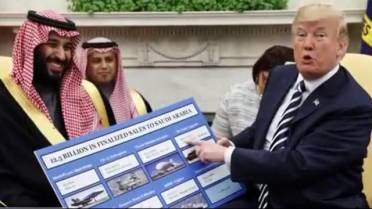 Why proposals to sell nuclear reactors to Saudi Arabia raise
 red flags, The Conversation, Director, Middle East Nonproliferation Program, Middlebury, February 23, 2019 According to a congressional report, a group that includes former senior U.S. government officials is lobbying to sell nuclear power plants to Saudi Arabia. As an expert focusing on the Middle East and the spread of nuclear weapons, I believe these efforts raise important legal, economic and strategic concerns.
It is understandable that the Trump administration might want to support the U.S. nuclear industry, which is shrinking at home. However, the congressional report raised concerns that the group seeking to make the sale may have have sought to carry it out without going through the process required under U.S. law. Doing so could give Saudi Arabia U.S. nuclear technology without appropriate guarantees that it would not be used for nuclear weapons in the future.
A competitive global market
Exporting nuclear technology is lucrative, and many U.S. policymakers have long believed that it promotes U.S. foreign policy interests. However, the international market is shrinking, and competition between suppliers is stiff.
Private U.S. nuclear companies have trouble competing against state-supported international suppliers in Russia and China. These companies offer complete construction and operation packages with attractive financing options. Russia, for example, is willing to accept spent fuel from the reactor it supplies, relieving host countries of the need to manage nuclear waste. And China can offer lower construction costs.
Saudi Arabia declared in 2011 that it planned to spend over US$80 billion to construct 16 reactors, and U.S. companies want to provide them. Many U.S. officials see the decadeslong relationships involved in a nuclear sale as an opportunity to influence Riyadh’s nuclear future and preserve U.S. influence in the Saudi kingdom.
Why does Saudi Arabia want nuclear power?
With the world’s second-largest known petroleum reserves, abundant untapped supplies of natural gas and high potential for solar energy, why is Saudi Arabia shopping for nuclear power? Some of its motives are benign, but others are worrisome. ………..
US nuclear trade regulations
Under the U.S. Atomic Energy Act, before American companies can compete to export nuclear reactors to Saudi Arabia, Washington and Riyadh must conclude a nuclear cooperation agreement, and the U.S. government must submit it to Congress. Unless Congress adopts a joint resolution within 90 days disapproving the agreement, it is approved. The United States currently has 23 nuclear cooperation agreements in force, including Middle Eastern countries such as Egypt (approved in 1981), Turkey (2008) and the United Arab Emirates (2009).
The Atomic Energy Act requires countries seeking to purchase U.S. nuclear technology to make legally binding commitments that they will not use those materials and equipment for nuclear weapons, and to place them under International Atomic Energy Agency safeguards. It also mandates that the United States must approve any uranium enrichment or plutonium separation activities involving U.S. technologies and materials, in order to prevent countries from diverting them to weapons use.
American nuclear suppliers claim that these strict conditions and time-consuming legal requirements put them at a competitive disadvantage. But those conditions exist to prevent countries from misusing U.S. technology for nuclear weapons. I find it alarming that according to the House report, White House officials may have attempted to bypass or sidestep these conditions – potentially enriching themselves in the process.
According to the congressional report, within days of President Trump’s inauguration, senior U.S. officials were promoting an initiative to transfer nuclear technology to Saudi Arabia, without either concluding a nuclear cooperation agreement and submitting it to Congress or involving key government agencies, such as the Department of Energy or the Nuclear  Regulatory Commission. One key advocate for this so-called “Marshall Plan” for nuclear reactors in the Middle East was then-national security adviser Michael Flynn, who reportedly served as an adviser to a subsidiary of IP3, the firm that devised this plan, while he was advising Trump’s presidential campaign.
The promoters of the plan also reportedly proposed to sidestep U.S. sanctions against Russia by partnering with Russian companies – which impose less stringent restrictions on nuclear exports – to sell reactors to Saudi Arabia.
Flynn resigned soon afterward and now is cooperating with the investigation into Russian interference in the 2016 campaign. But IP3 access to the White House persists: According to press reports, President Trump met with representatives of U.S. industry, a meeting organized by IP3 to discuss nuclear exports to Saudi Arabia as recently as mid-February 2019……..https://theconversation.com/why-proposals-to-sell-nuclear-reactors-to-saudi-arabia-raise-red-flags-112276
Climate change taking its toll on the Sea of Galilee and the Jordan River
The Sea of Galilee: A Sea of Miracles Disappearing
 Where Jesus once preached, the holy waters are draining away, Climate change and conflict have left the river Jordan a stagnant stream and the Sea of Galilee critically low, Guardian, Oliver Holmes Sun 24 Feb 2019
Once a raging torrent, the lower Jordan has been starved of water to become a stagnant stream, filled with sewage and dirty run-off from farms. Around 95% of its historical flow has been diverted by agriculture during the past half-century. And the river’s primary source, the Sea of Galilee – where Christians believe the son of God walked on water – has for years been dammed to prevent its demise.
Biblical bodies of water in the Holy Land, eternalised in Christian, Jewish and Muslim ancient texts as godly, are now facing very human threats: climate change, mismanagement and conflict.
Following five consecutive years of drought, the Sea of Galilee has sunk to a 100-year low. A number of small islands have emerged at the water’s surface, and several holiday homes that were built on the shoreline now stand at least 100 metres from the boggy edge.
Overuse has also taken its toll. Last summer, the level of the lake dropped close to a black line, a level at which it could lose its status as a freshwater body. “The black line is our best guess of that point,” says Gidon Bromberg, the Israeli director of EcoPeace, an organisation of Israeli, Palestinian and Jordanian environmentalists. “It was tens of centimetres above the black line,” he says, adding that such a shallow depth has not been seen in records taken over the past century.
As the lake’s level falls, it cannot wash away salt fast enough, and its salinity rises. If the Sea of Galilee’s waters were left to hover around the black line, its flora and fauna would start to perish. A glimpse of the lake’s grim future might be seen 350km downriver at the lowest place on the planet: the Dead Sea, a body almost devoid of fish and plant life. “Once the lake becomes saline, that could be irreversible,” says Bromberg, speaking at the muddy edge of the water, reeds poking up behind him………
As long as the Sea of Galilee is under threat, the river Jordan will be too. And their eventual deaths could have explosive ramifications as water in this region has been a key source of conflict. The river Jordan is shared by Israel, the occupied Palestinian territories, Jordan and Syria, all of which use its depleting reserves………
EcoPeace hopes that good water management will spur on peace to the region. Bromberg is now advocating for a deal in which Israel, which is on the Mediterranean, supplies desalinated water to Jordan. In exchange, Jordan, which is low on water but full of open desert with 320 sunny days a year, will supply solar power.
In the meantime, the river Jordan remains polluted. Most Christian pilgrims who want to be baptised in the holy waters do not venture to the original site where John the Baptist is believed to have led Jesus into the water. That location is in the occupied Palestinian territories next to Jordan, and the Israeli army mined it decades ago. Pilgrims were only allowed to return some years ago……… https://www.theguardian.com/world/2019/feb/23/israel-where-jesus-preached-holy-waters-draining-away-sea-of-galilee-river-jordan?CMP=share_btn_tw
1 This Month


Tell the Ukrainian Government to Drop Prosecution of Peace Activist Yurii Sheliazhenko

Petition to revoke the licensing of the Near Surface Nuclear Disposal Facility (NSDF) at Chalk River. https://www.ourcommons.ca/petitions/en/Petition/Details?Petition=e-7247


of the week – STOP SMALL MODULAR REACTORS IN CANADA
To see nuclear-related stories in greater depth and intensity – go to https://nuclearinformation.wordpress.com
-
Archives
- March 2026 (204)
- February 2026 (268)
- January 2026 (308)
- December 2025 (358)
- November 2025 (359)
- October 2025 (376)
- September 2025 (258)
- August 2025 (319)
- July 2025 (230)
- June 2025 (348)
- May 2025 (261)
- April 2025 (305)
-
Categories
- 1
- 1 NUCLEAR ISSUES
- business and costs
- climate change
- culture and arts
- ENERGY
- environment
- health
- history
- indigenous issues
- Legal
- marketing of nuclear
- media
- opposition to nuclear
- PERSONAL STORIES
- politics
- politics international
- Religion and ethics
- safety
- secrets,lies and civil liberties
- spinbuster
- technology
- Uranium
- wastes
- weapons and war
- Women
- 2 WORLD
- ACTION
- AFRICA
- Atrocities
- AUSTRALIA
- Christina's notes
- Christina's themes
- culture and arts
- Events
- Fuk 2022
- Fuk 2023
- Fukushima 2017
- Fukushima 2018
- fukushima 2019
- Fukushima 2020
- Fukushima 2021
- general
- global warming
- Humour (God we need it)
- Nuclear
- RARE EARTHS
- Reference
- resources – print
- Resources -audiovicual
- Weekly Newsletter
- World
- World Nuclear
- YouTube
-
RSS
Entries RSS
Comments RSS
 nuclear-news