Greenpeace study slams Japan’s plan to dump radioactive Fukushima water into the ocean
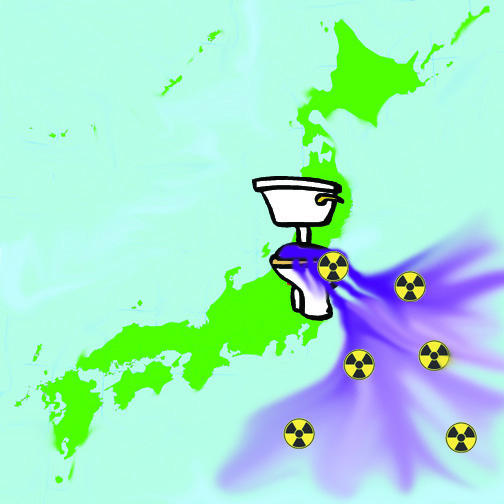
An estimated 1.09 million tonnes of water are presently stored in more than 900 tanks at the plant, which was destroyed by an earthquake and tsunami in March 2011, with up to 4,000 tonnes added every week.
The decision by the government and the plant’s operator, the Tokyo Electric Power Company (Tepco), to avoid developing the relevant technology “was motivated by short-term cost-cutting, not protection of the Pacific Ocean environment and of the health and livelihoods of communities along the Fukushima coast”, said Kazue Suzuki, campaigner on energy issues for Greenpeace Japan.
“We have raised the water crisis with the UN International Maritime Organisation and firmly stand with local communities, especially fisheries, who are strongly opposed to any plans to discharge contaminated water into their fishing grounds.”
The backlash against the plan jointly put forward by the government and Tepco began late last year after the Ministry of Economy, Trade and Industry (METI) held public hearings in Tokyo and Fukushima designed to convince local people that releasing the water into the ocean would have no impact on marine or human life.
Anti-nuclear and environmental groups had obtained data leaked from government sources, however, that showed that the water was still contaminated, triggering public anger. Tepco was forced to admit late last year that its efforts to reduce radioactive material – known as radionuclides – in the water had failed.
The company had previously claimed that advanced processes had reduced cancer-causing contaminants such as strontium-90, iodine-129 and ruthenium-106 in the water to non-detectible levels.
Despite the much-vaunted Advanced Liquid Processing System (ALPS) plant at Fukushima, Tepco has confirmed that levels of strontium-90, for example, are more than 100 times above legally permitted levels in 65,000 tonnes of water that have already been through the ALPS system.
In one of the hearings, Tatsuhiko Sato, a resident of Naraha who only returned to his home last spring because of contamination from the nuclear accident, accused Tepco of “not gathering all the data” and failing to adequately investigate reports that dangerous levels of radionuclides were still in the water after it was treated.
Local fishermen used the public hearing to express their “strong opposition” to plans to release the water, with one, Tetsu Nozaki, pointing out that while levels of radiation in locally caught fish and shellfish have been at or below normal levels for the past three years, releasing contaminated water would “deal a fatal blow” to the local fishing industry.
There has also been anger in some nearby countries, with environmental groups demonstrating in Seoul in November and Korea Radioactive Watch declaring that releasing the water “will threaten the waters of South Korea and other neighbouring nations”.
………..The Greenpeace report concludes that the water crisis at the plant will remain unresolved for the foreseeable future – and that the only viable option to safeguard local communities and the environment is to continue to store the water.
“The Japanese government and Tepco set an objective of ‘solving’ the radioactive water crisis by 2020 – that was never credible,” said Shaun Burnie, a nuclear specialist with Greenpeace Germany.
“The reality is that there is no end to the water crisis at Fukushima, a crisis compounded by poor decision-making by both Tepco and the government. Discharging into the Pacific is the worst option and must be ruled out.”https://www.scmp.com/news/asia/east-asia/article/2183175/greenpeace-slams-japans-plan-dump-radioactive-fukushima-water
No comments yet.
1 This Month


Tell the Ukrainian Government to Drop Prosecution of Peace Activist Yurii Sheliazhenko

Petition to revoke the licensing of the Near Surface Nuclear Disposal Facility (NSDF) at Chalk River. https://www.ourcommons.ca/petitions/en/Petition/Details?Petition=e-7247


of the week – STOP SMALL MODULAR REACTORS IN CANADA
To see nuclear-related stories in greater depth and intensity – go to https://nuclearinformation.wordpress.com
-
Archives
- March 2026 (204)
- February 2026 (268)
- January 2026 (308)
- December 2025 (358)
- November 2025 (359)
- October 2025 (376)
- September 2025 (258)
- August 2025 (319)
- July 2025 (230)
- June 2025 (348)
- May 2025 (261)
- April 2025 (305)
-
Categories
- 1
- 1 NUCLEAR ISSUES
- business and costs
- climate change
- culture and arts
- ENERGY
- environment
- health
- history
- indigenous issues
- Legal
- marketing of nuclear
- media
- opposition to nuclear
- PERSONAL STORIES
- politics
- politics international
- Religion and ethics
- safety
- secrets,lies and civil liberties
- spinbuster
- technology
- Uranium
- wastes
- weapons and war
- Women
- 2 WORLD
- ACTION
- AFRICA
- Atrocities
- AUSTRALIA
- Christina's notes
- Christina's themes
- culture and arts
- Events
- Fuk 2022
- Fuk 2023
- Fukushima 2017
- Fukushima 2018
- fukushima 2019
- Fukushima 2020
- Fukushima 2021
- general
- global warming
- Humour (God we need it)
- Nuclear
- RARE EARTHS
- Reference
- resources – print
- Resources -audiovicual
- Weekly Newsletter
- World
- World Nuclear
- YouTube
-
RSS
Entries RSS
Comments RSS
 nuclear-news
Leave a comment