High radiation levels in Fukushima area, but the Japanese government is pushing people back there
Fukushima Residents Return Despite Radiation, Eight years after the nuclear meltdown, wary citizens are moving back to contaminated homesteads—some not by choice, Scientific American, By Jane Braxton Little January 16, 2019
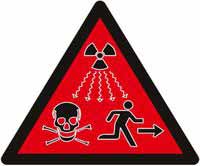 When the Fukushima Daiichi Nuclear Power Plant began spewing radioactive particles after it was clobbered by a tsunami in March 2011Kaori Sakuma fled. She bundled her infant and toddler into a car and left her husband and family in Koriyama, 44 miles west of the ruptured facility. “The truth is, I ran away,” she says. Confronting gas shortages and snarled roads, she transported her children 560 miles away to Hokkaido, about as far as she could get.
Radiation from the fuming plant spread over tile-roofed towns and rice paddies across an area the size of Connecticut. The meltdown 150 miles north of Tokyo drove more than 200,000 people out of the region. Most believed they were fleeing for their lives. Now, almost eight years after the accident, the government has lifted most evacuation orders. Nearly 122,000 people have been allowed to return to communities where weeds have overtaken parking lots. Most are elderly, relieved to be resuming their lives. Prime Minister Shinzo Abe is determined to end all evacuations by 2020, when Japan will host the Olympic Summer Games. The events will include baseball and softball competitions in Fukushima City, a mere 55 miles from the ruined reactors.
Around 35,000 other citizens still wait to return, but they and many others throughout northeastern Japan worry all of this is too soon. Radiation, which is generally linked to cancer, in some places continues to measure at least 5 millisieverts (mSv) a year beyond natural background radiation, five times the added level Japan had recommended for the general public prior to the incident. In certain spots radioactivity is as high as 20 mSv, the maximum exposure recommended by international safety experts for nuclear power workers.
In its haste to address the emergency, two months after the accident the Japanese government raised the allowable exposure from 1 mSv annually, an international benchmark, to 20 mSv. Evacuees now fear Abe’s determination to put the Daiichi accident behind the nation is jeopardizing public health, especially among children, who are more susceptible. Lifting most evacuations has also ended subsidies for evacuees, forcing many to return despite lingering questions.
As more people inside and outside the country absorb the radiation data, Japanese officials are confronting a collapse of public confidence. Before the accident residents in Japan (and the U.S.) were living with background radiation that averaged 3.1 mSv a year,most of it emanating naturally from the ground and space. In Japan and the U.S. many residents experience an additional 3.1 mSv annually, due mostly to medical testing. But the anxiety of Fukushima residents facing even higher levels is palpable. If the government is going to fully restore lives and livelihoods, it needs to regain their trust, says nuclear engineer Tatsujiro Suzuki, a professor at Nagasaki University and former vice chairman of the Japan Atomic Energy Commission. That, he says, should include respecting international safety standards for radiation and lowering the allowable level at least to 5 mSv, although he acknowledges “even 5 mSv is too high for children.”
……….Concern about children is one of the most controversial issues. When officials raised the allowable level of radiation to 20 mSv, including in schools, it was under the guise of giving people a measure of normalcy. But the May 2011decision became a flash point for opponents of the government’s handling of the accident. They were furious children would be subjected to the maximum radiation allowed for nuclear workers, spending day after day in buildings that increased their cancer risk to one in 200 people.
Sakuma was one of those who returned to Koriyama, from her outpost in Hokkaido. She did not want her young children to touch contaminated soil or water along their walk to school, so she carried them both on her small back. “We all want our kids to play in the dirt and pick flowers but I was afraid. We all were,” says Sakuma, now 46. ……https://www.scientificamerican.com/article/fukushima-residents-return-despite-radiation/
UK government’s proposed ‘Regulated Asset Base’ (RAB) financing – a cover-up for a nuclear bailout
  Dave Toke’s Blog 14th Dec 2019 There’s a bunch of highly misleading statements that the Government is to adopt so-called ‘Regulated Asset Base’ (RAB) financing of nuclear power projects. Dave Toke’s Blog 14th Dec 2019 There’s a bunch of highly misleading statements that the Government is to adopt so-called ‘Regulated Asset Base’ (RAB) financing of nuclear power projects.Yes, some of the mechanisms that are being proposed are also used in RAB, but the term is being grotesquely distorted to hide the fact that this is a cover for the Government risking very large sums of money to be lent to nuclear power developers.
Put simply, if the nuclear power projects are as expensive as they usually are the electricity consumer will lose an awful lot of money and prices will be jerked upwards. Either that or the
taxpayer takes a hit and funding of public services suffer big time. You can see the cover up printed in the Sunday Times yesterday where, we are told that ‘Ministers are expected to accelerate plans to introduce regulated asset base (RAB) financing, which is popular in the water and infrastructure sectors, for nuclear plants including the Horizon project’.
Under such schemes the developers are allowed to charge consumers in advance for the capital building projects. What Ministers are not emphasising of course, is that in industries such as water the Government does not lend lots of money to the privatised companies. They raise this on private markets. But in the case of nuclear power plants the bulk of the money needed to build them will be borrowed from the Government.
So if the nuclear plant has very big delays and cost overruns (as has happened to ALL nuclear power plant built in the West this century), the Government loses shedloads of money. The Treasury is likely to insist that this gets paid for by adding the (large) sums to electricity consumer bills. RAB has been used to try to finance nuclear power plant in the USA, in the states of Georgia and South Carolina recently.
The result was disaster and the developing company, Westinghouse, went bust. But this was ‘normal’ RAB where the developer takes the risk of cost overruns. But in the proposed UK
nuclear version it will be the electricity consumer who goes bust when the almost inevitable cost-overruns set in! The nuclear RAB is really a cover for a nuclear bailout. So let’s call it a ‘nuke bailout RAB’.
https://realfeed-intariffs.blogspot.com/2019/01/government-spreads-big-lie-about-rab.html |
Wild mushrooms in Finland still containing high radioactive cesium from Chernobyl nuclear accident in 1986
The Finnish Radiation and Nuclear Safety Authority (Stuk) says that fallout from the Chernobyl nuclear accident can still be detected in Finnish foods, but that it accounts for less than one percent of the average annual radiation dose for people in Finland.
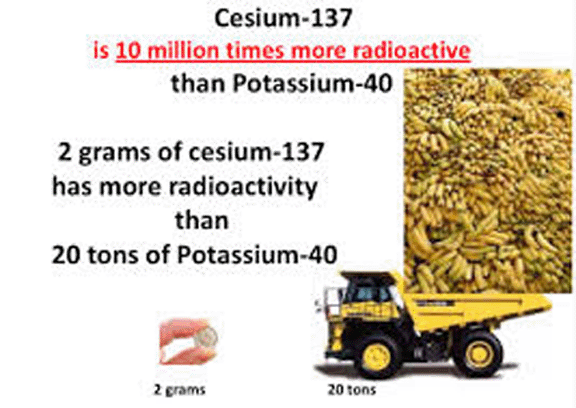 The city of Helsinki’s urban environment division said on Monday that two samples of funnel chanterelle (or yellow leg) mushrooms it tested contained levels of radioactive caesium that exceeded the recommended maximum.
According to EU guidelines, food products offered for sale should not contain more than 600 becquerels per kilo (Bq/kg) of caesium-137. Mushrooms picked in Pälkäne in Pirkanmaa, south-central Finland had a reading of nearly 1,000 Bq/kg. Meanwhile those picked in Hyvinkää, some 60 km from the capital, contained 1,300 Bq/kg. Wild produce from around the country is widely sold at marketplaces in the capital…… https://yle.fi/uutiset/osasto/news/watchdog_wild_mushrooms_ok_to_eat_despite_lingering_chernobyl_radiation/10598680
 |
ReplyForward
|
Offshore wind leads, as UK’s renewable energy is on course to overtake fossil fuels
 Business Green 16th Jan 2019, Renewables are on course to overtake fossil fuels for the first time as the UK’s primary electricity source as early as 2020, according to the latest market forecast from EnAppSys. If current trends continue, the market analyst predicts growing renewable power sources such as wind and solar
will generate 121.3TWh of electricity over the calendar year of 2020, pushing ahead of declining coal and gas-fired power sources with a forecasted 105.6TWh of generation.
The forecast assumes current trends of declining fossil fuel generation and rising renewables generation continue at the same annual rate. In 2018, coal and gas fired power stations
produced a combined 130.9TWh, a 6.7 per cent fall from the previous year’s 140.3TWh, the report states.
Meanwhile, renewable sources delivered 95.9TWh last year, rising 15.2 per cent from 2017 – a strong performance bolstered by the UK’s increasing offshore wind capacity.
https://www.businessgreen.com/bg/news/3069376/report-renewables-to-overtake-fossil-fuels-in-uk-energy-mix-in-2020
Japanese people losing trust in government, as the Fukushima nuclear catastrophe still poses health risks
 Fukushima Residents Return Despite Radiation Eight years after the nuclear meltdown, wary citizens are moving back to contaminated homesteads—some not by choice, SCIENTIFIC AMERICAN, BY JANE BRAXTON LITTLE JANUARY 16, 2019
“………. LACK OF PUBLIC TRUST
In the year after the accident Koriyama was one of 12 communities where the ongoing radiation rate measured between 3 and 5 mSv above background, but the town had not been evacuated. Today’s levels have stabilized at 1.5 mSv, but doubts remain. Skeptical of the government’s readings, Shigeru Otake, 49, takes his own. A slim man who wears a Dollar Store rope belt to give him “strength like a samurai,” he says he has measured radiation spikes at 15 mSv in Koriyama, where his family has lived for generations. Sakuma walks her sons, now eight and 10 years old, to school past a government monitoring post that she claims reads six times lower than her own dosimeter does.
Misgivings about government assurances of safety drove Hiroshi Ueki, 48, to move his family to Nagano Prefecture, where he is now growing “the best grapes in the world.” His parents stayed behind in Fukushima Prefecture. Ueki says he will never move back. “The prime minister says the accident is over but I won’t ever feel safe until the Daiichi plant itself is finally shut down. That will take 100 years.”
In spite of these concerns, Japan has continued to showcase repatriation as a barometer of progress toward recovery. By April 2017, the government had lifted all evacuations except for the most contaminated places closest to Daiichi. That decision also ended rent-free housing provided to people who were forced to leave as well as to some 26,600 people like Ueki who vacated voluntarily. Left without the $10,000 monthly subsidy provided by Tokyo Electric Company, some people have been forced to return home despite their safety concerns. They have no other economic options, says Hajime Matsukubo, general manager of the Citizens’ Nuclear Information Center. Some 16,000 people who refuse to return have been financially abandoned, according to the center.
Scientists generally agree on a few basics: The risks of getting leukemia or other cancers are higher for children than adults, and the risks for everyone increase significantly with exposure above 100 mSv annually. Various national agencies have set 20 mSv per year as a maximum for occupational exposure. Public exposure should be no more than 1 mSv per year above background levels, according to the International Commission for Radiological Protection. That raises questions about Japan’s 2011 emergency declaration of 20 mSv per year as the allowable exposure. …….
The public perception is that the Daiichi nuclear accident continues to pose health risks and, significantly, nuclear power is not safe. More than 80 percent of the Japanese public wants to phase it out, according to an October 2018 study by Suzuki, the former Japan Atomic Energy commissioner. He calls the erosion of public trust “the most unfortunate impact of the accident.”
Sakuma, the Koriyama mother, is using the Daiichi accident as a lesson in radical civic involvement. She intends to keep her sons in Koriyama despite radiation concerns. “I want them to grow up here so they can learn what the government does. I want them to tell other people about how it is to live with radiation,” she says. “This accident is not over.” https://www.scientificamerican.com/article/fukushima-residents-return-despite-radiation/
When it comes to heat, Australia is now a climate change leader
  The world’s 15 hottest sites on Tuesday were all in Australia, Brisbane Times, By Peter Hannam16 January 2019 Australia was home to all 15 of the world’s hottest temperatures on Tuesday, a feat it may well repeat on Wednesday and beyond as a huge swath of the nation bakes in 45-degree-plus heat………According to the El Dorado Weather site, the warmest 15 places on the planet in the past 24 hours were all in Australia. These ranged from Tarcoola in inland South Australia, which reached 49.1 degrees, to Yulara in the Northern Territory at 46.1 degrees in 15th slot…… The world’s 15 hottest sites on Tuesday were all in Australia, Brisbane Times, By Peter Hannam16 January 2019 Australia was home to all 15 of the world’s hottest temperatures on Tuesday, a feat it may well repeat on Wednesday and beyond as a huge swath of the nation bakes in 45-degree-plus heat………According to the El Dorado Weather site, the warmest 15 places on the planet in the past 24 hours were all in Australia. These ranged from Tarcoola in inland South Australia, which reached 49.1 degrees, to Yulara in the Northern Territory at 46.1 degrees in 15th slot……
50 degrees?Jacob Cronje, a senior meteorologist with Weatherzone, said he “wouldn’t be shocked” by a 50-degree reading during the current spell, given the scale and intensity of the heat. Certainly the duration of this event and the spatial extent of the heatwave across the southern half of Australia seems to be quite significant,” he said……. The Bureau of Meteorology and the CSIRO’s State of the Climate report identified rising temperatures as among the clearest indications of climate change in Australia.
Globally, last year was the world’s fourth-hottest year, according to the Japan Meteorological Agency. All of the five warmest years on record have happened since 2014, the agency reported this week. https://www.brisbanetimes.com.au/environment/weather/the-world-s-15-hottest-sites-were-all-in-australia-amid-significant-heatwave-20190116-p50rmr.html
|
|
It is unlikely that nuclear power will be included in America’s Green New Deal
 Morning Consult 14th Jan 2019 , Lawmakers embracing a transition to 100 percent renewable energy under a Green New Deal have largely left out mention of whether nuclear energy should be included in such a policy package. While Rep. Alexandria Ocasio-Cortez, one of the Green New Deal’s biggest proponents, said she hasn’t ruled out nuclear energy from the platform, other advocates on the left hold long-running concerns that appear to lessen nuclear’s chances of inclusion in the deal.
https://morningconsult.com/2019/01/14/nuclears-bleak-odds-in-a-green-new-deal/
Decision on the future of Wylfa nuclear project expected very soon
 Wylfa: Decision on future of nuclear power station expected, A decision is expected about whether work to build a new nuclear power station on Anglesey will be halted. BBC 17 Jan 19,
Japanese media has reported that Hitachi will suspend construction of its £20bn Wylfa Newydd plant – with the board due to meet on Thursday.
Wales’ Economy Secretary Ken Skates said he expected an announcement to be made during the morning……. speculation has been rife that Hitachi will suspend work on Wylfa – a project of its Horizon division – or scrap it due to potential increases in construction costs……. https://www.bbc.com/news/uk-wales-46898261
Australian govt to impose dangerous nuclear dump, despite State law prohibiting this
ANSTO nuclear waste to compromise safety and security in 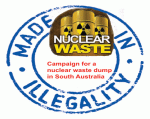 SA, https://www.foe.org.au/ansto_nuclear_waste_to_compromise_safety_and_security_in_sa David Noonan, 17 Jan 19 The federal government intends shipments of irradiated nuclear fuel waste to be imposed through Whyalla or Port Pirie to go onto indefinite above-ground storage at a nuclear dump site at either Kimba or Hawker ‒ all of which is illegal under state law in South Australia.
Two shipments of reprocessed nuclear waste ‒ arising from the reprocessing of fuel irradiated in research reactors operated by the Australian Nuclear Science and Technology Organisation (ANSTO) ‒ are intended in the first two years of nuclear store operations in SA. A shipment is due from Sellafield in UK in the early 2020s, and ANSTO plans a shipment of nuclear waste that was reprocessed in France then shipped to ANSTO’s Lucas Heights site (south of Sydney) in 2015.
 Some 100 B-Double truckloads of federal government Intermediate Level Wastes (ILW) ‒ predominantly ANSTO waste from Lucas Heights ‒ are also to be trucked into SA in the first four years of nuclear store operations in SA.
SA communities face decades of potential accident and terrorist risks and impacts from ongoing ANSTO nuclear waste transports, with all of the next 40 years of ANSTO reactor waste also to be shipped and trucked to SA for indefinite above-ground storage.
 The federal nuclear regulator, the Australian Radiation Protection and Nuclear Safety Agency (ARPANSA), states that nuclear fuel wastes and other ILW require radiation shielding and require isolation from the environment for over 10,000 years. Yet the current plan is to store this waste in SA in a fancy shed for indefinite storage described as “interim” and as “long term above-ground storage (approximately 100 years)”.
After 60 years, ANSTO still has no nuclear waste disposal capacity, while ANSTO’s nuclear waste production is set to increase to more than double waste stockpiles over the next 40 years.
The government’s April 2018 ‘Australian Radioactive Waste Management Framework’1 reports total ILW at 1,770 cubic metres (m3), with 95% by volume arising as federal government wastes.
 The federal government plans to produce a further 1,960 m3 of ILW over next 40 years, with 95% (1,850 m3) arising from ANSTO’s reactor operations – all to be trucked into SA for indefinite above-ground storage at either Kimba or Hawker.
All of these federal government nuclear waste plans face serious obstacles and community opposition. They are illegal under state law in SA; are in breach of formal advice of the Nuclear Safety Committee to the federal regulator ARPANSA2; and do not represent International Best Practice.
The import, transport, storage and disposal of ANSTO nuclear fuel wastes were prohibited by the SA Liberal government in 2000; then in 2002‒03 the incoming SA Labor government extended the legislation to cover other radioactive wastes. Yet the federal Coalition government intends to override state law to impose nuclear wastes onto South Aistralia.
Advice provided to the CEO of ARPANSA by ARPANSA’s ‘Nuclear Safety Committee’ in Nov. 2013 states that:
“International best practice points to the need to have in place a policy and infrastructure for final management and ultimate disposal of waste before activities generating waste commence.”
“[T]he dual handling and transport process associated with interim storage does not represent international best practice”
“Dual handling also has implications for security.”
More recently, in Nov. 2016, the Nuclear Safety Committee advised the CEO of ARPANSA on the “ongoing requirement to clearly and effectively engage all stakeholders, including those along transport routes” and the Committee said that such engagement is “essential”.3
However, in an arrogant, flawed process, the federal government named port cities in SA as required ports to take shipments of nuclear waste in a report4 posted on the internet but failed to even inform the targeted communities and their local councils.
The story broke on Southern Cross TV on Aug. 6. The next day the ABC quoted Port Pirie’s Mayor saying Council was “blind-sided” by the federal government position to potentially require Port Pirie as a nuclear waste port. On Aug. 9 the story ran on p.1 of the Whyalla News, with the Whyalla Mayor saying Council won’t accept this.
Communities in Whyalla or Port Pirie ‒ and in Port Augusta which was named on a number of potential required nuclear waste transport routes ‒ face “complete shutdown” in transport of nuclear wastes through their cities but have been excluded from having a say by this federal government.
The federal Coalition government must stop this untenable nuclear waste threat to compromise safety and security in SA and accept extended storage of ANSTO nuclear fuel waste and ILW at Lucas Heights.
As the alternate federal government, the ALP is yet to say what they may do if elected in 2019.
More information: www.nuclear.foe.org.au/noonan
References:….
- www.radioactivewaste.gov.au/sites/prod.radioactivewaste/files/files/Australian%20Radioactive%20Waste%20Management%20Framework.pdf
- www.arpansa.gov.au/sites/default/files/legacy/pubs/nsc/nsc_iwsadvice.pdf
- www.arpansa.gov.au/sites/default/files/legacy/pubs/nsc/nrwmf-stakeholder-engagement.rtf
- https://prod-radioactivewaste.industry.slicedtech.com.au/sites/prod.radioactivewaste/files/60565376_NRWMF%20Site%20Characterisation%20Technical%20Report_Wallerberdina_20.07.2018_FINAL_Optimized.pdf
Published in Chain Reaction #134, December 2018. National magazine of Friends of the Earth Australia. www.foe.org.au/chain_reaction
Japan must say NO to nuclear power, says former Prime Minister
 Koizumi says Japan must say ‘no’ to nuclear energy, THE ASAHI SHIMBUN, January 17, 2019, When he was prime minister, Junichiro Koizumi championed the use of atomic power to generate electricity.
Then the 2011 earthquake and tsunami disaster struck, triggering a crisis at the Fukushima No. 1 nuclear power plant in Fukushima Prefecture.
Koizumi, in office from 2001 to 2006, and widely regarded as one of Japan’s most popular postwar leaders, started reading up on the nuclear issue, and had a change of heart. Koizumi, 76, published his first book by his own hand titled “Genpatsu Zero Yareba Dekiru” (We can abolish all nuclear plants if we try) in December. It is available from Ohta Publishing Co.
In it, he lambasts consumers for lacking a sense of crisis and simply believing a serious accident like the Fukushima disaster will never happen again in Japan during their lifetime.
In a recent interview with The Asahi Shimbun, Koizumi said it was “a lie” to claim that nuclear power is “safe, low-cost and clean,” although that is precisely what he espoused when he held the reins of power.
Excerpts from the interview follow.
…….. Q: Is it really possible to replace all the nuclear reactors with other sorts of power plants?
A: No reactors were operated for two years after the Fukushima disaster. But no power shortages were reported during the period. That means Japan can do without nuclear plants. It is a fact……. http://www.asahi.com/ajw/articles/AJ201901170010.html
1 This Month
Chernobyl: The Lost Tapes – A good documentary on Chernobyl on SBS available On Demand for the next 3 weeks– https://www.sbs.com.au/ondemand/tv-program/chernobyl-the-lost-tapes/2352741955560

of the week–London Campaign for Nuclear Disarmament

Tell the Ukrainian Government to Drop Prosecution of Peace Activist Yurii Sheliazhenko
To see nuclear-related stories in greater depth and intensity – go to https://nuclearinformation.wordpress.com
-
Archives
- April 2026 (152)
- March 2026 (251)
- February 2026 (268)
- January 2026 (308)
- December 2025 (358)
- November 2025 (359)
- October 2025 (376)
- September 2025 (257)
- August 2025 (319)
- July 2025 (230)
- June 2025 (348)
- May 2025 (261)
-
Categories
- 1
- 1 NUCLEAR ISSUES
- business and costs
- climate change
- culture and arts
- ENERGY
- environment
- health
- history
- indigenous issues
- Legal
- marketing of nuclear
- media
- opposition to nuclear
- PERSONAL STORIES
- politics
- politics international
- Religion and ethics
- safety
- secrets,lies and civil liberties
- spinbuster
- technology
- Uranium
- wastes
- weapons and war
- Women
- 2 WORLD
- ACTION
- AFRICA
- Atrocities
- AUSTRALIA
- Christina's notes
- Christina's themes
- culture and arts
- Events
- Fuk 2022
- Fuk 2023
- Fukushima 2017
- Fukushima 2018
- fukushima 2019
- Fukushima 2020
- Fukushima 2021
- general
- global warming
- Humour (God we need it)
- Nuclear
- RARE EARTHS
- Reference
- resources – print
- Resources -audiovicual
- Weekly Newsletter
- World
- World Nuclear
- YouTube
-
RSS
Entries RSS
Comments RSS
 nuclear-news