


A Department of Energy proposal that could change what is done with some high level radioactive waste at Hanford has Oregon urging its residents to take a stand.
“Waste that is no longer considered high level would be disposed in shallow burial at Hanford,” said Oregon in a news release Monday.
The state’s position is at odds with Tri-City area groups, which say the DOE proposal could save billions of dollars in environmental cleanup money across the nation, making more money available for some of the most pressing environmental cleanup at the Hanford nuclear reservation.
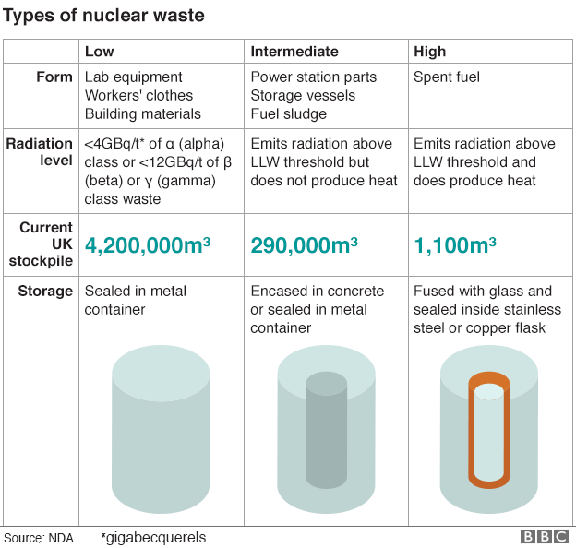
Now radioactive waste at Hanford and other DOE nuclear cleanup sites across the nation is defined as high level waste based on its origin.
Waste associated with chemically processing irradiated uranium fuel to remove plutonium for the nation’s nuclear weapons program is currently classified as high level waste.
It is required to be disposed of in a deep geological repository, such as the one that has been proposed at Yucca Mountain, Nev.
DOE wants to reinterpret the definition to look at the waste’s characteristics and risks, as other countries typically do, rather than its origin.
Oregon proposed that be done nearly 30 years ago.
But it is concerned that DOE’s current proposal would give DOE unilateral discretion to determine how to classify and dispose of waste that for decades has been managed as high level waste.
Independent regulatory oversight by states and the Nuclear Regulatory Commission would be gone, as well as the criteria for defining waste that has been approved by Congress, according to Oregon’s comments submitted to DOE.
DOE published the proposal in the Federal Register and set an extended deadline for comments on it to be received by Wednesday……….
DOE has declined to say what waste could be affected by its proposal to change its interpretation of what is high level waste.
But the state of Oregon says it could could allow more of the long-lived and highly radioactive constituents in the tank waste to remain in the treated waste expected to be disposed of at Hanford.
It also could allow more waste to remain in Hanford’s tanks as they are closed, likely through a process of filling them with grout and leaving them in the ground, according to Oregon. DOE is unable to get all of the waste out of the enclosed tanks as it empties them, but its goal is to remove 99 percent of the waste.
Soil contaminated by leaks and spills of Hanford tank waste and discharges of contaminated liquid into the ground also could be affected. The change to the definition could make it easier for DOE to leave the radioactive contamination in the soil, Oregon said.
“DOE projects confidence that it understands one of the most complicated radiochemical mixtures created by our civilization, and that this waste can be managed for thousands of years in shallow environments,” Oregon said in its comments.
“DOE’s proposed interpretation could lead to long-term risk decisions with insufficient precaution and technical rigor,” it said.
DOE faces a conflict between its responsibility to ensure long-term safety from radiation and its interest in reducing the cost of environmental cleanup in the nation’s nuclear weapons complex, Oregon said.
But the state believes that safety should always prevail over cost savings, it said.
TRIDEC, Hanford Communities and Oregon find some common ground in concerns over the way that DOE is proposing to change how it interprets the definition of high level waste……..
Washington state also is expected to weigh in against the proposed change before the comment period ends Wednesday, but had not finished its comments by Monday.
Comments from organizations and individuals may be emailed to HLWnotice.em.doe.gov. https://www.tri-cityherald.com/news/local/hanford/article224033150.html


 nuclear-news