As we might have expected, the de facto abandon of the Intermediate-Range Nuclear Forces Treaty (INF Treaty) – concluded between Washington and Moscow at the end of the Cold War – has now rebooted the competition. Except that this time, it’s even more complicated, since the United States violated the Treaty first, while they were already violating the Non-Proliferation Treaty (NPT). Meanwhile, Russia has discreetly forged ahead with its technological progress while pretending to allow the problem to drag on.
There’s money in denying the science about ionising radiation – it’s useful nuclear lobby spin
Recently, the National Council on Radiation Protection and Measurements (NCRP) – scientists who provide guidance and recommendations on radiation protection under a mandate from Congress – supported the LNT model. NCRP analyzed 29 epidemiological studies and found that the data was “broadly supportive” of the LNT model and that “no alternative dose-response relationship appears more pragmatic or prudent for radiation protection purposes.”
In fact, the National Academies’ Nuclear and Radiation Studies Board, the International Council on Radiation Protection, and other international bodies and regulators all use the LNT model for guidance and radiation protection.
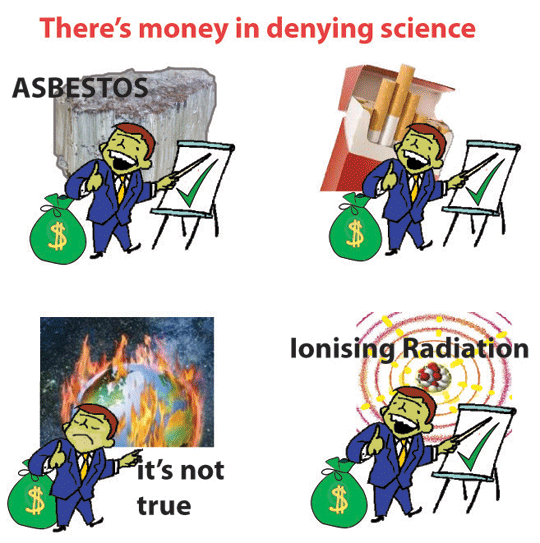
Why radiation protection experts are concerned over EPA proposal https://theconversation.com/why- radiation-protection-experts-are-concerned-over-epa-proposal-104895
 radiation-protection-experts-are-concerned-over-epa-proposal-104895
 Scientist-in-Residence and Adjunct Professor, Middlebury Institute of International Studies at Monterey, October 19, 2018 The Takata Corporation sold defective air bag inflators that resulted in the death of 16 people in the United States and a massive recall of cars. While it was rare for the air bags to fail, the brutal consequences of this defective device in even minor collisions was easy to recognize. But the effects of low-dose ionizing radiation – high energy waves or particles that can strip electrons from atoms and physically damage cells and the DNA within – on people’s health is much harder to see, and prove.
When the Associated Press reported that the Trump administration’s Environmental Protection Agency solicited the advice of a controversial toxicologist, Edward Calabrese, to consider changes to how it regulates radiation, it sent shock waves through the radiation protection community. Calabrese is well known for his unconventional and outlying view that low-dose radiation is not dangerous.It is important to note that the health effects of high doses of radiation are well established. We all know about the horrific effects based on studies of the populations of Hiroshima and Nagasaki after the atomic bombs were dropped. Then there was also the recent case of Russian defector Alexander Litvenenko who quickly sickened and died 23 days after being poisoned with the radioactive isotope polonium-210 in 2006.However, the effects of low doses of radiation are not well understood. Part of the reason is that these low doses are difficult to measure.
When the Associated Press reported that the Trump administration’s Environmental Protection Agency solicited the advice of a controversial toxicologist, Edward Calabrese, to consider changes to how it regulates radiation, it sent shock waves through the radiation protection community. Calabrese is well known for his unconventional and outlying view that low-dose radiation is not dangerous.It is important to note that the health effects of high doses of radiation are well established. We all know about the horrific effects based on studies of the populations of Hiroshima and Nagasaki after the atomic bombs were dropped. Then there was also the recent case of Russian defector Alexander Litvenenko who quickly sickened and died 23 days after being poisoned with the radioactive isotope polonium-210 in 2006.However, the effects of low doses of radiation are not well understood. Part of the reason is that these low doses are difficult to measure.
Current understanding of the health effect of radiation relies primarily on a decades-long study of the survivors of the Hiroshima and Nagasaki atomic bomb attacks. That population was exposed to a one-time large dose of radiation, with individual exposure dependent on where they were at the time of the explosion.
In those high-dose radiation studies, researchers found that there is a proportionate relationship between dose and effect. The way the EPA gauges the effect of low doses of radiation draws from these studies as well as studies following other incidents. The current guidelines for the EPA adhere to what is called the linear no-threshold (LNT) model, which implies that even low doses of radiation have an effect across a population. Some scientists dubbed it to be a “reverse lottery,” where an unlucky few within a given population will get cancer during their lifetime due to their exposure to radiation.
There have been questions as to whether the LNT model is appropriate for measuring cancer risk from low doses of radiation. That’s because when the radiation-induced cancer rate is low, and the sample size is small, there is more statistical uncertainty in the measurement. This allows more wiggle room in putting forward alternative dose- response models such as Calabrese’s, which have little scientific backing but that promise financial benefits for regulated industries.
Overall, the general feeling in the radiation protection community is that for now until new research proves otherwise, the LNT model, because of the lack of understanding of the effect of low doses, is the prudent model to use to set protective limits.
Also, not being able to determine the effect of a low dose of radiation is a problem in measurement, not in the underlying linear threshold model. As doses of radiation decrease, fewer cases of radiation-induced cancers occur, making it more difficult to identify those specific cases.
This is especially true given that cancer is already a common occurrence, making it nearly impossible to disentangle radiation exposure from many other potential cancer risk factors. This is where the analogy with Takata air bags fails, because it is not possible to prove that a specific cancer death is due to ionizing radiation, but this does not make it any less real or significant.
Who profits if radiation guidelines change
The EPA issues guidance and sets regulations to “limit discharges of radioactive material affecting members of the public” associated with the nuclear energy industry. The EPA defines what radiation levels are acceptable for a protective cleanup of radioactive contamination at Superfund sites. It also provides guidance on the levels of radiation exposure that would trigger a mass evacuation. It is not surprising that certain stakeholders would welcome modifications in EPA assessment of low-dose radiation exposure given the high costs involved in preventing or cleaning up sites and in compensating victims of such exposure.
Recently, the National Council on Radiation Protection and Measurements (NCRP) – scientists who provide guidance and recommendations on radiation protection under a mandate from Congress – supported the LNT model. NCRP analyzed 29 epidemiological studies and found that the data was “broadly supportive” of the LNT model and that “no alternative dose-response relationship appears more pragmatic or prudent for radiation protection purposes.”
In fact, the National Academies’ Nuclear and Radiation Studies Board, the International Council on Radiation Protection, and other international bodies and regulators all use the LNT model for guidance and radiation protection.
From my perspective, as someone who has worked with radioactive sources, the EPA should be cognizant of the warning by the late Harvard sociologist Daniel Yankelovich that just because an effect can’t be easily quantified does not mean it is not important or does not exist.
Here’s an example of the uncritical journalistic hype over the nuclear lobby’s new filmic advertisement
(Low on facts – high on uncritical enthusiasm)

A new documentary puts fresh, young faces on the old debate over nuclear power, Grist , on Oct 18, 2018“…….. David Schumacher’s new documentary, The New Fire,…. profiles young people working to invent better versions of nuclear power plants. There’s the couple with a simple reactor design who started the company, Oklo. And there’s the Bill Gates-backed TerraPower. …..the movie serves up hope and enthusiasm……..
I discovered these young people starting companies to build nuclear reactors. It was so audacious. They were so  heroic and charming and just completely iconoclastic. They shattered the standard image of nuclear engineers……
 heroic and charming and just completely iconoclastic. They shattered the standard image of nuclear engineers……
I’ve had people come up to me and say this has totally changed my mind. At the Philadelphia Environmental Film Festival, this couple approached me and said, “We started a chapter of the Sierra Club downwind of Three-Mile Island.” These are folks who would have been young adults at the time [1978, when the Three Mile Island plant had a partial meltdown]. “So we’ve been very anti-nuclear, but this film really changed our minds.” ……
Genetic effects on UK soldiers – ‘guinea pigs’ at nuclear bomb tests in Australia in 1950s
 UK to probe poisonous genetic legacy of nuclear test ‘guinea pigs’ SMH, By Nick Miller, 19 October 2018 London: The UK government is considering a new study into the health of the children of British veterans used as guinea pigs in its Australian and Pacific nuclear weapons tests, to test fears of a poisonous genetic legacy.
If a link can be found it may form the basis of a claim for compensation from the UK government, despite courts previously turning down such claims from the veterans themselves.
Defence Secretary Gavin Williamson has told officials in the Ministry of Defence to look at the feasibility of a study into the health and well-being of the children of nuclear test veterans, an MOD spokesman said.
Decades ago, around 22,000 British military personnel witnessed nuclear weapons tests in South Australia, on the Montebello Islands off Western Australia, and on Kiribati’s Christmas Island in the Pacific.
Some felt the heat of the explosion on their backs and were ordered to turn around and observe the mushroom cloud. One veteran told the BBC in February the tests “bowled people over” and left them on the ground screaming. He had watched “another sun hanging in the sky”, dressed only in a t-shirt, shorts and thongs.
“We were guinea pigs,” Bob Fleming, 83, said. He said 16 of his 21 children, grandchildren and great-grandchildren had birth defects or health problems: his youngest daughter has thyroid problems and severe breathing difficulties.
The family believe it is a result of the radiation Mr Fleming was exposed to during the test.
Another veteran, RAF sergeant Roy Kirkland, slept a half a mile from Ground Zero and was ordered to collect dead seabirds from the Christmas Island test site.
His grandson, Wayne, was diagnosed with cancer of the nervous system at age three and died before he was 10. Wayne’s aunt told the Daily Mirror “the biggest health issue for these veterans now is their descendants”.
The new feasibility study follows a campaign by the Mirrorand Labour deputy leader Tom Watson, who have been pushing for recognition and compensation for the veterans who were exposed to radiation during the tests in the region between 1952 and 1967 – and their families.
In 2007 a study of New Zealand nuclear test veteransfound they had more than double the expected amount of genetic damage for men of the same age – even higher than that detected in workers close to the Chernobyl nuclear accident or involved in the clean-up.
The study by researchers from Massey University found the genetic damage was most likely attributable to the veterans having been on board NZ navy frigates observing nuclear tests at Christmas Island.
Britain’s Health Protection Agency reviewed the Massey research and agreed with their conclusions. Earlier this year the UK’s Centre for Health Effects of Radiological and Chemical Agents at Brunel University in London announced a three-year genetic study looking for any possible damage to the veterans’ DNA caused by the tests.
In 2014 a study by European researchers found a “significant excess” of infant mortality and congenital illnesses in nuclear test veterans’ children. The veterans’ wives had five times as many stillbirths, and 57 children of veterans had congenital conditions – ten times the rate in the control group and eight times the national average. There were also significantly higher congenital illnesses – and cancer – among the veterans’ grandchildren. The researchers said their results were “highly statistically significant”. …….. https://www.smh.com.au/world/europe/uk-to-probe-poisonous-genetic-legacy-of-nuclear-test-guinea-pigs-20181019-p50alz.html
Fukushima and ‘The Devil’s Scenario’ – the bullet that Japan dodged
60,000 tons of dangerous radioactive waste sits on Great Lakes shores Keith Matheny, Detroit Free Press Oct. 19, 2018 “……… Fukushima and ‘The Devil’s Scenario’
On March 11, 2011, following a magnitude-9.0 earthquake and an ensuing, 50-foot tsunami, the Fukushima Daiichi nuclear power plant in Japan lost cooling capabilities for four of its six reactors. The cores became damaged and radiation was released into the atmosphere, making it the world’s second-worst nuclear power industry accident after Chernobyl.
But it’s what happened — or almost happened — at the plant’s Unit 4 spent-fuel pool that gives nuclear watchdogs nightmares.
A hydrogen explosion four days into the disaster left the building housing the Unit 4 spent-fuel pool in ruins. The pool was seven stories up in a crumbling, inaccessible building.
It “was so radioactive, you couldn’t put people up there,” von Hippel said. “For about a month after Fukushima, people didn’t know how much water was in the pool. They were shooting water up there haphazardly with a hose, trying to drop it by helicopter.”
Two weeks after the earthquake and tsunami, the Japanese Atomic Energy Commission secretly conducted a worst-case scenario study of the ongoing disaster. The biggest fear that emerged: that a self-sustaining fire would start in the Unit 4 spent fuel pool, spreading to the nearby, damaged reactors. That, they found, would release radiation requiring evacuations as far away as 150 miles, to the outskirts of Tokyo and its more than 13.4 million residents.
“That was the devil’s scenario that was on my mind,” Chief Cabinet Secretary Yukio Edano said during a special commission’s 2014 investigation of the accident.
“Common sense dictated that, if that came to pass, then it was the end of Tokyo.”
The worst-case-scenario report was not released for nearly a year. “The content was so shocking that we decided to treat it as if it didn’t exist,” the Japan Times quoted a senior Japanese government official as saying in January 2012.
What kept the spent fuel rods covered with water in Unit 4 was a miraculous twist of fate: The explosion had jarred open a gate that typically separated the Unit 4 spent fuel pool from an adjacent reactor pool.
 “Leakage through the gate seals was essential for keeping the fuel in the Unit 4 pool covered with water,” a 2016 report on the Fukushima accident by the U.S. National Academies of Sciences, Engineering and Medicine concluded.
“Had there been no water in the reactor well, there could well have been severe damage to the stored fuel and substantial releases of radioactive material to the environment.”
It’s a startling “very near-miss,” said Gordon Thompson, executive director of the Institute for Resource and Security Studies in Cambridge, Massachusetts.
“Given wind directions that are common in Japan, they could have been looking at removing the population of Tokyo for decades, or centuries,” he said. “You’re talking tens of millions of people that would have to relocate. That’s the bullet that Japan dodged.”……..https://www.freep.com/story/news/local/michigan/2018/10/19/nuclear-waste-great-lakes/1417767002/
The dangerous radioactive trash – 60,000 tons on the shores of the Great Lakes
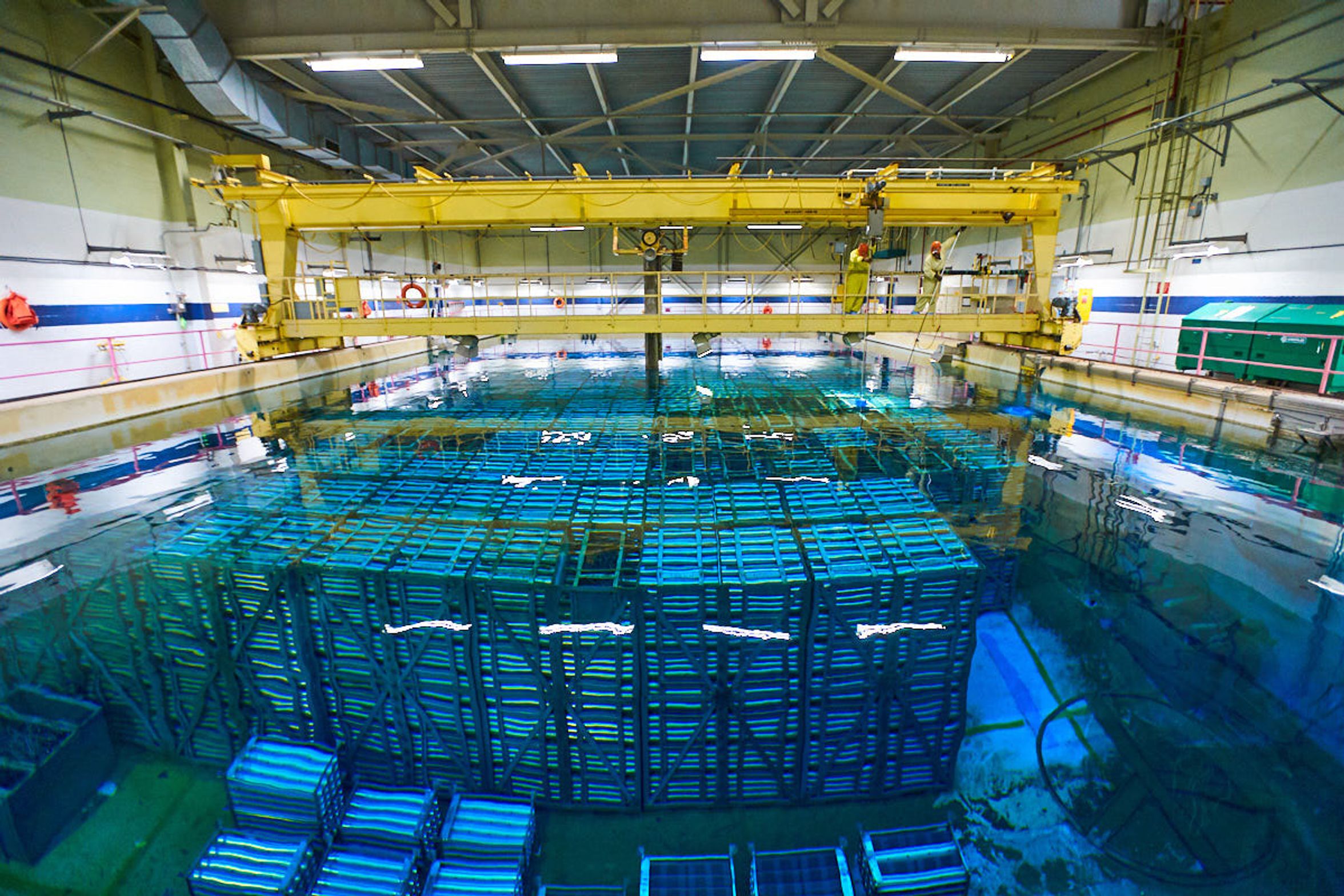 60,000 tons of dangerous radioactive waste sits on Great Lakes shores, THE EFFECTS OF A WORST-CASE SCENARIO — FROM A NATURAL DISASTER TO TERRORISM — COULD CAUSE UNTHINKABLE CONSEQUENCES FOR THE GREAT LAKES REGION, Keith Matheny, Detroit Free Press, Oct. 19, 2018 More than 60,000 tons of highly radioactive spent nuclear fuel is stored on the shores of four of the five Great Lakes — in some cases, mere yards from the waterline — in still-growing stockpiles.
“It’s actually the most dangerous waste produced by any industry in the history of the Earth,” said Gordon Edwards, president of the nonprofit Canadian Coalition for Nuclear Responsibility.
The spent nuclear fuel is partly from 15 current or former U.S. nuclear power plants, including four in Michigan, that have generated it over the past 50 years or more. But most of the volume stored along the Great Lakes, more than 50,000 tons, comes from Canadian nuclear facilities, where nuclear power is far more prevalent.
It remains on the shorelines because there’s still nowhere else to put it. The U.S. government broke a promise to provide the nuclear power industry with a central, underground repository for the material by 1998. Canada, while farther along than the U.S. in the process of trying to find a place for the waste, also doesn’t have one yet.
The nuclear power industry and its federal regulator, the U.S. Nuclear Regulatory Commission, point to spent nuclear fuel’s safe on-site storage over decades. But the remote possibility of a worst-case scenario release — from a natural disaster, a major accident, or an act of terrorism — could cause unthinkable consequences for the Great Lakes region.
Scientific research has shown a radioactive cloud from a spent fuel pool fire would span hundreds of miles, and force the evacuation of millions of residents in Detroit, Chicago, Cleveland, Toronto or other population centers, depending on where the accident occurred and wind patterns.
It would release multiple times the radiation that emanated from the Fukushima disaster in Japan in 2011 — a disaster that led to mass evacuations, no-go zones that exist to this day, and a government ban on fishing in a large, offshore area of the Pacific Ocean because of high levels of radioactive cesium in the water and in fish. The fishing industry there has yet to recover, more than seven years later.
“The Mississippi and the Great Lakes — that would be really bad,” said Frank von Hippel, senior research physicist and professor of public and international affairs emeritus at Princeton University.
Added Jim Olson, environmental attorney and founder of the Traverse City-based nonprofit For Love of Water, or FLOW: “The fact that it’s on the shorelines of the Great Lakes takes that high consequence that would be anywhere and paints it red and puts exclamation marks around it.”
Spent nuclear fuel is so dangerous that, a decade removed from a nuclear reactor, its radioactivity would still be 20 times the level that would kill a person exposed to it. Some radioactive byproducts of nuclear power generation remain a health or environmental hazard for tens of thousands of years. And even typically harmless radioactive isotopes that are easily blocked by skin or clothing can become extremely toxic if even small amounts are breathed in, eaten or drank, making their potential contamination of the Great Lakes — the drinking water supply to 40 million people — the connected Mississippi River and the prime agricultural areas of the U.S. a potentially frightening prospect. ……….
For five years, Michigan residents, lawmakers, environmental groups and others around the Midwest have, loudly and nearly unanimously, opposed a planned Canadian underground repository for low-to-medium radioactive waste at Kincardine, Ontario, near the shores of Lake Huron.
Meanwhile, spent nuclear fuel, vastly more radioactive, sits not far from the shores of four Great Lakes — Michigan, Huron, Erie and Ontario — at 15 currently operating or former nuclear power plant sites on the U.S. side. In Michigan, that includes Fermi 2; the Donald C. Cook nuclear plant in Berrien County; the Palisades nuclear plant in Van Buren County, and the former Big Rock Point nuclear plant in Charlevoix County, which ceased operation in 1997 and where now only casks of spent nuclear fuel remain.
Neither the U.S. nor the Canadian government has constructed a central collection site for the spent nuclear fuel. It’s not just a problem in the Great Lakes region — more than 88,000 tons of spent nuclear fuel, an amount that is rising, is stored at 121 U.S. locations across 39 states…….
Spent nuclear fuel isn’t only radioactive, it continues to generate heat. It requires storage in pools with circulating water for typically five years before it can be moved into so-called dry-cask storage — concrete-and-steel obelisks where spent fuel rods receive continued cooling by circulating air.
In practice, however, because of the high costs associated with transferring waste from wet pools to dry casks, nuclear plants have kept decades worth of spent fuel in wet storage. Plant officials instead “re-rack” the pools, reconfiguring them to add more and more spent fuel, well beyond the capacities for which the pools were originally designed.
“The prevailing practice in the United States is you re-rack the pools until they are just about as dense-packed as the nuclear core,” von Hippel said.
Only in recent years have nuclear plants stepped up the transition to dry cask storage because there’s no room left in the wet pools. Still, about two-thirds of on-site spent nuclear fuel remains in wet pools in the U.S.
That’s a safety concern, critics contend. A catastrophe or act of terrorism that drains a spent fuel pool could cause rising temperatures that could eventually cause zirconium cladding — special brackets that hold the spent fuel rods in bundles — to catch fire.
Such a disaster could be worse than a meltdown in a nuclear reactor, as spent nuclear fuel is typically stored with nowhere near the fortified containment of a reactor core.
“The long-term land-contamination consequences of such an event could be significantly worse than those from Chernobyl,” a 2003 research paper by von Hippel and seven other nuclear experts stated.
The reference is to the worst nuclear power disaster in world history, the April 1986 reactor explosion at the Chernobyl Nuclear Power Plant in the former Soviet Union, now a part of the Ukraine, where 4,000 to 90,000 are estimated to have died as a result of the radiation released. A study by the University of Exeter in Great Britain, released this June, found that cow’s milk from farms about 125 miles from the Chernobyl accident site still — more than 30 years later —- contains the radioactive element cesium at levels considered unsafe for adults and at more than seven times the limit unsafe for children.
Allison Macfarlane, a professor of public policy and international affairs at George Washington University, served as chairman of the NRC during the Obama administration from July 2012 until December 2014.
“What I think needs more examination is the practice of densely packing the fuel in the pool,” she said.
The NRC does not regulate how much fuel can be in a pool, in what configuration it’s placed, and how old the fuel is, Macfarlane said. ……….
In a Great Lakes region where magnitude-9.0 earthquakes and tsunamis aren’t a potential threat to stockpiles of spent nuclear fuel, terrorism remains possible………
In a Great Lakes region where magnitude-9.0 earthquakes and tsunamis aren’t a potential threat to stockpiles of spent nuclear fuel, terrorism remains possible.
“The NRC’s position on beyond design basis threats is essentially that this is a matter for the national security apparatus — it’s not our job, so somebody else will take care of it,” he said. “But if you look at the Pentagon, Homeland Security, I think you will look in vain to find any part of that apparatus that is addressing that area that the NRC says is not its job.”……….
Welcome to Zion, nuclear waste dump ………..
National security adviser John Bolton urging Trump to withdraw from Russian nuclear arms treaty
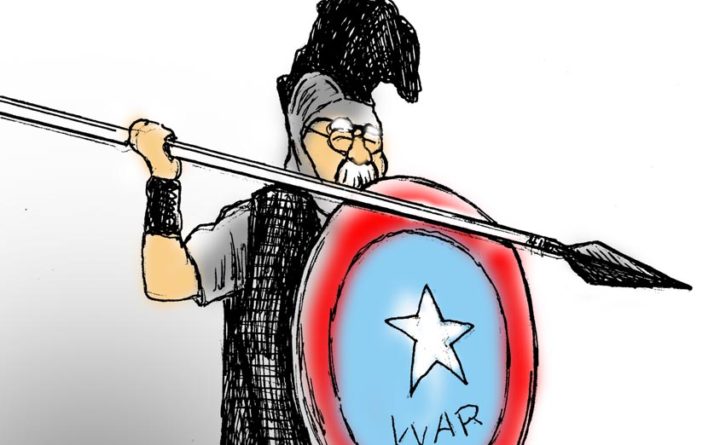 John Bolton pushing Trump to withdraw from Russian nuclear arms treaty, Exclusive: national security adviser recommends ending intermediate-range nuclear forces treaty over alleged Russia violations, Guardian, Julian Borger , 20 Oct 18, John Bolton is pushing for the US to withdraw from a cold war-era arms control treaty with Russia, in the face of resistance from others in the Trump administration and US allies, according to sources briefed on the initiative.Bolton, Donald Trump’s third national security adviser, has issued a recommendation for withdrawal from the 1987 intermediate-range nuclear forces treaty (INF), which the US says Russia has been violating with the development of a new cruise missile.
Withdrawal from the treaty, which would mark a sharp break in US arms control policy, has yet to be agreed upon by cabinet and faces opposition from within the state department and the Pentagon. A meeting on Monday at the White House to discuss the withdrawal proposal was postponed.
The INF faces a congressionally imposed deadline early next year. An amendment in the 2019 defence spending bill requires the president to tell the Senate by 15 January whether Russia is in “material breach” of the treaty, and whether the INF remains legally binding on the US.
Bolton, who has spent his career opposing arms control treaties, is seeking to shrug off the traditional role of national security adviser as a policy broker between the agencies, and become a driver of radical change from within the White House.
Former US officials say Bolton is blocking talks on extending the 2010 New Start treaty with Russia limiting deployed strategic nuclear warheads and their delivery systems. The treaty is due to expire in 2021 and Moscow has signaled its interest in an extension, but Bolton is opposing the resumption of a strategic stability dialogue to discuss the future of arms control between the two countries.
The US has briefed its European allies this week about the proposal, sounding out reactions. The briefing alarmed UK officials who see the INF as an important arms control pillar. The treaty marked the end of a dangerous nuclear standoff in 1980s Europe pitting US Pershing and cruise missiles against the Soviet Union’s SS-20 medium-range missiles.
The US alleges Russia is now violating the treaty with the development and deployment of a ground-launched cruise missile, known as the 9M729. Moscow insists the missile does not violate the range restrictions in the INF and alleges in return that a US missile defence system deployed in eastern Europe against a potential Iranian threat can be adapted to fire medium-range offensive missiles at Russia.
The National Security Council (NSC) declined to comment on the fate of the INF………
Bolton’s meeting with his Russian counterpart, Nikolai Patrushev, in Geneva in August, was expected to give the final green light to the dialogue, but Bolton is said to have blocked it. He is due to visit Moscow next week, when the Kremlin said he may meet Vladimir Putin.
(pic DANBY/BDN) The New York Times reported on Friday that Bolton intended to use his Moscow trip to inform Russian leaders of the administration’s plans to exit the INF agreement. Under the terms of the treaty, withdrawal would take six months.
In remarks in Sochi on Thursday, Putin appeared to suggest that Russia would adopt a “no first use” policy on nuclear weapons.
“We have no concept of a pre-emptive strike,” he told a conference. “[W]e expect to be struck by nuclear weapons, but we will not use them first,” he said.
A meeting of Nato defence ministers earlier this month in Brussels issued a joint statement saying the INF “has been crucial to Euro-Atlantic security and we remain fully committed to the preservation of this landmark arms control treaty”………
“The decision has been taken in the NSC [National Security Council] that the US should withdraw, and they are trying to persuade other parts of the administration. There has been no formal Trump decision yet,” said Hans Kristensen, the director of the nuclear information project at the Federation of the American Scientists. “Very little good will come of this, other than another round of nuclear escalation with Russia.” ………https://www.theguardian.com/us-news/2018/oct/19/john-bolton-russia-nuclear-arms-deal-trump-lobbying
U.S. nuclear power stations were the original target for the 9/11 terrorist attacks
| 60,000 tons of dangerous radioactive waste sits on Great Lakes shores, Keith Matheny, Detroit Free Press Oct. 19, 2018 “………The original 9/11 idea In August 2002, al-Jazeera reporter Yosri Fouda got an anonymous call offering him an incredible interview with two of the biggest fugitives from justice on the globe: al-Qaida leaders Khalid Sheikh Mohammed, the so-called mastermind of the 9/11 terrorist attacks, and Ramzi bin al-Shibh. Wrote London’s The Guardian about Fouda’s account at the time: “After two days in a run-down hotel (in Karachi, Pakistan), he was passed through a chain of people before being blindfolded, put in a car (trunk) and driven to an apartment building. He was taken to a flat strewn with laptop computers and mobile phones and occupied by two men whom he recognized as Bin al-Shibh and Mohammed. Among the things Fouda said he learned in his interview: That the initial targets for what became the Sept. 11, 2001, terrorist attacks included two, unspecified U.S. nuclear power plants. “It was decided to abandon nuclear targets for the moment,” Fouda said Mohammed explained to him. “I mean for the moment,” Mohammed added. Al-Qaida leaders feared an attack on U.S. nuclear facilities “might get out of hand,” Fouda said he was told. Noted Kamps of the nonprofit Beyond Nuclear, “We’re relying on the moral restraint of a terrorist organization not to attack nuclear plants.” That startling revelation was later amplified in the 9/11 Commission’s report, which not only noted Mohammed’s account, but that 9/11 ringleader and hijacker Mohammed Atta, in July 2001 meetings with Bin al-Shibh in Spain, “mentioned he had considered targeting a nuclear facility he had seen during familiarization flights near New York.” The plan was ultimately scuttled because Atta “thought a nuclear target would be difficult because the airspace around it was restricted, making reconnaissance flights impossible and increasing the likelihood that any plane would be shot down before impact,” the 9/11 Commission report states. Edwin Lyman of the Union of Concerned Scientists said the nuclear facility in question was probably Indian Point in New York, about 25 miles north of New York City. In an ironic twist, the supposed heightened security measures that discouraged Atta from a nuclear plant strike don’t exist, Lyman said. “In fact, there was no such protection,” he said. “There is no no-fly-zone around nuclear plants.” It’s still not an outright prohibition. After 9/11, the Federal Aviation Administration issued a “notice-to-airmen” stating: “In the interest of national security and to the extent practicable, pilots are strongly advised to avoid the airspace above, or in proximity to such sites as power plants (nuclear, hydro-electric, or coal), dams, refineries, industrial complexes, military facilities and other similar facilities. Pilots should not circle as to loiter in the vicinity over these types of facilities.” Personnel at nuclear plants “voluntarily report to us and to local law enforcement whenever they see a plane loitering in the vicinity,” NRC spokesman David McIntyre told the Free Press. “Such pilots may be greeted by local law enforcement upon landing and further advised not to fly over or loiter over a plant.” The policy also applies for remote-controlled drones, McIntyre said……. https://www.freep.com/story/news/local/michigan/2018/10/19/nuclear-waste-great-lakes/1417767002/
|
US nuclear missiles in Italy, as well as their bombs?
VOLTAIRE NETWORK | ROME (ITALY) | 19 OCTOBER 2018 he B61-12, the new US nuclear bomb which replaces the B-61 deployed in Italy and other European countries, will begin production in less than a year. The announcement was made officially by the National Nuclear Security Administration (NNSA). It reveals that the revision of the final project has now been completed with success, and the qualification stage will begin this month at the Pantex Plant in Texas. Production will be authorised to begin in September 2019.
In March 2020, the first unit of production will begin fabricating a series of 500 bombs. As from that time, in other words in about a year and a half, the United States will begin the anti-Russian deployment in Italy, Germany, Belgium, Holland and probably certain other European countries, of the first nuclear bomb in their arsenal with a precision guidance system. The B61-12 is designed with penetrating capacity, built to explode underground in order to destroy bunkers housing command centres.
Since Italy and the other countries, in violation of the Non-Proliferation Treaty, are offering the USA the bases, the pilots and the aircraft for the deployment of the B61-12, Europe will soon be exposed to a greater risk as the front line of the developing nuclear confrontation with Russia.
An even more dangerous situation appears at the same moment – the return of the Euromissiles, meaning the nuclear missiles which are similar to those deployed in Europe in the 1980’s by the USA, with the official aim of defending against Soviet missiles. This category of ground-based nuclear missiles of intermediate range (between 500 and 5,500 km) were eliminated with the INF Treaty of 1987. But in 2014, the Obama administration accused Russia of having experimented with a cruise missile (# 9M729) whose category was forbidden by the Treaty. Moscow denied that the missile violated the INF Treaty and, in turn, accused Washington of having installed in Poland and Romania launch ramps for interceptor missiles (elements of the « shield »), which could be used to launch cruise missiles bearing nuclear warheads.
The accusation aimed by Washington at Moscow, which is not supported by any evidence, enabled the USA to launch a plan aimed at once again deploying in Europe ground-based intermediate-range nuclear missiles. The Obama administration had already announced in 2015 that « faced with the violation of the INF Treaty by Russia, the United States are considering the deployment of ground-based missiles in Europe ». This plan was confirmed by the Trump administration – in fiscal year 2018, Congress authorised the financing of a « programme of research and development for a cruise missile which could be launched from a mobile road base ».
The plan is supported by the European allies of NATO. The recent North-Atlantic Council, at the level of Europe’s Defence Ministers, which was attended for Italy by Elisabetta Trenta (M5S), declared that the « INF Treaty is in danger because of the actions of Russia », which it accused of deploying « a disturbing missile system which constitutes a serious risk for our security ». Hence the necessity that « NATO must maintain nuclear forces which are stable, trust-worthy and efficient » (which explains why the members of the Alliance rejected en bloc the United Nations Treaty for the prohibition of nuclear weapons).
So the grounds are being laid for a European deployment, on the borders of Russian territory, of ground-based intermediate-range US nuclear missiles. It’s as if Russia were deploying in Mexico nuclear missiles pointed at the United States. Manlio Dinucci
Translation
Pete Kimberley
Source
Il Manifesto (Italy)
The dubious nuclear politics of of Fallout video games,
The ambivalent nuclear politics of Fallout video games, Bulletin of the Atomic Scientists, By Cameron Hunter, October 17, 2018 The late French filmmaker, François Truffaut, once claimed “There’s no such thing as an anti-war film”—referring to the adventure and thrill of combat, the (usually) clear-cut heroes and villains, and the opportunity for the film-maker to indulge in spectacular pyrotechnics and loud, cinema-shaking explosions of sound. And the loudest and most impressive explosion of all is the nuclear mushroom cloud.
The same may be proving to be true of video games—perhaps even more so.
Just like war movies, video games have frequently exploited the exciting and dramatic aspects of war. Yet, unlike movie-goers, gamers do not passively consume their media; instead, they make choices and influence the narrative. The result is a medium that trades heavily on visceral, simulated experience. And what could be more visceral than up-close and personal exposure to a nuclear strike?
Trading heavily on its nuclear theme, the Fallout video game series has so far teetered between satirizing the Bomb, and reveling in its power. But now it may be toppling over that fine line.
These games are almost certainly the most well-known (and well-loved) media that deal with nuclear weapons today. Fallout must therefore be taken seriously as an influence on the real-world politics and culture of nuclear weapons in the 21st century.
…..As the series has progressed, the developers have given the player more and more access to their own nuclear weapons. A franchise that began by mocking nuclear technologies now appears to be actively encouraging nuclear use by the players in the brand-new Fallout 76.
…….. perhaps most important of all, these sanitized representations risk teaching a misleading version of humanity’s nuclear predicament to a massive audience. https://thebulletin.org/2018/10/the-ambivalent-nuclear-politics-of-fallout-video-games/
Japanese government report – 4 companies exploited foreign workers in Fukushima nuclear clean-up
|
Four Japan firms used foreign trainees to clean up at Fukushima plant after nuclear meltdowns: final report, Japan Times, BY SARAH SUK, STAFF WRITER, 19 Oct 18 The government concluded Friday that four companies had used foreign trainees to perform work cleaning up radioactive contamination after the March 2011 tsunami triggered meltdowns at the Fukushima No. 1 nuclear plant.The headline figure from the final report on a survey conducted by the Justice Ministry, the labor ministry and the Organization for Technical Intern Training was the same as that in the interim report, released in mid-July, which reflected results of surveying fewer than 200 companies with foreign trainee programs.
Officials visited a total of 1,018 such companies with facilities in eight prefectures in eastern and northeastern Japan, interviewing technical interns there to confirm the situation, after the issue came to light in March. Of the four companies, one in Iwate Prefecture has been banned from accepting foreign trainees for five years. It was found to have neglected to pay allowances for decontamination work, amounting to a combined ¥1.5 million, to three trainees. The government has issued a similar ban for three years to a firm in Fukushima Prefecture for not paying a total of ¥180,000 to three interns for overtime work. A company in Fukushima and another in Chiba Prefecture received warnings because foreign trainees there engaged in decontamination work, albeit for short periods of time. The names of the four companies were not revealed……https://www.japantimes.co.jp/news/2018/10/19/national/four-japan-firms-used-foreign-trainees-clean-fukushima-plant-nuclear-meltdowns-final-report/#.W8qY8mgzbIU |
|
Risk of nuclear war between USA and China “not as implausible” no, as it was in the past
|
Newsweek 17th Oct 2018, It is more likely than in the past that China and the U.S. could enter into
a military conflict, and the possibility of such a battle going nuclear is higher than many analysts believe, a security expert from Georgetown University has warned. Caitlin Talmadge, who is an associate professor of
security studies at the Walsh School of Foreign Service, laid out a grim picture of how military escalation could play out between Washington and Beijing in an article for Foreign Affairs’ November-December issue.
“The odds of such a confrontation going nuclear are higher than most
policymakers and analysts think,” she wrote. However, she also pointed out that “a war between the two countries remains unlikely, but…no longer seems as implausible as it once did.” https://www.newsweek.com/us-china-nuclear-war-threat-greater-most-people-realize-expert-warns-1175610 |
|
France’s nuclear regulator fears that the Flamanville nuclear reactor has other problems as well as defective welds
Le Monde 18th Oct 2018 The Nuclear Safety Authority (ASN) fears that the site of the EPR nuclear
reactor in Flamanville (Channel) has other problems “very difficult” , in
addition to that of welds, said Thursday, October 18 the head of the EPR
pole of the ASN of Normandy. “I do not hide from you that ( … ) we can
imagine that there may indeed be other difficulties elsewhere.
We are looking at whether the welds will remain, or not, the only very difficult
topic ” of this project, said Eric Zelnio at a meeting of the Local
Information Committee (CLI) on the Flamanville nuclear site. This is the
reason why the ASN “is about to formulate to EDF a request to extend to
other equipment on the reactor” the requested quality review of the weld
problem.
topic ” of this project, said Eric Zelnio at a meeting of the Local
Information Committee (CLI) on the Flamanville nuclear site. This is the
reason why the ASN “is about to formulate to EDF a request to extend to
other equipment on the reactor” the requested quality review of the weld
problem.
The nuclear policeman also asks the group to “work on the kinetics
of these dysfunctions, known for some for some years, ” continued Zelnio.
“We have the feeling that there has been a significant lapse of time
between detection, reaction and information,” added the pole leader, also
regretting “the fact that some operations were not suspended” in the wake
of these detections. https://www.lemonde.fr/economie/article/2018/10/18/epr-de-flamanville-le-gendarme-du-nucleaire-exprime-de-nouvelles-inquietudes_5371459_3234.html
of these dysfunctions, known for some for some years, ” continued Zelnio.
“We have the feeling that there has been a significant lapse of time
between detection, reaction and information,” added the pole leader, also
regretting “the fact that some operations were not suspended” in the wake
of these detections. https://www.lemonde.fr/economie/article/2018/10/18/epr-de-flamanville-le-gendarme-du-nucleaire-exprime-de-nouvelles-inquietudes_5371459_3234.html
Wales Labour government’s poor decisions, favouring nuclear project at the expense of citizenz’ well-being
Wales Online 19th Oct 2018 David Lowry: The article by Westminster Energy Minister Claire Perry
to mark Green GB week is hypocritical, especially as in the same week
fracking was allowed to restart in Lancashire. She talks about windfarms
and solar farms in Anglesey, but makes no mention of the massively
expensive (£20 billion-plus) new nuclear plant on Ynys Mon at Wylfa
Newydd, which the Westminster government’s new financing plans mean
electricity bill-payers in Wales will have to subsidise in advance.
Also, in south Wales, people living near the coastline from Newport to Swansea
have had their health put in danger by the dumping of radioactively
contaminated mud from just off the Hinkley Point nuclear plant in Somerset.
The mud has been dredged to make channels for barges bringing equipment and
building materials to build the new £25bn reactor at Hinkley C. I find it
extraordinary that such a dangerous policy has been permitted by the Welsh
Labour Government, to assist the economically illiterate nuclear policies
of the Conservative Westminster government, whose policies are almost
entirely economically hostile to Wales. As a Welsh person from Neath
watching from afar, these absurd energy decisions are incomprehensible.
https://www.walesonline.co.uk/news/local-news/western-mail-letters-friday-october-15300307
Auditors question government handling of Hinkley Point C nuclear power station from its Major Projects Portfolio.

 New Civil Engineer 19th Oct 2018 , Auditors question government handling of Hinkley Point C. Public spending
watchdog the National Audit Office (NAO) has questioned the government’s
decision to remove the Hinkley Point C nuclear power station from its Major
Projects Portfolio.
https://www.newcivilengineer.com/latest/auditors-question-government-handling-of-hinkley-point-c/10036371.article
NAO 19th Oct 2018 , Monitoring of the UK’s biggest and riskiest projects has improved, but
the Infrastructure and Projects Authority (the Authority) and government
departments need to do more to increase transparency about what benefits
are delivered to ensure taxpayers secure maximum value, according to
today’s report by the National Audit Office (NAO).
In 2016 the Authority introduced a process for deciding when projects should leave the Portfolio,
addressing concerns raised by the NAO and the Committee of Public Accounts
in 20163. Although it has increased transparency about whether projects
have delivered their objectives, this is not happening consistently,
meaning the government can’t be sure projects are leaving when they
should.
The NAO has raised concerns about whether accountability is diluted
at the point at which projects leave the Portfolio. For example, some
projects delivered by a third party and which have a limited departmental
role have been removed from the Portfolio before they have completed, such
as the project to enable investment in the Hinkley Point C nuclear power
station, which left when the department responsible identified investors
and signed a construction contract.
Yet, the department remains the project sponsor, responsible for continuing oversight of the developer and has
risks to manage. The NAO recommends that the Authority and HM Treasury
require all projects to have a business case which is kept up to date to
reflect any changes to a project’s scope, and work together to deliver
intended benefits, keep costs within budget and select the right projects
for future funding. Government departments should also manage the delivery
of major projects until it is clear what benefits they have achieved and
publish evaluations on projects when they complete to help departments
learn lessons. https://www.nao.org.uk/press-release/projects-leaving-the-government-major-projects-portfo
Majority of Ottawa candidates oppose Chalk River nuclear dump
Ottawa Votes: Majority of Ottawa candidates oppose Chalk River nuclear dump https://ottawasun.com/news/local-news/ottawa-votes-most-ottawa-candidates-oppose-nuclear-dump-at-chalk-river/wcm/2bb7d3a5-700f-49df-b49c-c12e914deb1e
1 This Month
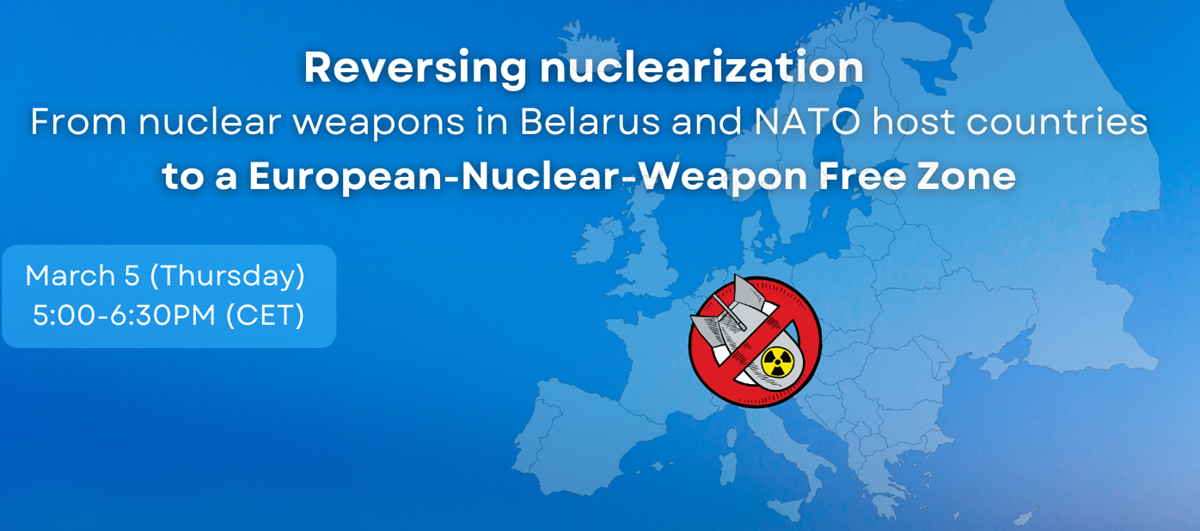
5 March -Online – Reversing nuclearization:
From nuclear weapons in Belarus and NATO host countries to a European-Nuclear-Weapon Free Zone
11am-12:30pm Eastern Time USA / 5pm-6:30pm CET

of the week – Advocating for a
nuclear free beach – https://www.samuellawrencefoundation.org/
The Samuel Lawrence Foundation advocates for a Nuclear Waste Free Beach at San Onofre, join us and take action!

10 March A LIVE WEBINAR THE REAL EFFECTS OF NUCLEAR POWER
What the Industry Isn’t Telling Us
1:00 PM Mountain, 2 pm Central, 3 pm Eastern. Live on the Keepers of the Water Facebook page

18 March Webinar @ 1 PM EST: An Assessment of SMR Projects: The Case of Canada
register for the zoom:
https://us02web.zoom.us/webinar/register/WN_o8BIIOUvQ2ONJR1nta65DQ#/registration

of the week – STOP SMALL MODULAR REACTORS IN CANADA
To see nuclear-related stories in greater depth and intensity – go to https://nuclearinformation.wordpress.com
-
Archives
- March 2026 (51)
- February 2026 (268)
- January 2026 (308)
- December 2025 (358)
- November 2025 (359)
- October 2025 (376)
- September 2025 (258)
- August 2025 (319)
- July 2025 (230)
- June 2025 (348)
- May 2025 (261)
- April 2025 (305)
-
Categories
- 1
- 1 NUCLEAR ISSUES
- business and costs
- climate change
- culture and arts
- ENERGY
- environment
- health
- history
- indigenous issues
- Legal
- marketing of nuclear
- media
- opposition to nuclear
- PERSONAL STORIES
- politics
- politics international
- Religion and ethics
- safety
- secrets,lies and civil liberties
- spinbuster
- technology
- Uranium
- wastes
- weapons and war
- Women
- 2 WORLD
- ACTION
- AFRICA
- Atrocities
- AUSTRALIA
- Christina's notes
- Christina's themes
- culture and arts
- Events
- Fuk 2022
- Fuk 2023
- Fukushima 2017
- Fukushima 2018
- fukushima 2019
- Fukushima 2020
- Fukushima 2021
- general
- global warming
- Humour (God we need it)
- Nuclear
- RARE EARTHS
- Reference
- resources – print
- Resources -audiovicual
- Weekly Newsletter
- World
- World Nuclear
- YouTube
-
RSS
Entries RSS
Comments RSS
 nuclear-news