What the IPCC Report 2018 says about nuclear power
Chapter 5 – Table 5.3 In spite of the industry’s overall safety track record, a non-negligible risk for accidents in nuclear power plants and waste treatment facilities remains. The long-term storage of nuclear waste is a politically fraught subject, with no large-scale long-term storage operational worldwide. Negative impacts from upsteam uranium mining and milling are comparable to those of coal, hence replacing fossil fuel combustion by nuclear power would be neutral in that aspect. Increased occurrence of childhood leukaemia in populations living within 5 km of nuclear power plants was identified by some studies, even though a direct causal relation to ionizing radiation could not be established and other studies could not confirm any correlation (low evidence/agreement in this issue). Table 5.3 http://report.ipcc.ch/sr15/pdf/sr15_chapter5_table5_3.pd
Abrupt Climate Change Will Rapidly Blow Past 1.5C and 2C
Paul Beckwith, -10 Oct 18 As I filmed today, yet another massive hurricane has just come ashore in Florida’s panhandle. Hurricane Michael, at 155 mph (1 mph shy of Cat. 5) appeared almost out of nowhere and strengthened rapidly in the way too-warm Gulf of Mexico. This video is not just on this storm, but primarily on the human/media/global storm that has arisen with the release of the IPCC 1.5C report on our present state of the climate system, and whether or not we can keep global temperature rise to 1.5C or even to 2C.
Hurricane Michael threatens nuclear power plants – Georgia – Florida
Hurricane Michael On Path of Several Nuclear Reactors, Latest Maps, Charts, Live Data, Flooding
(Put up with the annoying advertising stuff at the beginning of this video)
Nearly 3,000 Georgia Power personnel ready to respond to Hurricane Michael
Company reminds customers to stay informed and safe during and after storm Ciston PR Newswire ATLANTA, Oct. 10, 2018 /PRNewswire/ — As Hurricane Michael impacts the Gulf Coast, Georgia Power is ready to respond to power outages as quickly and safely as possible with nearly 3,000 personnel from the company and assisting utilities. Crews are continuing to mobilize from unaffected areas across Georgia over the next 24 hours and are strategically positioning throughout the state ready to re-enter central and south Georgia, and other areas, as Hurricane Michael subsides.
Damage assessment teams will be the first to enter affected areas and will relay critical field information so restoration teams can be dispatched as safely and efficiently as possible. Additional resources are available as part of the Southern Company system, which includes multiple electric and gas companies serving more than 9 million customers…….https://www.prnewswire.com/news-releases/nearly-3-000-georgia-power-personnel-ready-to-respond-to-hurricane-michael-300729092.html
Nuclear power plants in the path of Hurricane Michael
BREAKING-NUCLEAR PLANT-CAT5 HURRICANE MICHAEL-HISTORY BOOKS!
Extensive damage and extended power outages in South Georgia expected to continue over next 24 hours due to high winds and falling trees
Georgia Power ATLANTA, Oct. 10, 2018 /PRNewswire/ — Hurricane Michael arrived in Georgia this evening and is impacting service to Georgia Power customers. The company is prepared to respond with approximately 3,900 personnel from the company, other Southern Company operating companies and assisting utilities ready to restore power as quickly and safely as possible following the storm. All of Georgia Power’s resources are being held and dedicated to storm restoration efforts in the state following Hurricane Michael.
Georgia Power expects damage due to high winds, heavy rain and fallen trees. Once the storm passes, the company must wait until conditions are safe for damage assessment teams to enter the impacted zones and begin the restoration process, followed by repair crews, which could take several days, depending on the amount of damage and safe access to the area. As weather conditions improve, restoration efforts will accelerate, but it could take an extended period of time for all customers to be restored…….
As of 8:00 p.m. Wednesday, there are more than 65,000 customers without power in Georgia …https://www.prnewswire.com/news-releases/hurricane-michael-enters-georgia-65-000-customers-without-power-300729151.html
“Big concentrations of radioactivity”found in ice, as glaciers melt
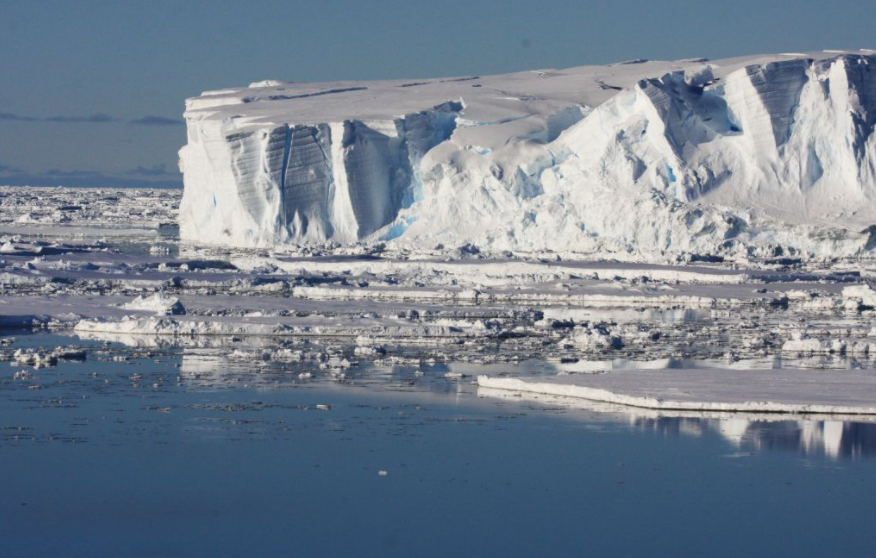 Melting glaciers at Novaya Zemlya contain radiation from nuclear bomb tests. https://thebarentsobserver.com/en/ecology/2018/10/melting-glaciers-novaya-zemlya-contain-radiation-nuclear-bomb-tests
US held subcritical nuclear test last Dec
https://www3.nhk.or.jp/nhkworld/en/news/20181010_27/ A US report says the country held a subcritical nuclear test in the state of Nevada last December.
The test was the first of its kind in 5 years, the 28th by the United States, and the first under the administration of President Donald Trump.
According to the report by the Department of Energy’s National Nuclear Security Administration, the experiment called Vega was held at a nuclear test site in Nevada.
Vega involved new explosives used to create powerful impacts on plutonium, and an examination of a plutonium implosion. The NNSA called the test an important step toward enhancing the performance of nuclear weapons.
The US government in February announced a new nuclear strategy of enhancing deterrence capabilities to counter Russia and China, by such means as increasing low-yield nuclear arsenals.
The move marks a shift from the policy of former president Barack Obama, who advocated a world without nuclear weapons.
Observers say antinuclear groups are expected to criticize the Trump administration for boosting nuclear weapon capabilities while pressing for denuclearization of North Korea.
Plan to sue France over ‘crimes against humanity’ in nuclear tests in South Pacific
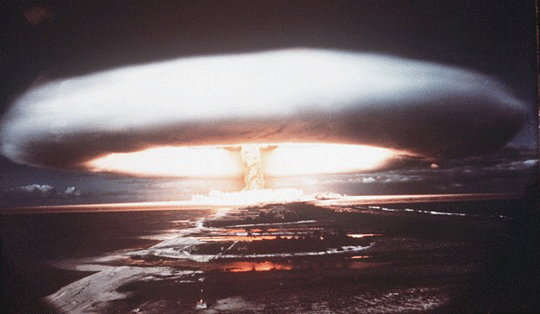 France sued for ‘crimes against humanity’ over nuclear tests in South Pacific https://www.dw.com/en/france-sued-for-crimes-against-humanity-over-nuclear-tests-in-south-pacific/a-45826054
France is being taken to the International Criminal Court for nuclear weapons tests in French Polynesia. France has long denied responsibility for the impacts of the tests and only recently began compensating civilians. France is being taken to the International Criminal Court (ICC) for carrying out nuclear weapons tests in French Polynesia, a Polynesian opposition leader announced on Tuesday.
Oscar Temaru, the archipelago’s former president and current leader of the Tavini Huiraatira Party, announced the move during a United Nations committee dealing with decolonization.
Temaru accused France of “crimes against humanity” and said that he hopes to hold French presidents accountable for the nuclear tests with the ICC complaint.
“We owe it to all the people who died from the consequences of nuclear colonialism,” he told the UN committee.
Maxime Chan from Te Ora Naho, an association for the protection of the environment in French Polynesia, told the UN that there had been 368 instances of radioactive fallout from the tests and that radioactive waste had also been discharged into the ocean — violating international rules.
Three decades of nuclear tests
The French territory, currently home to 290,000 people, is best known for the popular tourist island of Tahiti, but its atolls of Mururoa and Fangataufa were used for decades for nuclear tests.
France carried out 193 nuclear weapons tests on islands in the archipelago between 1960 and 1996 until French President Jacques Chirac halted the program.
Around 150,000 military and civilian personnel were involved in France’s nuclear tests, with thousands of them later developing serious health problems.
France has long denied responsibility for the detrimental health and environmental impacts of the tests, fearing that it would weaken the country’s nuclear program during the Cold War.
In 2010, France passed a law allowing military veterans and civilians to be compensated if their cancer could be attributed to the nuclear tests. Out of approximately 1,000 people who have filed complaints against France, only 20 have been compensated.
Belgium’s phaseout of nuclear power
Belgium’s creaky nuclear reactors raise risk of winter power outages, DW, 10 Oct 18
Belgium is slowly phasing out its aging nuclear energy infrastructure. But looming winter weather, limited renewable options and a poorly connected electricity network have left the country at risk of blackouts.
The Doel 3 nuclear reactor, near the Belgian port of Antwerp, was built in the early 1980s with a design life of four decades. Next week, that creaking reactor will be the only one in Belgium still working — a major blow to the energy security of a country that derives more than half of its electricity from nuclear power.
Belgium’s grid operator Elia said in a statement last week that 700-900 Megawatts (MW) of additional electricity capacity will be needed this winter — down from a previous estimate of about 1,600 MW — if the country is to meet its electricity needs and avoid blackouts.
Vitrified nuclear waste: glass corrodes and melts long before the radioactive trash is inert
What causes nuclear waste glass to dissolve? Phys Org, University of Houston October 10th, 2018
Immobilizing nuclear waste in glass logs—a process known as vitrification—is currently used in the United States to safeguard waste from sites associated with defense activities. Some other countries also use the process to capture waste from nuclear power plants.
Researchers know, however, that the glass can begin to dissolve after a long period of time, and the durability of these glass logs remains an active area of research.
Researchers from the University of Houston, the Department of Energy’s Pacific Northwest National Laboratory and the University of Pittsburgh are working on one of the most pressing issues—what causes the glass to begin to deteriorate relatively quickly at some point, potentially releasing radioactive waste at levels exceeding regulatory thresholds?……….”We have long observed from laboratory studies that zeolite formation in glass corrosion tests resulted in an increase in the glass corrosion rate,” said Neeway, a researcher at PNNL. ………
Zeolite P, the zeolite that forms from the glass, is affected by temperature—Rimer said researchers synthesize it in the lab at 100 °C—but they don’t yet know how crystallization proceeds at lower temperatures and they don’t have methods to deter its formation. But controlling temperatures in the geologic formations designated as nuclear waste repositories is not necessarily practical, thus researchers are looking for other factors that might affect crystal growth, including components of the glass. https://phys.org/wire-news/300629772/what-causes-nuclear-waste-glass-to-dissolve.html
Japanese people object to US government conducting a subcritical nuclear test last December.
A 39-year-old man expressed regret over the test during a visit with his baby to the Peace Memorial Park in the city of Hiroshima, which was hit by a US atomic bombing in 1945.
He said it’s regrettable that the United States conducted the test, which no one wanted, despite people’s hope for peace.
He said for the sake of children, he does not want nuclear weapons to exist in the future.
A 52-year-old woman in the city said the administration of President Donald Trump is not moving in the right direction, while provoking the world to divide.
She said she hopes the Japanese government will have its own views, without following the US administration.
Shigemitsu Tanaka, the head of the atomic bomb survivors’ organization in Nagasaki, also criticized the subcritical test.
He said it was a move against the UN Treaty on the Prohibition of Nuclear Weapons, which was adopted last year, and the test is unforgivable.
He said he hopes the US will lead efforts to eliminate nuclear arms as the only country to have used nuclear weapons and will call on other nations to abolish them.
MOX nuclear fuel plant in South Carolina “on life support”, following court case
Plans for jobs-rich but potentially deadly nuclear fuel plant on life support in SC https://www.greenvilleonline.com/story/news/2018/10/10/plans-nuclear-fuel-plant-south-carolina-life-support/1588238002/
In an afternoon ruling, the U.S. Fourth Circuit Court of Appeals overturned a lower court ruling that had halted the U.S. Department of Energy’s effort to quit building the mixed oxide fuel factory after a decade of construction. The ruling Tuesday sets aside a June 7 preliminary injunction that had stopped government plans to halt construction.
The decision was a blow to advocates of the plant in South Carolina. Key politicians have pushed to keep building the project — known as MOX — because it will be a jobs provider and a way to get rid of surplus plutonium at the Savannah River Site weapons complex near Aiken. At one point, as many as 2,000 jobs were touted for the project.
S.C. Attorney General Alan Wilson, who sued to force the government to keep building the plant, wasn’t happy with the ruling Tuesday. Wilson says failing to build the plant would mean plutonium, a deadly nuclear material, would be left in South Carolina.
While the ruling Tuesday lifts the injunction, Wilson’s lawsuit has not been decided.
“I’m disappointed in the Fourth Circuit panel’s decision,’’ Wilson said in a statement. “It is inconsistent with governing law and foreshadows the court’s opinion in the case. The state intends to vigorously contest the opinion when it is issued to protect the State’s interests and prevent the Department of Energy from turning the State into the dumping ground for plutonium.’’
Opponents of the plant, which is at least $12 billion over budget, said the court’s decision Tuesday could be the beginning of the end of the project. They say it is a waste of taxpayer money and is a dangerous way to get rid of surplus bomb-grade plutonium when other means are available.
The DOE, after years of pumping up the plant, now says it isn’t worth continuing. The project has been beset with delays and questionable workmanship.
“This is going to allow (the DOE) to start back up with termination,’’ said one of the project’s harshest critics, Tom Clements, who heads Savannah River Site Watch.
The Union of Concerned Scientists, a national environmental group that opposes MOX, issued a late afternoon statement praising the court’s decision.
Critics say a plutonium fuel factory isn’t necessary because there are other ways of disposing of excess weapons grade plutonium. The government has more recently proposed shipping much of the excess plutonium at SRS to a site in New Mexico.
“Using this type of facility to dispose of plutonium that is no longer needed for U.S. nuclear weapons increases the risk that this material could fall into the hands of terrorists,” according to an email from Edwin Lyman, a senior scientist with the Global Security Program at the Union of Concerned Scientists. “Although the order is only a temporary stay, it indicates that the court will likely rule against the South Carolina in favor of the DOE’s plan to terminate the MOX project and pursue a far superior alternative.”
Nuclear weapons proliferation risks in China’s push to export nuclear reactors
|
China’s Nuclear Diplomacy in the Middle East
China will have to balance its nuclear ‘going out’ with nonproliferation concerns. The Diplomat , By Samuel Hickey, October 09, 2018 On September 21, China’s Ministry of Justice published its draft Atomic Energy Law, which urges its vast nuclear industry to go forth into the world and secure a portion of the nuclear export market. Unlike the “Gold Standard” interpretation of the “1+2+3” agreement in the U.S. Atomic Energy Act of 1954, China will not officially limit a partner country’s access to the full nuclear fuel cycle in exchange for nuclear cooperation. |
|
|
WHY LANGUAGE MATTERS WHEN TALKING ABOUT NUCLEAR WEAPONS
PARANOIA AND DEFENSE PLANNING: WHY LANGUAGE MATTERS WHEN TALKING ABOUT NUCLEAR WEAPONS, War on the Rocks, JEFFREY LEWIS AND AARON STEIN OCTOBER 10, 2018 The U.S. ambassador to NATO has, when one thinks about it, just one job. No matter who holds the job, the U.S. ambassador to NATO has many priorities, as one would expect for a role that involves dealing with dozens of countries and trying to get them to agree on a coherent defense policy. But one would think that not provoking a nuclear war with Russia would be at the very top of the ambassador’s list of priorities. This seems like a no-brainer, but it helps to focus on the simple things. The United States has a special obligation to be the “adult in the room” and to keep the alliance focused on constructive responses to collective threats.
The United States has had good and bad ambassadors to NATO, but each managed, one after the other, to navigate disputes such as the Berlin and Euromissiles crises, and to extend the postwar peace through seven decades. Then, in early October, Kay Bailey Hutchison — the U.S. permanent representative to NATO and erstwhile senator from Texas — put that streak in jeopardy for no good reason, threatening to preemptively attack Russia before it deployed a new cruise missile in violation of the Intermediate Range Nuclear Forces Treaty (INF). In response to a series of questions from journalists, Hutchison used imprecise language, culminating in a strangely worded statement:
Getting them to withdraw [deployed missiles] would be our choice, of course. But I think the question was what would you do if this continues to a point where we know that they are capable of delivering. And at that point we would then be looking at a capability to take out a missile that could hit any of our countries in Europe and hit America in Alaska. So it is in all of our interests, and Canada as well, I suppose. So we have our North Atlantic risk as well as the European risk. …
This suggests a preemptive missile strike. Perhaps that’s not what she meant, but it is what she said. Hutchison has now issued a clarification, so perhaps someone has reminded her that her job is no longer riling up voters, but engaging in diplomacy. Threatening a nuclear-armed power is not something to be done lightly.
But the clarification, however welcome, does not undo the very real damage that Hutchison has done. The real issue is less the cavalier nuclear threat and more that Hutchison’s lapse risks feeding a particular strain of Russian paranoia. What Hutchison meant to do was convey a perfectly reasonable sense that our patience is not infinite when it comes to Moscow’s continuing violation of the INF Treaty……….
Russian Paranoia and Aggressive America: From Andropov to Putin and Reagan to Trump . …..https://warontherocks.com/2018/10/paranoia-and-defense-planning-why-language-matters-when-talking-about-nuclear-weapons/
Nuclear safety should be the first priority in the Korean Peninsula
Absent since the restart of dialogue with North Korea is any discussion on inter-Korean nuclear safety cooperation, despite concerns over possible safety risks at the North Korean nuclear complex. Inattention to the facility could have dire consequences for the peninsula: radioactive fallout does not recognize borders.
For example, because of its inability to acquire civil nuclear technology from abroad, North Korea might try to develop its own power reactor from a variation of outdated Soviet designs such as the RBMK-1000 type that resulted in the most catastrophic man-made disaster in history, the 1986 Chernobyl nuclear accident. On the other hand, the possible dismantlement of nuclear facilities such as the Punggye-ri nuclear test site, which contains hazardous material and radioactive elements, could contaminate the surrounding environment and expose North Korean workers if there is improper clean-up.
In addition, as the operator of several fuel cycle facilities, North Korean leaders and experts no doubt would be interested in learning more about Japan’s costly lessons with nuclear safety. Despite having sophisticated industrial capability and arguably high nuclear safety standards, Japan has experienced deadly accidents in fuel cycle facilities — most notably the accident at a fuel fabrication plant in Tokaimura in September 1999, when the mishandling of enriched uranium led to the death of two workers from acute radiation exposure, and permanent injury of another. The accident, attributed to poor safety culture and inadequate regulatory oversight, exposed 436 people to radiation.
Without strict safety practices and adequate protection, North Korea might experience a similar scenario. Furthermore, the country has issues related to emergency response and communication in the event of a nuclear accident because of the secretive nature of its nuclear program. In particular, because North Korea terminated all cooperation with the International Atomic Energy Agency (IAEA) in 2009, it would be difficult for outsiders to learn about any incident and provide support, if necessary. It is equally difficult for North Koreans to improve their safety culture and standards without an adequate, transparent working environment.
Why make nuclear safety an early priority in the high-level diplomatic process with North Korea? The number, pervasiveness and close-to-the-border locations of nuclear facilitates in North Korea are reasons enough.
The significant role of nuclear energy in electricity generation in South Korea, where 24 nuclear power units contribute almost 30 percent of the electricity production, means South Korean experts would have much to share.
Indeed, South Korea has had to overcome its own safety problems, such as the cover-up of a plant blackout at the Kori-1 nuclear power unit in 2012, and the revelation of falsified test results for safety-grade equipment in the same year. Scientists and engineers from these two countries should be enabled to cooperate on nuclear safety by sharing information about their safety practices.
Besides, communication platforms have existed for this kind of engineering diplomacy. Striving for the middle-power status in the region, South Korea has proposed several initiatives aimed at regional integration among Northeast Asian countries; thus, the issue of nuclear safety in North Korea would be a perfect opportunity for Moon to promote a nuclear safety initiative for bilateral cooperation of nuclear safety professionals from the two Koreas. …….. https://thehill.com/opinion/international/409750-first-cooperate-on-nuclear-safety-in-the-korean-peninsula
North Korea is not really making any big nuclear concession
Why North Korea’s latest nuclear concession isn’t one at all
Secretary of State Mike Pompeo wants you to believe North Korea just gave up something big. It didn’t. Vox By Secretary of State Mike Pompeo said on Monday that he and North Korean leader Kim Jong Un made “significant progress” over the weekend toward dismantling Pyongyang’s nuclear program. The problem is it’s not clear what advancement he’s pointing to.
The two met for a nearly three-hour summit in Pyongyang on Sunday to discuss a way to break the impasse in discussions. Speaking after the meeting on Monday, Pompeo told reporters that North Korea has agreed to let international inspectors visit Punggye-ri, the site of all six of North Korea’s nuclear tests. In September 2017, Pyongyang tested a nuke there that was around seven times stronger than the bomb America dropped on Hiroshima in 1945.
Letting inspectors visit the facility may sound well and good, except for one thing: It’s already been destroyed.
North Korea blew up that facility in May. And although the country’s leaders had originally invited international inspectors to witness the demolition, they changed their minds and said they would only allow a small group of foreign journalists to watch. CNN, for example, could only watch the destruction from about 1,600 feet away.
Letting inspectors in now to verify that the site is, in fact, destroyed is certainly a welcome step. After all, North Korea has been reluctant for years to let outsiders into its nuclear facilities and question officials at the sites. And while it’s unclear how much access the inspectors will get, it’s understandable that Pompeo is touting this as a victory……….
A second Trump-Kim summit may be on the horizon
The US and North Korea remain in a stalemate over how to dismantle Pyongyang’s nuclear program.
Washington wants Pyongyang to destroy much of its nuclear arsenal upfront and offer an inventory list of all parts of its program. Kim’s regime, meanwhile, wants President Donald Trump to sign a peace declaration — a nonbinding document that would formally end the Korean War — before Pyongyang makes any concessions.
Experts are split on whether that’s a good idea. Those who want the US to sign the agreement say it’s costless because it’s nonbinding, and therefore America has nothing to lose and everything to gain by signing it………https://www.vox.com/2018/10/8/17952178/pompeo-north-korea-trip-nuclear-site
1 This Month


Tell the Ukrainian Government to Drop Prosecution of Peace Activist Yurii Sheliazhenko

Petition to revoke the licensing of the Near Surface Nuclear Disposal Facility (NSDF) at Chalk River. https://www.ourcommons.ca/petitions/en/Petition/Details?Petition=e-7247


of the week – STOP SMALL MODULAR REACTORS IN CANADA
To see nuclear-related stories in greater depth and intensity – go to https://nuclearinformation.wordpress.com
-
Archives
- March 2026 (204)
- February 2026 (268)
- January 2026 (308)
- December 2025 (358)
- November 2025 (359)
- October 2025 (376)
- September 2025 (258)
- August 2025 (319)
- July 2025 (230)
- June 2025 (348)
- May 2025 (261)
- April 2025 (305)
-
Categories
- 1
- 1 NUCLEAR ISSUES
- business and costs
- climate change
- culture and arts
- ENERGY
- environment
- health
- history
- indigenous issues
- Legal
- marketing of nuclear
- media
- opposition to nuclear
- PERSONAL STORIES
- politics
- politics international
- Religion and ethics
- safety
- secrets,lies and civil liberties
- spinbuster
- technology
- Uranium
- wastes
- weapons and war
- Women
- 2 WORLD
- ACTION
- AFRICA
- Atrocities
- AUSTRALIA
- Christina's notes
- Christina's themes
- culture and arts
- Events
- Fuk 2022
- Fuk 2023
- Fukushima 2017
- Fukushima 2018
- fukushima 2019
- Fukushima 2020
- Fukushima 2021
- general
- global warming
- Humour (God we need it)
- Nuclear
- RARE EARTHS
- Reference
- resources – print
- Resources -audiovicual
- Weekly Newsletter
- World
- World Nuclear
- YouTube
-
RSS
Entries RSS
Comments RSS
 nuclear-news