Radiation caused the deaths of 4,000 clean-up workers, and 70,000 disabled at Chernobyl nuclear disaster
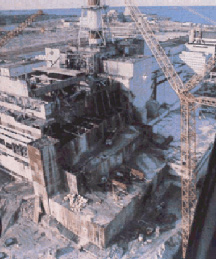 THE ‘LIQUIDATORS’ WHO RISKED IT ALL TO CLEAN UP CHERNOBYL WIRED, LAURA MALLONEE, 09.08.18
THE MELTDOWN AT the Chernobyl Nuclear Power Plant in northern Ukraine on April 26, 1986 was a massive tragedy that ultimately claimed at least 9,000 lives and affected millions more. It also created a toxic mess. Radioactive particles choked the atmosphere and rained down on cities, forests, and roads. In the immediate aftermath, fires had to be put out, debris cleared, contaminated waste buried deep underground.It was, obviously, not an easy task. Remote-controlled bulldozers and other robots proved too weak for the job, their circuitry fried by radiation. So the Soviet Union sent in humans—600,000 of them. These brave firefighters, soldiers, janitors, and miners—the so-called “liquidators”—did everything from hosing down streets to felling trees to building a concrete sarcophagus around the exposed reactor … all the while charged subatomic particles ravaged their cells and shortened their life spans.
“No personal sacrifice was too much for these men and women,” says photographer Tom Skipp. Moved by their story, he visited Slavutych, Ukraine in April to photograph survivors, now in their golden years. The portraits make up his haunting series The Liquidators.
“The liquidators were sent into impossible scenarios where even machines failed,” Skipp says. “Each has a human story seemingly entangled in the complex history of communism and duty to the motherland….
On average, the liquidators were exposed to 120 millisieverts of radiation, about 1,200 times the amount you get from a simple x-ray. In the years following the meltdown, more than 4,000 of them died from radiation-caused cancers, and another 70,000 were disabled by exposure. Still, the liquidators shared a steadfast sense of duty to their government and fellow citizens, even when they didn’t agree with the ruling system or found it difficult to talk about. “I think that there’s a certain amount of fear aligned with speaking out against any wrongdoings that were committed,” Skipp says. “Many live on a state pension.”
Skipp photographed the men and women with his Fujifilm GFX 50 in their homes, as well as at at a local museum dedicated to explaining the history of Chernobyl and Slavutych. Many of the portraits capture them standing proudly but solemnly before an image of the destroyed reactor and beneath a clock stopped at the exact time of the meltdown—the moment that defined their lives forever. https://www.wired.com/story/chernobyl-liquidators-photo-gallery/
No comments yet.
1 This Month



Tell the Ukrainian Government to Drop Prosecution of Peace Activist Yurii Sheliazhenko

Petition to revoke the licensing of the Near Surface Nuclear Disposal Facility (NSDF) at Chalk River. https://www.ourcommons.ca/petitions/en/Petition/Details?Petition=e-7247


of the week – STOP SMALL MODULAR REACTORS IN CANADA
To see nuclear-related stories in greater depth and intensity – go to https://nuclearinformation.wordpress.com
-
Archives
- March 2026 (212)
- February 2026 (268)
- January 2026 (308)
- December 2025 (358)
- November 2025 (359)
- October 2025 (376)
- September 2025 (258)
- August 2025 (319)
- July 2025 (230)
- June 2025 (348)
- May 2025 (261)
- April 2025 (305)
-
Categories
- 1
- 1 NUCLEAR ISSUES
- business and costs
- climate change
- culture and arts
- ENERGY
- environment
- health
- history
- indigenous issues
- Legal
- marketing of nuclear
- media
- opposition to nuclear
- PERSONAL STORIES
- politics
- politics international
- Religion and ethics
- safety
- secrets,lies and civil liberties
- spinbuster
- technology
- Uranium
- wastes
- weapons and war
- Women
- 2 WORLD
- ACTION
- AFRICA
- Atrocities
- AUSTRALIA
- Christina's notes
- Christina's themes
- culture and arts
- Events
- Fuk 2022
- Fuk 2023
- Fukushima 2017
- Fukushima 2018
- fukushima 2019
- Fukushima 2020
- Fukushima 2021
- general
- global warming
- Humour (God we need it)
- Nuclear
- RARE EARTHS
- Reference
- resources – print
- Resources -audiovicual
- Weekly Newsletter
- World
- World Nuclear
- YouTube
-
RSS
Entries RSS
Comments RSS
 nuclear-news
Leave a comment