Saudi Arabia’s plans to make Qatar a nuclear waste dump island

 Saudi Official Pushes Plans to Make Qatar an Island, Dump Nuclear Waste There,
 Sputnik News, 30 Sep 18 No man is an island – but the peninsular nation of Qatar just might become one, as it looks increasingly likely that Saudi Arabia will move ahead with plans to build a canal across the peninsula, cutting the nation off from the mainland.
Reports have steadily emerged since April that the Saudi government was considering a canal across the Qatari peninsula roughly half a mile from the border. A Friday tweet by a prominent government official seems to further signal that the plans could be legitimate and not simply a public relations stunt or attempt at intimidation.
As a citizen, I am impatiently waiting for the details of the implementation of the East Salwa island project. This great and historic project will change the region’s geography,” Saud al-Qahtani, a senior adviser to Saudi Crown Prince Mohammed bin Salman, tweeted on Friday, according to Reuters. The news agency noted that Qahtani has mentioned the canal several times on Twitter over the past few months.
And if that wasn’t petty enough, the half-mile gap between the canal and the Qatar border would be turned into a nuclear waste dump, Press TV reported Friday. The waste would come from the 16 nuclear reactors the monarchy plans to open in the next 25 years.
The South China Morning Post noted in April that the United Arab Emirates would be building a nuclear waste dump at the part of its country closest to Qatar, too.
The Salwa Marine Canal Project would be roughly 37 miles long, 650 feet wide and 65 feet deep and would service a military base and tourist resort in addition to the nuclear waste dump, exiting to the Persian Gulf at the Saudi cities of Salwa and Khor al-Adeed, Gulf News reported in June when the Saudi government closed construction applications by interested companies.
The proposed canal would cost roughly 2.8 billion Saudi riyals ($745 million)……..https://sputniknews.com/middleeast/201808311067651290-Saudi-Official-Pushes-Canal-Qatar-Island/
Call for immediate removal of nuclear waste from San Onofre area

Environmental Group Wants Immediate Removal of Nuclear Waste From San Onofre Area, https://www.theinertia.com/environment/an-environmental-group-is-pushing-for-the-transport-of-nuclear-waste-away-from-san-o-stat/ Dylan Heyden, 30 Aug 18,
The ever-evolving situation at the San Onofre Nuclear Generation Station and its nuclear waste problem has become a hot-button issue for residents of San Clemente, Oceanside, and beyond. It’s immensely complex, but allow me, if you will, to oversimplify.
Spent nuclear fuel goes through a years-long cooling process in pools before it can be moved to dry storage where it further cools until it is safe for transport to long-term storage. “Long-term” storage facility, though, is a misnomer. It’s essentially the permanent resting place for nuclear waste stored in extremely thick metal canisters. The problem at San Onofre and many decommissioned nuclear generation stations across the country, though, is there is no long-term storage facility. Or rather, one was planned for an area called Yucca Mountain in Nevada, but in 2011 the Feds pulled the plug. As a result, short-term solutions have become defacto long-term solutions, which is where we are today at San Onofre.
Back in February, Southern California Edison and contractors involved in the SONGS decommissioning process began transferring spent nuclear fuel from pools to dry storage – or dry cask storage. Tens of thick metal canisters of spent nuclear fuel have since been stored on site adjacent to the generators beneath a concrete pad called the Independent Spent Fuel Storage Installation (ISFSI).
When I toured the facility back in May (more on that later), SoCal Edison employees were adamant that public safety was of the utmost importance, and that these thick metal casks were not “buried in the sand” but rather safely stored in concrete for the interim. Employees also emphasized that Southern California Edison’s goal is to move the spent fuel as expeditiously and safely as possible. “Don’t forget, our families go in the ocean nearby, too,” many said.
But Congressional gridlock and an inability to designate a feasible long-term storage site means what was once thought to be a safer short-term solution (dry storage is passive and doesn’t require energy to cool as in cooling pools) may need re-thinking.
That’s why a group of activists, called the Physicians for Social Responsibility Los Angeles recently launched a letter-writing campaign urging the California State Lands Commission to authorize the local transfer of spent nuclear fuel to an area further east in Camp Pendleton.
“3.6 million pounds of highly radioactive nuclear waste at San Onofre Nuclear Generating Station near San Diego is currently in the process of being buried on the beach, just 100 feet from the ocean and a mere few feet above the water table,” their website reads. “Send in a comment on the Draft Environmental Impact Report (EIR) and demand a better solution: the nuclear waste should be moved off the beach to a new, above-ground concrete-reinforced temporary storage facility located further east in Camp Pendleton—where it can be protected from sea level rise and potential terrorist attack.”
A sub-group of PSRLA called the Committee to Bridge the Gap has created a petition page, urging concerned citizens to put their name on a letter voicing their discontent.
According to their website, the group claims this revised plan has garnered the support of former Nuclear Regulatory Commission Chief Greg Jaczko, U.S. government advisor on nuclear waste Tom English, and retired Navy Admiral Len Herring.
The campaign explains that the failure to even consider the idea of moving the fuel east of the primary ISFSI site is a serious oversight on the part of those involved in the decommissioning process.
The letter PSRLA is urging residents to sign implores the State Lands Commission to step in. “As public servants and members of the CSLC you have a moral duty to protect our safety. Please do not take that responsibility lightly,” it says.
Terrible sickness price paid by Americans for 1,032 nuclear bombs the govt dropped on America

America Has Dropped 1,032 Nuclear Weapons (On Itself) In the form of nuclear tests. https://nationalinterest.org/blog/buzz/america-has-dropped-1032-nuclear-weapons-itself-30042
uring the early years of nuclear testing it was anticipated that nuclear weapons would be used on the battlefield, and that the Army and Marine Corps had better get used to operating on a “nuclear battlefield.” During the 1952 Big Shot test, 1,700 ground troops took shelter in trenches just seven thousand yards from the thirty-three-kiloton explosion. After the test, the troops conducted a simulated assault that took them to within 160 meters of ground zero. This test and others like them led to increases in leukemia, prostate and nasal cancers among those that participated.
Right wing nationalism is linked to climate denial
Bill Bufford, 31 Aug 18 Right wing nationalism is now linked to climate denial. In Sweden recently a rightwing nationalist-racist party took over. They threw out plans for renewables, and put an end to the phasing out of nuclear and nuclear reactors in sweden. Rightwing nationalism is racist and chauvenistic in nature. Right wing nationalism-racism is shown to be linked to a rise in climate denial as we see in america, sweden. It is linked to the invigoration of dangerous nulear reactors in japan post fukushima. Even with the continued earthquakes and dramataic increases in dangerous tropical storms there. The Swedes were growing renewables and cutting nuclear. Trump counts wwhite nationalst-racists as his base. Trump is a strong climate deniar that is heavily into nuclearism. The same can be said of nationalist racists in Britain like UKIP. In germany. In Hungary. In Poland.
Abe in Japan engenders nationalism through hatred of korean and chinese immigrants. Through hatred of other immigrants and refugees. He even illegally uses refugees to work for nothing at Fukushima; while they are irradiated to death.
With neonazis and rightwing nationalists in power in sweden, they are scrapping renewables and planning on keeping old reactors open . They are planning on opening new nuclear reactors.
Why is rightwing nationalism and, their awful racism linked to fracking, more fossil fuel-oil rigs and exploitattion, more nuclear reactors?
It is because they have to manufacture the fake motivations and anger of racism, to justify their corporate bosses and others, disconnection from reality. Also they have to have a rallying cause for their fake and amoral cult like with Trump in america and Abe in Japan.The racism card fits the bill!
Corporations have long been linked to climate denial. They are now cultivating and
Engendering rightwing nationalism and racism to further their dirty deeds and aims. Same can be said for nuclearists.
ENVIRONMENTAL SOCIOLOGY recently published an article where M Hultman and his research colleagues show the connections between conservatism, xenophobia, and climate change denial, through a study in Norway
Hultman an expert explains:
“That many of the right-wing nationalist parties in Europe now have climate change denial as one of their most important issues.
These parties are increasing in significance.
We see it in Denmark and Norway, in Britain with UKIP, and Front National in France. But also, in Sweden, with the Sweden Democrats’ suspicion towards SMHI (Swedish Meteorological and Hydrological Institute), their dismissal of the Paris Agreement and of climate laws, and in their appraisal of climate change denier Václav Klaus as a freedom-fighting hero.”
Beyond the backyard: understanding geopolitics for a more peaceful foreign policy
Dr Adam Broinowski, College of Asia and the Pacific, Australian National University, adam.broinowski@anu.edu.au,31 Aug 18
At this moment of shifting world order, in which the atomic clock has been returned to two minutes to midnight (the first time since 1953) and the United States has committed to a 1.5 trillion dollar upgrade to its nuclear arsenal, one can be forgiven for a sense of déja vu. Unlike the 1950s, however, we are now aware of the risk of even greater extinctions in the next 100 years not only from potential full-scale nuclear war but also from the impacts of climate disruption across the entire biosphere.
From here, if we are to identify the dynamics of both militarism and climate disruption with a view to achieving and perpetuating more peaceful conditions, we must recognise how oil – and control over its distribution – has been pivotal to the development of US-led world order since the turn of the 20th century. When US leaders claim the ‘exceptionalism’ of the ‘indispensable’ US nation, they are primarily referring to the US military capability to allow or deny access to supply corridors for the flow of vital resources, products, labour and market access. In this brief overview, we can track this through various stages of the US empire.
Stage I: Beyond the western hemisphere
Having expropriated the lands of native Americans and propelled by its own abundant supply of oil, the US claimed the trophies of Cuba, Puerto Rico, Guam and the Philippines after the Spanish-American War in 1898 and entrenched itself in the oil-rich Gulf of Mexico and Caribbean region (‘Western Hemisphere’).
As envisioned by ‘world island’ theory, in which maritime powers could claim hegemony by encircling and containing from the ‘rimlands’ any rival economic and military land-based power emerging on the Eurasian ‘heartland’, the US sent naval flotillas from US bases to control geostrategic ‘land nodes’, ‘geographical pivots’, and ‘choke points’ along resource corridors supplying the largest market at the time: western Europe.
In 1900, the Russian empire accounted for over 50 percent of the world’s oil production and was the world number two producer by the 1920s. After the British procured an exclusive petroleum concession in 1901, British and French powers sought to undermine any coordinated resistance from a united Arabia by forming weak Arab provincial administrations that relied on revenue from oil extraction and distribution to Europe. By the 1920s, however, the US had over 70 percent of world oil production with an economy the size of the next six powers combined. After Standard Oil secured concessions in Dharan, ‘one of the greatest material prizes in history,’ on the Saudi peninsula by 1938, the US consolidated its operations east of Suez by 1944.
Stage II: Cold War
At war’s end, having escaped major destruction from WWII as compared to nations in Europe, the Soviet Union and Asia, the US possessed:
- over 50 percent of world GDP;
- guaranteed oil supply from Saudi Arabia, and Israel as a foothold in the Middle East;
- 70 percent of world monetary gold and the US dollar fixed as world currency reserve.
This leverage permitted the US to construct a ‘division and alliance architecture’ (UN system, NATO, US military bases) in which US bases were set up primarily in western Europe and East Asia on either side of the ‘world island’. US bases carry and store nuclear weapons and related systems; they surround territories with large oil and gas reserves and strategic transport corridors; they facilitate rapid interventions and support for proxy wars, economic warfare, and information/psychological warfare. US operations conducted from these bases have primarily targeted governments, authoritarian or otherwise, that seek autonomous and sovereign control over their country’s resources, markets and finances.
Despite the hype surrounding Soviet plans to invade western Europe and its potential attack US cities in the early Cold War years, there is evidence to show that it was indeed hype, and by 1960, the US could target and destroy almost all Soviet and Chinese cities with near-simultaneous nuclear attack, ostensibly in ‘retaliation’ for a nuclear attack by the enemy. Only by the mid 1970s did the Soviets really catch up with the US in terms of scale and sophistication of nuclear weapons to establish a period of détente. In the intervening years more nations acquired nuclear capability in either a clandestine fashion or outside the Non Proliferation Treaty while others relied on US ‘extended nuclear deterrence’ in return for hosting US bases and other bilateral agreements.
Stage III: Oil politics
In the 1970s, with large debt from the American War in Vietnam, and with several countries seeking return of their gold security deposits from the US Federal Reserve, the Nixon administration withdrew from the gold-backed system rather than allowing the dollar to devalue. When oil prices sky-rocketed with the OPEC oil embargo, the US arranged a financial mechanism whereby all OPEC nations would trade oil exclusively in US dollars in return for US military protection and weapons contracts. The dollar remained the world currency reserve, the US could disregard its national debt from foreign wars and US and UK banks amassed huge profits from commissions on foreign currency exchanges for the purchase of oil, the world’s largest commodity.
The Tengiz field oil reserves in the Caspian Sea were discovered in 1979, the same year as Iran’s Islamic Revolution. The latter was met with heavy sanctions while Saudi Arabia’s Wahabbist Islamic uprising at Mecca was not. The US armed and trained Islamist mujahideen to fight against the Soviet-backed government in Afghanistan (Operation Cyclone). Saddam Hussein’s Ba’ath Party was installed by the CIA in Iraq and aided to fight Iran for eight years. Wahabbism spread to Pakistan and to Chechnya, Dagestan, Albania and Kosovo – Russia’s soft oil-rich underbelly.
Stage IV: Middle East wars
In 1991, despite the opportunity to withdraw US foreign bases and ratify arms control treaties with the disintegration of the Soviet Union, the US together with NATO proceeded to foment ‘Colour Revolutions’ in resource-rich former Soviet-aligned states (Yugoslavia, Ukraine, Georgia, Moldova). The Persian Gulf War launched that year, rather than to stop an illegal invasion by a dictatorial regime and to keep local gas prices low, was primarily to enable US control over the distribution of Iraqi oil and further its reach in the region.
Similarly in Afghanistan 2001 and Iraq 2003, rather than retaliation for the 11 September 2001 attacks or to destroy mythical Weapons of Mass Destruction, the Iraq War was to prevent Iraqi oil being traded in Euro, to weaken the Iraqi state by supporting competing factions and claim a stake in roughly one-third of Iraqi oil production. Since then, in 2018 the Trump administration added insult to injury by demanding that the costs of the US-led engagement in the Iraq War be paid for in oil. The selection of Hamid Karzai, with connections to the US oil industry, to lead Afghanistan, and the installation of US bases (including the huge Bagram base), allowed the US to further its access and control over oil and gas pipelines from Tengiz and Turkmenistan and leverage over the economies of US rivals in the region (Russia in the north-west, China in the East, Iran in the South).
In Syria, while the Assad government stands accused of human rights abuses to its own population (and this needs careful scrutiny), US intervention in this multinational proxy war is not about democracy or international law. In 2009 President Assad rejected a ten billion dollar pipeline offer (proposed in 2000) from Qatar (North Dome field) and signed onto a PARS pipeline project from Iran (South Pars field) to Europe. Rather, it is yet another in a long line of US interventions to destabilise the Syrian government since 1947, and to increase its control over (via US bases in the north-eastern part of Syria) the distribution of oil and gas through the region to Europe.
Similarly, rather than to bring about a corrective to Iran’s human rights record, years of US sanctions against Iran (Iran is an NPT signatory, maintains legal levels of uranium enrichment, centrifuge deployment and heavy water stocks, it has altered its Arak reactor to prevent significant plutonium production, provided the IAEA 24-hour access to its declared facilities and subjected its uranium mining to novel verification, has a legal right to possess non-nuclear missiles and combats terrorist groups) have been to weaken its control over resource flows through the Strait of Hormuz, slow its oil and gas exports to inhibit its economic growth and development of its military capacity and to support its rivals (and US allies) Saudi Arabia and Israel (nuclear-armed) which seek regional hegemony.
Stage IVa: North Korea
On the eastern side of the world island, the Korean peninsula has remained divided despite the end of the Cold War. Having lost its security guarantee from the Soviet Union in 1991, North Korea has on many occasions sought direct talks with the US to arrive at a formal conclusion to the Korean War in a peace treaty and the normalisation of relations both with the US and South Korea. While North Korea is a garrison state that has developed under siege conditions for over sixty years, media hyperventilation over North Korean missiles and nuclear weapons has conspicuously ignored several important points. These include:
- the gross imbalance in military and economic capacity between North Korea and the US and its allies.
- many nations outside the permanent (P5) nuclear weapons states such as Israel, the NATO nuclear umbrella states, India and Pakistan possess far higher numbers of nuclear weapons while remaining free of sanctions or threats.
- it is not illegal to conduct non-nuclear missile tests or sell missile technology to other countries.
- the US regularly tests its own non-loaded nuclear weapons and obviously sells missile technologies to many other countries.
- North Korea was the only nuclear weapons state to support the motion for the UN Treaty for the Prohibition of Nuclear Weapons in 2017.
- the US’ legacy of abrogating its commitments in negotiations with North Korea.
- the US has conducted sporadic underground ‘subcritical’ nuclear tests since it ended its nuclear explosion tests in 1992, the latest of which was in December 2017.
Over the course of the 20th century, having experienced the long game to weaken and force China and Russia, or any other perceived rival, to submit to US-led world order, these nations have responded by establishing an alternative geopolitical and geo-economic system, potentially dividing the world once more. This can be seen, for example, in the opening of the Northern Sea Route along the Russian Arctic coast from the Kara Sea, along Siberia, to the Bering Strait. In what is one of the most significant logistical developments since the opening of the Suez Canal, this will enable Russia, China and others an alternative sea route that is not under US control – unlike that which passes through the Straits of Malacca and the Indian Ocean – connecting the European market with suppliers. It is crucial to question further the dominant narrative repeated in mainstream media to better understand the underlying drivers of wars in recent history when we seek to identify ways of achieving denuclearisation, reducing the impacts of global heating and promoting long-lasting peace in the 21st century.[i]
[i] This paper is part of a longer chapter with citations by the author: Adam Broinowski, ‘Nuclear Power and Oil Capital in the Long Twentieth Century,’ Bellamy B. and J. Diamanti (Eds.), Materialism and the Critique of Energy, Alberta and Chicago: MCM Press, 2018: 197-240. http://www.mcmprime.com/books/marxism-and-energy
Adam Broinowski is a lecturer and researcher at the ANU, https://researchers.anu.edu.au/researchers/broinowski-arg.
U.S.-North Korea Nuclear Talks are going nowhere
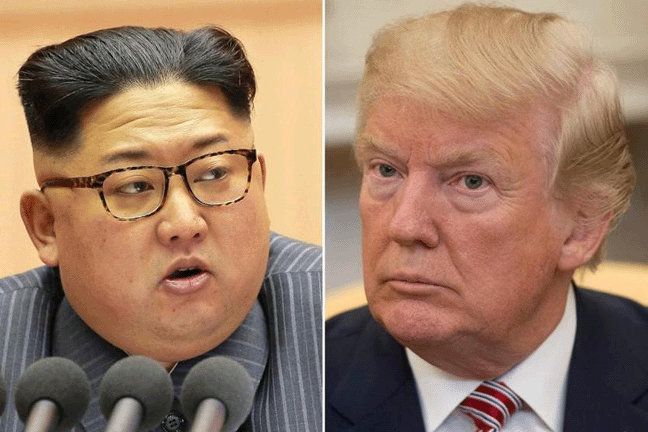 Why the U.S.-North Korea Nuclear Talks Have Stalled, Bloomberg, By David Tweed, August 29, 2018 Just a few months after Donald Trump’s historic handshake with Kim Jong Un in June, nuclear talks between the U.S. and North Korea are going nowhere.
Last week the U.S. president publicly acknowledged for the first time that discussions weren’t going according to plan, canceling a trip to Pyongyang by Secretary of State Michael Pompeo. North Korean state media then accused the U.S. of “double-dealing attitudes” and returning to “gunboat diplomacy.”
The problem is, neither side can agree on what the Singapore Declaration signed by both leaders actually means. Pompeo asserts that Kim accepted the “final, fully verified denuclearization of North Korea.” North Korean Foreign Minister Ri Yong Ho says all four provisions must be implemented simultaneously, not denuclearization first.
……… The failure to formally resolve the 1950-53 Korean War lies at the heart of the dispute, with each side using the continued threat of attack to justify its own military activities. Thus, the agreement between Trump and Kim — like earlier deals by their predecessors — included a pledge to “build a lasting and stable peace regime on the Korean Peninsula.”
Signing a peace treaty without a disarmament deal carries risks for the U.S. because it could legitimize Kim’s control over half of the peninsula and undermine the rationale for stationing 28,000 or so American troops in South Korea. Although Trump suspended some military drills with South Korea, he has so far refused to accept a symbolic peace declaration. That’s prompted the North Koreans to accuse the U.S. of backtracking on its commitments.
Denuclearization
Despite Trump’s post-summit claim that North Korea was “no longer a nuclear threat,” his agreement with Kim provided no timetable for giving up his nuclear weapons. Even the phrase “complete denuclearization” — a term preferred by North Korea’s that could be read to include nuclear-capable U.S. bombers and submarines — was left open to negotiation.
While Kim has followed through on pledges to refrain from weapons tests and dismantle testing facilities, those were moves he committed to before meeting with Trump. Pompeo has conceded before the U.S. Senate that Kim’s regime continues producing fissile material and has provided no inventory of its nuclear program and facilities. North Korea has warned that the U.S.’s focus on “denuclearization first” risks derailing talks.……… https://www.bloomberg.com/news/articles/2018-08-29/why-u-s-north-korea-nuclear-talks-have-stalled-state-of-play
Following Trump, Canada and Australia go backwards on climate change action

The Global Rightward Shift on Climate Change, President Trump may be leading the rich, English-speaking world to scale back environmental policies. The Atlantic , ROBINSON MEYER, AUG 28, 2018 Last Thursday, Malcolm Turnbull was the prime minister of Australia. By the end of this week, he’ll be just another guy in Sydney.
Trump’s former lawyer Michael Cohen’s involvement in shady deals to secure huge funding for nuclear project

 Senator requests documents on Michael Cohen’s ‘pay to play’ work for nuclear developer
Illinois senator wants communications between DOE and President Trump’s former lawyer. Think Progress,
Media about climate change must address the social impacts, and respect refugees
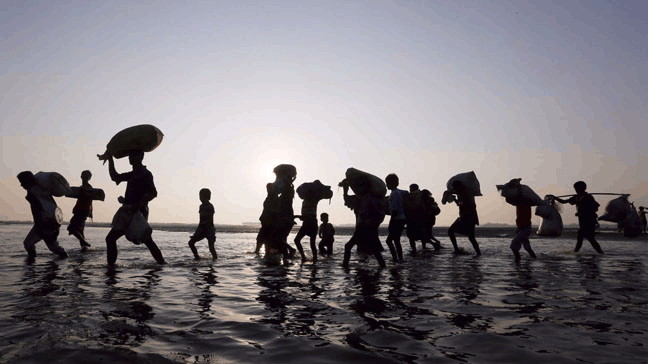

Climate change and migration: the need for a new media narrative, Ecologist Maria Sakellari, 29th August 2018 People forced by climate change to relocate are described by the media as victims or as security threats. There is little information about vulnerable communities’ fight to secure a viable future. We need to challenge these representations to provoke policies that protect the inherent rights of people affected by climate change, argues MARIA SAKELLARI
Safety measures for America’s nuclear weapons complex to be unravelled
 Under siege: Safety in the nuclear weapons complex, Bulletin of the Atomic Scientists, By Robert Alvarez, August 30, 2018 The Defense Nuclear Facilities Safety Board—which oversees and reports on safety practices in the US nuclear weapons complex—is under siege. Congress created the board almost 30 years ago to address years of lax safety practices. Now, the Energy Department is seeking to block the board’s access to safety information, excluding the board from overseeing worker protection at dozens of facilities and blocking board staff from interacting with contractors that operate the department’s nuclear sites. At the same time, the board is undergoing an internal crisis that affects staff morale and, ultimately, its critical role in ensuring the safety of the government’s largest high-hazard research and industrial enterprise.
Largely unknown to the general public, the Defense Nuclear Facilities Safety Board is a small organization, but it has played a critical role in dragging the US nuclear weapons complex away from decades of operating outside the mainstream of nuclear safety practice. With an annual budget of $31 million, the board oversees safety at 10 Energy Department sites that employ 110,000 people and occupy a land base larger than the states of Delaware and Rhode Island combined. These sites store and handle some of the world largest and potentially most dangerous inventories of nuclear materials. Since its inception the board has been largely responsible, among other things, for:
Removing and safely packaging large amounts of unsafe nuclear explosive materials from several sites.- Reducing explosion and fire hazards, a dominant concern.
- Increasing emergency planning and response to major nuclear accidents.
- Upgrading antiquated safety systems at nuclear facilities.
Despite this record of achievement, the board now faces difficulties that include the actions of some if its own members, who either don’t want or can’t seem to execute its mission. Last year, Sean Sullivan, the acting chairman installed at the request of Senate Republicans, tried to secretly convince the Trump White House to get rid of the board entirely, claiming it was “a relic of the Cold-War era defense-establishment.” Sullivan failed and was compelled to resign after his effort was revealed to the public.
As he attempted to eliminate the safety board, Sullivan also created a “secondary proposal” that would impose deep staffing cuts; outlined in a letter to the Office of Management and Budget, this fallback proposal was meant to go into effect if efforts to terminate the board went nowhere. The new acting chair of the safety board, Bruce Hamilton (also selected by Senate Republicans), unveiled the secondary proposal on August 15. The plan would “restructure by reducing the size of the workforce and relocating most of the technical staff to defense nuclear sites. This restructuring would reduce agency employees by at least 32 percent, down to 82 from the current 120.”
Although the restructuring plan has some positive elements—notably an addition of inspectors in the field—the deep budget and staff cut could disrupt and cripple the safety board’s effectiveness. Contention among board members is a symptom of crisis that has led to a loss of staff morale and high turnover. More than 60 percent of its technical staffers have left in less than the last four years. In May, the inspector general who oversees the safety board reported that it was ranked last by employees of 28 small federal agencies in terms a being a desirable place to work. According to the inspector general, more than a third of the safety staff surveyed in 2017 planned to leave, largely because of a “stark disagreement among board members, on how and when [safety] reporting requirements should be issued.” According to the inspector general, “two board members [Sullivan and Hamilton] routinely disapproved staff reports that included reporting requirements and instead proposed amendments to remove the reporting requirements.”
The restructuring plan cannot be considered in isolation from the Trump administration’s aggressive dismantlement of oversight across the government, especially in light of the Energy Department’s constantly stumbling efforts to build new nuclear weapons at its antiquated facilities. The Congressional Budget Office has estimated that US nuclear weapons laboratories and supporting activities will cost $261 billion over the next three decades. The board’s restructuring plan is expected to begin by October 18 of this year and follows the Trump administration’s playbook of slashing safety oversight in federal agencies, as has happened with the Chemical Safety Board, responsible for investigating industrial chemical accidents. Unless Congress intervenes, the restructuring of the Defense Nuclear Facilities Safety Board will proceed.
Safety and conflict in the nuclear weapons complex. Unlike the commercial nuclear power industry, which consists of a relatively small number of reactor designs, the nuclear weapons complex includes a host of one-of-a-kind facilities, many built 50 to 70-plus years ago. Over the decades, each Energy Department site in the complex has created its own unique culture, shaped by secrecy, isolation, and demands of the Cold War nuclear arms race. Since making the most dangerous weapons in the world involves working with some of the world’s most dangerous materials, the employees in the nuclear weapons complex need a high degree of protection against workplace exposure to radiation and toxic materials. The United States is already paying a stiff price for the harm caused to the workers who made nuclear weapons through the 1980s. To date, 120,599 deceased and sick nuclear weapons workers have been paid $15.37 billion in compensation and medical care.
Via a semi-autonomous subunit known as the National Nuclear Security Administration (NNSA), the Energy Department manages the US nuclear weapons complex in an unusual manner. In the complex, private contractors control at least 10 times more employees than federal managers. And unlike the rest of the government, the Energy Department self-regulates its workplace safety performance, primarily through a system of “orders” that are not on their own legally binding, but rather are enforced as requirements in contracts with private companies. With its origins in what the US Governmental Accountability Office has described as an “undocumented policy of blind faith in its contractor’s performance,” this regime is largely dependent on an honor system, in which contractors are expected to self-report their safety problems. ………
Though the Cold War is long over, the Energy Department’s antiquated, contractor-dominated management system—in which safety goal posts are easily moved behind closed doors—continues to endure and, in some cases, thrive. Without the meaningful oversight of the Defense Nuclear Facilities Safety Board, the nuclear weapons complex will predictably march back to a time, in the no-so-distant past, when public and worker safety was an afterthought—with serious consequences. https://thebulletin.org/2018/08/under-siege-safety-in-the-nuclear-weapons-complex/
Resignation of France’s environment Minister – he did not do a great deal to pull back nuclear power
French environment minister resigns https://beyondnuclearinternational.org/2018/08/29/french-environment-minister-resigns/Update: A newly leaked report examines the possibility of France building six new EPR reactors starting in 2025, after a prolonged period of inactivity in the industry. The report was ironically commissioned by Hulot and economy minister, Bruno Lemaire, and concludes that France “cannot stop building” reactors in order to maintain industrial know how and provide jobs, according to the newspaper, Les Echos, which broke the story. The report’s finding may have contributed to Hulot’s decision to resign. However, the notion that France would build six more EPRs was met with derision by nuclear critics who pointed out that the French nuclear industry has been unable to complete even one EPR in either France of Finland, where both projects are years behind schedule and massively over-budget.
Release of tritium-tainted water into sea is opposed by Fukushima fisheries group
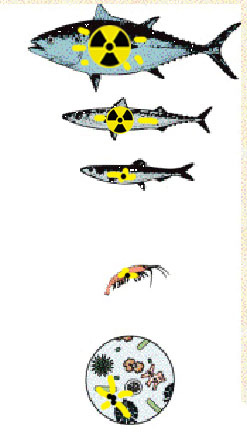 Fukushima fisheries group opposes release of tritium-tainted water into sea https://www.japantimes.co.jp/news/2018/08/30/national/fukushima-fisheries-group-opposes-release-tritium-tainted-water-sea/#.W4hrkSQzbGg
JIJI TOMIOKA, FUKUSHIMA PREF. – The head of a fisheries industry group in Fukushima Prefecture expressed opposition on Thursday to the idea of releasing water containing radioactive tritium from a crippled nuclear plant in the prefecture into the ocean.
The tritium-tainted water is from Tokyo Electric Power Company Holdings Inc.’s Fukushima No. 1 nuclear power plant, which was damaged heavily in the powerful earthquake and tsunami in March 2011.
“At a time when harmful rumors are still circulating in Japan and some countries continue to restrict imports (of Fukushima goods), releasing the tainted water into the sea will inevitably deliver a fatal blow to the Fukushima fishery industry,” Tetsu Nozaki, who leads the Fukushima Prefectural Federation of Fisheries Cooperative Associations, said.
His remarks came during a public hearing held by a subcommittee of the Agency for Natural Resources and Energy in the Fukushima town of Tomioka.
The hearing was for the canvassing of opinions on how to deal with the tritium-tainted water. Releasing it into the sea has been proposed as one option. Similar hearings will be held in the city of Koriyama, Fukushima, and Tokyo on Friday.
Using special equipment, Tepco is lowering the radiation levels in contaminated water at the plant, but the device cannot remove tritium. While the processed water is kept in tanks within the premises of the nuclear power station, the amount of tainted water continues to increase as the plant’s damaged reactors need to be cooled continuously. Tepco is about to run out of suitable sites to construct new storage tanks, according to the government.
Discussions on ways to deal with the tritium-contaminated water are underway at the subcommittee of the government agency.
In a June 2016 report, an expert panel of the agency said that releasing the polluted water into the sea after it is diluted with fresh water would be relatively cheap and time-efficient.
UK, USSR, and US soldiers paid the health costs, as guinea pigs for nuclear bomb blasts

‘We Were Guinea Pigs’: Soldiers Explain What Nuclear Bomb Blasts Feel Like https://motherboard.vice.com/en_us/article/wjk3wb/what-does-a-nuclear-bomb-blast-feel-like, 30 Aug 18
“It was as if someone my size had caught fire and walked through me.” When America dropped the nuclear bombs on Hiroshima and Nagasaki, the world watched as the atomic age began. The effects of the bomb were devastating and linger to this day. No government or military has ever detonated a nuclear bomb during a war since. But they have detonated them for various other reasons—including a series of tests designed to give soldiers a taste of what nuclear war might feel like.
“When the flash hit you, you could see the x-rays of your hands through your closed eyes,” he said. “Then the heat hit you, and that was as if someone my size had caught fire and walked through me. It was an experience that was unearthing. It was so strange. There were guys with bruises and broken legs. We couldn’t believe it. To say it was frightening is an understatement. I think it all shocked us into silence.”
The stories these nuclear veterans told Motherboard were harrowing.
“It was utter devastation. If I was looking at you now, I would see all your bones. You would see all the blood vessels. All I saw was this rising, colossal fireball going up and thunder, lightning, you name it,” David Hemsley, who experienced atomic bomb blasts at the age of 18, told Motherboard. “I think it was too much for some people—some of them were crying, asking for their mum. It was awful.”
“Didn’t know anything about it when we went, we didn’t know what we were going to do when we went, only to be told we were going to be testing bombs. It was just sheer brilliant light,” Robert Fleming said.
The most notorious of these experiments was the Castle Bravo detonation on March 1, 1954. At 15 megatons, it was the highest yield weapon ever tested by the United States, but that high yield was an accident. Weapon scientists anticipated a yield of 6 megatons, but new weapon designs led to the inadvertent discovery of thermonuclear fusion chain reactions. The accident more than doubled the power of the blast.
US Navy sailors on several ships watched the explosion from what they were told was a distance. It was not. “We soon found ourselves under a large, black and orange cloud that seemed to be dropping bright red balls of fire all over the ocean around us,” one witness told journalist Douglas Keeney in 15 Minutes: General Curtis LeMay and the Countdown to Nuclear Annihilation. “I think many of us expected we were witnessing the end of the world.”
The nearby Bikini Atoll, Marshall Islands have never been the same. The tiny island republic experienced fallout from multiple nuclear tests over the years, but the Castle Bravo explosion permanently altered the islands and its people. To this day, its citizens experience birth defects and cancer rates many times higher than those of the general population.
“We were basically used as guinea pigs,” Hern said. “There’s no other word for it.”
These men stood closer to the power of the atom and lived to tell the tale, but the blasts took their toll. Many have chronic health issues and cancers. The blasts sterilized certain soldiers, and higher instances of disease and early death were reported among the kids of those soldiers who did go on to bear children.
The onus is now on the young people to get rid of these weapons,” George Booker said. “With the right sort of education, they will do that.”
Trump administration partners with weapons contractors removes Defense Nuclear Facilities Safety Board power to oversee worker safety
|
|
|
U.N. watchdog says Iran continues to comply with nuclear restrictions despite U.S. pullout
WP, By Tamer El-Ghobashy, August 30 18 The United Nations’ nuclear watchdog said Thursday that Iran continues to comply with the terms of a 2015 nuclear pact, despite the United States’ withdrawal from the deal and renewed sanctions that have contributed to an economic crisis.
The International Atomic Energy Agency certified that Tehran is complying with restrictions on its enrichment of uranium and uranium stocks in addition to other provisions, according to a confidential IAEA report reviewed by the Associated Press and Reuters on Thursday. It is the 12th consecutive report affirming Iran’s adherence to the deal that President Trump formally rejected in May by withdrawing from it and reimposing sanctions on Tehran.
…….. It remains unclear whether the IAEA report will aid efforts by the deal’s European signatories — Germany, France and Britain — to save it amid punishing American sanctions. But both Iran and European nations have signaled that maintaining the terms of the accord as they are is unlikely.
On Thursday, French Foreign Minister Jean-Yves Le Drian said Iran must be willing to expand discussions in order to salvage the deal and answer for its ballistic missile program and its role in Middle Eastern conflicts, according to Agence France-Presse.
Iran’s supreme leader, Ayatollah Ali Khamenei, said Wednesday that he doubts Europe will be able to rescue the accord and that Iran may abandon it.
On Thursday, he again expressed his vehement opposition to the possibility of talks with Washington — a prospect that Trump has raised. Khamenei’s series of tweets appeared to quash speculation about a meeting between Trump and Rouhani on the sidelines of next month’s U.N. General Assembly in New York https://www.washingtonpost.com/world/2018/08/30/un-watchdog-says-iran-continues-comply-with-nuclear-restrictions-despite-us-pullout/?utm_term=.86839c9a4b9d
| ReplyForward |
1 This Month

of the week – Shut Down Drone Warfare!


Tell the Ukrainian Government to Drop Prosecution of Peace Activist Yurii Sheliazhenko

Petition to revoke the licensing of the Near Surface Nuclear Disposal Facility (NSDF) at Chalk River. https://www.ourcommons.ca/petitions/en/Petition/Details?Petition=e-7247
To see nuclear-related stories in greater depth and intensity – go to https://nuclearinformation.wordpress.com
-
Archives
- April 2026 (114)
- March 2026 (251)
- February 2026 (268)
- January 2026 (308)
- December 2025 (358)
- November 2025 (359)
- October 2025 (376)
- September 2025 (257)
- August 2025 (319)
- July 2025 (230)
- June 2025 (348)
- May 2025 (261)
-
Categories
- 1
- 1 NUCLEAR ISSUES
- business and costs
- climate change
- culture and arts
- ENERGY
- environment
- health
- history
- indigenous issues
- Legal
- marketing of nuclear
- media
- opposition to nuclear
- PERSONAL STORIES
- politics
- politics international
- Religion and ethics
- safety
- secrets,lies and civil liberties
- spinbuster
- technology
- Uranium
- wastes
- weapons and war
- Women
- 2 WORLD
- ACTION
- AFRICA
- Atrocities
- AUSTRALIA
- Christina's notes
- Christina's themes
- culture and arts
- Events
- Fuk 2022
- Fuk 2023
- Fukushima 2017
- Fukushima 2018
- fukushima 2019
- Fukushima 2020
- Fukushima 2021
- general
- global warming
- Humour (God we need it)
- Nuclear
- RARE EARTHS
- Reference
- resources – print
- Resources -audiovicual
- Weekly Newsletter
- World
- World Nuclear
- YouTube
-
RSS
Entries RSS
Comments RSS
 nuclear-news