Climate change brings collapse of ecosystems in Australia
The Conversation 4 July 18 Climate Research Fellow, University of Tasmania, Professor, Environmental Change Biology, University of Tasmania, Senior Lecturer, Macquarie University,
To the chagrin of the tourist industry, the Great Barrier Reef has become a notorious victim of climate change. But it is not the only Australian ecosystem on the brink of collapse.
Our research, recently published in Nature Climate Change, describes a series of sudden and catastrophic ecosystem shifts that have occurred recently across Australia.
These changes, caused by the combined stress of gradual climate change and extreme weather events, are overwhelming ecosystems’ natural resilience.
Variable climate
Australia is one of the most climatically variable places in the world. It is filled with ecosystems adapted to this variability, whether that means living in scorching heat, bitter cold or a climate that cycles between the two.
Despite land clearing, mining and other activities that transform the natural landscape, Australia retains large tracts of near-pristine natural systems.
Many of these regions are iconic, sustaining tourism and outdoor activities and providing valuable ecological services – particularly fisheries and water resources. Yet even here, the combined stress of gradual climate change and extreme weather events is causing environmental changes. These changes are often abrupt and potentially irreversible.
They include wildlife and plant population collapses, the local extinction of native species, the loss of ancient, highly diverse ecosystems and the creation of previously unseen ecological communities invaded by new plants and animals.
Australia’s average temperature (both air and sea) has increased by about 1°C since the start of the 19th century. We are now experiencing longer, more frequent and more intense heatwaves, more extreme fire weather and longer fire seasons, changes to rainfall seasonality, and droughts that may be historically unusual.
The interval between these events has also shortened, which means even ecosystems adapted to extremes and high natural variability are struggling.
As climate change accelerates, the magnitude and frequency of extreme events is expected to continue increasing.
What is ecosystem collapse?
Gradual climate change can be thought of as an ongoing “press”, on which the “pulse” of extreme events are now superimposed. In combination, “presses” and “pulses” are more likely to push systems to collapse.
We identified ecosystems across Australia that have recently experienced catastrophic changes, including:
not all examples can be directly linked to a single weather event, or a series of events. These are most likely caused by multiple interactingclimate “presses” and “pulses”. It’s worth remembering that extreme biological responses do not always manifest as an impact on the dominant species. Cascading interactions can trigger ecosystem-wide responses to extreme events.
The cost of intervention
Once an ecosystem goes into steep decline – with key species dying out and crucial interactions no longer possible – there are important consequences.
Apart from their intrinsic worth, these areas can no longer supply fish, forest resources, or carbon storage. It may affect livestock and pasture quality, tourism, and water quality and supply.
Unfortunately, the sheer number of variables – between the species and terrain in each area, and the timing and severity of extreme weather events – makes predicting ecosystem collapses essentially impossible.
Targeted interventions, like the assisted recolonisation of plants and animals, reseeding an area that’s suffered forest loss, and actively protecting vulnerable ecosystems from destructive bushfires, may prevent a system from collapsing, but at considerable financial cost. And as the interval between extreme events shorten, the chance of a successful intervention falls.
Critically, intervention plans may need to be decided upon quickly, without full understanding of the ecological and evolutionary consequences.
How much are we willing to risk failure and any unintended consequences of active intervention? How much do we value “natural” and “pristine” ecosystems that will increasingly depend on protection from threats like invasive plants and more frequent fires?
We suspect the pervasive effects of the press and pulse of climate change means that, increasingly, the risks of doing nothing may outweigh the risks of acting.
The beginning of this century has seen an unprecedented number of widespread, catastrophic biological transformations in response to extreme weather events.
This constellation of unpredictable and sudden biological responses suggests that many seemingly healthy and undisturbed ecosystems are at a tipping point https://theconversation.com/ecosystems-across-australia-are-collapsing-
Man Buries 42 Buses to Build Nuclear Shelter in Canada
By Pam Wright, 6 July 18 weather.com
At a Glance
- The 10,000-foot bunker features a medical facility, decontamination room, mortuary, daycare, pharmacy and even a dental clinic.
- Despite threats by authorities to seal off the bunker, Bruce Beach continues his work, saying his mission is for the greater good. ………https://weather.com/science/environment/news/2018-07-05-canada-nuclear-bunker-42-buses
Pickering nuclear critics call for more emergency preparedness

 Durham Region.com NEWS Jul 04, 2018 by Kristen Calis Pickering News Advertiser
Shawn-Patrick Stensil, senior energy analyst for Greenpeace, spoke Thursday at the Pickering Recreation Complex during the hearings. The CNSC will make the decision on the extension request.
In his submission on behalf of Greenpeace, Stensil said there is no justification for Pickering’s operation and the commission should reject OPG’s “request to expose millions of people within the (Greater Toronto Area) to the possibility of a nuclear accident.”
The week of hearings wrapped up on Friday. The first round took place in Ottawa in April.
……….The advocacy group was granted funding from the CNSC to poll the public on specific issues for the purpose of the hearing and presented its results.
The poll found 93 per cent of those surveyed want detailed nuclear emergency plans in place to protect residents from a possible large-scale accident at Pickering (or Darlington).
“Population density around the Pickering station is already too high yet intensification is being stepped up,” McNeill said.
The poll also found 87 per cent believe the radius for predistribution of KI pills should be extended. Currently its delivered within 10 kilometres. Only 17 per cent are aware they can order the KI pills free from preparetobesafe.ca…………..https://www.durhamregion.com/news-story/8704832-pickering-nuclear-critics-call-for-more-emergency-preparedness/?s=n1
USA’s costly new pork-barrel project – DOE’s Versatile Fast Neutron Source Nuclear Reactor
Science Mag 3rd July 2018 , Plans for a controversial multibillion-dollar U.S. nuclear research reactor
are coming together at lightning speed—much too fast, say some nuclear policy experts. With a push from Congress, the Department of Energy (DOE) has begun designing the Versatile Fast Neutron Source, which would be the first DOE-built reactor since the 1970s.
It would generate high-energy neutrons for testing materials and fuels for so-called fast reactors. But U.S. utilities have no plans to deploy such reactors, which some nuclear proliferation analysts say pose a risk because they use plutonium, the
stuff of atomic bombs.
Researchers are divided on whether the reactor, which would likely be built at Idaho National Laboratory (INL) near Idaho
Falls, is badly needed or a boondoggle. “Definitely, there is a lack of capability in the U.S. and a shortage of such facilities worldwide,” says Massimiliano Fratoni, a nuclear engineer at the University of California, Berkeley. But Frank von Hippel, a nuclear physicist at Princeton University, says, “It’s a pork-barrel project.”
http://www.sciencemag.org/news/2018/07/congress-pushes-multibillion-dollar-nuclear-reactor-critics-call-boondoggle
US-UK Mutual Defense Agreement (MDA) of 1958 underpins UK-USA ‘s joint nuclear arms race
David Lowry’s Blog 4th July 2018 , On 3 July 1958 the United States Government signed a bilateral agreement
with the UK, the effect of which has for sixty years to completely undermine the moral authority of Washington and London to preach to atomic aspirant countries that nuclear weapons are bad for national security; and civilian nuclear activities should be kept separate from any military uses.
This deal – often called the US-UK Mutual Defense Agreement (MDA) on atomic energy matters (in which the word defence is spelled with an ‘s’, even in the official UK Treaty series version, indicating its political provenance) – is the agreement that provided the underpinning framework for the subsequent Polaris and Trident nuclear weapons of mass destruction deals with US, as well as facilitating the testing of British nuclear warheads in Nevada, after the 1963 partial nuclear test ban treaty halted the atmospheric testing of nuclear explosive devices.
http://drdavidlowry.blogspot.com/2018/07/how-us-uk-mutual-defense-agreement.html
French engineering group to help Saudi Arabia towards nuclear power
 World Nuclear News 4th July 2018 , French engineering group Assystem is to conduct site characterisation and
impact studies for Saudi Arabia’s first nuclear power plant under a
contract from the King Abdullah City for Atomic and Renewable Energy
(KA-CARE). The contract was awarded recently following an international
call for tenders launched by KA-CARE. Assystem said the services to be
provided under the contract include site characterisation studies –
including geological and seismic analyses – as well as studies on the
impact of a nuclear power plant on the environment, demographics and on
electricity grids. These services will be provided over an 18-month period.
http://www.world-nuclear-news.org/NN-Assystem-to-assess-potential-Saudi-sites-0407185.html
Coal, nuclear moves solve problems that don’t exist
https://www.chron.com/business/energy/article/Administration-s-action-on-coal-and-nuclear-13048108.php By Don Santa
Natural gas pipelines can be targeted by cyberattacks. So can electric grids. And power plants. And hospitals, city governments, banks, entertainment companies, and virtually anything else that exists in the digital age.
Like most of those entities, pipeline companies have taken aggressive steps to better shield their infrastructure from hackers, isolate critical systems, and beef up physical security. Recent allegations by some that the natural gas industry is increasingly vulnerable to cyberattack are unsubstantiated and not based on any factual evidence.
A recent incident affecting a third-party service provider, used for scheduling and nominations by some pipeline operators, demonstrates how the industry’s preparedness protects consumers. After an attack in March halted data exchanges from the company, the operators that used their services to facilitate gas deliveries and billing sprang into action. There was no impact on natural gas deliveries and gas never stopped moving through pipelines as a result of this incident.
Natural gas pipeline companies have a long standing track record of reliable service, and are dedicated to meeting the highest industry and federal standards for safety, security and resilience, ensuring the flow of natural gas. This is par for the course in an industry where the number of threats are increasing, but advances in security and system resilience have made inflicting any real damage increasingly difficult.
Compared to cyberattacks that shut down entire electric grids in the Ukraine and a ransomware virus that hobbled services in Atlanta for days, the natural gas industry has avoided any attacks causing a halt in services. Preparedness is key, and the industry has demonstrated its commitment through participation in programs like the Downstream Natural Gas Information Sharing and Analysis Center, as well as real-world training exercises like the NERC GridEx. There is still work to be done, but we are on the right track.
Despite this progress, a recently leaked “pre-decisional” memo from the U.S. Department of Energy and the National Security Council argues that natural gas cybersecurity threats are proof that aging coal and nuclear power plants need to be propped up through unprecedented and legally-questionable use of federal national security powers.
This represents a solution to a problem that does not exist. If the Energy Department acts, consumers will be saddled with as much as $11.8 billion to pay for the uneconomic coal and nuclear plants.
That might be justifiable if these facilities increased the reliability of the grid. But they don’t. That’s why three previousattempts to find legal justification to subsidize these plants have failed. That’s also why PJM, the non-profit electric grid operator for the region that has seen most coal and nuclear retirements, dismissed the proposal as “damaging to markets and therefore costly to consumers.”
UAE further delays launch of first nuclear reactor
5 July 18 Emirates Nuclear Energy Corporation now says first reactor to come online in late 2019 or early 2020, The United Arab Emirates said Wednesday that its first nuclear reactor would come online in late 2019 or early 2020, further delaying the launch of the Arab World’s first atomic power station….https://www.arabianbusiness.com/energy/400041-uae-further-delays-launch-of-first-nuclear-reactor
1 This Month
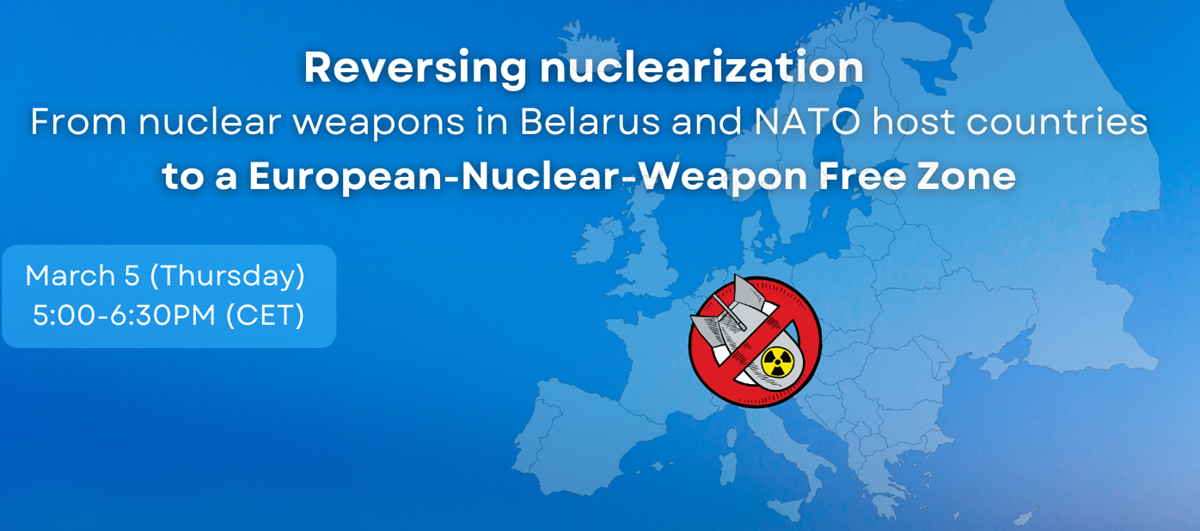
5 March -Online – Reversing nuclearization:
From nuclear weapons in Belarus and NATO host countries to a European-Nuclear-Weapon Free Zone
11am-12:30pm Eastern Time USA / 5pm-6:30pm CET

of the week – Advocating for a
nuclear free beach – https://www.samuellawrencefoundation.org/
The Samuel Lawrence Foundation advocates for a Nuclear Waste Free Beach at San Onofre, join us and take action!

10 March A LIVE WEBINAR THE REAL EFFECTS OF NUCLEAR POWER
What the Industry Isn’t Telling Us
1:00 PM Mountain, 2 pm Central, 3 pm Eastern. Live on the Keepers of the Water Facebook page

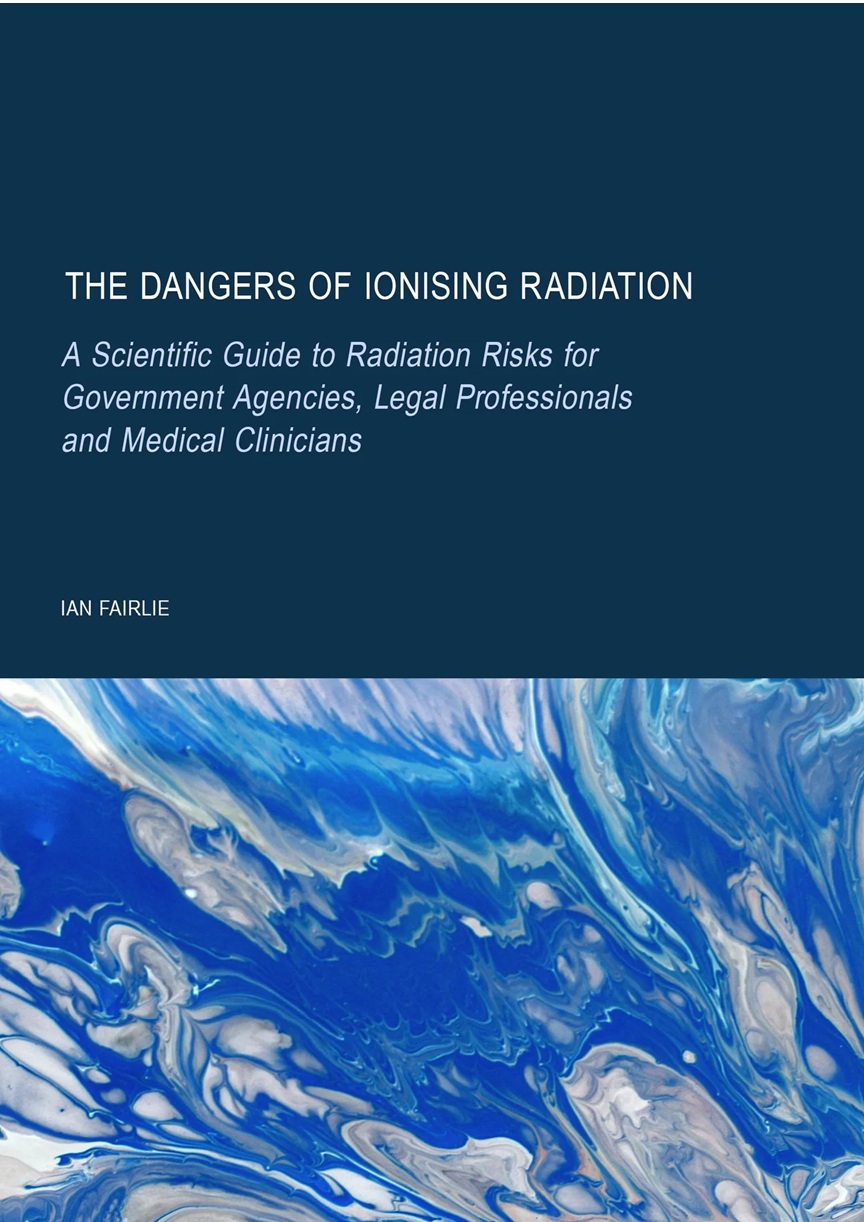
18 March Webinar @ 1 PM EST: An Assessment of SMR Projects: The Case of Canada
register for the zoom:
https://us02web.zoom.us/webinar/register/WN_o8BIIOUvQ2ONJR1nta65DQ#/registration

of the week – STOP SMALL MODULAR REACTORS IN CANADA
To see nuclear-related stories in greater depth and intensity – go to https://nuclearinformation.wordpress.com
-
Archives
- March 2026 (38)
- February 2026 (268)
- January 2026 (308)
- December 2025 (358)
- November 2025 (359)
- October 2025 (376)
- September 2025 (258)
- August 2025 (319)
- July 2025 (230)
- June 2025 (348)
- May 2025 (261)
- April 2025 (305)
-
Categories
- 1
- 1 NUCLEAR ISSUES
- business and costs
- climate change
- culture and arts
- ENERGY
- environment
- health
- history
- indigenous issues
- Legal
- marketing of nuclear
- media
- opposition to nuclear
- PERSONAL STORIES
- politics
- politics international
- Religion and ethics
- safety
- secrets,lies and civil liberties
- spinbuster
- technology
- Uranium
- wastes
- weapons and war
- Women
- 2 WORLD
- ACTION
- AFRICA
- Atrocities
- AUSTRALIA
- Christina's notes
- Christina's themes
- culture and arts
- Events
- Fuk 2022
- Fuk 2023
- Fukushima 2017
- Fukushima 2018
- fukushima 2019
- Fukushima 2020
- Fukushima 2021
- general
- global warming
- Humour (God we need it)
- Nuclear
- RARE EARTHS
- Reference
- resources – print
- Resources -audiovicual
- Weekly Newsletter
- World
- World Nuclear
- YouTube
-
RSS
Entries RSS
Comments RSS
 nuclear-news