It makes no economic sense – Trump’s new strategy to promote coal and nuclear
 Here’s why Trump’s new strategy to keep ailing coal and nuclear plants open makes no sense The Conversation. Director, Center for Energy and Sustainable Development; Professor of Law, West Virginia University,
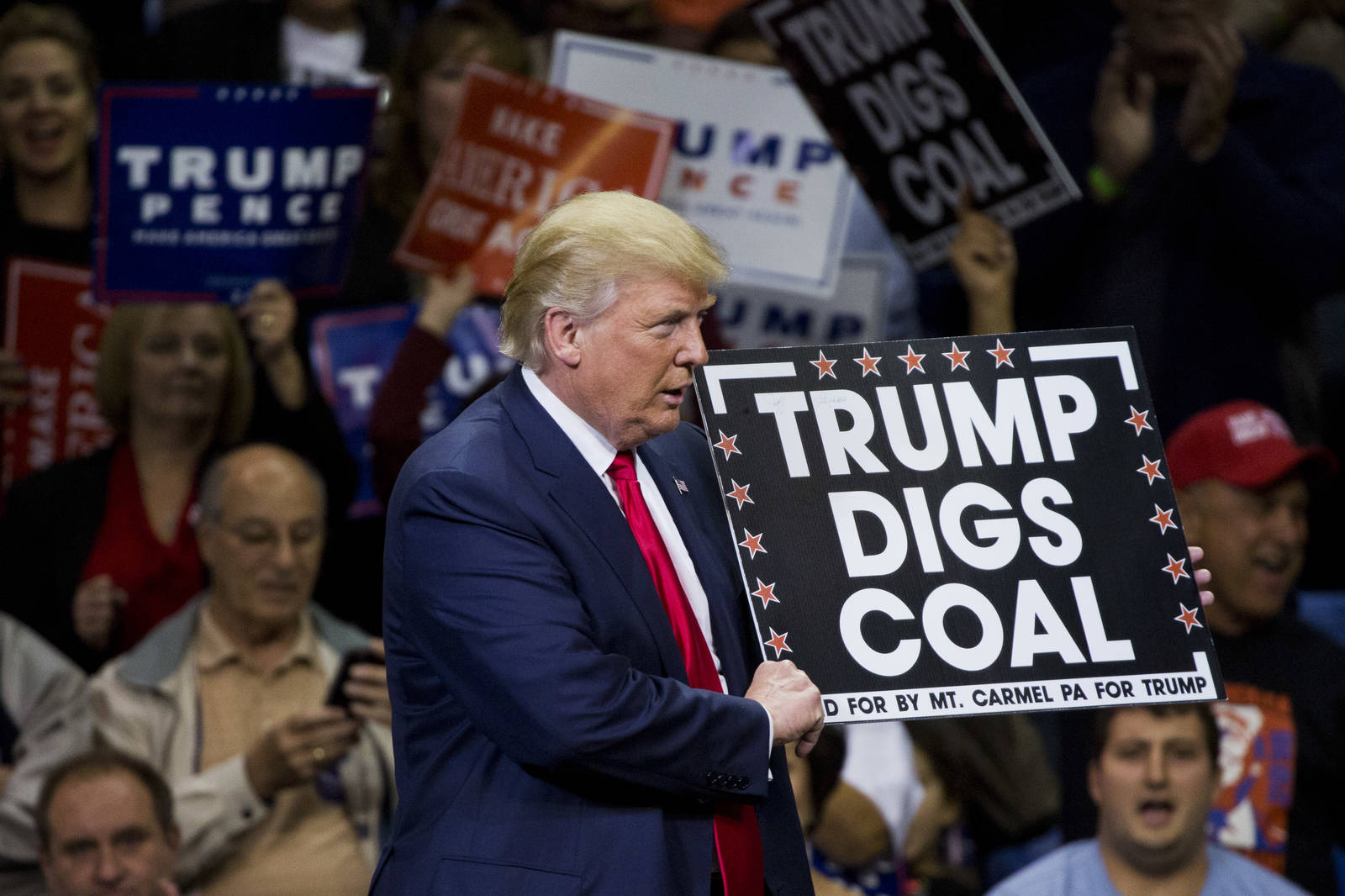
President Donald Trump recently ordered Energy Secretary Rick Perry to take “immediate steps” to stop the closure of coal and nuclear power plants.
And according to a draft memo that surfaced the same day, the federal government may establish a “Strategic Electric Generation Reserve” to purchase electricity from coal and nuclear plants for two years.
Both proposals, which have garnered little support, are premised on these power plants being essential to national security. If implemented, the government would be activating emergency powers rarely tapped before for any purpose.
Based on my four decades of experience as a utility regulatory attorney and law professor, I can see why this proposal has caused much controversy, partly because of how energy markets work.
No credible evidence
To be sure, these industries are in trouble.
The share of U.S. power derived from coal has fallen from about one-half in 2000 to less than one-third in 2017. ……
The share of power generated by nuclear reactors, despite holding steady at about one-fifth of the national grid since 2000, is about to slide. More than 1 in 10 of the nation’s nuclear reactors are likely to be decommissioned by 2025. If completed, the only two large-scale ones under construction will cost far more than originally planned.
But are experts worried about any electricity shortages or outages between now and 2025? Well, no. Other alternatives, mainly natural gas, wind and solar energy are poised to keep filling the gaps created in recent years by other coal plant closures.
When the Energy Department assessed whether the ongoing wave of coal and nuclear plant retirements are threatening grid reliability, it found no cause for alarm.
Disregarding the findings of its own study, the agency proceeded to ask the Federal Energy Regulatory Commission, an independent federal agency known as FERC that regulates energy rates and policies, for permission to subsidize coal and nuclear plants. The agency unanimously rejected that proposal.
More recently, PJM Interconnection – the nation’s biggest grid operator – declared that its power supply is not in jeopardy and that there is no reason to take this anticipated policy move.
The North American Reliability Corporation, the federal entity responsible for power reliability, has reached similar conclusions.
Unprecedented intrusion
In short, there is no emergency that justifies this unprecedented intrusion into the electricity markets that would warrant forcing taxpayers and utilities to pay a premium to keep coal and nuclear plants online.
The only “emergencies” are the financial woes of the plant owners caused by the rapid decline coal consumption and the nuclear industry’s weak outlook.
But the Trump administration appears to be arguing that a provision known as Section 202(c) of the Federal Power Act and the Defense Production Act grant the secretary of energy the power to nationalize parts of the power sector during wartime or amid other emergencies.
I believe that the sole rationale for this new policy is as a way for Trump to keep his campaign promise to revive the ailing coal industry.
Most likely, nuclear reactors are included in the proposal because that industry is increasingly unable to compete. Also, some companies, on the brink of bankruptcy, have stepped up their lobbying.
In many cases, the power generated by coal and nuclear power plantssells at prices that are too low to cover operating costs. The federal government does not typically intervene in wholesale electricity markets, other than to enforce rules intended to ensure that the competition is fair.
Because it would override the results of competition, I have no doubt that the Trump administration’s proposals would mark a radical intervention by the government into the electricity markets.
Winners and losers
Shareholders of the energy companies that own money-losing coal and nuclear plants stand to gain if this policy gets implemented because they are unable to compete in the wholesale power markets without this kind of assist.
Other power companies, utilities, taxpayers and electric ratepayers – meaning homeowners, businesses and anyone else who pays to keep the lights on – would lose out. We’d all have to pay a premium to pay for this unprecedented form of government intervention…….https://theconversation.com/heres-why-trumps-new-strategy-to-keep-ailing-coal-and-nuclear-plants-open-makes-no-sense-97816
No comments yet.
1 This Month


18 March Webinar @ 1 PM EST: An Assessment of SMR Projects: The Case of Canada
register for the zoom:
https://us02web.zoom.us/webinar/register/WN_o8BIIOUvQ2ONJR1nta65DQ#/registration


of the week – STOP SMALL MODULAR REACTORS IN CANADA
To see nuclear-related stories in greater depth and intensity – go to https://nuclearinformation.wordpress.com
-
Archives
- March 2026 (140)
- February 2026 (268)
- January 2026 (308)
- December 2025 (358)
- November 2025 (359)
- October 2025 (376)
- September 2025 (258)
- August 2025 (319)
- July 2025 (230)
- June 2025 (348)
- May 2025 (261)
- April 2025 (305)
-
Categories
- 1
- 1 NUCLEAR ISSUES
- business and costs
- climate change
- culture and arts
- ENERGY
- environment
- health
- history
- indigenous issues
- Legal
- marketing of nuclear
- media
- opposition to nuclear
- PERSONAL STORIES
- politics
- politics international
- Religion and ethics
- safety
- secrets,lies and civil liberties
- spinbuster
- technology
- Uranium
- wastes
- weapons and war
- Women
- 2 WORLD
- ACTION
- AFRICA
- Atrocities
- AUSTRALIA
- Christina's notes
- Christina's themes
- culture and arts
- Events
- Fuk 2022
- Fuk 2023
- Fukushima 2017
- Fukushima 2018
- fukushima 2019
- Fukushima 2020
- Fukushima 2021
- general
- global warming
- Humour (God we need it)
- Nuclear
- RARE EARTHS
- Reference
- resources – print
- Resources -audiovicual
- Weekly Newsletter
- World
- World Nuclear
- YouTube
-
RSS
Entries RSS
Comments RSS
 nuclear-news
Leave a comment