The birds and the bees disoriented by electromagnetic radiation: a warning about 5G networks

Electromagnetic radiation from power lines and phone masts poses ‘credible’ threat to wildlife, report finds https://www.telegraph.co.uk/science/2018/05/17/electromagnetic-radiation-power-lines-phone-masts-poses-credible/ Electromagnetic radiation from power lines, wi-fi, phone masts and broadcast transmitters poses a ‘credible’ threat to wildlife, a new report suggests, as environmentalists warned the 5G roll out could cause greater harm.
An analysis of 97 studies by the EU-funded review body EKLIPSE concluded that radiation is a potential risk to insect and bird orientation and plant health.
However the charity Buglife warned that despite good evidence of the harms there was little research ongoing to assess the impact, or apply pollution limits.
Nuclear war now becoming closer than ever
the chance of accidents, miscalculations, and blunders with tactical weapons—as well as the pressure to “use them or lose them” in battle—greatly increase the risk of an all-out nuclear war.
The Fourth Geneva Convention extends legal protection to civilians during wartime. The rules against deliberately harming noncombatants were expanded by two additional protocols, in 1977. “The civilian population . . . shall not be the object of attack,” Protocol II states. “Acts or threats of violence the primary purpose of which is to spread terror among the civilian population are prohibited.” Despite that admonition, today’s nuclear-targeting policies in many ways resemble medieval hostage-taking. The innocent are threatened with murder in order to preserve the peace.
 The Growing Dangers of the New Nuclear-Arms Race, The Trump Administration’s push for more nuclear weapons is part of a perilous global drive to miniaturize and modernize devices that already promise annihilation. New Yorker, By Eric Schlosser, 24 May 18, Less than a decade after President Barack Obama called for the abolition of nuclear weapons, the nine countries that possess them are engaged in a new nuclear-arms race. North Korea has most likely developed a hydrogen bomb, and its Hwasong-15 missiles may be large enough to transport not only a warhead but also decoys, chaff, and other countermeasures that would thwart America’s Ground-Based Midcourse Defense anti-ballistic-missile system. India recently commissioned its second ballistic-missile submarine, launched an Agni-5 ballistic missile that can strike targets throughout Pakistan and China, and tested nuclear-capable BrahMos and Nirbhay cruise missiles. Pakistan now has the world’s fastest-growing nuclear stockpile, including low-yield warheads on Hatf-9 missiles for use against Indian troops and armored vehicles. Israel is expanding the range of its Jericho III ballistic missiles and deploying cruise missiles with nuclear weapons on submarines. France and the United Kingdom are developing replacements for their Vanguard and Triomphant ballistic-missile submarines. China is about to introduce Dongfeng-41 ballistic missiles that will be mounted on trucks, loaded with up to ten nuclear warheads, and capable of reaching anywhere in the United States. Russia is building a wide range of new missiles, bombers, and submarines that will carry nuclear weapons. The R-28 Sarmat missile, nicknamed Satan-2, will carry up to sixteen nuclear warheads—more than enough for a single missile to destroy every American city with a population larger than a million people. Russia plans to build forty to fifty of the Satan-2s. Three other countries—Iran, Japan, and South Korea may soon try to obtain their own nuclear arsenals. Continue reading
New research reveals significant Fukushima radioactive particle release
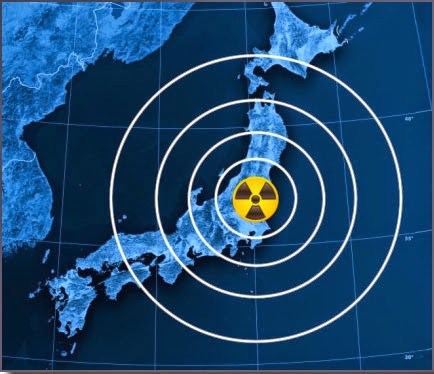 Fukushima radioactive particle release was significant says new research https://www.eurekalert.org/pub_releases/2018-05/uom-frp052418.php UNIVERSITY OF MANCHESTER
Scientists say there was a significant release of radioactive particles during the Fukushima-Daiichi nuclear accident.
The researchers identified the contamination using a new method and say if the particles are inhaled they could pose long-term health risks to humans.
The new method allows scientists to quickly count the number of caesium-rich micro-particles in Fukushima soils and quantify the amount of radioactivity associated with these particles.
The research, which was carried out by scientists from Kyushu University, Japan, and The University of Manchester, UK, was published in Environmental Science and Technology.
In the immediate aftermath of the Fukushima Daiichi nuclear accident, it was thought that only volatile, gaseous radionuclides, such as caesium and iodine, were released from the damaged reactors. However, in recent years it has become apparent that small radioactive particles, termed caesium-rich micro-particles, were also released.
Scientists have shown that these particles are mainly made of glass, and that they contain significant amounts of radioactive caesium, as well as smaller amounts of other radioisotopes, such as uranium and technetium.
The abundance of these micro-particles in Japanese soils and sediments, and their environmental impact is poorly understood. But the particles are very small and do not dissolve easily, meaning they could pose long-term health risks to humans if inhaled.
Therefore, scientists need to understand how many of the micro-particles are present in Fukushima soils and how much of the soil radioactivity can be attributed to the particles. Until recently, these measurements have proven challenging.
The new method makes use of a technique that is readily available in most Radiochemistry Laboratories called Autoradiography. In the method, an imaging plate is placed over contaminated soil samples covered with a plastic wrap, and the radioactive decay from the soil is recorded as an image on the plate. The image from plate is then read onto a computer.
The scientists say radioactive decay from the caesium-rich micro particles can be differentiated from other forms of caesium contamination in the soil.
The scientists tested the new method on rice paddy soil samples retrieved from different locations within the Fukushima prefecture. The samples were taken close to (4 km) and far away (40 km) from the damaged nuclear reactors. The new method found caesium-rich micro-particles in all of the samples and showed that the amount of caesium associated with the micro-particles in the soil was much larger than expected.
Dr Satoshi Utsunomiya, Associate Professor at Kyushu University, Japan, and the lead author of the study says “when we first started to find caesium-rich micro-particles in Fukushima soil samples, we thought they would turn out to be relatively rare. Now, using this method, we find there are lots of caesium-rich microparticles in exclusion zone soils and also in the soils collected from outside of the exclusion zone”.
Dr Gareth Law, Senior Lecturer in Analytical Radiochemistry at the University of Manchester and an author on the paper, adds: “Our research indicates that significant amounts of caesium were released from the Fukushima Daiichi reactors in particle form.
“This particle form of caesium behaves differently to the other, more soluble forms of caesium in the environment. We now need to push forward and better understand if caesium micro-particles are abundant throughout not only the exclusion zone, but also elsewhere in the Fukushima prefecture; then we can start to gauge their impact”.
The new method can be easily used by other research teams investigating the environmental impact of the Fukushima Daiichi accident.
Dr Utsunomiya adds: “we hope that our method will allow scientists to quickly measure the abundance of caesium-rich micro-particles at other locations and estimate the amount of caesium radioactivity associated with the particles. This information can then inform cost effective, safe management and clean-up of soils contaminated by the nuclear accident”.
USA and others start a new desperate push to promote nuclear power
 U.S. and partners form international alliance to push nuclear power https://www.reuters.com/article/us-usa-nuclear/u-s-and-partners-form-international-alliance-to-push-nuclear-power-idUSKCN1IP1PO, Reuters Staff, 24 May 18, COPENHAGEN (Reuters) – The United States is leading an initiative with several other governments to promote nuclear power and encourage investment in new nuclear technologies.
The initiative, launched on Thursday by U.S. Deputy Secretary of Energy Dan Brouillette with international partners, aims to “highlight the value of nuclear energy as a clean reliable energy source”.
The partners are Japan, Canada, Russia, South Africa, the United Arab Emirates, Poland, Argentina and Romania.
The U.S. nuclear industry is battling competition particularly from natural gas, while many national governments want to reduce their dependency on the energy source after the nuclear accident at Japan’s Fukushima plant in 2011.
The group of nations aims to promote areas such as improved power system integration and the development of technologies like hybrid nuclear-renewable systems.
“Nuclear-renewable systems could link emission-free nuclear power plants with variable renewables like solar or wind farms and could allow nuclear power to backstop intermittent generation,” Brouillette said during the launch at the Clean Energy Ministerial (CEM) in Copenhagen.
CEM is a global forum of 24 countries and the European Union which together account for 75 percent of global greenhouse gas emissions.
Brouillette said the initiative would also focus on the development of small modular reactors (SMR), which use existing or new nuclear technology scaled down to a fraction of the size of larger plants and would be able to produce around a tenth of the electricity created by large-scale projects.
Critics say SMR economies of scale will be limited because each reactor will need its own control and safety systems. They also point to the danger of spreading radioactive material more widely, increasing radiation and security risks.
The administration of President Donald Trump also launched an alliance with Norway and Saudi Arabia to boost public and private partnerships on carbon capture, utilization and storage (CCUS).
Earlier this month, Japan released a draft of an updated basic energy policy, leaving its ideal mix of power sources for 2030 in line with targets set three years ago, despite criticism that it placed too much emphasis on unpopular nuclear power.
To view a graphic on Nuclear power plants in the world , click: tmsnrt.rs/2sKlV1X
Reporting by Stine Jacobsen and Jacob Gronholt-Pedersen; Editing by Edmund Blair and David Stamp
USA Department of Veterans Affairs conveniently lost hundreds of claims for children, grandchildren of contaminated veterans
 VA lost or misplaced hundreds of claims for children, grandchildren of contaminated veterans http://www.wfla.com/8-on-your-side/investigations/va-lost-or-misplaced-hundreds-of-claims-for-children-grandchildren-of-contaminated-veterans/1194448265, Steve Andrews May 23, 2018
UK short of funds for its £51bn nuclear defence programme
 Nuclear defence programme to cost £51bn over next decade National Audit Office predicts total spending and warns of £2.9bn shortfall, Ft.com Peggy Hollinger, Industry Editor
The cost of building and maintaining the UK’s nuclear defence programme will add up to £50.8bn over the next 10 years, the UK’s public spending watchdog has said. The National Audit Office predicted a £2.9bn shortfall on the programme in that period, assuming the Ministry of Defence delivers the cost-cutting it has promised. The assessment is the first time the NAO has looked at the cost of the entire network of programmes, equipment and people needed for the UK’s nuclear deterrent between 2018 and 2028. As well as itemising completion of the current Astute submarines, the report looks at the costs of building the new Dreadnought class that will eventually replace the four Vanguard nuclear-armed boats from the early 2030s. The report showed that the top four suppliers — Rolls-Royce, BAE Systems, Babcock International and AWE Management — have won 97 per cent of contracts for nuclear defence………..https://www.ft.com/content/08d19194-5d0e-11e8-ad91-e01af256df68
USA Congress rejects move to limit new low-yield nuclear weapon.
House rejects limit on new nuclear warhead, Defense News , , 24 May 18, WASHINGTON — The U.S. House on Wednesday shot down a proposed limit on the Trump administration’s pursuit of a low-yield nuclear weapon.
F-35 bombers to get B61 Mod 12 nuclear weapon
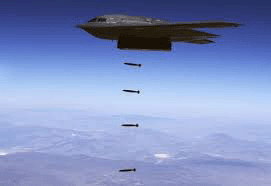 Terrifying new nuclear threat is here, Fox news By Kris Osborn | Warrior Maven 24 May 18
The Air Force is integrating the B61 Mod 12 nuclear weapon into the F-35 this year as part of a long-range plan to deploy a nuclear-armed, dual-capable F-35 able to give commanders a wider envelope of precision nuclear attack options.
“Detailed risk reduction activities have been completed ensuring the F-35A is fully compatible with the B61-12 weapon. Planning for Block 4 nuclear certification efforts have begun in anticipation of initial B61-12 integration on the F-35A this year,” Maj. Emily Grabowski, Air Force Spokeswoman, told Warrior Maven.
The Block 4 F-35, to fully emerge in the next decade, contains more than 50 technical adjustments to the aircraft designed as software and hardware builds — to be added in six-month increments between April 2019 to October 2024, she added.
The latest version of the B61 thermonuclear gravity bomb, which has origins as far back as the 1960s, is engineered as a low-to-medium yield strategic and tactical nuclear weapon, according to nuclearweaponsarchive.org, which also states the weapon has a “two-stage” radiation implosion design.
The most current Mod 12 version has demonstrated a bunker-buster earth-penetrating capability, according to the Federation of American Scientists (FAS).
“B61-12 is designed to have four selectable explosive yields: 0.3 kilotons (kt), 1.5 kt, 10 kt and 50 kt,” FAS writes.
Utilizing speed, maneuverability and lower-altitude flight when compared to how a bomber such as a B-2 would operate, a nuclear-capable F-35 presents new threats to a potential adversary. In a tactical sense, it seems that a high-speed F-35, fortified by long-range sensors and targeting technologies, might be well positioned to identify and destroy mobile weapons launchers or other vital, yet slightly smaller on-the-move targets. ………..
Also, without providing any detail, Grabowski did add that the Air Force is working closely with industry weapons developers to actively build new weapons specifically for the F-35.
“As we gain increasing experience with the aircraft and these new weapons mature, the program will follow the requirements for incorporating future weapons,” she told Warrior. http://www.foxnews.com/tech/2018/05/24/terrifying-new-nuclear-threat-is-here.html
Trump’s reckless propping up of the nuclear industry pleases its big lobbyists
 Trump has Plenty of Accomplices in his Reckless Energy Policies http://progressive.org/dispatches/trump-has-plenty-of-accomplices-in-his-reckless-energy-polic/, by Harvey Wasserman, May 24, 2018
Some 360,000 Americans now work in the solar industry, more than in nukes and coal combined. In fact, more Americans are now working in California’s solar industry than are digging coal nationwide. And the U.S. wind business now employs more than 100,000 people.
But President Donald Trump wants to change that. He has already slammed the solar industry’s growth by slapping a 30 percent tariff on imported Chinese panels, slowing installations nationwide.
He’s also contemplating using an obscure Korean War-era “emergency” ordinance that would let the government bail out money-losing coal and nuclear plants at the expense of renewables.
The idea was presented to Trump while he dined with a lobbyist from the infamous Akron-based FirstEnergy, whose bad business decisions have hung it with four crumbling, money-losing nuclear power reactors and some eighty obsolete coal burners.
More than half the nation’s ninety-nine licensed commercial reactors are now losing money. FirstEnergy’s Davis-Besse, near Toledo, Ohio; Perry, east of Cleveland, Ohio, and Beaver Valley 1 & 2, outside Pittsburgh, Pennsylvania, are bleeding radioactive red ink. One might expect “free market” corporate executives to cut their losses and let competition determine how our energy will be generated.
But FirstEnergy CEO Chuck Jones (annual salary: $8.7 million) has begged Ohio’s legislature and regulators to slap consumers with billions in higher electric rates. So far he’s failed, which is why he sent his lobbyist to dine with Trump.
Already, governments are doing what they can to prop up the nuclear power and fossil-fuel industries and damage the cause of renewable power.
Three nuclear reactors in Illinois have been granted a $200 million annual handout for the next decade. Pennsylvania and Connecticut may soon get soaked with massive rate hikes to keep reactors running there.
The New Jersey legislature has just approved spending $430 million over the next decade to run three more uneconomical reactors there, two at Salem and one at Hope Creek. Activists including actor Alec Baldwin have urged that state’s new Democratic governor to veto that proposal.
Throughout the United States, owners of even those few reactors that are still making money are poised to scam their way into compliant legislatures to see how much they can grab.
But the biggest nuke scam of all has been rammed through state regulatory agencies by New York’s “liberal” Governor Andrew Cuomo. Cuomo backs the 2021 shutdown of two decrepit reactors at Indian Point, saying they are too close to Manhattan to be considered safe.
But Cuomo wants ratepayers statewide to cough up a staggering $7.6 billion for four upstate reactors whose owners had them slated for decommissioning. To the astonishment of economists, ecologists, business and ratepayer groups, Cuomo’s hand-picked regulators approved the rip-off last year.
Nuclear opponents have gone to court to stop it. They argue that while less than four thousand jobs are tied to the reactors, many thousands more would be created by replacement wind and solar projects.
FirstEnergy’s scam is even more brazen. According to the Nuclear Energy Institute, the average reactor generally employs between four hundred and seven hundred workers. Some workers stay on long after shutdown to deal with issues of decommissioning and waste management.
But along with bailing out its four dying nukes, FirstEnergy wants a staggering $8 billion per year in above-market ratepayer fees for some 80 coal burners.
Rightwing think tanks like Heritage have joined financial and business groups in warning such rate hikes could decimate the area’s economy.
Meanwhile, a bitterly disputed “set-back” law has stopped some $4.2 billion in proposed wind projects along Ohio’s “north coast,” which is flat, windy, well-wired and full of farmers desperate for the projects to begin. But repeal has stalled, with tens of thousands of jobs and billions in income hanging in limbo.
They’ll all disappear if Trump and Energy Secretary Rick Perry approve FirstEnergy’s “emergency” bailout.
Last September, the Trump Administration approved another $3.7 billion in federal loans, on top $8.3 billion approved in the past, to sustain a scandal-ridden nuclear project in Vogtle, Georgia.
More recently, on May 10, Congress passed a new attempt to open the proposed Yucca Mountain waste dump. The plan to store some 70,000 tons of high-level commercial radwaste in an earthquake-riddled dormant volcano is overwhelmingly opposed by Nevadans and had long since been written off. But the measure was approved by a vote of 206 to 179, with ninety-four Democrats and eighty-five Republicans voting against. It now heads to the Senate.
As all of this plays out, tens of thousands of jobs hang in the balance. The nation’s entrenched fossil-nuclear corporate elites are more focused on propping up the industries of the past than embracing the technologies of the future.
Harvey Wasserman’s radio shows appear at prn.fm and KPFK-Pacifica, 90.7FM, Los Angeles. His America at the Brink of Rebirth: The Life & Death Spiral of US History from Deganawidah to the Donald will soon be published at Solartopia.org.
USA’s history of accidental dropping of nuclear bombs
Remembering A Near Disaster: U.S. Accidently Drops Nuclear Bombs On Itself And Its Allies WUNC91.5, By JAY PRICE 24 May 18
In 1968, the Pentagon halted a program that kept military bombers in the air, loaded with nuclear weapons to deter a Soviet attack.
The problem was the jets kept having near-catastrophic accidents.
“If you go through some of the archival evidence publicly available, it seems like once a week or so, there was some kind of significant noteworthy accident that was being reported to the Department of Defense or the Atomic Energy Commission or members of Congress,” said Stephen Schwartz, a long-time nuclear weapons analyst.
Schwartz singled out 1958 as a particularly notorious year.
“We’re actually celebrating − celebrating is probably the wrong word − but we’re marking the 60th anniversary of no fewer than eight nuclear weapons accidents this year,” Schwartz said.
Every couple of weeks, Maurice Sanders gets a reminder of one of those 1958 accidents when a car with out-of-state tags parks in front of his house just outside Florence, South Carolina. Strangers pile out and tromp around to the scrub oak forest just behind his back yard to gaze down at an odd tourist attraction.
“It’s the hole from where the bomb had dropped, years ago,” Sanders said. “I think it’s on some kind of map or something.”
The circular pit is as big around as a small house, with a pond of tea-colored water at the bottom. A fading plywood cutout that someone put up − apparently to lure more tourists − is the size and shape of the Mark 6 nuclear bomb that was dropped there by accident.
The core containing the nuclear material was stored separately on the B-47 bomber it fell from, but the high explosives that were used to trigger the nuclear reaction exploded on impact, digging the crater estimated at 35 feet deep. The blast injured six members of a nearby family and damaged their home beyond repair.
Earlier that same year, just one state farther south, a jet fighter collided with a bomber during a training exercise, and the crew jettisoned a bomb into coastal waters near Savannah, Georgia.
Two years later, in 1961, a B-52 bomber flying out of Seymour Johnson Air Force Base near Goldsboro came apart in the sky, and the two armed nuclear bombs it was carrying fell into a farming community northeast of the base. One buried itself so deeply into a tobacco field that some of its parts were never found. The other floated down on a parachute, planting its nose in the ground beside a tree.
The parachute bomb came startlingly close to detonating. A secret government document said three of its four safety mechanisms failed, and only a simple electrical switch prevented catastrophe. It was 260 times more powerful than the bomb dropped on Hiroshima and could have instantly killed thousands of people. The radioactive fallout could have endangered millions more as far north as New York City.
Safety takes back seat to readiness
The military’s name for serious nuclear weapons mishaps is “broken arrow.” The Pentagon has only officially acknowledged 32 broken arrows, but evidence compiled by the government shows there were thousands more accidents involving nuclear weapons, Schwartz said.
“Most of which were not that as serious as the 32 we know about, but some of them were quite bad,” he said.
Schwartz said a wave of serious accidents in the late 1950s through 1968 was partly due to programs that kept the U.S. on a war footing. A few planes were kept aloft 24 hours a day, ready to drop bombs on Russia.
And then there was the sheer number of weapons being made, which created more opportunities for things to go wrong.
Schwartz said by the year after the bomb fell on South Carolina, the U.S. was making almost 20 nuclear weapons a day……..
“Everything associated with nuclear weapons the nuclear weapons delivery system, the command-and-control systems that make sure they go off when they’re supposed to and most importantly that they don’t go off when they’re not supposed to − all of these things are designed, built, operated, and maintained by human beings,” Schwartz said. “And human beings are fallible.”
Overseas accidents bring program’s end
It wasn’t the bombs the U.S. dropped on itself that finally ended the program. Rather, it was two accidents over friendly nations.
In 1966, a B-52 bomber – also flying out of Seymour Johnson – broke apart in the sky near the coast of Spain. One of its bombs dropped into the sea, and three fell on land where conventional explosives scattered radioactive material.
Then, in 1968, the burning-seat-cushion crash spread plutonium and uranium onto sea ice and into the sea off the coast of Greenland……..http://wunc.org/post/remembering-near-disaster-us-accidently-drops-nuclear-bombs-itself-and-its-allies#stream/0
Ontario NDP only party speaking out against nuclear waste bunker near Lake Huron
Global News, The Canadian Press 24 May 18, TORONTO — Of the three main parties vying for office in Ontario’s spring election, only the NDP has spoken out against building a $2.4-billion nuclear waste bunker near Lake Huron.
USA nuclear agency up to its old tricks – secretive over-spending on nuclear weapons
New Documents Raise Questions About Increased Nuclear Spending, A nuke agency is up to its old tricks War is Boring, WIB POLITICS May 22, 2018 Lydia Dennett
There are many reasons to keep certain parts of the U.S. nuclear weapons complex a secret. But fraud, waste, and abuse run rampant when the mystique and awe of nuclear bombs gets in the way of effective oversight. And it is the taxpayer who ends up suffering.
The secrets to creating a nuclear explosion and the materials to do so are kept by the National Nuclear Security Administration, a semi-autonomous agency within the Department of Energy, and it has a $1.2 trillion plan to build new nuclear warheads and facilities over the next 30 years.
But new documents obtained by the Project on Government Oversight discussing the life expectancy of nuclear weapons components show that the uranium cores may have a longer life span than originally thought. This may undermine some justifications for an expansive—and expensive—nuclear modernization plan.
Although much of the documents are redacted, likely to keep safe the most sensitive details of the U.S. nuclear enterprise, the remaining details seem to suggest that initial life-span estimates were too conservative. These initial estimates were partially used as justification for plans to build an expensive new facility and revising plans based on these findings could result in billions of savings for taxpayers.
In light of NNSA’s rhetoric about the aging nuclear arsenal and the desperate need for more money to modernize, POGO endeavored to determine exactly what upgrades were truly needed to support a credible nuclear deterrent. In 2013, we released a report that called for a study into the lifetime of uranium secondaries in order to determine what capacity would be required of a proposed new facility.
Initially, the NNSA had claimed publicly that it needed a “big box” design, a large facility that would replace several different buildings in the complex and that had the capacity to remanufacture 160-200 secondaries per year. But just a few years later the department’s own Stockpile Stewardship and Management Plan stated the need was really only 80.
Given this shift within the department, as well as a litany of design missteps, cost overruns, and poor project oversight, POGO recommended a lifetime study for uranium secondaries and a scaled-down design utilizing existing facilities.
Shortly after POGO released our UPF report, the NNSA formed a “Red Team” to review the design. That review echoed many of POGO’s findings and recommendations including the need for “significant and sustained oversight” as well as immediately scrapping the big box design.
“Design efforts on the current ‘big box,’ single structure UPF concept should be stopped while a comprehensive reevalution of program requirements and applicable design standards is undertaken,” the report stated.
The new documents from the time suggest that a study into the lifetimes of secondaries supported this decision. One of the newly obtained documents is a 2010 peer review analysis conducted by the Los Alamos National Laboratory of the life expectancy study for one nuclear warhead type, the W78. The review committee examined work and analysis done by the “life expectancy team” charged with concluding how long these secondaries will remain effective…………
NNSA’s pattern of exaggerating spending needs
A remarkably similar situation occurred with the agency’s planned plutonium operations replacement facility. The NNSA claimed the proposed Chemistry and Metallurgy Research Replacement – Nuclear Facility needed to be able to manufacture 450 plutonium cores per year. But after a lifetime study found they can last for over 150 years without significantly degrading the number plummeted to less than 80 per year, dramatically decreasing what would be required of the new building.
Congress ultimately canceled the facility when cost overruns and delays made it impossible to continue, and the NNSA is now pursuing a scaled down approach. But there’s no getting around the fact that twice now the NNSA has either obscured facts that would suggest a more limited capacity is all that’s required or has pursued an expensive plan without knowing all the facts beforehand. Either explanation is an unacceptable exploitation of taxpayer dollars.
……… Despite these nearly constant warnings and recommendations for improvement from all the four corners of the nuclear complex world, the NNSA plans to move full steam ahead with their incredibly expensive upgrade plan. A plan that is partially justified by rhetoric suggesting that age has significantly deteriorated parts of the complex.Without an independent study it’s impossible to know if these claims are true. And with NNSA’s track record, Congress would be more than justified in asking questions. Before pouring billions of dollars into this effort, Congress should commission an independent, scientist-led study by the JASON advisory group to ensure NNSA’s future spending plans match up with the overall U.S. national security needs.
This story first appeared at the Project on Government Oversight. https://warisboring.com/new-documents-raise-questions-about-increased-nuclear-spending/
Trump’s lawyer Cohen opens doors for Alabama nuclear developer Haney
By Kyle Whitmire kwhitmire@al.com “……Franklin Haney is a very rich man, and his money is hard at work in Alabama, in Washington, D.C., and maybe even the Middle East. The Chattanooga developer’s campaign cash has given him access to politicians from city council members to presidents of the United States.
And now, according to the Wall Street Journal, he has the help of President Donald Trump’s personal lawyer and political fixer, Michael Cohen, with designs on bringing online a nuclear power plant in northeast Alabama.
Two years ago, when I first wrote about Haney’s dream to buy a half-finished nuclear power plant in north Alabama and bring it online, I didn’t take his plans seriously for a couple of reasons.
Even if Haney could convince TVA to sell him the Bellefonte plant, even he — a billionaire — probably couldn’t afford to finish it, could he? Haney’s own projection was that the project would cost about $13 billion to complete. By most accounts, including Haney’s company’s website, he is worth less than that.
And even if he managed to finish it, there was no way the federal government would allow him to turn the thing on, would they?
The logistics and regulation of nuclear power make it nearly impossible to stop a project and then restart it again, which was a big reason the TVA never finished the job.
I wasn’t alone in that assessment.
Stephen Smith, the executive director of the Southern Alliance for Clean Energy, said then that Haney’s plans for Bellefonte were delusional.
“The first concrete was poured in 1974,” he said. “That reactor is approaching 50 years old. Do you think the Nuclear Regulatory Commission is going give a license for a reactor that has been sitting around for 50 years?”
But Haney didn’t give up.
Once a door-to-door Bible salesman, Haney became a self-made billionaire through working as the government’s landlord. He acquires and develops property, which he leases to local, state and federal agencies.
And he makes connections first with political donations. He’s donated to Democrats and Republicans. Bill Clinton and Barack Obama have benefited from his largess, as have Republicans, including Alabama Gov. Bob Riley………
TVA agreed to sell the power plant to Haney, but he still had those two hurdles left — regulation and capital.
Enter Donald Trump.
After the president’s victory in 2016, Haney donated $1 million to Trump’s inaugural fund, and last summer Bloomberg reported that Haney had bragged about dining with Trump about a dozen times during the president’s first six months in office. Haney could have had those opportunities because he’s a member of Trump’s club, Mar-a-Lago.
And it turns out, the Wall Street Journal reports, Haney had another connection, too. He is a client of Michael Cohen, Trump’s personal lawyer and political fixer, who appears to have turned his proximity to the president into a lucrative business opportunity.
According to the Journal, Haney hired Cohen to help him solicit investments for the Bellefonte project, and in April, the two met in Miami with Sheikh Ahmed bin Jassim bin Mohammed al-Thani, the minister of economy and commerce of Qatar and the vice chairman of the Qatar Investment Authority.
Previously, Cohen had solicited $1 million from Qatar for access to the Trump administration, the Washington Post reported last month. The Qatar government declined that solicitation.
It’s unclear whether the meeting was fruitful for Haney, but what is clear is that the law might not allow significant foreign investment in the Bellefonte project. Under the Atomic Energy Act, the NRC may not issue licenses for projects owned or controlled by a foreign entity.
But laws change, especially when men with money need them fixed, and if the Trump administration has shown anything, it’s that it cares little about regulations, environmental protections and foreign influence in domestic affairs.
Haney’s hurdles are still high. They are still there. But his money is working harder than ever to tear them down.
And anyone who cares about the safety of northeast Alabama should take him very seriously. https://www.al.com/opinion/index.ssf/2018/05/cohen_opens_doors_for_alabama.html
Cosmic radiation will damage the brains of space travellers
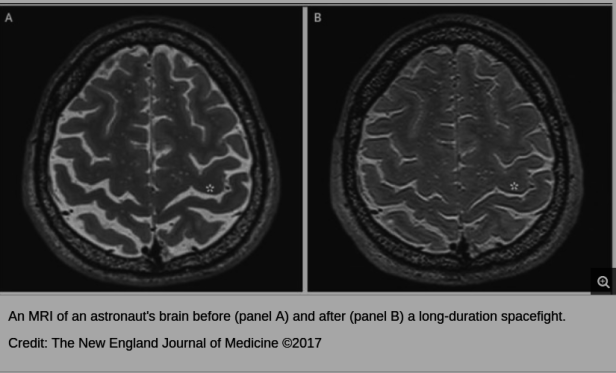
Can we protect the brain from cosmic radiation? Medical News Today , As we prepare to enter a new era of space travel, we must find ways of averting health risks posed by the cosmic environment. Deep space radiation, in particular, is known to impair cognitive function………. One main threat comes from cosmic radiation, which can harm the central nervous system, altering cognitive function and leading to symptoms similar to those found in Alzheimer’s disease.
……. ‘Cosmic radiation may affect brain long-term’Previous research conducted by Rosi and team found that, after mice were exposed to a level of radiation roughly equivalent to what human astronauts might encounter during an outer space mission, their capacity to differentiate between familiar and unfamiliar objects was impaired.
Usually, when mice are faced with two objects — one that is new and unknown to them and one that they formerly explored — they will spend more time familiarizing themselves with the new object.
However, the animals that had been exposed to radiation tended to spend an equal amount of time exploring both objects, which suggested to the researchers that the mice had forgotten they had already been exposed to one of the two.
Other symptoms that the mice presented included problems with social interactions and a sense of elevated anxiety. Rosi and team note that this was likely because of the effect the strong radiation had on the microglia, or nerve cells found in the brain and spinal chord that are part of the central nervous system’s immune mechanism.
When microglia are activated, they can cause symptoms — such as impaired memory recall — that are consistent with those of neurodegenerative disorders.
This is partly due to the fact that they are driven to destroy synapses, or the connections formed between brain cells that allow them to convey information.
“We are starting to have evidence that exposure to deep space radiation might affect brain function over the long-term, but as far as I know, no one had explored any possible countermeasures that might protect astronauts’ brains against this level of radiation exposure.” Susanna Rosi………https://www.medicalnewstoday.com/articles/321898.php
1 This Month

of the week – Shut Down Drone Warfare!


Tell the Ukrainian Government to Drop Prosecution of Peace Activist Yurii Sheliazhenko

Petition to revoke the licensing of the Near Surface Nuclear Disposal Facility (NSDF) at Chalk River. https://www.ourcommons.ca/petitions/en/Petition/Details?Petition=e-7247
To see nuclear-related stories in greater depth and intensity – go to https://nuclearinformation.wordpress.com
-
Archives
- April 2026 (77)
- March 2026 (251)
- February 2026 (268)
- January 2026 (308)
- December 2025 (358)
- November 2025 (359)
- October 2025 (376)
- September 2025 (257)
- August 2025 (319)
- July 2025 (230)
- June 2025 (348)
- May 2025 (261)
-
Categories
- 1
- 1 NUCLEAR ISSUES
- business and costs
- climate change
- culture and arts
- ENERGY
- environment
- health
- history
- indigenous issues
- Legal
- marketing of nuclear
- media
- opposition to nuclear
- PERSONAL STORIES
- politics
- politics international
- Religion and ethics
- safety
- secrets,lies and civil liberties
- spinbuster
- technology
- Uranium
- wastes
- weapons and war
- Women
- 2 WORLD
- ACTION
- AFRICA
- Atrocities
- AUSTRALIA
- Christina's notes
- Christina's themes
- culture and arts
- Events
- Fuk 2022
- Fuk 2023
- Fukushima 2017
- Fukushima 2018
- fukushima 2019
- Fukushima 2020
- Fukushima 2021
- general
- global warming
- Humour (God we need it)
- Nuclear
- RARE EARTHS
- Reference
- resources – print
- Resources -audiovicual
- Weekly Newsletter
- World
- World Nuclear
- YouTube
-
RSS
Entries RSS
Comments RSS
 nuclear-news