An underground North Korean nuclear test in September last year exploded with 10 times the energy of the atomic bomb that exploded over Nagasaki in 1945.
It also caused the overlying mountain peak to sink by half a metre and shift about 3.5 metres south.
Key points:
North Korea detonated a nuclear bomb under Mt Mantap on September 3, 2017
Using satellite measurements and seismic data, geophysicists calculated the strength of the test and its location — the first time satellite radar has been used this way
The blast was big enough to cause an earthquake and deform the mountain above
These are conclusions drawn by geophysicists, who used satellite radar and instruments that pick up waves travelling through the earth, to calculate the explosion’s depth and strength.
In the journal Science today, they also report signs that a subterranean tunnel system at the test site collapsed 8.5 minutes after the bomb detonated.
In the past, satellite technology — called synthetic radar aperture imagery — has mapped how the ground stretches and warps after earthquakes.
But this is the first time it has been used to examine a nuclear bomb test site, according to Teng Wang, study co-author and a geophysicist at Singapore’s Nanyang Technological University.
Since the United Nations General Assembly adopted the Comprehensive Nuclear-Test-Ban Treaty in 1996, nine nuclear tests have taken place.
Six of these were by North Korea, five of which were at its Mt Mantap facility in the country’s north.
The bombs were detonated in chambers tunnelled into the mountain itself — a granite peak that extends upwards just over 2,200 metres.
But this means the details of the tests, such as the energy produced by the bombs, have been largely unknown outside North Korea — until now.
Eye in the sky, ear to the ground
Dr Wang and his colleagues suspected they could deduce the strength and precise location of the bomb test on September 3 last year, which triggered a magnitude-6.3 earthquake.
Clandestine nuclear activities are tracked by a global monitoring system of sensors that pick up the faint shivers and shudders generated by distant underground blasts and earthquakes.
But while these instruments are capable of picking up the wave signature of a bomb blast thousands of kilometres away, more information is needed to pinpoint exactly where an explosion has taken place.
So in the weeks after the September North Korean bomb test, Dr Wang and his colleagues received images of the Mt Mantap terrain before and after the test, snapped by the German TerraSAR-X satellite.
To map the bumps and dips on the Earth’s entire surface, TerraSAR-X pings radar towards the ground and measures how long it before the signal is bounced back up again.
“As long as the ground is deformed, we can measure it from space using synthetic radar aperture,” Dr Wang said.
Combined with a bit of nifty mathematical modelling — the first time anyone’s modelled an underground nuclear test with radar data — he and his colleagues got a fix on the exact location of the detonation site.
This is a highlight of the work, said Hrvoje Tkalcic, a geophysicist at the Australian National University, who was not involved in the study.
“What’s always difficult is pinpointing an exact location [of a bomb test],” Professor Tkalcic said.
Dr Wang and his team calculated that the top of the mountain subsided about half a metre after the September test, and parts of it shuffled south.
To manage this deformation, the bomb released the energy equivalent to between 109,000 and 276,000 tonnes of TNT in a chamber 450 metres below Mt Mantap’s peak.
The “Fat Man” bomb that exploded over Nagasaki yielded an energy level equivalent to 20,000 tonnes.
Among the data, they found the seismic shivers of a second, smaller event — an aftershock that appeared 700 metres south of, and 8.5 minutes after, the explosion.
The waves produced by the aftershock weren’t consistent with an explosion; rather, it looked like the ground had imploded.
This, the geophysicists suggest, “likely indicates the collapse of the tunnel system of the test site”.
While Dr Wang and his team used data from seismic monitoring systems in China and the surrounding area, Australia has one of the best in the world, Professor Tkalcic said: the Warramunga monitoring station in the Northern Territory, near Tennant Creek.
It’s almost smack bang in the centre of the continent, in an incredibly quiet part of the world, seismically speaking; far from tectonic plate edges, cities and the shoreline, where waves crashing on the coast create seismic noise.
It uses an array of buried instruments to pick up waves that travel through the ground, acting as a giant antenna to amplify weak signals.
“They’re used in the same way as astronomers use arrays of antennas to look at deep space. It’s just that our antennas are pointed to the centre of the earth,” Professor Tkalcic said.
There is also an infrasound detection system at Warramunga station, which detects waves that travel through the atmosphere produced by bomb blasts.
The data is transmitted by satellite to the Comprehensive Nuclear-Test-Ban Treaty Organisation in Vienna, where it is monitored round the clock.
So how do geophysicists know if seismic waves are caused by bomb blasts and not, say, an earthquake or landslide?
In a subterranean explosion, the ground is pushed outwards and compressed, sending a particular type of wave through the ground, Professor Tkalcic said.
An earthquake’s seismic signature is different. If two plates collide, rub against each other or slip, they send out another type of wave.
“We can tell if the first motion was predominantly a compression or if it was a shear type of motion,” Professor Tkalcic said.
THE IRAN NUCLEAR DEAL’S UNRAVELING RAISES FEARS OF CYBERATTACKS Wired Andy Greenberg, 18 May 18
WHEN THE US last tightened its sanctions against Iran in 2012, then-president Barack Obama boasted that they were “virtually grinding the Iranian economy to a halt.” Iran fired back with one of the broadest series of cyberattacks ever to target the US, bombarding practically every major American bank with months of intermittent distributed denial of service attacks that pummeled their websites with junk traffic, knocking them offline. Three years later, the Obama administration lifted many of those sanctions in exchange for Iran’s promise to halt its nuclear development; Tehran has since mostly restrained its state-sponsored online attacks against Western targets.
Now, with little more than a word from President Trump, that détente appears to have ended. And with it, the lull in Iranian cyberattacks on the West may be coming to an end, too.
Cutting Swords
President Trump announced Tuesday that he would unilaterally withdraw the US from the Iran nuclear deal negotiated by the Obama administration in 2015, and impose new sanctions against the country within 90 days. Since then, foreign policy watchers have warned that the move would isolate the US, risk further destabilizing the Middle East, and invite another nuclear rogue nation into the world. But for those who have followed the last decade of digital conflicts around the globe, the unraveling of the Iran deal reignites not only the country’s nuclear threat, but also the threat of its highly aggressive hackers—now with years more development and training that have only honed their offensive tactics.
“They’ve developed this ability over the last years and there’s no reason for them not to use it now,” says Levi Gundert, an Iran-focused analyst at private intelligence firm Recorded Future. “They want to try to induce other countries to think about repercussions before levying sanctions, and they have a real capability in the cyber domain.”
……… since the 2015 nuclear deal, Iran has largely restricted its hacking to its own neighborhood, repeatedly hitting its longtime rival Saudi Arabia and other Gulf nations with cyberattacks but limiting its attacks on Western targets to mere cyberespionage, not actual disruptive operations.
……… Iran’s abrupt entrance into the digital arms race came in 2012, when state-sponsored Iranian hackers calling themselves the Cutting Sword of Justice used a piece of malware called Shamoon to overwrite the files of 30,000 machines on the network of energy company Saudi Aramco with a file that displayed the image of a burning American flag. A similar malware infection struck Qatari gas firm RasGas soon after. The attacks, which temporarily paralyzed the IT operations of one of the world’s largest oil companies, is widely seen as retaliation for Stuxnet, the NSA- and Israeli-created malware that was unleashed against the Natanz Iranian nuclear facility in 2010 to destroy its enrichment centrifuges. ………
Iran may have quietly grown into a serious threat to any enemy nation that it can reach via the internet. And now that the last three years of tense peace appears to be ending, its list of fair-game targets may once again include the United States, too.
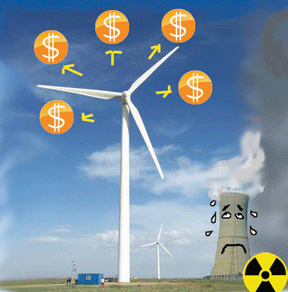
PGE picks Baltic wind over nuclear as Poland embraces green power, Agnieszka Barteczko, Pawel Goraj WARSAW/GDYNIA (Reuters) – State-controlled PGE (PGE.WA) has abandoned its leading role in plans to build Poland’s first nuclear power station as it focuses on new wind farms in the Baltic Sea, two sources said.
PGE, the largest Polish power group, announced a nearly $10 billion offshore wind project in March but has also been responsible for the nuclear project…….
One source said PGE could not fund both projects and cheap technology had swung the decision in favor of wind. PGE could still play a smaller role in the nuclear project which has been delayed and still needs government approval.
“PGE cannot afford both – offshore wind and nuclear. The decision was taken to go for offshore,” the source said.
A government source also said that PGE would focus on offshore.
…….. Poland’s ruling conservative Law and Justice (PiS) party promised before elections in 2015 to defend the coal industry and put in place laws to prevent new investment in both onshore and offshore windfarms.
But in March it changed tack and proposed a law to make it easier to build wind turbines. That is currently being debated in parliament.
If the law is passed, as expected, several other wind farm projects could also proceed.
Polenergia (PEPP.WA), owned by the Kulczyk family, has said it would like to build a wind farm in the Baltic by 2022. PKN Orlen is also considering building one.
PGE said in March that it wants to build offshore windfarms with a capacity of 2.5 gigawatts (GW) by 2030.
………. Analysts and investors say that offshore wind farms are the easiest and fastest way for Poland to fill the expected capacity gap from coal and reduce CO2 emissions in line with EU’s 2030 targets as Poland seeks improved ties with Brussels.
They provide more electricity than onshore windfarms, which Poland already has, and can be built more quickly than a nuclear power plant.
The decision to open up the offshore power industry could also draw in investors. Statoil said in April it would join Polenergia’s offshore project which has drawn interest from other international wind companies.
“We received phone calls from all over Europe after Statoil’s decision was announced. If such a player has entered, we need to be in too, many investors say,” said Maciej Stryjecki, the president of the board at SMDI Advisory Group.
………. The Polish Wind Energy Association (PWEA) estimates that offshore windfarms with a total capacity of 6 GW would help create around 77,000 new jobs and add around 60 billion zlotys to economic growth.
Local authorities in the windy Baltic resort and port of Leba, which is close to the future offshore sites, are hoping the industry could provide year-round employment as a balance to seasonal jobs.
“If investors choose Leba, a base and functional and technical facilities for wind farms could be created here,” the mayor of Leba, Andrzej Strzechminski, said.
PWEA has identified around 70 potential Polish suppliers to the offshore industry including shipyards Crist SA and GSG Towers. Their workers’ boat-building skills can be transferred to make windmill components.
GSG Towers, a unit of Gdansk Shipyard Group, is looking forward to Poland’s first offshore windmills and contracts with new clients.
The Polish Wind Energy Association (PWEA) estimates that offshore windfarms with a total capacity of 6 GW would help create around 77,000 new jobs and add around 60 billion zlotys to economic growth.
Local authorities in the windy Baltic resort and port of Leba, which is close to the future offshore sites, are hoping the industry could provide year-round employment as a balance to seasonal jobs.
“If investors choose Leba, a base and functional and technical facilities for wind farms could be created here,” the mayor of Leba, Andrzej Strzechminski, said.
PWEA has identified around 70 potential Polish suppliers to the offshore industry including shipyards Crist SA and GSG Towers. Their workers’ boat-building skills can be transferred to make windmill components.
GSG Towers, a unit of Gdansk Shipyard Group, is looking forward to Poland’s first offshore windmills and contracts with new clients.
“We are not talking anymore about whether Poland needs to develop offshore wind projects…there are no more question marks and we only talk about when and how to do it right,” said Liudmyla Buimister who was the CEO of GSG Towers, a unit of Gdansk Shipyard Group, until April 16.
It has approached PGE and Polenergia about building a device to send electricity generated at sea to the onshore grid.
For nine days, representatives from governments across the globe have been meeting in Bonn, Germany, to hammer out details of the Paris climate agreement.
But participating at the talks alongside diplomatic representatives and environmental groups are some perhaps unexpected parties — like the U.S. Chamber of Commerce, which has long opposed climate regulations and is a vocal proponent of fossil fuels.
A coalition of developing nations in Africa and Latin America had hoped to draw attention to the influence that the fossil fuel industry maintains over the climate negotiation process with a formal acknowledgement of conflicts of interest at the conclusion of the talks in Bonn this week.
But developed nations — led largely by the United States — succeeded in preventing such a formal acknowledgement from being included in the meeting’s final notes.
Conflicts of interest within the United Nations Framework Convention on Climate Change (UNFCC) — the international treaty that dictates the UN’s annual climate conferences — aren’t a new phenomenon.
In 2015, companies like Engie — a utility company that gets more than 70 percent of its energy output from fossil fuels — were financial sponsors of the Paris climate talks.
But this year, developing nations — alongside environmental groups — have been working to make eliminating conflicts of interest a central part of the climate negotiations moving forward, much to the chagrin of countries like the United States and Australia.
“Every institution, especially of this scale, has some kind of policy to identify and mitigate internal conflict of interests,” Jesse Brag, media director for Corporate Accountability, which has been campaigning to make conflicts of interest within the United Nations climate negotiations a central issue since 2015, told ThinkProgress.
“Right now, there is no acknowledgement [within the UNFCCC] that there could be problems that arise from the financial interests of businesses and NGOs operating here.”
There are a few ways in which fossil fuel companies — or industry groups that represent fossil fuel companies — have already influenced UN climate negotiations.
At the Paris climate negotiations in 2015, for instance, fossil fuel companies that sponsored the talks were given access to “communications and networking” areas in rooms where negotiations were taking place.
The text of the Paris climate agreement, which calls for limiting global warming to “well below 2 degrees Celsius” (3.6 degrees Fahrenheit) doesn’t mention the term “fossil fuels” once, despite the fact that burning fossil fuels is the primary action driving climate change.
And the UNFCCC’s Climate Technology Network, which promotes the adoption of low carbon technology in developing countries, includes a member of the World Coal Association.
Developing nations, alongside NGOs like Corporate Accountability, had hoped to get parties on the record this year acknowledging that conflicts of interest exist within the climate negotiations.
They had also hoped that such acknowledgement would be followed by policy suggestions aimed at helping root out conflicts of interest within the process.
That effort was largely waylaid due to intense opposition from the United States, which refused to allow any mention of conflicts of interest or fossil fuel companies into the meeting’s official notes.
But a coalition of governments representing 70 percent of the world’s population — largely from developing countries in Latin America and Africa — did succeed in getting parties to agree to keep talking about the issue at climate negotiations next year.
That might seem like a small victory, but Bragg argues it’s an important signal that the culture of the talks — as well as general recognition of the issue of conflicts of interest within the negotiations — is starting to change.
“Three years ago, no one wanted to talk about the fossil fuel industry’s role in climate denial in these talks,” Bragg said. “Now, it’s a discussion that is happening in every area of these halls. As the process advances, so does the culture around what needs to be done.”
It is unsurprising that the United States — which is still a party to the UNFCCC even as President Trump has promised to withdraw from the Paris climate agreement — would oppose efforts to draw attention to conflicts of interest between environmental treaties and fossil fuel companies.
Under the Trump administration, several high-profile environmental regulator posts have been filled by people who previously represented the industries that they now oversee.
Environmental Protection Agency (EPA) Deputy Administrator Andrew Wheeler, for instance, came to the EPA after working as a lobbyist for Murray Energy, the largest privately-owned coal firm in the United States.
Nancy Beck, who is currently the highest-ranking political appointee at overseeing regulation of the chemical industry at the EPA, used to work for the American Chemical Council , the chemical industry’s main lobbying organization.
And over at the Department of the Interior, Deputy Secretary David Bernhardt came to the agency after working for years as a lobbyist in the natural resources department of the firm Brownstein Hyatt Farber Schreck.
Nasr al-Hariri, chair of the Syrian Negotiations Committee, says move could help remove ‘malignant influence’ of Iran from country, Guardian, Patrick WintourDiplomatic editor Thu 10 May 2018Donald Trump’s decision to break the Iran nuclear deal has won praise from the official Syrian opposition, which said the move represented a real opportunity to remove Iranian influence from the war-torn country……….. He stopped short of directly praising Israel for attacking Iranian positions in Syria, saying the effort to drive as many as 100,000 Iran-backed militias from Syria needed to be coordinated…… He stopped short of directly praising Israel for attacking Iranian positions in Syria, saying the effort to drive as many as 100,000 Iran-backed militias from Syria needed to be coordinated. more https://www.theguardian.com/world/2018/may/10/syrian-opposition-praises-donald-trumps-iran-nuclear-deal-exit
The U.S. Treasury imposed sanctions against six individuals and three companies it said had funneled millions of dollars to the Iranian Revolutionary Guard’s elite Qods Force.
The sanctions were imposed just days after President Donald Trump withdrew from the Iran nuclear deal.
bipartisan negotiations produced “a separate path to interim storage, decoupling it from a permanent repository.”
Sacramento Municipal Utility District (SMUD) SMUD estimates that it spends roughly $5 million each year to essentially “babysit” the waste, which requires tight security and a small crew to oversee its proper storage.
More than two hundred tons of nuclear waste have been sitting a half-hour drive from downtown Sacramento for decades, as policymakers in Washington haggle over where to send the material.
A breakthrough in Congress Thursday improves the chances that the Sacramento Municipal Utility District (SMUD) will finally be able remove the spent uranium fuel stored at the decommissioned Rancho Seco nuclear power plant since 1989.
It would ultimately mean lower costs for local ratepayers.
The House of Representatives on Thursday overwhelmingly passed the Nuclear Waste Policy Amendments Act, which represents a bipartisan compromise on nuclear waste disposal. The legislation restarts work on the controversial nuclear waste storage site at Yucca Mountain, Nevada, as Republicans favor. But it also authorized the temporary storage of nuclear waste at other sites. Democrats have supported interim storage provisions, but until now, House Republicans refused to consider that option, independent of resolving Yucca Mountain’s status.
“When this bill was first presented in committee, the licensing of an interim storage facility was linked to a final decision on Yucca Mountain,” noted Democratic Rep. Doris Matsui of Sacramento, who was one of the key players in the negotiations that led to the bill’s passage. That “meant that our nation’s nuclear waste could continue to be stranded at decommissioned plants in California and across the country.”
Speaking on the House floor before the vote, Matsui hailed the bipartisan negotiations that produced “a separate path to interim storage, decoupling it from a permanent repository.”
It’s unclear where the waste would go. Two private companies have already applied to take the uranium spent fuel from SMUD and other nuclear facilities, creating a much more immediate storage option than Yucca Mountain, which has yet to be constructed and faces intense local opposition.
SMUD is eager to rid itself of the 228.8 metric tons of uranium spent fuel and 13.6 metric tons of metal from the reactors, dubbed Greater Than Class C waste, stored in casks on the site in Herald, Calif., just east of Galt.
The waste has resided there for nearly 30 years now, ever since Sacramento voters elected to shut down the plant in June 1989. That vote came after a 1986 cooling accident at the plant that came close to triggering a reactor meltdown. And it made Sacramento the first community to shutter a nuclear plant by public vote anywhere in the world.
SMUD estimates that it spends roughly $5 million each year to essentially “babysit” the waste, which requires tight security and a small crew to oversee its proper storage. On Thursday, SMUD CEO and General Manager Arlen Orchard called the uranium’s removal one of SMUD’s “top legislative priorities.”
“Not only will this legislation save our customers money,” Orchard said, “it will also allow us to restore the site to a beneficial use, such as expanding our nearby solar array or pursuing other renewable energy projects.”
First, however, the bill has to pass the Senate, which will be difficult. Nevada’s senators oppose any move to advance Yucca Mountain and Republican leaders aren’t inclined to hold a vote on legislation that could hurt their Nevada colleague, Dean Heller, who faces a tough Democratic challenge in 2018.
But the strong bipartisan vote in the House sends an important signal to Nuclear Regulatory Commission, which is attempting to push forward on interim storage removal on its own. The House’s ability to reach an elusive policy agreement on nuclear waste could prompt the Senate to move forward after the election.
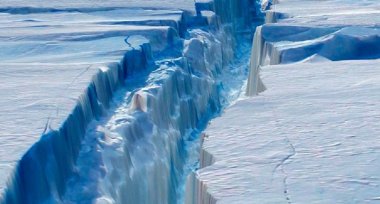
Warming oceans melting Antarctic ice shelves could accelerate sea level rise, Guardian, John Abraham, 9 May 18, “……With global warming, both of the poles are warming quite quickly, and this warming is causing ice to melt in both regions. When we think of ice melting, we may think of it melting from above, as the ice is heated from the air, from sunlight, or from infrared energy from the atmosphere. But in truth, a lot of the melting comes from below. For instance, in the Antarctic, the ice shelves extend from the land out over the water. The bottom of the ice shelf is exposed to the ocean. If the ocean warms up, it can melt the underside of the shelf and cause it to thin or break off into the ocean.
A new study, recently published in Science Advances, looked at these issues. One of the goals of this study was to better understand whether and how the waters underneath the shelf are changing. They had to deal with the buoyancy of the waters. We know that the saltier and colder water is, the denser it is.
Around Antarctica, water at the ocean surface cools down and becomes saltier. These combined effects make the surface waters sink down to the sea floor. But as ice melt increases, fresh water flows into the ocean and interrupts this buoyancy effect. This “freshening” of the water can slow down or shut down the vertical mixing of the ocean. When this happens, the cold waters at the surface cannot sink. The deeper waters retain their heat and melt the ice from below.
The study incorporated measurements of both temperature and salinity (saltiness) at three locations near the Dalton Iceberg Tongue on the Sabrina Coast in East Antarctica. The measurements covered approximately an entire year and gave direct evidence of seasonal variations to the buoyancy of the waters. The researchers showed that a really important component to water-flow patterns were ‘polynyas.’ These are regions of open water that are surrounded by ice, typically by land ice on one side and sea ice on the other side.
When waters from the polynya are cold and salty, the waters sink downwards and form a cold curtain around the ice shelf. However, when the waters are not salty (because fresh water is flowing into the polynya), this protective curtain is disrupted and warm waters can intrude from outside, leading to more ice melt.
Based on this study, we may see increased ice loss in the future – sort of a feedback loop. That concerns us because it will mean more sea level rise (which is already accelerating), and more damage to coastal communities. I asked the lead author, Alesandro Silvano about this work:
Lead author Alesandro Silvano.
We found that freshwater from melting ice shelves is already enough to stop formation of cold and salty waters in some locations around Antarctica. This process causes warming and freshening of Antarctic waters. Ocean warming increases melting of the Antarctic Ice Sheet, causing sea level to rise. Freshening of Antarctic waters weakens the currents that trap heat and carbon dioxide in the ocean, affecting the global climate. In this way local changes in Antarctica can have global implications. Multiple sources of evidence exist now to show that these changes are happening. However, what will happen in Antarctica in the next decades and centuries remains unclear and needs to be understood.
South Carolina’s state utility paid bonuses to private execs WP, By Christina L. Myers and Jeffrey Collins | APMay 9 2018 COLUMBIA, S.C.— South Carolina’s state owned utility paid $9 million in performance bonuses to executives of a private utility for two nuclear reactors that were never finished, according to the public utility and emails turned over to state and federal investigators.
SCANA Corp. even billed taxpayer-supported Santee Cooper $3.2 million for bonuses in August, a month after the utilities abandoned 10 years of construction and planning for the reactors, according to the emails released by Gov. Henry McMaster’s office on Wednesday.
Santee Cooper refused to pay, utility spokeswoman Mollie Gore said.
“I will not approve this invoice,” Senior Vice President for Nuclear Energy Michael Crosby wrote in one email. “I may get over-ridden … but if SCANA cares to push this … CFOs & CEOs will need to get involved.”
Crosby also suggested letting SCANA CEO Jimmy Addison know his company was still seeking performance bonuses after the reactors were abandoned, and suggested that other executives “man-up and ask if he wants to push this,” according to the emails……..
The invoices indicated at least $5 million of bonuses paid to SCANA executives, but Gore said Santee Cooper’s records showed the public utility paid $8.9 million to the executives at the private firm.
The governor also sent the emails to legislative leaders, asking senators to confirm his nominee to run the Santee Cooper board as soon as possible.
“Santee Cooper’s customers, including individuals and the electric cooperatives of our state, deserve to know how their hard earned money is being spent by the utility, and now, we know that much of it was going to pay SCANA executives’ bonuses related to the failed reactors,” Symmes said in a statement.
……. Also on Wednesday, South Carolina lawmakers made a last-minute push to pass several bills to give ratepayers temporary relief and pass regulations to prevent anything like this from happening again.A committee of House members and senators could not reach a compromise on how much to cut a charge that customers of South Carolina Electric & Gas — a SCANA subsidiary — pay for the abandoned reactors.
Guardian 9th May 2018 Chernobyl: History of a Tragedy by Serhii Plokhy review – Europe nearly
became uninhabitable. A compelling history of the 1986 disaster and its
aftermath presents Chernobyl as a terrifying emblem of the terminal decline
of the Soviet system. The turbine test that went catastrophically wrong was
not, he argues, a freak occurrence but a disaster waiting to happen. It had
deep roots in the party’s reckless obsession with production targets and
in the pliant nuclear industry’s alarming record of cutting corners to
cut costs. https://www.theguardian.com/books/2018/may/09/chernobyl-history-tragedy-serhii-plokhy-review-disaster-europe-soviet-system
No nuclear waste near Great Lakes, Detroit News Debbie Dingell and Fred Upton May 9, 2018
In Michigan, we know the value of our precious and finite natural resources. The Great Lakes account for more than 20 percent of the word’s freshwater supply — providing drinking water for millions of people and supporting our economy, jobs and our way of life. It is our responsibility to be good stewards of this vital resource for our children and grandchildren, which is why the Great Lakes delegation has been consistent in our strong opposition to efforts to store nuclear waste in or near the Great Lakes.
This should never be a consideration. Yet, a Canadian utility company, Ontario Power Generation, continues to seek approval to construct a deep geologic repository for nuclear waste less than one mile from Lake Huron in Kincardine, Ontario. This misguided proposal would mean radioactive waste would be buried less than a mile from the water source that 40 million people — Americans and Canadians — depend upon.
This is unacceptable. That’s why we worked closely with our colleagues on the House Energy and Commerce Committee to include an amendment to protect the Great Lakes in legislation being considered by the House of Representatives this week on nuclear waste policy.
Our amendment sends a strong, powerful, bipartisan message to our friends and neighbors in Canada that the U.S. Congress is united against storing nuclear waste in or near the Great Lakes.
By expressing the sense of the Congress that the governments of the United States and Canada should not allow storage of nuclear waste in or around the Great Lakes, we are sending a strong signal that we will not sit idly by and allow spent nuclear fuel or other radioactive waste near this precious water source.
While this amendment is critical to Michigan and the Great Lakes, the broader bill we will consider, the Nuclear Waste Policy Amendments Act of 2018, is also important because we in the United States need to find a place to dispose of our commercial spent nuclear fuel.
……….This bipartisan legislation would help solve this long-standing issue once and for all by providing for the construction of a permanent nuclear waste storage facility far from the Great Lakes. It also maintains interim storage facilities to hold nuclear waste in the meantime.
This legislation is good for Michigan because we are keeping nuclear waste out of the Great Lakes, and it is good for the United States because it finally provides a pathway to dispose of this nuclear waste.
We remain committed to working with our colleagues in the Michigan delegation to ensure we never see nuclear waste in the Great Lakes. Storing spent nuclear fuel and other radioactive material in the Great Lakes basin bears a great risk. All of our lakes are connected, and the potential of an accident contaminating this precious resource is too great.
Protecting the Great Lakes and the drinking water of 40 million people should be the No. 1 priority. We’re glad that today, we can take a bipartisan step forward to preserve these waters for future generations.
U.S. Rep. Debbie Dingell represents Michigan’s 12th Congressional district. U.S. Rep. Fred Upton represents its 6th Congressional district.
This bipartisan legislation would help solve this long-standing issue once and for all by providing for the construction of a permanent nuclear waste storage facility far from the Great Lakes. It also maintains interim storage facilities to hold nuclear waste in the meantime.
This legislation is good for Michigan because we are keeping nuclear waste out of the Great Lakes, and it is good for the United States because it finally provides a pathway to dispose of this nuclear waste.
We remain committed to working with our colleagues in the Michigan delegation to ensure we never see nuclear waste in the Great Lakes. Storing spent nuclear fuel and other radioactive material in the Great Lakes basin bears a great risk. All of our lakes are connected, and the potential of an accident contaminating this precious resource is too great.
Protecting the Great Lakes and the drinking water of 40 million people should be the No. 1 priority. We’re glad that today, we can take a bipartisan step forward to preserve these waters for future generations.
The solar industry accounts for the largest share of jobs in renewable energy, with nearly 3.4 million people employed in research, production, installation and maintenance of solar panels — an increase of 9 percent from 2016. The solar sector is followed by liquid biofuels, with 1.9 million jobs, and hydropower, with 1.5 million. The IRENA report finds that employment in the global wind industry decreased slightly from 2016 to 2017, shrinking to 1.15 million. China is home to 65 percent of the world’s solar jobs, and 43 percent of all renewable energy jobs. Due to the region’s robust manufacturing sector, four-fifths of all renewable energy jobs are located in Asia.
“The data underscores an increasingly regionalized picture, highlighting that in countries where attractive policies exist, the economic, social and environmental benefits of renewable energy are most evident,” said Adnan Z. Amin, director general of IRENA.
Mirror 9th May 2018 ,Tory ministers were slammed after they refused to rule out burying nuclear
waste under national parks. The government’s statement was branded
“absolutely shocking” by Green Party co-leader Caroline Lucas. It comes
more than five years after Cumbria County Council rejected a bid for an
underground storage unit under the Lake District.
Since then ministers have continued their search for a home for the Geological Disposal Facility.
Labour peer Lord Judd asked ministers to promise national parks, protected
areas and areas of outstanding natural beauty will be excluded from the
search.
But energy minister Lord Henley said he was “not excluding”
those areas yet while a National Policy Statement is finalised. He
insisted: “Development for a Geological Disposal Facility should only be
consented in nationally designated areas in exceptional circumstances and
where it would be in the public interest to do so. “Even if such
development were consented, the developer would be required to take a
number of measures to protect and where possible improve the
environment.” https://www.mirror.co.uk/news/politics/tory-ministers-refuse-rule-out-12508389












 nuclear-news