Prime Minister Theresa May faces crunch talks over the future of a new nuclear power station
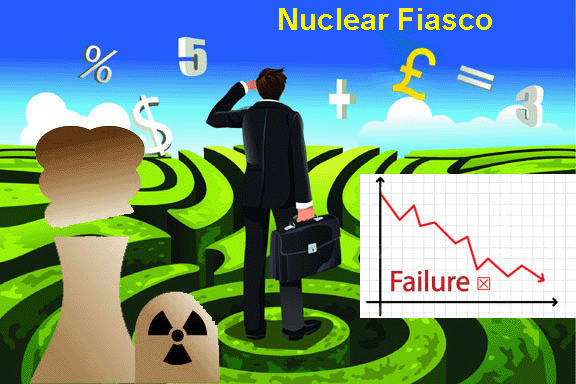 UK in last ditch new nuclear crunch talks as ageing power plants falter https://www.telegraph.co.uk/business/2018/05/03/uk-last-ditch-new-nuclear-crunch-talks-ageing-power-plants-falter/ 3 MAY 2018 Prime Minister Theresa May faces crunch talks over the future of a new nuclear power station on Thursday, as fresh faults reduce the amount of energy Britain’s ageing fleet of reactors can generate.
The Japanese conglomerate behind plans to build a new reactor at the Wylfa nuclear site in Wales is expected to call on the Government to take a direct stake in the new plant, or risk the £27bn project falling through.
The last-ditch talks between Hitachi chairman Hiroaki Nakanishi and the prime minister were scheduled for the same day that fresh cracks in one of the UK’s oldest nuclear plants underlined the need for new investment in low-carbon power.
A string of power plants, including the faltering Hunterston nuclear plant, are set to close by 2025.
Hitachi’s 2.9 gigawatt nuclear project could help to fill the gap created by the closures, but the group is not willing to take on the full risk burden without the backing of other private investors and government involvement.
The conglomerate is planning to back away from the project entirely unless the UK agrees to help finance it or take a stake in the plant alongside investments from the Japanese government, according to local media reports.
The nuclear exit would be a major blow to the UK’s struggling ambitions to build a fleet of low-carbon, nuclear power plants to replace the ageing coal and nuclear plants.
EDF Energy said the new cracks in its 42-year old Hunterston reactor mean that the plant will be closed for much of 2018, meaning more expensive gas-fired power may be required to fill the gap in the UK’s power supplies this summer. Hunterston is scheduled to shut entirely by 2023.
Number 10 has remained tight-lipped over its negotiations with Hitachi, and a spokesman declined to comment on the latest talks.
Hannah Martin, of Greenpeace, said the “information blackout” is “unjustifiable” because of the high costs to be paid by energy users to support the projects.
“The public have a right to know what the government is planning to do with their money and why,” she said.
“Major Western economies are reducing their exposure to nuclear, so why is Britain doing the exact opposite? It would make no sense to waste yet more on expensive and outdated nuclear when technologies such as offshore wind can do the same job faster and cheaper,” Ms Martin added.
No comments yet.
1 This Month


Tell the Ukrainian Government to Drop Prosecution of Peace Activist Yurii Sheliazhenko

Petition to revoke the licensing of the Near Surface Nuclear Disposal Facility (NSDF) at Chalk River. https://www.ourcommons.ca/petitions/en/Petition/Details?Petition=e-7247


of the week – STOP SMALL MODULAR REACTORS IN CANADA
To see nuclear-related stories in greater depth and intensity – go to https://nuclearinformation.wordpress.com
-
Archives
- March 2026 (204)
- February 2026 (268)
- January 2026 (308)
- December 2025 (358)
- November 2025 (359)
- October 2025 (376)
- September 2025 (258)
- August 2025 (319)
- July 2025 (230)
- June 2025 (348)
- May 2025 (261)
- April 2025 (305)
-
Categories
- 1
- 1 NUCLEAR ISSUES
- business and costs
- climate change
- culture and arts
- ENERGY
- environment
- health
- history
- indigenous issues
- Legal
- marketing of nuclear
- media
- opposition to nuclear
- PERSONAL STORIES
- politics
- politics international
- Religion and ethics
- safety
- secrets,lies and civil liberties
- spinbuster
- technology
- Uranium
- wastes
- weapons and war
- Women
- 2 WORLD
- ACTION
- AFRICA
- Atrocities
- AUSTRALIA
- Christina's notes
- Christina's themes
- culture and arts
- Events
- Fuk 2022
- Fuk 2023
- Fukushima 2017
- Fukushima 2018
- fukushima 2019
- Fukushima 2020
- Fukushima 2021
- general
- global warming
- Humour (God we need it)
- Nuclear
- RARE EARTHS
- Reference
- resources – print
- Resources -audiovicual
- Weekly Newsletter
- World
- World Nuclear
- YouTube
-
RSS
Entries RSS
Comments RSS
 nuclear-news
Leave a comment