Indigenous Canadians oppose “insanity” of planned nuclear waste disposal near Ottawa River
 ‘Insanity’ to allow nuclear waste disposal near Ottawa River, Indigenous groups say http://www.cbc.ca/news/canada/ottawa/chalk-river-nuclear-waste-indigenous-1.4492937
Canadian Nuclear Laboratories facility in Chalk River, Ont., could be up and running in 2020, CBC News Jan 18, 2018 Indigenous groups say a plan to dispose of nuclear waste near the Ottawa River in eastern Ontario is “insanity” and want the federal government to intervene.
Canadian Nuclear Laboratories, a private company, wants a 10-year licence to keep running the Chalk River nuclear labs in eastern Ontario.
- Protest to oppose Chalk River nuclear licence renewal
- Waste disposal site in Chalk River raises concerns
In 2014, the federal government gave Canadian Nuclear Laboratories (CNL) control over nuclear operations at Chalk River. The government continues to own the nuclear assets.
CNL has plans for a permanent nuclear waste disposal site at Chalk River, plans that have been criticized by a concerned citizen’s group as being “cheap, dirty, unsafe and out of alignment with International Atomic Energy Agency guidance.”
Nuclear waste in Chalk River will cost billions to deal with and leave a legacy that will last centuries, opponents say.
“Trying to build this giant mound of radioactive waste … is insanity,” said Patrick Madahbee, grand council chief of the Anishinabek Nation, which advocates for around 40 communities representing around 65,000 people across Ontario.
He said CNL has an obligation under the United Nations Declaration on the Rights of Indigenous Peoples to consult Indigenous people about storing hazardous materials in their territory, but CNL hasn’t talked to them about it.
The waste facility could be operational by 2020.
“We understand this is a complex file, but clearly the risks here are to people’s drinking waters and traditional territories,” said Patrick Nadeau, executive director of the Ottawa Riverkeeper.
CNL’s licence to run the Chalk River labs expires on March 31 and the consortium has asked the regulator, Canadian Nuclear Safety Commission, for a 10-year licence agreement, rather than the usual five-year term.
The Canadian Nuclear Safety Commission will hold public hearings in Pembroke, Ont., from Jan. 23 to 25 to consider CNL’s licence.
Dozens of delegations have registered to comment at the hearings. But Mark Lesinski, president of Canadian Nuclear Laboratories said among those posed to present submissions at the hearings, there are a number of “misunderstandings.”
No comments yet.
1 This Month
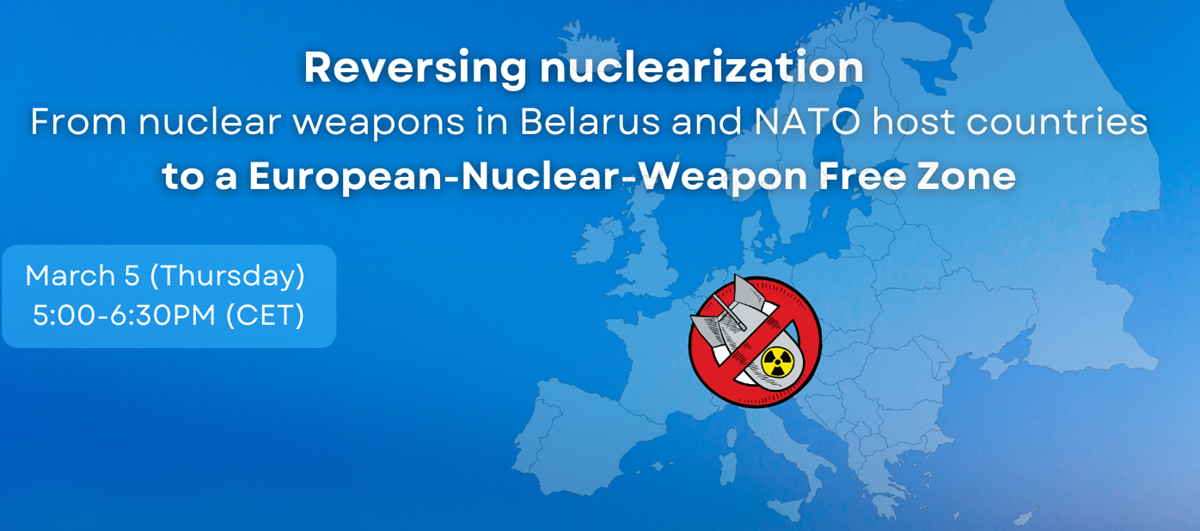
5 March -Online – Reversing nuclearization:
From nuclear weapons in Belarus and NATO host countries to a European-Nuclear-Weapon Free Zone
11am-12:30pm Eastern Time USA / 5pm-6:30pm CET

of the week – Advocating for a
nuclear free beach – https://www.samuellawrencefoundation.org/
The Samuel Lawrence Foundation advocates for a Nuclear Waste Free Beach at San Onofre, join us and take action!

10 March A LIVE WEBINAR THE REAL EFFECTS OF NUCLEAR POWER
What the Industry Isn’t Telling Us
1:00 PM Mountain, 2 pm Central, 3 pm Eastern. Live on the Keepers of the Water Facebook page


18 March Webinar @ 1 PM EST: An Assessment of SMR Projects: The Case of Canada
register for the zoom:
https://us02web.zoom.us/webinar/register/WN_o8BIIOUvQ2ONJR1nta65DQ#/registration

of the week – STOP SMALL MODULAR REACTORS IN CANADA
To see nuclear-related stories in greater depth and intensity – go to https://nuclearinformation.wordpress.com
-
Archives
- March 2026 (38)
- February 2026 (268)
- January 2026 (308)
- December 2025 (358)
- November 2025 (359)
- October 2025 (376)
- September 2025 (258)
- August 2025 (319)
- July 2025 (230)
- June 2025 (348)
- May 2025 (261)
- April 2025 (305)
-
Categories
- 1
- 1 NUCLEAR ISSUES
- business and costs
- climate change
- culture and arts
- ENERGY
- environment
- health
- history
- indigenous issues
- Legal
- marketing of nuclear
- media
- opposition to nuclear
- PERSONAL STORIES
- politics
- politics international
- Religion and ethics
- safety
- secrets,lies and civil liberties
- spinbuster
- technology
- Uranium
- wastes
- weapons and war
- Women
- 2 WORLD
- ACTION
- AFRICA
- Atrocities
- AUSTRALIA
- Christina's notes
- Christina's themes
- culture and arts
- Events
- Fuk 2022
- Fuk 2023
- Fukushima 2017
- Fukushima 2018
- fukushima 2019
- Fukushima 2020
- Fukushima 2021
- general
- global warming
- Humour (God we need it)
- Nuclear
- RARE EARTHS
- Reference
- resources – print
- Resources -audiovicual
- Weekly Newsletter
- World
- World Nuclear
- YouTube
-
RSS
Entries RSS
Comments RSS
 nuclear-news
Leave a comment