USA’s nuclear-capable B-2 stealth bomber on mission in Pacific as Trump visits Asia
 U.S. sends nuclear-capable B-2 stealth bomber on mission in Pacific ahead of Trump visit to Asia, Japan Times, BY JESSE JOHNSON,STAFF WRITER, 29 Oct 17, The U.S. military sent a nuclear-capable B-2 stealth bomber from Whiteman Air Force Base in Missouri on a long-range mission to the Pacific area of operations over the weekend, it said Sunday, a day after Pentagon chief Jim Mattis highlighted rival North Korea’s “accelerating” atomic weapons program during a visit to South Korea.
The U.S. military’s Strategic Command said in a statement that the type of long-range mission conducted was to “familiarize aircrew with air bases and operations in different geographic combatant commands, enabling them to maintain a high state of readiness and proficiency.”
The flight path of the B-2 was unclear, and Strategic Command did not respond to a request for comment, but the last time one of the stealth bombers flew near the Koreas was during a rare show of force over the peninsula in 2013. Military experts say that any U.S. strike on North Korea would almost certainly involve the powerful bombers……..
The weekend flight of the B-2, which can carry conventional as well as nuclear bombs, comes just ahead of Trump’s Asia tour, which is scheduled to kick off with a visit to Japan between Nov. 5-7. That visit will include talks with Prime Minister Shinzo Abe that are expected to focus on the North Korean nuclear crisis……
On Saturday Mattis blasted North Korea for “outlaw” behavior and vowed that the U.S. would never accept a nuclear North.
“North Korea has accelerated the threat that it poses to its neighbors and the world through its illegal and unnecessary missile and nuclear weapons programs,” he said, adding that U.S.-South Korean military and diplomatic collaboration thus has taken on “a new urgency.”
“I cannot imagine a condition under which the United States would accept North Korea as a nuclear power,” Mattis said…….. https://www.japantimes.co.jp/news/2017/10/29/asia-pacific/u-s-sends-nuclear-capable-b-2-stealth-bomber-mission-pacific-ahead-trump-visit-asia/#.WfY2FI-CzGg
Evidence that Britain’s nuclear power industry subsidises nuclear weapons
channelling revenues ultimately funded by electricity consumers towards a joint civil-military national nuclear industry base
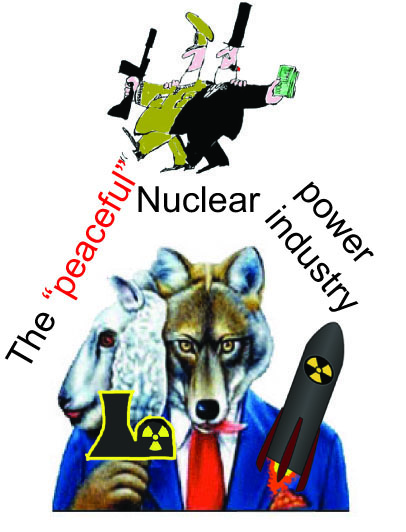
Evidence from Andy Stirling and Philip Johnstone: As the early part of the process of the BEIS Committee Brexit Inquiry has unfolded, the salience of this civil/military link is being further underscored in statements in which a number of relevant senior civil servants and ministers are confirming that the priority attached to UK military submarine capabilities is deeply entangled in strategic commitments to civil nuclear industry strategy 6 . Several possibly serious implications therefore arise in relation to the particular circumstances of Brexit.
 Parliament 27th Oct 2017 http://data.parliament.uk/writtenevidence/committeeevidence.svc/evidencedocument/business-energy-and-industrial-strategy-committee/leaving-the-eu-implications-for-the-nuclear-industry/written/71514.pdf
Written evidence from the University of Sussex, Science Policy Research Unit (BRN0015)
- We submit this evidence to the inquiry on Brexit and the Implications for UK Business.s. The content draws on a detailed submission by the same authors to the Public Accounts Committee (PAC), discussed at the PAC witness session on Monday 9 th October 2017, which informed illuminating exchanges with senior civil service witnesses to that Committee and was subsequently published by PAC 1 . A number of potentially important implications arise in relation to issues under discussion around Brexit.
2: This earlier evidence to PAC addressed the otherwise difficult-to-explain intensity of Government commitments to civil nuclear power in the face of growing recognition of the relative competitiveness of alternative UK low carbon energy investments. Multiple grounds were found for inferring that this persistent Government attachment is due, at least in part (and with no public discussion), to perceived needs to engineer a cross-subsidy from electricity consumers to help cover costs of a national nuclear industrial base that is deemed to be essential for maintaining UK military nuclear infrastructures 2 .
3: The issues that arise are central to the general remit of the BEIS Committee. For instance, this recent evidence to the PAC documents significant statements by the National Audit Office, which suggest that UK military nuclear infrastructures are being bolstered by revenue flows to UK industry strategy in other sectors 3 . Many statements in support of this interpretation are cited from defence policy discussions, acknowledging incentives to “mask” costs of military industrial strategy behind civil energy programmes 4 . As a result, it is evident that Government-negotiated, high-price, guaranteed long-term contracts for civil nuclear power, are channelling revenues ultimately funded by electricity consumers towards a joint civil-military national nuclear industry base, whose full costs probably could not otherwise feasibly be covered by defence budgets alone. Resulting implications for wider industry strategy and energy policy have received effectively zero Parliamentary or other policy scrutiny.
4: Much other evidence was presented in submission to PAC, concerning this evidently significant-buthidden influence on civil industry policy by military nuclear considerations 5 . As a result, it seems that undetermined but likely large cross-subsidies are being engineered from UK electricity consumers, in order to cover otherwise insupportable costs of military nuclear industry strategies. In the present evidence we outline key implications for the BEIS Committee inquiry on nuclear implications of Brexit
5: As the early part of the process of the BEIS Committee Brexit Inquiry has unfolded, the salience of this civil/military link is being further underscored in statements in which a number of relevant senior civil servants and ministers are confirming that the priority attached to UK military submarine capabilities is deeply entangled in strategic commitments to civil nuclear industry strategy 6 . Several possibly serious implications therefore arise in relation to the particular circumstances of Brexit.
6: First, there are well-documented general concerns that Brexit-related pressures on the UK industrial base are likely to have a particular impact on large infrastructure projects, specifically including new nuclear build. If these developments unfold, then pressures are likely to intensify around the interlinkages between UK civil and military nuclear infrastructures. With foregone opportunities for industry strategy in other sectors (like offshore wind), the these Brexit-related implications for UK industrial strategy are central issues for the BEIS Committee, which remain unexplored elsewhere 7 .
7: Second, there are concerns that the economic effects of Brexit may include current and possible continuing future depreciation of Sterling. If these effects transpire as variously predicted, then economic pressures will likely intensify to find ways to cross-subsidise growing military nuclear costs in some fashion that mitigates the impact on public spending. Brexit may thus exacerbate incentives to ‘mask’ otherwise-unbearable wider industrial costs of military nuclear submarine infrastructures behind strategic support for civil nuclear supply chains ultimately funded by electricity consumers 8 .
8: Third, there are prospects that demand for UK access to overseas specialist nuclear skills may be aggravated by Brexit-related constraints on labour movement. If this occurs, then competition can be expected to accentuate between recruitment needs for national civil and military nuclear industries. Since key military nuclear skills in particular must for obvious reasons be disproportionately UKbased, so Brexit may reinforce upward pressures on costs of military nuclear infrastructures and so help further increase the pressures for cross-subsidy documented in the earlier PAC evidence 9
9: Fourth, there is the likely effect of Brexit in reinforcing pressures towards Scottish independence. If this transpires, then strong opposition in Scotland to continued associations with the current UK nuclear weapons infrastructure, mean that Brexit will make it more probable that a move will be required of key military nuclear facilities away from Scotland. The result will be a very large Brexitrelated increase in military nuclear costs, further exacerbating pressures for cross-subsidies 10 . 10: We hope it is useful to draw these emerging issues to the attention of the BEIS Committee – both in relation to the above specific repercussions around Brexit and to their wider implications for UK energy strategies, industrial policy and more general qualities of national democratic accountability 11 . October 2017
Extensive references are given on the original document .
The lies and distortions of “nuclear environmentalist” Michael SHILLenberger
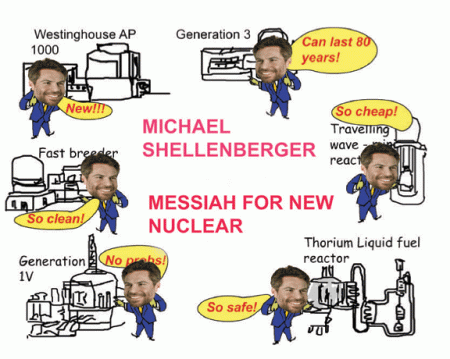
The nuclear power industry is having one of its worst ever years. Environmental Progress is warning about nuclear power’s “rapidly accelerating crisis” and other pro-nuclear lobbyists have noted that “the industry is on life support in the United States and other developed economies“.
Is there a future for ‘pro-nuclear environmentalism’? Jim Green, 30 Oct 2017, http://reneweconomy.com.au/is-there-a-future-for-pro-nuclear-environmentalism-94038/
Michael Shellenberger is visiting Australia this week. He has been a prominent environmentalist (of sorts) since he co- authored the 2004 essay, The Death of Environmentalism. These days, as the President of the California-based ‘Environmental Progress’ lobby group, he is stridently pro-nuclear, hostile towards renewable energy and hostile towards the environment movement.
Shellenberger is visiting to speak at the International Mining and Resources Conference in Melbourne. His visit was promoted by Graham Lloyd in The Australian in September. Shellenberger is “one of the world’s leading new-generation environmental thinkers” according to The Australian, and if the newspaper is any guide he is here to promote his message that wind and solar have failed, that they are doubling the cost of electricity, and that “all existing renewable technologies do is make the electricity system chaotic and provide greenwash for fossil fuels.”
Trawling through Environmental Progress literature, one of their recurring themes is the falsehood that “every time nuclear plants close they are replaced almost entirely by fossil fuels”. South Korea, for example, plans to reduce reliance on coal and nuclear under recently-elected President Moon Jae-in, and to boost reliance on gas and renewables. But Shellenberger and Environmental Progress ignore those plans and concoct their own scare-story in which coal and gas replace nuclear power, electricity prices soar, thousands die from increased air pollution, and greenhouse emissions increase.
Fake scientists and radiation quackery
Environmental Progress’ UK director John Lindberg is described as an “expert on radiation” on the lobby group’s website. In fact, he has no scientific qualifications. Likewise, a South Korean article falsely claims that Shellenberger is a scientist and that article is reposted, without correction, on the Environmental Progress website.
Shellenberger says that at a recent talk in Berlin: “Many Germans simply could not believe how few people died and will die from the Chernobyl accident (under 200) and that nobody died or will die from the meltdowns at Fukushima. How could it be that everything we were told is not only wrong, but often the opposite of the truth?”
There’s a simple reason that Germans didn’t believe Shellenberger’s claims about Chernobyl and Fukushima ‒ they are false. Shellenberger claims that “under 200” people have died and will die from the Chernobyl disaster, but in fact the lowest of the estimates of the Chernobyl cancer death toll is the World Health Organization’s estimate of “up to 9,000 excess cancer deaths” in the most contaminated parts of the former Soviet Union. And of course there are higher estimates for the death toll across Europe.
Shellenberger claims that the Fukushima meltdowns “killed precisely no one” and that “nobody died or will die from the meltdowns at Fukushima”. An Environmental Progress report has this to say about Fukushima: “[T]he science is unequivocal: nobody has gotten sick much less died from the radiation that escaped from three meltdowns followed by three hydrogen gas explosions. And there will be no increase in cancer rates.”
In support of those assertions, Environmental Progress cites a World Health Organization report that directly contradicts the lobby group’s claims. The WHO report concluded that for people in the most contaminated areas in Fukushima Prefecture, the estimated increased risk for all solid cancers will be around 4% in females exposed as infants; a 6% increased risk of breast cancer for females exposed as infants; a 7% increased risk of leukaemia for males exposed as infants; and for thyroid cancer among females exposed as infants, an increased risk of up to 70% (from a 0.75% lifetime risk up to 1.25%).
Applying a linear-no threshold (LNT) risk factor to the estimated collective radiation dose from Fukushima fallout gives an estimated long-term cancer death toll of around 5,000 people. Nuclear lobbyists are quick to point out that LNT may overestimate risks from low dose and low dose-rate exposure ‒ but LNT may also underestimate the risks according to expert bodies such as the US National Academy of Sciences’ Committee on the Biological Effects of Ionizing Radiation.
Attacking environment groups Continue reading
US will not accept a nuclear North Korea: Mattis
The Pentagon’s chief says the threat of nuclear missile attack by North Korea is accelerating. AP – SBS Wires, Reuters – SBS Wires, 29 Oct 17,
USA would negotiate with North Korea- but only on USA’s terms
 US refusal to accept N. Korea as nuclear power leaves little room for talks By KIM GAMEL | STARS AND STRIPES October 29, 2017 SEOUL, South Korea – Defense Secretary Jim Mattis insisted the United States will never accept North Korea as a nuclear power, warning the communist state will face a massive military response if it attacks.
But he also clung to diplomatic efforts aimed at resolving the standoff over the North’s nuclear weapons program.
The mixed messages reflect the lack of good options in dealing with the North, which conducted its sixth and most powerful nuclear test on Sept. 3 and has made rapid progress in developing a missile that could threaten the U.S. mainland.
U.S. policy has been aimed at forcing Pyongyang to abandon its nuclear ambitions. but North Korea has defiantly persisted with its efforts despite punishing economic sanctions and diplomatic pressure.
While both sides say that in principle they’re willing to return to dialogue, the standoff over the North’s nuclear ambitions leaves little room for negotiation……..https://www.stripes.com/news/us-refusal-to-accept-n-korea-as-nuclear-power-leaves-little-room-for-talks-1.495161
Iran is living up to nuclear deal – says IAEA’s Yukiya Amano

 IAEA’s Yukiya Amano: Iran is living up to nuclear deal, AlJazeera, by Zein Basravi, 29 Oct 17, Tehran, Iran – What would have been a routine visit by the head of the International Atomic Energy Agency (IAEA) became a public relations opportunity for the Iranian government.
Huge new nuclear waste storage facility in Fukushima Prefecture
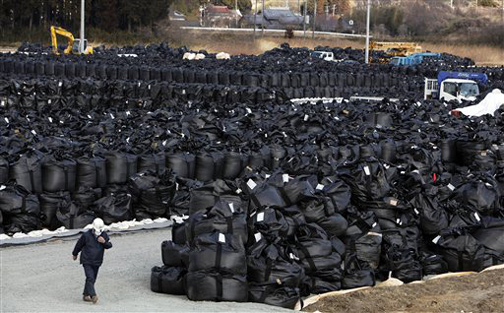 Sprawling radioactive waste storage facility opens for business in Fukushima https://www.japantimes.co.jp/news/2017/10/28/national/sprawling-radioactive-waste-storage-facility-opens-business-fukushima/#.WfZG54-CzGi, KYODO
While the facility near the crippled Fukushima No. 1 nuclear complex is designed to store soil and other tainted waste collected during decontamination work for up to 30 years, it remains only half complete six years after the triple core meltdown struck in March 2011.
The government has been able to buy only 40 percent of the land so far but eventually plans to secure 1,600 hectares for the facility, which is expected to generate ¥1.6 trillion ($14.1 billion) in construction and related costs.
The storage facility is urgently needed to consolidate the 13 million cu. meters of radioactive waste scattered around the prefecture. The prolonged disposal work, among other concerns, is said to be keeping residents away from their hometowns even when the evacuation orders are lifted.
Also on Saturday, the government began full operation of a facility where waste intended for incineration, such as trees and plants, is separated from the rest.
Contaminated soil is sorted into different categories depending on cesium level before storage.
No to nuclear power – South Africa’s Finance Minister Malusi Gigaba
Gigaba says no to nuclear, Fin 24, 2017-10-29 – Sipho Masondo and Setumo Stone, Johannesburg – Finance Minister Malusi Gigaba says drastic steps are needed to help South Africa’s ailing economy – including freezing senior civil servants’ salaries and selling chunks of state-owned enterprises.
‘no greater force for world peace than the U.S. nuclear arsenal’ !
 Trump team drawing up fresh plans to bolster US nuclear arsenal Congress and US allies briefed on progress of Nuclear Posture Review Pence: ‘There’s no greater force for world peace than the US nuclear arsenal’, Guardian, Julian Borger 29 Oct 17,
A draft of the new Nuclear Posture Review (NPR) was presented in September at a White House meeting between Donald Trump and his top national security advisers. Congress and US allies have been briefed on the progress of the new draft.
The document is still being debated with a target for completion by the end of this year or the beginning of next. Among the new elements under consideration are a low yield ballistic missile intended primarily to deter Russia’s use of a small nuclear weapon in a war over the Baltic states; a sea-launched cruise missile; a change in language governing conditions in which the US would use nuclear weapons; and investments aimed at reducing the time it would take the US to prepare a nuclear test.
Trump has frequently voiced his intention to build up the US arsenal. According to one report, he was outraged at a meeting with military leaders in July when he was shown a downward sloping graph of the US weapons stockpile since the cold war, and had to be talked out of ordering a tenfold increase.
The White House denied the report but it has repeatedly made clear it aims to adopt a more aggressive nuclear stance………
Like much else about Trump’s presidency, the new policy is aimed at erasing the legacy of his predecessor. Barack Obama began his administration with a major speech in Prague in April 2009, committing the US to disarmament and the eventual elimination of nuclear weapons globally………
On Thursday, Christopher Ford, special assistant to the president on weapons of mass destruction and counterproliferation, told a meeting on nuclear threats organised by the Ploughshares Fund: “The traditional post-cold war approach of seeking to demonstrate disarmament bona fides by showing steady numerical movement towards elimination, while trying to avoid steps that could actually undermine US national security, has largely run its course and is no longer tenable, especially given evolving security conditions.
“So it’s time to explore alternative approaches – and we are.”
Ford did not provide further details, as he said the NPR was still being worked on. Several sources briefed on its progress said elements under consideration include:
- A low-yield ballistic missile, possibly using the Trident D5 missile but using only the first, fission, part of its two-stage warhead.
- Bringing back nuclear Tomahawk sea-launched cruise missiles, which were dropped from the arsenal in 2013.
- Reducing the lead time the US would need to resume nuclear testing from its current level of three years.
- A relaxation of constraints laid down in Obama’s 2010 NPR, which pledged the US would only used its nuclear weapons in “extreme circumstances to defend the vital interests of the United States or its allies and partners” and never against non-weapons states in compliance with their non-proliferation obligations.
- Any change in the US arsenal would have to be approved by Congress, which controls the funding for the nuclear weapons programme and which is already concerned that its ballooning cost is eating away at conventional capabilities.
The Congressional Budget Office is expected to issue a new report on Tuesday that would revise cost estimates for the nuclear weapon modernisation programme approved by Obama from $1tn to $1.25tn over the next three decades…… https://www.theguardian.com/world/2017/oct/29/trump-us-nuclear-weapons-arsenal
UK Labour government would sign global anti-nuclear weapons treaty
Jeremy Corbyn’s shadow minister for peace has said a Labour government would sign a global anti-nuclear weapons treaty that would effectively confine the Royal Navy’s Trident submarines to port. Fabian Hamilton MP, in comments that risk reigniting the party’s internal divisions over the future of the UK’s nuclear deterrent, told i that while the issue of
Trident was “dead in the water” as it had been approved by Parliament,
a future Corbyn government would sign a UN treaty that bans nuclear weapons
and prohibits their use.
Labour included a promise to renew Trident in its
election manifesto, but Hamilton said that Corbyn’s leadership of the
Labour party presented a “golden opportunity” for opponents of nuclear
weapons, admitting the issue was still a “thorn in the side” of the
party.
https://inews.co.uk/essentials/news/trident-labour-sign-un-treaty-banning-nuclear-weapons/
Areva-Siemens and the Finnish electricity company TVO blame each other for delays in nuclear build
 L’Usine Nouvelle 27th Oct 2017[Machine translation] Areva in the quagmire of the Finnish EPR. A further
delay in commissioning the Olkiluoto EPR in Finland is further complicating
the task of Areva SA, the new entity dedicated mainly to the end of the
project.
At this rate, the EPR Flamanville (Channel) will be put into
service before that of Olkiluoto in Finland. On October 9th, the
Areva-Siemens consortium informed the Finnish electrician Teollisuuden
Voima Oyj (TVO) that he was still cutting back the connection to the
reactor network in May 2019. It was initially planned for 2009!
And the penultimate postponement fixed the end of the test period at the end of
2018. After ten years of overtaking and 5 billion euros of additional cost,
the consortium Areva-Siemens and the Finnish electricity company TVO accuse
each other of the delay. The first claims 3.5 billion euros in compensation
to TVO, which continues for 2.6 billion.
https://www.usinenouvelle.com/article/areva-dans-le-bourbier-de-l-epr-finlandais.N604108
Drug use by British navy sailors on nuclear Trident submarine
British navy sailors on nuclear Trident submarine fired after failing drug tests, ABC News, 29 Oct 17, Britain’s navy has fired nine sailors serving on a nuclear-armed submarine after they tested positive for cocaine, the country’s defence ministry says.
The crew were from HMS Vigilant, one of four Royal Navy submarines which operate the Trident nuclear missile system.
“We do not tolerate drugs misuse by service personnel. Those found to have fallen short of our high standards face being discharged from service,” a Royal Navy spokesman said.
The Daily Mail newspaper reported that the sailors had failed drugs tests while the submarine was docked in the United States to pick up nuclear warheads and undergo work, and the sailors had been accommodated in hotels on shore……http://www.abc.net.au/news/2017-10-28/british-navy-sacks-nuclear-submariners-over-cocaine-use/9096396
Extreme caution needed, as controlled explosions of chemicals are continued at Sellafield nuclear facility
Bomb disposal experts are continuing controlled explosions of chemicals at
the Sellafield nuclear reprocessing plant. It follows a routine audit of
chemicals stored in a laboratory. The Army’s explosive ordnance disposal
team have been on-site since last weekend dealing with a canisters of
solvents present since 1992.
Sellafield Ltd said there were concerns they
could become hazardous if exposed to oxygen. A spokeswoman said the
solvents are “widely used in industry” but “extreme caution” is being
exercised. The disposal will continue over the weekend with the site
operating as normal with the exception of the laboratory.
http://www.bbc.co.uk/news/uk-england-cumbria-41783748
WEST Somerset Council concerned about EDF’s £19.6 billion for huge stranded waste nuclear storage

 WEST Somerset Council’s cabinet is being asked to challenge Hinkley Point
C power station’s plans to change the way it will deal with waste nuclear
fuel until the council gets more information.
At its meeting next Wednesday, the cabinet committee will be recommended to object to EDF
Energy’s application to the Government’s planning inspectorate for
“non-material changes” to the £19.6 billion project. This would allow
an interim spent nuclear fuel store with a life of 120 years to be
increased in size – up in length from 150 to 229 metres, eight metres wider
and five metres higher, making it one of the biggest buildings on the site.
EDF claims a larger building is needed because it has been decided to keep
the nuclear waste dry in concrete and steel cannisters rather than, as
originally planned, in wet storage in a pool.
http://www.wsfp.co.uk/article.cfm?id=108485&headline=Concern%20over%20bigger%20Hinkley%20waste%20fuel%20building§ionIs=news&searchyear=2017
Britain’s military will have to greatly squeeze all other costs, to raise extra £300 million for Trident nuclear submarines
Military chiefs must find an extra £300 million in savings this year to
cover a rise in the cost of Britain’s replacement fleet of Trident
submarines, The Times can reveal. The army is set to take a hit, with
commanders ordered to make at least £100 million of efficiency savings on
top of hundreds of millions of pounds that have already been squeezed out
of threadbare budgets for training, maintenance, accommodation and travel.
https://www.thetimes.co.uk/article/forces-must-find-300m-for-rising-trident-costs-bmxnl9
1 This Month


18 March Webinar @ 1 PM EST: An Assessment of SMR Projects: The Case of Canada
register for the zoom:
https://us02web.zoom.us/webinar/register/WN_o8BIIOUvQ2ONJR1nta65DQ#/registration


of the week – STOP SMALL MODULAR REACTORS IN CANADA
To see nuclear-related stories in greater depth and intensity – go to https://nuclearinformation.wordpress.com
-
Archives
- March 2026 (140)
- February 2026 (268)
- January 2026 (308)
- December 2025 (358)
- November 2025 (359)
- October 2025 (376)
- September 2025 (258)
- August 2025 (319)
- July 2025 (230)
- June 2025 (348)
- May 2025 (261)
- April 2025 (305)
-
Categories
- 1
- 1 NUCLEAR ISSUES
- business and costs
- climate change
- culture and arts
- ENERGY
- environment
- health
- history
- indigenous issues
- Legal
- marketing of nuclear
- media
- opposition to nuclear
- PERSONAL STORIES
- politics
- politics international
- Religion and ethics
- safety
- secrets,lies and civil liberties
- spinbuster
- technology
- Uranium
- wastes
- weapons and war
- Women
- 2 WORLD
- ACTION
- AFRICA
- Atrocities
- AUSTRALIA
- Christina's notes
- Christina's themes
- culture and arts
- Events
- Fuk 2022
- Fuk 2023
- Fukushima 2017
- Fukushima 2018
- fukushima 2019
- Fukushima 2020
- Fukushima 2021
- general
- global warming
- Humour (God we need it)
- Nuclear
- RARE EARTHS
- Reference
- resources – print
- Resources -audiovicual
- Weekly Newsletter
- World
- World Nuclear
- YouTube
-
RSS
Entries RSS
Comments RSS
 nuclear-news