Solar minigrid overturns rural hardship in MASHABA, Zimbabwe
Solar grid keeps harvests high, hospitals lit in parched rural Zimbabwe, by Tonderayi Mukeredzi | Thomson Reuters Foundation, 11 September 2017, With worsening droughts drying fields and hydropower, solar energy is providing a way forward in rural areas MASHABA, – Until recently, farmers in this town in southern Zimbabwe struggled to water their crops, frustrated by poor rainfall and the regular breakdown of the diesel engines that powered their irrigation systems.
As in most areas of rural Zimbabwe, rain-fed agriculture provides most of the jobs in this part of Gwanda district, some 130km (80 miles) southeast of Bulawayo.
But sparse rains over the last decade, a worsening problem associated with climate change, have caused many harvests to fail, and cut into the country’s generation of hydropower, which provides much of its electricity.
In Mashaba, however, the community’s luck is turning. In 2015, the town installed a solar mini-grid power station that has helped green the hot, arid area transform into a hive of entrepreneurial activity. The off-grid power system, with 400 solar panels that provide nearly 100 kilowatts of reliable power, has made it possible to effectively irrigate crops, boosting farming yields and fuelling economic growth. Local leaders say schools have become more productive and medical facilities safer.
The $3.2 million mini-grid was funded by the European Union, the OPEC Fund for International Development and the Global Environment Facility as part of a drive to promote universal access to modern energy in rural areas. Its construction was overseen by Practical Action Southern Africa, a development charity.
The plant powers the Mankonkoni and Rustlers Gorge irrigation schemes, which cover 32 hectares (79 acres) and 42 hectares (104 acres) respectively; the Mashaba Primary School; a business centre with three shops; the Mashaba Clinic; and the Masendani Business Centre, which has four shops and an energy kiosk.
A board of trustees selected by the community is responsible for the day-to-day operation of the mini-grid, and community members have been trained to maintain and operate it.
The mini-grid will be co-owned by an independent power producer and the community through the trust…….http://news.trust.org/item/20170911111952-ei8xq/
No comments yet.
1 This Month
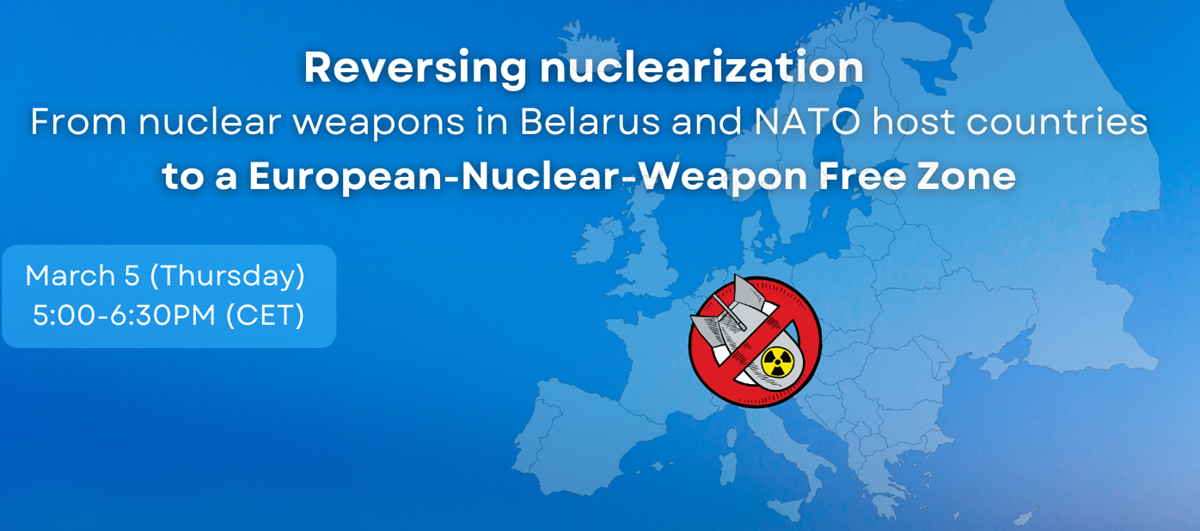
5 March -Online – Reversing nuclearization:
From nuclear weapons in Belarus and NATO host countries to a European-Nuclear-Weapon Free Zone
11am-12:30pm Eastern Time USA / 5pm-6:30pm CET

of the week – Advocating for a
nuclear free beach – https://www.samuellawrencefoundation.org/
The Samuel Lawrence Foundation advocates for a Nuclear Waste Free Beach at San Onofre, join us and take action!

10 March A LIVE WEBINAR THE REAL EFFECTS OF NUCLEAR POWER
What the Industry Isn’t Telling Us
1:00 PM Mountain, 2 pm Central, 3 pm Eastern. Live on the Keepers of the Water Facebook page

18 March Webinar @ 1 PM EST: An Assessment of SMR Projects: The Case of Canada
register for the zoom:
https://us02web.zoom.us/webinar/register/WN_o8BIIOUvQ2ONJR1nta65DQ#/registration

of the week – STOP SMALL MODULAR REACTORS IN CANADA
To see nuclear-related stories in greater depth and intensity – go to https://nuclearinformation.wordpress.com
-
Archives
- March 2026 (51)
- February 2026 (268)
- January 2026 (308)
- December 2025 (358)
- November 2025 (359)
- October 2025 (376)
- September 2025 (258)
- August 2025 (319)
- July 2025 (230)
- June 2025 (348)
- May 2025 (261)
- April 2025 (305)
-
Categories
- 1
- 1 NUCLEAR ISSUES
- business and costs
- climate change
- culture and arts
- ENERGY
- environment
- health
- history
- indigenous issues
- Legal
- marketing of nuclear
- media
- opposition to nuclear
- PERSONAL STORIES
- politics
- politics international
- Religion and ethics
- safety
- secrets,lies and civil liberties
- spinbuster
- technology
- Uranium
- wastes
- weapons and war
- Women
- 2 WORLD
- ACTION
- AFRICA
- Atrocities
- AUSTRALIA
- Christina's notes
- Christina's themes
- culture and arts
- Events
- Fuk 2022
- Fuk 2023
- Fukushima 2017
- Fukushima 2018
- fukushima 2019
- Fukushima 2020
- Fukushima 2021
- general
- global warming
- Humour (God we need it)
- Nuclear
- RARE EARTHS
- Reference
- resources – print
- Resources -audiovicual
- Weekly Newsletter
- World
- World Nuclear
- YouTube
-
RSS
Entries RSS
Comments RSS
 nuclear-news
Leave a comment