Cold War-era nuclear waste in the path of Hurricane Irma
 Hurricane Irma may plow into a site full of Cold War-era nuclear waste, Business Insider, DAVE MOSHER,
- Hurricane Irma, or what’s left of it, may plow into the continental US over the weekend.
- There’s a chance the damaging winds and heavy rainfall could affect Savannah River Site, a large Cold War-era nuclear reservation in South Carolina.
- The site hosts tens of millions of gallons of liquid nuclear waste in storage tanks, plus burial grounds filled with contaminated objects.
- SRS said its facilities are “able to withstand extreme natural events including hurricanes and floods.”
As Hurricane Irma threatens to ram South Florida, officials have issued warnings and evacuation orders.
Yet National Hurricane Center forecasts suggest the Texas-size storm may penetrate deep into the US mainland after pummelling Florida, blowing down trees, knocking out power, and triggering flooding far away from the sea.
On Friday, one inland area still well within Irma’s threat zone was the Savannah River Site: a sprawling 310-square-mile nuclear reservation in South Carolina that borders northeast Georgia.
During the Cold War, scientists and technicians there produced weapons-grade bomb material for the US military as well as plutonium-238 for NASA’s pluckiest spacecraft. These activities also created millions of gallons of nuclear waste that’s stored in dozens of tanks, plus burial grounds filled with contaminated objects.
With Irma threatening powerful wind and heavy rains across the Savannah River watershed, of which SRS is a part, some experts have expressed concern.
“If Hurricane #Irma track predictions hold, it will pass close to or even directly over DOE’s Savannah River Site. That could be very bad,” Stephen Schwartz, an independent nuclear-weapons policy analyst and author of “Atomic Audit: The Costs and Consequences of US Nuclear Weapons Since 1940,” wrote in a tweet on Thursday. (Irma’s path later shifted west, but the NHC still has the site on the edge of the storm’s “cone of probability.”)
Schwartz went on to sum up the cache of SRS’ waste, which includes about 35 million gallons of liquid radioactive waste, 195 acres of dirt-trench burial grounds filled with contaminated gear, and even thousands of tons’ worth of nuclear contamination from Greenland and Spain.
The most dangerous waste is contained in 51 large storage tanks. Less dangerous “low-level” waste (clothes, tools, equipment, and more laced with radioactive contamination) was dumped into unlined pits and covered with earth over the decades.
A major effort is underway to empty and seal the storage tanks, solidify the waste into glass, and entomb it underground, as well as construct up-to-standard disposal units.
However, there’s still billions of dollars’ and perhaps decades’ worth of work that remains, given current nuclear-cleanup funding levels.
 “The problem with the tanks and flooding isn’t so much that the tanks will leak … it’s more the stuff that has leaked out over the years,” Schwartz told Business Insider. “If there’s severe flooding, it could move that stuff around and into the ground water.”
Schwartz also said the burial grounds may pose a lesser though significant risk. “If you’ve got a contaminated tool or bulldozer, which there are, that’s not going to move,” he said. “But the uranium, plutonium, and other stuff stuck to clothing and dirt and equipment could potentially start migrating very far.”
He added that SRS is situated on top of an aquifer that supplies several states with drinking water……….https://www.businessinsider.com.au/hurricane-irma-cold-war-nuclear-waste-flooding-2017-9?r=UK&IR=T
No comments yet.
1 This Month
To see nuclear-related stories in greater depth and intensity – go to https://nuclearinformation.wordpress.com/
12 February – Webinar The Big Push: New Nuclear Projects in Canada
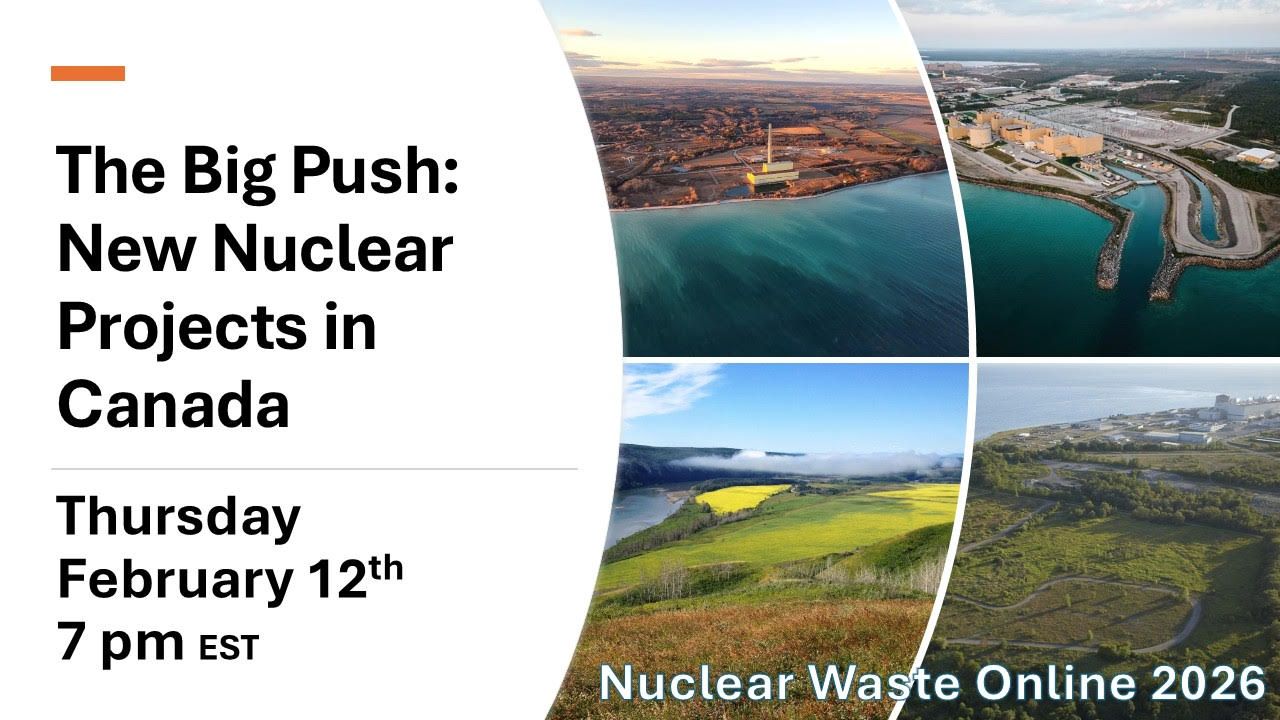
Thursday, February 12, 7 pm Eastern | 2nd of 4 sessions in the 2026 Nuclear Waste Online webinar series
Join a webinar on the push for new nuclear generation in Canada. Go to Northwatch.org to register or use the registration link https://us02web.zoom.us/webinar/register/WN_ZfWOf1GITqSRIZX8CB-A9w
-
Archives
- February 2026 (127)
- January 2026 (308)
- December 2025 (358)
- November 2025 (359)
- October 2025 (376)
- September 2025 (258)
- August 2025 (319)
- July 2025 (230)
- June 2025 (348)
- May 2025 (261)
- April 2025 (305)
- March 2025 (319)
-
Categories
- 1
- 1 NUCLEAR ISSUES
- business and costs
- climate change
- culture and arts
- ENERGY
- environment
- health
- history
- indigenous issues
- Legal
- marketing of nuclear
- media
- opposition to nuclear
- PERSONAL STORIES
- politics
- politics international
- Religion and ethics
- safety
- secrets,lies and civil liberties
- spinbuster
- technology
- Uranium
- wastes
- weapons and war
- Women
- 2 WORLD
- ACTION
- AFRICA
- Atrocities
- AUSTRALIA
- Christina's notes
- Christina's themes
- culture and arts
- Events
- Fuk 2022
- Fuk 2023
- Fukushima 2017
- Fukushima 2018
- fukushima 2019
- Fukushima 2020
- Fukushima 2021
- general
- global warming
- Humour (God we need it)
- Nuclear
- RARE EARTHS
- Reference
- resources – print
- Resources -audiovicual
- Weekly Newsletter
- World
- World Nuclear
- YouTube
-
RSS
Entries RSS
Comments RSS
 nuclear-news
Leave a comment